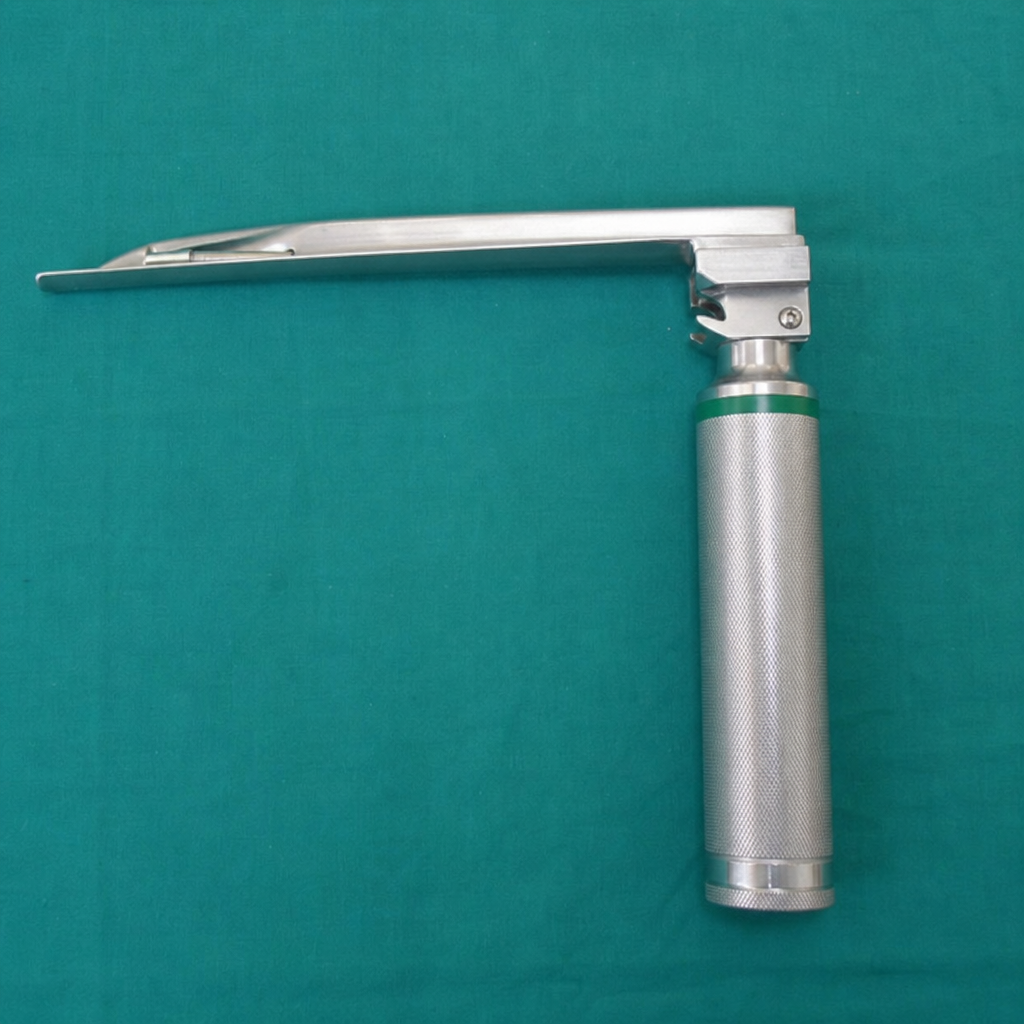
Difficult oral intubation may be associated with all EXCEPT:
Sallick's maneuver is used for what purpose?
Which of the following is NOT a side effect of oxygen therapy?
What is the recommended treatment for post-intubation croup in a child who has undergone adenoidectomy?
What is the reason for difficult intubation in an obese patient?
Placement of a double lumen tube for lung surgery is best confirmed by which method?
Which of the following volatile anesthetic agents are pungent?
What is the standard airway intervention for Ludwig's Angina?
What difficulty is assessed by the Mallampati classification during intubation?
Which statement is true regarding cardiopulmonary resuscitation?
Explanation: **Explanation:** The question asks for the factor **NOT** associated with difficult oral intubation. However, there is a clinical nuance here: **Decreased thyromental distance (TMD)** is actually a classic predictor of a **difficult** airway. In the context of standard NEET-PG patterns, if "Decreased TMD" is marked as the "Except" (correct) answer, it usually implies a technical error in the question stem or options, as all four options (A, B, C, and D) are well-established indicators of difficult intubation. **1. Why Decreased Thyromental Distance is a predictor (The Concept):** The thyromental distance (Patil's Test) is the distance from the mentum to the thyroid notch with the head fully extended. A **decreased TMD (< 6–6.5 cm or 3 fingerbreadths)** suggests a receded mandible or a high larynx. This results in less space to displace the tongue during laryngoscopy, leading to an anterior larynx and a poor view (Cormack-Lehane Grade III or IV). **2. Analysis of Other Options (Predictors of Difficulty):** * **A. Receding lower jaw (Retrognathia):** Reduces the mandibular space available to sweep the tongue, making it difficult to visualize the glottis. * **B. Poor mobility of mandible:** Limited mouth opening (inter-incisor distance < 3 cm) prevents the insertion of the laryngoscope blade and visualization. * **C. Protruding upper incisors:** These act as a physical barrier, interfering with the line of sight and the optimal positioning of the laryngoscope blade. **Clinical Pearls for NEET-PG:** * **LEMON Criteria:** Used for difficult airway assessment (Look externally, Evaluate 3-3-2 rule, Mallampati, Obstruction, Neck mobility). * **3-3-2 Rule:** 3 fingers mouth opening, 3 fingers Thyromental distance, 2 fingers Hyoid-to-thyroid distance. * **Mallampati Classification:** Class III (only base of uvula seen) and Class IV (only hard palate seen) are strong predictors of difficult intubation. * **Gold Standard:** The most definitive way to confirm a difficult airway is via direct laryngoscopy.
Explanation: **Explanation:** **Sellick’s Maneuver**, also known as **Cricoid Pressure**, is a technique used during Rapid Sequence Induction (RSI) to prevent the passive regurgitation of gastric contents into the pharynx, thereby **preventing pulmonary aspiration**. 1. **Why Option A is correct:** The maneuver involves applying firm downward pressure on the cricoid cartilage. Since the cricoid is the only complete cartilaginous ring in the larynx, pressing it posteriorly compresses the esophagus against the body of the fifth or sixth cervical vertebra. This physical occlusion prevents stomach contents from reaching the glottis during the period between the loss of consciousness and successful tracheal intubation. 2. **Why other options are incorrect:** * **Option B & D:** Sellick’s maneuver does not facilitate respiration or prevent alveolar collapse; in fact, excessive pressure can sometimes distort the laryngeal anatomy, making ventilation or intubation more difficult. * **Option C:** Reducing dead space is typically achieved through specialized breathing circuits or tracheostomy, not manual airway maneuvers. **High-Yield Clinical Pearls for NEET-PG:** * **Force Required:** Approximately **10 Newtons (1kg)** of pressure is applied while the patient is awake, increasing to **30 Newtons (3kg)** once consciousness is lost. * **BURP Maneuver vs. Sellick’s:** Do not confuse Sellick’s with the **BURP maneuver** (Backwards, Upwards, Rightwards Pressure), which is applied to the *thyroid* cartilage specifically to improve the *view of the glottis* during laryngoscopy. * **Contraindications:** Suspected cricotracheal transition injury, active vomiting (risk of esophageal rupture), or unstable cervical spine fractures.
Explanation: Oxygen therapy, while life-saving, can lead to **Oxygen Toxicity** (the Lorrain Smith effect) when high concentrations are administered for prolonged periods. ### **Why "Increased Pulmonary Compliance" is the Correct Answer** Oxygen toxicity actually **decreases** pulmonary compliance. High concentrations of oxygen (FiO2 > 0.6) lead to the formation of Reactive Oxygen Species (ROS), which damage the alveolar-capillary membrane and inhibit surfactant production. This results in "stiff lungs," making them harder to inflate, thereby decreasing compliance. ### **Analysis of Incorrect Options** * **A. Absorption Atelectasis:** Normally, nitrogen (an inert gas) stays in the alveoli and keeps them splinted open. When 100% oxygen is given, nitrogen is "washed out." Since oxygen is rapidly absorbed into the blood, the alveoli collapse. * **C. Decreased Vital Capacity:** This is one of the earliest signs of pulmonary oxygen toxicity. It occurs due to a combination of airway congestion, alveolar edema, and the aforementioned atelectasis. * **D. Endothelial Damage:** ROS directly damage the pulmonary capillary endothelium, leading to increased permeability, protein leakage into the alveoli, and eventually a picture similar to ARDS (Acute Respiratory Distress Syndrome). ### **High-Yield Clinical Pearls for NEET-PG** * **Safe Limit:** To avoid toxicity, the FiO2 should ideally be kept below **0.5 to 0.6 (50-60%)** for long-term therapy. * **Retinopathy of Prematurity (ROP):** In neonates, hyperoxia causes vasoconstriction followed by abnormal vascular proliferation in the retina. * **CO2 Narcosis:** In patients with chronic hypercapnia (e.g., COPD), high-flow oxygen can abolish the **hypoxic drive**, leading to respiratory depression. * **Paul Bert Effect:** Refers to Central Nervous System oxygen toxicity (seizures) occurring under hyperbaric conditions.
Explanation: **Explanation:** Post-intubation croup (post-extubation subglottic edema) is a common pediatric complication caused by mucosal edema at the level of the cricoid cartilage, the narrowest part of a child’s airway. It typically presents within 30–60 minutes of extubation with stridor, barking cough, and respiratory distress. **Why "All of the Above" is Correct:** The management of post-intubation croup is multi-modal, focusing on reducing airway inflammation and improving airflow: * **Steroids (Dexamethasone):** These are the mainstay of treatment. They reduce mucosal inflammation and capillary permeability. Intravenous dexamethasone (0.15–0.6 mg/kg) is highly effective in decreasing the severity of symptoms. * **Racemic Epinephrine:** Administered via nebulization, it causes alpha-adrenergic vasoconstriction of the subglottic mucosa, rapidly reducing edema and providing immediate symptomatic relief. * **Mist/Humidified Oxygen:** While its efficacy is debated in isolation, humidified air/oxygen (mist) helps soothe the airway, prevents drying of secretions, and reduces the work of breathing. * **Re-intubation:** In severe cases refractory to medical management where the airway is compromised, re-intubation with a smaller diameter (usually 0.5 mm smaller) endotracheal tube is necessary. **Clinical Pearls for NEET-PG:** 1. **Risk Factors:** Frequent in children aged 1–4 years, use of oversized/uncuffed tubes, prolonged surgery, and multiple intubation attempts. 2. **Prevention:** The **"Cuff Leak Test"** is a vital bedside predictor; the absence of an air leak at <20 cm H₂O pressure indicates a high risk for post-extubation stridor. 3. **Heliox:** A mixture of Helium and Oxygen (70:30) may be used to reduce turbulent flow through the narrowed subglottic area. 4. **Drug of Choice:** Dexamethasone is the steroid of choice due to its high potency and long duration of action.
Explanation: In obesity, anatomical and physiological changes combine to make airway management particularly challenging. **Explanation of the Correct Answer:** The correct answer is **D (All of the above)** because obesity affects every stage of the intubation process: 1. **Difficult Visualization (Option A):** Obese patients often have increased neck circumference, redundant pharyngeal soft tissue, and limited atlanto-occipital extension. These factors lead to a higher Mallampati score and poor visualization of the glottis during direct laryngoscopy. 2. **Decreased Safe Apnea Time (Option B):** This is the most critical physiological challenge. Obesity causes a significant decrease in **Functional Residual Capacity (FRC)** due to the weight of the chest wall and abdomen. Since FRC acts as the body's oxygen reservoir, its reduction—coupled with increased basal oxygen consumption—leads to rapid arterial desaturation during apnea. 3. **Lower Tidal Volume (Option C):** Increased intra-abdominal pressure and reduced chest wall compliance lead to a restrictive lung pattern. This results in lower spontaneous tidal volumes and requires higher airway pressures during mechanical ventilation. **Clinical Pearls for NEET-PG:** * **Positioning:** The **"Ramped Position"** (stacking blankets under the head, neck, and shoulders) is the gold standard for obese patients to align the oral, pharyngeal, and laryngeal axes. * **Pre-oxygenation:** Use of **Head-Up (25-30°)** position and CPAP/BiPAP during pre-oxygenation can help prolong the safe apnea time. * **Predictors:** Neck circumference (>40-43 cm) is often a better predictor of difficult intubation in obese patients than BMI alone. * **Induction:** Always be prepared for a "Cannot Intubate, Cannot Oxygenate" (CICO) scenario; have a video laryngoscope and supraglottic airway devices (SADs) readily available.
Explanation: **Explanation:** The placement of a **Double Lumen Tube (DLT)** is a critical skill in thoracic anesthesia to achieve one-lung ventilation. While several methods exist to verify placement, **Fiberoptic Bronchoscopy (FOB)** is considered the **gold standard** and the most reliable method for confirmation. **1. Why Bronchoscopy is the Correct Answer:** A DLT must be precisely positioned so that the bronchial cuff is just below the carina in the intended bronchus without obstructing the upper lobe bronchus (especially on the right side). Clinical methods are notoriously unreliable for detecting minor malpositions. Bronchoscopy allows direct visualization of the carina, the blue bronchial cuff, and the patency of the lobar orifices, ensuring optimal lung isolation and preventing collapse of the ventilated lung. **2. Why Other Options are Incorrect:** * **EtCO2 Monitoring (A):** This confirms that the tube is in the trachea (preventing esophageal intubation) but cannot differentiate between a DLT in the correct position, one that is too deep, or one that is too shallow. * **Airway Pressure Measurement (B):** While high pressures may suggest malposition (e.g., the tube is "wedged"), it is a non-specific finding and does not confirm correct anatomical placement. * **Clinical Assessment/Auscultation (C):** Traditionally used as the first step, auscultation is frequently inaccurate. Studies show that up to 40% of DLTs "confirmed" by auscultation are found to be malpositioned when checked via bronchoscopy. **High-Yield Clinical Pearls for NEET-PG:** * **Gold Standard:** Fiberoptic Bronchoscopy (FOB). * **Most common DLT:** Left-sided DLT (even for right-sided surgery) because the left main bronchus is longer, making the tube easier to position without obstructing the upper lobe. * **Right-sided DLT:** Used specifically for left pneumonectomy or left mainstem bronchus tumors; it features a special "Murphy’s eye" to ventilate the Right Upper Lobe. * **Confirmation Sequence:** Inflate tracheal cuff → Auscultate (bilateral) → Inflate bronchial cuff → Clamp one lumen → Auscultate (unilateral) → **Confirm with FOB.**
Explanation: ### Explanation The pungency of a volatile anesthetic agent refers to its tendency to irritate the airway, which can trigger coughing, breath-holding, or laryngospasm during induction. **Why Sevoflurane is the Correct Answer (in the context of non-pungency):** *Note: There appears to be a discrepancy in the provided key. In clinical practice and standard textbooks (Miller, Morgan & Mikhail), **Sevoflurane is non-pungent** and sweet-smelling. This makes it the gold standard for **inhalational induction**, especially in pediatric patients.* **Analysis of Options:** * **Desflurane & Isoflurane:** These are highly **pungent** agents. They cause significant airway irritation and are generally avoided for mask induction as they can trigger coughing and laryngospasm. Desflurane is the most pungent of all. * **Halothane:** This is a **non-pungent**, sweet-smelling agent. Historically, it was the preferred agent for smooth inhalational induction before Sevoflurane became widely available. * **Sevoflurane:** This is **non-pungent**. It is the agent of choice for smooth induction due to its pleasant odor and lack of airway irritation. **NEET-PG High-Yield Pearls:** 1. **Agent of Choice for Induction:** Sevoflurane (due to non-pungency and rapid onset). 2. **Most Pungent Agent:** Desflurane (causes most airway irritation). 3. **Blood-Gas Partition Coefficient:** Desflurane (0.42) < Sevoflurane (0.65) < Isoflurane (1.4) < Halothane (2.4). Lower coefficient means faster induction/recovery. 4. **Soda Lime Reaction:** Sevoflurane can react with dry soda lime to produce **Compound A** (nephrotoxic in rats), while Desflurane/Isoflurane can produce **Carbon Monoxide**.
Explanation: ### **Explanation** **Ludwig’s Angina** is a rapidly spreading cellulitis of the submandibular, submental, and sublingual spaces. The hallmark of this condition is the **superior and posterior displacement of the tongue**, which leads to acute upper airway obstruction. #### **Why Cricothyrotomy is the Correct Answer** In the context of an emergency airway in Ludwig’s Angina, the anatomy of the upper airway is severely distorted by massive edema and a "woody" induration of the neck. This makes visualization of the glottis nearly impossible. **Cricothyrotomy** is considered the standard emergency surgical airway intervention when conventional intubation fails or is deemed impossible (the "cannot intubate, cannot oxygenate" scenario). It provides a rapid, direct route to the airway below the level of the obstruction. #### **Why Other Options are Incorrect** * **Oral Intubation:** This is extremely difficult and often contraindicated due to the inability to open the mouth (trismus) and the posterior displacement of the tongue obstructing the view. * **Nasal Intubation:** While blind nasal intubation was historically used, it is risky as it can cause trauma, bleeding, or rupture of a potential abscess, further compromising the airway. * **Tracheostomy:** While a definitive airway, an emergency tracheostomy is technically difficult in Ludwig’s Angina due to the massive submandibular edema and distorted neck anatomy. It is usually reserved for elective cases or performed after a cricothyrotomy has stabilized the patient. #### **NEET-PG High-Yield Pearls** * **Source of Infection:** Most commonly arises from the **2nd or 3rd mandibular molar** (odontogenic origin). * **Clinical Sign:** Look for "Woody Edema" of the neck and a protruding tongue. * **Gold Standard for Stable Patients:** Awake **Fiberoptic Intubation** is the preferred method if the patient is stable and the facility is equipped. * **Management Priority:** Airway protection is always the first priority, followed by IV antibiotics and surgical drainage.
Explanation: **Explanation:** The **Mallampati classification** is a bedside screening tool used to predict the ease of endotracheal intubation by assessing the relationship between the size of the tongue and the oral cavity. **1. Why "Large Tongue" is correct:** The Mallampati score is based on the structures visualized when a patient opens their mouth and protrudes their tongue. A high Mallampati score (Class III or IV) indicates that a **disproportionately large tongue** is masking the visualization of the pharyngeal structures (faucial pillars, soft palate, and uvula). In clinical practice, a large tongue obscures the laryngeal view during direct laryngoscopy, making intubation potentially difficult. **2. Analysis of Incorrect Options:** * **Inadequate neck movement:** This is assessed using the **atlanto-occipital joint extension** (normal is >35°). Limited neck extension prevents the alignment of the oral, pharyngeal, and laryngeal axes. * **Inadequate mouth opening:** This is assessed by the **Inter-incisor distance**. A distance of less than 3 cm (or <3 finger breadths) suggests difficult laryngoscopy. * **Receding mandible:** This is assessed by the **Thyromental distance** (Patil’s Test). A distance of less than 6 cm (or <3 finger breadths) indicates a receding mandible (micrognathia), which provides less space for the tongue to be displaced during laryngoscopy. **High-Yield NEET-PG Pearls:** * **Modified Mallampati Classification (Samsoon & Young):** * **Class I:** Soft palate, fauces, uvula, pillars visible. * **Class II:** Soft palate, fauces, portion of uvula visible. * **Class III:** Soft palate, base of uvula visible. * **Class IV:** Only hard palate visible. * **Gold Standard for Laryngeal View:** The **Cormack-Lehane classification** (assessed during actual laryngoscopy, not bedside). * **Best Predictor:** Combining Mallampati with Thyromental distance increases the sensitivity of predicting a difficult airway.
Explanation: ### Explanation **Correct Option: C. Adrenaline is given if cardioversion fails.** In the management of **Shockable Rhythms** (Ventricular Fibrillation/Pulseless Ventricular Tachycardia), the priority is immediate defibrillation. If the initial shocks (cardioversion/defibrillation) fail to restore a perfusing rhythm, **Adrenaline (1 mg IV/IO every 3–5 minutes)** is administered. It acts via alpha-1 adrenergic receptors to cause vasoconstriction, increasing coronary and cerebral perfusion pressure during CPR, thereby improving the chances of successful subsequent shocks. **Analysis of Incorrect Options:** * **A. Most common presentation:** In adult out-of-hospital cardiac arrests (OHCA), the most common initial rhythm is actually **Ventricular Fibrillation (VF)**, not asystole. Asystole is more common in prolonged arrests or pediatric cases. * **B. Compression to ventilation ratio:** According to the latest AHA/ERC guidelines, the universal ratio for adult CPR (one or two rescuers) is **30:2**. A 5:1 ratio is obsolete and no longer recommended. * **D. Calcium gluconate:** Calcium is **not** recommended for routine use in CPR. It is only indicated in specific scenarios such as hyperkalemia, hypocalcemia, or magnesium/calcium channel blocker toxicity. Routine use may cause cerebral reperfusion injury. **High-Yield Clinical Pearls for NEET-PG:** * **Compression Depth:** 5–6 cm (2–2.4 inches) in adults. * **Compression Rate:** 100–120 compressions per minute. * **Amiodarone:** The antiarrhythmic of choice (300 mg bolus) if VF/pVT persists after the 3rd shock. * **Reversible Causes (5Hs & 5Ts):** Always look for Hypovolemia, Hypoxia, Hydrogen ion (acidosis), Hypo/Hyperkalemia, Hypothermia; and Tension pneumothorax, Tamponade, Toxins, Thrombosis (pulmonary/coronary).
Respiratory Physiology
Practice Questions
Airway Anatomy
Practice Questions
Preoxygenation Techniques
Practice Questions
Mask Ventilation
Practice Questions
Supraglottic Airway Devices
Practice Questions
Direct Laryngoscopy
Practice Questions
Video Laryngoscopy
Practice Questions
Fiberoptic Intubation
Practice Questions
Surgical Airway Management
Practice Questions
One-Lung Ventilation Techniques
Practice Questions
Ventilation Strategies During Anesthesia
Practice Questions
Extubation Criteria and Techniques
Practice Questions
Get full access to all questions, explanations, and performance tracking.
Start For Free