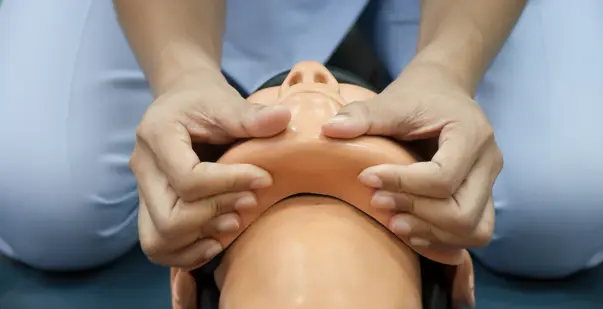
In basic life support (BLS), what organ receives direct support?
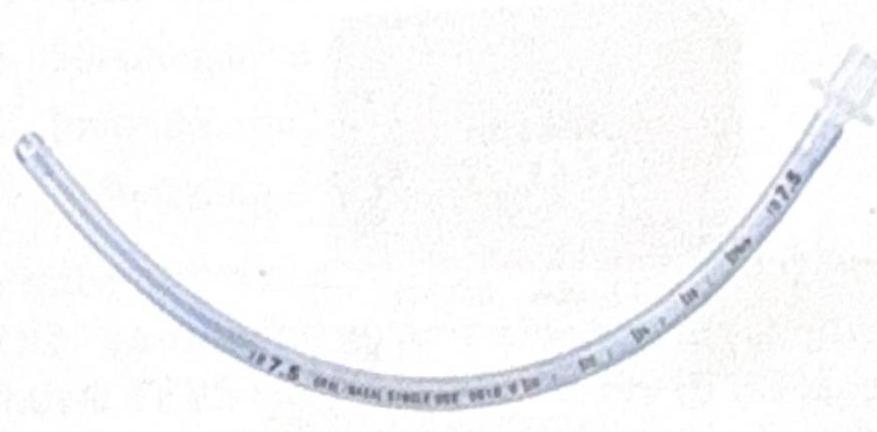
What is the purpose of the bevel on the proximal tip of an endotracheal tube?
Which intravenous anaesthetic can be used for upper airway manipulation in the absence of neuromuscular blockers?
A very high Positive End-Expiratory Pressure (PEEP) results in which of the following?
Which of the following anesthetic agents can be safely used in a patient with asthma?
Which of the following is NOT an indication for one-lung ventilation?
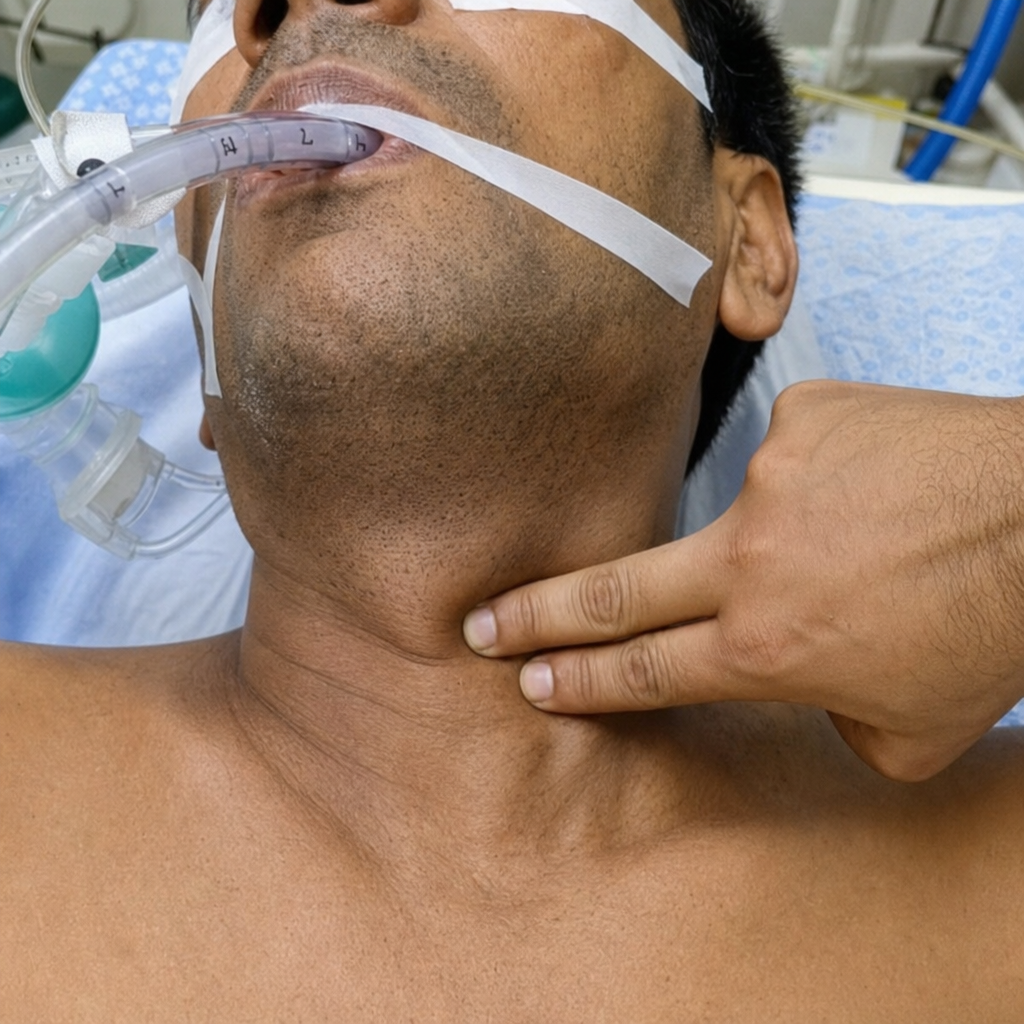
Blind nasal intubation is indicated in which of the following conditions?
Which muscle relaxant can be used as an alternative to succinylcholine for endotracheal intubation?
By which hand should a right-handed person hold the laryngoscope for intubation?
An asthmatic patient is posted for elective hernia repair. Which of the following inhalational anesthetic agents is preferred for induction?
Explanation: **Explanation:** In Basic Life Support (BLS), the primary objective is to maintain oxygenation and circulation to vital organs during cardiac or respiratory arrest. The correct answer is **Lung** because BLS provides **direct mechanical support** to the respiratory system through rescue breaths (ventilation) and the maintenance of a patent airway. While chest compressions are performed, they act as an external substitute for the heart's pumping action, but the lungs are the organs directly "supported" to ensure gas exchange occurs, providing the oxygen necessary for the heart and brain to survive. **Analysis of Options:** * **Heart (Option B):** While BLS aims to restore cardiac output, chest compressions provide *indirect* circulatory support. The heart is the "target" of the resuscitation, but the lungs receive the direct intervention of ventilation. * **Kidney (Option C):** The kidneys are peripheral organs. While they benefit from the systemic perfusion maintained during BLS, they do not receive direct mechanical or ventilatory support. * **Skeletal Muscle (Option D):** These are non-vital during an acute arrest scenario and receive no specific support during BLS protocols. **Clinical Pearls for NEET-PG:** * **CAB Sequence:** Current AHA guidelines emphasize **C-A-B** (Compressions, Airway, Breathing) to minimize delays in starting compressions. * **Compression Depth:** 2–2.4 inches (5–6 cm) in adults. * **Compression Rate:** 100–120 per minute. * **Ventilation:** In a 30:2 ratio (one-rescuer), each breath should be delivered over 1 second, ensuring visible chest rise. * **High-Yield Fact:** The most common cause of airway obstruction in an unconscious patient is the **tongue**; the "Head Tilt-Chin Lift" is the primary maneuver to correct this.
Explanation: ### Explanation The **bevel** is the slanted opening at the distal (patient) end of an endotracheal tube (ETT). Its primary purpose is to **facilitate passage through the vocal cords** by providing a tapered point that improves visibility and allows the tube to glide more easily through the glottic opening. **1. Why Option A is Correct:** The bevel is typically left-facing. This design allows the clinician to maintain a better line of sight of the vocal cords during laryngoscopy. The slanted tip acts as a wedge, making it easier to navigate the narrowest part of the upper airway (the rima glottidis) without causing significant trauma. **2. Why Other Options are Incorrect:** * **Option B:** While preventing occlusion is a critical safety feature, this is specifically the function of the **Murphy Eye** (a side hole located opposite the bevel). If the bevel tip rests against the tracheal wall, the Murphy Eye provides an alternate pathway for gas flow. * **Option C:** High-pressure ventilation is a function of the tube’s internal diameter and the seal created by the **cuff**, not the shape of the tip. * **Option D:** Since B and C are incorrect, "All of the above" is invalid. **High-Yield Clinical Pearls for NEET-PG:** * **Murphy Eye:** Its presence distinguishes a "Murphy Tube" from a "Magill Tube" (which lacks the eye). * **Bevel Orientation:** Standard ETTs have a **left-facing bevel**. This is designed to optimize the view when using a Macintosh laryngoscope (which displaces the tongue to the left). * **Tube Material:** Most modern ETTs are made of **Polyvinyl Chloride (PVC)**, which is disposable and thermosoftening. * **Vocal Cord Marker:** A black line proximal to the cuff helps the clinician ensure the tube is placed at the correct depth (usually 21 cm for females and 23 cm for males at the corner of the mouth).
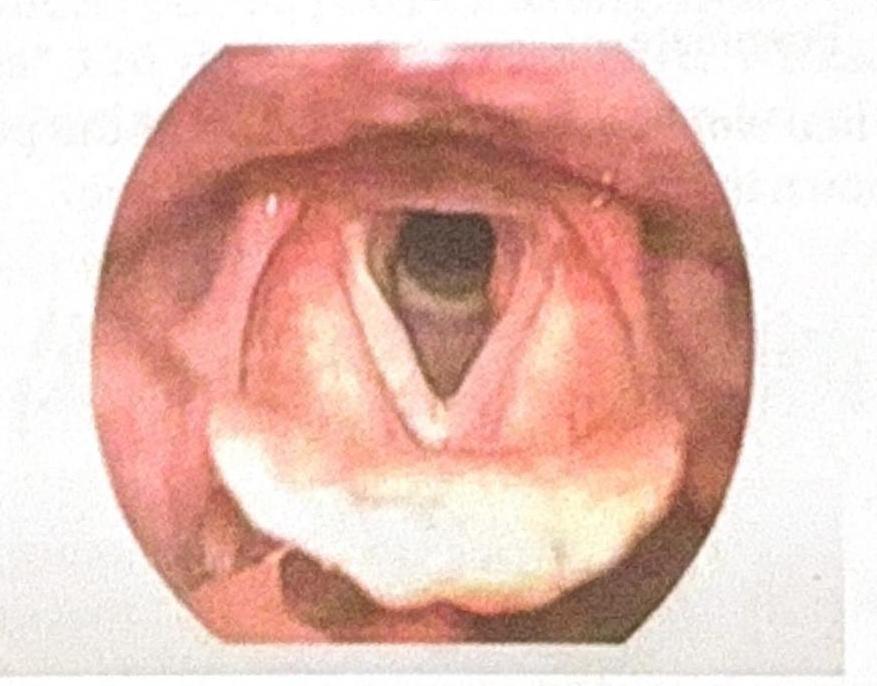
Explanation: **Explanation:** The correct answer is **Propofol**. **Why Propofol is correct:** Propofol is the drug of choice for upper airway manipulations (like Laryngeal Mask Airway insertion or bronchoscopy) when neuromuscular blockers are not used. This is because Propofol significantly **depresses the upper airway reflexes** (pharyngeal and laryngeal reflexes) to a greater extent than other induction agents. This profound suppression allows for easier instrumentation of the airway without causing gagging, coughing, or laryngospasm. **Why other options are incorrect:** * **Thiopentone:** It does not suppress airway reflexes effectively. In fact, it may lead to "light" anesthesia where airway manipulation can trigger severe **laryngospasm**. * **Etomidate:** It maintains hemodynamic stability but has a minimal effect on suppressing airway reflexes. It is also associated with myoclonus, which can interfere with airway management. * **Ketamine:** It is known for **preserving upper airway reflexes** and increasing secretions (sialorrhea). Attempting airway manipulation under ketamine alone often triggers protective reflexes, making it unsuitable for this purpose. **High-Yield Clinical Pearls for NEET-PG:** * **Drug of choice for LMA insertion:** Propofol. * **Drug of choice for Day Care Surgery:** Propofol (due to rapid recovery and anti-emetic properties). * **Antiemetic effect:** Propofol has intrinsic anti-emetic properties (at doses of 10–20 mg). * **Pain on injection:** A common side effect of Propofol and Etomidate; can be reduced by using larger veins or pre-treatment with Lidocaine. * **Contraindication:** Avoid Propofol in patients with egg or soy allergy (due to the lipid emulsion vehicle).
Explanation: **Explanation:** The correct answer is **Hypotension**. **Mechanism of Action:** Positive End-Expiratory Pressure (PEEP) maintains airway pressure above atmospheric pressure at the end of expiration. While beneficial for recruitment of alveoli and improving oxygenation, high levels of PEEP significantly impact hemodynamics through **heart-lung interactions**: 1. **Increased Intrathoracic Pressure:** High PEEP increases the pressure within the chest cavity. 2. **Decreased Venous Return:** This pressure compresses the superior and inferior vena cava, reducing the preload (venous return) to the right atrium. 3. **Reduced Cardiac Output:** A decrease in preload leads to a decrease in stroke volume and overall cardiac output, manifesting clinically as **hypotension**. 4. **Right Ventricular Afterload:** High PEEP can also increase pulmonary vascular resistance, further straining the right heart. **Analysis of Incorrect Options:** * **A. Hypertension:** PEEP typically decreases blood pressure; it does not cause hypertension. * **B & D. Hypothermia/Hyperthermia:** PEEP is a mechanical ventilation setting and does not directly influence the body’s thermoregulatory center or core temperature. **Clinical Pearls for NEET-PG:** * **Zone 3 to Zone 1:** High PEEP can convert West Zone 3 (well-perfused) areas of the lung into Zone 1 (dead space), increasing the V/Q mismatch. * **Barotrauma:** Excessive PEEP increases the risk of alveolar rupture, leading to pneumothorax or subcutaneous emphysema. * **Auto-PEEP:** Also known as "intrinsic PEEP," this occurs in COPD/Asthma patients when there is insufficient expiratory time, leading to air trapping and similar hemodynamic instability. * **Standard PEEP:** Physiological PEEP is usually **5 cm H₂O**, used to prevent micro-atelectasis in intubated patients.
Explanation: **Explanation:** The primary goal in the anesthetic management of an asthmatic patient is to avoid bronchospasm and provide bronchodilation. **Why Ketamine is the Correct Answer:** Ketamine is the induction agent of choice for patients with asthma or reactive airway disease. It possesses potent **bronchodilatory properties** mediated through two mechanisms: 1. **Sympathomimetic effect:** It increases the release of endogenous catecholamines, which stimulate $\beta_2$ receptors. 2. **Direct smooth muscle relaxation:** It has a direct relaxant effect on the bronchial smooth muscle. Additionally, it maintains functional residual capacity (FRC) and does not typically suppress the respiratory drive as significantly as other agents. **Analysis of Incorrect Options:** * **Thiopentone:** It is generally **contraindicated** in asthma. It can cause histamine release and may lead to life-threatening bronchospasm, especially if the airway is manipulated during light planes of anesthesia. * **Etomidate:** While hemodynamically stable, it has no bronchodilatory properties. It is also associated with myoclonus and adrenocortical suppression. * **Propofol:** While Propofol is actually a good choice for asthmatics (it is a bronchodilator and suppresses airway reflexes), **Ketamine is superior** in an acute setting or for patients with active wheezing due to its active sympathomimetic bronchodilation. In many MCQ formats, Ketamine is the "most correct" classical answer. **High-Yield NEET-PG Pearls:** * **Drug of Choice for Induction in Asthma:** Ketamine. * **Inhalational Agent of Choice:** Sevoflurane (least pungent, potent bronchodilator). * **Avoid:** Desflurane (pungent, can cause airway irritation) and Morphine (histamine release). * **Pre-medication:** Glycopyrrolate is preferred over Atropine to reduce secretions without causing significant tachycardia.
Explanation: **Explanation:** One-lung ventilation (OLV) is the physiological and mechanical separation of the two lungs to allow independent ventilation of one lung while the other is collapsed. The indications for OLV are broadly categorized into **Absolute** and **Relative** indications. **Why Cardiac Surgery is the correct answer:** Standard cardiac surgery (such as CABG or valve replacement) is typically performed via a **median sternotomy**. In this approach, both lungs are retracted but remain within the same pleural space, and the patient is usually placed on Cardiopulmonary Bypass (CPB). OLV is not required for access. However, if cardiac surgery is performed via a lateral thoracotomy (e.g., minimally invasive mitral valve repair), OLV may be used, but it is not a standard indication compared to the other options. **Analysis of other options:** * **Bronchopleural Fistula (Absolute Indication):** OLV is mandatory to prevent the loss of tidal volume through the low-resistance fistula tract and to maintain adequate PEEP in the healthy lung. * **Massive Hemorrhage (Absolute Indication):** OLV is essential to protect the healthy lung from "soiling" or cross-contamination of blood from the affected lung, which could lead to asphyxiation. * **Video-Assisted Thoracoscopy (Relative Indication):** OLV is required to collapse the lung on the operative side to provide a still, quiet surgical field and adequate visualization for the surgeon. **Clinical Pearls for NEET-PG:** * **Absolute Indications:** Protection of a healthy lung (hemorrhage, abscess), controlling the distribution of ventilation (Bronchopleural fistula, giant bullae), and unilateral lung lavage. * **Most common device:** The **Double-Lumen Tube (DLT)** is the gold standard for OLV. The left-sided DLT is preferred in most cases due to the ease of placement and lower risk of upper lobe obstruction. * **Confirmation:** The "Gold Standard" for confirming the position of a DLT is **Fiberoptic Bronchoscopy**.
Explanation: **Explanation:** **1. Why Option A is Correct:** Blind Nasal Intubation (BNI) is a technique used when direct laryngoscopy is impossible due to restricted mouth opening. In **Temporomandibular Joint (TMJ) Ankylosis**, there is a physical fusion of the joint leading to "false" or "true" lockjaw. Since the patient cannot open their mouth to allow a laryngoscope blade or even a fiberoptic scope (if the gap is too narrow), BNI serves as a classic alternative. It relies on spontaneous breathing and listening for breath sounds through the tube to guide it into the glottis. **2. Why Other Options are Incorrect:** * **B. Cervical Spondylitis:** The primary concern here is neck extension. While BNI can be done, the gold standard for a stable neck is **Fiberoptic Intubation (FOI)**. BNI often requires some neck manipulation (sniffing position) to align the axes, which may be contraindicated. * **C. Fracture of the Mandible:** Mandibular fractures often involve intraoral bleeding, edema, or unstable bone fragments. Blind instrumentation can worsen the injury or cause airway obstruction. * **D. Traumatic Quadriplegia:** Similar to cervical spondylitis, these patients have unstable cervical spines. Blind maneuvers are risky; **Manual In-Line Stabilization (MILS)** with Video Laryngoscopy or Fiberoptic Intubation is preferred to prevent secondary spinal cord injury. **3. High-Yield Clinical Pearls for NEET-PG:** * **Prerequisite:** The patient **must be breathing spontaneously** for BNI to be successful (to hear the "whistling" breath sounds). * **Contraindications:** Basal skull fractures (risk of intracranial tube placement), nasal polyps, and coagulopathy. * **Signs of successful placement:** Sudden loss of breath sounds (esophageal) vs. loud tubular breath sounds and fogging (tracheal). * **Drug of choice:** Often performed under topical anesthesia or "awake" to maintain airway reflexes.
Explanation: **Explanation:** The primary reason **Succinylcholine** is the gold standard for rapid sequence induction is its **rapid onset** (60 seconds) and **ultra-short duration of action** (5–10 minutes). When seeking an alternative, we look for a Non-Depolarizing Neuromuscular Blocker (NDNMB) that most closely mimics these pharmacokinetic properties. **Why Mivacurium is the correct answer:** Mivacurium is the only NDNMB classified as **short-acting**. Like succinylcholine, it is metabolized by **plasma cholinesterase (pseudocholinesterase)**. While its onset is slightly slower than succinylcholine (approx. 2–3 minutes), its duration of action is relatively short (15–20 minutes), making it the most suitable alternative among the options for short procedures or difficult airway scenarios where rapid recovery of spontaneous ventilation is desired. **Analysis of Incorrect Options:** * **Atracurium:** An intermediate-acting agent. While unique for its metabolism via **Hofmann elimination** (useful in liver/renal failure), its duration (30–45 mins) is too long to be a direct substitute for the ultra-short profile of succinylcholine. * **Pancuronium:** A **long-acting** agent (60–90 mins). It is rarely used for routine intubation now due to its slow onset and prolonged blockade. * **Vecuronium:** An intermediate-acting agent. It lacks the rapid metabolism seen with Mivacurium or Succinylcholine. **High-Yield Clinical Pearls for NEET-PG:** * **Rocunorium** (at a dose of 1.2 mg/kg) is actually the *clinical* drug of choice as an alternative to succinylcholine for **Rapid Sequence Induction (RSI)** because its onset matches succinylcholine (60s), though its duration is much longer. * **Mivacurium** is notable for causing significant **histamine release** if injected rapidly. * Patients with **Pseudocholinesterase deficiency** will experience prolonged paralysis with both Succinylcholine and Mivacurium.
Explanation: **Explanation:** In clinical anesthesia, the standard technique for direct laryngoscopy dictates that the **laryngoscope must always be held in the left hand**, regardless of the clinician's dominant hand. **Why the Left Hand is Correct:** The design of the standard Macintosh and Miller laryngoscope blades is asymmetrical. The flange (the vertical part of the blade) is positioned on the left side to displace the tongue to the left, creating a clear line of sight to the glottis. By holding the scope in the left hand, the **right hand remains free** to perform the more delicate task of navigating the endotracheal tube (ETT) through the vocal cords, applying cricoid pressure (Sellick’s maneuver), or using a stylet/bougie. **Why Other Options are Incorrect:** * **Right hand:** If the laryngoscope were held in the right hand, the blade's flange would obstruct the view, and the clinician would have to use their non-dominant (left) hand for the high-precision task of tube placement. * **Either hand:** Standard equipment is not ambidextrous. Using the right hand would violate the ergonomic design of the blade and impede the intubation process. **High-Yield Clinical Pearls for NEET-PG:** * **The "Left-to-Right" Rule:** Always enter the right side of the mouth and sweep the tongue to the left. * **Force Direction:** The lifting force should be directed upward and forward (at a 45-degree angle) toward the intersection of the ceiling and the opposite wall. **Never pivot** the blade against the upper incisors (prevents dental trauma). * **Positioning:** The "Sniffing Position" (flexion of the lower cervical spine and extension of the atlanto-occipital joint) is the gold standard for aligning the oral, pharyngeal, and laryngeal axes.
Explanation: **Explanation:** The primary goal in the anesthetic management of an asthmatic patient is to avoid airway irritation and bronchospasm. **Sevoflurane** is the preferred inhalational agent for induction in these patients due to its unique pharmacological profile. **Why Sevoflurane is Correct:** 1. **Bronchodilation:** Sevoflurane is a potent bronchodilator, which helps counteract airway hyper-reactivity. 2. **Non-pungency:** It has a pleasant odor and is non-irritating to the respiratory mucosa. This allows for a smooth "gas induction" without triggering coughing, breath-holding, or laryngospasm, which are common precursors to bronchospasm in asthmatics. **Analysis of Incorrect Options:** * **Desflurane:** It is highly pungent and a known airway irritant. It can trigger coughing and increase airway resistance, making it contraindicated for inhalation induction in patients with reactive airway disease. * **Isoflurane:** While it has bronchodilatory properties, it is moderately pungent. It is generally avoided for induction because it can cause airway irritation, though it is safe for maintenance of anesthesia. * **Enflurane:** It is less commonly used today and is more irritating to the airway compared to Sevoflurane. **High-Yield Clinical Pearls for NEET-PG:** * **Drug of Choice for Induction (Asthma):** Sevoflurane (Inhalational) or Propofol (Intravenous). * **Ketamine:** The preferred IV induction agent in hemodynamically unstable asthmatics due to its sympathomimetic, bronchodilatory effects. * **Avoid:** Thiopentone (can cause histamine release) and Desflurane (airway irritant). * **Pre-medication:** Anticholinergics (like Glycopyrrolate) can be used to reduce secretions and provide mild bronchodilation.
Respiratory Physiology
Practice Questions
Airway Anatomy
Practice Questions
Preoxygenation Techniques
Practice Questions
Mask Ventilation
Practice Questions
Supraglottic Airway Devices
Practice Questions
Direct Laryngoscopy
Practice Questions
Video Laryngoscopy
Practice Questions
Fiberoptic Intubation
Practice Questions
Surgical Airway Management
Practice Questions
One-Lung Ventilation Techniques
Practice Questions
Ventilation Strategies During Anesthesia
Practice Questions
Extubation Criteria and Techniques
Practice Questions
Get full access to all questions, explanations, and performance tracking.
Start For Free