Mallampati classification is done for what purpose?
Hyperbaric oxygen therapy is indicated for which of the following conditions?
What is the recommended position of an endotracheal tube in the trachea?
The severe bronchospasm associated with rapacuronium is caused by which mechanism?
Which of the following general anesthetic techniques is most appropriate for anesthesia in oral surgery?
What is an advantage of nasotracheal intubation in an emergency road traffic accident situation?
A 42-year-old patient presents to the emergency department with difficulty in breathing, 7 months after discharge from the burns unit. On examination, O2 saturation was decreasing to 80%, respiratory rate was 20/min, and blood pressure was 110/74 mmHg. Local examination of the neck revealed post-burn contracture with restricted neck extension. What is the ideal method of intubation in this case?
Respiratory irritation is seen with which of the following anesthetics?
The Mallampati test is used for assessing which of the following?
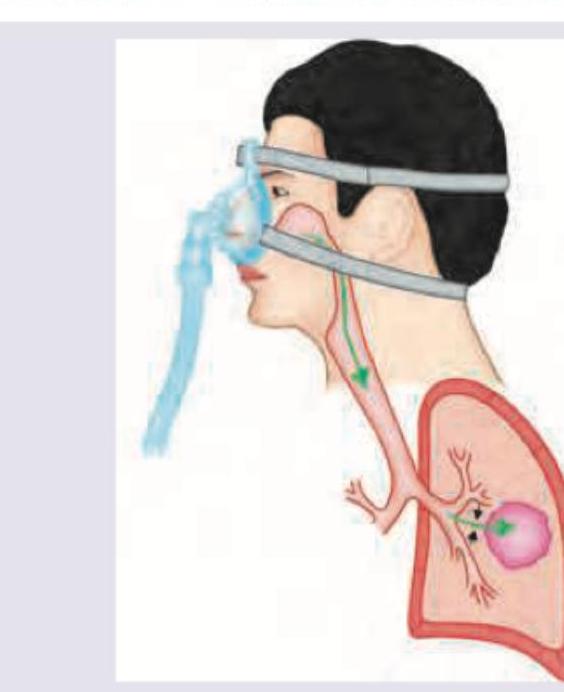
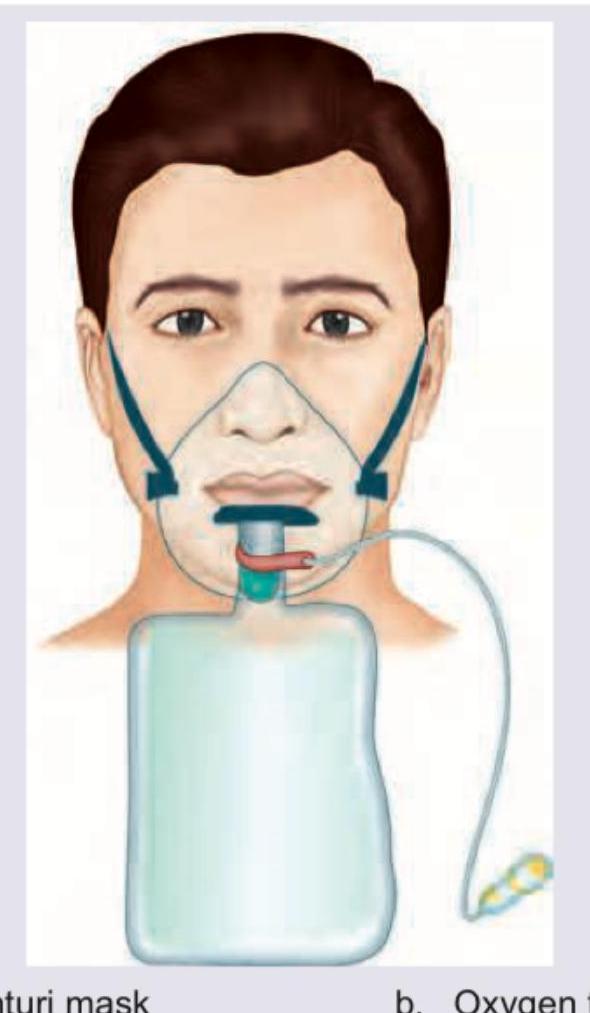
Which of the following is a method of non-invasive positive pressure ventilation?
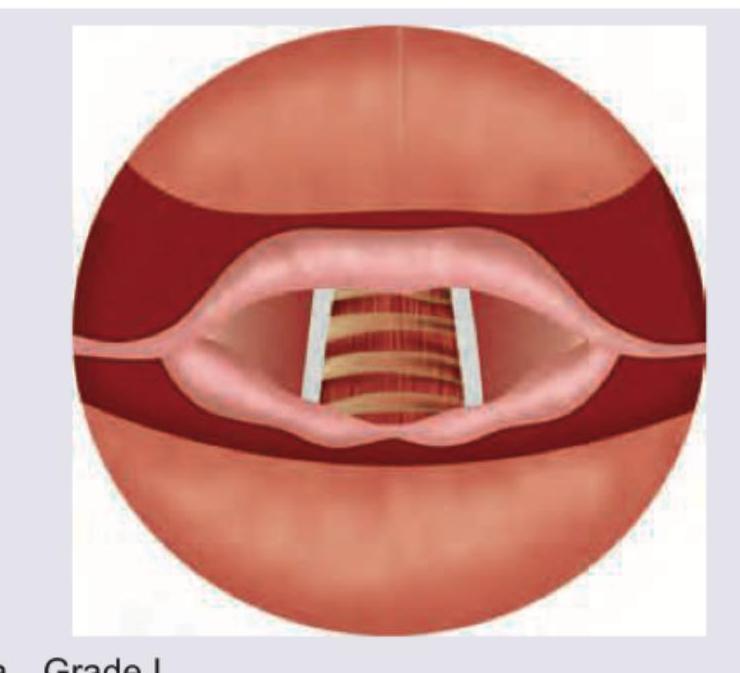
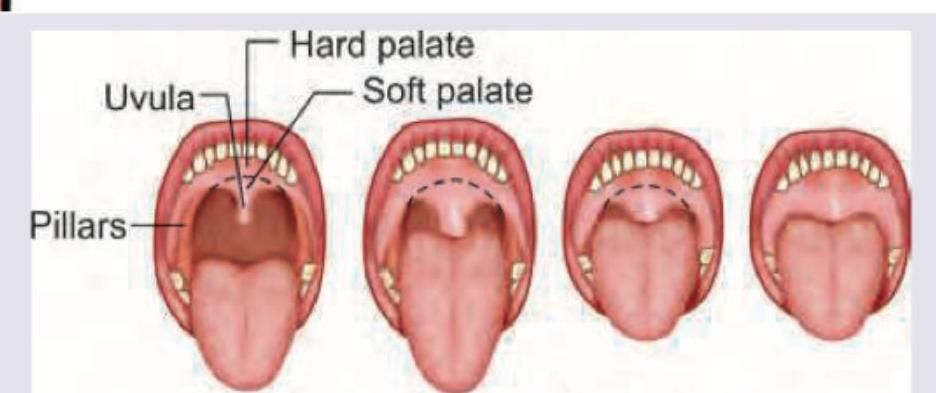
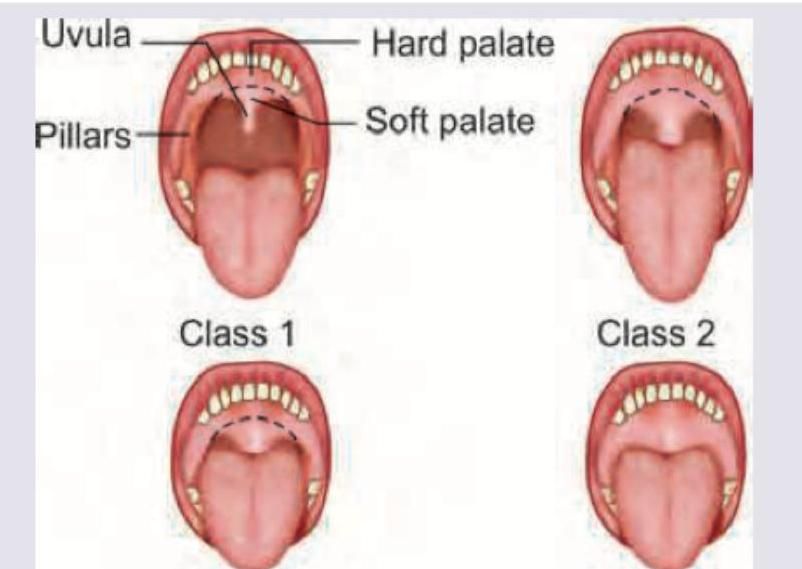
Explanation: **Explanation:** The **Mallampati Classification** is a clinical screening tool used to predict the ease of endotracheal intubation. It is based on the anatomical relationship between the size of the tongue and the structures of the oral cavity (specifically the oropharynx). By asking a seated patient to open their mouth wide and protrude the tongue without phonating, the clinician assesses how much the tongue obscures the view of the faucial pillars, soft palate, and uvula. A larger tongue relative to the oral cavity (higher Mallampati class) suggests a potentially difficult airway. **Analysis of Options:** * **Option C (Correct):** It directly assesses the visibility of structures within the **oral cavity** to predict the difficulty of laryngoscopy and intubation. * **Option A:** Neck mobility is assessed via the **atlanto-occipital joint extension**, not Mallampati. * **Option B:** While it indirectly relates to space, "size of the airway" is a vague term. Mallampati specifically looks at the **proportionality** of the tongue to the oral cavity. * **Option D:** The size of the endotracheal tube is determined by the patient’s age, sex, and laryngeal anatomy (cricoid ring), not by the visibility of the oropharynx. **High-Yield Clinical Pearls for NEET-PG:** * **Modified Mallampati Classification (Samsoon & Young):** * **Class I:** Soft palate, fauces, uvula, pillars visible. * **Class II:** Soft palate, fauces, portion of uvula visible. * **Class III:** Soft palate and base of uvula visible. * **Class IV:** Only hard palate visible. * **Predicting Difficult Airway:** Classes III and IV are associated with difficult laryngoscopy (Cormack-Lehane Grade 3 or 4). * **LEMON Criteria:** Mallampati is the 'M' in the LEMON mnemonic for difficult airway assessment (Look, Evaluate 3-3-2, Mallampati, Obstruction, Neck mobility).
Explanation: **Explanation:** Hyperbaric Oxygen Therapy (HBOT) involves breathing 100% oxygen at atmospheric pressures greater than 1 atmosphere (usually 2 to 3 ATA). This increases the amount of oxygen dissolved in the plasma (Henry’s Law), which is the underlying mechanism for its therapeutic effects. * **Carbon Monoxide (CO) Poisoning:** HBOT is the treatment of choice. It drastically reduces the half-life of carboxyhemoglobin (from 300 minutes on room air to ~20 minutes at 3 ATA) and helps prevent delayed neurological sequelae by displacing CO from hemoglobin and cytochrome oxidase. * **Caisson Disease (Decompression Sickness):** HBOT reduces the volume of nitrogen bubbles in the blood and tissues (Boyle’s Law) and establishes a favorable diffusion gradient to accelerate the elimination of inert gases. * **Gas Gangrene (Clostridial Myonecrosis):** *Clostridium perfringens* is an obligate anaerobe. HBOT inhibits bacterial toxin production, stops bacterial growth, and improves the phagocytic activity of white blood cells in ischemic tissues. **Clinical Pearls for NEET-PG:** * **Absolute Contraindication:** Untreated tension pneumothorax (due to the risk of rapid expansion during decompression). * **Most Common Side Effect:** Middle ear barotrauma (due to inability to equalize pressure). * **Other Indications:** Air/gas embolism, refractory osteomyelitis, necrotizing soft tissue infections, and non-healing diabetic foot ulcers. * **Paul Bert Effect:** Central Nervous System oxygen toxicity (seizures) occurring at high pressures (>3 ATA). * **Lorrain Smith Effect:** Pulmonary oxygen toxicity due to prolonged exposure.
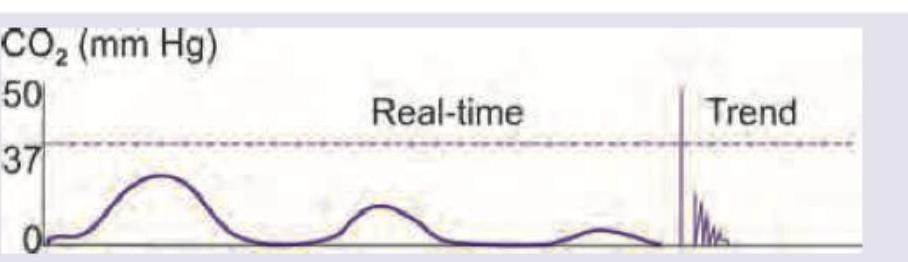
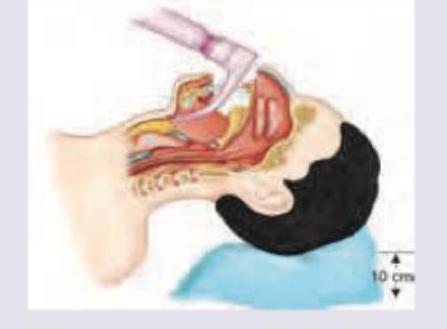
Explanation: ### Explanation The ideal position for the tip of an endotracheal tube (ETT) is **3–4 cm above the carina** in an adult. This position is considered the "safe zone" because it accounts for the dynamic movement of the tube during neck flexion and extension. **Why Option A is correct:** The trachea is approximately 10–12 cm long. Placing the tip 3–4 cm above the carina ensures that the tube remains within the tracheal lumen during head movements. When the neck is **flexed** (chin to chest), the tube moves **caudad** (towards the carina) by up to 2 cm. Conversely, when the neck is **extended**, the tube moves **cephalad** (away from the carina) by up to 2 cm. A 3–4 cm buffer prevents accidental endobronchial intubation or unplanned extubation. **Why other options are incorrect:** * **Option B (On the carina):** Placing the tube at the carina carries a high risk of **right mainstem bronchus intubation**, leading to collapse of the left lung and potential barotrauma to the right lung. * **Option C (Midway in the trachea):** While safer than the carina, "midway" is less precise. In clinical practice, we aim for a specific distance (usually the T2-T4 vertebral level on X-ray) to ensure the cuff is well below the vocal cords but far from the carina. * **Option D (At the cricoid cartilage):** This is too high. The cuff would likely be at the level of the vocal cords, risking laryngeal trauma and inadequate seal (vocal cord palsy or air leak). **High-Yield NEET-PG Pearls:** 1. **Rule of Thumb:** In adults, the average depth of insertion is **21 cm for females** and **23 cm for males** (measured at the teeth/lips). 2. **Pediatric Formula:** For children >2 years, depth (cm) = **(Age/2) + 12**. 3. **Gold Standard for Confirmation:** Persistent detection of **EtCO₂** (Capnography) for 5–6 breaths. 4. **Chest X-ray:** The ETT tip should ideally be at the level of the **T3 or T4 vertebra**.
Explanation: **Explanation:** Rapacuronium, a non-depolarizing neuromuscular blocking agent (NMBA), was withdrawn from the market primarily due to its association with severe, life-threatening bronchospasm. **Mechanism of the Correct Answer:** The bronchospasm is mediated by the drug’s selective **antagonism of M2 muscarinic receptors** located on the pre-junctional parasympathetic nerve endings in the lungs. Normally, these M2 receptors act as an "off-switch" (negative feedback), inhibiting the further release of acetylcholine (ACh). By blocking these M2 receptors, rapacuronium causes an excessive, unregulated release of ACh. This excess ACh then acts on the **M3 muscarinic receptors** on the bronchial smooth muscle, leading to profound bronchoconstriction. Thus, the bronchospasm is due to the **unopposed action of M3 receptors.** **Analysis of Incorrect Options:** * **Option A & B:** While many NMBAs (like atracurium or mivacurium) cause bronchospasm via IgE-mediated allergy or direct histamine release from mast cells, rapacuronium-induced bronchospasm is unique because it occurs via a **non-histaminergic, muscarinic mechanism.** * **Option D:** Rapacuronium **blocks** (antagonizes) M2 receptors rather than activating them. Activation of M2 receptors would actually decrease ACh release and prevent bronchospasm. **High-Yield Clinical Pearls for NEET-PG:** * **Rapacuronium:** A rapid-onset, short-acting steroid NMBA (similar to rocuronium) that was withdrawn in 2001. * **M2 vs. M3:** Remember, **M2 is Pre-junctional** (Inhibitory) and **M3 is Post-junctional** (Excitatory/Bronchoconstriction). * **Drug of Choice for Bronchospasm in Anesthesia:** Ketamine (due to its sympathomimetic bronchodilatory effects) or Sevoflurane. * **Safest NMBA in Asthma:** Vecuronium or Cisatracurium (minimal histamine release).
Explanation: **Explanation:** The primary challenge in oral surgery is the **sharing of the airway** between the surgeon and the anesthesiologist. The correct answer is **Nasoendotracheal tube with throat pack** for the following reasons: 1. **Airway Protection & Access:** Nasotracheal intubation removes the breathing tube from the oral cavity, providing the surgeon with an unobstructed field. 2. **Prevention of Aspiration:** Oral surgeries involve blood, secretions, and bone debris. A **throat pack** (moistened gauze placed in the oropharynx) acts as a physical barrier, preventing these materials from entering the trachea or esophagus, thereby reducing the risk of aspiration and postoperative nausea/vomiting (PONV). 3. **Controlled Ventilation:** Endotracheal intubation ensures a definitive airway, allowing for positive pressure ventilation and precise delivery of volatile anesthetics. **Analysis of Incorrect Options:** * **Open drop method:** An obsolete technique (e.g., Schimmelbusch mask) that provides no airway protection and leads to significant environmental pollution. * **Nasopharyngeal airway:** While it maintains patency, it does not protect the lungs from aspiration of blood or surgical debris. * **Intravenous anesthesia with $N_2O/O_2$:** Without a cuffed tube, the airway remains unprotected. $N_2O$ is an inhalational agent, not intravenous; this option is pharmacologically inconsistent. **High-Yield Clinical Pearls for NEET-PG:** * **Throat Pack Safety:** Always document the insertion and removal of the throat pack. A "forgotten" pack is a classic cause of postoperative airway obstruction. * **Contraindication:** Nasal intubation is contraindicated in patients with suspected **basal skull fractures** (risk of intracranial entry) or severe coagulopathy. * **Magill Forceps:** These are specifically used to guide the nasotracheal tube into the laryngeal inlet under direct vision.
Explanation: **Explanation:** Nasotracheal intubation involves passing an endotracheal tube through the nose into the trachea. While it is less commonly used in emergency settings than orotracheal intubation, it offers specific advantages in long-term management and specific trauma scenarios. **Why Option A is Correct:** The primary advantage of nasotracheal intubation is that it leaves the oral cavity unobstructed. This **facilitates superior oral hygiene**, allows for easier inspection of the mouth, and permits dental or oropharyngeal procedures. In trauma patients who may require prolonged ventilation, maintaining oral hygiene is crucial to prevent secondary complications like stomatitis. **Analysis of Incorrect Options:** * **Option B:** Nasotracheal intubation is actually associated with a **higher risk of infection**, specifically paranasal sinusitis, due to the obstruction of sinus drainage. * **Option C:** It is more likely to cause **mucosal damage and epistaxis** (bleeding) because the tube must pass through the narrow, vascularized nasal turbinates. * **Option D:** Nasotracheal tubes are generally **more stable** and less prone to accidental displacement or "pistoning" compared to oral tubes, as they are wedged within the nasal anatomy. **High-Yield Clinical Pearls for NEET-PG:** * **Contraindications:** Nasotracheal intubation is strictly **contraindicated in base of skull fractures** (risk of intracranial entry) and severe mid-face (Le Fort) fractures. * **Tube Size:** A nasotracheal tube is typically 0.5 to 1.0 mm smaller in internal diameter than an equivalent oral tube. * **Blind Nasal Intubation:** Can be performed in breathing patients but is avoided in apneic or head-injured patients. * **Vasoconstriction:** Topical phenylephrine or xylometazoline is used prior to insertion to minimize bleeding.
Explanation: ### **Explanation** The patient presents with a **difficult airway** due to **post-burn contracture (PBC)** of the neck. This condition leads to restricted neck extension and limited thyromental distance, making conventional direct laryngoscopy (sniffing position) impossible. **1. Why Fiberoptic Intubation (FOI) is the Correct Answer:** Awake Fiberoptic Intubation is the **gold standard** for managing an anticipated difficult airway where neck mobility is severely restricted. It allows for visualization of the glottis and placement of the endotracheal tube without requiring neck extension or alignment of the oral, pharyngeal, and laryngeal axes. Since the patient is currently hypoxic (SpO2 80%), maintaining spontaneous ventilation while securing the airway is the safest approach. **2. Why Other Options are Incorrect:** * **Laryngeal Mask Airway (LMA):** While an LMA can be a rescue device, it does not provide a definitive airway (protection against aspiration) and may be difficult to insert if the contracture also limits mouth opening. * **Nasal Intubation after IV Induction:** Intravenous induction (giving muscle relaxants/sedatives) in a patient with a known difficult airway is dangerous. If intubation fails, the patient cannot be ventilated ("Cannot Intubate, Cannot Ventilate" scenario), leading to cardiac arrest. * **Tracheostomy:** This is a surgical airway. While it is the final step in the difficult airway algorithm, it is invasive and technically challenging in PBC due to distorted anatomy and scarred overlying skin. FOI is the preferred non-invasive "Plan A." ### **Clinical Pearls for NEET-PG:** * **Difficult Airway Predictors:** Restricted neck extension, Mallampati Class III/IV, and thyromental distance <6 cm. * **Post-Burn Contracture:** Always suspect a difficult airway. The primary challenge is the inability to achieve the **"Sniffing Position."** * **Gold Standard:** For anticipated difficult airways where the patient is breathing spontaneously, **Awake Fiberoptic Intubation** is the technique of choice.
Explanation: **Explanation:** The correct answer is **Trichloroethylene (Trilene)**. **1. Why Trichloroethylene is correct:** Trichloroethylene is a potent analgesic but is known for being a significant **respiratory irritant**. When used, it can cause tachypnea (rapid breathing) and irritation of the upper respiratory tract. A critical high-yield fact regarding Trichloroethylene is its interaction with **soda lime** (used in closed circuits). It reacts with soda lime to form **dichloroacetylene** and **phosgene**, which are highly neurotoxic (causing cranial nerve palsies, especially the trigeminal nerve) and extremely irritating to the lungs. **2. Analysis of Incorrect Options:** * **Ether:** While Ether is pungent and can cause secretions, it is primarily known as a potent bronchodilator. In historical context, it was used for induction, but Trichloroethylene is more specifically associated with direct irritant properties in MCQ contexts. * **Halothane:** This is a **non-irritant** volatile anesthetic. It has a pleasant smell and causes potent bronchodilation, making it the historical gold standard for smooth inhalational induction in pediatric patients. * **Cyclopropane:** This gas is non-irritating to the airways. Its primary clinical concerns were its extreme flammability and its tendency to cause "cyclopropane shock" (hypotension post-discontinuation) and arrhythmias. **3. Clinical Pearls for NEET-PG:** * **Most Irritant Inhalational Agents:** Desflurane and Isoflurane (can cause coughing/laryngospasm during induction). * **Least Irritant (Best for Induction):** Halothane and Sevoflurane. * **Trichloroethylene Contraindication:** Must **never** be used in a closed circuit with CO2 absorbers (soda lime). * **Neurotoxicity:** Trichloroethylene is classically associated with **Trigeminal Nerve (CN V) palsy**.
Explanation: **Explanation:** The **Mallampati Classification** is a bedside clinical assessment tool used to predict the ease of endotracheal intubation. It specifically evaluates the **size of the tongue relative to the oral cavity**. When the tongue is disproportionately large compared to the oropharyngeal space, it obscures the view of the faucial pillars and uvula, suggesting that it will likely obscure the laryngeal view during direct laryngoscopy (a high Cormack-Lehane grade). * **Option A (Correct):** The test is performed with the patient sitting upright, head in a neutral position, mouth opened maximally, and tongue protruded without phonation. It correlates the visible oropharyngeal structures with the potential difficulty of the airway. * **Option B & C (Incorrect):** These refer to **atlanto-occipital joint mobility**. While neck extension is crucial for aligning the oral, pharyngeal, and laryngeal axes (the "sniffing position"), it is assessed via the "Upper Lip Bite Test" or by measuring the degrees of neck flexion/extension, not the Mallampati score. * **Option D (Incorrect):** Endotracheal tube size is typically determined by age (in pediatrics) or laryngeal diameter/height (in adults), not by oropharyngeal visualization. **High-Yield Clinical Pearls for NEET-PG:** * **Modified Mallampati Classification (Samsoon & Young):** * **Class I:** Soft palate, fauces, uvula, pillars visible. * **Class II:** Soft palate, fauces, portion of uvula visible. * **Class III:** Soft palate and base of uvula visible. * **Class IV:** Only hard palate visible (highest risk of difficult intubation). * **Pnemonic:** Mallampati Class **III and IV** are clinically significant predictors of a **difficult airway**. * **Thyromental Distance:** Another key predictor; a distance **< 6 cm** (3 fingerbreadths) suggests a difficult airway.
Explanation: **Explanation:** **1. Why CPAP is Correct:** **Continuous Positive Airway Pressure (CPAP)** is a form of Non-Invasive Positive Pressure Ventilation (NIPPV). It provides a constant level of positive pressure throughout the entire respiratory cycle (both inspiration and expiration) in a spontaneously breathing patient. It is "non-invasive" because it is delivered via an external interface, such as a tight-fitting face mask, nasal mask, or helmet, rather than an endotracheal tube or tracheostomy. CPAP works by increasing functional residual capacity (FRC) and keeping alveoli open, making it the gold standard for Obstructive Sleep Apnea (OSA) and acute cardiogenic pulmonary edema. **2. Why Other Options are Incorrect:** * **CMV (Controlled Mechanical Ventilation):** This is a mode of **invasive** ventilation where the ventilator delivers a preset tidal volume or pressure at a fixed rate, regardless of the patient's effort. It requires an artificial airway (endotracheal tube). * **IMV (Intermittent Mandatory Ventilation):** This is an **invasive** mode that allows patients to take spontaneous breaths between ventilator-delivered mandatory breaths. * **SLMV:** This is not a standard recognized mode of ventilation in clinical practice (likely a distractor). **3. Clinical Pearls for NEET-PG:** * **NIPPV Types:** The two primary types are **CPAP** (single pressure level) and **BiPAP** (Bilevel Positive Airway Pressure – provides different pressures for inspiration [IPAP] and expiration [EPAP]). * **Indications for NIPPV:** Acute exacerbation of COPD (BiPAP is first-line), cardiogenic pulmonary edema, and weaning from invasive ventilation. * **Contraindications:** Cardiac or respiratory arrest, facial trauma/burns, high risk of aspiration, and inability to protect the airway. * **High-Yield Fact:** The most common complication of NIPPV is local skin necrosis/pressure sores at the bridge of the nose.
Respiratory Physiology
Practice Questions
Airway Anatomy
Practice Questions
Preoxygenation Techniques
Practice Questions
Mask Ventilation
Practice Questions
Supraglottic Airway Devices
Practice Questions
Direct Laryngoscopy
Practice Questions
Video Laryngoscopy
Practice Questions
Fiberoptic Intubation
Practice Questions
Surgical Airway Management
Practice Questions
One-Lung Ventilation Techniques
Practice Questions
Ventilation Strategies During Anesthesia
Practice Questions
Extubation Criteria and Techniques
Practice Questions
Get full access to all questions, explanations, and performance tracking.
Start For Free