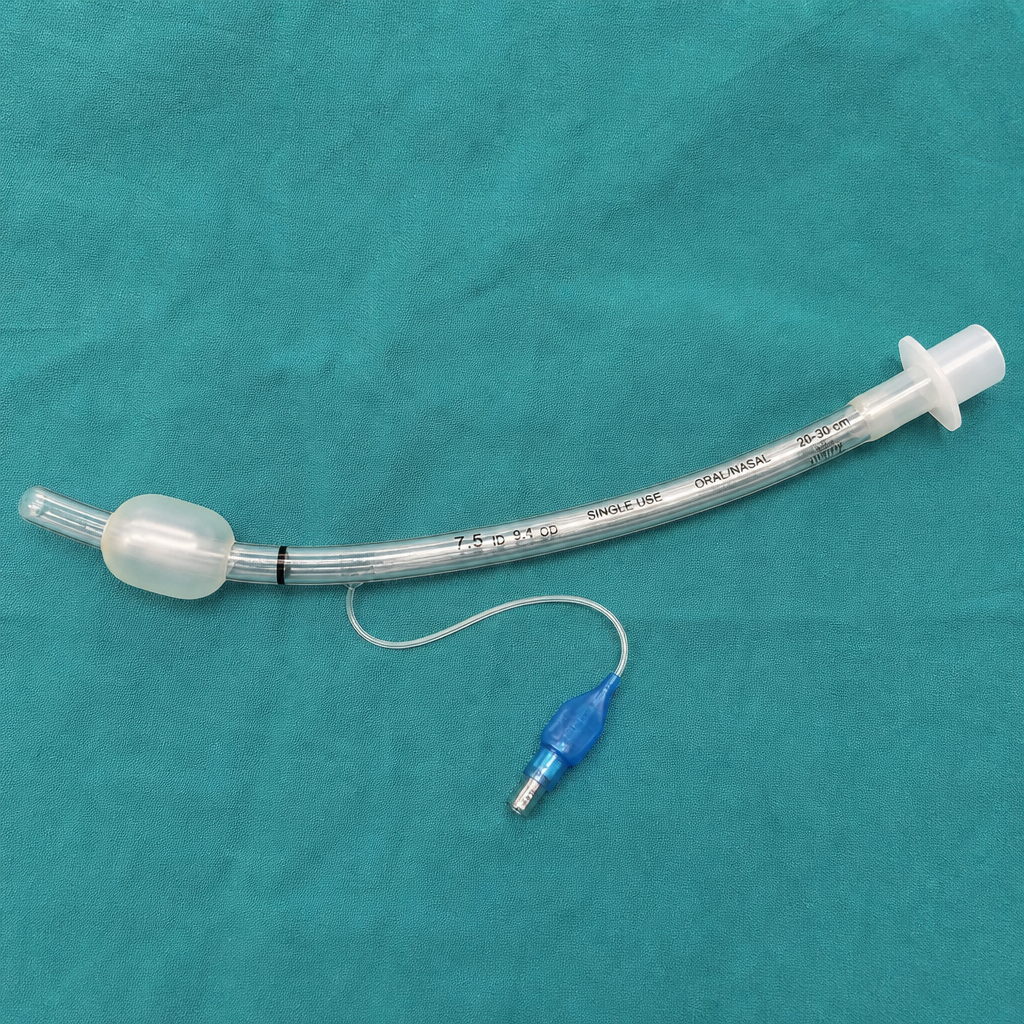
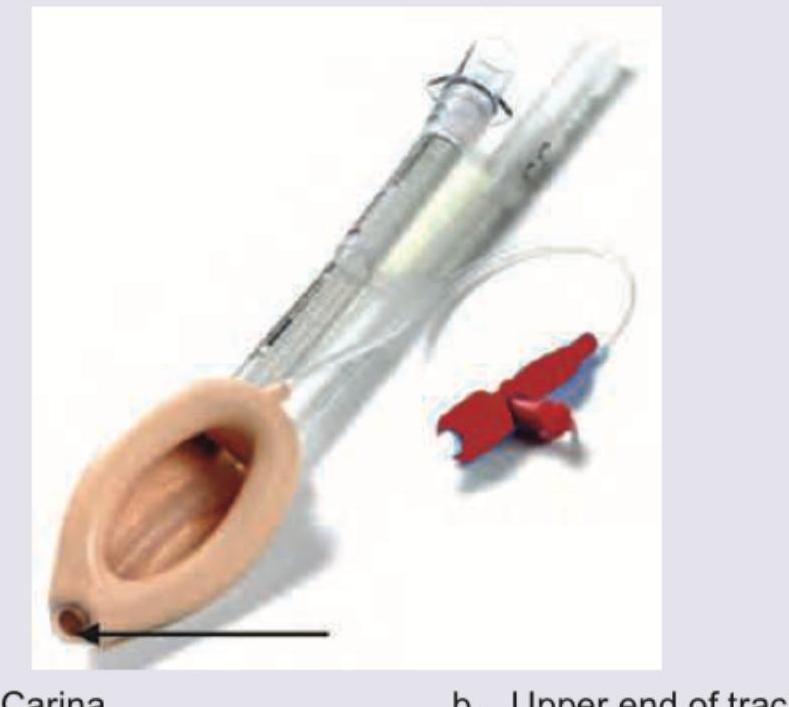
Dead space is increased by all except?
Which of the following is a pure control mode of ventilation?
What is the recommended ratio of chest compressions to rescue breaths for a lone rescuer performing CPR on a patient of any age?
All of the following are relative contraindications for the use of a nasopharyngeal airway adjunct, except:
Which of the following conditions requires a higher Positive End-Expiratory Pressure (PEEP) for recruiting collapsed alveoli?
Arterial blood gas (ABG) sampling can be performed from all of the following arteries EXCEPT:
Laryngeal spasm induced during intubation can be prevented by the following drugs except?
All are true about pressure control ventilation except-
What is the most important determinant of carbon dioxide elimination?
Which of the following is NOT an advantage of using a laryngeal mask airway?
Explanation: ### Explanation The correct answer is **D. Endotracheal intubation**. **1. Why Endotracheal Intubation is the Correct Answer:** Dead space refers to the volume of inspired air that does not participate in gas exchange. In a healthy adult, the **Anatomical Dead Space** (volume of the conducting airways) is approximately 150 ml (2 ml/kg). Endotracheal intubation involves placing a tube directly into the trachea, effectively bypassing the upper airway (nose, pharynx, and larynx). Since the volume of the endotracheal tube is significantly less than the volume of the upper airway it replaces, **endotracheal intubation decreases anatomical dead space** by approximately 30-50%. **2. Analysis of Incorrect Options:** * **Anticholinergic drugs (e.g., Atropine, Glycopyrrolate):** These drugs cause bronchodilation. By increasing the caliber of the conducting airways, they increase the volume of the anatomical dead space. * **Standing:** In the upright position, gravity leads to increased perfusion at the lung bases and decreased perfusion at the apices. This creates areas of high ventilation-perfusion (V/Q) ratio at the apices, thereby increasing **Physiological Dead Space**. * **Hyperextension of the neck:** This physical maneuver stretches and widens the upper airway structures, leading to a measurable increase in anatomical dead space. **3. Clinical Pearls for NEET-PG:** * **Formula:** Physiological Dead Space = Anatomical Dead Space + Alveolar Dead Space. * **Bohr’s Equation:** Used to measure physiological dead space ($Vd/Vt = (PaCO_2 - PeCO_2) / PaCO_2$). * **Factors decreasing dead space:** Endotracheal intubation, tracheostomy, and the supine position. * **Factors increasing dead space:** Age (due to loss of elastic recoil), PE (Pulmonary Embolism), emphysema, and positive pressure ventilation (PPV).
Explanation: **Explanation:** In mechanical ventilation, modes are classified based on who initiates the breath (trigger) and who does the work. A **pure control mode** is one where the ventilator has full control over the timing and delivery of breaths; the patient cannot trigger additional breaths or influence the flow. **Why Pressure Control Ventilation (PCV) is correct:** In PCV, the clinician sets a fixed inspiratory pressure, a set respiratory rate, and a fixed inspiratory time. The ventilator delivers breaths at these predetermined intervals regardless of the patient’s effort. While modern ventilators allow for "Assist-Control," in its classic definition, PCV is a mandatory, time-triggered mode where the machine performs all the work of breathing. **Analysis of Incorrect Options:** * **A. Pressure Support Ventilation (PSV):** This is a **spontaneous mode**. The patient must initiate every breath (patient-triggered). The ventilator only provides a pressure boost to decrease the work of breathing. * **B. Synchronized Intermittent Mandatory Ventilation (SIMV):** This is a **hybrid mode**. It delivers a set number of mandatory breaths but allows the patient to take spontaneous breaths in between. It "synchronizes" with the patient's effort to prevent breath stacking. * **D. Continuous Positive Airway Pressure (CPAP):** This is **not a true ventilation mode** but a pressure setting. The patient performs 100% of the work of breathing; the machine simply maintains a constant baseline pressure to keep alveoli open. **High-Yield Clinical Pearls for NEET-PG:** * **Control Variable:** In PCV, pressure is constant, but **tidal volume varies** based on lung compliance and airway resistance. * **Inverse Ratio Ventilation (IRV):** Often used in ARDS, this is typically a form of Pressure Control where the inspiratory time is longer than the expiratory time. * **Best mode for weaning:** Pressure Support Ventilation (PSV) is the most common mode used to assess a patient's readiness for extubation.
Explanation: **Explanation:** The correct answer is **30:2**. According to the American Heart Association (AHA) and International Liaison Committee on Resuscitation (ILCOR) guidelines, a compression-to-ventilation ratio of **30:2** is recommended for **lone rescuers** across all age groups (adults, children, and infants, excluding neonates). This ratio optimizes coronary perfusion pressure by minimizing interruptions in chest compressions while providing adequate oxygenation. **Analysis of Options:** * **Option A (30:2):** Correct. This is the universal ratio for single-rescuer CPR to ensure high-quality compressions and reduce the "no-flow" time. * **Option B (15:2):** This ratio is used for **two-rescuer CPR in children and infants** (to account for their higher respiratory requirements) but is not used for lone rescuers or adults. * **Option C (3:1):** This is the specific ratio used in **Neonatal Resuscitation** (90 compressions and 30 breaths per minute) because respiratory failure is the primary cause of neonatal arrest. * **Option D (30:1):** This is not a standard recommended ratio in any current basic or advanced life support guidelines. **Clinical Pearls for NEET-PG:** * **Compression Depth:** 2–2.4 inches (5–6 cm) in adults; at least 1/3rd the AP diameter of the chest in pediatrics. * **Compression Rate:** 100–120 compressions per minute. * **Hand Placement:** Lower half of the sternum. * **Advanced Airway:** Once an endotracheal tube or supraglottic airway is in place, compressions are continuous (100–120/min) with asynchronous breaths every 6 seconds (10 breaths/min). * **Chest Recoil:** Allow complete chest recoil to ensure adequate venous return and cardiac filling.
Explanation: The **Nasopharyngeal Airway (NPA)** is a soft, flexible tube inserted through the nostril to maintain airway patency by bypasssing the tongue. Understanding its contraindications is crucial for NEET-PG, as it involves the risk of intracranial placement. ### **Explanation of the Correct Answer** **Option C (Ethmoidal fracture)** is the correct answer because it is considered an **absolute contraindication**, not a relative one. When the ethmoid bone (specifically the cribriform plate) is fractured, there is a direct communication between the nasal cavity and the anterior cranial fossa. Inserting an NPA in this scenario carries a high risk of accidental **intracranial insertion**, which can lead to brain parenchymal injury, infection, or CSF leak. ### **Analysis of Incorrect Options** * **Option A (Nasoethmoidal fracture):** This involves the complex where the nose meets the ethmoid bone. While it suggests potential cribriform injury, in clinical practice, if the fracture is isolated to the external nasal-ethmoidal complex without dural tear, it is often categorized as a relative contraindication depending on the severity and clinical judgment. * **Option B (Nasal fracture):** This is a **relative contraindication**. While a fractured nose may cause obstruction, mucosal tearing, or epistaxis upon insertion, it does not pose the same catastrophic risk of intracranial entry as a base-of-skull fracture. ### **Clinical Pearls for NEET-PG** * **Measurement:** The correct size of an NPA is determined by measuring the distance from the **tip of the nose to the tragus of the ear**. * **Absolute Contraindications:** Basilar skull fractures (Battle’s sign, Raccoon eyes, CSF rhinorrhea) and suspected cribriform plate fractures. * **Complications:** The most common complication of NPA insertion is **epistaxis** (nosebleed). * **Preference:** NPAs are better tolerated than Oropharyngeal Airways (OPA) in conscious or semi-conscious patients with an intact gag reflex.
Explanation: **Explanation:** **Acute Respiratory Distress Syndrome (ARDS)** is the correct answer because it is characterized by **diffuse alveolar collapse (atelectasis)**, decreased lung compliance, and intrapulmonary shunting. In ARDS, the primary pathology involves inflammatory exudates and loss of surfactant, leading to "sticky" alveoli that collapse at the end of expiration. **Positive End-Expiratory Pressure (PEEP)** is the cornerstone of management as it provides constant pressure to keep these alveoli open (recruitment), increases the Functional Residual Capacity (FRC), and improves oxygenation by reducing the shunt. **Why the other options are incorrect:** * **Asthma and Emphysema (COPD):** These are obstructive airway diseases characterized by **air trapping** and "Auto-PEEP." Adding high external PEEP can worsen dynamic hyperinflation, increase intrathoracic pressure, and lead to barotrauma or hemodynamic instability. * **Bronchiectasis:** This involves permanent dilation of the bronchi and chronic infection. While it may require bronchial hygiene and oxygen, it is not a primary "restrictive/collapsible" alveolar pathology requiring high PEEP for recruitment. **High-Yield Clinical Pearls for NEET-PG:** * **ARDS Ventilation Strategy:** Use **Low Tidal Volume (6 mL/kg)** and **High PEEP** (Open Lung Approach) to prevent Ventilator-Induced Lung Injury (VILI). * **Goal of PEEP:** To shift the pressure-volume curve above the **Lower Inflection Point** to prevent cyclic alveolar collapse and re-opening (atelectrauma). * **Side Effects of High PEEP:** Decreased venous return (reduced cardiac output) and risk of pneumothorax.
Explanation: **Explanation:** Arterial Blood Gas (ABG) sampling is a critical procedure for assessing a patient's oxygenation, ventilation, and acid-base status. While several peripheral arteries can be used, the selection depends on accessibility and the presence of collateral circulation to prevent distal ischemia. **Why Option C is the Correct Answer:** In the context of standard clinical practice and examination patterns, the **Dorsalis pedis artery** is considered the least preferred or "incorrect" choice among the options provided. While it *can* technically be used in specific scenarios (like pediatrics or when other sites are unavailable), it is generally avoided because it is a small-caliber vessel, often difficult to palpate in patients with peripheral vascular disease, and has a higher risk of thrombosis compared to larger vessels. *Note: In some clinical textbooks, the ulnar artery is also listed as a secondary site, but the Dorsalis pedis is frequently the "distractor" in NEET-PG questions regarding standard ABG sites.* **Analysis of Incorrect Options:** * **A. Radial Artery:** The most common and preferred site due to its superficial location and the presence of collateral flow from the ulnar artery (verified by the **Modified Allen’s Test**). * **B. Ulnar Artery:** A valid site for sampling, though usually reserved if the radial artery is inaccessible. * **D. Femoral Artery:** The preferred site in emergency or "crash" situations (hypovolemia/shock) because it is a large-bore vessel and often the only palpable pulse in a low-flow state. **High-Yield Clinical Pearls for NEET-PG:** * **Modified Allen’s Test:** Must be performed before radial artery puncture to ensure ulnar collateral circulation. A refill time of **<7 seconds** is normal. * **Complications:** Hematoma is the most common complication; thrombosis and nerve injury are the most serious. * **Heparinization:** Use a pre-heparinized syringe or flush with 1:1000 heparin to prevent clotting, ensuring excess heparin is expelled to avoid falsely lowering the $pCO_2$ and $pH$. * **Air Bubbles:** Must be removed immediately as they can falsely elevate $pO_2$ and decrease $pCO_2$.
Explanation: **Explanation:** Laryngospasm is a protective but potentially life-threatening reflex closure of the vocal cords mediated by the superior laryngeal nerve (afferent) and recurrent laryngeal nerve (efferent). It is typically triggered by sensory stimulation of the upper airway during light planes of anesthesia. **Why Rofecoxib is the correct answer:** Rofecoxib is a selective **COX-2 inhibitor (NSAID)** used primarily for analgesia and reducing inflammation. It has no immediate effect on airway reflexes, neuromuscular transmission, or the autonomic nervous system. Therefore, it cannot acutely prevent or treat a laryngospasm during the induction of anesthesia. **Analysis of other options:** * **Fentanyl:** As an opioid, it provides potent analgesia and suppresses airway reflexes, making the patient more tolerant of the endotracheal tube and reducing the risk of spasm. * **Local anesthetic spray (e.g., Lidocaine):** Topical application desensitizes the laryngeal mucosa, blocking the afferent limb of the reflex arc. Intravenous lidocaine (1–1.5 mg/kg) is also a standard pharmacological intervention to prevent/treat laryngospasm. * **Diltiazem:** Calcium channel blockers (CCBs) like Diltiazem can attenuate the pressor response to intubation and have a mild inhibitory effect on smooth muscle and reflex-mediated airway constriction. While not a primary treatment, they contribute to blunting the sympathetic and reflex responses during airway manipulation. **High-Yield Clinical Pearls for NEET-PG:** * **Management of Laryngospasm:** The first step is removing the stimulus and providing 100% Oxygen with continuous positive airway pressure (CPAP). * **Drug of Choice:** **Succinylcholine** (0.25–0.5 mg/kg IV) is the gold standard for breaking a severe laryngospasm that does not respond to manual maneuvers. * **Larson’s Maneuver:** Application of firm pressure at the "laryngospasm notch" (behind the earlobe) can help break the spasm.
Explanation: In **Pressure Control Ventilation (PCV)**, the ventilator delivers a breath until a preset pressure limit is reached and maintains that pressure for a set inspiratory time. ### Why Option B is the Correct Answer (The "Except") In PCV, the flow pattern is **decelerating**, not accelerating. At the start of inspiration, the pressure gradient between the ventilator and the lungs is highest, resulting in a high initial flow. As the lungs fill and alveolar pressure approaches the set limit, the flow rate **decreases (decelerates)** to maintain the constant pressure. An accelerating flow is not a standard feature of conventional mechanical ventilation modes. ### Explanation of Incorrect Options * **A. The desired inflation pressure is preselected:** This is the defining feature of PCV. The clinician sets the Peak Inspiratory Pressure (PIP). * **C. Tidal volume can be variable:** Since pressure is fixed, the delivered Tidal Volume ($V_t$) depends on the patient's **lung compliance** and **airway resistance**. If compliance decreases (e.g., ARDS), the $V_t$ will drop. * **D. Alveolar pressure is fixed:** In PCV, the pressure waveform is "square" or "constant." The ventilator ensures that the pressure remains at the set level throughout the inspiratory phase, effectively capping the alveolar pressure and reducing the risk of barotrauma. ### High-Yield Clinical Pearls for NEET-PG * **Flow Waveforms:** PCV uses a **decelerating (ramp)** flow, while Volume Control Ventilation (VCV) typically uses a **constant (square)** flow. * **Safety:** PCV is preferred in patients with low lung compliance (e.g., ARDS) to prevent barotrauma, as it limits peak airway pressure. * **Main Disadvantage:** The primary risk in PCV is **hypoventilation** if lung compliance worsens or the patient bites the tube, as the $V_t$ is not guaranteed.
Explanation: ### Explanation The elimination of carbon dioxide ($CO_2$) in an anesthesia breathing circuit depends primarily on the **Fresh Gas Flow (FGF)** and the efficiency of the $CO_2$ absorber. In the context of Mapleson breathing systems (semi-open circuits), FGF is the single most important determinant for preventing rebreathing and ensuring $CO_2$ elimination. **Why Fresh Gas Flow is Correct:** In Mapleson circuits, the FGF "washes out" the exhaled gases (rich in $CO_2$) from the circuit before the next inspiration. If the FGF is inadequate, the patient rebreathes exhaled $CO_2$, leading to hypercapnia. For example, in a Mapleson A circuit during spontaneous respiration, the FGF must equal the minute ventilation to prevent rebreathing. **Analysis of Incorrect Options:** * **Minute Ventilation (MV):** While MV (Tidal Volume × Respiratory Rate) determines $CO_2$ removal from the *alveoli* to the circuit, it does not guarantee elimination from the *breathing system*. Without adequate FGF, increasing MV will simply cause the patient to rebreathe more $CO_2$. * **Expiratory Reserve Volume (ERV):** This is the maximum volume of air that can be exhaled after a normal tidal expiration. It relates to lung capacity but does not govern the mechanical elimination of $CO_2$ from a circuit. * **Vital Capacity (VC):** This is the maximum amount of air a person can expel from the lungs after a maximum inhalation. It is a measure of pulmonary reserve, not a determinant of gas exchange efficiency during anesthesia. **High-Yield Clinical Pearls for NEET-PG:** * **Mapleson A (Magill):** Most efficient for **Spontaneous** ventilation (FGF = MV). * **Mapleson D (Bain’s):** Most efficient for **Controlled** ventilation. * **Dead Space:** The volume of the circuit between the patient and the Y-piece (or point of FGF intake) where gas exchange does not occur. * **Soda Lime:** Used in circle systems to chemically eliminate $CO_2$, allowing for lower FGF.
Explanation: **Explanation:** The **Laryngeal Mask Airway (LMA)** is a supraglottic airway device that sits above the glottis. The correct answer is **B (Prevents aspiration)** because the LMA does not form a definitive, fluid-tight seal with the trachea. Unlike an endotracheal tube (ETT), which has a cuff below the vocal cords to protect the lungs from gastric contents, the LMA is a "low-pressure" seal. Therefore, it is **contraindicated in patients at high risk for aspiration** (e.g., full stomach, obesity, or hiatus hernia). **Analysis of Incorrect Options:** * **A. Easy to insert:** This is a major advantage. LMA insertion is less technically demanding than endotracheal intubation and has a high first-attempt success rate, even for non-anesthesiologists. * **C. Does not require muscle relaxant:** Unlike ETT, which often requires neuromuscular blockade for laryngoscopy and tube placement, an LMA can be inserted under deep sedation or volatile anesthesia alone. * **D. Can be used with cervical injuries:** Since LMA insertion does not require "sniffing position" or neck extension (unlike direct laryngoscopy), it is an excellent choice for managing the airway in patients with suspected or confirmed cervical spine instability. **High-Yield Pearls for NEET-PG:** * **Gold Standard for Aspiration Protection:** Endotracheal Intubation (Cuffed). * **LMA Pro-Seal:** A modified LMA with a gastric drain tube that offers *better* (but not absolute) protection against aspiration compared to the LMA Classic. * **Difficult Airway Algorithm:** The LMA is a key "rescue device" when one "cannot ventilate, cannot intubate." * **Pressure Limit:** Avoid peak airway pressures >20 cm H₂O with a standard LMA to prevent gastric insufflation.
Respiratory Physiology
Practice Questions
Airway Anatomy
Practice Questions
Preoxygenation Techniques
Practice Questions
Mask Ventilation
Practice Questions
Supraglottic Airway Devices
Practice Questions
Direct Laryngoscopy
Practice Questions
Video Laryngoscopy
Practice Questions
Fiberoptic Intubation
Practice Questions
Surgical Airway Management
Practice Questions
One-Lung Ventilation Techniques
Practice Questions
Ventilation Strategies During Anesthesia
Practice Questions
Extubation Criteria and Techniques
Practice Questions
Get full access to all questions, explanations, and performance tracking.
Start For Free