What is the concentration of lignocaine typically used for topical anesthesia?
Why is the effect of local anesthesia slow in infected tissues?
Which local anesthetic, other than lignocaine without vasoconstriction, is indicated in a hyperthyroid patient?
Convulsions following an overdose of local anesthesia are best treated by which of the following?
Adrenaline is added to Lignocaine injection for what purpose?
What is the maximum dose of lidocaine as a local anesthetic?
Allergic reactions to amide-linked anesthetics are:
Which local anesthetic is commonly used for nasal surgery?
Which group of nerve fibers are least susceptible to local anesthesia?
Which of the following local anesthetics has the lowest pKa value?
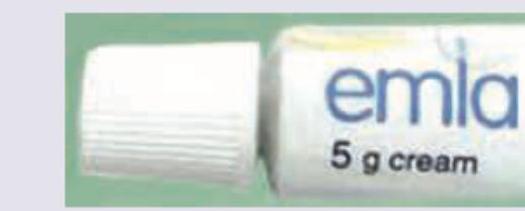
Explanation: Lignocaine (Lidocaine) is the most versatile and widely used local anesthetic in clinical practice. For **topical (surface) anesthesia**, higher concentrations are required compared to infiltration because the drug must penetrate mucous membranes or skin to reach nerve endings. ### **Explanation of Options** * **Correct Answer (B) 2-10%:** This range covers the standard clinical preparations used for various surfaces. Common formulations include **2% jelly** (used for urethral lubrication/catheterization), **4% solution** (used for topical airway anesthesia or nebulization), and **10% spray** (commonly used in dentistry or prior to endoscopy/intubation). * **Option A (2%):** While 2% is a common concentration for jellies and infiltration, it does not represent the full range of topical applications, particularly the higher concentrations needed for rapid mucosal onset (like the 10% spray). * **Options C & D (7-15%):** These concentrations are generally too high for routine topical use and increase the risk of systemic toxicity (LAST) due to rapid absorption through vascular mucous membranes. ### **High-Yield Clinical Pearls for NEET-PG** 1. **Mechanism:** Lignocaine works by blocking voltage-gated **sodium (Na+) channels** in the inactivated state. 2. **Maximum Dose:** * Plain Lignocaine: **3 mg/kg** * With Adrenaline (1:200,000): **7 mg/kg** 3. **Onset & Duration:** It has a rapid onset (2–5 mins) and intermediate duration (30–60 mins). 4. **EMLA Cream:** A eutectic mixture of **2.5% Lignocaine and 2.5% Prilocaine**, used for topical anesthesia of intact skin (requires 60 minutes of contact time). 5. **Toxicity:** Early signs of toxicity include perioral numbness and metallic taste; severe toxicity leads to seizures and cardiovascular collapse. Treatment of choice is **20% Intralipid**.
Explanation: ### Explanation The efficacy of local anesthetics (LAs) is heavily dependent on the **pH of the tissue**. Most local anesthetics are weak bases, existing in a chemical equilibrium between a **non-ionized (lipid-soluble)** form and an **ionized (water-soluble)** form. **1. Why Option C is Correct:** According to the Henderson-Hasselbalch equation, in an acidic environment (low pH) typical of infected or inflamed tissues, the equilibrium shifts toward the **ionized form**. Only the non-ionized form can cross the lipid-rich neuronal membrane to reach the intracellular site of action. Because infection lowers the pH, fewer drug molecules can penetrate the nerve sheath, leading to a delayed onset or failure of anesthesia. **2. Why Other Options are Incorrect:** * **Option A:** Infected tissues actually exhibit **increased vascularity** (hyperemia) due to inflammation. This leads to faster systemic absorption and shorter duration of action, rather than a slow onset. * **Option B:** While some LAs (esters) are metabolized by pseudocholinesterase, there is no evidence that infected tissues contain specific enzymes that degrade LAs faster than healthy tissue. * **Option C:** While extracellular $K^+$ levels can fluctuate, the primary mechanism of LA failure in infection is the **pH-dependent ionization** of the drug, not potassium-mediated receptor inhibition. **3. High-Yield Clinical Pearls for NEET-PG:** * **Mechanism of Action:** LAs block voltage-gated $Na^+$ channels from the **inside** of the cell. * **pKa Relationship:** The closer the pKa of a drug is to the tissue pH, the faster the onset (more non-ionized drug available). * **Bicarbonate Addition:** Clinicians sometimes add sodium bicarbonate to LAs to raise the pH, increasing the non-ionized fraction and speeding up the onset of the block. * **Order of Blockade:** Small myelinated fibers > Small unmyelinated fibers > Large myelinated fibers. (Autonomic > Pain > Temperature > Touch > Pressure > Motor).
Explanation: **Explanation:** In hyperthyroid patients, the myocardium is hypersensitive to catecholamines. The use of local anesthetics (LA) containing **epinephrine (adrenaline)** is strictly contraindicated as it can precipitate a thyroid storm, severe hypertension, or arrhythmias. **Why Mepivacaine is the Correct Answer:** Mepivacaine is unique because it possesses **mild intrinsic vasoconstrictive properties**. Unlike most other LAs (like lignocaine or procaine), which are potent vasodilators, mepivacaine does not significantly increase local blood flow. This allows it to provide an adequate duration of action and maintain low systemic toxicity **without the need for added vasoconstrictors** (epinephrine). Therefore, it is the safest alternative for patients where epinephrine is contraindicated, such as those with uncontrolled hyperthyroidism or severe cardiovascular disease. **Analysis of Incorrect Options:** * **Bupivacaine & Ropivacaine:** These are long-acting amides. While they are potent, they are typically used for regional blocks or epidurals. Bupivacaine, in particular, is highly cardiotoxic; if systemic absorption occurs in a hyperdynamic hyperthyroid state, the risk of refractory arrhythmias is high. * **Procaine:** This is an ester-linked LA and a potent vasodilator. Without a vasoconstrictor, it has an extremely short duration of action and a high risk of systemic absorption/toxicity, making it unsuitable for these patients. **High-Yield Clinical Pearls for NEET-PG:** * **Vasoconstrictor of choice:** If a vasoconstrictor must be used in cardiac/thyroid patients, **Felypressin** (a vasopressin analogue) is preferred over epinephrine as it does not affect heart rate or rhythm. * **Lignocaine:** Standard 2% Lignocaine is a vasodilator; it *requires* adrenaline to prolong its effect, making plain Mepivacaine a superior choice in hyperthyroidism. * **Max Dose of Mepivacaine:** 4 mg/kg (plain) and 7 mg/kg (with vasoconstrictor).
Explanation: **Explanation:** Local Anesthetic Systemic Toxicity (LAST) occurs when high plasma concentrations of local anesthetics (LAs) cross the blood-brain barrier, leading to CNS excitation (convulsions) followed by CNS depression. **Why Diazepam is the Correct Choice:** Benzodiazepines, such as **Diazepam** or Midazolam, are the first-line agents for controlling LA-induced seizures. They work by enhancing GABA-mediated inhibition in the CNS, effectively raising the seizure threshold and suppressing the excitatory activity caused by the LA. In modern practice, if seizures are refractory or if cardiovascular collapse is imminent, **Intravenous Lipid Emulsion (20% Intralipid)** is the definitive treatment. **Analysis of Incorrect Options:** * **Droperidol:** A butyrophenone antipsychotic used for PONV. It can lower the seizure threshold and prolong the QT interval, making it inappropriate for seizure management. * **Hydroxyzine:** An H1-receptor antagonist with sedative properties, but it lacks the potent anticonvulsant activity required to stop status epilepticus or LA-induced seizures. * **Fentanyl/Ketamine:** Fentanyl is an opioid (analgesic) and Ketamine is a dissociative anesthetic. Ketamine can actually increase cerebral blood flow and potentially worsen CNS excitation in the context of toxicity. **High-Yield Clinical Pearls for NEET-PG:** * **Early signs of LAST:** Perioral numbness, metallic taste, tinnitus, and lightheadedness. * **Bupivacaine** is the most cardiotoxic LA; it binds tightly to sodium channels ("fast in, slow out" kinetics). * **Management Priority:** 1. Airway/Oxygenation (Hypoxia/Acidosis worsen toxicity), 2. Benzodiazepines (for seizures), 3. **20% Lipid Emulsion** (the specific antidote). * **Avoid:** Vasopressin, Calcium channel blockers, and Local Anesthetics (like Lidocaine) for arrhythmia management during LAST.
Explanation: Lignocaine is a medium-acting local anesthetic (LA) with vasodilator properties. When combined with Adrenaline (usually in a 1:200,000 concentration), it produces several clinical benefits based on the principle of **vasoconstriction**. **Explanation of Options:** * **A. Less bleeding at the site:** Adrenaline acts on $\alpha_1$ receptors in the local blood vessels, causing vasoconstriction. This reduces surgical site bleeding, providing a clearer operative field. * **B. Higher doses can be given:** By constricting local vessels, Adrenaline slows the systemic absorption of Lignocaine. This reduces the peak plasma concentration and the risk of systemic toxicity (LAST), allowing the maximum safe dose to be increased (e.g., from 5 mg/kg to 7 mg/kg). * **C. Prolonged duration of action:** Slower absorption means the drug remains in contact with the nerve fibers for a longer period, significantly extending the duration of the block. Since all three mechanisms occur simultaneously, **Option D** is the correct answer. **High-Yield Clinical Pearls for NEET-PG:** * **Maximum Doses:** Lignocaine plain = 5 mg/kg; Lignocaine with Adrenaline = 7 mg/kg. * **Contraindications:** Adrenaline-containing LAs must **never** be used in areas supplied by end-arteries (fingers, toes, nose, ears, and penis) due to the risk of ischemia and gangrene. * **pH Effect:** Adrenaline is stable only in acidic solutions. Therefore, commercial Lignocaine with Adrenaline has a lower pH, which can cause more "sting" on injection compared to plain Lignocaine. * **Bupivacaine:** Adrenaline does not significantly prolong the duration of Bupivacaine as much as it does for Lignocaine, because Bupivacaine is already highly protein-bound and long-acting.
Explanation: **Explanation:** The maximum recommended dose of Lidocaine (Lignocaine) is determined by whether it is administered alone or in combination with a vasoconstrictor (epinephrine). 1. **Lidocaine Plain:** The maximum dose is **3 mg/kg**, up to a total of **200 mg**. 2. **Lidocaine with Epinephrine (1:200,000):** The addition of epinephrine causes local vasoconstriction, slowing systemic absorption and reducing toxicity. This allows for a higher maximum dose of **7 mg/kg**, up to a total of **500 mg**. In the context of standard NEET-PG questions, when the "maximum dose" is asked without specifying the presence of adrenaline, the higher threshold (500 mg) is generally considered the correct answer as it represents the absolute upper limit of the drug's safe clinical use. **Analysis of Options:** * **A & B (100 mg / 200 mg):** 200 mg is the limit for plain lidocaine, but it is not the absolute maximum dose possible for the drug. * **C (300 mg):** This is the maximum dose for Bupivacaine (with additives) or Prilocaine, but it does not correspond to the lidocaine limit. * **D (500 mg):** Correct. This represents the maximum safe limit when systemic absorption is minimized using epinephrine. **High-Yield Clinical Pearls for NEET-PG:** * **Mechanism:** Blocks voltage-gated Na+ channels from the inside. * **Order of Blockade:** B-fibers (Autonomic) > A-delta & C-fibers (Pain/Temp) > A-gamma/beta (Touch/Pressure) > A-alpha (Motor). * **Toxicity (LAST):** Initial CNS symptoms (perioral numbness, metallic taste, seizures) followed by Cardiovascular collapse. * **Antidote:** 20% Intralipid emulsion is the specific treatment for Local Anesthetic Systemic Toxicity (LAST).
Explanation: **Explanation:** Local anesthetics (LAs) are chemically classified into two groups: **Esters** (e.g., Procaine, Benzocaine) and **Amides** (e.g., Lignocaine, Bupivacaine). **1. Why Option A is Correct:** True allergic reactions to local anesthetics are rare (<1% of all adverse reactions). However, they are significantly **less common with amide-linked anesthetics** compared to esters. The primary reason is that ester anesthetics are derivatives of **Para-aminobenzoic acid (PABA)**. PABA is a known potent allergen that can trigger IgE-mediated type I hypersensitivity or type IV delayed hypersensitivity reactions. Amides do not metabolize into PABA, making them much safer from an immunological standpoint. **2. Why Other Options are Incorrect:** * **Option B:** Incorrect because esters are the more frequent culprits due to the PABA metabolite. * **Option C:** Incorrect because while extremely rare, allergic reactions to amides *can* occur. These are usually attributed to the preservative used in multi-dose vials, such as **Methylparaben**, which is chemically similar to PABA. **High-Yield Clinical Pearls for NEET-PG:** * **Mnemonic:** Amides have two "i"s in their name (L**i**doca**i**ne, Pr**i**loca**i**ne, Bup**i**vaca**i**ne), while Esters have only one (Proca**i**ne, Chloroproca**i**ne). * **Metabolism:** Esters are metabolized by **plasma pseudocholinesterase**; Amides are metabolized by **liver microsomal enzymes** (CYP450). * **Cross-reactivity:** There is no cross-reactivity between the ester and amide groups. If a patient is allergic to an ester, an amide can be safely used. * **Preservative-free:** To minimize risk in a sensitive patient, use "preservative-free" amide preparations (e.g., single-use ampules).
Explanation: **Explanation:** In nasal surgery, the primary goal is to achieve both profound anesthesia of the sensitive nasal mucosa and significant **vasoconstriction** to minimize bleeding in a highly vascular surgical field. * **Cocaine (Option A):** It is unique among local anesthetics because it is the only one that possesses intrinsic **vasoconstrictive properties** (by inhibiting norepinephrine reuptake). In ENT practice, it is commonly used as a 4% solution or paste to provide topical anesthesia and shrink the nasal mucosa, thereby improving visualization and reducing operative hemorrhage. * **Xylocaine (Lidocaine) (Option B):** This is the gold standard local anesthetic for infiltration. While it is a vasodilator on its own, it is almost always used in combination with **Adrenaline (Epinephrine)** for nasal procedures. This combination provides rapid, effective anesthesia and surgical hemostasis. **Why Option C is correct:** Clinical practice frequently involves a "dual approach." Cocaine is used topically for its superior vasoconstriction and mucosal numbing, while Xylocaine (with adrenaline) is used for infiltration to ensure deeper anesthesia of the septum or turbinates. Therefore, both are commonly used. **High-Yield NEET-PG Pearls:** 1. **Mechanism of Cocaine:** Blocks the reuptake of Catecholamines (Norepinephrine) at the nerve endings. 2. **Maximum Dose:** Cocaine (1.5–3 mg/kg); Lidocaine (3 mg/kg plain, 7 mg/kg with adrenaline). 3. **Toxicity:** Cocaine overdose presents with sympathetic overstimulation (hypertension, tachycardia, arrhythmias). 4. **Ester vs. Amide:** Cocaine is an **Ester** (metabolized by plasma pseudocholinesterase); Lidocaine is an **Amide** (metabolized by the liver).
Explanation: **Explanation:** The susceptibility of nerve fibers to local anesthetics (LAs) is determined by fiber diameter, myelination, and the length of the nerve exposed to the drug. **Why Option D is Correct:** According to the **Gasser-Erlanger classification**, nerve fibers are categorized by size and function. **Type C fibers** are the smallest in diameter and are **unmyelinated**. While smaller diameter usually increases sensitivity, the lack of myelin means there are no Nodes of Ranvier to concentrate sodium channels. In clinical practice and in-vivo studies, Type C fibers (carrying slow pain and temperature) are often the **least susceptible** or the last to be blocked compared to myelinated fibers. They require a higher concentration of local anesthetic to achieve a complete conduction block. **Analysis of Incorrect Options:** * **Option A (A-alpha):** These are the largest, heavily myelinated fibers responsible for motor function and proprioception. While they are thick, they are more sensitive than C fibers in certain clinical settings due to the mechanism of saltatory conduction. * **Option B (A-beta):** These are large, myelinated fibers for touch and pressure. They are blocked before A-alpha but after B and Delta fibers. * **Option C (B fibers):** These are small, lightly myelinated preganglionic autonomic fibers. They are the **most susceptible** and the first to be blocked by local anesthetics because they have a small diameter and a thin myelin sheath. **NEET-PG High-Yield Pearls:** 1. **Order of Blockade (Clinical):** B fibers (Autonomic) > A-delta & C (Pain/Temp) > A-beta (Touch) > A-alpha (Motor). 2. **The "3-Node Rule":** For a myelinated fiber to be blocked, at least **three successive Nodes of Ranvier** must be exposed to a critical concentration of the local anesthetic. 3. **Sensitivity Rule:** Generally, smaller diameter and myelination increase sensitivity, but B fibers are the most sensitive, while C fibers are the most resistant to blockade despite being the smallest.
Explanation: **Explanation:** The **pKa** of a local anesthetic (LA) is the pH at which the ionized and non-ionized forms of the drug exist in equal concentrations. Since only the **non-ionized (lipid-soluble) form** can cross the neuronal lipid bilayer, the pKa determines the **onset of action**. The closer the pKa is to the physiological pH (7.4), the higher the concentration of non-ionized base, leading to a faster onset. **1. Why Lignocaine is correct:** Lignocaine has a pKa of **7.9**. Among the options provided, this is the value closest to 7.4. Consequently, a larger fraction of the drug exists in the base form at physiological pH, allowing it to penetrate the nerve membrane rapidly. This makes Lignocaine the gold standard for rapid-onset local anesthesia. **2. Analysis of Incorrect Options:** * **Chloroprocaine (pKa ~8.7-9.1):** It has the highest pKa among common LAs. Despite this, it has a fast onset due to the high concentrations used clinically, but its pKa value itself is high. * **Prilocaine (pKa ~7.9):** While Prilocaine has a pKa similar to Lignocaine (7.9), in standard comparative tables and NEET-PG contexts, Lignocaine is the classic answer for the lowest pKa among common amides. * **Bupivacaine (pKa ~8.1):** It has a higher pKa than Lignocaine, resulting in a slower onset of action. **High-Yield Clinical Pearls for NEET-PG:** * **Onset of Action:** Inversely proportional to pKa (Lower pKa = Faster onset). * **Infected Tissue:** In acidic environments (e.g., abscesses), the fraction of ionized drug increases, which is why LAs are less effective in infected tissues. * **Potency:** Determined by **lipid solubility**. * **Duration of Action:** Determined by **protein binding** (Bupivacaine has high protein binding, hence long duration). * **Mnemonic:** "Amides have two 'i's" (L**i**doca**i**ne, Pr**i**loca**i**ne, Bup**i**vaca**i**ne).
Chemistry and Mechanism of Action
Practice Questions
Pharmacokinetics of Local Anesthetics
Practice Questions
Amide Local Anesthetics
Practice Questions
Ester Local Anesthetics
Practice Questions
Clinical Uses of Local Anesthetics
Practice Questions
Toxicity of Local Anesthetics
Practice Questions
Management of Local Anesthetic Systemic Toxicity
Practice Questions
Adjuvants to Local Anesthetics
Practice Questions
Maximum Safe Doses
Practice Questions
Local Anesthetics in Special Populations
Practice Questions
Allergic Reactions to Local Anesthetics
Practice Questions
Future Developments in Local Anesthetics
Practice Questions
Get full access to all questions, explanations, and performance tracking.
Start For Free