Which of the following procedures is NOT an appropriate indication for the use of this cream?
What type of local anesthesia involves injecting the anesthetic directly into the tissue at the site of the procedure?
Which of the following local anesthetics is not used topically?
Which of the following statements about lidocaine is FALSE?
Which of the following local anesthetics has the longest duration of action?
What is the concentration of adrenaline used with lidocaine?
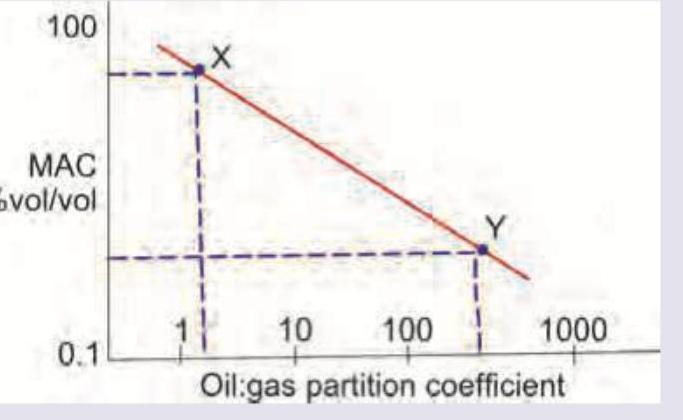
Which is correct about the anesthetic drugs X and Y in the image shown? (Recent NEET Pattern 2016-17)
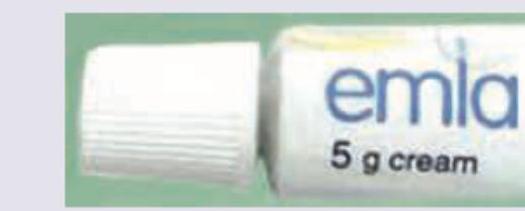
The composition of the given anesthetic product is:
A young male was administered regional anesthesia with 0.25% bupivacaine. The patient became unresponsive, and the pulse became unrecordable. What is the best management in this situation?
Which nerve is targeted in the nasociliary nerve block?
Explanation: The question refers to **EMLA (Eutectic Mixture of Local Anesthetics)**, which is a combination of 2.5% Lidocaine and 2.5% Prilocaine. ### **Explanation** **Why Laceration Repair is the correct answer:** EMLA cream is designed for use on **intact skin** only. It is contraindicated for use on open wounds, lacerations, or mucous membranes because the rapid systemic absorption through non-intact skin can lead to **Lidocaine/Prilocaine toxicity**. Furthermore, components of the cream can be tissue-irritant or interfere with wound healing. For laceration repair, infiltration of local anesthetic or topical solutions like LET (Lidocaine, Epinephrine, Tetracaine) are preferred. **Why other options are incorrect:** * **Venipuncture & Lumbar Puncture:** These are classic indications for EMLA. It provides effective surface anesthesia for needle-insertion procedures, reducing pain and anxiety, especially in pediatric patients. * **Myringotomy:** EMLA is frequently used off-label or in specific formulations to anesthetize the tympanic membrane before minor otologic procedures like myringotomy or tube insertion. ### **High-Yield Clinical Pearls for NEET-PG** * **Composition:** Eutectic means the melting point of the mixture (Lidocaine + Prilocaine) is lower than the individual components, allowing it to exist as an oil at room temperature. * **Application Time:** Requires **60 minutes** of contact time under an occlusive dressing for a depth of 3mm, and **120 minutes** for a depth of 5mm. * **Side Effects:** A key risk, especially in infants, is **Methemoglobinemia** due to the Prilocaine metabolite (o-toluidine). * **Contraindication:** Avoid in patients with known methemoglobinemia or infants under 12 months receiving concurrent methemoglobin-inducing drugs (e.g., sulfonamides).
Explanation: **Explanation:** **Infiltration anesthesia** is the correct answer because it involves the injection of a local anesthetic (LA) directly into the subcutaneous tissue or intradermal layers at the specific site of the procedure. This technique targets the terminal nerve endings in the immediate area to provide localized numbness for minor surgeries, such as suturing a laceration or performing a skin biopsy. **Analysis of Incorrect Options:** * **Nerve Block:** Involves injecting LA around a specific peripheral nerve or nerve plexus (e.g., Brachial plexus block) to anesthetize a larger, distal area of the body. * **Field Block:** Involves injecting LA circumferentially around the operative site to create a "wall" of anesthesia. It targets the nerves proximal to the site rather than injecting directly into the tissue being operated upon. * **Bier’s Block (Intravenous Regional Anesthesia):** Involves injecting LA intravenously into a limb distal to a double-cuffed tourniquet. It is used for short procedures on the forearm or lower leg. **High-Yield NEET-PG Pearls:** * **Mechanism of Action:** LAs work by blocking **voltage-gated sodium channels** on the inner surface of the nerve membrane, preventing depolarization. * **Adrenaline Addition:** Often added to LAs (1:200,000) to cause vasoconstriction, which decreases systemic absorption, prolongs the duration of action, and reduces surgical bleeding. * **Contraindication:** Never use adrenaline in "end-artery" areas (fingers, toes, nose, ears, and penis) due to the risk of ischemic necrosis. * **Order of Blockade:** Small myelinated fibers (B and A-delta) are blocked before large unmyelinated fibers. Clinically, **Pain and Temperature** are lost before **Touch and Pressure**.
Explanation: **Explanation:** Local anesthetics (LAs) are categorized based on their ability to penetrate mucous membranes and skin. For an LA to be effective topically, it must possess high lipid solubility and the ability to diffuse through epithelial barriers to reach nerve endings. **Why Bupivacaine is the Correct Answer:** Bupivacaine is a potent, long-acting amide local anesthetic primarily used for infiltration, nerve blocks, and spinal/epidural anesthesia. It has **poor topical penetration** and is not effective when applied to the surface of the skin or mucous membranes. Therefore, it is not formulated for topical use. **Analysis of Incorrect Options:** * **Lignocaine (Lidocaine):** The most versatile LA. It is highly effective topically and is available in various formulations (2% jelly, 4% topical solution, 5% ointment, and 10% spray) for airway anesthesia and urethral procedures. * **Dibucaine (Cinchocaine):** One of the most potent and toxic long-acting LAs. Due to its toxicity, its use is largely restricted to topical application (e.g., ointments for hemorrhoids). * **Tetracaine (Amethocaine):** An ester LA with high lipid solubility. It is widely used topically in ophthalmology (eye drops) and for surface anesthesia of the tracheobronchial tree. **NEET-PG High-Yield Pearls:** 1. **Cocaine** is the only naturally occurring LA and possesses intrinsic vasoconstrictive properties, making it excellent for topical use in ENT procedures. 2. **EMLA (Eutectic Mixture of Local Anesthetics):** A 1:1 mixture of **Lidocaine and Prilocaine** used to provide anesthesia to intact skin. 3. **Benzocaine:** Highly lipid-soluble but water-insoluble; used exclusively topically (lozenges/sprays) as it is too toxic for injection (risk of methemoglobinemia). 4. **Bupivacaine** is notorious for **cardiotoxicity** (blocks sodium channels during diastole); **Levobupivacaine** and **Ropivacaine** are safer S-enantiomer alternatives.
Explanation: **Explanation:** Lidocaine (Lignocaine) is the most widely used local anesthetic and serves as the prototype for the **Amide group** of local anesthetics. **1. Why Option C is the Correct (False) Statement:** Local anesthetics are classified into two chemical groups: **Esters** and **Amides**. Lidocaine is an **Amide-type** anesthetic, not an ester. A high-yield rule to distinguish them is the "i" rule: Amide-type anesthetics (L**i**docaine, Pr**i**locaine, Bup**i**vacaine, Rop**i**vacaine) have two "i"s in their name, whereas Esters (Procaine, Chloroprocaine, Tetracaine, Benzocaine) have only one. Amides are metabolized in the **liver** by cytochrome P450 enzymes, unlike esters which are metabolized by plasma pseudocholinesterase. **2. Analysis of Other Options:** * **Option A:** Lidocaine is a standard local anesthetic that works by blocking voltage-gated sodium channels, preventing nerve impulse conduction. * **Option B:** It is a **Class IB anti-arrhythmic** agent. It is used intravenously to treat ventricular arrhythmias, particularly those associated with acute myocardial infarction or cardiac surgery. * **Option D:** Lidocaine has excellent surface activity and is effectively absorbed through mucous membranes (topical/surface anesthesia), making it useful for procedures like intubation (sprays) or urethral catheterization (jellies). **High-Yield Clinical Pearls for NEET-PG:** * **Maximum Dose:** 4 mg/kg (plain) and 7 mg/kg (with adrenaline). * **Onset & Duration:** Rapid onset with intermediate duration (60–120 mins). * **Toxicity:** Early signs of systemic toxicity (LAST) include perioral numbness, metallic taste, and tinnitus, progressing to seizures. * **Drug of Choice:** Lidocaine is the drug of choice for ventricular tachycardia in the setting of acute MI.
Explanation: **Explanation:** The duration of action of a local anesthetic (LA) is primarily determined by its **protein binding capacity**. Agents with high affinity for plasma and tissue proteins remain at the nerve receptor site for a longer period. **Why Tetracaine is Correct:** Tetracaine is an ester-linked local anesthetic known for its high lipid solubility and high protein binding. Among the options provided, **Tetracaine** has the longest duration of action (approximately 2–3 hours, which can be extended to 4–6 hours with epinephrine). While Bupivacaine is also long-acting, in standard pharmacological classifications and comparative potency charts used in exams, Tetracaine (especially in spinal anesthesia) is categorized as having a longer duration than Bupivacaine. **Analysis of Incorrect Options:** * **Bupivacaine (Option A):** An amide-linked LA with a long duration of action (approx. 120–240 minutes). While very common clinically, it is slightly shorter-acting than Tetracaine in specific formulations. * **Lidocaine (Option C):** An amide-linked LA with **intermediate** duration (30–60 minutes). It is the most commonly used LA for infiltration and regional blocks. * **Procaine (Option D):** An ester-linked LA with a **short** duration of action (15–30 minutes) due to rapid hydrolysis by plasma pseudocholinesterase. **High-Yield Clinical Pearls for NEET-PG:** * **Potency** is determined by **Lipid Solubility**. * **Duration of Action** is determined by **Protein Binding**. * **Onset of Action** is determined by the **pKa** (lower pKa = faster onset, as more drug exists in the uncharged base form). * **Metabolism:** Esters (like Tetracaine/Procaine) are metabolized by **plasma pseudocholinesterase**; Amides (like Lidocaine/Bupivacaine) are metabolized by **liver microsomal enzymes**. * **Bupivacaine** is notorious for **cardiotoxicity** (blocks cardiac sodium channels during diastole).
Explanation: **Explanation:** The standard concentration of adrenaline (epinephrine) used as an additive to local anesthetics like lidocaine is **1:200,000**. This corresponds to **5 mcg/mL**. **Why 1:200,000 is Correct:** Adrenaline is added to local anesthetics to act as a vasoconstrictor. At a concentration of 1:200,000, it provides an optimal balance between efficacy and safety. Its primary roles include: 1. **Decreasing systemic absorption:** Reducing the risk of Local Anesthetic Systemic Toxicity (LAST). 2. **Increasing duration of action:** By keeping the drug at the nerve site longer. 3. **Reducing surgical bleeding:** Providing a clearer operative field. 4. **Increasing the maximum safe dose:** For lidocaine, the dose increases from 5 mg/kg (plain) to 7 mg/kg (with adrenaline). **Analysis of Incorrect Options:** * **Options A & B:** These numerical values are mathematically irrelevant to standard medical dilutions and likely represent distractors or formatting errors. * **Option C (1:20,000):** This concentration is far too potent (50 mcg/mL). Using such a high concentration of adrenaline increases the risk of severe hypertension, tachycardia, arrhythmias, and localized tissue necrosis due to excessive vasoconstriction. **High-Yield Clinical Pearls for NEET-PG:** * **Maximum Dose of Lidocaine:** 5 mg/kg (Plain); 7 mg/kg (with Adrenaline). * **Adrenaline Concentration in Anaphylaxis:** 1:1,000 (IM). * **Adrenaline Concentration in Cardiac Arrest:** 1:10,000 (IV). * **Contraindications:** Avoid adrenaline-containing local anesthetics in "end-artery" areas (fingers, toes, nose, ears, and penis) to prevent ischemic necrosis. * **Test Dose:** Lidocaine with adrenaline is often used as a "test dose" in epidural anesthesia to detect accidental intravascular injection (indicated by a heart rate increase of >20 bpm).
Explanation: ***Drug X is more fast acting than Y*** - The **oil:gas partition coefficient** for Drug X is lower than for Drug Y. A lower oil:gas partition coefficient typically correlates with a **faster onset of action** for inhaled anesthetics as it indicates lower solubility in blood and tissues, allowing for quicker equilibration in the brain. - While MAC is plotted against oil:gas partition coefficient, the question specifically asks about **onset of action**, which is primarily influenced by blood-gas solubility rather than oil-gas solubility. However, an anesthetic with lower oil-gas solubility (like X) would generally also have lower blood-gas solubility, leading to faster onset. *Drug Y is more fast acting than X* - Drug Y has a **higher oil:gas partition coefficient** compared to Drug X, indicating greater lipid solubility. - A higher oil:gas partition coefficient generally correlates with a **slower onset of action** for inhaled anesthetics, as more drug dissolves in lipids before reaching the brain. *Drug X and Y have equally fast onset of action* - The graph clearly shows that Drug X and Drug Y have different **oil:gas partition coefficients**. - Since the partition coefficients are different, their **solubility characteristics** and therefore their clinical onset of action would also be different. *Drug X and Y have equally fast onset of action but potency of X is more than Y* - Onset of action is **not equal** for X and Y due to their differing oil:gas partition coefficients. - Potency, represented by **MAC** (Minimum Alveolar Concentration), is inversely related to the oil:gas partition coefficient for many inhaled anesthetics. From the graph, Drug X has a higher MAC value than Drug Y (meaning it is **less potent** but acts faster).
Explanation: ***5 % lignocaine and 5 % prilocaine*** - The image clearly displays "emla 5 g cream". **EMLA (Eutectic Mixture of Local Anesthetics)** cream is a widely recognized topical anesthetic preparation. - EMLA cream is composed of a **eutectic mixture of 2.5% lidocaine (lignocaine) and 2.5% prilocaine**, which is typically presented as a 5% cream (meaning 5 g of cream contains 2.5 g of lidocaine and 2.5 g of prilocaine, effectively 5% of each active ingredient when referring to the total concentration of local anesthetics). *5 % lignocaine and 5 % benzocaine* - While lignocaine is a common local anesthetic, **benzocaine** is also a local anesthetic but it's not a primary component of EMLA cream. - The combination of 5% lignocaine and 5% benzocaine is not the standard formulation for the product shown in the image. *5 % benzocaine and 5 % tetracaine* - **Benzocaine** and **tetracaine** are both local anesthetics, but this combination is incorrect for EMLA cream. - This pairing would constitute a different topical anesthetic product, not the one identified in the image. *5 % benzocaine and 5 % cocaine* - **Cocaine** is a local anesthetic, but it is also a powerful stimulant and has high abuse potential, making it unsuitable for general topical anesthetic creams due to its severe side effects and regulatory restrictions. - This combination is not found in common medical topical anesthetic preparations like EMLA cream.
Explanation: ***ECPR with 20% intralipid*** - The scenario describes **Local Anesthetic Systemic Toxicity (LAST)**, likely due to bupivacaine, leading to cardiovascular collapse. - **Intralipid 20%** is the first-line treatment for LAST-induced cardiovascular toxicity, as it acts as a lipid sink for the lipophilic local anesthetic. *ECPR with calcium* - While calcium may be used in certain cardiac arrest scenarios, it is **not the primary treatment for bupivacaine-induced cardiovascular collapse** and LAST. - Calcium might offer some cardiac support but does not directly neutralize the local anesthetic's toxic effects. *ECPR with dobutamine* - **Dobutamine is an inotropic agent** used to improve cardiac contractility but is not indicated as a primary rescue therapy for severe LAST. - It would not address the underlying toxicity caused by bupivacaine and could potentially worsen the situation by increasing myocardial oxygen demand without reversing toxin effects. *ECPR with sodium bicarbonate* - **Sodium bicarbonate** is used to treat metabolic acidosis and can be beneficial in certain drug overdoses to enhance excretion or stabilize cardiac membranes. - However, it is **not the primary or most effective treatment for bupivacaine-induced LAST** and cardiovascular collapse compared to lipid emulsion therapy.
Explanation: ***Nasociliary nerve*** - A nasociliary nerve block specifically targets the **nasociliary nerve** itself. - This block is used to anesthetize the sensory innervation of structures supplied by the nasociliary nerve, such as parts of the **nasal cavity**, **eyeball**, and **skin of the nose**. *Greater palatine nerve* - The **greater palatine nerve** supplies sensation to the posterior hard palate and is targeted in a **greater palatine nerve block**. - This nerve is a branch of the **maxillary nerve** and is primarily involved in dental and palatal anesthesia. *Sphenopalatine nerve* - The **sphenopalatine nerve**, or pterygopalatine ganglion, contains sensory fibers for the nasal cavity, palate, and pharynx, and its block is distinct from a nasociliary block. - A **sphenopalatine ganglion block** is mainly used for conditions like cluster headaches and facial pain, not for direct eyeball sensation. *Anterior ethmoidal nerve* - The **anterior ethmoidal nerve** is a branch of the nasociliary nerve, but a nasociliary nerve block targets the main trunk, which includes all its branches. - While the anterior ethmoidal nerve supplies the anterior part of the nasal septum and lateral wall, it is a **component** of the nasociliary innervation rather than the sole target.
Chemistry and Mechanism of Action
Practice Questions
Pharmacokinetics of Local Anesthetics
Practice Questions
Amide Local Anesthetics
Practice Questions
Ester Local Anesthetics
Practice Questions
Clinical Uses of Local Anesthetics
Practice Questions
Toxicity of Local Anesthetics
Practice Questions
Management of Local Anesthetic Systemic Toxicity
Practice Questions
Adjuvants to Local Anesthetics
Practice Questions
Maximum Safe Doses
Practice Questions
Local Anesthetics in Special Populations
Practice Questions
Allergic Reactions to Local Anesthetics
Practice Questions
Future Developments in Local Anesthetics
Practice Questions
Get full access to all questions, explanations, and performance tracking.
Start For Free