A known case of hyperthyroidism, who is not on medication, is scheduled for total thyroidectomy. The PAC check was not done properly. What is the leading complication that can occur during surgery?
A patient undergoing surgery is administered succinylcholine for muscle relaxation. Shortly after administration, he develops hyperthermia, muscle rigidity, tremors, and tachycardia. What is the most appropriate treatment for this condition?
A 35-year-old male undergoing abdominal surgery under general anesthesia develops sudden generalized muscle rigidity, rapid increase in body temperature, and tachycardia shortly after administration of sevoflurane and succinylcholine. His end-tidal CO2 is rising despite controlled ventilation. What is the most appropriate immediate treatment?
A patient undergoing surgery receives a muscle relaxant and soon develops flushing and rashes over the neck and anterior chest. Which of the following muscle relaxants is most commonly associated with this reaction?
All are correct about the complications of the anesthesia technique shown except:
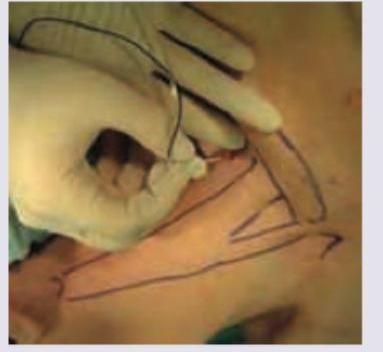
All of the following reduce complication rates following the procedure shown below, except:
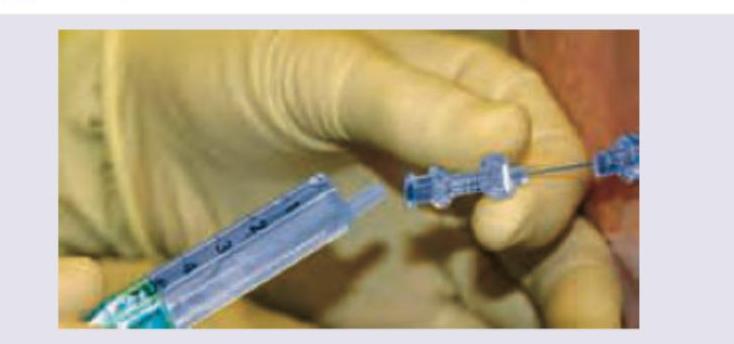
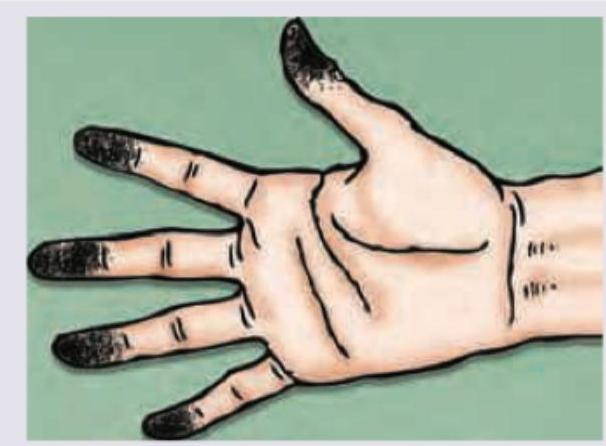
During induction of anesthesia, after thiopentone injection patient develops discoloration of hand. All are true about this condition and its management except:
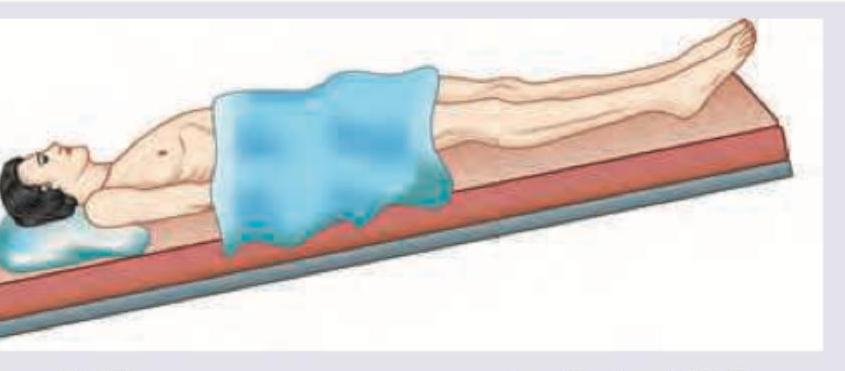
The position of the patient as shown below is favored for which of the following conditions?
Which one of the following is a Nephrotoxic anaesthetic agent ?
In which clinical scenario would you find a patient requiring the vital signs assessment technique shown in the image?
Explanation: ***Arrhythmia***- Uncontrolled **hyperthyroidism** significantly increases sympathetic cardiovascular stimulation, making the heart susceptible to **tachycardia** and cardiac instability during stress.- Intraoperative stress (from anesthesia and surgery) can trigger a **thyroid storm**, where the resulting severe ventricular tachycardia or **atrial fibrillation** poses the greatest immediate threat to life during the procedure.*Hyperthermia*- Although **hyperthermia** (high fever) is a critical classic sign of a **thyroid storm**, immediate cardiovascular collapse due to **arrhythmias** typically precedes or dominates the intraoperative crisis.- The underlying increase in the **basal metabolic rate (BMR)** in hyperthyroidism predisposes the patient to thermal dysregulation, which is exacerbated during surgery.*Hypothermia*- **Hypothermia** (low body temperature) is extremely unlikely as the leading complication in an actively hyperthyroid patient due to their persistently elevated **BMR**.- This complication would be more typical of severe non-thyroid disease or prolonged surgery with poor thermal management, not directly caused by unmedicated hyperthyroidism itself.*Hypothyroidism*- **Hypothyroidism** is a predictable *long-term complication* following a successful **total thyroidectomy** and subsequent removal of functional thyroid tissue.- This condition is not an acute, intraoperative complication resulting from the lack of proper preoperative control of the underlying **thyrotoxicosis**.
Explanation: ***Dantrolene sodium***- This is the specific and definitive antidote for **Malignant Hyperthermia (MH)**, characterized by signs like hyperthermia, muscle rigidity, and tachycardia after succinylcholine administration.- **Dantrolene** works directly on skeletal muscle by inhibiting the release of calcium from the **sarcoplasmic reticulum**, thereby interrupting the sustained muscle contraction and hypermetabolic state.*Neostigmine*- It is an **acetylcholinesterase inhibitor** used to reverse the effects of non-depolarizing neuromuscular blocking agents (e.g., rocuronium).- It is **contraindicated** in MH as it could potentially exacerbate muscle rigidity and the hypermetabolic crisis by increasing **acetylcholine** activity at the neuromuscular junction.*Atropine*- This is an **anticholinergic** drug primarily used to treat bradycardia or to dry secretions.- Although the patient exhibits severe tachycardia, atropine does not treat the underlying pathological hypermetabolism or the excessive calcium release that defines MH.*Midazolam*- This is a **benzodiazepine** used for anxiolysis, sedation, and if necessary, managing seizures.- While supportive care for MH might involve benzodiazepines if seizures occur due to hyperthermia, it is not the crucial drug needed to counteract the life-threatening hypermetabolic crisis.
Explanation: ***Dantrolene*** - This clinical scenario is a classic presentation of **Malignant Hyperthermia (MH)**, a life-threatening pharmacogenetic disorder triggered by volatile anesthetics (like sevoflurane) and succinylcholine. - **Dantrolene sodium** is the only specific treatment for MH; it acts by directly interfering with excitation-contraction coupling in skeletal muscle, reducing the intracellular calcium release from the sarcoplasmic reticulum. *Diazepam* - Diazepam is an anxiolytic/sedative and an anticonvulsant; it might be used to control generalized seizures or anxiety, but it is **not effective** against the massive muscle contracture seen in Malignant Hyperthermia. - Administering diazepam would only treat minor symptoms or anxiety and delay the necessary specific treatment, leading to potentially fatal outcomes from **rhabdomyolysis and hyperkalemia**. *Pancuronium* - Pancuronium is a **non-depolarizing neuromuscular blocking agent** (muscle relaxant) and will not halt the underlying pathological process of Malignant Hyperthermia, which involves uncontrolled calcium release from the sarcoplasmic reticulum. - Although it causes paralysis, it would not address the **hypermetabolic state** (characterized by rising ETCO2 and temperature) that is the hallmark of MH. *Vecuronium* - Vecuronium is also a **non-depolarizing neuromuscular blocking agent** used for muscle relaxation during anesthesia, similar to pancuronium. - While it causes muscle paralysis, it does not correct the massive, uncontrolled increase in intracellular calcium that drives the **malignant hyperthermic crisis**.
Explanation: ***Atracurium*** - The characteristic reaction described (flushing and rashes over the neck and chest) is often termed an **anaphylactoid reaction** due to **direct non-immunological histamine release** from mast cells. - Among the non-depolarizing muscle relaxants, **atracurium** and mivacurium are the most common causes of significant, dose-dependent histamine release, leading to cutaneous vasodilation (flushing) and potential hypotension. *Cisatracurium* - Although cisatracurium is an isomer of atracurium, it is associated with a **significantly lower incidence** of **histamine release** and provides better cardiovascular stability. - It is often favored over atracurium for patients with severe cardiovascular disease. *Vecuronium* - Vecuroniumbelongs to the **aminosteroid class** (e.g., rocuronium, vecuronium, pancuronium) of muscle relaxants, which are generally associated with **minimal-to-negligible risk** of **histamine release**. - It is preferred for its high degree of **cardiovascular stability** (minimal effect on heart rate or blood pressure). *Pancuronium* - Pancuronium, another **aminosteroid**, has a very low potential for histamine release, thus not typically causing flushing or rash. - Its main side effect is a **vagolytic action** (antimuscarinic effect) that often causes significant **tachycardia** and hypertension.
Explanation: ***Chylothorax*** - Chylothorax, though a potential complication of neck or thoracic surgery, is **not typically a direct complication** of interscalene brachial plexus block, as the thoracic duct is not in the immediate vicinity of the needle placement. - The interscalene block targets the brachial plexus at the level of the **interscalene groove**, far from the major lymphatic structures that could lead to chylothorax. *Horner syndrome* - **Horner syndrome** (ptosis, miosis, anhidrosis) can occur due to the spread of local anesthetic to the sympathetic stellate ganglion, which is located nearby. - This is a recognized but usually **transient complication** of interscalene blocks. *Seizures* - **Seizures** are a serious complication resulting from **intravascular injection** of local anesthetics, leading to systemic toxicity. - This risk is present with any regional block, including the interscalene block, if the anesthetic enters a blood vessel. *Respiratory failure* - **Respiratory failure** can occur if the local anesthetic spreads to the **phrenic nerve**, causing hemidiaphragmatic paresis or paralysis, especially in patients with pre-existing respiratory compromise. - Additionally, high cervical spread can depress respiratory drive, leading to respiratory compromise or failure.
Explanation: ***Reverse Trendelenburg position*** - The image shows a **lumbar puncture** being performed. The **Reverse Trendelenburg position (head elevated)** is not typically used to reduce complications like post-dural puncture headache (PDPH) and may theoretically worsen it by increasing CSF leakage due to gravity. - Positioning the patient **flat or slightly head-down** *after* the procedure is sometimes advised to reduce orthostatic components of headache, but the reverse Trendelenburg position is not a standard preventive measure. *Epidural blood patch* - An **epidural blood patch** is a highly effective treatment for severe or persistent post-dural puncture headache (PDPH), which is a common complication of lumbar puncture. - It works by injecting autologous blood into the epidural space, which then clots and seals the dural puncture site, stopping CSF leakage. *Caffeine* - **Caffeine** is often used as a pharmacological intervention to treat or prevent post-dural puncture headache (PDPH) due to its vasoconstrictive properties, which can reduce cerebral blood volume and intracranial pressure. - It can provide symptomatic relief for headaches by reducing vasodilation of cerebral blood vessels. *Use of pencil point needle* - Using a **pencil-point needle** for lumbar puncture significantly reduces the incidence of post-dural puncture headache (PDPH) compared to cutting-point needles. - These needles separate rather than cut the dural fibers, allowing the dural defect to close more effectively and minimize cerebrospinal fluid (CSF) leakage.
Explanation: ***Immediately remove the needle from the vessel*** - This is an **incorrect** management step for accidental intra-arterial injection of thiopentone because removing the needle can lead to **vasospasm** and further compromise blood flow. - The needle should be left in place to facilitate administration of vasodilator and antispasmodic agents, helping to mitigate the damage. *Inject lignocaine* - **Intra-arterial lignocaine** (without adrenaline) is a crucial step to induce vasodilation and alleviate pain caused by the irritation and arterial spasm. - This helps to restore blood flow and prevent further tissue ischemia. *Dilute heparin* - Administering **dilute heparin** directly into the artery helps to prevent or treat **thrombosis**, a common complication of intra-arterial injection of irritant substances like thiopentone. - Thiopentone's high pH can cause endothelial damage, leading to clot formation and further reducing perfusion. *Intra-arterial thrombolysis* - If conservative measures fail and there is evidence of severe ischemia or thrombosis, **intra-arterial thrombolysis** with agents like urokinase or streptokinase may be considered. - This highly invasive procedure aims to dissolve existing clots and restore arterial patency to salvage tissue.
Explanation: ***Raised ICT*** - The image depicts the patient in a **reverse Trendelenburg position** (head elevated). This position is often used to reduce **intracranial pressure (ICP)** by promoting venous drainage from the brain. - Elevating the head above the trunk aids in gravity-assisted drainage of cerebral venous blood and cerebrospinal fluid, thereby lowering ICP and preventing complications like brain herniation. *CHF* - Patients with **congestive heart failure (CHF)** often prefer a **Fowler's position** (sitting upright) to ease breathing and reduce pulmonary congestion, not the reverse Trendelenburg as shown. - Lying flat or with feet elevated in CHF can worsen dyspnea and increase cardiac workload due to increased venous return. *Air embolism* - For suspected **air embolism**, the patient is typically placed in the **Trendelenburg position** (head down, feet up) with a left lateral tilt to trap air in the right ventricle and prevent it from entering the pulmonary circulation. - This position helps prevent air from crossing into the left side of the heart thereby reducing the risk of systemic arterial air embolization. *Neurosurgery* - While neurosurgery often involves specific patient positioning, the depicted position isn't uniquely favored for neurosurgery in general. Positioning depends on the surgical site. - The **reverse Trendelenburg** is specifically used when reducing ICP is a primary goal during or after neurosurgical procedures, but not all neurosurgeries.
Explanation: ***Methoxyflurane*** - **Methoxyflurane** is an inhaled anesthetic that can cause dose-dependent **nephrotoxicity** due to the metabolic release of **fluoride ions**. - Its use is limited due to the risk of **renal dysfunction**, including **high-output renal failure**, especially with prolonged administration or high concentrations. *Nitrous oxide* - **Nitrous oxide** is an inhaled anesthetic known for its analgesic properties and low solubility, leading to rapid onset and offset. - It does not typically cause **direct organ toxicity** like nephrotoxicity, though prolonged exposure can affect bone marrow. *Halothane* - **Halothane** is an older inhaled anesthetic associated with **hepatotoxicity** (halothane hepatitis) in some susceptible individuals. - While it can cause liver damage, it is not primarily known for causing **nephrotoxicity**. *Isoflurane* - **Isoflurane** is a commonly used inhaled anesthetic known for its relatively stable cardiovascular effects and low metabolic degradation. - It is generally considered to have a **good safety profile** with minimal organ toxicity, including the kidneys.
Explanation: ***Pulse present, breath absent*** - The image depicts a **mouth-to-mouth resuscitation** technique, specifically rescue breaths being administered by one person to another. - This technique is applied when a person has a **detectable pulse** but is **not breathing** or is only gasping, indicating respiratory arrest while the heart is still circulating blood. *Pulse absent, breath present* - This scenario would represent **cardiac arrest** where the heart has stopped, but the person is still attempting to breathe. This is a rare, transient state. - In such a case, the primary intervention would be **chest compressions**, not just rescue breathing, as circulation is the immediate priority. *Pulse and breath both not present* - This describes **cardiopulmonary arrest (CPA)**, where both the heart and lungs have ceased functioning. - The appropriate intervention is **cardiopulmonary resuscitation (CPR)**, which involves a combination of **chest compressions and rescue breaths (30:2 ratio)**, not just rescue breaths alone. *Pulse and breath present* - If both vital signs are present, the person is **conscious and breathing adequately**, or unconscious but breathing normally. - No advanced respiratory intervention like mouth-to-mouth resuscitation is needed; the priority would be maintaining their airway and monitoring their condition.
Adverse Drug Reactions
Practice Questions
Anaphylaxis and Allergic Reactions
Practice Questions
Malignant Hyperthermia
Practice Questions
Local Anesthetic Toxicity
Practice Questions
Perioperative Cardiac Complications
Practice Questions
Pulmonary Complications
Practice Questions
Awareness Under General Anesthesia
Practice Questions
Neurological Complications
Practice Questions
Postoperative Visual Loss
Practice Questions
Perioperative Renal Dysfunction
Practice Questions
Transfusion-Related Complications
Practice Questions
Risk Management and Prevention
Practice Questions
Get full access to all questions, explanations, and performance tracking.
Start For Free