Which of the following anesthetic agents causes adrenal suppression?
Shivering is most commonly seen with the use of which anesthetic agent?
Which of the following anesthetic agents is contraindicated in renal failure?
Hyperkalemia is caused by which of the following?
Improper direction of needle insertion during inferior alveolar nerve block can result in which of the following complications?
The physiological dead space is decreased by which of the following?
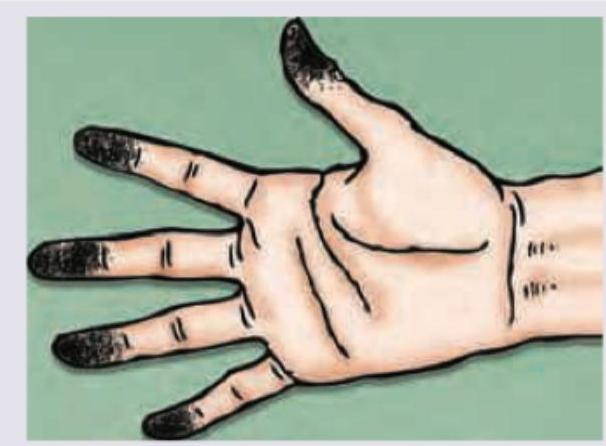
What are the potential consequences of an intra-arterial injection of a drug?
A patient developed fever and severe back pain following surgery performed under spinal anesthesia. On examination, a fluctuant swelling was noted at the site of spinal anesthesia. A non-contrast CT scan of the region showed a hypodense soft tissue mass, leading to a diagnosis of epidural abscess. What is the treatment of choice for an epidural abscess?
Which of the following neuromuscular blocking agents can be safely administered in patients with hepatic as well as renal failure?
Malignant hyperthermia is caused due to which of the following mechanisms?
Explanation: ### Explanation The correct answer is **A. Etomidate**. *(Note: There appears to be a discrepancy in the provided key. In clinical anesthesia and standard textbooks like Miller’s, **Etomidate** is the classic agent known for causing adrenal suppression, not Thiopentone.)* #### 1. Why Etomidate is the Correct Answer Etomidate causes dose-dependent inhibition of the enzyme **11-beta-hydroxylase**. This enzyme is essential for converting 11-deoxycortisol into cortisol in the adrenal cortex. Even a single induction dose can suppress adrenal steroidogenesis for 24–48 hours. While this makes it ideal for hemodynamically unstable patients due to its cardiovascular stability, its use is controversial in septic shock due to this suppression. #### 2. Analysis of Other Options * **B. Thiopentone:** A barbiturate that acts on GABA-A receptors. Its primary side effects are cardiovascular and respiratory depression and histamine release. It does **not** cause adrenal suppression. * **C. Ketamine:** An NMDA receptor antagonist. It is a "sympathomimetic" agent that increases heart rate and blood pressure. It does not inhibit adrenal enzymes. * **D. Propofol:** A sedative-hypnotic that works via GABA-A receptors. It is known for causing significant hypotension and "Propofol Infusion Syndrome" (PRIS) with long-term use, but it does not affect the adrenal axis. #### 3. High-Yield Clinical Pearls for NEET-PG * **Drug of Choice for Hemodynamic Stability:** Etomidate (but avoid in sepsis). * **Drug of Choice for Day Care Surgery:** Propofol (due to rapid recovery). * **Drug of Choice for Head Injury:** Thiopentone (decreases ICP and provides cerebral protection). * **Drug of Choice for Bronchial Asthma:** Ketamine (due to bronchodilatory properties). * **Adrenal Suppression:** Always associate this specifically with **Etomidate** and the enzyme **11-β-hydroxylase**.
Explanation: ### **Explanation** **Correct Option: A (Halothane)** Post-anesthetic shivering (PAS) is a frequent complication of general anesthesia, and among the options provided, **Halothane** is most notoriously associated with it. **The Underlying Concept:** Halothane causes significant peripheral vasodilation and profoundly depresses the hypothalamic thermoregulatory center. This leads to a rapid drop in core body temperature (hypothermia). During the recovery phase, as the anesthetic concentration decreases, the body’s thermoregulatory mechanisms "reset" and attempt to generate heat to compensate for the hypothermia, resulting in intense shivering. This is often referred to as the "Halothane Shakes." **Analysis of Incorrect Options:** * **B. Cyclopropane:** While it can cause some sympathetic stimulation, it is not primarily associated with the intense thermoregulatory shivering characteristic of Halothane. * **C. Ether:** Ether is an irritant and causes significant catecholamine release, which may mask or alter the shivering response compared to the potent vasodilatory effect of Halothane. * **D. Thiopentone:** As an intravenous induction agent with a short duration of action, it does not typically cause the prolonged hypothermia required to trigger significant post-operative shivering. **High-Yield Clinical Pearls for NEET-PG:** * **Drug of Choice for Shivering:** **Meperidine (Pethidine)** is the gold standard treatment for post-operative shivering (dose: 12.5–25 mg IV). It works by lowering the shivering threshold. * **Other agents used:** Clonidine, Tramadol, and Dexmedetomidine. * **Mechanism:** Shivering increases oxygen consumption by up to **300–400%**, which can be dangerous in patients with limited cardiac reserve (CAD). * **Differential:** Do not confuse anesthetic-induced shivering with "Emergence Delirium," which is also common with Halothane in pediatric patients.
Explanation: ### Explanation **Correct Option: D. Gallamine** **Why Gallamine is the Correct Answer:** Gallamine is a long-acting, non-depolarizing neuromuscular blocking agent that is **exclusively excreted by the kidneys** (nearly 100%). In patients with renal failure, the clearance of gallamine is severely impaired, leading to prolonged neuromuscular blockade and the risk of "recurarization." Due to this absolute dependence on renal excretion, it is strictly contraindicated in patients with any degree of renal impairment. **Analysis of Incorrect Options:** * **A. d-Tubocurarine:** While a portion (approx. 40-60%) is excreted by the kidneys, it undergoes significant **biliary excretion** as an alternative pathway. It is not strictly contraindicated, though it should be used with caution. * **B. Succinylcholine:** It is metabolized by **plasma pseudocholinesterase**, not the kidneys. However, it is avoided in renal failure *only if* the patient is hyperkalemic (K+ > 5.5 mEq/L), as it causes a transient rise in serum potassium. It is not contraindicated by renal failure itself. * **C. Halothane:** This is an inhalational anesthetic primarily eliminated via the **lungs** and metabolized by the liver. It does not depend on renal clearance and is safe for the kidneys (unlike Sevoflurane, which produces Compound A, or Methoxyflurane, which is nephrotoxic). **High-Yield Clinical Pearls for NEET-PG:** * **Drug of Choice in Renal Failure:** **Atracurium** and **Cisatracurium** are the preferred neuromuscular blockers because they undergo **Hofmann elimination** (spontaneous non-enzymatic degradation), which is independent of renal or hepatic function. * **Pancuronium:** Like Gallamine, it is primarily (80%) excreted by the kidneys and should be avoided. * **Vecuronium/Rocuronium:** These are primarily eliminated via the bile/liver, making them safer than Gallamine in renal failure.
Explanation: **Explanation:** **Succinylcholine (Suxamethonium)** is a depolarizing neuromuscular blocker that acts as an agonist at the nicotinic acetylcholine receptors (nAChR) at the motor endplate. When it binds, it causes prolonged depolarization of the muscle membrane. This process opens ion channels, leading to an efflux of **potassium (K+)** from the intracellular space into the extracellular fluid. In a healthy individual, this typically results in a transient, clinically insignificant rise in serum potassium (approx. **0.5 mEq/L**). **Why the other options are incorrect:** * **Atracurium & Pancuronium:** These are **non-depolarizing** neuromuscular blockers. They act as competitive antagonists at the nAChR, preventing depolarization. Consequently, they do not cause ion flux or potassium release. (Note: Atracurium is known for histamine release and its metabolite *laudanosine*, which can cause seizures). * **Nitrous Oxide:** This is an inhalational anesthetic agent. Its primary significant hematological complication is the inhibition of Vitamin B12 (methionine synthase), leading to megaloblastic anemia, not electrolyte imbalances like hyperkalemia. **High-Yield Clinical Pearls for NEET-PG:** * **Exaggerated Hyperkalemia:** Succinylcholine can cause life-threatening hyperkalemia in patients with **upregulation of extrajunctional receptors**. This occurs in: * Severe burns (after 24-48 hours) * Crush injuries/Massive trauma * Upper/Lower motor neuron lesions (Paraplegia/Quadriplegia) * Prolonged immobilization * **Antidote:** There is no pharmacological reversal for Succinylcholine; it is metabolized by **pseudocholinesterase**. * **Other Side Effects:** Muscle fasciculations, myalgia, increased intraocular/intragastric pressure, and it is a potent trigger for **Malignant Hyperthermia**.
Explanation: **Explanation:** The **Inferior Alveolar Nerve Block (IANB)** is a common technique in dental anesthesia. The correct answer is **Facial nerve paralysis** because of the specific anatomical relationship between the needle path and the parotid gland. **1. Why Facial Nerve Paralysis is Correct:** If the needle is inserted too far posteriorly (over-insertion) or directed too deep during an IANB, it can pass through the retromandibular space and enter the **capsule of the parotid gland**. The facial nerve (CN VII) branches within the substance of the parotid gland. Deposition of anesthetic solution here leads to transient anesthesia of the facial nerve, resulting in an inability to close the eyelid (loss of blink reflex) and drooping of the corner of the mouth on the affected side. **2. Analysis of Incorrect Options:** * **B. Paraesthesia:** This is usually caused by direct trauma to the nerve (needle contact) or neurotoxicity of the local anesthetic, rather than improper *direction* of the needle. * **C. Hematoma:** This occurs due to the nicking of a blood vessel (commonly the inferior alveolar artery or pterygoid plexus). While it is a complication of IANB, it is more related to vascularity than the specific posterior misdirection that targets the parotid. * **D. Trismus:** This refers to "lockjaw" or limited opening of the mouth, usually caused by multiple needle penetrations leading to muscle trauma (medial pterygoid) or infection, not specific needle direction. **Clinical Pearls for NEET-PG:** * **Prevention:** To avoid facial nerve paralysis, the needle must **contact bone** (the internal surface of the ramus) before injecting the solution. This ensures the needle is not too deep. * **Management:** Facial nerve paralysis from IANB is transient (lasting the duration of the anesthetic). The most important management step is **eye protection** (using a patch or manual closure) to prevent corneal drying/abrasion until the blink reflex returns. * **Anatomy:** The facial nerve is the most common cranial nerve affected by local anesthetic complications in dentistry.
Explanation: **Explanation:** Physiological dead space is the sum of anatomical dead space (volume of the conducting airways) and alveolar dead space (alveoli that are ventilated but not perfused). **Why Neck Flexion is Correct:** Neck flexion decreases the **anatomical dead space**. When the neck is flexed, the volume of the upper airway (pharynx and trachea) is physically reduced due to the shortening of the air column. Conversely, neck extension or "sniffing position" increases anatomical dead space. **Analysis of Incorrect Options:** * **Upright Position:** Moving from supine to upright increases dead space. Gravity causes more blood to flow to the lung bases, increasing the ventilation-perfusion (V/Q) ratio at the apices, thereby increasing alveolar dead space. * **Positive Pressure Ventilation (PPV):** PPV increases dead space. The pressure distends the conducting airways (increasing anatomical dead space) and can compress pulmonary capillaries in some alveoli, increasing alveolar dead space. * **Emphysema:** This condition increases physiological dead space significantly. The destruction of alveolar walls reduces the surface area for gas exchange and creates large air spaces that are ventilated but poorly perfused (increased alveolar dead space). **High-Yield Facts for NEET-PG:** * **Anatomical Dead Space:** Roughly 2 ml/kg in an upright adult (approx. 150 ml). * **Factors increasing dead space:** Anticholinergics (bronchodilation), Age, PEEP, Pulmonary Embolism, and General Anesthesia. * **Factors decreasing dead space:** Tracheostomy or Endotracheal intubation (bypasses upper airway volume), Supine position. * **Measurement:** Physiological dead space is measured using **Bohr’s Equation**.
Explanation: **Explanation:** Intra-arterial (IA) injection of drugs (most commonly Thiopentone or Diazepam) is a dreaded anesthetic complication. The primary pathophysiology involves **intense vasospasm** and the formation of **micro-crystals** that obstruct small capillaries, leading to severe distal ischemia and chemical endarteritis. **Analysis of Options:** * **Mottling of the affected limb:** This is an early sign of ischemia. The drug causes immediate vasoconstriction and endothelial damage, leading to a "patchy" or marbled appearance of the skin due to uneven blood flow. * **Development of Compartment Syndrome:** Ischemia leads to tissue hypoxia, which increases capillary permeability. This results in massive edema within the tight fascial compartments of the limb. As pressure rises, it further compromises blood flow, potentially leading to muscle necrosis. * **Absence of a palpable pulse:** While the initial insult is at the arteriolar level, the resulting edema, progressive thrombosis, and severe vasospasm can eventually lead to the loss of distal pulses in the affected extremity. **Clinical Pearls for NEET-PG:** 1. **Classic Presentation:** Sudden, severe "burning" pain distal to the site of injection, followed by blanching or mottling. 2. **Management Gold Standard:** * **Leave the catheter in situ** (to administer vasodilators). * **Dilute the drug:** Flush with Heparinized saline. * **Vasodilation:** Intra-arterial **Papaverine**, Lidocaine, or Phentolamine. * **Sympathetic Block:** Stellate ganglion block or Brachial plexus block to relieve vasospasm. 3. **Prevention:** Always check for arterial pulsations before injecting and use a "test dose" of Thiopentone (2.5% is safer than 5%).
Explanation: ### Explanation **Correct Answer: A. Immediate surgical evacuation** **Medical Concept:** Spinal Epidural Abscess (SEA) is a neurosurgical emergency. The pathophysiology involves a space-occupying lesion within the narrow spinal canal, which can rapidly lead to irreversible neurological damage due to direct cord compression or vascular compromise (thrombophlebitis or arterial infarction). The definitive management is **urgent surgical decompression and evacuation** (usually via laminectomy) combined with long-term antibiotics. Early intervention is the single most important predictor of a favorable neurological outcome. **Why other options are incorrect:** * **B. Conservative management:** This is generally contraindicated due to the high risk of sudden, permanent paraplegia. It is only considered in very specific cases (e.g., patient is unfit for surgery, or there is a complete loss of function for >48 hours where surgery may not help). * **C. Antibiotics:** While antibiotics are a crucial *adjunct* to treatment, they are insufficient as a standalone therapy for a fluctuant mass/abscess. They cannot provide the necessary decompression to save the spinal cord. * **D. Aggressive debridement:** While debridement is part of the surgical process, the primary goal in the acute spinal setting is **evacuation and decompression**. "Aggressive debridement" often refers to bone and extensive tissue removal, which may lead to spinal instability; the priority is relieving pressure. **High-Yield Clinical Pearls for NEET-PG:** * **Classic Triad:** Fever, back pain, and progressive neurological deficit (though all three are present in only ~15% of cases). * **Most Common Organism:** *Staphylococcus aureus* is the most frequent causative agent. * **Gold Standard Investigation:** **MRI with Gadolinium contrast** is the investigation of choice (more sensitive than CT). * **Red Flag:** In a post-spinal anesthesia patient, localized tenderness and new-onset back pain should always raise suspicion of SEA or epidural hematoma.
Explanation: ### Explanation The correct answer is **Atracurium**. #### Why Atracurium is Correct Atracurium (and its isomer Cisatracurium) is unique among neuromuscular blocking agents (NMBAs) because its metabolism is independent of organ function. It undergoes **Hofmann Elimination**, a spontaneous non-enzymatic degradation at physiological pH and temperature, as well as ester hydrolysis by non-specific plasma esterases. Because it does not rely on the liver for metabolism or the kidneys for excretion, it is the drug of choice for patients with **multi-organ failure (hepatic and renal failure)**. #### Why Other Options are Incorrect * **Vecuronium:** It is primarily metabolized by the liver (up to 80%) and excreted in bile. A significant portion (20-30%) is also excreted by the kidneys. Its duration of action is significantly prolonged in patients with hepatic or renal impairment. * **Pancuronium:** This is a long-acting NMBA primarily excreted by the kidneys (approx. 80%). It is strictly contraindicated in renal failure as it leads to profound accumulation and prolonged paralysis. * **Mivacurium:** While it is metabolized by plasma cholinesterase (like succinylcholine), its clearance is significantly delayed in patients with liver disease (due to decreased enzyme production) and renal failure, making it less predictable than Atracurium. #### NEET-PG High-Yield Pearls * **Laudanosine Toxicity:** A major metabolite of Atracurium breakdown is Laudanosine. In high concentrations (prolonged infusions), it can cross the blood-brain barrier and act as a **CNS stimulant**, potentially causing seizures. * **Cisatracurium:** It is more potent than atracurium, undergoes Hofmann elimination, but **does not** cause histamine release or produce significant laudanosine, making it even safer for cardiac patients. * **Histamine Release:** Atracurium can cause dose-dependent histamine release, leading to flushing, hypotension, and bronchospasm. It should be used cautiously in asthmatics.
Explanation: **Explanation:** **Malignant Hyperthermia (MH)** is a life-threatening, pharmacogenetic hypermetabolic disorder of skeletal muscle. **1. Why Option C is Correct:** The core pathophysiology involves a defect in the **Ryanodine Receptor (RYR1)** located on the sarcoplasmic reticulum. In susceptible individuals, exposure to triggering agents (volatile anesthetics like Halothane or depolarizing relaxants like Succinylcholine) causes the RYR1 channel to remain open. This leads to a massive, uncontrolled release of **calcium (Ca²⁺) from the sarcoplasmic reticulum into the intracellular space (cytosol)**. This excess calcium causes sustained muscle contraction (rigidity), which accelerates metabolic rate, increases CO₂ production, and generates extreme heat. **2. Why Other Options are Incorrect:** * **Option A & B:** While electrolyte shifts occur secondary to cell membrane breakdown (rhabdomyolysis), the primary triggering mechanism is not related to sodium or chloride flux. * **Option D:** **Hyperkalemia** (increased serum K) is a frequent and dangerous *consequence* of MH due to muscle cell necrosis and rhabdomyolysis, but it is not the *cause* of the condition. **Clinical Pearls for NEET-PG:** * **Earliest Sign:** Increase in **EtCO₂** (End-tidal Carbon Dioxide) despite increased ventilation. * **Early Clinical Sign:** Masseter muscle rigidity (Trismus). * **Late Sign:** Hyperthermia (can be as high as 1°C every 5 minutes). * **Drug of Choice:** **Dantrolene** (a muscle relaxant that acts by inhibiting calcium release from the RYR1 receptor). * **Safe Agents:** Propofol, Ketamine, Etomidate, and non-depolarizing neuromuscular blockers (e.g., Vecuronium). * **Association:** Strongly linked with Central Core Disease and King-Denborough Syndrome.
Adverse Drug Reactions
Practice Questions
Anaphylaxis and Allergic Reactions
Practice Questions
Malignant Hyperthermia
Practice Questions
Local Anesthetic Toxicity
Practice Questions
Perioperative Cardiac Complications
Practice Questions
Pulmonary Complications
Practice Questions
Awareness Under General Anesthesia
Practice Questions
Neurological Complications
Practice Questions
Postoperative Visual Loss
Practice Questions
Perioperative Renal Dysfunction
Practice Questions
Transfusion-Related Complications
Practice Questions
Risk Management and Prevention
Practice Questions
Get full access to all questions, explanations, and performance tracking.
Start For Free