What is true regarding cardiopulmonary resuscitation?
During surgery for aortic arch aneurysm under deep hypothermic circulatory arrest, which of the following anesthetic agents administered prior to circulatory arrest also provides cerebral protection?
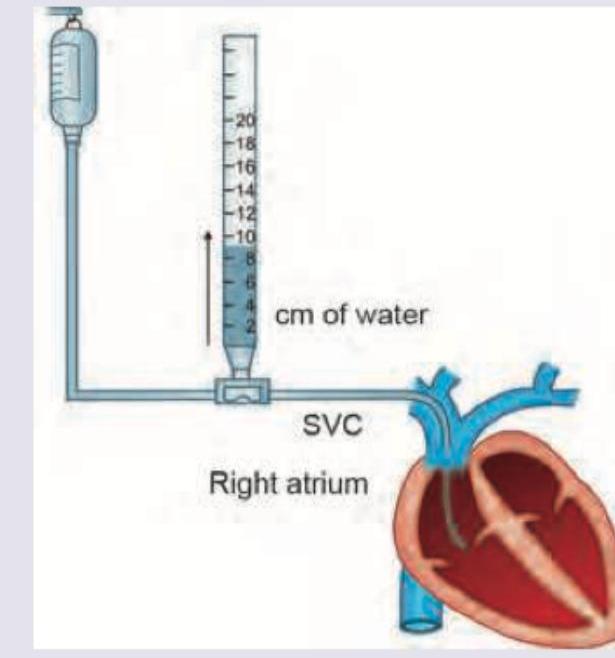
All are correct about the pressure recording shown below except: (Recent NEET Pattern 2016-17)
Most sensitive method of monitoring cardiovascular ischemia in the perioperative period is -
Which of the following is not used in controlling heart rate intraoperatively?
A patient with history of coronary artery disease presents with pulse rate of 48/min and low BP. Patient has decreased myocardial contractility on Echo. Which of these anesthetic agents is contraindicated?
Which of the following is not a cardiovascular monitoring technique
The most sensitive and practical technique for detection of myocardial ischemia in the perioperative period is -
Among the following anesthetic agents, portal vein flow is maximally reduced by:
Which drug is used for anesthesia in a hypotensive patient?
Explanation: In Cardiopulmonary Resuscitation (CPR), the management of cardiac arrest follows the Advanced Cardiovascular Life Support (ACLS) guidelines. **Explanation of the Correct Option:** **Option C** is correct because in cases of shockable rhythms (Ventricular Fibrillation or Pulseless Ventricular Tachycardia), the priority is defibrillation. If the initial shocks (cardioversion/defibrillation) fail to restore a perfusing rhythm, **Adrenaline (1 mg every 3–5 minutes)** is administered to improve coronary and cerebral perfusion pressure via its alpha-adrenergic vasoconstrictive effects. **Analysis of Incorrect Options:** * **Option A:** The most common initial rhythm in out-of-hospital cardiac arrest (OHCA) is **Ventricular Fibrillation (VF)**, not asystole. Asystole is often a late finding with a poorer prognosis. * **Option B:** According to current AHA guidelines, the universal compression-to-ventilation ratio for adults is **30:2**. A 5:1 ratio is obsolete and no longer recommended. * **Option D:** Calcium gluconate is **not** given routinely. It is only indicated in specific scenarios: hyperkalemia, hypocalcemia, or magnesium toxicity/calcium channel blocker overdose. Routine use can cause cerebral reperfusion injury. **High-Yield Clinical Pearls for NEET-PG:** * **Compression Depth:** 2–2.4 inches (5–6 cm) at a rate of 100–120 bpm. * **Shockable Rhythms:** VF and Pulseless VT. * **Non-Shockable Rhythms:** Asystole and PEA (Pulseless Electrical Activity). * **Amiodarone:** The first-line anti-arrhythmic (300mg bolus) given if VF/pVT persists after the 3rd shock. * **H's and T's:** Always look for reversible causes (Hypoxia, Hypovolemia, Hydrogen ion/Acidosis, Hypo/Hyperkalemia, Hypothermia; Tension pneumothorax, Tamponade, Toxins, Thrombosis).
Explanation: **Explanation:** The primary goal during Deep Hypothermic Circulatory Arrest (DHCA) is to minimize the brain's metabolic demand to prevent ischemic injury. **Why Thiopental Sodium is Correct:** Thiopental sodium is the classic "gold standard" for pharmacological cerebral protection during cardiac surgery. It works by causing **dose-dependent suppression of cerebral metabolic rate for oxygen (CMRO2)**. It reduces neuronal electrical activity until the EEG becomes isoelectric (burst suppression), thereby decreasing the oxygen requirement of the brain. Additionally, it provides protection by stabilizing lysosomal membranes and scavenging free radicals. In clinical practice, it is often administered as a bolus or infusion just prior to the initiation of circulatory arrest to provide a "safety buffer" alongside hypothermia. **Why Other Options are Incorrect:** * **Etomidate:** While it reduces CMRO2 and intracranial pressure, it is generally avoided in major cardiac surgeries due to its known side effect of **adrenocortical suppression**, which can impair the stress response required during complex aortic repairs. * **Propofol:** Propofol does reduce CMRO2 similarly to Thiopental; however, it causes significant **systemic vasodilation and myocardial depression**, which can lead to hemodynamic instability during the critical transition to cardiopulmonary bypass. Thiopental remains the more traditionally cited answer for "cerebral protection" in exam contexts. * **Ketamine:** This is contraindicated for cerebral protection as it typically **increases CMRO2**, cerebral blood flow, and intracranial pressure, potentially worsening the balance between oxygen supply and demand. **High-Yield Pearls for NEET-PG:** * **Hypothermia** is the most effective method of cerebral protection (CMRO2 decreases by ~7% for every 1°C drop in temperature). * **Thiopental** only reduces the *functional* component of CMRO2; it cannot reduce the *basal* metabolic rate required for cellular integrity. * **Barbiturate Coma:** Thiopental is also used for refractory intracranial hypertension. * **Target Temperature in DHCA:** Usually 18°C–22°C.
Explanation: ***Can be used to assess left ventricular function*** - Central venous pressure (CVP) primarily reflects **right atrial pressure** and, indirectly, **right ventricular end-diastolic pressure**. - It is **not a reliable indicator** for assessing **left ventricular function**, which is better gauged by pulmonary artery wedge pressure (PAWP) or echocardiography. *Normal CVP is 2-10 cm of water* - The image depicts a manometer measuring CVP in **cm of water**. - The generally accepted normal range for CVP is **2-10 cm H2O** (or 0-8 mmHg), reflecting adequate right heart filling and venous return. *Pressure recording of more than 10 cm of water implies restricting IV fluids to the patient* - A CVP **above 10 cm H2O** (or 8 mmHg) typically indicates **fluid overload**, increased right ventricular preload, or right ventricular dysfunction. - In such cases, **restricting intravenous fluids** is often appropriate to prevent further circulatory congestion and potential complications like pulmonary edema. *Venous catheter is advanced into subclavicular IVC* - For CVP measurement, the catheter tip should ideally be positioned in the **superior vena cava (SVC)**, near its junction with the **right atrium**. - Advancing the catheter into the **inferior vena cava (IVC)** is anatomically incorrect for standard CVP measurement, as it would not reflect right atrial pressure as directly or accurately.
Explanation: ***TEE*** - **Transesophageal echocardiography (TEE)** is the most sensitive method for detecting perioperative myocardial ischemia because it can visualize **regional wall motion abnormalities** and changes in **ventricular function** much earlier than ECG. - **Ischemia** directly impairs the contractility of the affected myocardium, leading to subtle changes in wall motion that TEE can identify. *NIBP* - **Non-invasive blood pressure (NIBP)** monitoring can detect **hemodynamic changes** (like hypotension or hypertension) that may precede or accompany ischemia. - However, these changes are **non-specific** and occur relatively late, making NIBP a less sensitive indicator of early ischemia. *ECG* - **Electrocardiography (ECG)** monitors the electrical activity of the heart and can detect **ST-segment changes** indicative of ischemia. - While useful, ECG changes may appear later than wall motion abnormalities, and **silent ischemia** can be missed if the leads are not optimally placed or if the ischemia does not produce significant electrical changes. *Pulse oximeter* - A **pulse oximeter** measures **oxygen saturation** in the peripheral blood. - It is primarily used to assess **respiratory function** and tissue oxygenation, and it does not directly monitor myocardial ischemia or cardiac function.
Explanation: ***Procainamide*** - While an antiarrhythmic, **procainamide** is primarily used for the treatment of various *atrial* and *ventricular arrhythmias* and *Wolff-Parkinson-White syndrome*, not for heart rate control alone. - Its mechanism involves blocking sodium channels and some potassium channels, affecting myocardial excitability and conduction. *Verapamil* - **Verapamil** is a **non-dihydropyridine calcium channel blocker** frequently used intraoperatively to **slow heart rate** by acting on the sinoatrial and atrioventricular nodes. - It is effective in treating *supraventricular tachycardias* (SVT) and controlling ventricular rate in *atrial fibrillation* or *flutter*. *Esmolol* - **Esmolol** is a **short-acting, cardioselective beta-1 adrenergic blocker** that is often administered intraoperatively due to its rapid onset and offset of action. - It is used to quickly **decrease heart rate** and blood pressure, particularly in response to surgical stress or in cases of *supraventricular tachycardia*. *Propranolol/Metoprolol* - **Propranolol** (non-selective) and **Metoprolol** (cardioselective) are **beta-adrenergic blockers** commonly used to **reduce heart rate** and myocardial oxygen demand. - They are effective in managing *tachycardia*, *hypertension*, and preventing *myocardial ischemia* during surgery.
Explanation: ***Dexmedetomidine*** - Dexmedetomidine is a **highly selective alpha-2 adrenergic agonist** that causes a dose-dependent decrease in heart rate and blood pressure, which would exacerbate the patient's existing **bradycardia** and **hypotension**. - Its negative chronotropic and inotropic effects make it contraindicated in patients with compromised cardiac function and already low heart rate and blood pressure, as it could worsen **myocardial contractility** and perfusion. *Fentanyl* - Fentanyl is an **opioid analgesic** that primarily causes respiratory depression and can lead to bradycardia, but its direct myocardial depressant effects are generally minimal compared to other agents and it can maintain hemodynamics. - While it can cause bradycardia, it does not typically cause the profound hypotensive and myocardial depression seen with dexmedetomidine, especially when used appropriately. *Etomidate* - Etomidate is a **hemodynamically stable induction agent** that has minimal effects on heart rate, blood pressure, and myocardial contractility, making it a good choice for patients with cardiovascular compromise. - Its main side effect is **adrenocortical suppression**, but it does not cause significant cardiac depression. *Ketamine* - Ketamine generally causes **sympathetic stimulation**, leading to an increase in heart rate and blood pressure by releasing **catecholamines**, which would be beneficial in a hypotensive patient with low cardiac output. - While it can have direct myocardial depressant effects in very high doses, its overall effect is often **cardiovascular stimulation**, making it a relatively good choice in this scenario.
Explanation: ***Capnography*** - **Capnography** is primarily used to monitor **ventilatory status** by measuring the concentration of carbon dioxide in respiratory gases. - While respiratory and cardiovascular systems are interconnected, capnography directly assesses **pulmonary function** and **CO2 elimination**, not intrinsic cardiovascular hemodynamics. *Transesophageal echocardiography* - **Transesophageal echocardiography (TEE)** provides detailed images of the heart's structure and function, including valve function, chamber size, and myocardial contractility. - It is a direct and highly effective method for **cardiovascular assessment** and monitoring during surgical procedures or in critically ill patients. *Pulmonary artery catheterization* - **Pulmonary artery catheterization (PAC)**, also known as Swan-Ganz catheter, directly measures pressures within the right atrium, right ventricle, and pulmonary artery, as well as cardiac output. - This technique provides comprehensive **hemodynamic data** essential for cardiovascular monitoring in critical care settings. *Central venous pressure monitoring* - **Central venous pressure (CVP) monitoring** measures the pressure in the vena cava or right atrium, reflecting the patient's **fluid status** and right ventricular preload. - It is a key parameter for assessing circulatory volume and guiding fluid management in patients with cardiovascular instability.
Explanation: ***Regional wall motion abnormality detected with the help of 2D transesophageal echocardiography*** - **Transesophageal echocardiography (TEE)** provides high-resolution images of the heart, allowing for the sensitive detection of **regional wall motion abnormalities (RWMA)**, an early and practical indicator of myocardial ischemia in the perioperative setting. - The development of new or worsening RWMA is often the **first sign of ischemia**, preceding ECG changes or hemodynamic alterations, making it a highly sensitive and clinically useful tool. *Direct measurement of end-diastolic pressure* - While an elevated **end-diastolic pressure** can indicate ventricular dysfunction, it is an **indirect sign** and not specific enough for early myocardial ischemia detection. - This measurement often requires invasive monitoring, which is less practical for routine detection compared to TEE. *Radio-labeled lactate determination* - **Lactate production** can increase in ischemic tissue, but its detection is a **biochemical marker** that typically lags behind the onset of ischemia. - This technique is generally **research-oriented** and not a practical, bedside method for rapid perioperative ischemia detection. *Magnetic Resonance Spectroscopy* - **Magnetic Resonance Spectroscopy (MRS)** can provide detailed metabolic information about tissue, including changes related to ischemia. - However, it is a **complex, time-consuming, and expensive imaging modality** that is not practical for routine, real-time perioperative monitoring of myocardial ischemia.
Explanation: ***Halothane*** - **Halothane** causes the most significant reduction in **portal vein blood flow** due to its potent direct **myocardial depression** and systemic vasodilation, leading to a decrease in **hepatic perfusion pressure**. - Its effects can significantly compromise liver oxygen supply, particularly in patients with pre-existing hepatic dysfunction, making it less favorable for liver surgery compared to newer agents. *Isoflurane* - While **isoflurane** can reduce **portal vein flow**, it tends to maintain overall **hepatic oxygen delivery** better than halothane due to its favorable effect on the **hepatic arterial buffer response**. - It causes less profound **myocardial depression** and may maintain a more stable **hepatic blood flow** compared to halothane. *Ether* - **Ether** is an older anesthetic agent that is rarely used in modern practice due to its flammability and slower induction/recovery times. - Its effects on **portal vein flow** are less pronounced compared to halothane, and it generally maintains **hepatic blood flow** more effectively. *Enflurane* - **Enflurane** also causes **dose-dependent reductions** in **portal vein flow**, but generally less severely than halothane. - It can cause **renal toxicity** due to fluoride metabolites and is generally less favored than isoflurane or sevoflurane for maintaining optimal organ perfusion.
Explanation: ***Ketamine*** - **Ketamine** is preferred in hypotensive patients due to its **sympathomimetic effects**, which typically increase **heart rate** and **blood pressure**, thereby supporting cardiovascular stability. - It maintains **cardiac output** and **systemic vascular resistance**, making it a safer option for induction in hemodynamically unstable individuals. *Thiopentone* - **Thiopentone** is a barbiturate that causes significant **cardiovascular depression**, including **hypotension** and decreased cardiac output, making it unsuitable for hypotensive patients. - It can lead to severe drops in **blood pressure**, especially in patients with compromised cardiovascular function or hypovolemia. *Propofol* - **Propofol** is known for its potent **vasodilatory effects** and direct myocardial depression, frequently leading to profound **hypotension**. - Its use is generally avoided in hypotensive patients due to the risk of exacerbating **hemodynamic instability**. *None of the options* - This option is incorrect as **Ketamine** is a well-established anesthetic agent used specifically for its beneficial cardiovascular profile in hypotensive patients.
Cardiovascular Physiology
Practice Questions
Anesthesia for Coronary Artery Disease
Practice Questions
Valvular Heart Disease Management
Practice Questions
Congenital Heart Disease in Adults
Practice Questions
Cardiopulmonary Bypass Principles
Practice Questions
Myocardial Protection Strategies
Practice Questions
Inotropes and Vasopressors
Practice Questions
Vasodilators in Cardiac Anesthesia
Practice Questions
Transesophageal Echocardiography
Practice Questions
Off-Pump Cardiac Surgery
Practice Questions
Management of Cardiac Pacemakers and ICDs
Practice Questions
Fast-Track Cardiac Anesthesia
Practice Questions
Get full access to all questions, explanations, and performance tracking.
Start For Free