Vapour concentration in a breathing system is monitored by all except:
Regarding the oxygen flush valve, all of the following are true EXCEPT:
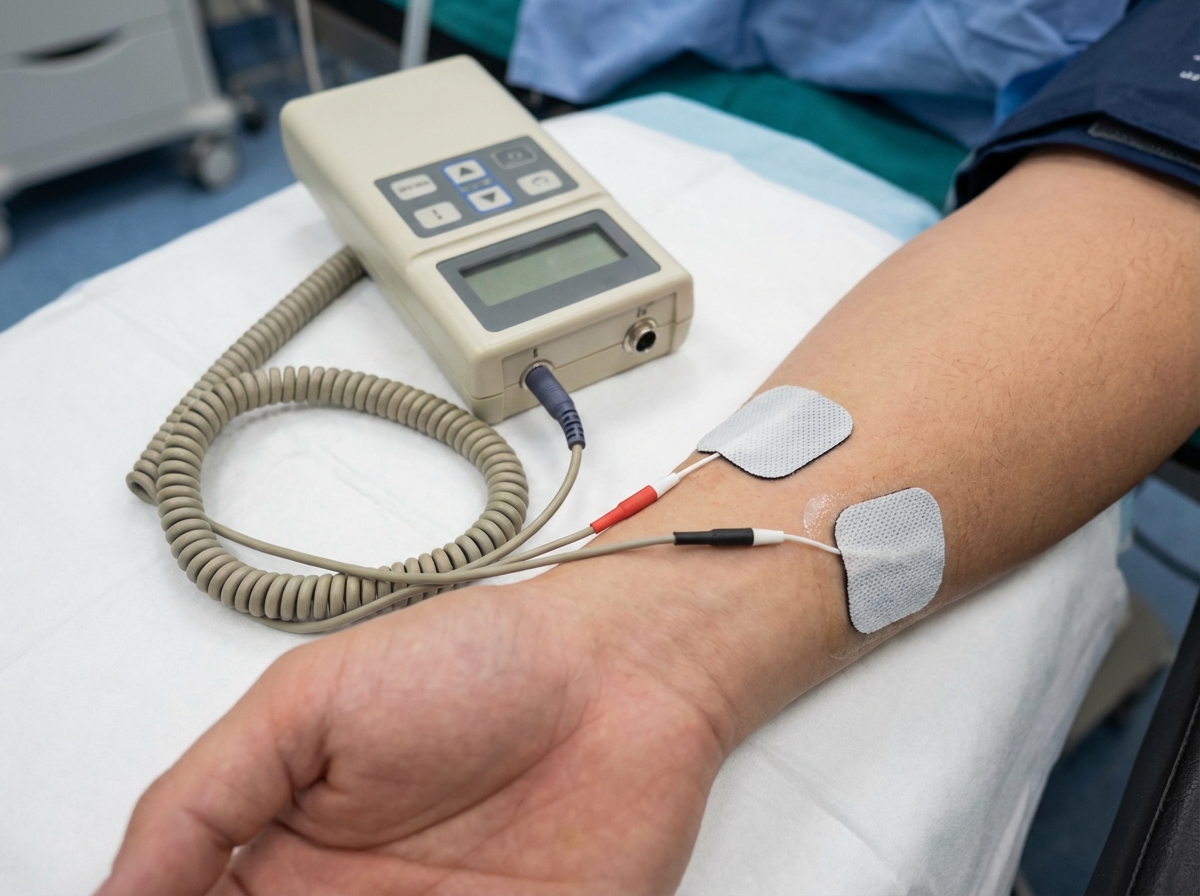
Which instrument is shown in the image?

Which of the following does NOT increase CO2 absorption in the anesthetic circuit?
Which of the following statements is true about Sevoflurane?
Which of the following will produce decreased EEG activity?
What does the partition coefficient of a gas measure?
Depth of anesthesia by inhalation anesthetics depends upon which of the following factors?
The 'train of four' is characteristically used in concern with which of the following?
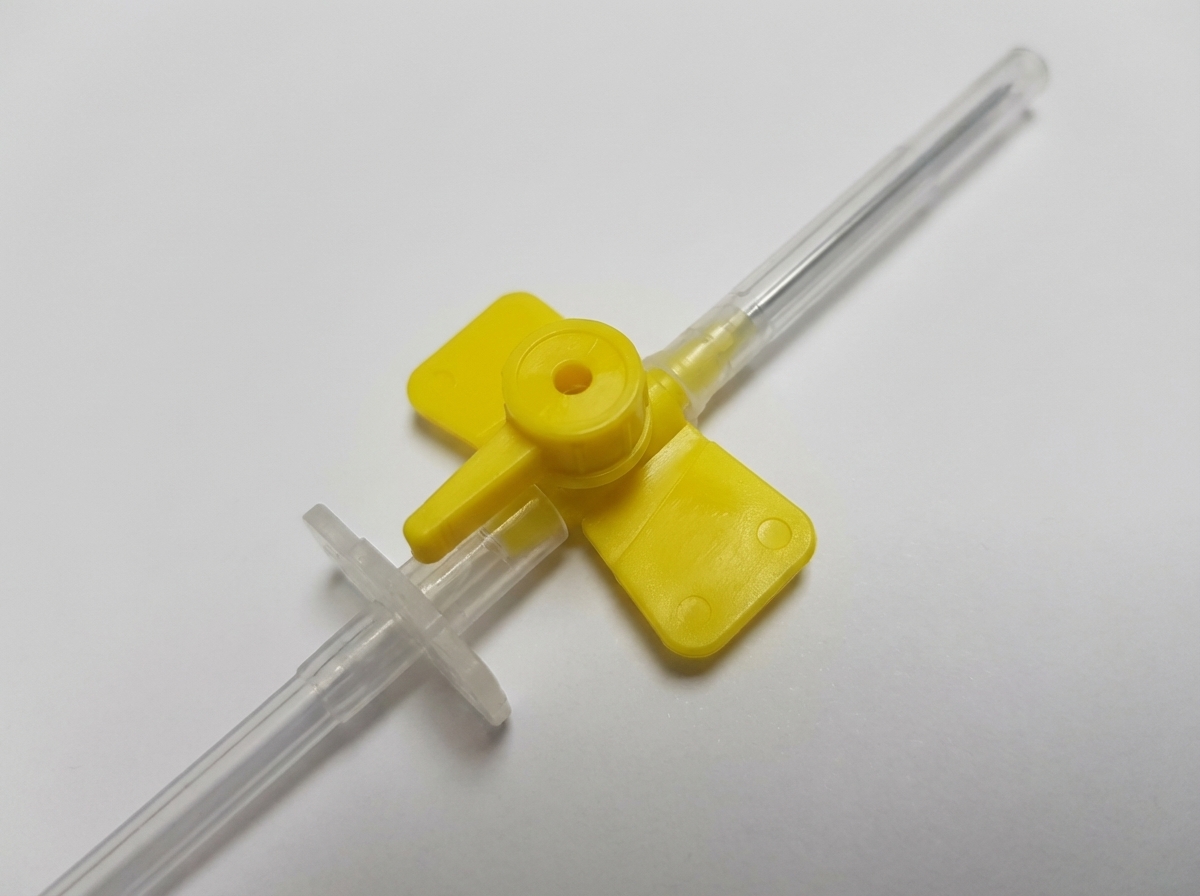
Central line may be inserted in all of the following veins except?
Explanation: **Explanation:** The question asks for the method **not** typically used for real-time monitoring of anesthetic vapor concentration in a breathing system. **1. Why Gas Chromatography is the Correct Answer:** While **Gas Chromatography (GC)** is the "gold standard" for separating and identifying gases with extreme precision, it is **not used for real-time clinical monitoring**. GC requires a long time (several minutes) to process a single sample, making it impractical for the continuous, breath-by-breath monitoring required during anesthesia. It is primarily used in research or industrial settings. **2. Analysis of Incorrect Options:** * **Infrared (IR) Gas Analysis:** This is the most common method used in modern anesthetic monitors. Molecules with two or more different atoms (like $CO_2$, $N_2O$, and volatile agents) absorb specific wavelengths of IR light. * **Ultraviolet (UV) Gas Analysis:** Halothane absorbs UV light. While less common than IR today, UV analyzers (like the "Halothane meter") were historically used to measure concentrations of halogenated agents. * **Paramagnetism:** This is the standard method for measuring **Oxygen ($O_2$)** concentration. Oxygen is unique because it is paramagnetic (attracted to a magnetic field). While it measures $O_2$ rather than "vapors" (volatile agents), in the context of this MCQ, it is a recognized real-time monitoring technology, whereas GC is not a monitoring tool. **Clinical Pearls for NEET-PG:** * **Infrared Analysis:** Cannot measure Oxygen or Nitrogen (as they are symmetric, non-polar molecules). * **Mass Spectrometry:** Can measure all gases and vapors but is expensive and bulky. * **Refractometry:** Used for **calibration** of vaporizers (e.g., Abbe refractometer) but not for patient monitoring. * **Piezoelectric Absorption:** Uses oil-coated crystals to measure vapor concentration based on changes in vibration frequency.
Explanation: The **Oxygen Flush Valve** is a high-pressure bypass system in the anesthesia machine. The correct answer is **Option A** because it contains an incorrect value for the flow rate. ### 1. Why Option A is the Correct Answer (The Exception) According to standard safety specifications (ASTM F1101), the oxygen flush valve must deliver a flow of **35 to 75 L/min**. The range of 25–50 L/min mentioned in the option is lower than the standard requirement, making it the false statement. ### 2. Explanation of Other Options * **Option B (Barotrauma):** This is **True**. Because the valve delivers oxygen at high pressure and flow, if it is activated during the inspiratory phase of a ventilator cycle (when the spill valve is closed), the excessive pressure can lead to pulmonary barotrauma or pneumothorax. * **Option C (Master Switch):** This is **True**. The flush valve receives oxygen directly from the high-pressure or intermediate-pressure circuit, bypassing the flowmeters and vaporizers. Therefore, it functions even if the master switch is turned **OFF**. * **Option D (Pressure):** This is **True**. The valve delivers oxygen at the pipeline pressure, which is typically **45 to 60 psi** (roughly 3–4 bar). ### 3. High-Yield Clinical Pearls for NEET-PG * **Composition:** It delivers **100% pure oxygen**. It does not pass through vaporizers; hence, it can lead to the dilution of anesthetic gases and potential **awareness under anesthesia**. * **Safety Feature:** The valve is usually recessed or protected by a rim to prevent accidental activation. * **Indicator:** It is a "Type 3" connector in some classifications, signifying it bypasses the low-pressure system. * **Key Risk:** Never use the flush valve while a patient is connected to a **Mapleson A (Magill)** circuit during inspiration, as it can cause immediate lung injury.
Explanation: ***Fogarty's catheter*** - Features a distinctive **inflatable balloon tip** that can be inflated to remove emboli or block bronchi during procedures. - Commonly used in **arterial embolectomy** procedures and as a **bronchial blocker** in anesthesia for lung isolation. *Judkins catheter* - A **preformed coronary catheter** with specific curves designed for **cardiac catheterization** procedures. - Does not have an **inflatable balloon tip** and is specifically shaped for accessing coronary arteries. *Pigtailed catheter* - Characterized by a **coiled or curled tip** that prevents perforation of vessel walls during insertion. - Primarily used for **drainage procedures** and **angiography**, lacking the balloon feature of Fogarty catheters. *Simmons catheter* - A **sidewinder catheter** with a specific curved configuration used for **selective catheterization**. - Designed for accessing **visceral arteries** and does not possess an inflatable balloon mechanism.
Explanation: ### Explanation The efficiency of CO₂ absorption in a circle system depends on the contact time and surface area between the exhaled gas and the absorbent (soda lime). **1. Why "Resistance in the circuit" is the correct answer:** Resistance is a mechanical property of the breathing circuit influenced by valves, tubing diameter, and the density of the absorbent. While high resistance can increase the **work of breathing** for the patient, it does not inherently increase the chemical absorption of CO₂. In fact, if resistance is too high, it may impede gas flow, but it is not a factor that enhances the neutralization of CO₂. **2. Analysis of Incorrect Options:** * **High fresh gas flow (FGF):** When FGF exceeds minute ventilation, most exhaled gases are vented out through the APL valve rather than passing through the canister. This reduces the *load* on the absorbent but technically increases the "efficiency" of CO₂ removal from the circuit via washout. * **Small granule size:** Smaller granules provide a **larger total surface area** for the chemical reaction (CO₂ + Ca(OH)₂). This increases the absorption capacity and efficiency. * **Medium granule size with channeling:** While "channeling" (gas taking the path of least resistance) usually *decreases* efficiency, the question asks what does **not increase** absorption. In the context of granule size, the standard 4–8 mesh size is optimized to balance surface area and resistance. However, compared to resistance alone, granule characteristics are direct determinants of absorption kinetics. **Clinical Pearls for NEET-PG:** * **Standard Granule Size:** 4–8 Mesh (number of openings per linear inch). * **Indicator Dye:** Ethyl violet is the most common; it turns purple when the pH drops below 10.3, signaling exhaustion. * **Compound A:** Formed when **Sevoflurane** reacts with soda lime (especially when dry). * **Carbon Monoxide:** Formed when **Desflurane** (most common) or Isoflurane reacts with dry/desiccated absorbent. * **Size vs. Resistance:** Smaller granules increase absorption but also increase the resistance to gas flow. The 4-8 mesh size is the "Goldilocks" zone.
Explanation: **Explanation:** **1. Why Option A is Correct:** Sevoflurane is chemically classified as a **fluorinated methyl isopropyl ether**. Its structure consists of a central carbon atom bonded to a trifluoromethyl group and a fluoromethoxy group. Understanding the chemical structure of volatile anesthetics is a high-yield topic for NEET-PG, as it determines their physical properties and metabolic pathways. **2. Why the Other Options are Incorrect:** * **Option B:** The MAC of Sevoflurane is approximately **2.0% in oxygen** and **1.7% in 60% N₂O**. While 2% is often cited, it is not a fixed constant; MAC is age-dependent. However, Option A is a definitive chemical fact, making it the most accurate choice. * **Option C:** Sevoflurane is generally **not the first choice for the elderly** compared to Desflurane or Isoflurane because its metabolism produces **Compound A** (in the presence of CO₂ absorbers), which has potential nephrotoxicity. Additionally, its MAC decreases significantly with age, increasing the risk of over-sedation. * **Option D:** The blood-gas partition coefficient of Sevoflurane is **0.65**, which is much **lower** than that of Halothane (2.4). A lower coefficient means Sevoflurane is less soluble in blood, leading to faster induction and emergence. **Clinical Pearls for NEET-PG:** * **Induction of Choice:** Sevoflurane is the agent of choice for **pediatric mask induction** due to its non-pungent odor and lack of airway irritation. * **Metabolism:** It undergoes about 5-8% hepatic metabolism, releasing inorganic fluoride ions. * **Soda Lime Interaction:** It reacts with strong bases in CO₂ absorbers to form **Compound A** (pentafluoroisopropenyl fluoromethyl ether), especially at low fresh gas flows (<1-2 L/min). * **Boiling Point:** 58.5°C (higher than Desflurane, allowing it to be used in standard variable-bypass vaporizers).
Explanation: **Explanation:** The Electroencephalogram (EEG) measures the electrical activity of the cerebral cortex. Any factor that significantly reduces cerebral metabolic rate or impairs neuronal transmission will lead to a decrease in EEG frequency and amplitude. **Correct Answer: A. Hypothermia** Hypothermia causes a dose-dependent reduction in the Cerebral Metabolic Rate of Oxygen ($CMRO_2$). As the brain's metabolic demand drops, electrical activity decreases to conserve energy. At temperatures below $20^\circ C$, the EEG may become isoelectric (flat), which is why profound hypothermia is used during certain cardiac and neurosurgical procedures for neuroprotection. **Analysis of Incorrect Options:** * **B. Early Hypoxia:** Initially, mild hypoxia or hypercapnia causes **activation** of the EEG (increased frequency). It is only during late, severe hypoxia or ischemia that EEG activity decreases and eventually disappears. * **C. Ketamine:** Unlike most intravenous anesthetics that depress the EEG, Ketamine is an NMDA antagonist that causes **increased** EEG activity. It produces a characteristic pattern of rhythmic delta activity and may even induce excitatory "bursts" on the EEG. * **D. Nitrous Oxide ($N_2O$):** When used alone, $N_2O$ typically causes an increase in beta-wave frequency (fast activity). It does not produce the significant depression or "burst suppression" seen with volatile inhalational agents. **High-Yield Pearls for NEET-PG:** * **Burst Suppression:** A pattern of high-voltage activity alternating with periods of silence; seen with high doses of Etomidate, Propofol, and Volatile anesthetics (Isoflurane/Sevoflurane). * **Isoelectric EEG:** Can be caused by deep anesthesia, profound hypothermia, severe hypoxia, or brain death. * **Opioids:** Generally cause a dose-dependent decrease in frequency and an increase in amplitude (delta/theta waves) but rarely lead to burst suppression.
Explanation: ### Explanation **Correct Answer: C. Measures solubility** The **Partition Coefficient** is a ratio that describes how an inhaled anesthetic distributes itself between two phases (e.g., blood/gas, oil/gas, or tissue/blood) at equilibrium. It is a direct measure of the **solubility** of the anesthetic agent in a particular solvent. * **Blood/Gas Partition Coefficient:** Indicates how soluble the gas is in blood. A **lower** coefficient (e.g., Desflurane = 0.42) means the gas is less soluble in blood, leading to a faster rise in alveolar concentration ($F_A/F_I$ ratio) and, consequently, a **faster induction and recovery**. * **Oil/Gas Partition Coefficient:** Indicates how soluble the gas is in lipids. This is a measure of **potency** (Meyer-Overton Hypothesis). --- **Analysis of Incorrect Options:** * **Option A & B:** These are incorrect because the partition coefficient itself is a measure of solubility, not potency. While the **Oil/Gas** partition coefficient is *related* to potency (higher oil solubility = higher potency), the general term "partition coefficient" refers to the distribution/solubility ratio. Potency is clinically measured by **MAC (Minimum Alveolar Concentration)**. * **Option D:** Since A and B are technically incorrect definitions of the coefficient, "All of the above" is invalid. --- **High-Yield Clinical Pearls for NEET-PG:** 1. **Inverse Relationship:** MAC is inversely proportional to Oil/Gas solubility (Potency $\propto$ 1/MAC). 2. **Speed of Induction:** Inversely proportional to Blood/Gas solubility. * *Low solubility = Fast induction (e.g., Desflurane).* * *High solubility = Slow induction (e.g., Halothane).* 3. **Order of Blood/Gas Solubility (Lowest to Highest):** Desflurane (0.42) < Sevoflurane (0.65) < Nitrous Oxide (0.47*) < Isoflurane (1.4) < Halothane (2.4). * *Note: N2O is less soluble than Sevoflurane, but Sevoflurane has a faster clinical induction due to concentration effects.* 4. **Meyer-Overton Hypothesis:** States that the anesthetic potency of a gas is directly proportional to its lipid solubility.
Explanation: The depth of anesthesia is determined by the **partial pressure of the anesthetic agent in the brain ($P_{brain}$)**. Since the brain is highly vascular, $P_{brain}$ rapidly equilibrates with the **alveolar partial pressure ($P_A$)**. Therefore, any factor influencing the rate at which $P_A$ approaches the inspired concentration ($P_I$) affects the depth of anesthesia. **Explanation of Options:** * **Respiratory Minute Volume (Option A):** An increase in minute ventilation (hyperventilation) delivers more anesthetic to the alveoli per unit time, leading to a faster rise in $P_A$ and a more rapid induction/deepening of anesthesia. * **Solubility (Blood-Gas Partition Coefficient) (Option B):** Solubility determines the "uptake" into the blood. Agents with **low solubility** (e.g., Desflurane) do not dissolve much in blood, allowing $P_A$ to rise rapidly, leading to faster induction. Highly soluble agents (e.g., Halothane) get "soaked up" by the blood, slowing the rise of $P_A$ and delaying anesthesia. * **Blood Concentration (Option C):** The concentration of the agent in the blood acts as the bridge between the lungs and the brain. The gradient between the blood and the tissues determines the net transfer of the gas to the CNS. **Why "All of the Above" is Correct:** The depth of anesthesia is a dynamic equilibrium. It depends on **delivery** to the lungs (Ventilation), **uptake** from the lungs (Solubility and Cardiac Output), and the resulting **concentration** delivered to the brain. **High-Yield Clinical Pearls for NEET-PG:** * **The Second Gas Effect:** Using a high concentration of a fast-absorbing gas (Nitrous Oxide) accelerates the rise in $P_A$ of a companion volatile anesthetic. * **Concentration Effect:** The higher the inspired concentration ($P_I$), the faster the induction (Overpressurization). * **V/Q Abnormality:** A right-to-left shunt slows induction more significantly for **insoluble** agents than for soluble ones. * **MAC (Minimum Alveolar Concentration):** The standard measure of anesthetic potency; it is inversely proportional to lipid solubility (Meyer-Overton Hypothesis).
Explanation: **Explanation:** The **Train of Four (TOF)** is the standard method for monitoring **neuromuscular blockade (NMB)** during anesthesia. It involves delivering four supramaximal electrical stimuli (2 Hz) to a peripheral nerve (commonly the ulnar nerve) and observing the resulting muscle contractions (twitches). **Why Option B is Correct:** TOF is specifically used to assess the depth of blockade caused by **Non-depolarizing Neuromuscular Blockers** (e.g., Vecuronium, Rocuronium). These agents compete with acetylcholine at the nicotinic receptors, leading to a characteristic **"fade"** phenomenon—where the strength of the four twitches progressively diminishes. Clinically, a TOF ratio (T4/T1) of <0.9 indicates residual paralysis, while a ratio of 0 indicates complete blockade. Note: Depolarizing blockers (Succinylcholine) typically show a uniform reduction in all four twitches (Phase I block) without fade. **Why Other Options are Incorrect:** * **A. Malignant Hyperthermia:** Monitored via core temperature and end-tidal CO2 (EtCO2), as hypercapnia is the earliest sign. * **C. Mechanical Ventilation:** Monitored using capnography, airway pressures, and tidal volumes, not peripheral nerve stimulation. * **D. Hemodynamic Parameters:** Monitored via ECG, non-invasive blood pressure (NIBP), or invasive arterial lines. **High-Yield Clinical Pearls for NEET-PG:** * **Most sensitive site for recovery:** Adductor pollicis (Ulnar nerve). * **Most resistant muscle to NMB:** Diaphragm (requires higher doses to paralyze, recovers first). * **TOF Ratio for safe extubation:** Must be **>0.9** to ensure adequate airway protection and respiratory effort. * **Double Burst Stimulation (DBS):** More sensitive than TOF for detecting subtle residual neuromuscular blockade.
Explanation: **Explanation:** Central Venous Catheterization (CVC) involves placing a catheter such that its tip resides within a large, central vein—typically the **Superior Vena Cava (SVC)** or **Inferior Vena Cava (IVC)**. **Why Common Iliac Vein is the Correct Answer:** The **Common Iliac Vein** is not a standard site for central line insertion. It is located deep within the pelvis and retroperitoneum, making it clinically inaccessible for percutaneous cannulation. Furthermore, it is a "tributary" rather than a primary access point. While femoral lines pass through the iliac veins to reach the IVC, the iliac vein itself is never the primary target site for insertion. **Analysis of Incorrect Options:** * **Internal Jugular Vein (IJV):** The most common site for CVC. It offers a straight path to the SVC, has a high success rate due to ultrasound guidance, and carries a lower risk of pneumothorax compared to the subclavian route. * **Subclavian Vein:** Preferred for long-term access and trauma (as it remains patent during hypovolemia). It has the lowest risk of infection but a higher risk of pneumothorax. * **Femoral Vein:** Used in emergencies or when the upper body is inaccessible. It is easier to cannulate during CPR but carries a higher risk of thromboembolism and infection. **High-Yield Clinical Pearls for NEET-PG:** * **Ideal Tip Position:** For upper body lines (IJV/Subclavian), the tip should be at the **cavo-atrial junction** (level of the 2nd intercostal space or T4-T5 on X-ray). * **Most Common Complication:** Arterial puncture (IJV) and Pneumothorax (Subclavian). * **Highest Infection Risk:** Femoral vein. * **PICC Lines:** Peripherally Inserted Central Catheters are usually inserted via the **Basilic vein** (preferred over Cephalic due to a straighter course).
Anesthesia Machine Components
Practice Questions
Breathing Systems
Practice Questions
Vaporizers
Practice Questions
Gas Cylinders and Pipeline Supply
Practice Questions
Anesthesia Ventilators
Practice Questions
Standard Monitoring: ECG, BP, Pulse Oximetry
Practice Questions
Capnography
Practice Questions
Neuromuscular Monitoring
Practice Questions
Temperature Monitoring
Practice Questions
Invasive Hemodynamic Monitoring
Practice Questions
Equipment Troubleshooting
Practice Questions
Safety Features in Modern Anesthesia Equipment
Practice Questions
Get full access to all questions, explanations, and performance tracking.
Start For Free