Which size cannula is typically used for massive bleeding during surgery?
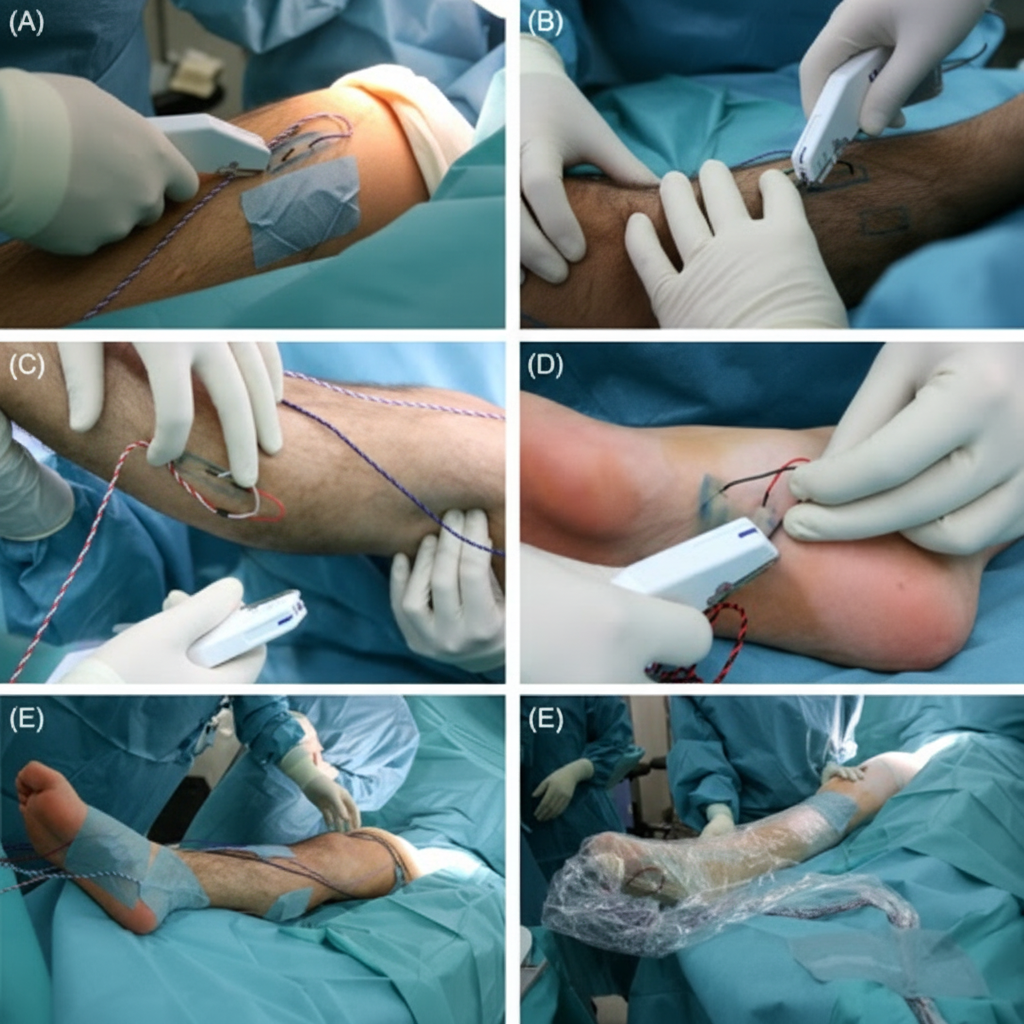
Train of fasciculations is seen in which of the following drugs?
Plasma potassium concentration is increased with which of the following agents?
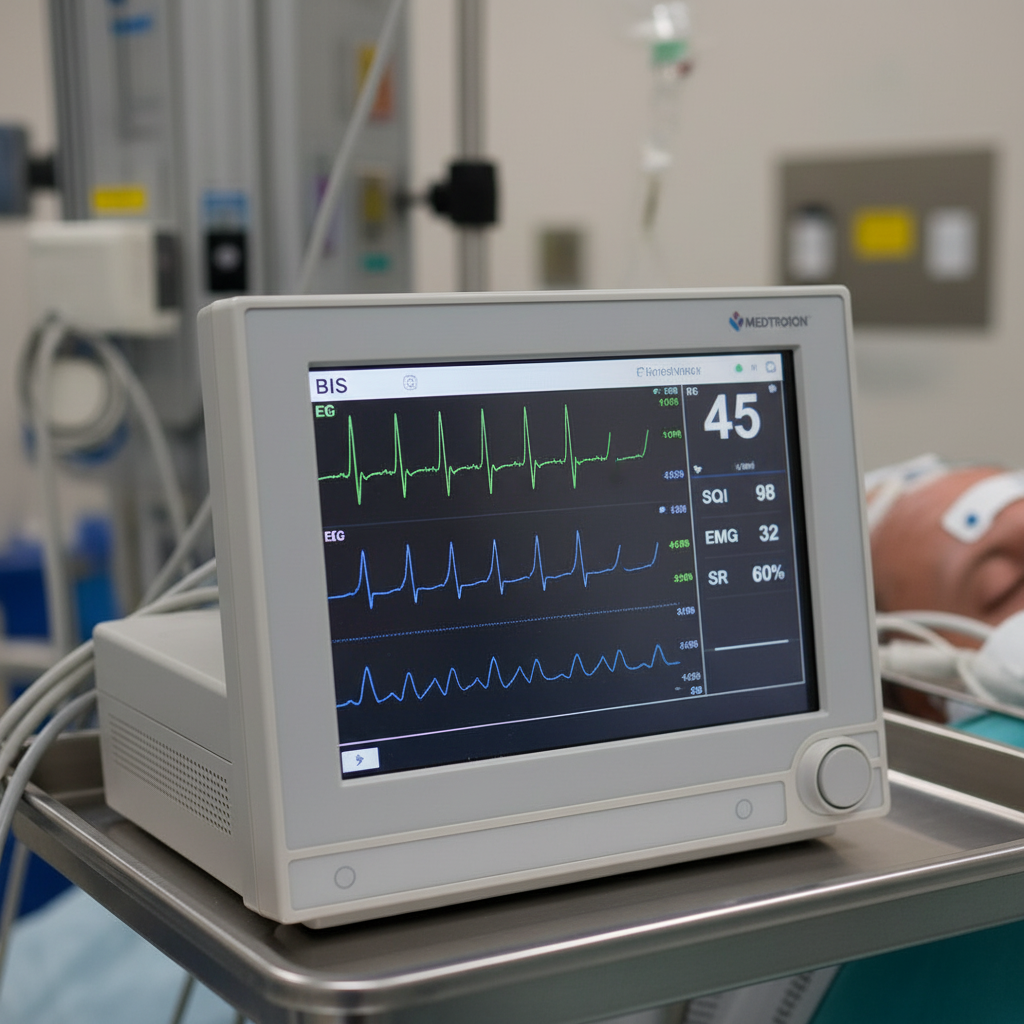
Most anesthetic drugs are detectable by entropy monitoring, except:
The most sensitive investigation for air embolism is:
What is an indication for nasotracheal intubation?
What is a characteristic of an ideal gas?
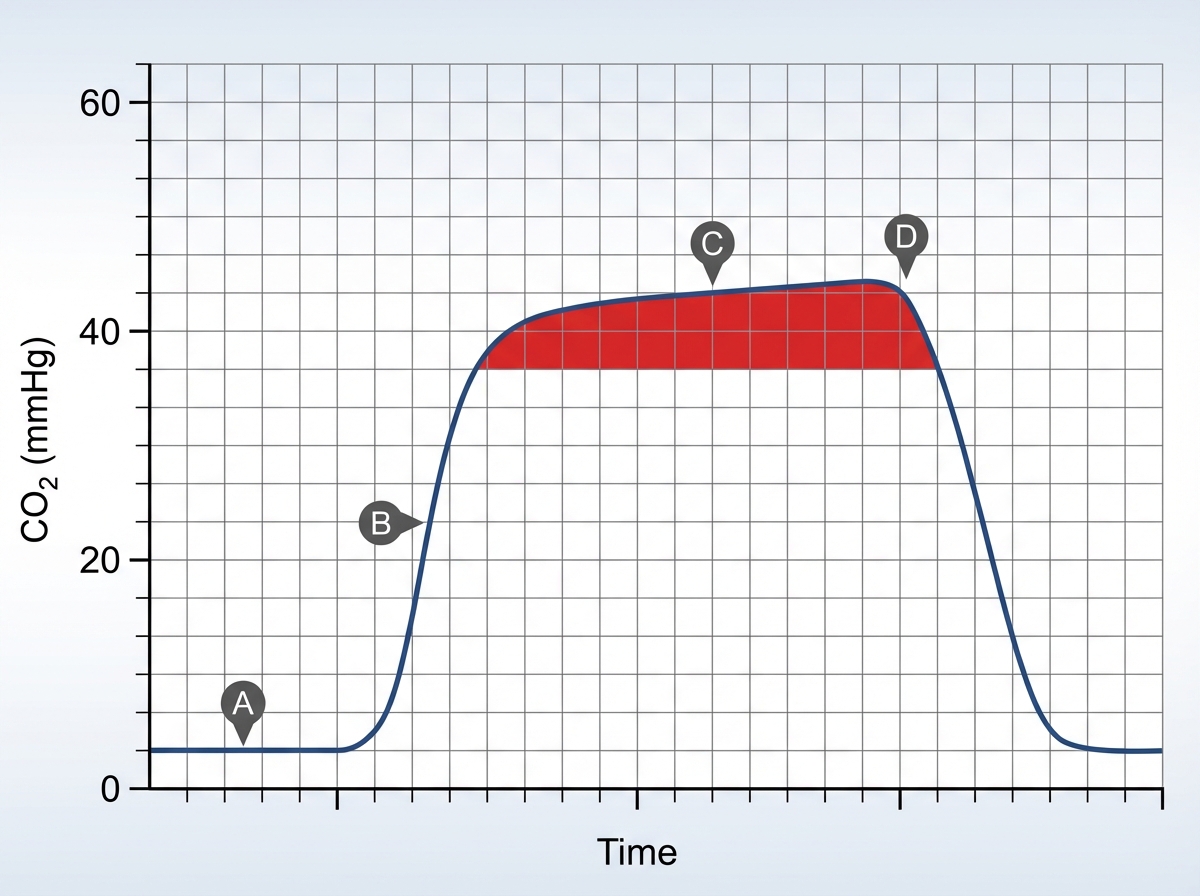
What happens to end-tidal carbon dioxide (ETCO2) when the rate and depth of breathing are increased?
Which of the following is a fixed performance device?
100 grams of soda lime absorbs what percentage of CO2?
Explanation: **Explanation:** The choice of intravenous (IV) cannula size in clinical practice is governed by **Poiseuille’s Law**, which states that the flow rate of a fluid is directly proportional to the fourth power of the radius of the tube ($Q \propto r^4$) and inversely proportional to its length. Therefore, a larger internal diameter (smaller gauge number) and a shorter length allow for the fastest administration of fluids and blood products. * **16 G (Grey):** This is a large-bore cannula capable of high flow rates (approx. 180–200 mL/min). It is the standard choice for **major surgeries, trauma, and massive hemorrhage** where rapid volume replacement is critical to maintain hemodynamic stability. * **20 G (Pink):** This is the most common "universal" size used for routine IV maintenance and blood transfusions in stable patients. However, its flow rate (approx. 60 mL/min) is insufficient for "massive" bleeding. * **22 G (Blue):** Primarily used for older patients with fragile veins or pediatric patients. It is too narrow for rapid resuscitation. * **24 G (Yellow):** Used mainly in neonates and pediatrics. High resistance makes it unsuitable for rapid fluid boluses. **High-Yield Clinical Pearls for NEET-PG:** * **The "Ideal" Resuscitation Cannula:** While 16 G is the standard answer, the **14 G (Orange)** cannula provides the maximum flow rate (up to 300 mL/min) and is preferred in ER/Trauma settings if the vein allows. * **Flow & Length:** A short, wide peripheral cannula (e.g., 14G or 16G) often provides faster flow than a long, narrow Triple Lumen Central Venous Catheter. * **Color Coding Memory Aid:** * 14G: Orange (Fire - Urgent) * 16G: Grey (Stone - Solid/Major) * 18G: Green (Go - Blood transfusion) * 20G: Pink (Routine)
Explanation: **Explanation:** **Succinylcholine (Suxamethonium)** is the correct answer because it is the only **depolarizing neuromuscular blocker (DNMB)** used clinically. Its mechanism involves binding to nicotinic acetylcholine receptors at the motor endplate, causing prolonged depolarization. Before the muscle becomes paralyzed, this initial stimulation results in disorganized muscle fiber contractions known as **fasciculations**. This "train of fasciculations" is a hallmark clinical sign of Succinylcholine administration, typically occurring just before the onset of flaccid paralysis. **Analysis of Incorrect Options:** * **Mivacurium:** This is a non-depolarizing neuromuscular blocker (benzylisoquinolinium class). Unlike Succinylcholine, it acts as a competitive antagonist and does not cause initial depolarization or fasciculations. * **Baclofen:** A GABA-B receptor agonist used as a centrally acting muscle relaxant for spasticity. It works in the spinal cord, not at the neuromuscular junction, and does not cause fasciculations. * **Galanthamine:** An acetylcholinesterase inhibitor used primarily in Alzheimer’s disease. While it increases acetylcholine levels, it is not used to induce surgical muscle relaxation or fasciculations. **High-Yield Clinical Pearls for NEET-PG:** * **Phase I vs. Phase II Block:** Succinylcholine normally produces a Phase I block (characterized by fasciculations and lack of fade on Train-of-Four monitoring). Prolonged exposure can lead to a Phase II block, which resembles a non-depolarizing block. * **Side Effects:** Fasciculations are associated with post-operative myalgia. Pre-treatment with a small dose of a non-depolarizing agent ("pre-curarization") can prevent these fasciculations. * **Contraindications:** Avoid Succinylcholine in patients with burns, massive trauma, or upper motor neuron lesions due to the risk of **hyperkalemia**. It is also a potent trigger for **Malignant Hyperthermia**.
Explanation: **Explanation:** **Succinylcholine (Option A)** is the correct answer. It is a **depolarizing neuromuscular blocker** that acts as an agonist at the nicotinic acetylcholine receptors (nAChR) at the motor endplate. When it binds, it causes prolonged depolarization of the muscle cell membrane. This process leads to an efflux of intracellular **potassium (K+)** into the extracellular fluid. In a healthy individual, this typically results in a transient rise of approximately **0.5 mEq/L**. **Why the other options are incorrect:** * **Atracurium (Option B) and Pancuronium (Option C):** These are **non-depolarizing** neuromuscular blockers. They act as competitive antagonists at the nAChR, preventing depolarization and thus do not cause an efflux of potassium. * **Propofol (Option D):** This is an intravenous anesthetic agent that works primarily via GABA-A receptors. It does not significantly affect serum potassium levels. **Clinical Pearls for NEET-PG:** 1. **Exaggerated Hyperkalemia:** While the 0.5 mEq/L rise is safe in healthy patients, life-threatening hyperkalemia can occur in patients with **upregulation of extrajunctional receptors**. This is seen in: * Severe burns (after 24–48 hours) * Massive trauma/crush injuries * Upper or lower motor neuron lesions (e.g., stroke, spinal cord injury) * Prolonged immobilization 2. **Pre-curarization:** Giving a small dose of a non-depolarizing agent before Succinylcholine may reduce fasciculations but **does not** reliably prevent the rise in potassium. 3. **Contraindication:** Succinylcholine is strictly contraindicated in patients with pre-existing hyperkalemia or the conditions mentioned above.
Explanation: **Explanation:** Entropy monitoring is a processed EEG technology used to assess the depth of anesthesia by measuring the irregularity (chaos) of brain electrical activity. It utilizes two parameters: **State Entropy (SE)**, which reflects cortical activity, and **Response Entropy (RE)**, which includes frontal electromyography (EMG) activity. **Why Nitrous Oxide (N₂O) is the correct answer:** Nitrous oxide is a unique anesthetic agent that primarily acts as an NMDA receptor antagonist. Unlike volatile anesthetics, N₂O does not produce the typical dose-dependent suppression of EEG activity (slowing and increased regularity). Instead, it often maintains high-frequency EEG patterns or even increases beta-wave activity. Consequently, **Entropy (and BIS) monitors fail to accurately reflect the depth of anesthesia when N₂O is used**, as the index values do not decrease significantly despite clinical sedation. **Why the other options are incorrect:** * **Isoflurane, Halothane, and Sevoflurane (Options A, B, D):** These are potent volatile halogenated ethers/hydrocarbons. They act primarily via GABA-A receptors, causing a predictable, dose-dependent decrease in EEG complexity. As the concentration of these agents increases, the brain's electrical activity becomes more rhythmic and less "chaotic," which is accurately detected and quantified by Entropy monitors as a lower numerical value. **High-Yield Clinical Pearls for NEET-PG:** * **Ketamine & N₂O:** Both are NMDA antagonists and are the two classic drugs that "deceive" depth-of-anesthesia monitors (Entropy/BIS) by maintaining high index values despite adequate anesthesia. * **Range:** Entropy values range from **0 (isoelectric EEG/deep anesthesia)** to **91 (SE)** or **100 (RE - awake state)**. * **Target Range:** For general anesthesia, the recommended Entropy range is typically **40 to 60**. * **Advantage of Entropy:** It can distinguish between shallow anesthesia (high RE and SE) and inadequate analgesia/neuromuscular blockade (high RE but low SE due to EMG activity).
Explanation: **Explanation:** Venous Air Embolism (VAE) is a critical complication, particularly in neurosurgical procedures performed in the sitting position. The sensitivity of detection depends on the monitoring modality used. **1. Why Transesophageal Echocardiography (TEE) is correct:** TEE is the **most sensitive** monitoring tool for detecting air embolism. It can visualize even minute amounts of air (as small as 0.02 mL/kg) in the right atrium or ventricle before any physiological changes occur. It is also the only monitor capable of identifying a Paradoxical Air Embolism (PAE) via a patent foramen ovale. **2. Analysis of Incorrect Options:** * **Decreased tidal volume of $CO_2$ (EtCO2):** While a sudden drop in end-tidal $CO_2$ is a very common and useful clinical sign of VAE (due to increased dead space), it is **less sensitive** than TEE and Doppler. It only changes after significant air has entered the pulmonary circulation. * **Decreased tidal volume of $NO_2$:** This is not a standard monitoring parameter for air embolism. In fact, if $N_2O$ is being used during an embolic event, it should be discontinued immediately as it diffuses into the air bubble and expands its volume. * **Central Venous Pressure (CVP):** An increase in CVP is a **late sign** of VAE, occurring only when there is significant right heart strain or outflow obstruction. **High-Yield Clinical Pearls for NEET-PG:** * **Order of Sensitivity (Highest to Lowest):** TEE > Precordial Doppler > EtCO2 > Pulmonary Artery Pressure > ECG/BP changes. * **Precordial Doppler:** The most sensitive **non-invasive** monitor. It produces a characteristic "mill-wheel murmur" (though the murmur heard via stethoscope is a late sign). * **Management (The "D-O-R-A" mnemonic):** **D**iscontinue $N_2O$, **O**fload (Flood the surgical field with saline), **R**eposition (Left lateral decubitus/Durant’s position), and **A**spirate air via a CVP catheter.
Explanation: **Explanation:** **Nasotracheal intubation** involves passing an endotracheal tube through the nose into the trachea. It is primarily indicated when the oral route is inaccessible or when the presence of an oral tube would interfere with the surgical field. **1. Why "Oral Surgeries" is correct:** In surgeries involving the oral cavity (e.g., dental procedures, mandibulectomy, or tongue surgeries), an orotracheal tube obstructs the surgeon's view and limits access. Nasotracheal intubation provides a clear surgical field and allows for better manipulation of the mandible and assessment of dental occlusion. **2. Why the other options are incorrect:** * **Coagulopathy (B):** This is a **relative contraindication**. The nasal mucosa is highly vascular; intubating a patient with bleeding diathesis carries a high risk of severe epistaxis, which can lead to airway obstruction or aspiration. * **Basilar skull fractures (C):** This is an **absolute contraindication**. There is a significant risk of the tube accidentally entering the cranial vault through a fractured cribriform plate, leading to direct brain injury or infection. * **Maxillary/Mid-face fractures (D):** Similar to skull fractures, complex facial traumas (like Le Fort II or III fractures) often involve the ethmoid bone or skull base. Nasal instrumentation in these cases risks intracranial placement or worsening of the fracture. **High-Yield Clinical Pearls for NEET-PG:** * **Preferred Nostril:** The right nostril is generally preferred because the bevel of the tube faces the septum, reducing the risk of turbinate injury. * **Vasoconstriction:** Pre-treatment with topical vasoconstrictors (e.g., Oxymetazoline or Xylometazoline) is essential to minimize bleeding. * **Magill Forceps:** Often required during direct laryngoscopy to guide the tip of the nasotracheal tube into the glottis. * **Contraindications to remember:** Nasal polyps, abscesses, and severe deviated nasal septum (DNS).
Explanation: ### Explanation An **Ideal Gas** is a theoretical gas composed of many randomly moving point particles that are not subject to interparticle interactions. In medical physics and anesthesiology, understanding gas behavior is crucial for managing vaporizers, gas cylinders, and mechanical ventilation. **Why Option D is Correct:** An ideal gas strictly follows the **Ideal Gas Equation ($PV = nRT$)**, which is a combination of three fundamental laws: 1. **Boyle’s Law:** $V \propto 1/P$ (at constant temperature). 2. **Charles’ Law:** $V \propto T$ (at constant pressure). 3. **Avogadro’s Law:** $V \propto n$ (equal volumes of gases contain equal numbers of molecules at the same temperature and pressure). **Analysis of Incorrect Options:** * **Option A:** Incorrect. According to Boyle’s Law, volume is **inversely** proportional to pressure ($V \propto 1/P$), not directly. * **Option B:** Incorrect. According to Charles’ Law, volume is **directly** proportional to absolute temperature ($V \propto T$). * **Option C:** Incorrect. At absolute zero ($0\ K$ or $-273.15^\circ C$), the volume of an ideal gas is theoretically **zero**, as molecular motion ceases entirely. **Clinical Pearls for NEET-PG:** * **Real vs. Ideal:** No gas is perfectly ideal. Real gases (like $O_2$ or $N_2O$) behave most like ideal gases at **high temperatures and low pressures**. * **Critical Temperature:** The temperature above which a gas cannot be liquefied, regardless of the pressure applied (e.g., $O_2 = -118^\circ C$; $N_2O = 36.5^\circ C$). This explains why $N_2O$ is a liquid in cylinders at room temperature, while $O_2$ remains a gas. * **Adiabatic Expansion:** When a gas is released rapidly from a cylinder, it cools down (Joule-Thompson effect), which can cause frost formation on the regulator.
Explanation: **Explanation:** The correct answer is **B. Decreases**. **Underlying Medical Concept:** End-tidal carbon dioxide (ETCO2) represents the partial pressure of $CO_2$ at the end of exhalation, which closely approximates arterial $CO_2$ ($PaCO_2$) in healthy individuals. The level of $CO_2$ in the blood is primarily governed by the balance between metabolic production and alveolar ventilation. When the **rate and depth of breathing increase** (hyperventilation), the minute ventilation increases. This leads to an increased "washout" of $CO_2$ from the alveoli faster than the tissues can produce it, resulting in a decrease in both $PaCO_2$ and ETCO2. **Analysis of Options:** * **A. Increases:** This occurs during hypoventilation (decreased rate/depth), increased metabolic states (malignant hyperthermia, sepsis), or equipment failure (soda lime exhaustion). * **C & D. Remains high / No change:** These are incorrect because ETCO2 is highly dynamic and sensitive to changes in ventilation. Any significant increase in alveolar ventilation will inevitably lower the ETCO2. **Clinical Pearls for NEET-PG:** * **Hyperventilation:** Common causes include anxiety, pain, or compensatory mechanisms for metabolic acidosis. In anesthesia, it is often iatrogenic (ventilator settings). * **Sudden drop to zero:** Suggests a catastrophic event like esophageal intubation, circuit disconnection, or total airway obstruction. * **Sudden decrease (but not to zero):** Highly suggestive of a **Pulmonary Embolism** or a sudden drop in cardiac output, as $CO_2$ cannot reach the lungs to be exhaled. * **Gold Standard:** Capnography is the gold standard for confirming endotracheal tube placement.
Explanation: ### Explanation Oxygen delivery devices are classified into two categories based on whether they provide the patient's entire inspiratory requirements: **Variable Performance** and **Fixed Performance** devices. **1. Why Venturi Mask is Correct:** The **Venturi mask** is a fixed performance (high-flow) device. It operates on the **Bernoulli principle** and the **Venturi effect**. As oxygen passes through a narrow orifice, its velocity increases, creating a drop in pressure that "entrains" a specific, constant amount of room air. Because the total flow delivered exceeds the patient’s peak inspiratory flow rate, the **Fraction of Inspired Oxygen ($FiO_2$) remains constant** regardless of the patient’s respiratory rate or tidal volume. **2. Why Other Options are Incorrect:** * **Nasal Cannula & Simple Mask:** These are **variable performance (low-flow)** devices. They provide flow rates (1–6 L/min) lower than the patient’s inspiratory demand. The remaining volume is made up by room air; thus, the $FiO_2$ fluctuates based on the patient’s breathing pattern. * **Non-rebreathing Mask (NRM):** While it can deliver high concentrations of oxygen (up to 80–90%), it is still considered a variable performance device because the actual $FiO_2$ depends on the seal of the mask and the patient’s inspiratory flow. **High-Yield Clinical Pearls for NEET-PG:** * **Ideal Use:** Venturi masks are the gold standard for **COPD patients**, where precise $FiO_2$ is critical to avoid suppressing the hypoxic respiratory drive. * **Color Coding:** Venturi valves are color-coded (e.g., Blue = 24%, White = 28%, Yellow = 35%, Red = 40%). * **$FiO_2$ Calculation for Cannula:** For every 1 L/min increase in oxygen via nasal cannula, the $FiO_2$ increases by approximately **4%** (Starting from 21% at room air).
Explanation: ### Explanation **1. Why 25% is Correct:** Soda lime is a CO2 absorbent used in closed or semi-closed breathing circuits to prevent rebreathing of carbon dioxide. The theoretical maximum absorption capacity of soda lime is approximately **26 liters of CO2 per 100 grams of absorbent**. Since the density of CO2 is such that 100g of soda lime effectively neutralizes about 24-26g of CO2, it is clinically accepted that 100g of soda lime absorbs roughly **25%** of its weight in CO2. **2. Analysis of Incorrect Options:** * **A (15%):** This is lower than the standard efficiency. While "Baralyme" (a different absorbent) had a lower efficiency than modern soda lime, 15% does not represent the standard capacity of USP-grade soda lime. * **C & D (150% and 1000%):** These values are physically impossible. An absorbent cannot neutralize more than its own molecular stoichiometric capacity. These options are distractors to test the candidate's basic understanding of chemical absorption limits. **3. Clinical Pearls & High-Yield Facts for NEET-PG:** * **Composition:** Soda lime consists of 80% Calcium Hydroxide [Ca(OH)₂], 15% Water, and 4% Sodium Hydroxide [NaOH] (the catalyst). Potassium hydroxide has been largely removed to reduce the risk of Carbon Monoxide and Compound A formation. * **Indicator:** Ethyl violet is the most common pH indicator; it changes from colorless to **violet/purple** when the pH drops below 10.3 (indicating exhaustion). * **Mesh Size:** The standard size is **4–8 mesh**. This provides a balance between high surface area for absorption and low resistance to gas flow. * **Reaction:** The neutralization of CO2 is an **exothermic reaction** (produces heat) and requires moisture (water) to proceed. * **Compound A:** Formed specifically when **Sevoflurane** reacts with dry soda lime. * **Carbon Monoxide:** Formed when **Desflurane** (most common), Enflurane, or Isoflurane reacts with desiccated (dry) absorbent.
Anesthesia Machine Components
Practice Questions
Breathing Systems
Practice Questions
Vaporizers
Practice Questions
Gas Cylinders and Pipeline Supply
Practice Questions
Anesthesia Ventilators
Practice Questions
Standard Monitoring: ECG, BP, Pulse Oximetry
Practice Questions
Capnography
Practice Questions
Neuromuscular Monitoring
Practice Questions
Temperature Monitoring
Practice Questions
Invasive Hemodynamic Monitoring
Practice Questions
Equipment Troubleshooting
Practice Questions
Safety Features in Modern Anesthesia Equipment
Practice Questions
Get full access to all questions, explanations, and performance tracking.
Start For Free