What does the acronym DISS stand for in the context of medical gas supply?
What is the primary use of the Macintosh laryngoscope?
Which of the following inhalational agents sensitizes myocardium to catecholamines
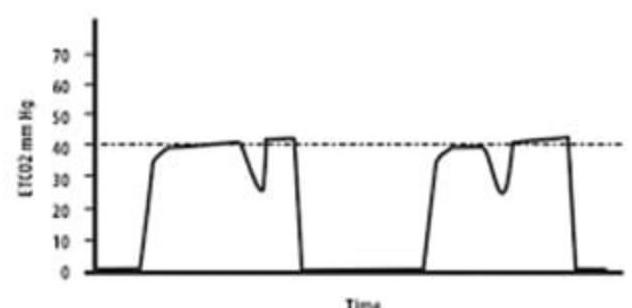
What does the image of the Capnograph depict?

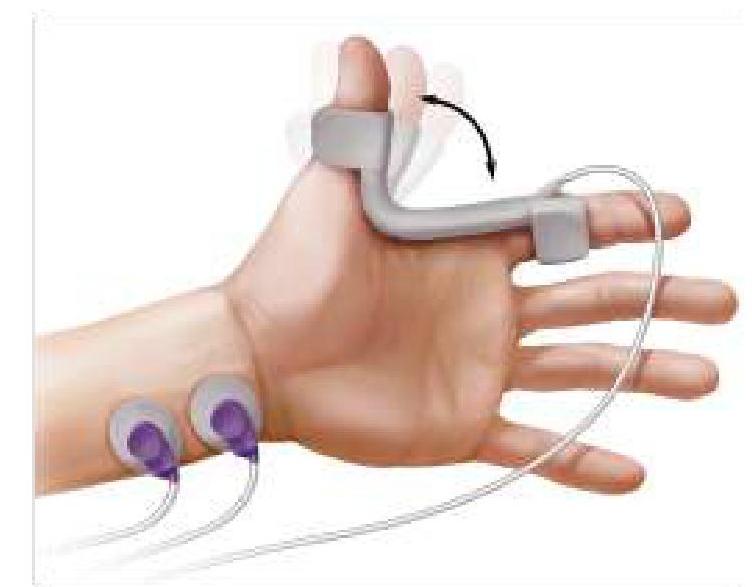
The image given below shows neuromuscular monitoring of the patient after anesthesia. What is the most commonly used nerve for monitoring?

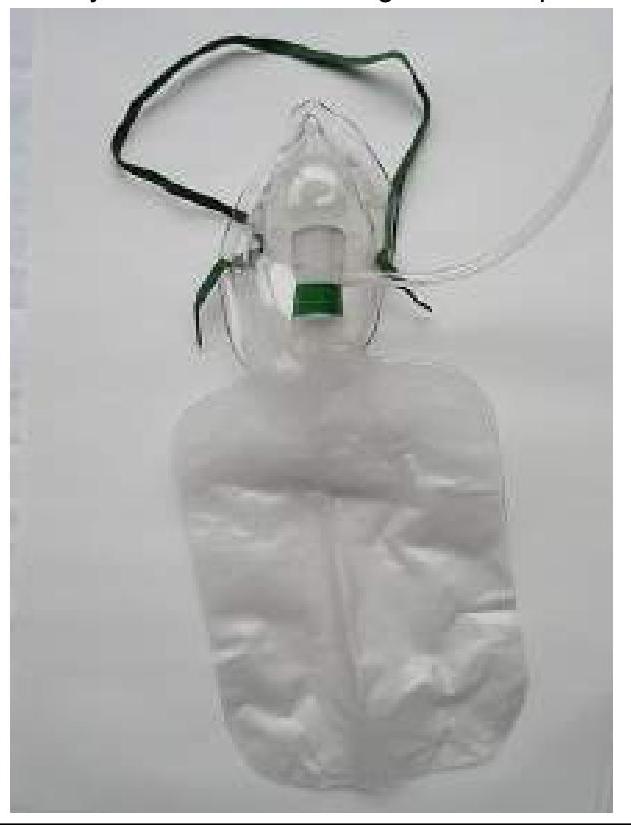
Identify the mask used for patients requiring high concentrations of oxygen.
Which anesthetic gas is known for causing maximum respiratory irritation?
Which of the following is the most commonly used objective method for monitoring depth of anaesthesia in modern practice?
What is the purpose of Murphy's eye in an endotracheal tube?
Which is the most effective circuit in spontaneous anaesthesia?
Explanation: ***Diameter Index Safety System*** - **DISS** stands for **Diameter Index Safety System**, which is a standard for **medical gas connections** designed to prevent misconnections. - It uses specific **diameters and thread sizes** for different gases, ensuring that a hose for one gas cannot be connected to an outlet for another. *To provide safe gas delivery* - While DISS aims to provide **safe gas delivery**, this answer describes the *purpose* rather than the full acronym. - The name itself refers to the **mechanical indexing** that ensures safety, not just the general goal. *To monitor blood pressure* - This option is **unrelated** to the function of DISS. - **Blood pressure monitoring** uses entirely different medical devices and principles. *To monitor central venous pressure* - This function is also **irrelevant** to DISS. - **Central venous pressure monitoring** involves catheters and transducers, not gas supply connections.
Explanation: ***To assist in endotracheal intubation*** - The **Macintosh laryngoscope** is designed to visualize the **larynx** and vocal cords by displacing the tongue and epiglottis indirectly, facilitating the passage of an **endotracheal tube** into the trachea. - Its curved blade fits into the **vallecula**, an anatomical space between the base of the tongue and the epiglottis, allowing for indirect lifting of the epiglottis. *To assess degree of neuromuscular blockade* - Assessing neuromuscular blockade typically involves a **nerve stimulator** to measure the response of a muscle to electrical stimulation, such as the **train-of-four (TOF)** ratio. - A laryngoscope is a tool for airway management, not for monitoring the reversal or depth of muscle relaxation. *To assess level of general anesthesia* - The level of general anesthesia is assessed using various clinical signs (e.g., heart rate, blood pressure, pupillary responses) and specialized monitors like the **Bispectral Index (BIS) monitor** which analyzes brain waves. - A laryngoscope is irrelevant for determining the depth of anesthesia; its use is primarily mechanical to secure the airway. *To monitor respiratory depression* - Monitoring respiratory depression primarily involves assessing **respiratory rate**, **tidal volume**, **end-tidal CO2 (capnography)**, and **oxygen saturation (pulse oximetry)**. - While it can be used to establish an airway in a patient with respiratory depression, it does not function as a continuous monitoring device for respiratory function itself.
Explanation: ***Halothane*** - **Halothane** is known to significantly **sensitize the myocardium to circulating catecholamines**, increasing the risk of arrhythmias, particularly ventricular extrasystoles. - This effect is due to its interaction with calcium channels and other cellular mechanisms that alter cardiac excitability. *Desflurane* - While Desflurane can cause a **transient increase in heart rate and blood pressure** upon rapid increase in concentration, it does not sensitize the myocardium to catecholamines to the same extent as halothane. - Its cardiovascular effects are usually mediated by sympathetic nervous system activation rather than enhanced myocardial sensitivity. *Nitrous Oxide* - **Nitrous oxide** has minimal direct effects on the myocardium and does not sensitize it to catecholamines. - It tends to have a mild sympathomimetic effect, but its impact on cardiac excitability is generally considered benign. *Enflurane* - **Enflurane** has a moderate effect on the cardiovascular system, causing dose-dependent myocardial depression. - However, it does not significantly sensitize the myocardium to catecholamines in the same problematic way that halothane does.
Explanation: ***Capnograph indicating spontaneous respiration*** - The characteristic dip in the **EtCO2 waveform** during the plateau phase (phaselll) is indicative of a breath taken by the individual which is a classic finding of **spontaneous respiration**. This dip is because when a patient takes a breath in, fresh gas with no CO2 is pulled into the sampling line momentarily decreasing the measured CO2. - This pattern is often referred to as a "**curare cleft**" or "**respiratory indentation**," and it signifies incomplete paralysis or return of spontaneous breathing. *Capnograph during inspiration* - During normal inspiration, there is no CO2 in the inhaled air, so the capnograph reading would theoretically drop to **zero** or near-zero, not exhibit a waveform with a plateau. - The baseline of the capnograph reflects inspiration, which should be flat (zero CO2). *Capnograph showing inspiration with cardiac oscillations* - Cardiac oscillations typically appear as **small rhythmic fluctuations** on the baseline or the expiratory plateau, synchronized with the heartbeat. - These oscillations are usually much smaller and do not present as distinct, sharp dips within the expiratory plateau as seen in the image. *Capnograph during expiration* - During a normal expiration, the capnograph waveform rises from a baseline of zero (phase I, **dead space ventilation**) to a plateau (phase III, **alveolar gas emptying**) with a peak value, before returning to baseline during inspiration. - While the image shows expiration with a plateau, the key feature of the dip during the plateau is more specific to spontaneous respiration than just general expiration.
Explanation: ***Ulnar nerve*** - The **ulnar nerve** is the most commonly chosen site for neuromuscular monitoring due to its ease of accessibility and predictable response of the **adductor pollicis muscle**. - Stimulation of the ulnar nerve at the wrist causes **adduction of the thumb**, which is easily quantifiable and provides reliable information about neuromuscular blockade. *Median nerve* - While the median nerve can be monitored, it is **less commonly used** than the ulnar nerve due to potential for confusing responses or less clear twitch measurements. - Stimulation of the median nerve primarily leads to **flexion of the thumb and fingers**, but the adductor pollicis response from ulnar nerve stimulation is often preferred for its clear isolation. *Radial nerve* - The radial nerve innervates muscles involved in **wrist and finger extension**, which are not typically targeted for standard neuromuscular monitoring. - Its stimulation can be more complex to interpret and may not provide the precise information needed for monitoring paralytic depth in the same way as the ulnar nerve. *Metacarpal nerve* - The term "metacarpal nerve" is broad and refers to nerves near the metacarpals, which are **not primary sites** for direct neuromuscular blocking agent monitoring. - Specific named peripheral nerves like the ulnar, median, or radial nerves are targeted for their predictable muscle responses, not generalized metacarpal innervation.
Explanation: ***Non-rebreathing mask*** - The **non-rebreathing mask** delivers the **highest concentration of oxygen** (FiO2 60-90%) among standard oxygen masks due to a one-way valve that prevents exhaled air from returning to the reservoir bag and ensures only pure oxygen is inhaled. - It is identifiable by the **reservoir bag** which fills with oxygen and one-way valves. *Hudson mask* - The **Hudson mask**, also known as a simple face mask, delivers a **moderate concentration of oxygen (FiO2 35-50%)** and does not have the reservoir bag or one-way valves seen in the image. - It is used for patients requiring a higher oxygen concentration than nasal cannulae, but less than a non-rebreather. *Nebulizer* - A **nebulizer** is a device used to administer medication in the form of a **mist**, typically for respiratory conditions, not primarily for administering high concentrations of oxygen. - While it can be oxygen-driven, its primary function is drug delivery, not oxygen concentration. *Venturi mask* - The **Venturi mask** delivers **precise and consistent concentrations of oxygen (FiO2 24-60%)** through interchangeable jets, which are not visible in the depicted mask. - It is used when precise control over oxygen delivery is crucial, such as in patients with **COPD**.
Explanation: ***Desflurane*** - **Desflurane** is known for its **pungent odor** and tendency to cause significant **respiratory irritation** (e.g., coughing, breath-holding, laryngospasm) upon induction, especially at higher concentrations. - This irritation is exacerbated by its **low blood-gas solubility**, leading to rapid increases in alveolar concentration and rapid achievement of brain partial pressure. *Halothane* - **Halothane** is a potent anesthetic but is generally associated with less respiratory irritation compared to desflurane due to its **less pungent odor**. - Its main concerns include **hepatotoxicity** (halothane hepatitis) and cardiac arrhythmias, not primary respiratory irritation. *Enflurane* - **Enflurane** can cause some respiratory irritation, but it is generally less irritating than desflurane. - It is also associated with a risk of **seizures** at higher concentrations, making it less commonly used. *Sevoflurane* - **Sevoflurane** is known for its **non-pungent odor** and minimal respiratory-irritant properties, making it an excellent choice for **inhalational induction**, especially in pediatric patients. - While it can generate compound A (a nephrotoxic substance) with CO2 absorbents, it is very well tolerated by the respiratory system.
Explanation: ***Bispectral Index (BIS)*** - The **Bispectral Index (BIS) monitor** is the most widely adopted and studied objective method for assessing the hypnotic component of anesthesia depth. - It processes **electroencephalogram (EEG) signals** into a dimensionless number (0-100) to indicate the patient's level of consciousness, with lower numbers typically indicating deeper anesthesia. *Electromyography (EMG) monitoring* - **EMG monitoring** primarily assesses **neuromuscular blockade**, not the depth of anesthesia itself. - While muscle relaxation is part of general anesthesia, EMG specifically measures the response to nerve stimulation to gauge the degree of **paralysis**. *Heart rate variability (HRV) monitoring* - **Heart rate variability (HRV)** reflects the balance of the **autonomic nervous system** and can be influenced by various factors, including stress, pain, and anesthetic agents. - While it offers some insight into autonomic responses to anesthesia, it is not a direct or primary measure of the **hypnotic depth** of anesthesia. *End-tidal CO2 monitoring* - **End-tidal CO2 (EtCO2) monitoring** is critical for assessing **ventilation adequacy** and confirming correct endotracheal tube placement. - It does not directly measure the **depth of consciousness** or brain activity related to anesthesia.
Explanation: ***Prevent complete obstruction*** - **Murphy's eye** is a small hole located on the distal tip of the endotracheal tube, allowing for alternative airflow if the **beveled tip** becomes occluded against the tracheal wall. - This design feature provides a safety mechanism, ensuring continued ventilation even if the primary opening is obstructed. *Facilitate suctioning* - While suctioning is performed through the endotracheal tube, the **Murphy's eye** itself is not primarily designed to facilitate this process. - **Suction catheters** are typically advanced through the central lumen of the tube, bypassing the eye. *Reduce risk of tube occlusion* - This option is partially correct, but it's important to distinguish the specific mechanism: Murphy's eye prevents *complete* obstruction rather than broadly reducing the *risk* of all types of occlusion. - The main purpose is to maintain an airway if the main lumen is blocked by contact with the tracheal wall and does not prevent occlusion by secretions or kinking. *Humidify inspired gases* - The **Murphy's eye** is a structural part of the endotracheal tube and plays no role in the humidification of gases. - Humidification is achieved through external devices like **heat and moisture exchangers (HMEs)** or powered humidifiers attached to the breathing circuit.
Explanation: ***Mapleson A*** - The **Mapleson A circuit** is highly efficient for **spontaneous ventilation** due to its unique design, allowing exhaled gases to preferentially exit through the expiratory valve and preventing rebreathing of CO2. - Its efficiency stems from the **fresh gas flow** being directed close to the patient, ensuring exhaled CO2 is effectively flushed away during expiration while fresh gas is accumulated for inspiration. *Mapleson B* - **Mapleson B circuits** are less efficient for spontaneous ventilation compared to Mapleson A, requiring higher fresh gas flows to prevent rebreathing. - The expiratory valve is placed close to the patient, but the fresh gas inlet is further away, making washout of exhaled CO2 less effective. *Mapleson C* - **Mapleson C circuits** share similarities with Mapleson B in terms of fresh gas inlet and expiratory valve placement but have a shorter corrugated tubing, making them even less efficient for spontaneous ventilation. - They are primarily used for short procedures or during transport due to their compact size, despite their inefficiency in clearing CO2 during spontaneous breathing. *Mapleson D* - **Mapleson D circuits** are highly effective for **controlled ventilation** due to their design, which allows for efficient fresh gas delivery and CO2 washout during positive pressure breaths. - However, for spontaneous ventilation, they are less efficient than Mapleson A, as the fresh gas flow and expiratory valve placement do not optimally prevent rebreathing without higher fresh gas flows.
Anesthesia Machine Components
Practice Questions
Breathing Systems
Practice Questions
Vaporizers
Practice Questions
Gas Cylinders and Pipeline Supply
Practice Questions
Anesthesia Ventilators
Practice Questions
Standard Monitoring: ECG, BP, Pulse Oximetry
Practice Questions
Capnography
Practice Questions
Neuromuscular Monitoring
Practice Questions
Temperature Monitoring
Practice Questions
Invasive Hemodynamic Monitoring
Practice Questions
Equipment Troubleshooting
Practice Questions
Safety Features in Modern Anesthesia Equipment
Practice Questions
Get full access to all questions, explanations, and performance tracking.
Start For Free