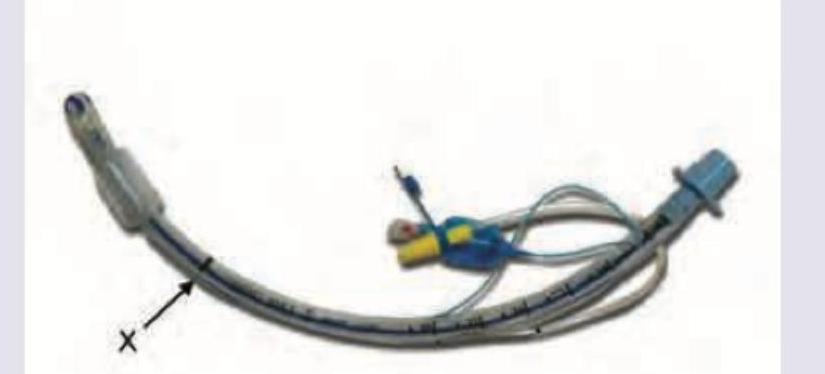
What does the marking $X$ in the endotracheal tube indicate? (Recent NEET Pattern 2016-17)
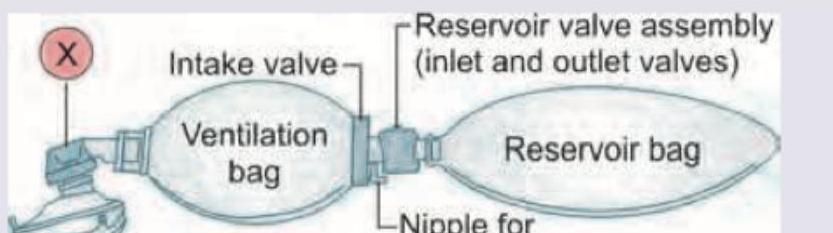
The resuscitation breathing system shown below has a valve regulating flow of fresh gas to the patient. This valve marked as $X$ is
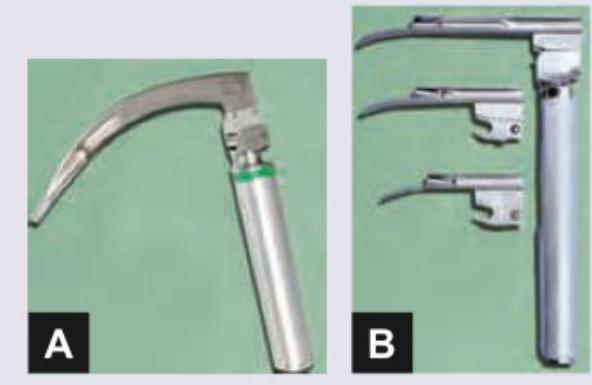
Which is correct about the laryngoscope blades shown below? (Recent NEET Pattern 2016-17)
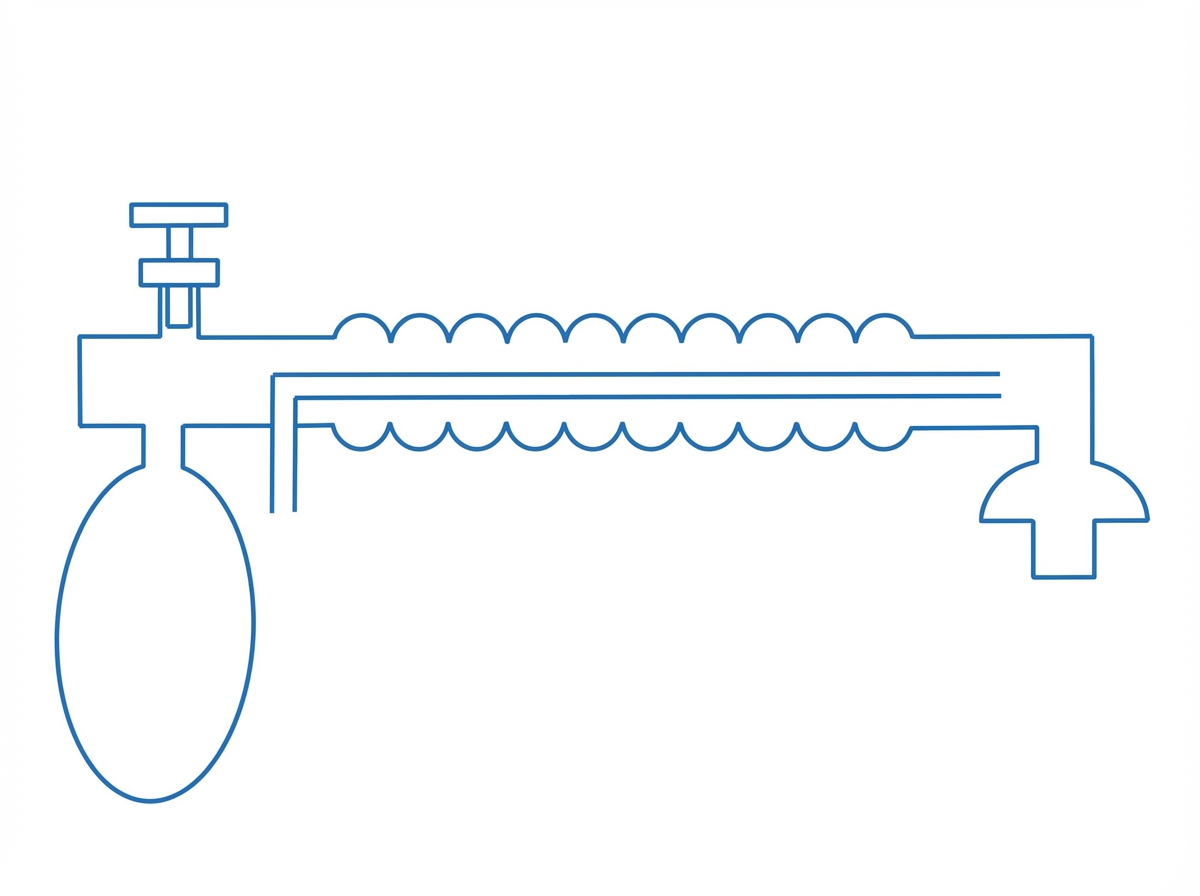
What is the following circuit known as?
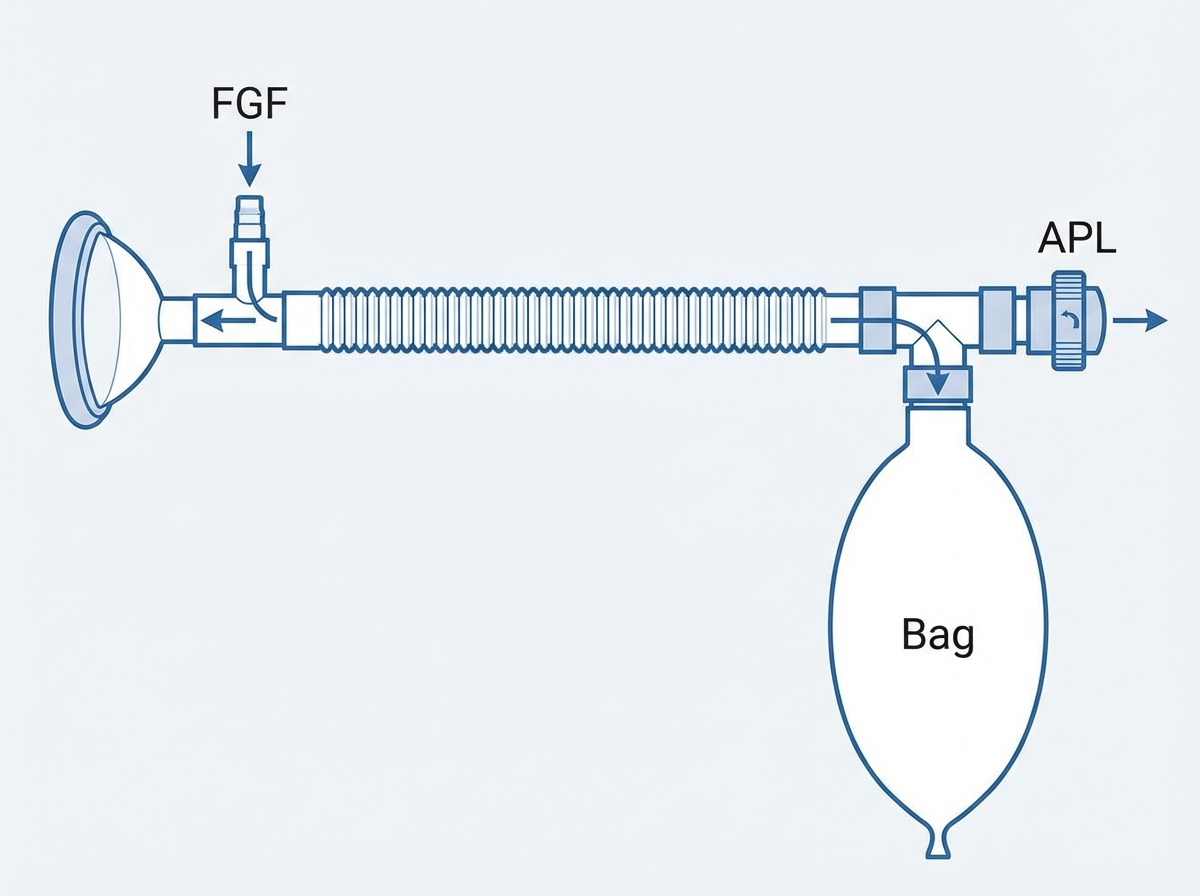
Which of the following Mapleson system is shown below?
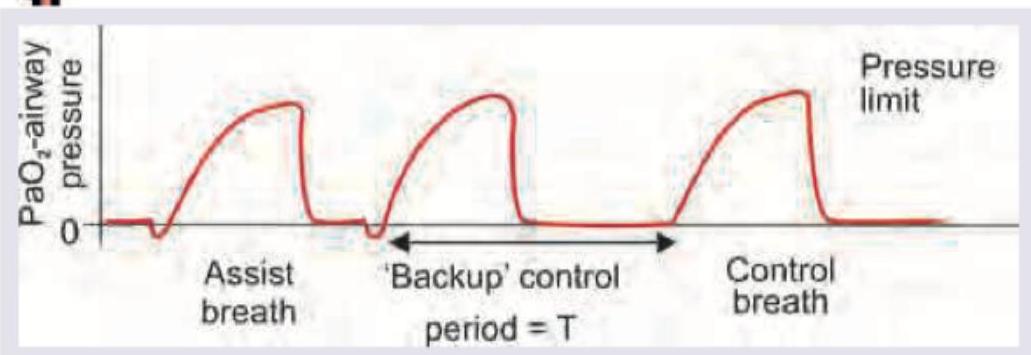
What is the mode of ventilation shown here?
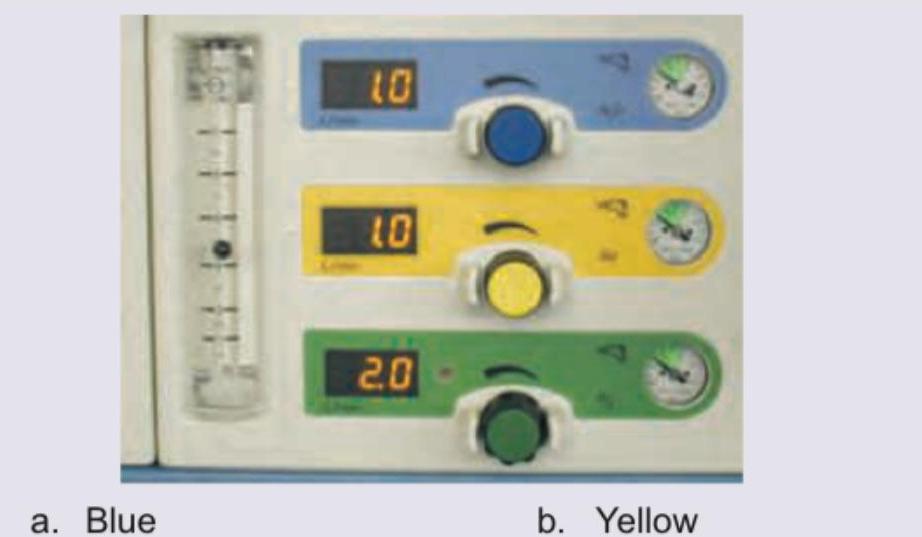
Which of the knobs shown below represent the knob controlling oxygen flow in the anesthesia machine?
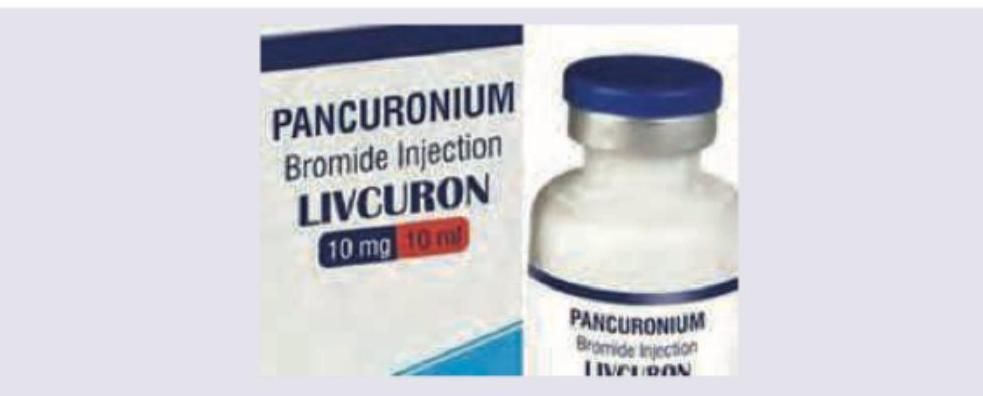
The following drug is colour coded for perioperative use:
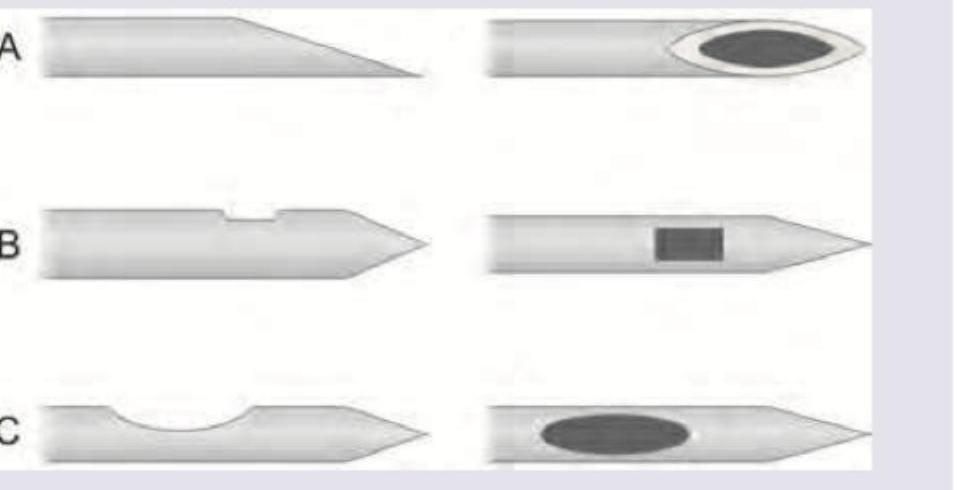
(1) Identify the spinal needles shown in the image:
Maximum oxygen concentration can be delivered by:
Explanation: ***Vocal cord marker*** - The black ring that is indicated by X on the endotracheal tube is the **vocal cord marker**. - This mark helps guide proper tube placement, ensuring that the tip is correctly positioned in the trachea, past the vocal cords. *Depth marker to indicate position at teeth* - The **depth markers** are the numerical markings along the side of the tube (e.g., 20 cm, 22 cm, etc.), which indicate the distance from the tube's tip and are used to record its position relative to the teeth or gums. - The mark X represents a specific anatomical landmark, not a measurement point against the teeth. *Right bronchus marker* - There is no specific **right bronchus marker** on standard endotracheal tubes; their design is for tracheal intubation above the carina. - If a tube enters a main bronchus (e.g., right bronchus), it's typically an error of over-insertion, not a deliberate marking purpose. *Internal diameter of tube* - The **internal diameter** of the tube is usually indicated by a number printed on the tube connector, for example, 7.0 mm or 8.0 mm. - The mark X is a visual cue for positioning during intubation, not an indicator of the tube's internal bore size.
Explanation: ***Nonrebreathing valve*** - The valve marked X is positioned at the patient connection port of the **bag-valve-mask (BVM) device**, often called a resuscitation bag. This valve configuration is characteristic of a **non-rebreathing valve**. - Its primary function is to direct fresh gas flow to the patient during inspiration and to vent exhaled gases to the atmosphere during expiration, preventing the patient from rebreathing expired carbon dioxide. *Rebreathing valve* - A rebreathing valve would allow at least a portion of the patient’s exhaled breath to be re-inspired, typically seen in systems that conserve exhaled gas. - This valve is designed to **prevent rebreathing**, as indicated by the typical flow pattern in resuscitation bags. *Adjustable pressure limiting valve* - An **adjustable pressure limiting (APL) valve** regulates the maximum pressure within the breathing circuit and allows for manual ventilation or spontaneous breathing in an anesthetic gas delivery system. - While BVMs have pressure relief mechanisms, the valve at position X is specifically for directing gas flow for ventilation, not primarily for pressure limitation. *Adjustable volume limiting valve* - There is no standard component referred to as an "adjustable volume limiting valve" in conventional resuscitation breathing systems like the one depicted. - **Volume limitation** is typically achieved by the operator’s squeeze of the bag, or by flow restrictors, not by a dedicated valve at this position.
Explanation: ***A= Macintosh blade, B= Miller's blade*** - Image A shows a **curved blade**, which is characteristic of the **Macintosh blade**. This blade is designed to displace the epiglottis indirectly. - Image B displays a **straight blade**, which is consistent with the **Miller blade**. This blade directly lifts the epiglottis. *A= Miller's blade, B= Macintosh blade* - This is incorrect because the blade in image A is curved, not straight, and the blade in image B is straight, not curved. - The **Macintosh blade is curved** and engages the vallecula, while the **Miller blade is straight** and directly lifts the epiglottis. *A= Millard blade, B= Macintosh blade* - This is incorrect as **Millard blades** are typically designed for specific pediatric uses and have a distinct shape, not matching image A. - Image B clearly shows a straight blade, which identifies it as a Miller blade, not a Macintosh blade. *A= Macintosh blade, B= Millard blade* - While image A correctly depicts a Macintosh blade, image B does not show a **Millard blade**. - **Millard blades** are generally straight blades with a specific curvature near the tip, differing from the uniform straightness of the Miller blades shown in B.
Explanation: ***Bain Circuit*** - The image displays a **Bain circuit**, which is a type of **Mapleson D circuit** commonly used in anesthesia. - Key features identifying it as a Bain circuit: **fresh gas tubing** runs coaxially *inside* the outer expiratory limb (tube-within-a-tube design), and the **APL (adjustable pressure limiting) valve** and **reservoir bag** are located at the **machine end**, away from the patient. - Fresh gas enters near the **patient end**, making it efficient at preventing rebreathing during controlled ventilation. *Magill circuit* - The **Magill circuit** is a **Mapleson A** system; its APL valve is located at the **patient end** (near the face mask), not the machine end. - It is the most efficient circuit for **spontaneous breathing** but inefficient for controlled ventilation. - It lacks the coaxial (tube-within-a-tube) configuration seen here. *Lack circuit* - The **Lack circuit** is also a **Mapleson A** type but uses a **coaxial design** (like Bain); however, the fresh gas runs in the **outer tube** and the expiratory gas runs in the **inner tube** — the reverse of the Bain circuit. - The APL valve is at the **machine end**, similar to Bain, but fresh gas flow direction distinguishes it. *Ayres T-piece* - The **Ayres T-piece** is a **Mapleson E** system used primarily in **pediatric patients**. - It has **no APL valve and no reservoir bag**, making it distinctly different from the circuit shown.
Explanation: ***Mapleson D*** - This system is characterized by the **fresh gas inlet (FG)** being close to the patient end (P) and the **reservoir bag** and **adjustable pressure-limiting (APL) valve (T)** being further away, typically near the expiratory limb. The corrugated tube separates the bag and valve from the patient. - The image clearly depicts the **fresh gas entering near a reservoir bag**, which is then connected via a corrugated tube to the patient end, with an **APL valve (T)** situated near the patient, right before the patient connection, which is characteristic of the Mapleson D system. *Mapleson A* - In a Mapleson A system, the **fresh gas inlet** is located near the **reservoir bag**, which is positioned far from the patient. The APL valve is also near the reservoir bag. - This arrangement is highly efficient for **spontaneous ventilation** but less so for controlled ventilation. The image shows a different configuration. *Mapleson B* - The Mapleson B system has both the **fresh gas inlet** and the **APL valve** close to the patient, with the reservoir bag at the end of a long expiratory limb. - This system is **not very efficient** for either spontaneous or controlled ventilation due to significant rebreathing potential, which is unlike the depicted system. *Mapleson C* - This system is similar to Mapleson B but with a **shorter expiratory limb**, making it more compact. - Both the **fresh gas inlet** and the **APL valve** are near the patient, with the reservoir bag also close to the patient. The image clearly shows a long corrugated tube, making this option incorrect.
Explanation: ***SIMV*** - The image shows both **patient-triggered** breaths ("Assist breath") and **time-triggered, ventilator-delivered** breaths ("Control breath"), with a designated "Backup control period." This combination is characteristic of **Synchronized Intermittent Mandatory Ventilation (SIMV)**, where spontaneous breaths are permitted between mandatory breaths. - In SIMV, the ventilator delivers a set number of mandatory breaths, but also allows the patient to breathe spontaneously between these mandatory breaths, which is evident from the varying timing of the assist and control breaths in the image. *ACMV* - In **Assist-Control Mechanical Ventilation (ACMV)**, every breath, whether initiated by the patient or by the ventilator's set rate, is a **full mandatory breath** delivering a preset tidal volume or pressure. The graph shows differing breath types and patient-initiated efforts that are not fully controlled each time the patient initiates. - There is no "backup control period" as a distinct concept in typical ACMV; it focuses on ensuring a preset number of full breaths and assisting patient effort, rather than synchronizing mandatory breaths with spontaneous breathing efforts to allow for intermittent spontaneous breaths. *CPAP* - **Continuous Positive Airway Pressure (CPAP)** provides a constant level of positive pressure throughout the breathing cycle to keep airways open, but it does **not provide any mandatory breaths** or set tidal volumes. The graph clearly shows actively delivered "assist" and "control" breaths, indicating mechanical support beyond simple positive pressure. - In CPAP, all breaths are spontaneous, and the ventilator does not initiate mechanical breaths, which is inconsistent with the "Control breath" seen in the image. *Noninvasive ventilation* - **Noninvasive ventilation (NIV)** is a method of delivering ventilatory support without an invasive artificial airway (e.g., through a mask). While SIMV can be delivered noninvasively, "Noninvasive ventilation" itself describes the *interface* of ventilation, not a specific *mode* of ventilation. - The image depicts the pressure-time waveform of a specific ventilation mode, which can be applied either invasively or noninvasively. Therefore, "Noninvasive ventilation" is too broad and does not specify the mode illustrated.
Explanation: ***Blue*** - In anesthesia machines, the blue knob typically controls the flow of **nitrous oxide**. However, in the provided image, the blue knob is labeled with "O2" (implied by the digital display indicating "10" which typically refers to **liters per minute of oxygen**). The question asks for the knob controlling oxygen flow, and based on the provided image, the blue knob corresponds to oxygen. - The digital display next to the blue knob reads "10", which in the context of anesthesia machines, usually signifies a flow rate in **liters per minute**. Given that the question asks for the oxygen flow control, and it is common for oxygen to be blue-coded in some parts of the world, this is the most logical choice depicted. *Yellow* - The yellow knob is labeled "Air" (implied by the digital display indicating "10"). This knob would control the flow of **medical air**, not oxygen. - Medical air is a distinct gas from oxygen, used for different purposes in anesthesia. *Green* - The green knob is labeled "N2O," representing **nitrous oxide**. This knob controls the flow of nitrous oxide, which is an anesthetic gas. - Nitrous oxide is typically color-coded blue in some regions (like the US) but green in others (like the UK/Europe), similar to how oxygen can be white or green. However, in this specific image, green is clearly labeled N2O. *None* - This option is incorrect because the image clearly shows a knob, specifically the blue one, designated for oxygen flow (implied by the "O2" display). - The presence of color-coded knobs with corresponding digital displays for gas flow negates the possibility of "None" being the correct answer.
Explanation: ***Blue*** - The image shows a **Pancuronium** vial with a blue cap and blue accents on its label and packaging, indicating that the drug is color-coded **blue**. - Color-coding of vials, particularly the cap color, is a common practice in anesthesiology to quickly identify drug classes and reduce medication errors. *Red* - While red is used for color-coding in some perioperative drugs, typically for specific drug classes like muscle relaxants, the drug shown (**Pancuronium**) is depicted with a **blue** color code. - Drug color-coding schemes can vary slightly between manufacturers and regions, but pancuronium is frequently associated with blue. *Yellow* - Yellow is a common color code for certain anesthetic drugs, such as **non-depolarizing muscle relaxant antagonists** (e.g., neostigmine, sugammadex) or some vasoactive drugs. - However, it is not the color code associated with Pancuronium in the provided image. *Orange* - Orange is also used for specific drug classes in perioperative settings, but it is not typically associated with **Pancuronium**. - For example, propofol (anesthetic induction agent) is sometimes color-coded orange.
Explanation: ***A= Whitacre, B= Quincke, C= Sprotte*** - Image A depicts a **Whitacre needle**, characterized by a **pencil-point tip** with a side port for fluid delivery. This design is known for reducing the incidence of post-dural puncture headache (PDPH). - Image B shows a **Quincke needle**, which has a **beveled cutting tip**. This design is associated with a higher risk of PDPH due to its cutting action on the dura mater. - Image C illustrates a **Sprotte needle**, also a **pencil-point tip** with a larger oval side port compared to the Whitacre. It is recognized for its ability to spread dural fibers rather than cut them, minimizing PDPH risk. *A= Quincke, B= Whitacre, C= Sprotte* - This option incorrectly identifies needle A as Quincke; the **beveled cutting tip** belongs to the Quincke needle, not the pencil-point tip. - It also misidentifies needle B as Whitacre; the **side port with an opening towards the tip** is characteristic of the Whitacre, not the cutting tip. *A= Whitacre, B= Sprotte, C= Quincke* - This option incorrectly identifies needle B as Sprotte; the **Sprotte needle has a specific pencil-point design with a large oval side port**, not a cutting tip. - It also misidentifies needle C as Quincke, confusing the **pencil-point Sprotte** with the **beveled cutting tip of a Quincke**. *A= Sprotte, B= Whitacre, C= Quincke* - This option incorrectly identifies needle A as Sprotte; the **Sprotte needle has a distinctive design with a large oval side port**, not the precise pencil-point and smaller side port of the Whitacre. - It also misidentifies needle B as Whitacre, as the **cutting tip shown in B is characteristic of a Quincke**, not a pencil-point needle.
Explanation: ***Non-rebreather mask*** - A **non-rebreather mask** provides the highest possible FiO₂ (up to **95–100%**) in spontaneously breathing patients. - It uses a **one-way valve** that prevents rebreathing of exhaled air and a **reservoir bag** that pre-fills with 100% oxygen between breaths. - This device is used for patients with **severe hypoxemia** requiring aggressive oxygen therapy. *Venturi mask* - A **Venturi mask** delivers precise, controlled oxygen concentrations (24%, 28%, 35%, 40%, 50%) through colour-coded Venturi adapters. - It is preferred for patients with **COPD** where precise FiO₂ delivery is critical to avoid suppressing the hypoxic respiratory drive. - Maximum FiO₂ achievable: ~50%. *Nasal cannula* - A **nasal cannula** delivers relatively low concentrations of oxygen (**24–44%** with flow rates of 1–6 L/min). - Suitable for patients requiring **low-flow oxygen therapy**; allows eating, drinking, and talking comfortably. *Simple face mask* - A **simple face mask** delivers moderate oxygen concentrations (**35–50%** with flow rates of 6–10 L/min). - Has no reservoir bag and no one-way valves, so there is some rebreathing of exhaled air, limiting the maximum FiO₂ achievable.
Anesthesia Machine Components
Practice Questions
Breathing Systems
Practice Questions
Vaporizers
Practice Questions
Gas Cylinders and Pipeline Supply
Practice Questions
Anesthesia Ventilators
Practice Questions
Standard Monitoring: ECG, BP, Pulse Oximetry
Practice Questions
Capnography
Practice Questions
Neuromuscular Monitoring
Practice Questions
Temperature Monitoring
Practice Questions
Invasive Hemodynamic Monitoring
Practice Questions
Equipment Troubleshooting
Practice Questions
Safety Features in Modern Anesthesia Equipment
Practice Questions
Get full access to all questions, explanations, and performance tracking.
Start For Free