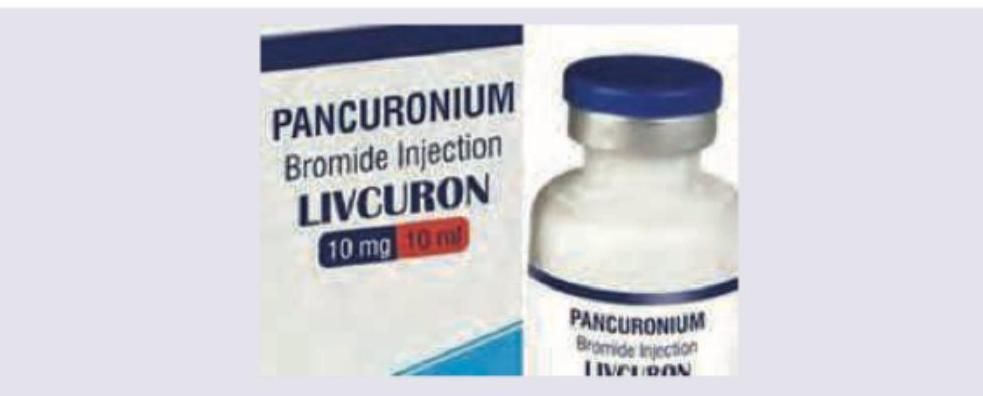
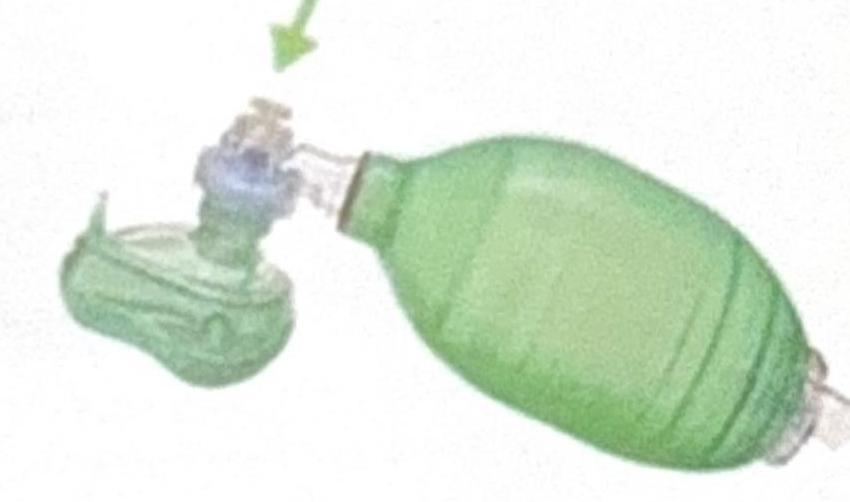
Sugammadex is used for what purpose?
What is the clinically relevant dose of neuromuscular blocker required for clinically useful relaxation?
The provided capnography (ETCO2) curve depicts which of the following conditions?

Nasal intubation is contraindicated in which of the following conditions?
What is the most sensitive method for non-invasive monitoring of cardiovascular ischemia in the perioperative period?
Which of the following anesthetic agents has the least diffusion coefficient?
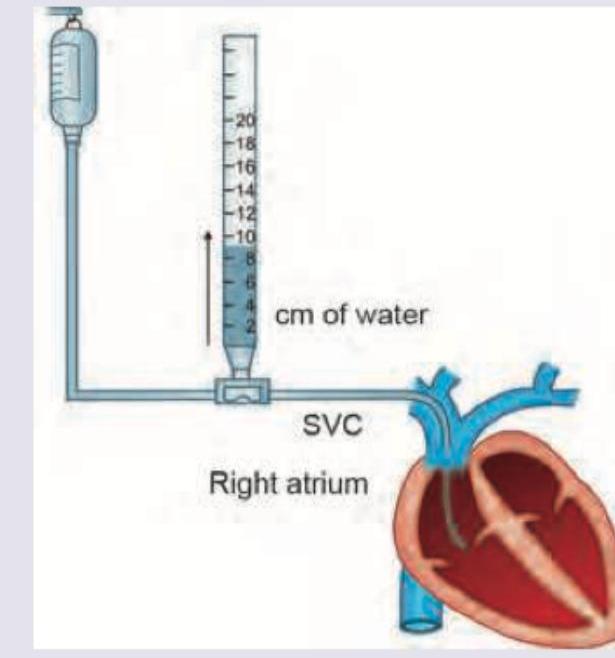
Central venous pressure (CVP) and pulmonary wedge pressure provide an accurate assessment of all of the following EXCEPT?
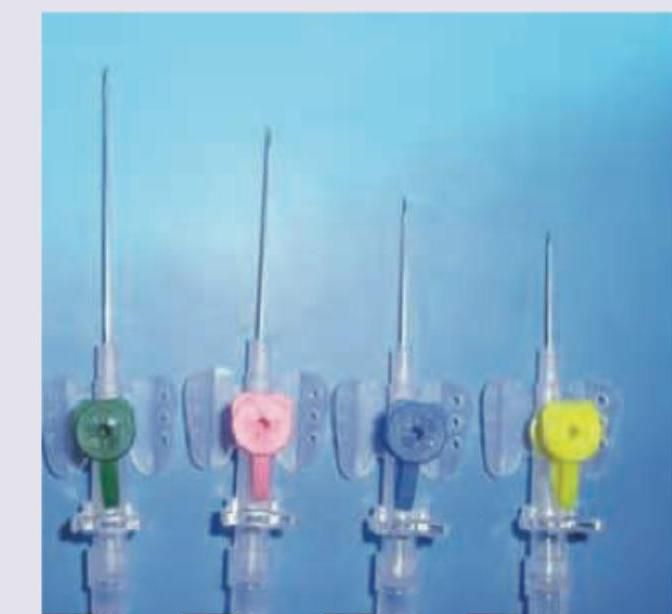
What is the color of a 22 gauge IV cannula?
What is true about Nitrous Oxide (N2O)?
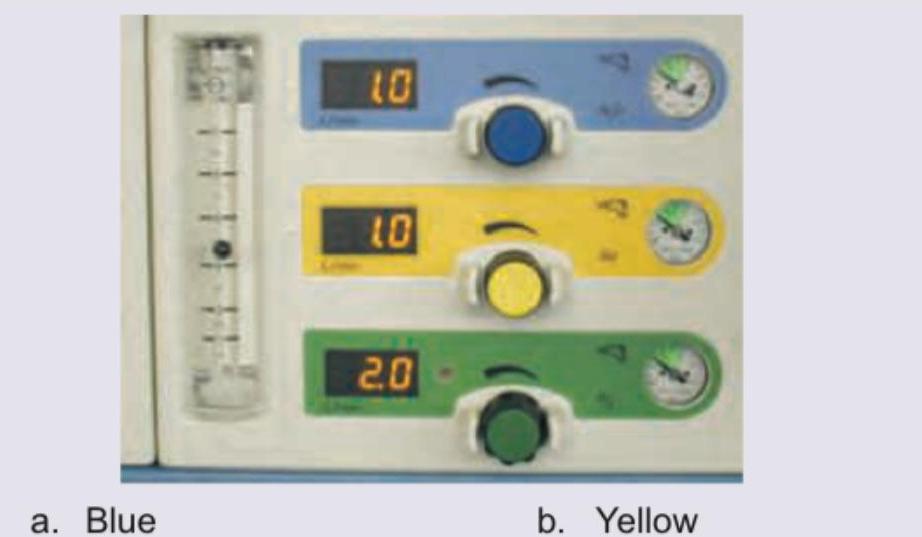
All of the following are safety measures to prevent the delivery of a hypoxic gas mixture to the patient, except –
Explanation: **Explanation:** **Sugammadex** is a revolutionary selective relaxant binding agent (SRBA) used specifically for the **reversal of neuromuscular blockade** induced by aminosteroid non-depolarizing muscle relaxants (NDMRs). **Mechanism of Action:** Sugammadex is a modified $\gamma$-cyclodextrin. Its structure resembles a hollow truncated cone with a hydrophobic interior and a hydrophilic exterior. It works by **encapsulating** the molecules of aminosteroid agents (primarily Rocuronium and Vecuronium) in a 1:1 ratio within its cavity. This creates a concentration gradient that pulls the drug away from the nicotinic acetylcholine receptors at the neuromuscular junction back into the plasma, leading to a rapid and predictable reversal of paralysis. **Analysis of Incorrect Options:** * **Option A (Organophosphate poisoning):** Treated with Atropine (muscarinic antagonist) and Pralidoxime (oxime to reactivate acetylcholinesterase). * **Option C (Local anesthetic poisoning):** The gold standard treatment for Local Anesthetic Systemic Toxicity (LAST) is **Intravenous Lipid Emulsion (20% Intralipid)**. * **Option D (Central anticholinergic syndrome):** This is typically treated with **Physostigmine**, a tertiary amine acetylcholinesterase inhibitor that crosses the blood-brain barrier. **High-Yield Clinical Pearls for NEET-PG:** 1. **Selectivity:** It works best for **Rocuronium** > Vecuronium > Pancuronium. It has **no effect** on Succinylcholine or Benzylisoquinolines (e.g., Atracurium, Cisatracurium). 2. **Advantage over Neostigmine:** Unlike Neostigmine, Sugammadex does not require co-administration of anticholinergics (like Glycopyrrolate) because it does not inhibit acetylcholinesterase and thus lacks muscarinic side effects (bradycardia, secretions). 3. **Dosing:** 2 mg/kg for routine reversal; 4 mg/kg for deep blockade; 16 mg/kg for immediate rescue reversal after a 1.2 mg/kg dose of Rocuronium. 4. **Key Side Effect:** It can interfere with **hormonal contraceptives**; patients should be advised to use backup contraception for 7 days post-administration.
Explanation: **Explanation:** In clinical anesthesiology, the potency of a neuromuscular blocking agent (NMBA) is defined by its **ED95**. This represents the dose required to produce a **95% suppression of the twitch height** (usually measured at the adductor pollicis muscle via ulnar nerve stimulation). **Why ED95 is the Correct Answer:** For effective surgical relaxation and to facilitate endotracheal intubation, a near-complete blockade of the neuromuscular junction is required. A 95% reduction in twitch height correlates with clinically useful muscle relaxation. In practice, the "intubating dose" is typically calculated as **2 × ED95**, which ensures rapid onset and excellent intubating conditions for nearly all patients. **Analysis of Incorrect Options:** * **ED50:** This is the dose that produces 50% twitch suppression. While it is a standard pharmacological measure of median potency, it provides insufficient relaxation for surgery or intubation. * **ED75 & ED25:** These doses represent 75% and 25% suppression, respectively. They are occasionally used in dose-response studies but have no practical utility for achieving the profound relaxation required in the operating theater. **High-Yield Clinical Pearls for NEET-PG:** * **Potency vs. Onset:** There is an inverse relationship between potency and onset time. Low-potency drugs (like Succinylcholine or Rocuronium) have a faster onset because more molecules are available to saturate the receptors quickly. * **Monitoring:** Clinical recovery is defined as a **Train-of-Four (TOF) ratio > 0.9**. * **Diaphragm vs. Adductor Pollicis:** The diaphragm is more resistant to NMBAs than peripheral muscles; therefore, an ED95 at the thumb does not guarantee complete diaphragmatic paralysis.
Explanation: ***Spontaneous breathing effort*** - The capnography waveform shows a **curare cleft** or **notch in the expiratory plateau (Phase III)**, which is the hallmark sign of spontaneous breathing effort against mechanical ventilation. - This occurs when the patient's spontaneous respiratory muscles contract during the expiratory phase, causing a characteristic **dip or notch** in the otherwise flat plateau portion of the ETCO2 curve. *Bronchospasm* - Produces a **shark fin appearance** with a prolonged, slanted expiratory upstroke and delayed return to baseline due to **airway obstruction**. - The waveform would show **prolonged Phase II and III** with a gradual slope rather than the sharp plateau seen in normal capnography. *Esophageal intubation* - Results in a **flat line or absent ETCO2 waveform** since no carbon dioxide is being exhaled from the lungs. - May show minimal initial CO2 readings from **gastric contents** but quickly drops to **zero or near-zero values**. *Accidental extubation* - Shows a **sudden drop to zero ETCO2** as the endotracheal tube is no longer in the airway to detect exhaled carbon dioxide. - The waveform would demonstrate an **abrupt cessation** of the capnography trace rather than any characteristic pattern modifications.
Explanation: **Explanation:** **1. Why CSF Rhinorrhea is the Correct Answer:** Cerebrospinal fluid (CSF) rhinorrhea indicates a **fracture of the cribriform plate** (base of the skull). In such cases, the anatomical barrier between the nasal cavity and the intracranial space is compromised. Attempting nasal intubation can lead to the accidental passage of the endotracheal tube or nasogastric tube into the **cranial vault**, causing direct brain injury or introducing bacteria that lead to life-threatening **meningitis**. **2. Analysis of Incorrect Options:** * **Fracture of the Cervical Spine:** Nasal intubation (often fiberoptic-guided) is actually a **preferred** technique here. It allows for intubation without extending the neck, thereby preventing spinal cord injury. * **Fracture of the Mandible:** Nasal intubation is frequently indicated in mandibular fractures because it provides a clear surgical field and allows for intermaxillary fixation (wiring the jaws shut) during the procedure. * **Shortness of Breath:** This is a symptom, not a contraindication. While acute respiratory distress may require rapid sequence induction (usually oral), nasal intubation is not strictly contraindicated unless there is a specific nasal/skull base pathology. **3. High-Yield Clinical Pearls for NEET-PG:** * **Absolute Contraindications for Nasal Intubation:** Base of skull fractures (Battle’s sign, Raccoon eyes, CSF rhinorrhea/otorrhea), severe mid-face fractures (Le Fort II and III), and coagulopathy (due to risk of epistaxis). * **Preferred Tube:** The **North Polar (Ivory) tube** is specifically designed for nasal intubation to prevent kinking. * **Vasoconstriction:** Always use topical vasoconstrictors (e.g., Oxymetazoline or Xylometazoline) before nasal intubation to minimize the risk of epistaxis.
Explanation: **Explanation:** **Correct Answer: D. Intraoperative lactate (ILE)** **Why it is the most sensitive:** Cardiovascular ischemia occurs when oxygen demand exceeds supply, leading to anaerobic metabolism. **Intraoperative lactate (ILE)** is a biochemical marker of tissue hypoperfusion and cellular hypoxia. It is considered the most sensitive non-invasive indicator because metabolic changes (lactate production) occur at the cellular level **before** structural or electrical changes are visible on an ECG or before hemodynamic instability (hypotension) manifests. Elevated lactate levels serve as an early warning sign of "occult" ischemia, allowing for timely intervention. **Why other options are incorrect:** * **A. Non-invasive blood pressure (NIBP):** While hypotension can cause or result from ischemia, NIBP is a late indicator. Significant ischemia can occur even in the presence of a normal blood pressure (normotensive ischemia). * **B. Electrocardiogram (ECG):** ECG is the standard clinical tool for monitoring ischemia (looking for ST-segment changes), but it is less sensitive than biochemical markers. It only detects ischemia once electrical conductivity is affected, often missing subendocardial or localized events. * **C. Pulse oximeter:** This monitors arterial oxygen saturation ($SpO_2$). It reflects oxygenation of the blood but does not provide information regarding tissue-level perfusion or myocardial oxygen balance. **High-Yield Clinical Pearls for NEET-PG:** * **Gold Standard for Ischemia:** Transesophageal Echocardiography (TEE) is the most sensitive *overall* (detecting regional wall motion abnormalities), but it is considered invasive/semi-invasive. * **ECG Leads:** For detecting intraoperative ischemia, **Lead V5** is the most sensitive single lead (75% sensitivity), while combining **Lead II and V5** increases sensitivity to approximately 80-90%. * **Lactate Threshold:** A lactate level $>2 \text{ mmol/L}$ is generally considered the threshold for identifying patients at risk of postoperative complications.
Explanation: **Explanation:** The diffusion of a gas across a membrane (like the alveolar-capillary membrane) is governed by **Graham’s Law**, which states that the rate of diffusion of a gas is inversely proportional to the square root of its molecular weight ($Rate \propto 1/\sqrt{MW}$). **Why N₂O is the Correct Answer:** Nitrous Oxide ($N_2O$) has the lowest molecular weight (approx. **44**) among the given options. Because it is the smallest molecule, it has the highest rate of diffusion but the **least (lowest) diffusion coefficient** when considering the resistance to movement compared to larger volatile molecules. In the context of this specific question (often framed in exams regarding the physical property of the agent), $N_2O$ is the most "diffusible" gas, allowing it to rapidly enter the bloodstream and closed gas spaces. **Analysis of Incorrect Options:** * **Halothane (MW ~197), Enflurane (MW ~184), and Isoflurane (MW ~184):** These are all halogenated volatile anesthetics. They have significantly higher molecular weights than $N_2O$. Consequently, their diffusion coefficients are higher (indicating they move more slowly across membranes based on size) and they are less "diffusible" than Nitrous Oxide. **High-Yield Clinical Pearls for NEET-PG:** 1. **Second Gas Effect:** Because $N_2O$ diffuses so rapidly from the alveoli into the blood, it increases the concentration of the co-administered volatile agent (e.g., Halothane), speeding up induction. 2. **Diffusion Hypoxia (Fink Effect):** Upon discontinuation, $N_2O$ rushes out of the blood into the alveoli so quickly that it dilutes alveolar oxygen. Prevention: Administer 100% $O_2$ for 3–5 minutes after stopping $N_2O$. 3. **Expansion of Closed Spaces:** Due to its high diffusibility, $N_2O$ is contraindicated in conditions like pneumothorax, intestinal obstruction, and after vitreoretinal surgery (gas bubbles), as it expands these spaces rapidly.
Explanation: **Explanation:** Central Venous Pressure (CVP) and Pulmonary Capillary Wedge Pressure (PCWP) are measures of **intravascular pressure** and **volume status**, not indicators of cellular-level oxygenation. **1. Why "Tissue Perfusion" is the correct answer (The Exception):** Tissue perfusion refers to the delivery of oxygenated blood to the capillary beds to meet metabolic demands. CVP and PCWP only measure the "input" or "filling" pressures of the heart. A patient can have a normal or even high CVP/PCWP (e.g., in cardiogenic shock) while suffering from profound tissue hypoxia. To assess tissue perfusion, clinicians must look at markers like **Serum Lactate, Base Excess, Mixed Venous Oxygen Saturation ($SvO_2$), and Urine Output.** **2. Why the other options are incorrect:** * **Volume Depletion & Overload:** CVP reflects right atrial pressure, and PCWP reflects left atrial pressure. These are standard (though sometimes limited) surrogates for assessing preload. Low pressures typically indicate hypovolemia (depletion), while high pressures suggest hypervolemia (overload). * **Myocardial Function:** PCWP is a sensitive indicator of left ventricular end-diastolic pressure (LVEDP). Significant elevations in PCWP often indicate left ventricular failure or decreased myocardial compliance. **High-Yield Clinical Pearls for NEET-PG:** * **Normal CVP:** 2–6 mmHg (or 3–8 $cmH_2O$). * **Normal PCWP:** 6–12 mmHg. * **The "Gold Standard"** for measuring PCWP is the **Swan-Ganz catheter** (Pulmonary Artery Catheter). * **West Zones:** For accurate PCWP readings, the catheter tip must be in **Zone 3** of the lung, where pulmonary venous pressure exceeds alveolar pressure. * **CVP vs. PCWP:** CVP monitors Right Heart function; PCWP monitors Left Heart function. In patients with isolated left heart failure, CVP may remain normal while PCWP is dangerously high.
Explanation: **Explanation:** The color-coding of peripheral intravenous (IV) cannulas is standardized internationally (ISO 10555-5) to allow rapid identification of the gauge size, which determines the flow rate. The gauge (G) refers to the external diameter; as the gauge number increases, the diameter of the cannula decreases. **Correct Answer: C. Blue** A **22 Gauge** cannula is color-coded **Blue**. It has a flow rate of approximately 31-36 ml/min. It is commonly used for older children, adolescents, and adults with small or fragile veins where rapid fluid resuscitation is not the primary goal. **Incorrect Options:** * **A. Green (18G):** This is a large-bore cannula (approx. 90-103 ml/min) used for rapid fluid replacement, blood transfusions, and major surgical procedures. * **B. Gray (16G):** A very large-bore cannula (approx. 180-200 ml/min) used in trauma and emergency settings for massive fluid resuscitation. * **D. Pink (20G):** The most commonly used size in clinical practice (approx. 54-61 ml/min), suitable for general infusions and non-emergency blood transfusions. **High-Yield Clinical Pearls for NEET-PG:** * **The "Rule of 2":** Remember the sequence: **14G (Orange)** → **16G (Gray)** → **18G (Green)** → **20G (Pink)** → **22G (Blue)** → **24G (Yellow)** → **26G (Violet)**. * **Poiseuille’s Law:** Flow rate is directly proportional to the fourth power of the radius and inversely proportional to the length. Therefore, a shorter, wider cannula (like 14G) provides the fastest flow. * **Blood Transfusion:** Ideally requires an 18G (Green) or 20G (Pink) to prevent hemolysis and ensure adequate flow.
Explanation: **Explanation:** Nitrous Oxide ($N_2O$), commonly known as "Laughing Gas," is a non-potent inhalation anesthetic with unique physical and storage properties frequently tested in NEET-PG. 1. **Pin Index System (Option A):** The Pin Index Safety System (PISS) prevents the accidental connection of the wrong gas cylinder to the anesthesia machine. For Nitrous Oxide, the specific pin positions are **3 and 5**. (For comparison, Oxygen is 2 and 5). 2. **Color Coding (Option B):** International and Indian standards dictate that Nitrous Oxide cylinders are color-coded **Blue**. The shoulder and the body of the cylinder are both blue. (Oxygen cylinders have a black body with a white shoulder). 3. **Physical State (Option C):** Nitrous Oxide has a critical temperature of $36.5^\circ C$. Since this is above room temperature, it can be liquefied by pressure. Therefore, it is **stored as a liquid** in cylinders under a pressure of approximately 750 psi (50 bar). **Why "All of the Above" is Correct:** All three statements accurately describe the safety, identification, and storage characteristics of $N_2O$. **High-Yield Clinical Pearls for NEET-PG:** * **Pressure Gauge Fallacy:** Because $N_2O$ is stored as a liquid, the pressure gauge stays constant at 750 psi until all the liquid has evaporated. A drop in pressure only occurs when the cylinder is nearly empty (less than 1/4th remaining). * **Filling Ratio:** In tropical climates like India, cylinders are filled to a ratio of **0.67** to prevent explosion due to pressure rise. * **Second Gas Effect:** $N_2O$ is used to speed up the induction of other volatile anesthetics. * **Contraindications:** Avoid in pneumothorax, intestinal obstruction, and middle ear surgeries, as $N_2O$ expands in closed air-filled spaces.
Explanation: The goal of safety measures in an anesthesia machine is to prevent the delivery of a **hypoxic gas mixture** (FiO2 < 21%). **Explanation of the Correct Answer (Option B):** The **Pin Index Safety System (PISS)** is designed to prevent the **accidental attachment** of the wrong gas cylinder to the yoke of the anesthesia machine (e.g., attaching a Nitrous Oxide cylinder to the Oxygen yoke). While this is a vital safety feature, it ensures the *identity* of the gas being supplied, not the *composition* of the mixture being delivered to the patient. If the oxygen cylinder runs out during a procedure, the PISS cannot prevent the delivery of pure N2O from the other flowmeter. Therefore, it is technically categorized as a "gas supply safety feature" rather than a "hypoxic mixture prevention" feature. **Analysis of Other Options:** * **Option A (Oxygen valve location):** In the flowmeter manifold, the oxygen flow control valve is always placed **downstream** (closest to the common gas outlet). This ensures that if there is a leak in the upstream flowmeter tubes (like N2O), oxygen is the last gas added, minimizing the risk of a hypoxic mixture. * **Option C (Fail-safe valve):** Also known as the Pressure Sensor Shut-off Valve, it is located downstream from the N2O supply. It automatically shuts off or proportionally decreases the flow of N2O (and other gases) if the oxygen supply pressure drops below a certain threshold (usually 30 psi). **High-Yield Clinical Pearls for NEET-PG:** * **Hypoxic Guard (Proportioning Systems):** Modern machines use mechanical (Link-25) or pneumatic links to ensure a minimum oxygen concentration of 25%. * **Oxygen Analyzer:** This is the **only** monitor that detects a hypoxic mixture resulting from a pipeline crossover (the ultimate safety check). * **PISS Codes:** Oxygen (2, 5), Nitrous Oxide (3, 5), Air (1, 5). * **DISS (Diameter Index Safety System):** Prevents accidental cross-connection of pipeline hoses.
Anesthesia Machine Components
Practice Questions
Breathing Systems
Practice Questions
Vaporizers
Practice Questions
Gas Cylinders and Pipeline Supply
Practice Questions
Anesthesia Ventilators
Practice Questions
Standard Monitoring: ECG, BP, Pulse Oximetry
Practice Questions
Capnography
Practice Questions
Neuromuscular Monitoring
Practice Questions
Temperature Monitoring
Practice Questions
Invasive Hemodynamic Monitoring
Practice Questions
Equipment Troubleshooting
Practice Questions
Safety Features in Modern Anesthesia Equipment
Practice Questions
Get full access to all questions, explanations, and performance tracking.
Start For Free