Which of the following drugs is not used in the Jorgenson technique?
What is measured when the radial artery is cannulated?
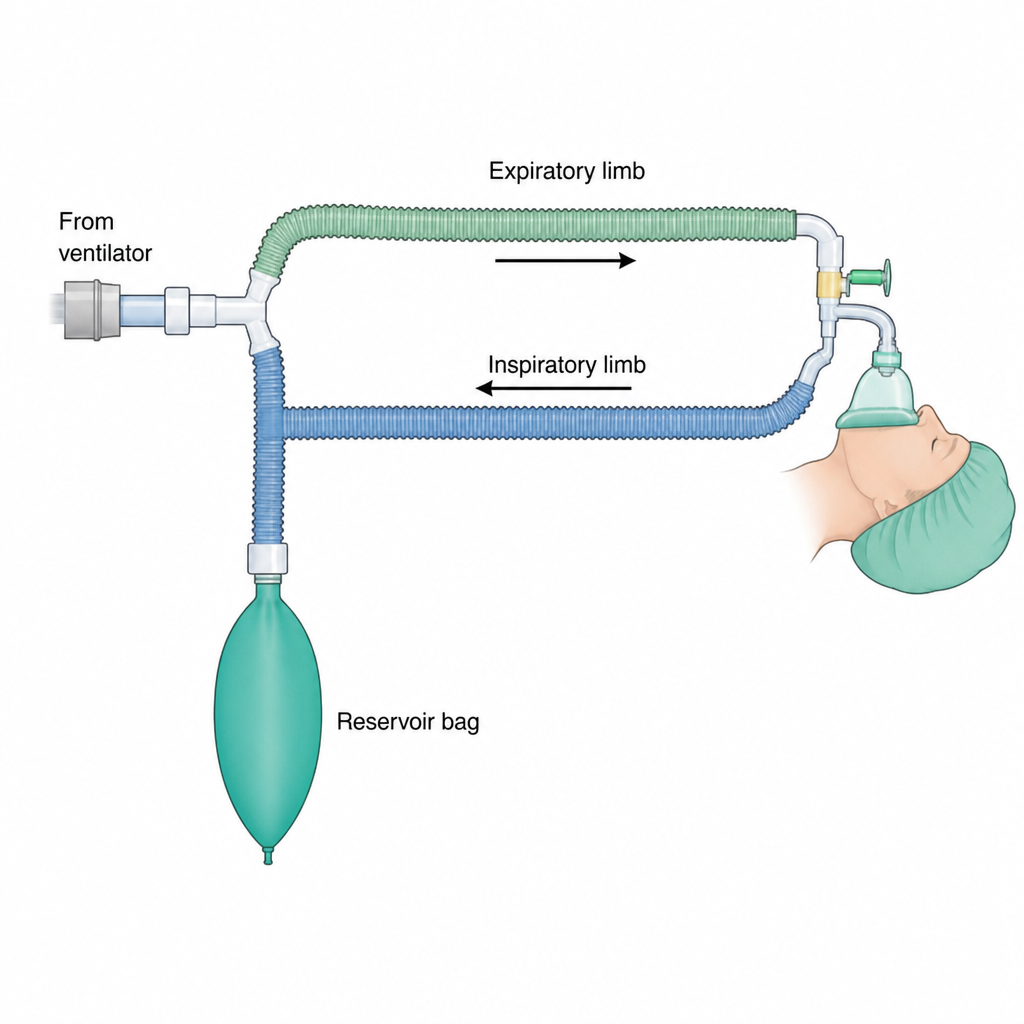
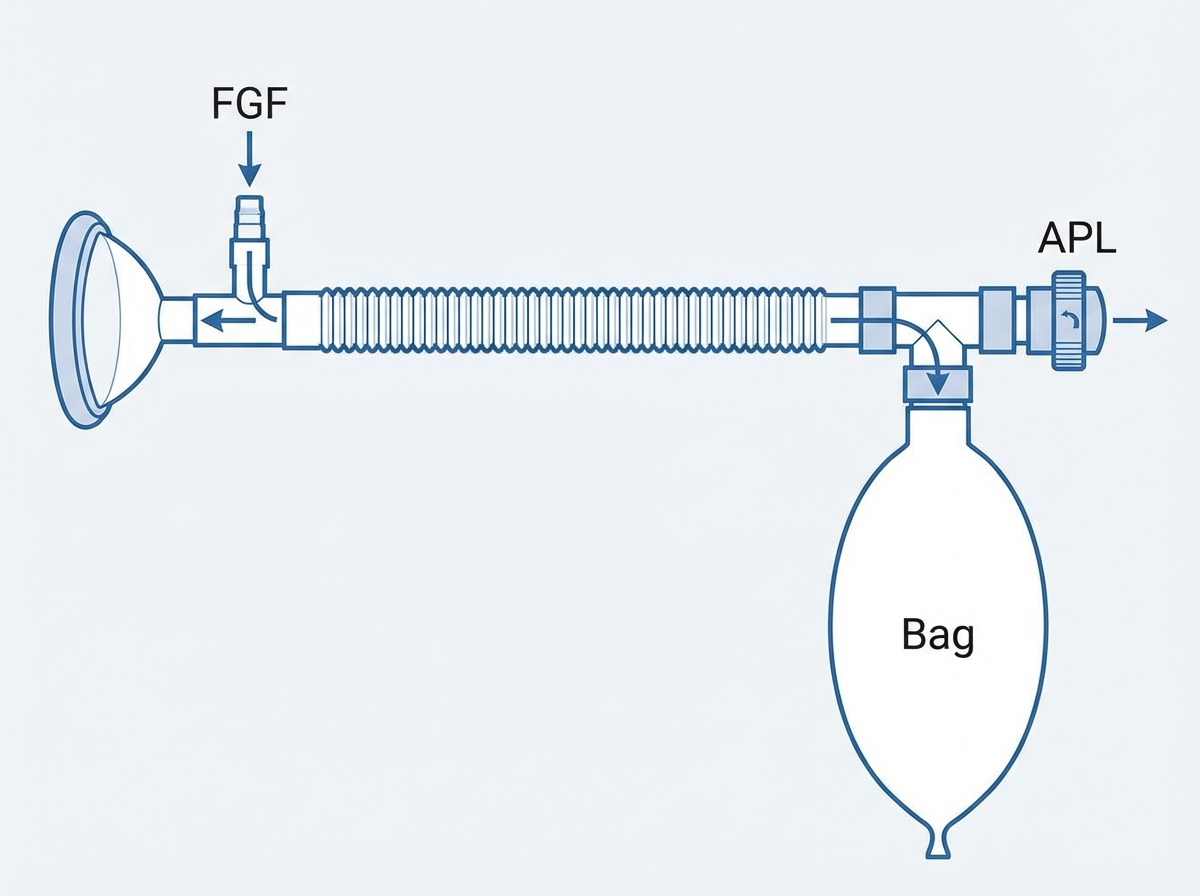
For what purpose is a Type E circuit used?
In hyperbaric oxygenation, what is the maximum allowed pressure of O2?
Which of the following produces the least damage to blood elements during cardiopulmonary bypass?
You are administering anesthesia in a location that does not have an oxygen supply line. The E-cylinder that you are using reads 500 psig. Your oxygen flows are 10 L/min. Approximately how long does it take for your E-cylinder to empty?
For a fit and healthy young female undergoing laparoscopic gynecological surgery, which of the following does not require continuous monitoring during anesthesia?
What is the flow rate and pressure provided by the emergency oxygen flush in an anesthetic machine?
Regarding variable orifice flowmeters, which statement is true?
Henry's law states that?
Explanation: The **Jorgensen technique** (also known as the Loma Linda technique) is a classic intravenous sedation method developed by Dr. Niels Jorgensen in 1945. It was primarily designed for deep sedation in dentistry to provide analgesia, amnesia, and relaxation for long procedures. ### **Explanation of the Correct Answer** **C. Propofol** is the correct answer because it was not part of the original Jorgensen triad. Propofol is a modern intravenous anesthetic agent (an alkylphenol) that was developed much later (introduced in the 1970s/80s). The Jorgensen technique specifically utilizes a combination of a barbiturate, an opioid, and an anticholinergic. ### **Analysis of Incorrect Options** The Jorgensen technique involves the sequential administration of three specific drugs: * **A. Pentobarbital:** A short-acting barbiturate used to provide the primary sedative and hypnotic effect. It is titrated until the patient reaches a state of "baseline sedation" (first signs of cortical depression). * **D. Pethidine (Meperidine):** A synthetic opioid added to provide systemic analgesia and enhance the sedative effect of the barbiturate. * **B. Scopolamine (Hyoscine):** An anticholinergic added primarily for its potent **antegrade amnestic** properties and its ability to decrease salivary secretions (antisialagogue effect). ### **High-Yield Clinical Pearls for NEET-PG** * **The Triad:** Remember the Jorgensen components as **P-P-S** (Pentobarbital, Pethidine, Scopolamine). * **Verrill’s Sign:** While the Jorgensen technique relies on titration, the **Verrill sign** (ptosis of the eyelid halfway across the pupil) is a clinical landmark used to indicate the endpoint of sedation, specifically associated with **Diazepam** sedation (not Jorgensen). * **Sequence:** In the Jorgensen technique, Pentobarbital is always administered first, followed by a mixture of Pethidine and Scopolamine. * **Indication:** It is used for procedures lasting longer than 2 hours; for shorter procedures, Diazepam (Valium) is often preferred.
Explanation: **Explanation:** **Why Blood Pressure is the correct answer:** Radial artery cannulation is the gold standard for **Invasive Blood Pressure (IBP)** monitoring. By placing a catheter directly into the radial artery and connecting it to a pressure transducer, clinicians obtain a continuous, beat-to-beat measurement of arterial blood pressure. This is essential in hemodynamically unstable patients, major surgeries, or when frequent arterial blood gas (ABG) sampling is required. **Analysis of Incorrect Options:** * **A. Heart rate:** While the arterial waveform can be used to calculate heart rate, it is not the primary purpose of cannulation. Heart rate is typically monitored via ECG or Pulse Oximetry. * **C. Central venous pressure (CVP):** CVP measures the pressure in the right atrium or vena cava. It requires a **Central Venous Catheter (CVC)** inserted into a large vein (e.g., Internal Jugular or Subclavian vein), not an artery. * **D. End-tidal CO2 (EtCO2):** This is a measure of the partial pressure of carbon dioxide at the end of an exhaled breath, monitored via **Capnography** in the breathing circuit. **High-Yield Clinical Pearls for NEET-PG:** * **Allen’s Test:** Must be performed before radial artery cannulation to ensure adequate collateral circulation from the **ulnar artery**. * **Site Selection:** The radial artery is the most common site due to its superficial location and collateral flow; other sites include the femoral, brachial, and dorsalis pedis arteries. * **Transducer Leveling:** For accurate readings, the transducer must be leveled at the **phlebostatic axis** (4th intercostal space, mid-axillary line), representing the level of the right atrium. * **Complications:** The most serious complication is digital ischemia due to arterial thrombosis or embolism.
Explanation: ### Explanation The **Type E circuit**, also known as **Ayre’s T-piece**, is a valveless Mapleson circuit specifically designed for **pediatric anesthesia**. **Why C is correct:** The primary advantage of the Type E circuit is its **minimal resistance** to breathing. Because it lacks valves and a soda-lime canister, it significantly reduces the work of breathing, which is critical for neonates and small children (typically under 20-25 kg) who have limited respiratory reserve and cannot easily overcome the resistance of adult breathing circuits. **Why other options are incorrect:** * **A & B (Spontaneous/Controlled Ventilation):** While the T-piece can technically be used for both, it is highly inefficient for adults due to the requirement of very high fresh gas flows (2.5 to 3 times the minute volume) to prevent rebreathing. Furthermore, the original Type E lacks a reservoir bag, making manual controlled ventilation difficult unless modified (e.g., Jackson-Rees modification/Mapleson F). * **D (All of the above):** This is incorrect because the circuit's clinical utility is strictly defined by the patient's weight and age rather than a universal application for all ventilation types in adults. **High-Yield Clinical Pearls for NEET-PG:** * **Mapleson Classification:** Ayre’s T-piece is **Mapleson E**. * **Jackson-Rees Modification:** Adding a reservoir bag with an open tail to the expiratory limb of a Mapleson E turns it into a **Mapleson F**, allowing for easier controlled ventilation. * **Dead Space:** It has minimal dead space, making it ideal for small tidal volumes. * **Disadvantage:** The main drawback is the lack of humidification and the requirement for high fresh gas flows, which is uneconomical and causes atmospheric pollution.
Explanation: **Explanation:** Hyperbaric Oxygen Therapy (HBOT) involves breathing 100% oxygen while being in a treatment chamber pressurized to levels greater than sea level atmospheric pressure. **Why 3 atm is the correct answer:** In clinical practice, the maximum pressure used for hyperbaric oxygenation is typically **3 atmospheres absolute (ATA)**. At this pressure, the amount of dissolved oxygen in the plasma increases significantly (based on Henry’s Law), reaching approximately 6.8 volumes percent—enough to support tissue metabolism even in the absence of hemoglobin. Exceeding 3 ATA significantly increases the risk of **Central Nervous System (CNS) Oxygen Toxicity** (the Paul Bert effect), which can manifest as grand mal seizures. **Analysis of Incorrect Options:** * **1 atm (Option B):** This is standard atmospheric pressure at sea level. While breathing 100% oxygen at 1 atm is supplemental oxygen therapy, it does not constitute "hyperbaric" therapy, which by definition requires pressures >1 ATA. * **5 atm and 9 atm (Options C & D):** These pressures are excessively high for medical oxygenation. At these levels, the partial pressure of oxygen becomes acutely toxic to the brain and lungs almost immediately, leading to rapid neurological collapse. **High-Yield Clinical Pearls for NEET-PG:** * **Indications for HBOT:** Carbon monoxide (CO) poisoning, Decompression Sickness (the "Bends"), Gas Gangrene (*Clostridium perfringens*), and non-healing diabetic ulcers. * **Most Common Side Effect:** Middle ear barotrauma (due to failure to equalize pressure across the eustachian tube). * **Absolute Contraindication:** Untreated pneumothorax (as the air pocket will expand during decompression, leading to tension pneumothorax). * **Oxygen Toxicity:** CNS toxicity (seizures) occurs at high pressures (>2-3 ATA), while Pulmonary toxicity (Lorrain Smith effect) occurs with prolonged exposure to lower concentrations of oxygen.
Explanation: **Explanation:** The primary goal of an oxygenator in a cardiopulmonary bypass (CPB) circuit is to facilitate gas exchange (O₂ uptake and CO₂ removal) while minimizing trauma to blood components. **1. Why Membrane Oxygenator is the Correct Answer:** The **Membrane Oxygenator** is currently the gold standard because it utilizes a semi-permeable membrane (usually microporous polypropylene or silicone) to separate the blood phase from the gas phase. This prevents a **direct gas-blood interface**, which significantly reduces the denaturation of plasma proteins, hemolysis of red blood cells, and activation of platelets and complement systems. It mimics the natural alveolar-capillary barrier of the human lung, making it the least traumatic option for long-term bypass. **2. Why Other Options are Incorrect:** * **Bubble Oxygenator (C):** Here, oxygen is bubbled directly through the blood. The direct contact between gas and blood causes significant hemolysis and protein denaturation. It also carries a higher risk of gaseous microemboli. * **Disc (A) and Screen (D) Oxygenators:** These are older "film" oxygenators. They work by spreading blood over a large surface area (rotating discs or wire screens) exposed to an oxygen-rich atmosphere. Like bubble oxygenators, the direct gas-blood interface leads to high rates of cellular damage and is rarely used in modern practice. **Clinical Pearls for NEET-PG:** * **Ideal Oxygenator:** The membrane oxygenator is preferred for procedures lasting >2 hours to prevent "post-perfusion syndrome." * **Priming:** CPB circuits are typically primed with balanced salt solutions (like Ringer's Lactate) to maintain volume and reduce viscosity (hemodilution). * **Monitoring:** During CPB, the **Activated Clotting Time (ACT)** must be maintained >400–480 seconds to ensure adequate anticoagulation.
Explanation: ### Explanation To solve this problem, you must understand the relationship between pressure and volume in a gas cylinder (Boyle’s Law) and the specific capacities of an **Oxygen E-cylinder**. **1. Why Option B is Correct:** * **Standard Capacity:** A full Oxygen E-cylinder has a pressure of **1900–2200 psig** and contains approximately **660 Liters** of oxygen. * **The Calculation:** Since the volume of gas is directly proportional to the pressure, we use the formula: * *Remaining Volume = (Current Pressure / Full Pressure) × Full Volume* * Remaining Volume = (500 / 2000) × 660 L = **165 Liters** (approx.) * **Time to Empty:** Divide the remaining volume by the flow rate: * Time = 165 L / 10 L/min = **16.5 minutes**. * Among the choices, **15 minutes** is the closest approximation. **2. Why Other Options are Wrong:** * **Option A (5 mins):** This would imply only 50L remain, which underestimates the cylinder's capacity at 500 psig. * **Option C (50 mins):** This would be correct if the flow rate were 3 L/min, but at 10 L/min, the tank depletes much faster. * **Option D (100 mins):** This assumes a much larger cylinder (like an H-cylinder) or a very low flow rate (1.6 L/min). **3. Clinical Pearls for NEET-PG:** * **Color Coding:** Oxygen cylinders are **Black with a White shoulder** (International/ISO) or **Green** (USA). * **Pin Index Safety System (PISS):** For Oxygen, the pin positions are **2 and 5**. * **Critical Temperature:** The critical temperature of Oxygen is **-118°C**; therefore, it exists only as a gas at room temperature, and the pressure gauge linearly reflects the remaining volume. * **Nitrous Oxide Contrast:** Unlike oxygen, a $N_2O$ cylinder gauge stays at 745 psig until all liquid is evaporated; the gauge only drops when the cylinder is nearly empty (~1/4th remaining).
Explanation: **Explanation:** The core of this question lies in distinguishing between **mandatory continuous monitoring** for every patient and monitors that are essential but may not require "continuous" visual display or are specific to the breathing system rather than the patient's immediate physiology in a healthy individual. **Why ECG is the correct answer:** According to the **ASA (American Society of Anesthesiologists)** and **ISA (Indian Society of Anaesthesiologists)** standards for monitoring, while ECG is mandatory for all general anesthesia cases, it is technically the only parameter among the choices that may be monitored **intermittently** (at five-minute intervals) in a "fit and healthy" (ASA Grade I) patient, whereas oxygenation and circuit integrity must be monitored **continuously**. In many standardized exams, ECG is categorized as "essential" but not "continuous" in the same way a pulse oximeter or a disconnect alarm (which provides real-time breath-by-breath safety) functions. **Analysis of Incorrect Options:** * **Pulse Oximetry:** This is the most critical **continuous** monitor for oxygenation. It must be used on every patient undergoing anesthesia to detect hypoxia immediately. * **Disconnect Alarm:** During laparoscopic surgery, the patient is paralyzed and ventilated. A disconnect alarm (low-pressure alarm) is a mandatory safety feature of the breathing system to prevent accidental hypoventilation or apnea. * **Oxygen Analyzer:** This is a mandatory safety monitor for the **delivered gas mixture** to prevent the delivery of a hypoxic gas mixture. It must be used continuously in the inspiratory limb of the circuit. **Clinical Pearls for NEET-PG:** * **Standard I Monitoring:** Presence of qualified anesthesia personnel. * **Standard II Monitoring:** Oxygenation (Pulse oximetry, $FiO_2$ analyzer), Ventilation (Capnography, disconnect alarms), and Circulation (ECG, BP every 5 mins). * **Gold Standard for Ventilation:** Capnography ($EtCO_2$) is the most sensitive monitor for detecting circuit disconnection. * **Laparoscopy Specific:** $EtCO_2$ monitoring is vital due to $CO_2$ insufflation and the risk of $CO_2$ embolism or pneumothorax.
Explanation: The **Oxygen Flush Valve** (Emergency Oxygen Bypass) is a critical safety feature of the anesthesia machine designed to bypass the flowmeters and vaporizers to deliver a high-flow, high-pressure stream of pure oxygen directly to the common gas outlet. ### **Why Option A is Correct** The standard specifications for an oxygen flush valve are a flow rate of **35 to 75 L/min** at a pressure of **45 to 60 psi** (pounds per square inch). * **Source:** It receives oxygen directly from the high-pressure circuit (cylinder) or intermediate-pressure circuit (pipeline). * **Mechanism:** When pressed, it delivers unmetered oxygen, which is essential for rapidly filling the breathing bag or clearing anesthetic gases from the circuit. ### **Why Other Options are Incorrect** * **Options B & D:** These suggest pressures of 10–12 psi. This is too low; such pressures are typically seen in the low-pressure system (distal to flowmeters). The flush must operate at pipeline pressure to ensure rapid delivery. * **Option C:** While the pressure is correct, the flow rate of 55–75 L/min is too narrow. The internationally accepted range starts at 35 L/min. ### **High-Yield Clinical Pearls for NEET-PG** 1. **Risk of Barotrauma:** Because the flush delivers oxygen at high pressure (up to 60 psi), it should **never** be used during the inspiratory phase of mechanical ventilation. This can lead to pneumothorax or gastric insufflation. 2. **Risk of Awareness:** Since the flush bypasses the vaporizers, prolonged use will dilute the anesthetic concentration, potentially leading to intraoperative awareness. 3. **Type of Valve:** It is a **non-locking, self-closing** (spring-loaded) button to prevent accidental continuous activation. 4. **Internal Safety:** It is designed to prevent "back-pressure" from affecting the flowmeters or vaporizers.
Explanation: Variable orifice flowmeters (Thorpe tubes) are essential components of the anesthesia machine used to measure the flow rate of medical gases. ### **Explanation of the Correct Answer** **Option B is correct.** The bobbin (float) in a flowmeter is often **scored with slanted grooves** on its upper rim. As gas flows upward, it strikes these grooves, causing the bobbin to rotate rapidly. This rotation centers the bobbin within the tube, preventing it from touching the glass walls. This eliminates **static friction** (stiction), ensuring the bobbin moves freely and provides an accurate reading. ### **Analysis of Incorrect Options** * **Option A:** The tube must be perfectly **vertical**. Any inclination would cause the bobbin to lean against the wall, increasing friction and leading to inaccurate flow readings. * **Option C:** Flowmeters are calibrated for both laminar and turbulent flow. At **low flow rates**, the flow is laminar (governed by **Poiseuille’s Law** and gas **viscosity**). At **high flow rates**, the flow is turbulent (governed by **Graham’s Law** and gas **density**). * **Option D:** By definition, an **orifice** has a diameter that is **greater than its length**. If the length were greater than the diameter, it would be considered a tube. ### **High-Yield NEET-PG Pearls** * **Thorpe Tube Design:** It is a tapered glass tube that is narrower at the bottom and wider at the top (variable orifice). * **Reading the Flow:** For a **bobbin**, read at the **top**; for a **ball float**, read at the **center**. * **Safety Sequence:** In the USA, the **Oxygen flowmeter** is always placed **downstream** (closest to the manifold outlet) to prevent the delivery of a hypoxic mixture in case of a leak in an upstream flowmeter. * **Calibration:** Flowmeters are specific to each gas; they are not interchangeable because gases differ in viscosity and density.
Explanation: **Explanation:** **Henry’s Law** is a fundamental gas law in anesthesiology which states that at a constant temperature, the amount of a given gas that dissolves in a given type and volume of liquid is directly proportional to the **partial pressure** of that gas in equilibrium with that liquid. Mathematically, it is expressed as: **C = kP** (Where *C* is the concentration of dissolved gas, *k* is Henry's law constant, and *P* is the partial pressure). **Why Option A is Correct:** In clinical practice, this law explains how anesthetic gases (like Sevoflurane or Isoflurane) and oxygen dissolve in the blood. When we increase the partial pressure of oxygen (FiO2) in the alveoli, more oxygen dissolves in the arterial blood (PaO2), directly following Henry’s Law. **Analysis of Incorrect Options:** * **Option B:** This is incorrect because solubility generally *decreases* as temperature increases (an inverse relationship), and the law specifically requires temperature to be constant. * **Options C & D:** While fat solubility (Oil:Gas partition coefficient) determines the **potency** of an anesthetic (Meyer-Overton Hypothesis), it is not the defining factor of Henry’s Law, which focuses on the relationship between pressure and concentration. **High-Yield Clinical Pearls for NEET-PG:** 1. **Hyperbaric Oxygen Therapy (HBOT):** This is a direct clinical application of Henry’s Law. By increasing the atmospheric pressure, we force more oxygen to dissolve in the plasma. 2. **Decompression Sickness (The Bends):** When a diver ascends too rapidly, the partial pressure of Nitrogen decreases, causing the dissolved gas to come out of the solution and form bubbles in the blood. 3. **Temperature Effect:** Solubility is inversely proportional to temperature. Therefore, a hypothermic patient may take longer to emerge from anesthesia because the anesthetic gas remains more soluble in their blood.
Anesthesia Machine Components
Practice Questions
Breathing Systems
Practice Questions
Vaporizers
Practice Questions
Gas Cylinders and Pipeline Supply
Practice Questions
Anesthesia Ventilators
Practice Questions
Standard Monitoring: ECG, BP, Pulse Oximetry
Practice Questions
Capnography
Practice Questions
Neuromuscular Monitoring
Practice Questions
Temperature Monitoring
Practice Questions
Invasive Hemodynamic Monitoring
Practice Questions
Equipment Troubleshooting
Practice Questions
Safety Features in Modern Anesthesia Equipment
Practice Questions
Get full access to all questions, explanations, and performance tracking.
Start For Free