What is the optimal droplet size for humidification when a drug is delivered via a nebulizer?
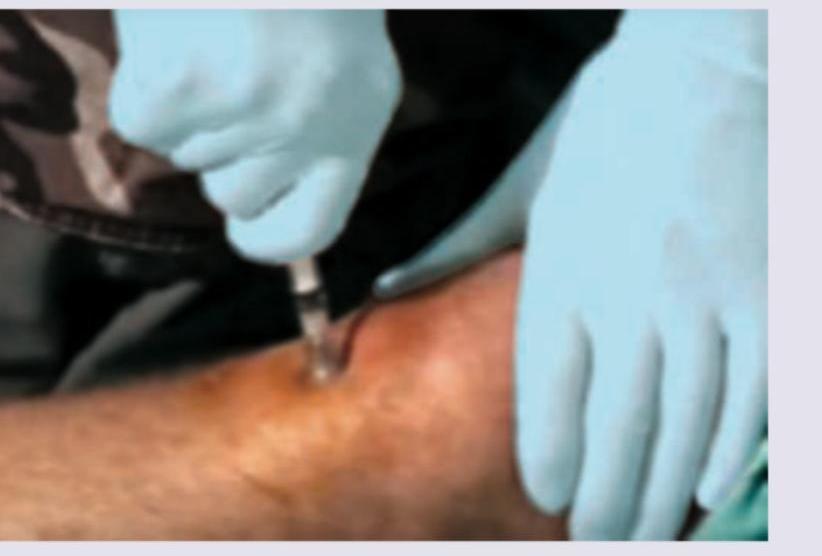
While inserting a central venous catheter, a patient develops respiratory distress. What is the most likely cause?
For any anesthetic procedure, which of the following is NOT a basic standard of monitoring?
Which of the following ECG leads is most sensitive in detecting intraoperative myocardial ischemia?
While introducing the Swan-Ganz catheter, its placement in the pulmonary artery can be identified by which of the following pressure tracings?
Soda lime is NOT used in anesthesia with which of the following agents?
Armored enforcement of an endotracheal tube is used in which type of surgery?
Which of the following statements about sugammadex is true?
Which of the following increases intraocular pressure?
Which anesthetic agent is known to dissolve rubber?
Explanation: **Explanation:** The effectiveness of aerosol therapy depends primarily on the **particle size**, which determines the site of deposition within the respiratory tract. This concept is known as **inertial impaction** and **sedimentation**. 1. **Why <5 micrometers is correct:** For a drug to reach the lower respiratory tract (bronchioles and alveoli), the particle size must be between **1 and 5 micrometers**. * Particles **2–5 μm** in diameter typically deposit in the proximal and distal airways (bronchi). * Particles **<2 μm** (specifically 1–3 μm) are optimal for reaching the alveolar regions. In clinical practice, a nebulizer producing a "respirable fraction" of <5 μm ensures the drug bypasses the upper airway and reaches the target site for systemic absorption or local bronchodilation. 2. **Why the other options are incorrect:** * **10–15 micrometers (Option B):** Particles of this size are too large. They possess high momentum and are filtered out by the nose or impact the posterior pharynx (oropharyngeal deposition) due to centrifugal force. * **15–25 micrometers (Options C & D):** These large droplets are primarily used for humidification of the upper airway or treating laryngeal edema (e.g., croup), as they deposit entirely in the upper respiratory tract and do not reach the lungs. **High-Yield Clinical Pearls for NEET-PG:** * **Ultra-fine particles (<1 μm):** These are often so light that they remain suspended in the air and are exhaled out without depositing. * **Ideal Size for Alveoli:** 1–3 μm. * **Factors affecting deposition:** Slow, deep inhalation and a breath-hold (5–10 seconds) increase the deposition of 1–5 μm particles by allowing time for sedimentation. * **Nebulizer Types:** Ultrasonic nebulizers generally produce smaller, more uniform particles compared to jet nebulizers.
Explanation: **Explanation:** The development of acute respiratory distress during or immediately after central venous catheter (CVC) insertion is a classic presentation of an **iatrogenic pneumothorax**. **Why Pneumothorax is the correct answer:** The apex of the lung (cupula) extends above the level of the first rib. During CVC insertion, particularly via the **subclavian or internal jugular vein** approach, the needle may inadvertently puncture the visceral pleura. This allows air to enter the pleural space, leading to lung collapse and sudden respiratory distress. It is the most common mechanical pulmonary complication of central line placement. **Analysis of Incorrect Options:** * **Hemothorax:** While possible if a major artery (like the subclavian) is punctured, it usually presents with signs of hemorrhagic shock alongside respiratory distress. It is less common than pneumothorax as an immediate cause of acute distress during the procedure. * **Pleural Effusion:** This is a chronic or subacute accumulation of fluid. While an "infusothorax" (infusion of IV fluids into the pleura) can occur if the catheter is misplaced, it does not typically cause the *instantaneous* distress seen during the insertion process itself. * **Hypovolemia:** This presents with hypotension and tachycardia but does not primarily cause acute respiratory distress unless it leads to secondary complications. **Clinical Pearls for NEET-PG:** * **Highest Risk Route:** The **subclavian vein** approach carries a higher risk of pneumothorax compared to the internal jugular vein. * **Gold Standard Diagnosis:** An upright **Expiratory Chest X-ray** is the traditional investigation of choice, though bedside **Ultrasound** (looking for "lung sliding") is now faster and highly sensitive. * **Management:** Small, asymptomatic pneumothoraces (<15-20%) may be observed; large or symptomatic ones require a chest tube (intercostal drainage). * **Other acute complications:** Always consider **Air Embolism** if the patient develops sudden distress and a "mill-wheel murmur" is heard.
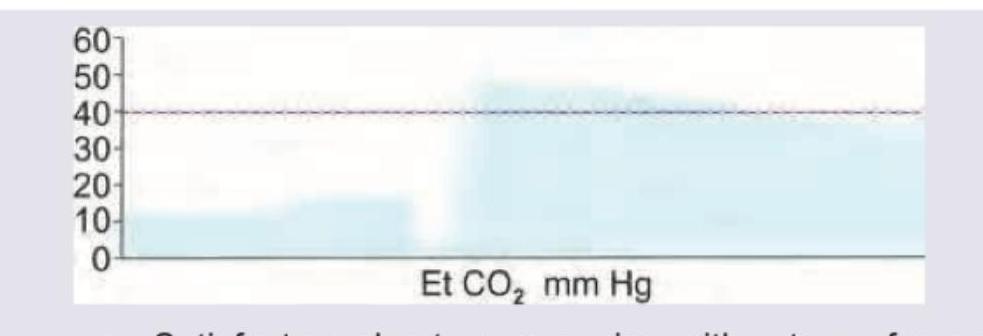
Explanation: **Explanation:** The **American Society of Anesthesiologists (ASA)** defines the "Standards for Basic Anesthetic Monitoring" which apply to all general anesthetics, regional anesthetics, and monitored anesthesia care (MAC). These standards are designed to ensure patient safety through continuous clinical observation and the use of specific devices. **Why Hematocrit is the correct answer:** Hematocrit is a laboratory value, not a continuous physiological monitor. While it may be checked intraoperatively in cases of significant blood loss, it is **not** a basic standard of monitoring for every anesthetic procedure. Basic standards focus on real-time physiological status rather than laboratory parameters. **Why the other options are incorrect:** The ASA standards mandate the continuous evaluation of four essential parameters: * **Oxygenation (Option D):** Monitored via pulse oximetry ($SpO_2$) and inspired oxygen concentration (with a low-oxygen alarm). * **Ventilation (Option C):** Monitored via clinical signs (chest excursion), capnography ($EtCO_2$), and, for mechanically ventilated patients, disconnect alarms. * **Circulation (Option B):** Monitored via continuous ECG, blood pressure (at least every 5 minutes), and heart rate (pulse palpation or auscultation). * **Temperature:** (The fourth pillar) Must be monitored when clinically significant changes in body temperature are intended, anticipated, or suspected. **High-Yield Clinical Pearls for NEET-PG:** * **Capnography ($EtCO_2$)** is the most reliable method to confirm endotracheal intubation and detect circuit disconnection. * **Pulse Oximetry** is the earliest indicator of hypoxic mixtures or respiratory failure. * **Standard I:** Presence of qualified anesthesia personnel throughout the procedure. * **Standard II:** Continuous monitoring of Oxygenation, Ventilation, Circulation, and Temperature.
Explanation: **Explanation:** Intraoperative myocardial ischemia is most commonly detected using Electrocardiography (ECG). The sensitivity of detection depends significantly on the specific lead being monitored, as different leads reflect different anatomical regions of the heart. **Why Lead V5 is Correct:** Lead V5 is positioned over the 5th intercostal space in the left anterior axillary line. This position provides the best view of the **anterolateral wall** of the left ventricle. Since the majority of intraoperative ischemic events involve the left ventricle (the most metabolically active part of the heart), **Lead V5 is the single most sensitive lead**, detecting approximately **75% to 80%** of ischemic changes (ST-segment depression or elevation). **Analysis of Incorrect Options:** * **Lead I:** Monitors the high lateral wall. It has very low sensitivity for detecting acute global or subendocardial ischemia compared to precordial leads. * **Lead II:** While Lead II is the "gold standard" for detecting **arrhythmias** (due to the clear P-wave), it only detects about 18-33% of ischemic events, primarily those involving the inferior wall. * **Lead V1:** This lead is useful for differentiating between Right Bundle Branch Block (RBBB) and ventricular ectopy but is not sensitive for early ischemic changes in the left ventricle. **High-Yield Clinical Pearls for NEET-PG:** * **Combination Monitoring:** Monitoring a combination of **Lead II and V5** increases the sensitivity for detecting ischemia to approximately **80-90%**. Adding **V4** further increases sensitivity to >95%. * **Standard of Care:** In modern anesthesia, a **5-lead ECG system** is preferred over a 3-lead system because it allows for the simultaneous monitoring of V5 and limb leads. * **Ischemia Criteria:** Intraoperatively, ischemia is typically defined as a horizontal or down-sloping ST-segment depression of **>1 mm** or ST-segment elevation.
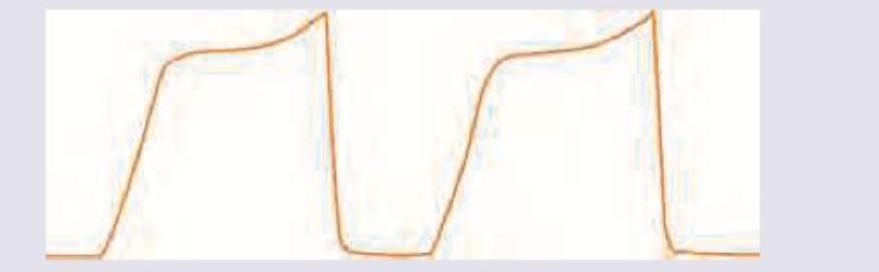
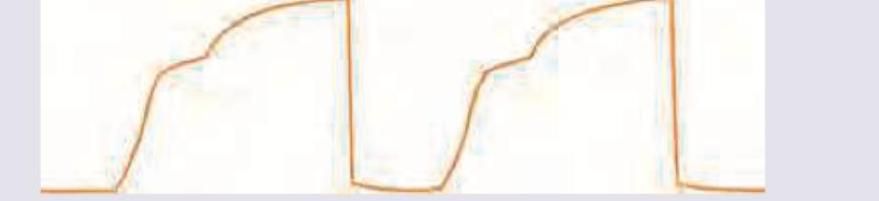
Explanation: The Swan-Ganz (Pulmonary Artery) catheter is advanced through the right heart chambers into the pulmonary artery (PA). Identifying its location requires analyzing specific pressure waveform morphologies. ### **Explanation of the Correct Answer** **Option C** is correct because the **dicrotic notch** (incisura) is the hallmark of an arterial pressure tracing. In the PA, this notch represents the **closure of the pulmonary valve** at the onset of diastole. As the catheter moves from the Right Ventricle (RV) into the PA, the systolic pressure remains similar, but the diastolic pressure rises significantly, and the characteristic dicrotic notch appears. ### **Analysis of Incorrect Options** * **Option A & B:** In the RV, diastolic pressure drops near zero (0–8 mmHg). In the PA, the diastolic pressure is significantly **higher** (8–15 mmHg) because the closed pulmonary valve maintains a higher pressure in the pulmonary circuit. Therefore, Option B is physiologically true but Option C is the definitive morphological identifier. * **Option D:** A "plateau and sharp drop" (Square root sign) is characteristic of **Constrictive Pericarditis** or Restrictive Cardiomyopathy, not a normal RV tracing during catheter insertion. ### **High-Yield Clinical Pearls for NEET-PG** * **Normal PA Pressure:** 15–30 / 8–15 mmHg. * **Insertion Landmarks:** 1. **Right Atrium (RA):** Low pressure (0-8 mmHg) with *a, c,* and *v* waves. 2. **Right Ventricle (RV):** Pulsatile; systolic same as PA, but **diastolic drops to zero.** 3. **Pulmonary Artery (PA):** Pulsatile; **diastolic pressure rises**; dicrotic notch present. 4. **PCWP (Wedge):** Non-pulsatile, reflects Left Atrial Pressure (LAP). * **Distance Tip:** The PA is usually reached at 40–50 cm from the right internal jugular vein. * **Complication:** The most common arrhythmia during insertion is **PVCs** (Premature Ventricular Contractions) as the tip irritates the RV endocardium.
Explanation: **Explanation:** The correct answer is **Trichloroethylene**. **Why Trichloroethylene is the correct answer:** Trichloroethylene is chemically unstable in the presence of heat and strong alkalis, both of which are present in a **Soda Lime** canister (which contains Calcium Hydroxide and Sodium/Potassium Hydroxide). When Trichloroethylene reacts with soda lime, it undergoes exothermic decomposition to form **Dichloroacetylene**, a highly neurotoxic gas. Dichloroacetylene can cause cranial nerve palsies (most commonly the **Trigeminal nerve**) and encephalitis. Furthermore, it can further decompose into **Phosgene**, a potent pulmonary irritant. Therefore, its use in a closed-circuit system with CO2 absorbers is strictly contraindicated. **Why the other options are incorrect:** * **Enflurane, Isoflurane, and Methoxyflurane:** These are modern volatile halogenated ethers. While they can react with dry soda lime to produce Carbon Monoxide (CO), they do not produce neurotoxic degradation products like Dichloroacetylene. They are routinely and safely used in semi-closed or closed circuits with CO2 absorbers. **High-Yield Clinical Pearls for NEET-PG:** * **Sevoflurane Warning:** Sevoflurane reacts with soda lime to form **Compound A** (fluoromethyl-2,2-difluoro-1-(trifluoromethyl) vinyl ether), which is nephrotoxic in rats, though clinical toxicity in humans is rare. To minimize risk, fresh gas flows should be kept above 1–2 L/min. * **Carbon Monoxide (CO) Production:** Desflurane produces the highest amount of CO when used with desiccated (dry) soda lime, followed by Enflurane and Isoflurane. * **Indicator Dye:** Ethyl violet is the most common indicator used in soda lime; it changes from colorless to **violet** when the pH drops below 10.3, signaling exhaustion.
Explanation: **Explanation:** **1. Why Neurosurgery is Correct:** Armored endotracheal tubes (also known as **reinforced** or **anode tubes**) contain a spiral wire coil embedded within the wall of the tube. This design provides high flexibility while preventing **kinking or collapse** of the lumen when the tube is bent at acute angles. In neurosurgery, patients are often placed in extreme positions (e.g., prone, sitting, or lateral) or the head is acutely flexed/rotated to provide surgical access. Furthermore, the surgeon often works near the airway, increasing the risk of accidental tube compression. The reinforcement ensures airway patency despite these mechanical stresses. **2. Why Other Options are Incorrect:** * **Cardiac, Liver, and Intestinal Surgeries:** In these procedures, the patient is typically in a supine position with the head in a neutral alignment. Standard PVC (polyvinyl chloride) endotracheal tubes are sufficient because there is a minimal risk of the tube kinking or being compressed by surgical positioning or manipulation. **3. High-Yield Clinical Pearls for NEET-PG:** * **Key Indication:** Apart from neurosurgery, armored tubes are frequently used in **Head and Neck surgeries** (where the surgeon moves the head intraoperatively) and **prone position** surgeries. * **The "Bite Block" Rule:** Because the wire coil prevents kinking but *cannot* prevent occlusion if the patient bites down (the wire may actually deform and permanently obstruct the lumen), a **bite block** must always be used with an armored tube. * **MRI Safety:** Most armored tubes use stainless steel or nylon; however, if the wire is ferromagnetic, it is contraindicated in an MRI suite. * **Stylet Caution:** These tubes are very floppy; a stylet is usually required for successful intubation.
Explanation: **Explanation:** **1. Why the Correct Answer is Right:** Sugammadex is a **selective relaxant binding agent (SRBA)**. It is a modified gamma-cyclodextrin molecule designed with a lipophilic core and a hydrophilic exterior. Its mechanism of action involves encapsulating the aminosteroid neuromuscular blocking agent (NMBA) molecule in a 1:1 ratio, creating a guest-host complex. This effectively lowers the free plasma concentration of the drug, causing it to diffuse away from the nicotinic acetylcholine receptors at the neuromuscular junction. It has the highest affinity for **rocuronium**, followed by vecuronium. **2. Why the Other Options are Wrong:** * **Option A:** Sugammadex only works on **aminosteroid** NMBAs. Succinylcholine is a depolarizing NMBA (a benzylisocholine derivative) and is metabolized by pseudocholinesterase; sugammadex has no effect on it. * **Option C:** Sugammadex is a **reversal agent** used at the *end* of surgery or for emergency rescue. It is not used for the *induction* of anesthesia itself, though it allows for the safe use of high-dose rocuronium in Rapid Sequence Induction (RSI) by providing a "fail-safe" for rapid reversal. * **Option D:** Atracurium and Cisatracurium are **benzylisoquinolinium** compounds. Their molecular structure does not fit into the sugammadex cyclodextrin ring; therefore, they cannot be reversed by it. **3. Clinical Pearls for NEET-PG:** * **Dosing:** 2 mg/kg for routine reversal (TOF count ≥2); 4 mg/kg for deep blockade (PTC 1-2); 16 mg/kg for immediate rescue reversal after 1.2 mg/kg rocuronium. * **Side Effects:** Anaphylaxis (rare but significant) and transient bradycardia. * **Drug Interaction:** It can bind to oral contraceptives, rendering them ineffective; patients should be advised to use alternative contraception for 7 days post-administration. * **Elimination:** The sugammadex-rocuronium complex is excreted unchanged by the **kidneys**.
Explanation: ### Explanation The control of intraocular pressure (IOP) is a critical consideration in ophthalmic anesthesia, particularly in cases of penetrating eye injuries or glaucoma. **Why Ketamine is Correct:** Ketamine is a dissociative anesthetic that **increases intraocular pressure**. The underlying mechanism involves the stimulation of the sympathetic nervous system, leading to increased arterial blood pressure and heart rate, which in turn increases choroidal blood volume. Additionally, ketamine can cause nystagmus and blepharospasm (increased extraocular muscle tone), further elevating IOP. Due to this effect, it is generally avoided in patients with open globe injuries. **Why the Other Options are Incorrect:** * **Propofol (Option A):** This is the most common induction agent used in ophthalmology because it significantly **decreases IOP** (by 30-50%). It reduces IOP by decreasing systemic vascular resistance and facilitating the aqueous humor's outflow. * **Thiopentone & Barbiturates (Options B & D):** Barbiturates (like Thiopentone) **decrease IOP** by depressing the central nervous system, reducing the production of aqueous humor, and increasing its drainage. They also lower intracranial pressure (ICP), which often correlates with a drop in IOP. **High-Yield Clinical Pearls for NEET-PG:** * **Succinylcholine:** This is the most high-yield drug associated with **increased IOP** (by 5-10 mmHg for 5-10 minutes) due to prolonged contraction of extraocular muscles. * **Laryngoscopy/Intubation:** These maneuvers cause a sympathetic surge that sharply increases IOP; hence, deep anesthesia is required before intubation in eye surgeries. * **Inhalational Agents:** Most volatile anesthetics (Sevoflurane, Isoflurane) **decrease IOP** in a dose-dependent manner. * **Hypercapnia (High $CO_2$):** Increases IOP via vasodilation of choroidal blood vessels.
Explanation: **Explanation:** **Halothane** is a halogenated hydrocarbon that acts as a potent organic solvent. It is uniquely known for its ability to dissolve or degrade **rubber and certain plastics**. This occurs because halothane molecules can penetrate the polymer chains of natural rubber, causing it to swell, lose elasticity, and eventually disintegrate. This property necessitated the development of specialized "antistatic" neoprene or plastic components in anesthetic breathing circuits and vaporizers to prevent equipment failure. **Analysis of Incorrect Options:** * **Enflurane (B):** While it is a halogenated ether, it is much less corrosive than halothane and does not significantly degrade rubber components used in modern clinical practice. * **Cyclopropane (C):** This is an explosive gas. While it requires specific precautions regarding static electricity and rubber (to prevent sparks), it does not chemically dissolve the rubber itself. * **Ether (D):** Diethyl ether is highly flammable and can cause rubber to swell slightly over prolonged exposure, but it lacks the potent solvent action seen with halothane. **High-Yield Clinical Pearls for NEET-PG:** * **Corrosion:** Halothane also corrodes metals like aluminum, brass, and lead, especially in the presence of moisture. * **Preservative:** Because halothane is unstable, it is stored in amber-colored bottles with **0.01% Thymol** added as a stabilizing agent to prevent spontaneous decomposition. * **Vaporizer:** Halothane requires a **variable bypass, agent-specific vaporizer** (e.g., Fluotec) because of its specific saturated vapor pressure. * **Hepatotoxicity:** Remember the "Halothane Hepatitis" association, often linked to the formation of trifluoroacetylated liver proteins.
Anesthesia Machine Components
Practice Questions
Breathing Systems
Practice Questions
Vaporizers
Practice Questions
Gas Cylinders and Pipeline Supply
Practice Questions
Anesthesia Ventilators
Practice Questions
Standard Monitoring: ECG, BP, Pulse Oximetry
Practice Questions
Capnography
Practice Questions
Neuromuscular Monitoring
Practice Questions
Temperature Monitoring
Practice Questions
Invasive Hemodynamic Monitoring
Practice Questions
Equipment Troubleshooting
Practice Questions
Safety Features in Modern Anesthesia Equipment
Practice Questions
Get full access to all questions, explanations, and performance tracking.
Start For Free