What is true about Boyle's apparatus?
In an infant, which method is used for administering anesthesia?
Which of the following anesthesia circuits is preferred for spontaneous respiration in children?
What is the modification of the Mapelson E breathing system used in infants?
What is the recommended range of energy used by a biphasic defibrillator?
What is the most sensitive test to detect venous air embolism during surgery?
What is the most recent advance in noninvasive cardiac output monitoring?
A 40-year-old female underwent surgery. Postoperatively, she reported being aware of preoperative events. How is individual intraoperative awareness evaluated?
During anaesthesia, which of the following evoked potentials is least affected?
Which anesthetic agent is mainly excreted by the kidneys?
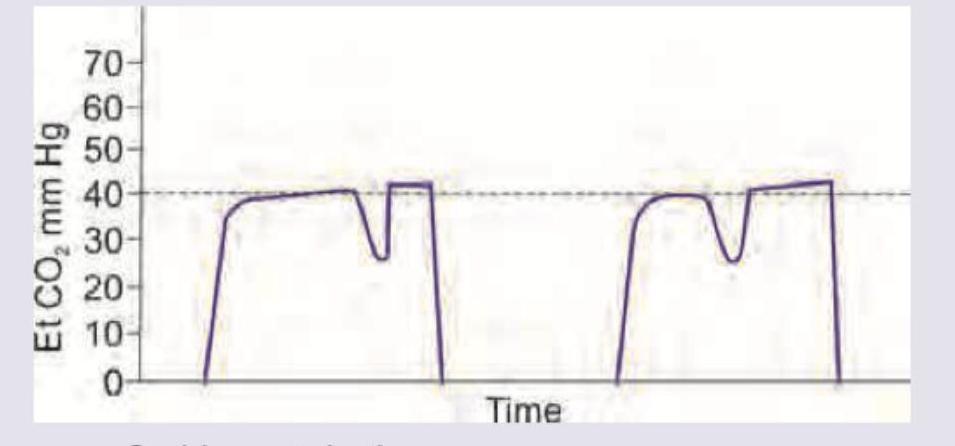
Explanation: The Boyle’s apparatus (specifically the traditional design) is a classic topic in anesthetic equipment. Here is the breakdown of the options: **Why "Resistance is very high" is correct:** In the traditional Boyle’s machine, the design of the breathing circuits and the presence of unidirectional valves, narrow-diameter tubing, and the soda lime canister (in closed circuits) create significant **frictional resistance** to gas flow. Furthermore, older vaporizers (like the Boyle’s bottle) were "out-of-circuit" but still contributed to the overall pressure drop. In spontaneous respiration, high resistance increases the **work of breathing** for the patient, which is a critical clinical consideration. **Analysis of Incorrect Options:** * **A & B:** These are technically incorrect in the context of the classic Boyle’s apparatus definition. While modern workstations are continuous flow, the original Boyle’s machine was a **semi-closed/intermittent** design. More importantly, the machine was specifically designed to deliver **liquid anesthetic vapors** (like ether or halothane) via glass bottle vaporizers. * **D:** This is the opposite of the correct answer. Low resistance is a feature of modern "open" systems or Mapleson A circuits without valves, but not the standard Boyle’s setup. **High-Yield Clinical Pearls for NEET-PG:** * **Components:** The basic components follow the flow: Gas source → Pressure regulator → Flowmeters → Vaporizers → Common Gas Outlet (CGO) → Breathing circuit. * **Safety Feature:** The **Pin Index Safety System (PISS)** prevents the wrong cylinder from being attached (e.g., Oxygen is 2,5; Nitrous Oxide is 3,5). * **Fail-Safe Mechanism:** The "Nitrous Cut-off" or "Pressure Sensor Shut-off" valve ensures that if oxygen pressure falls, the flow of all other gases (like $N_2O$) is stopped to prevent delivery of a hypoxic mixture. * **Color Coding:** Oxygen (White/Green), Nitrous Oxide (Blue), Cyclopropane (Orange), Carbon Dioxide (Grey).
Explanation: **Explanation:** The primary goal in pediatric anesthesia is to minimize **resistance to breathing** and **dead space**, as infants have small tidal volumes and easily fatigued respiratory muscles. **Why Ayre’s T-piece is correct:** Ayre’s T-piece (Mapleson E) and its modification, the **Jackson-Rees circuit** (Mapleson F), are the systems of choice for infants and children weighing less than 20 kg. These are **valveless circuits** with minimal dead space and very low resistance. Since there are no unidirectional valves or soda lime canisters to breathe through, the work of breathing is significantly reduced, making it ideal for the spontaneous ventilation of an infant. **Analysis of Incorrect Options:** * **Open mask ventilation:** This is an obsolete technique (e.g., Schimmelbusch mask) that leads to unpredictable anesthetic concentrations and significant environmental pollution. * **Non-breathing circuit:** While technically Ayre's T-piece is a non-rebreathing system, the term usually refers to circuits with valves (like the Bain circuit). In infants, the valves in standard non-rebreathing circuits increase resistance beyond the child's physiological tolerance. * **Magill’s system (Mapleson A):** This is the most efficient circuit for **spontaneously breathing adults**. However, it is unsuitable for infants because it is bulky and the expiratory valve adds significant resistance. **High-Yield Clinical Pearls for NEET-PG:** * **Jackson-Rees Circuit:** The most commonly used modification of Ayre's T-piece; it adds a reservoir bag to allow for assisted ventilation and monitoring of respirations. * **Fresh Gas Flow (FGF):** To prevent rebreathing in a T-piece, the FGF should be **2.5 to 3 times** the patient's minute ventilation. * **Mapleson Classification:** Remember the mnemonic **"All Dogs Can Bite Eat Fresh"** (A, B, C, D, E, F). Mapleson A is best for spontaneous ventilation; Mapleson D is best for controlled ventilation.
Explanation: ### Explanation The classification of Mapleson breathing systems is a high-yield topic in anesthesia, primarily determined by their efficiency in preventing rebreathing during different modes of ventilation. **Why Mapleson A is correct:** Mapleson A (Magill circuit) is the **most efficient circuit for spontaneous respiration**. In this system, the fresh gas flow (FGF) required to prevent rebreathing is equal to the patient’s minute ventilation (FGF = 1 x MV). During expiration, the initial gas entering the reservoir bag is dead space gas (rich in oxygen), while the alveolar gas (rich in $CO_2$) is vented out through the APL valve. This makes it highly economical and effective for patients breathing spontaneously. **Why the other options are incorrect:** * **Mapleson D, E, and F (Jackson-Rees):** These are the circuits of choice for **controlled ventilation**. Mapleson F (Jackson-Rees modification of Ayre’s T-piece) is specifically preferred for pediatric ventilation because it has low dead space and low resistance, but it is inefficient for spontaneous breathing as it requires very high FGF (2–3 times MV) to prevent rebreathing. * **Mapleson C:** Also known as the Waters' circuit (without the absorber), it is primarily used for manual resuscitation or short-term transport but is inefficient for routine spontaneous or controlled ventilation. **Clinical Pearls for NEET-PG:** * **Mnemonic for Efficiency:** * **Spontaneous Respiration:** **A** > D > C > B (Mapleson **A** is best). * **Controlled Ventilation:** **D** > B > C > A (Mapleson **D** is best; Mapleson A is the worst). * **Bain’s Circuit:** A coaxial version of Mapleson D; it is the most commonly used circuit in modern practice for both spontaneous and controlled ventilation in adults. * **Pediatric Choice:** While Mapleson A is physiologically efficient for spontaneous breathing, **Mapleson F (Jackson-Rees)** is often used in clinical pediatric practice due to its minimal resistance and light weight, despite being less gas-efficient.
Explanation: **Explanation:** The **Mapleson F** system, also known as the **Jackson-Rees modification of Ayre’s T-piece**, is the correct answer. The original Mapleson E (Ayre’s T-piece) consists of a fresh gas inlet, a T-connector, and corrugated reservoir tubing, but it lacks a reservoir bag, making it difficult to monitor spontaneous ventilation or provide assisted ventilation. By adding a **double-ended reservoir bag** to the expiratory limb of the Mapleson E, it becomes the Mapleson F. This modification allows for easy manual ventilation and visual monitoring of breathing, making it the gold standard for pediatric anesthesia (infants and children <20kg) due to its low resistance and minimal dead space. **Analysis of Incorrect Options:** * **Mapleson A (Magill Circuit):** Most efficient for **spontaneous ventilation** in adults, but unsuitable for controlled ventilation or infants due to high resistance and valve placement. * **Mapleson B & C:** These systems utilize a corrugated tube and a reservoir bag near the fresh gas inlet. They are rarely used in modern practice as they are inefficient for both spontaneous and controlled ventilation. * **Mapleson D:** The most efficient system for **controlled ventilation** in adults (Bain circuit is a coaxial version of Mapleson D). **High-Yield Pearls for NEET-PG:** * **Efficiency for Spontaneous Ventilation:** A > D > E > B > C (Mnemonic: **All Dogs Eat Bitches' Crap**) * **Efficiency for Controlled Ventilation:** D > E > F > B > C (Mnemonic: **Dog Eggs For Breakfast**) * **Mapleson F** is preferred in neonates because it has **no valves** and **low resistance**, preventing exhaustion in small children with limited functional residual capacity.
Explanation: **Explanation:** The correct answer is **B (100-300 Joules)**. This range aligns with current Advanced Cardiovascular Life Support (ACLS) guidelines for biphasic defibrillators. **Underlying Medical Concept:** Defibrillation works by delivering a current to depolarize a critical mass of the myocardium, allowing the sinus node to resume its role as the primary pacemaker. **Biphasic waveforms** are the modern standard because they deliver current in two directions. This allows for effective defibrillation at lower energy levels compared to older monophasic units, resulting in less myocardial damage and skin burns. For a biphasic device, the initial recommended dose is typically **120–200 J**, with subsequent doses increasing up to **360 J** if the initial shock fails. **Analysis of Options:** * **Option A (30-100 J):** Too low for adult external defibrillation; these levels are typically used for synchronized cardioversion of SVT or atrial flutter. * **Option C (300-1000 J):** 360 J is the maximum for biphasic/monophasic units. Levels approaching 1000 J would cause significant thermal injury to the heart. * **Option D (1000-2000 J):** Clinically dangerous and physiologically inappropriate for human use. **High-Yield Clinical Pearls for NEET-PG:** * **Biphasic vs. Monophasic:** Monophasic defibrillators require a constant **360 J** for all shocks. Biphasic is more efficient. * **Synchronized Cardioversion:** Used for unstable tachyarrhythmias with a pulse (starts at 50–100 J). * **Unsynchronized Shock (Defibrillation):** Used for Pulseless VT and Ventricular Fibrillation (VF). * **Internal Defibrillation:** If paddles are applied directly to the heart (e.g., during cardiac surgery), the energy required is much lower (**5–20 J**).
Explanation: **Explanation:** Venous Air Embolism (VAE) is a potentially fatal complication, most commonly associated with neurosurgical procedures in the sitting position (e.g., posterior fossa surgery). **1. Why TEE is the Correct Answer:** **Transesophageal Echocardiography (TEE)** is the **most sensitive** method for detecting VAE. It can detect air bubbles as small as 0.02 mL/kg. It allows for direct visualization of air in the right atrium and ventricle, often before any physiological changes occur. **2. Analysis of Incorrect Options:** * **Doppler (Precordial):** This is the **most sensitive non-invasive** test. It detects the characteristic "mill-wheel murmur" or "washing machine" sound. While highly sensitive, it is less sensitive than TEE and can be affected by obesity or poor positioning. * **ECG:** This is a **late sign**. ECG changes (such as right heart strain, ST-segment changes, or arrhythmias) only appear after a significant volume of air has entered the circulation and caused physiological distress. * **BIS (Bispectral Index):** This is used to monitor the depth of anesthesia and has no role in detecting air emboli. **3. High-Yield Clinical Pearls for NEET-PG:** * **Order of Sensitivity (Highest to Lowest):** TEE > Precordial Doppler > ETCO₂ (decreases) / PAP (increases) > ECG > Precordial Stethoscope. * **Earliest Sign:** A decrease in **End-Tidal CO₂ (ETCO₂)** is often the first clinical sign detected by routine monitors (due to increased dead space). * **Management (Durant’s Maneuver):** If VAE occurs, place the patient in the **Left Lateral Decubitus and Trendelenburg position** to trap air in the apex of the right ventricle, preventing it from entering the pulmonary artery. * **Gold Standard for Treatment:** Aspiration of air via a Central Venous Catheter (CVC) positioned at the junction of the SVC and right atrium.
Explanation: **Explanation:** **Electrical Impedance Cardiography (EIC)**, also known as Bioimpedance, is the most recent advancement among the given options for **noninvasive** cardiac output monitoring. It works on the principle that the thoracic electrical impedance changes with the cardiac cycle. As blood (a highly conductive fluid) is pumped into the aorta during systole, the impedance decreases. By measuring these changes via skin electrodes, the device calculates stroke volume and cardiac output using specialized algorithms. Its primary advantages are that it is continuous, operator-independent, and carries zero risk of procedural complications. **Analysis of Incorrect Options:** * **Pulmonary Artery (PA) Catheter:** This is the "gold standard" but is strictly **invasive**, requiring central venous access and passage through the heart chambers. * **Thermodilution Technique:** This is the method used by the PA catheter to calculate cardiac output. It is an **invasive** procedure involving the injection of a cold saline bolus. * **Echocardiography:** While noninvasive (TTE) or minimally invasive (TOE), it is not the "most recent" advance in this context and is highly **operator-dependent**, requiring significant skill to obtain accurate, continuous measurements. **NEET-PG High-Yield Pearls:** * **Gold Standard for CO:** Pulmonary Artery Catheter (Swan-Ganz). * **Fick’s Principle:** The classic physiological method for calculating CO based on oxygen consumption. * **Esophageal Doppler:** Another minimally invasive technique that measures blood flow velocity in the descending aorta. * **Pulse Contour Analysis:** A technique (e.g., PiCCO, FloTrac) that derives CO from the arterial pressure waveform; it can be invasive or minimally invasive.
Explanation: **Explanation:** **Bispectral Index (BIS) monitoring** is the gold standard for assessing the depth of anesthesia and preventing intraoperative awareness. It uses a processed EEG signal (ranging from 0 to 100) to quantify the level of consciousness. A score of **40–60** indicates an adequate plane of general anesthesia, while scores above 70 increase the risk of recall/awareness. **Analysis of Options:** * **Bispectral Imaging (BIS):** It analyzes EEG waveforms (frequency, amplitude, and phase) to provide a single dimensionless number. It is specifically designed to monitor the hypnotic component of anesthesia and reduce the incidence of accidental awareness under general anesthesia (AAGA). * **Cerebral Pulse Oximetry:** This uses Near-Infrared Spectroscopy (NIRS) to measure regional cerebral oxygen saturation ($rScO_2$). It monitors brain oxygenation during cardiac or carotid surgeries but does not measure the depth of consciousness. * **Color Doppler:** This is an ultrasound technique used to visualize blood flow through vessels. It has no role in monitoring anesthetic depth or brain activity. * **End-tidal $CO_2$ (Capnography):** This monitors ventilation, cardiac output, and circuit integrity. While vital for safety, it cannot detect if a patient is conscious or aware. **High-Yield Clinical Pearls for NEET-PG:** * **Ideal BIS Range:** 40–60 (General Anesthesia); <40 (Deep Hypnosis); 100 (Awake). * **Brice Interview:** The standard clinical tool used postoperatively to screen patients for intraoperative awareness. * **Isolated Forearm Technique:** A clinical method (non-pharmacological) to detect awareness by allowing the patient to move a non-paralyzed hand on command. * **Risk Factors for Awareness:** Use of neuromuscular blockers, TIVA (Total Intravenous Anesthesia), emergency surgeries (trauma/obstetrics), and difficult intubation.
Explanation: **Explanation:** Evoked potentials (EPs) measure the electrical activity of the brain in response to specific sensory stimuli. In the context of anesthesia, different EPs exhibit varying degrees of sensitivity to anesthetic agents. **Why Brainstem Auditory Evoked Response (BAER) is the correct answer:** BAERs are remarkably **resistant** to almost all anesthetic agents (including volatile anesthetics, opioids, and muscle relaxants). This is because the neural generators for BAER are located in the brainstem, which is phylogenetically older and more resistant to the depressant effects of anesthesia compared to the cerebral cortex. This stability makes BAER a reliable tool for monitoring brainstem integrity during posterior fossa surgeries, regardless of the anesthetic depth. **Analysis of Incorrect Options:** * **Visual Evoked Responses (VER):** These are the **most sensitive** to anesthetic agents. They are highly volatile and easily abolished by even low concentrations of inhalational agents, making them technically difficult to monitor intraoperatively. * **Somatosensory Evoked Responses (SSER) - Median/Posterior Tibial Nerve:** SSERs are moderately sensitive to anesthetics. Inhalational agents typically cause a dose-dependent increase in latency and a decrease in amplitude. While they can be monitored, they require a stable anesthetic technique (often Total Intravenous Anesthesia or <0.5 MAC of gas). **High-Yield Clinical Pearls for NEET-PG:** * **Hierarchy of Sensitivity (Most to Least affected):** Visual (VER) > Somatosensory (SSER) > Brainstem Auditory (BAER). * **Etomidate and Ketamine:** Exceptionally, these agents can actually **increase** the amplitude of SSERs. * **Muscle Relaxants:** Do not affect the neural component of EPs but can improve the signal-to-noise ratio by reducing muscle artifact (except in Motor Evoked Potentials, where they are contraindicated). * **BAER** is the "gold standard" for monitoring the 8th cranial nerve and brainstem function.
Explanation: **Explanation:** The correct answer is **Gallamine**. **1. Why Gallamine is Correct:** Gallamine triethiodide is a long-acting, non-depolarizing neuromuscular blocking agent. Its primary pharmacokinetic characteristic is that it is **almost entirely (approx. 95-100%) excreted unchanged by the kidneys**. Because it lacks significant hepatic metabolism or biliary excretion, its duration of action is strictly dependent on renal clearance. Consequently, it is strictly contraindicated in patients with renal failure, as it leads to prolonged paralysis and "recurarization." **2. Analysis of Incorrect Options:** * **A. d-Tubocurarine:** While partially excreted by the kidneys (approx. 40-60%), it also undergoes significant biliary excretion. This dual pathway makes it safer than gallamine in mild renal impairment, though it is rarely used today due to histamine release. * **B. Scoline (Succinylcholine):** This is a depolarizing muscle relaxant metabolized rapidly in the **plasma** by the enzyme **pseudocholinesterase** (butyrylcholinesterase). Only a negligible amount is excreted in the urine. * **C. Halothane:** This is an inhalational anesthetic. It is primarily eliminated via the **lungs** (exhalation), with a small portion (approx. 20%) undergoing hepatic metabolism via the Cytochrome P450 system. **3. High-Yield Clinical Pearls for NEET-PG:** * **Gallamine Side Effect:** It causes significant **tachycardia** due to its strong vagolytic effect (atropine-like action) on the heart. * **Renal Failure Safe Drugs:** **Atracurium and Cisatracurium** are the drugs of choice in renal failure because they undergo **Hofmann elimination** (spontaneous non-enzymatic degradation), which is independent of organ function. * **Pancuronium:** Another muscle relaxant with significant renal excretion (approx. 80%), but Gallamine remains the classic textbook example of "pure" renal excretion.
Anesthesia Machine Components
Practice Questions
Breathing Systems
Practice Questions
Vaporizers
Practice Questions
Gas Cylinders and Pipeline Supply
Practice Questions
Anesthesia Ventilators
Practice Questions
Standard Monitoring: ECG, BP, Pulse Oximetry
Practice Questions
Capnography
Practice Questions
Neuromuscular Monitoring
Practice Questions
Temperature Monitoring
Practice Questions
Invasive Hemodynamic Monitoring
Practice Questions
Equipment Troubleshooting
Practice Questions
Safety Features in Modern Anesthesia Equipment
Practice Questions
Get full access to all questions, explanations, and performance tracking.
Start For Free