A cardiovascular parameter helpful in diagnosis of anaphylaxis during anaesthesia:
In the Magill circuit, airflow is
A sevoflurane vaporizer can accurately deliver the dose of an anesthetic agent. This accuracy depends on which of the following properties of the anesthetic agent?
Gas cylinder with single pin index ?
Early and reliable indication of air embolism during anaesthesia can be obtained by continuous monitoring of:
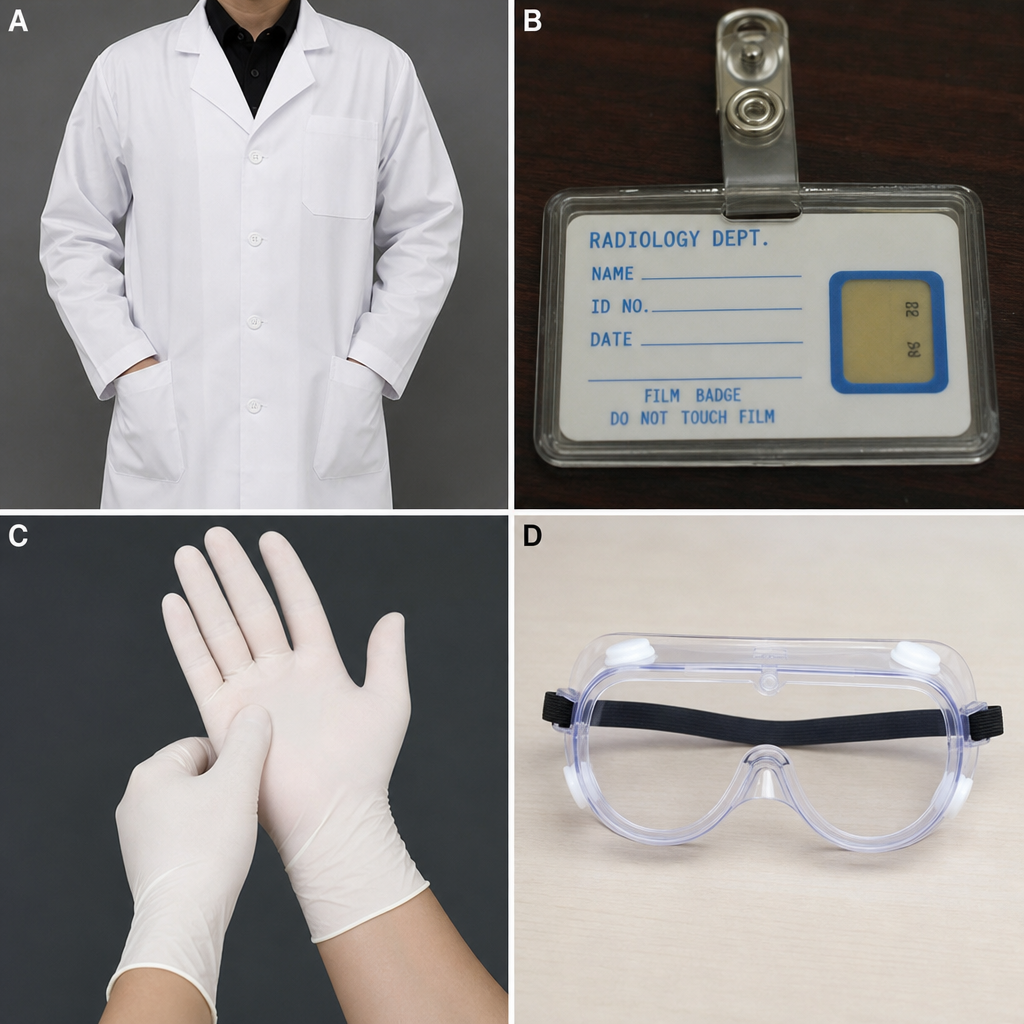
Which of the following is NOT a personal protective equipment (PPE)?
Anaesthetic death rate more than what level calls for scrutiny of staff or equipment?
Endotracheal tube in the esophagus is best assessed by:
All of the following are used to maintain proper oxygen flow to the patient except:
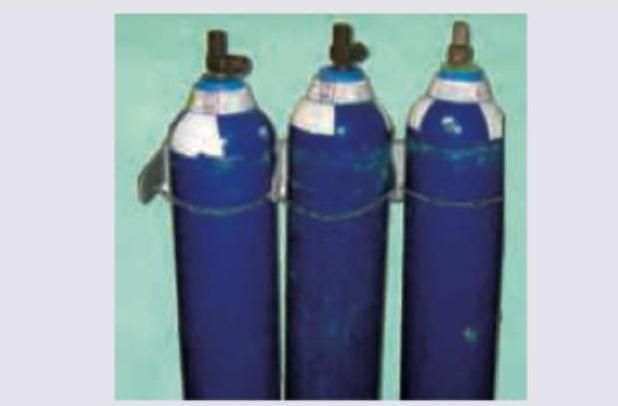
The pin index of the following cylinder is:
Explanation: ***Hypotension*** - **Hypotension** is a hallmark cardiovascular sign of anaphylaxis, occurring due to widespread **vasodilation** and increased vascular permeability. - This symptom is often profound and unresponsive to initial fluid resuscitation due to the ongoing systemic release of inflammatory mediators. *Bradycardia* - While bradycardia can occur in some rare cases of anaphylaxis (e.g., **vasovagal response**), **tachycardia** is the more common cardiac response due to compensatory mechanisms. - It is not a primary or consistent indicator of anaphylaxis, making it less helpful for diagnosis in this context. *Dysrhythmia* - **Dysrhythmias** can occur during anaphylaxis due to myocardial ischemia or electrolyte imbalances, but they are not a direct or consistent diagnostic feature. - Their presence often reflects severe compromise or co-existing conditions rather than being a primary anaphylactic sign. *Increased peripheral vascular resistance* - Anaphylaxis is characterized by a significant **decrease in peripheral vascular resistance** due to mast cell and basophil degranulation releasing vasodilatory mediators like histamine. - Therefore, an increase in peripheral vascular resistance would contradict the pathophysiology of anaphylaxis.
Explanation: ***Three times the minute volume (M.V.)*** - In a **Magill circuit (Mapleson A)**, for spontaneous respiration, a fresh gas flow (FGF) of **1-1.5 times the minute volume (M.V.)** is sufficient to prevent rebreathing. - However, to ensure efficient CO2 washout and prevent rebreathing during **controlled ventilation**, the FGF needs to be significantly higher, typically **two to three times the minute volume (M.V.)**, with three times being the safest margin. *Half of the minute volume (M.V.)* - This flow rate would be **insufficient** for preventing rebreathing of carbon dioxide in a Magill circuit, especially during controlled ventilation or even spontaneous breathing. - **Inadequate fresh gas flow** would lead to CO2 accumulation and hypercapnia. *Twice the minute volume (M.V.)* - While **twice the minute volume (M.V.)** can be considered a minimum for spontaneous ventilation, for controlled ventilation or to provide a wider margin of safety, **three times the minute volume (M.V.)** is generally recommended to ensure adequate CO2 elimination and prevent rebreathing. - Below 2-3 times M.V., there's an increased risk of CO2 rebreathing. *equal to the minute volume (M.V.)* - A fresh gas flow **equal to the minute volume (M.V.)** in a Magill circuit would lead to significant **rebreathing of exhaled CO2**, as the dead space is not effectively flushed. - This flow rate is only appropriate for Mapleson D circuits during controlled ventilation, not for the Magill circuit.
Explanation: ***Vapor pressure*** - Sevoflurane vaporizers are designed to deliver a specific concentration of anesthetic gas by controlling the amount of carrier gas (**oxygen** or **air**) that flows over or through a liquid anesthetic. - The precise control relies on the **vapor pressure** of the liquid anesthetic, which determines how much vapor is formed at a given temperature. *Blood gas partition coefficient* - The **blood gas partition coefficient** describes the solubility of an anesthetic in blood relative to inspired gas, influencing the **speed of onset** and **recovery**. - It does not directly affect the vaporizer's ability to accurately deliver a set concentration of anesthetic from the liquid state. *Molecular weight* - **Molecular weight** is important for the physical properties of the anesthetic, but it does not directly determine the accuracy of vapor delivery by the vaporizer. - While it plays a role in diffusion, the vaporizer's function is primarily driven by vapor pressure and flow dynamics. *Oil gas partition coefficient* - The **oil gas partition coefficient** indicates the solubility of an anesthetic in fat, reflecting its **potency** and distribution into fatty tissues. - This coefficient influences the **pharmacodynamics** and tissue distribution of the anesthetic but has no direct bearing on the accuracy of the vaporizer's output of a specific vapor concentration.
Explanation: **Entonox** - Entonox cylinders have a unique **single pin index** safety system to prevent accidental connection to incorrect gas lines. - This distinct pin configuration ensures the delivery of the correct 50% nitrous oxide and 50% oxygen mixture. *Nitrogen* - Nitrogen cylinders typically use a **double pin index** system (7-2 configuration) for connection. - This gas is primarily used for powering surgical equipment and is not a breathing gas. *Oxygen* - Oxygen cylinders are easily identifiable by their **white colour** and use a **double pin index** system (2-5 configuration) for connection. - This prevents interchangeability with other medical gases that have different pin configurations. *Air* - Medical air cylinders are grey and white and use a **double pin index** safety system (1-5 configuration). - This ensures only medical air is connected and used for patient ventilation or nebulization.
Explanation: ***End Tidal CO2*** - A sudden and unexplained decrease in **End Tidal CO2 (EtCO2)** is often the first sign of an air embolism. - This occurs because air in the pulmonary circulation obstructs blood flow, leading to reduced CO2 delivery to the lungs. *Oxygen saturation* - **Oxygen saturation** changes are typically a later sign of air embolism, as significant pulmonary impairment or right-to-left shunting must occur before a drop is detectable. - A decrease in saturation indicates a more advanced and potentially severe embolism. *ECG* - **ECG changes**, such as arrhythmias or signs of right heart strain, are usually late and non-specific indicators of air embolism. - These changes reflect the cardiovascular consequences of the embolism rather than its initial event. *Blood pressure* - A drop in **blood pressure** is a late and often profound sign of an air embolism, reflecting significant cardiovascular compromise. - Early detection methods precede observable changes in systemic blood pressure.
Explanation: ***Badges for detecting radiation*** - While important for safety in environments with radiation exposure, **radiation badges (dosimeters)** are used to **monitor exposure levels**, not to protect the individual from the radiation itself. - They are a measurement tool rather than a physical barrier or protective clothing item. *Lab coat* - A **lab coat** is a primary piece of PPE, designed to protect personal clothing and skin from **splashes, spills, and hazardous substances**. - It forms a **physical barrier** between the wearer and potential contaminants. *Gloves* - **Gloves** are essential PPE used to protect hands from **chemical exposure, biological agents**, and to prevent the transmission of contaminants. - They create a direct barrier for tasks involving contact with hazardous materials. *Goggles* - **Goggles** are crucial PPE for protecting the eyes from **splashes, flying debris, and irritating mists or gases**. - They form a **seal around the eyes**, offering comprehensive protection from various hazards.
Explanation: ***1 in 5000*** - Historically, an anaesthetic death rate exceeding **1 in 5,000** was considered a benchmark for initiating scrutiny into staffing, equipment, and protocols. - This threshold indicates a potential systemic issue rather than isolated incidents, necessitating a thorough review to ensure **patient safety**. *1 in 500* - A death rate of **1 in 500** is significantly higher than accepted norms for anaesthesia and would be considered an exceptionally alarming rate, indicating severe and immediate concerns about safety. - This rate would suggest a widespread and critical failure in care, far exceeding the threshold for mere "scrutiny." *1 in 1000* - While concerning, a death rate of **1 in 1,000** is still much higher than the point at which detailed scrutiny is typically triggered for anaesthetic practice. - Modern anaesthesia aims for much lower mortality rates, so even this figure would warrant investigation but doesn't precisely match the historical threshold for concern. *None of the options* - The option is incorrect because **1 in 5000** is indeed a recognized threshold that historically prompted scrutiny of anaesthetic practice. - This standard has been an important reference point, although modern practice strives for even lower mortality rates.
Explanation: ***CO2 Exhalation*** - Measuring **CO2 exhalation** (capnography) is the most reliable method to confirm endotracheal tube placement, as CO2 is present in the trachea but not in the esophagus. - A persistent **waveform on the capnograph** indicates proper tracheal intubation. *Direct laryngoscopy* - While helpful for initial visualization during intubation, **direct laryngoscopy** cannot confirm continuous tracheal placement after the tube is advanced. - It only confirms the tube passing through the vocal cords, not its final position in the trachea versus esophagus. *Auscultation* - **Auscultation** can be misleading because stomach sounds can be transmitted to the chest, and breath sounds can be heard in the epigastrium even with esophageal intubation. - It relies on subjective interpretation and is less definitive than capnography. *Chest wall movement* - Observing **chest wall movement** is not a definitive sign, as the chest can still rise with esophageal intubation due to air entering the stomach. - This method is unreliable and can be mistaken for proper ventilation, leading to dangerous delays in correcting tube misplacement.
Explanation: ***Different pin index for nitrogen and oxygen*** - Oxygen and nitrogen *do not* use pin index safety systems; the **Pin Index Safety System (PISS)** is used for small gas cylinders to prevent wrong gas connection, but nitrogen is a non-medical gas. - While medical gases have specific pin index patterns, this system is for preventing inadvertent connection of gas cylinders to the wrong yoke, not for *maintaining proper oxygen flow to the patient* from the anesthesia machine's internal system. *A proportioner between N₂ and O₂ control valves* - This device, such as the **Ohio proportioner** or **Link 25 system**, mechanically or pneumatically links the **nitrous oxide (N₂O)** and **oxygen (O₂)** flow controls. - It ensures that the inspired oxygen concentration never falls below a preset safe level, typically 25%, thereby **preventing hypoxic gas mixtures**. *Calibrated oxygen concentration analyzers* - **Oxygen analyzers** continuously monitor the inspired oxygen concentration and provide an audible and visual alarm if the level deviates from the set range. - This serves as a critical safety measure to detect and alert anesthesia providers to **hypoxic gas delivery** or machine malfunctions. *Placement of oxygen flowmeter downstream of the nitrogen flowmeter* - Positioning the **oxygen flowmeter downstream** (closest to the patient) of all other gas flowmeters (e.g., nitrous oxide, air) is a crucial safety feature. - This design ensures that **any leak occurring upstream** of the oxygen flow tube will primarily affect other gases, reducing the risk of an **undetected hypoxic mixture** reaching the patient.
Explanation: ***2,5*** - The image displays a gas cylinder with a **pin index safety system** where pins are evident at positions 2 and 5. This specific pin configuration is standard for **nitrous oxide** cylinders. - The pin index system for medical gases is designed to prevent incorrect gas connections, ensuring that only the proper regulator can be attached to a specific gas cylinder. *1,5* - A pin index of 1,5 is associated with **oxygen** cylinders. The cylinder in the image has a different pin configuration, which indicates it does not contain oxygen. - The physical appearance and color coding (blue body with a white shoulder/top, though not clearly visible in this image other than the body color) of this cylinder are not consistent with oxygen. *3,5* - A pin index of 3,5 is designated for **air** cylinders. The pin configuration in the image does not match this setting. - Each medical gas has a unique and standardized pin index combination to ensure safety and prevent medical errors. *7* - A single pin at position 7 is associated with **carbon dioxide** cylinders. The cylinder in the image clearly shows two pins, not one. - The pin index system relies on precise hole and pin placement to achieve gas-specific connections.
Get full access to all questions, explanations, and performance tracking.
Start For Free