
Anesthesia for Cardioversion — MCQs

A person was brought to emergency department and was diagnosed with Supra ventricular tachycardia and suddenly he became unstable. What is the next line of management?
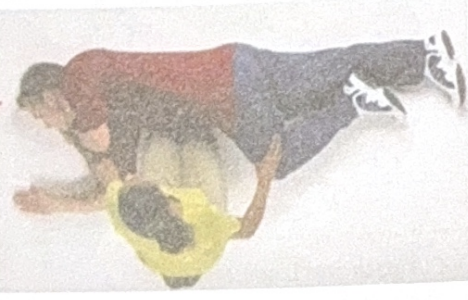
In which clinical scenario would you find a patient requiring the resuscitation technique shown in the image?
During rapid sequence intubation in a child after taking brief history and clinical examination next step is:
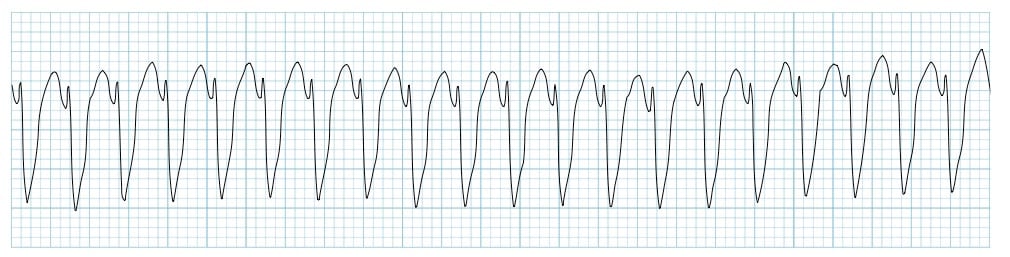
A patient is pulseless with the following rhythm shown in the ECG. What is the next best step in management?
A patient presents with palpitations, consciousness, fast pulse, and BP of 80/50 mmHg. After failed vagal maneuver and maximum dose of adenosine, what is the next step in management?
A patient scheduled for elective inguinal hernia surgery has a history of myocardial infarction (MI) and underwent coronary artery bypass grafting (CABG). What should be included in the preoperative assessment?
Which of the following drugs produces dissociative anesthesia?
Which IV anesthetic does not cause cardiac depression?
A patient is admitted following a road traffic accident. He has sustained significant blunt injury to his head, chest and abdomen and has a Glasgow Coma Scale score of 8/15. His saturations are poor at 89% on 15 L of oxygen a rebreathing mask. You note bruising around both eyes and blood-stained fluid issuing from his left ear, which forms concentric circles when dripped on a white sheet. You wish to support his airway to improve oxygenation. The first choice of airway adjunct would be
Which of the following is used for day care surgery?
Want unlimited practice?
Get full access to all questions, explanations, and performance tracking.
Scan to download app