
Perioperative Management of Sleep Apnea — MCQs

A 56-year-old woman with diabetes, hypertension, and hyperlipidemia is found to have an A1C of 11 despite her best attempts at diet and faithfully taking her metformin and glyburide. She reports severe fatigue and sleepiness in the daytime, which has limited her ability to exercise. On examination, she is obese, has a full appearing posterior pharynx, clear lungs, a normal heart examination, and trace bilateral edema. Her TSH is 2.0 m/L (normal). Before adding another oral agent or switching to insulin, what is the best next step?
The Children's Hospital of Eastern Ontario Pain Scale (CHEOPS) for rating postoperative pain in children under one year excludes all of the following, EXCEPT:
Patient with BMI 40 presents for emergency surgery. All are correct about airway management EXCEPT:
What does a pulse oximeter primarily measure?
Which one of the following is not a component of THORACOSCORE?
A 40–year female has to undergo incisional hernia surgery under general anaesthesia. She complains of awareness during her past cesarean section. Which of the following monitoring techniques can be used to prevent such awareness ?
On doing laparoscopic cholecystectomy patient developed wheezing. Which of the following is used in the treatment?
Depth of anaesthesia can be best assessed by
Which of the following is not seen in scoline apnea?
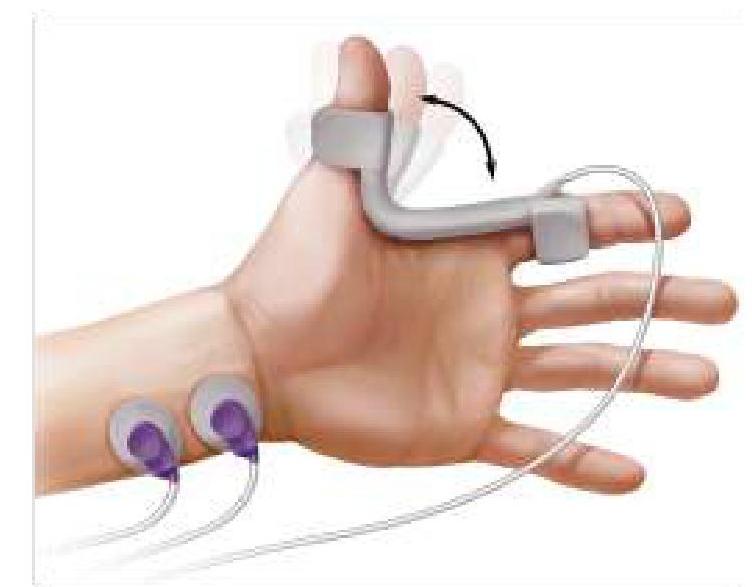
The image given below shows neuromuscular monitoring of the patient after anesthesia. What is the most commonly used nerve for monitoring?
Want unlimited practice?
Get full access to all questions, explanations, and performance tracking.
Scan to download app