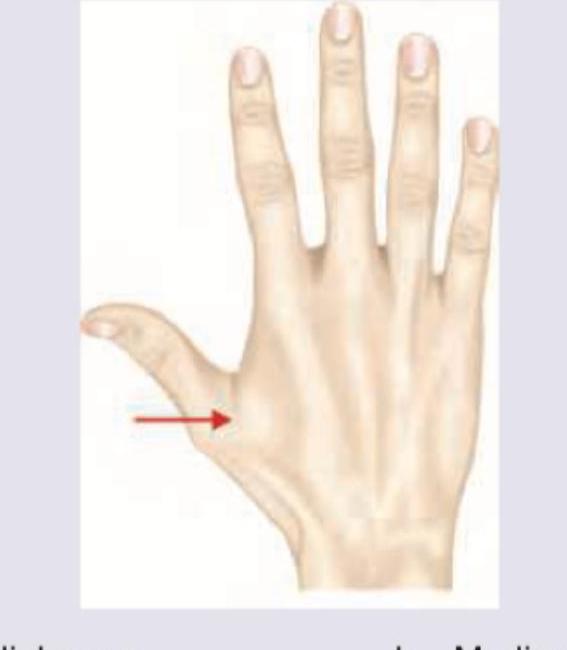
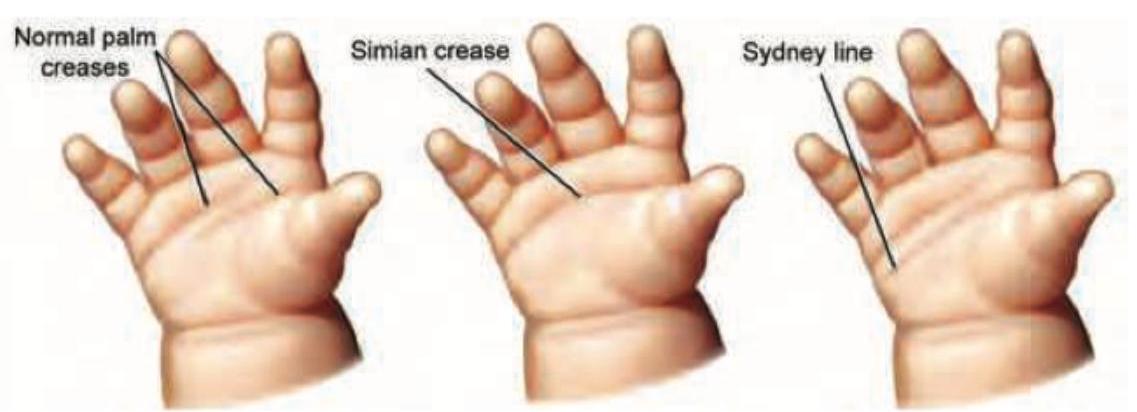
Palmar interossei are absent in which of the following digits?
Klumpke's palsy is due to injury to which part of the brachial plexus?
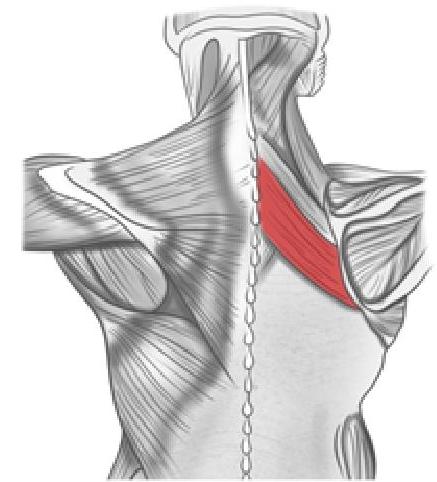
Which muscle forms the posterior wall of the axilla?
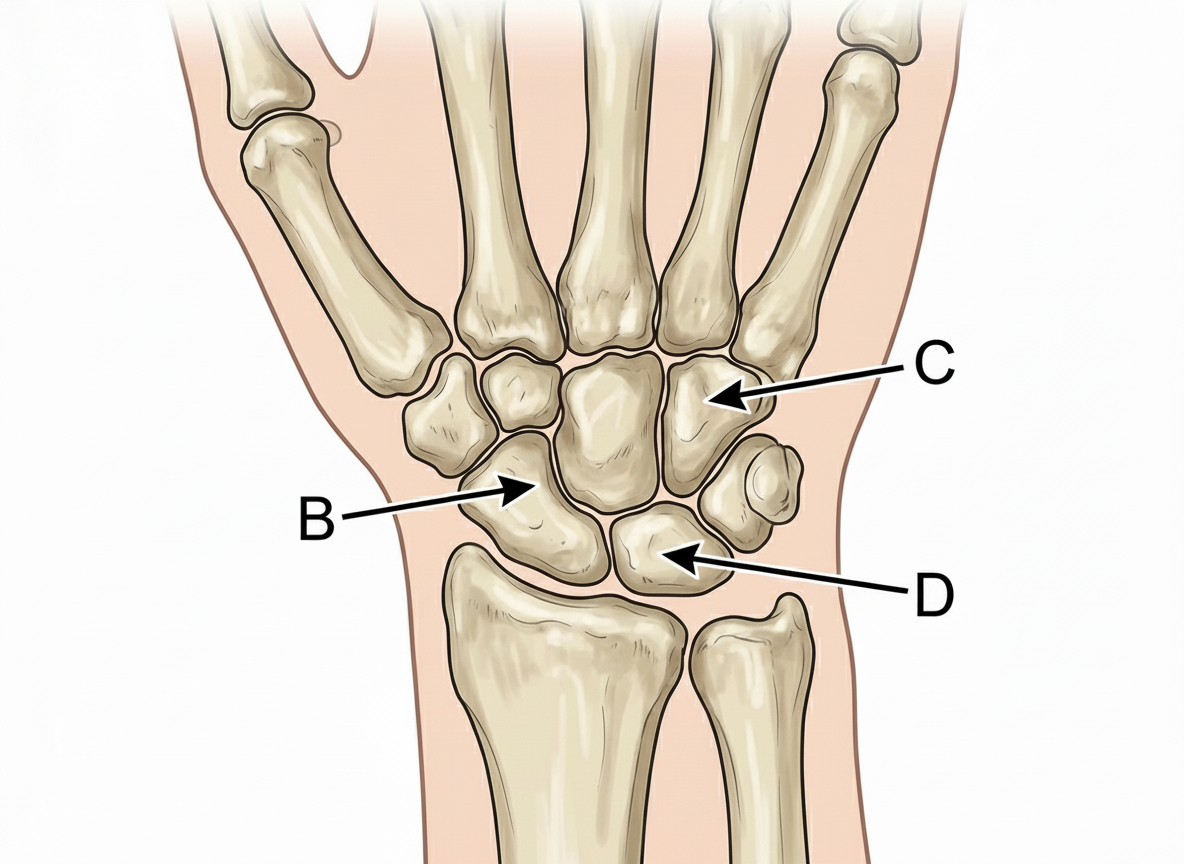
All are true about carpal bones except?
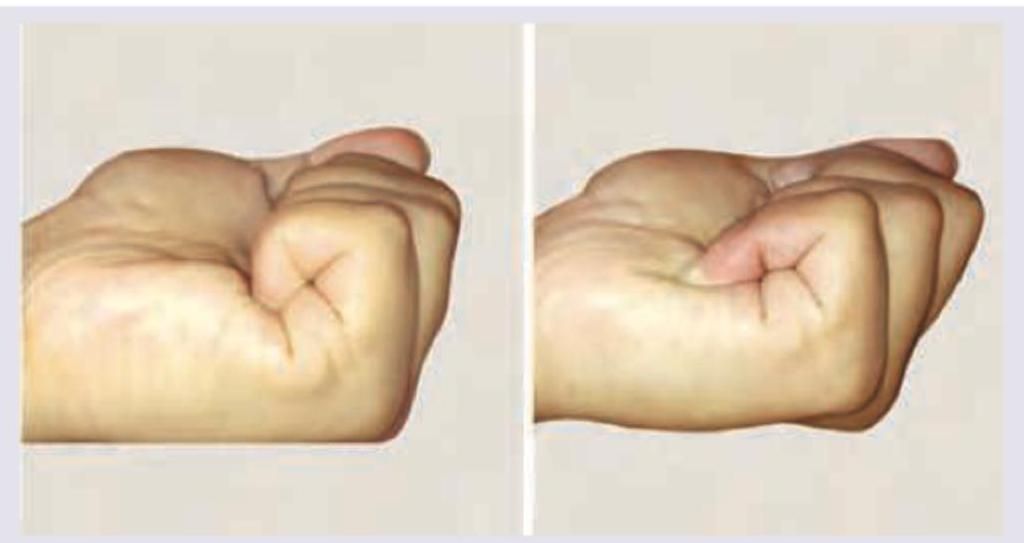
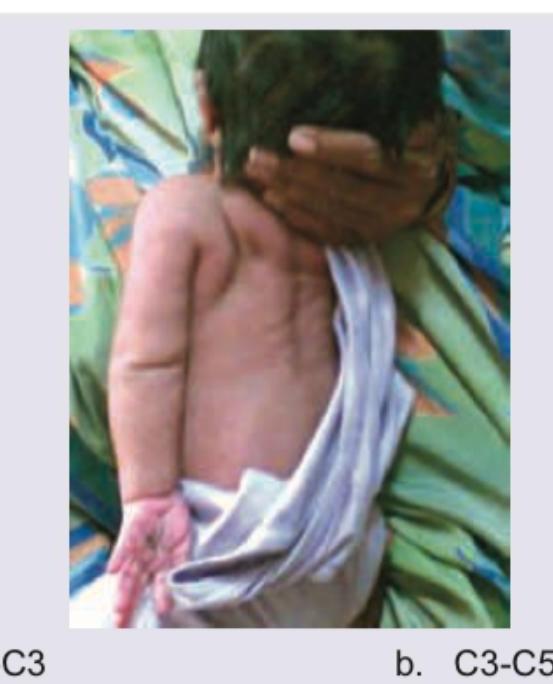
The test performed below shows involvement of which of the following nerve?

Which of the following muscles has no action at the shoulder joint?
What is the major action of the muscles that cause flexion of the MCP joint and extension of the IP joints?
Claw hand is caused by which of the following conditions?
What is the largest carpal bone?
Upper boundary of quadrangular space is formed by?
Explanation: The **Palmar Interossei (PI)** are intrinsic muscles of the hand responsible for **adduction** (moving the fingers toward the midline of the hand). The midline of the hand is defined by the longitudinal axis of the **middle finger**. Together with the interossei, these bring about flexion of the MP joints and extension of the interphalangeal (IP) joints of the fingers [1]. ### Why the Middle Finger is the Correct Answer: The middle finger is the central axis of the hand. It can move away from the midline (abduction) in two directions, but it cannot move "toward" itself. Therefore, it does not require a palmar interosseus muscle for adduction. Instead, the middle finger possesses two Dorsal Interossei to facilitate abduction to either side. ### Explanation of Incorrect Options: * **Thumb (Option A):** While traditionally some texts describe three palmar interossei (excluding the thumb), the **1st Palmar Interosseus** (often called the "pollicis" head) is frequently present, though its function is largely supplemented by the Adductor Pollicis. In standard NEET-PG anatomy (based on Gray's), the thumb is considered to have a palmar interosseus. * **Ring Finger (Option C):** The 3rd Palmar Interosseus originates from the 4th metacarpal and adducts the ring finger toward the middle finger. * **Little Finger (Option D):** The 4th Palmar Interosseus originates from the 5th metacarpal and adducts the little finger toward the middle finger. ### High-Yield Clinical Pearls for NEET-PG: * **Mnemonic (PAD-DAB):** **P**almar **AD**duct / **D**orsal **AB**duct. * **Innervation:** All interossei (Palmar and Dorsal) are supplied by the **Deep branch of the Ulnar Nerve (C8, T1)** [1]. * **Testing:** Adduction is tested by placing a piece of paper between the fingers and asking the patient to hold it against resistance (**Card Test**). * **Claw Hand:** Paralysis of these muscles leads to the loss of the "Z-position" (flexion at MCP and extension at IP joints), contributing to the ulnar claw hand deformity [1].
Explanation: **Explanation:** **Klumpke’s Palsy** (Dejerine-Klumpke paralysis) is a form of brachial plexus injury resulting from a lesion of the **inferior (lower) trunk**, which carries fibers from the **C8 and T1** nerve roots. 1. **Why Option A is Correct:** The injury typically occurs due to hyper-abduction of the arm (e.g., clutching an object while falling from a height or a breech delivery). The T1 fibers primarily supply the **intrinsic muscles of the hand** (interossei, thenar, and hypothenar muscles). Loss of these muscles leads to an imbalance between the long flexors and extensors, resulting in the characteristic **"Total Claw Hand"** deformity. 2. **Why Other Options are Incorrect:** * **Superior Trunk (B):** Injury here (C5-C6) leads to **Erb’s Palsy**, characterized by the "Waiter’s tip" deformity (adducted, internally rotated arm with extended elbow). * **Subscapular Nerve (C):** This nerve arises from the posterior cord and supplies the subscapularis and teres major; its injury would affect internal rotation but not cause claw hand. * **Ulnar Nerve (D):** While ulnar nerve damage causes a "partial" claw hand (affecting the 4th and 5th digits), Klumpke’s palsy involves both ulnar and median-supplied intrinsic muscles, leading to a more severe total clawing. **High-Yield Clinical Pearls for NEET-PG:** * **Site of Lesion:** Lower Trunk (C8-T1). * **Deformity:** Total Claw Hand (hyperextension at MCP joints, flexion at IP joints). * **Associated Feature:** **Horner’s Syndrome** (miosis, ptosis, anhidrosis) may be present if the T1 preganglionic sympathetic fibers are involved. * **Sensory Loss:** Occurs along the medial aspect of the forearm and hand (ulnar border).
Explanation: ### Explanation The **axilla** is a pyramid-shaped space between the upper arm and the chest wall. Understanding its boundaries is a high-yield topic for NEET-PG. **1. Why Subscapularis is correct:** The **posterior wall** of the axilla is formed by three muscles: * **Subscapularis** (superiorly) * **Latissimus dorsi** [1] * **Teres major** (inferiorly) The Subscapularis forms the largest portion of this wall, lying directly on the costal surface of the scapula. **2. Why the other options are incorrect:** * **Pectoralis major (Options A & B):** This muscle, along with the Pectoralis minor and the clavipectoral fascia, forms the **anterior wall** of the axilla [1]. The lower border of the Pectoralis major specifically forms the anterior axillary fold. * **Intercostal muscles (Option D):** These muscles, along with the upper four ribs and the Serratus anterior, form the **medial wall** of the axilla. **3. Clinical Pearls & High-Yield Facts:** * **Lateral Wall:** This is the narrowest boundary, formed by the bicipital groove (intertubercular sulcus) of the humerus, the Coracobrachialis, and the short head of the Biceps brachii. * **Apex:** Also known as the *cervico-axillary canal*, it is bounded by the clavicle (anteriorly), the first rib (medially), and the superior border of the scapula (posteriorly). * **Axillary Folds:** The **anterior fold** is formed by the Pectoralis major, while the **posterior fold** is formed by the Latissimus dorsi and Teres major [1]. * **Contents:** The axilla contains the axillary artery/vein, the cords of the brachial plexus, and axillary lymph nodes (crucial for breast cancer staging) [1].
Explanation: Explanation: The carpal bones are a complex of **eight** short bones arranged in two rows (proximal and distal). This question tests your fundamental knowledge of carpal anatomy and biomechanics. **Why Option B is the "Except" (Correct Answer):** While the carpal bones allow for movement, their primary biomechanical role is to provide **stability** and strength to the wrist complex rather than "flexibility" in the sense of high-range elasticity. The wrist's range of motion is primarily determined by the radiocarpal and midcarpal joints. In the context of multiple-choice questions, when compared to the factual error in Option C (number of bones), Option B is often debated; however, in standard anatomical texts, the carpal bones are described as a stable "arch" for weight transmission. *Note: In many versions of this classic MCQ, Option C is the most objectively "false" statement.* **Analysis of Other Options:** * **Option A:** True. The carpal bones form a compact, interlocking unit supported by strong interosseous ligaments, providing a stable base for hand function. * **Option C:** **False.** There are **eight** carpal bones (Proximal: Scaphoid, Lunate, Triquetrum, Pisiform; Distal: Trapezium, Trapezoid, Capitate, Hamate). *Mnemonic: She Looks Too Pretty, Try To Catch Her.* * **Option D:** True. The proximal surface of the proximal row (Scaphoid, Lunate, Triquetrum) forms a **convex** articular surface that fits into the **concave** distal end of the radius and the articular disc. (Note: The carpal tunnel itself is concave anteriorly/ventrally). **High-Yield Clinical Pearls for NEET-PG:** 1. **Most commonly fractured:** Scaphoid (risk of avascular necrosis due to retrograde blood supply). 2. **Most commonly dislocated:** Lunate (can lead to Median nerve compression). 3. **First to ossify:** Capitate (at 1–3 months). 4. **Last to ossify:** Pisiform (at 9–12 years; it is a sesamoid bone in the Flexor Carpi Ulnaris tendon).
Explanation: ***Median nerve*** - The test shown is the **pen test** or **grip test**, which assesses **median nerve function** by testing the ability to grip objects between thumb and fingers. - **Median nerve palsy** causes weakness in **thumb opposition** and **flexion of index and middle fingers**, making it difficult to hold objects firmly. *Ulnar nerve* - **Ulnar nerve palsy** is tested using **Froment's sign** or the **paper test**, where patients compensate for weak thumb adduction by flexing the thumb IP joint. - Ulnar nerve dysfunction primarily affects **hypothenar muscles** and causes **claw hand deformity** in the 4th and 5th fingers. *Radial nerve* - **Radial nerve palsy** is assessed by testing **wrist extension** and **finger extension** at the MCP joints, not grip strength. - Classic presentation includes **wrist drop** with inability to extend the wrist against gravity and weakness in **thumb extension**. *Axillary nerve* - **Axillary nerve palsy** is tested by assessing **deltoid muscle function** and **shoulder abduction**, not hand grip. - Loss of **sensation over the deltoid region** (regimental badge area) and inability to **abduct the arm** beyond 15 degrees are characteristic findings.
Explanation: The fundamental principle to determine if a muscle acts on a joint is its **anatomical attachment**. For a muscle to act on the shoulder (glenohumeral) joint, it must cross that joint and insert onto the **humerus**. **1. Why Pectoralis Minor is the Correct Answer:** The **Pectoralis minor** originates from the 3rd, 4th, and 5th ribs and inserts onto the **coracoid process of the scapula**. Because it does not attach to the humerus, it does not cross the glenohumeral joint. Its primary actions are stabilization, depression, and protraction of the **scapula**, not the shoulder joint. **2. Analysis of Incorrect Options:** * **Teres Major:** Originates from the scapula and inserts into the medial lip of the bicipital groove of the **humerus**. It acts as an adductor and medial rotator of the shoulder. * **Subscapularis:** Part of the rotator cuff; it inserts into the lesser tubercle of the **humerus**. It is the primary medial rotator of the shoulder joint. * **Trapezius:** While it primarily acts on the scapula (elevation, retraction, rotation), it is traditionally considered to have an indirect but significant action on the "shoulder complex." However, in many competitive exams, if the question implies the *functional* shoulder, Trapezius is often a distractor. Between B and D, Pectoralis minor is the "more correct" answer because it has absolutely no attachment or primary leverage for humeral movement. **Clinical Pearls for NEET-PG:** * **Rotator Cuff (SITS):** Supraspinatus, Infraspinatus, Teres **minor**, and Subscapularis all act on the shoulder joint. Note that Teres **major** is NOT a rotator cuff muscle. * **Pectoralis Minor Landmark:** It is the key landmark in the axilla, dividing the **axillary artery** into three parts. * **Clavipectoral Fascia:** This fascia is pierced by the lateral pectoral nerve, thoracoacromial artery, cephalic vein, and lymphatics; it encloses the Pectoralis minor.
Explanation: ### Explanation The correct answer is **Lumbricals**. **1. Why the Lumbricals are correct:** The lumbricals are unique muscles that originate from the tendons of the Flexor Digitorum Profundus (FDP) and insert into the **extensor expansions** (dorsal digital expansions) of the fingers [1]. Due to this specific anatomical pathway—passing anterior to the Metacarpophalangeal (MCP) joint but posterior to the Interphalangeal (IP) joints—their contraction simultaneously pulls the MCP joint into **flexion** and the IP joints (PIP and DIP) into **extension** [1]. This specific movement is known as the **"Lumbrical Position"** or the "Writing Position." **2. Why the other options are incorrect:** * **Dorsal Interossei:** Their primary action is **abduction** of the fingers (DAB: Dorsal ABducts). While they also assist in MCP flexion and IP extension [1], they are not the "major" muscles defined by this specific functional description in standard anatomical questions. * **Palmar Interossei:** Their primary action is **adduction** of the fingers (PAD: Palmar ADducts). Like the dorsal interossei, they assist the lumbricals but are primarily tested for their role in adduction. * **Flexor Digitorum Superficialis (FDS):** This muscle primarily causes flexion of the PIP joint and the MCP joint. It does **not** extend the IP joints; in fact, it is a powerful flexor. **3. Clinical Pearls & High-Yield Facts:** * **Innervation:** Lumbricals 1 and 2 (lateral) are supplied by the **Median Nerve**, while 3 and 4 (medial) are supplied by the **Ulnar Nerve**. * **Ulnar Claw Hand:** Loss of the medial lumbricals leads to the opposite deformity: hyperextension at the MCP and flexion at the IP joints. * **Testing:** To test the lumbricals, ask the patient to make a "Z" shape with their hand (the writing position). * **Origin Fact:** Lumbricals are the only muscles in the body that originate from a tendon and insert into another tendon [1].
Explanation: **Explanation:** **Claw hand (Main en griffe)** is the characteristic clinical deformity resulting from **Ulnar nerve palsy**, typically due to a lesion at the wrist or elbow. [1] **Why Ulnar Nerve Palsy is correct:** The ulnar nerve innervates the **medial two lumbricals** and all **interossei**. These muscles normally flex the metacarpophalangeal (MCP) joints and extend the interphalangeal (IP) joints. In ulnar nerve palsy, these actions are lost, leading to the opposite posture: **hyperextension at the MCP joints** (due to unopposed action of long extensors) and **flexion at the IP joints** (due to unopposed action of long flexors). This primarily affects the ring and little fingers. **Why other options are incorrect:** * **Median nerve palsy:** Results in "Ape thumb deformity" (loss of thumb opposition) or "Hand of Benediction" (when attempting to make a fist). [2] * **Radial nerve palsy:** Leads to **Wrist drop** and finger drop due to paralysis of the extensors of the wrist and fingers. * **Anterior interosseous nerve palsy:** Affects the deep flexors of the thumb and index finger, resulting in an inability to make the "OK" sign (Pinch deformity). [2] **High-Yield Clinical Pearls for NEET-PG:** * **Ulnar Paradox:** A lesion at the **wrist** causes a *more severe* clawing than a lesion at the elbow. This is because, in high lesions (elbow), the Flexor Digitorum Profundus is also paralyzed, reducing the flexion at the IP joints. * **Froment’s Sign:** Positive in ulnar nerve palsy due to paralysis of the Adductor Pollicis (patient compensates by flexing the thumb IP joint using the median nerve). * **Total Claw Hand:** Occurs in **Klumpke’s Paralysis** (C8-T1 injury), where both ulnar and median nerve-innervated intrinsic muscles are affected.
Explanation: The **Capitate** is the largest and most central bone of the carpus. Its name is derived from the Latin word *caput* (head), referring to its rounded proximal projection that fits into the concavity formed by the Scaphoid and Lunate bones. It occupies a pivotal position in the distal row of carpal bones and serves as the center of rotation for the entire wrist. **Analysis of Options:** * **Capitate (Correct):** It is the largest carpal bone. It is also the **first bone to begin ossification** (usually at 1–3 months of age), making it a key landmark in pediatric bone age assessment. * **Scaphoid (Incorrect):** While it is the largest bone in the **proximal row** and the most commonly fractured carpal bone, it is smaller than the Capitate. * **Lunate (Incorrect):** This is a crescent-shaped bone in the proximal row. It is clinically significant as the most commonly dislocated carpal bone, but it is relatively small. * **Trapezoid (Incorrect):** This is the smallest bone in the distal row and sits between the Scaphoid and the second metacarpal. **High-Yield NEET-PG Pearls:** 1. **Ossification Sequence:** Remember the mnemonic **"C-H-T-L-T-T-S-P"** (Capitate, Hamate, Triquetrum, Lunate, Trapezium, Trapezoid, Scaphoid, Pisiform). Capitate is first; Pisiform is last (9–12 years). 2. **Smallest Carpal Bone:** The **Pisiform** (a sesamoid bone in the tendon of Flexor Carpi Ulnaris). 3. **Clinical Correlation:** The head of the Capitate articulates with the Lunate; in perilunate dislocations, the Capitate is typically displaced dorsally.
Explanation: The **Quadrangular Space** is a clinically significant anatomical gap located in the posterior scapular region. It serves as a conduit for neurovascular structures passing from the axilla to the posterior arm. ### **Anatomical Boundaries** To master this topic, visualize the space as a four-sided window: * **Superior (Upper):** **Teres minor** (anteriorly) and the capsule of the shoulder joint. * **Inferior (Lower):** **Teres major** muscle. * **Medial:** **Long head of triceps brachii**. * **Lateral:** **Surgical neck of the humerus**. ### **Analysis of Options** * **Teres minor (Correct):** Forms the superior boundary. In some texts, the Subscapularis is also mentioned as the anterior-superior boundary, but Teres minor is the standard posterior-superior landmark. * **Teres major (Incorrect):** This muscle forms the **inferior** boundary of the space. * **Long head of triceps (Incorrect):** This forms the **medial** boundary, separating the quadrangular space from the triangular space. * **Surgical neck of humerus (Incorrect):** This forms the **lateral** boundary. ### **High-Yield Clinical Pearls for NEET-PG** 1. **Contents:** The space transmits the **Axillary nerve** and the **Posterior circumflex humeral artery**. 2. **Quadrangular Space Syndrome:** Compression of the axillary nerve in this space (often in overhead athletes) leads to atrophy of the deltoid and teres minor muscles and sensory loss over the "regimental badge" area. 3. **The "Rule of Teres":** Remember that **Minor is Superior** and **Major is Inferior** in the boundaries of both the quadrangular and triangular spaces.
Pectoral Region and Axilla
Practice Questions
Arm and Cubital Fossa
Practice Questions
Forearm and Hand
Practice Questions
Joints of Upper Limb
Practice Questions
Nerves of Upper Limb
Practice Questions
Arterial Supply and Venous Drainage
Practice Questions
Lymphatic Drainage
Practice Questions
Muscles and Their Actions
Practice Questions
Applied Anatomy and Clinical Correlations
Practice Questions
Surface Anatomy and Landmarks
Practice Questions
Get full access to all questions, explanations, and performance tracking.
Start For Free