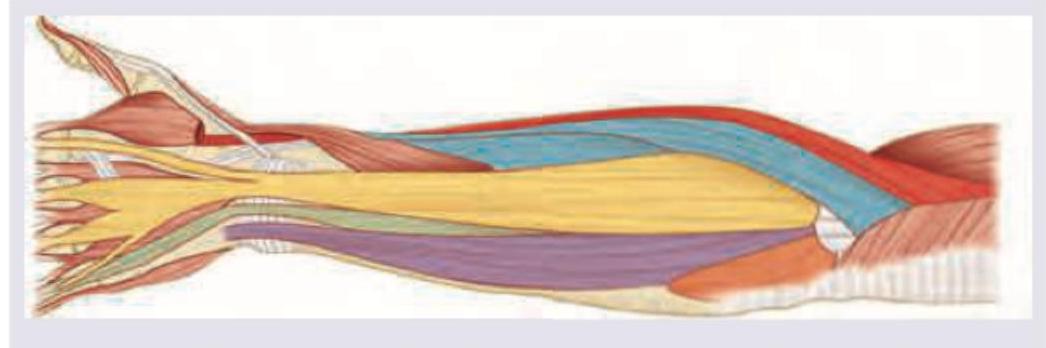
An open anastomosis in the shoulder occurs between the suprascapular artery and which other artery?
The radial bursa is the synovial sheath covering the tendon of which muscle?
Froment's sign is due to which nerve injury?
The skin over the thenar eminence is supplied by which nerve?
Which of the following statements about the radius bone is true?
A female developed 'pointing index' after an accident. This is due to injury to which nerve?
Which muscle of the rotator cuff is often called the 'forgotten muscle'?
The interossei muscles are supplied by which of the following?
The median nerve supplies all of the following muscles except?
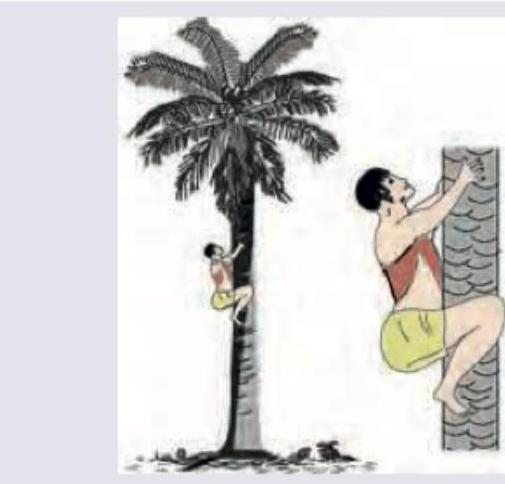
A 38-year-old man sustained a motor vehicular accident and subsequently lost the ability to abduct his right shoulder and flex his elbow. What is the most likely cause?
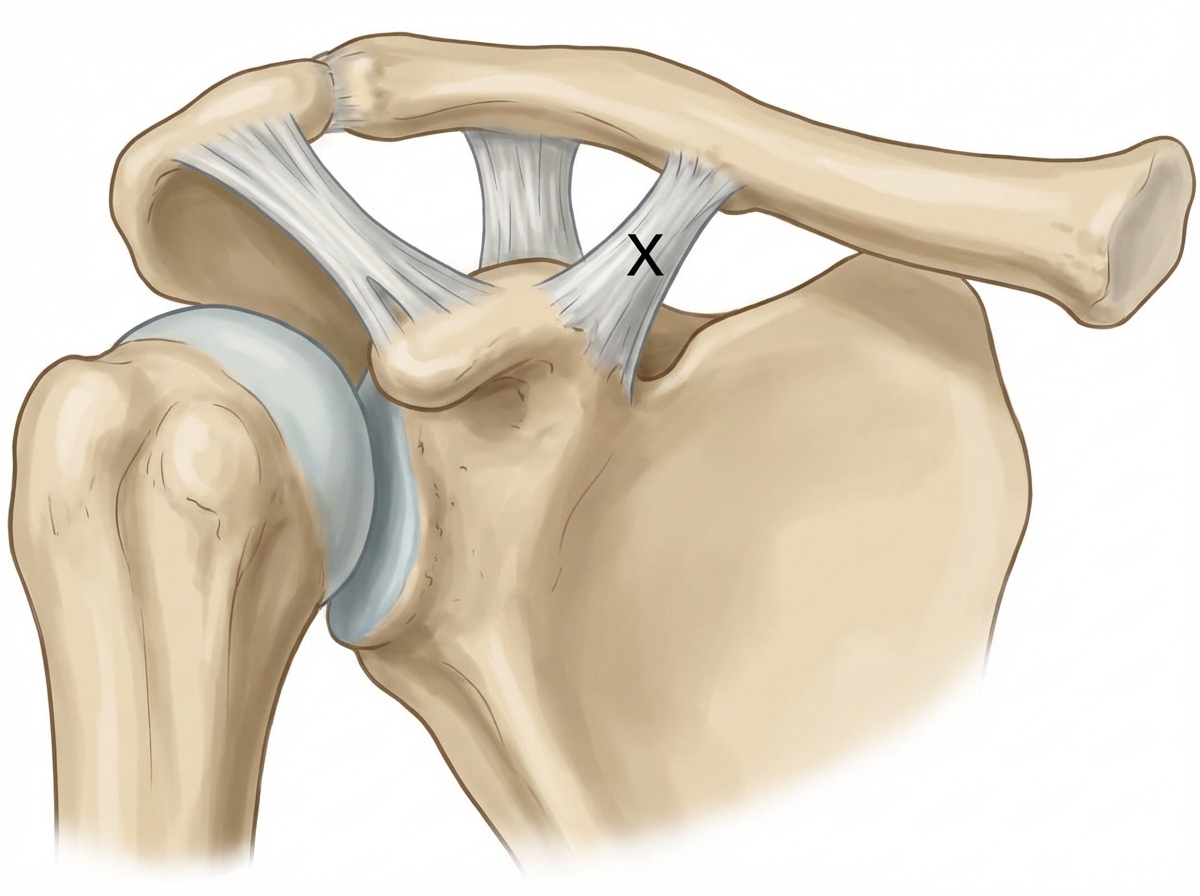
Explanation: ### Explanation The question refers to the **scapular anastomosis**, a vital collateral circulation network located around the body of the scapula. This anastomosis allows blood to reach the upper limb even if the first or second parts of the axillary artery are obstructed. **Why the correct answer is right:** The scapular anastomosis primarily involves three arteries: 1. **Suprascapular artery** (from the thyrocervical trunk, a branch of the 1st part of the subclavian artery). 2. **Circumflex scapular artery** (a branch of the subscapular artery, which arises from the 3rd part of the axillary artery). 3. **Deep branch of the transverse cervical artery** (also known as the **Dorsal scapular artery**). The **suprascapular artery** and the **circumflex scapular artery** meet and form an "open" anastomosis specifically on the dorsal surface of the scapula (within the infraspinous fossa). **Analysis of incorrect options:** * **A. Anterior circumflex humeral artery:** This artery anastomoses with the posterior circumflex humeral artery around the surgical neck of the humerus, not on the scapula. * **C. Dorsal scapular artery:** While it participates in the scapular anastomosis (along the medial border), the most direct and classic "open" connection described in standard anatomical texts for the suprascapular artery is with the circumflex scapular artery. * **D. Thoracodorsal artery:** This is a terminal branch of the subscapular artery that supplies the latissimus dorsi; it does not participate in the scapular anastomosis. **High-Yield Clinical Pearls for NEET-PG:** * **Direction of Flow:** If the axillary artery is ligated between the 1st and 3rd parts, blood flow reverses in the circumflex scapular artery to reach the distal axillary artery. * **Mnemonics:** Remember **"S-I-D"** for Scapular anastomosis: **S**uprascapular, **I**nfrascapular (Circumflex scapular), and **D**orsal scapular. * **Suprascapular Nerve vs. Artery:** The nerve passes *under* the superior transverse scapular ligament (through the notch), while the artery passes *over* it ("Army over, Navy under").
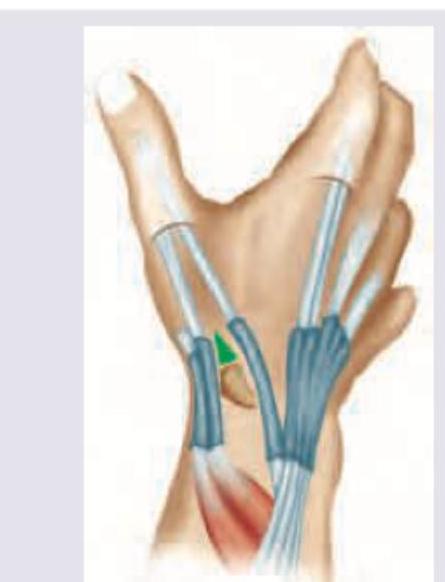
Explanation: ### Explanation The synovial sheaths of the wrist and palm are designed to reduce friction as the long flexor tendons pass under the flexor retinaculum. **Why the Correct Answer is Right:** The **Radial Bursa** is the proximal continuation of the digital synovial sheath of the thumb. It specifically envelops the tendon of the **Flexor Pollicis Longus (FPL)** [1]. It extends from the neck of the first metacarpal to a point approximately 2.5 cm proximal to the flexor retinaculum. Because the sheath of the thumb is continuous with the radial bursa, infections in the thumb can easily spread proximally into the forearm (Parona’s space). **Analysis of Incorrect Options:** * **Flexor digitorum superficialis (FDS) & Flexor digitorum profundus (FDP):** These eight tendons are collectively enclosed in the **Ulnar Bursa**. While the digital sheaths of the index, middle, and ring fingers are usually separate, the sheath of the little finger is continuous with the ulnar bursa. * **Flexor carpi radialis (FCR):** This tendon has its own dedicated synovial sheath as it passes through a separate compartment in the lateral part of the flexor retinaculum (within the groove of the trapezium) [2]. It is not part of the radial bursa. **High-Yield Clinical Pearls for NEET-PG:** * **Communication:** In about 50-80% of individuals, the radial and ulnar bursae communicate deep to the flexor retinaculum. * **Horseshoe Abscess:** An infection starting in the thumb can spread through the radial bursa, into the ulnar bursa (via the communication), and down to the little finger, forming a "horseshoe-shaped" infection. * **Parona’s Space:** A potential space in the distal forearm between the FDP tendons and the pronator quadratus where infected bursae can rupture.
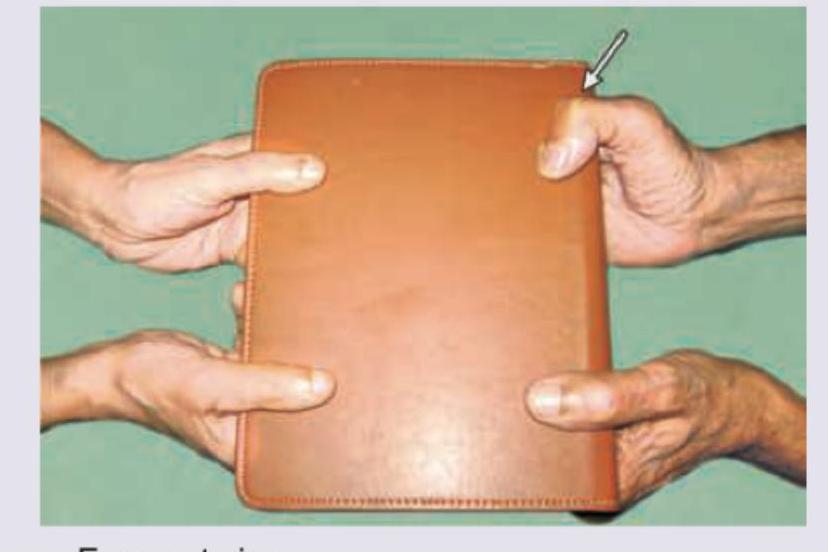
Explanation: **Froment’s Sign** is a classic clinical test used to identify **Ulnar nerve palsy**, specifically assessing the paralysis of the **Adductor Pollicis** muscle [1]. ### 1. Why Ulnar Nerve is Correct The Adductor Pollicis is the only muscle of the thumb supplied by the Ulnar nerve (Deep branch) [1]. Its primary function is to adduct the thumb toward the palm. When the ulnar nerve is injured, this muscle becomes paralyzed [1]. * **The Test:** The patient is asked to hold a piece of paper between the thumb and the index finger (pinch grip) [1]. * **The Mechanism:** To prevent the paper from being pulled away, the patient compensates for the weak Adductor Pollicis by using the **Flexor Pollicis Longus (FPL)** [1]. Since the FPL is supplied by the **Median nerve**, it remains functional. This results in **flexion of the interphalangeal (IP) joint** of the thumb, which is a positive Froment’s sign [1]. ### 2. Why Other Options are Incorrect * **Median Nerve:** Injury would cause "Ape Thumb" deformity and loss of opposition [1]. In Froment's sign, the Median nerve is actually the nerve providing the compensatory action (via FPL). * **Radial Nerve:** Injury leads to "Wrist Drop" due to paralysis of extensors [1]. It does not primarily affect thumb adduction or flexion. * **Intercostobrachial Nerve:** This is a sensory nerve (T2) supplying the skin of the axilla and medial arm; it has no motor control over the hand. ### 3. Clinical Pearls for NEET-PG * **Jeanne’s Sign:** If the thumb also shows hyperextension at the MCP joint during this test, it is called Jeanne’s sign (also indicative of Ulnar nerve palsy). * **Mnemonic:** **F**roment = **F**lexion of the thumb (IP joint). * **Ulnar Paradox:** The higher the lesion (at the elbow), the less prominent the clawing of the fingers; the lower the lesion (at the wrist), the more severe the clawing.
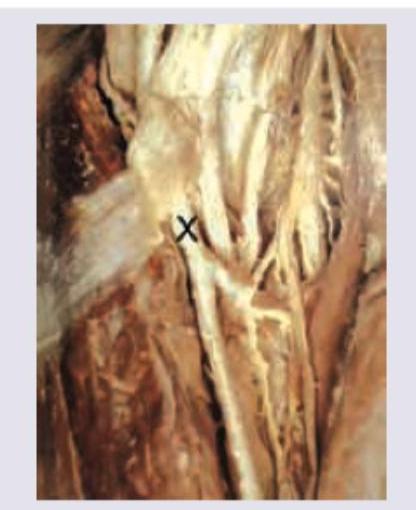
Explanation: The skin over the **thenar eminence** is supplied by the **Palmar Cutaneous Branch of the Median Nerve**. [1] ### 1. Why the Median Nerve is Correct The median nerve provides sensory innervation to the lateral 3½ digits and the corresponding palm. Specifically, the **palmar cutaneous branch** arises from the median nerve in the distal forearm, proximal to the flexor retinaculum. [1] It passes **superficial** to the carpal tunnel to supply the skin over the thenar eminence and the central palm. [1] ### 2. Why the Other Options are Incorrect * **Radial Nerve:** The superficial branch of the radial nerve supplies the skin of the **lateral half of the dorsum of the hand** and the proximal parts of the lateral 3½ digits. It does not supply the palmar surface. * **Ulnar Nerve:** The ulnar nerve (via its palmar cutaneous branch) supplies the skin over the **hypothenar eminence** and the medial 1½ digits. [1] * **Anterior Interosseous Nerve (AIN):** This is a purely **motor** branch of the median nerve (supplying the deep flexors of the forearm) and provides sensory fibers only to the wrist and intercarpal joints, not the skin. ### 3. Clinical Pearls for NEET-PG * **Carpal Tunnel Syndrome (CTS):** In CTS, there is sensory loss in the lateral 3½ digits, but **sensation over the thenar eminence is spared**. [1] This is because the palmar cutaneous branch passes superficial to the flexor retinaculum and is not compressed within the tunnel. [1] * **Ape Thumb Deformity:** Caused by a proximal median nerve injury, leading to wasting of the thenar muscles. * **Rule of 1½:** The ulnar nerve supplies 1½ muscles in the forearm (FCU and medial half of FDP) and the median nerve supplies the rest. In the hand, the ulnar nerve supplies all intrinsic muscles except the **LOAF** muscles (Lateral 2 Lumbricals, Opponens pollicis, Abductor pollicis brevis, Flexor pollicis brevis), which are median-innervated.
Explanation: The radius is the lateral bone of the forearm, situated on the thumb side in the anatomical position. It is a long bone that plays a pivotal role in the movement of the forearm and the stability of the wrist. **1. Why Option C is correct:** In the standard anatomical position (palms facing forward), the radius is positioned **laterally** (away from the midline), while the ulna is positioned medially. This orientation is fundamental for the mechanics of pronation and supination, where the radius rotates around the relatively fixed ulna. **2. Why the other options are incorrect:** * **Option A:** The **radial groove** (also known as the spiral groove) is a feature of the **humerus**, not the radius. It lodges the radial nerve and the profunda brachii artery. * **Option B:** While the radius is the primary bone forming the wrist joint (radiocarpal joint) by articulating with the scaphoid and lunate, the phrasing "major contributor" can be tricky. However, in the context of basic anatomy, Option C is the most definitive structural fact. (Note: The ulna is excluded from the wrist joint by an articular disc). * **Option D:** The **ulna** is the medial bone of the forearm, not the radius. **Clinical Pearls for NEET-PG:** * **Colles' Fracture:** A common fracture of the distal end of the radius (dinner fork deformity) with posterior displacement. * **Smith's Fracture:** Reverse Colles' fracture with anterior displacement of the distal fragment. * **Pulled Elbow:** Subluxation of the radial head from the **annular ligament**, common in young children. * **Ossification:** The radius is the first long bone to start ossifying in the forearm (8th week of intrauterine life).
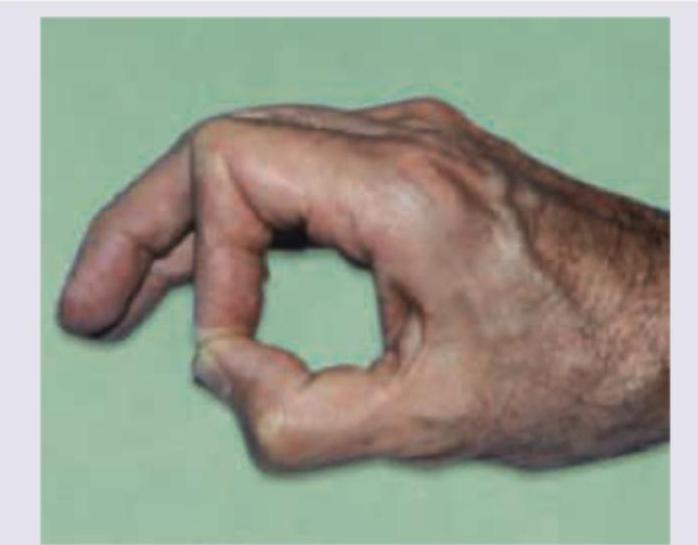
Explanation: **Explanation:** The **Median nerve** is the correct answer. The "pointing index" (also known as the **Ochsner’s test** or **Hand of Benediction** when attempting to make a fist) occurs due to a high median nerve injury (at or above the elbow) [1]. **Why it happens:** The median nerve supplies the long flexors of the thumb, index, and middle fingers [1]. Specifically: 1. **Flexor Digitorum Profundus (FDP):** The lateral half (index and middle fingers) is paralyzed [1]. 2. **Flexor Digitorum Superficialis (FDS):** All four tendons are paralyzed. 3. **Flexor Pollicis Longus (FPL):** Paralyzed. When the patient attempts to clench their fist, the ring and little fingers flex (supplied by the ulnar nerve), but the **index finger remains straight** (pointing), and the middle finger flexes only partially [1]. **Analysis of Incorrect Options:** * **Radial Nerve:** Injury leads to **Wrist Drop** and inability to extend the fingers/thumb [1]. It does not affect finger flexion. * **Ulnar Nerve:** Injury leads to **Ulnar Claw Hand** (hyperextension at MCP joints and flexion at IP joints of the ring and little fingers), most prominent at rest. Weakness in abduction and adduction of the index finger is also seen [1]. * **Axillary Nerve:** Injury leads to paralysis of the deltoid and teres minor, resulting in loss of shoulder abduction and "flat shoulder" appearance. **High-Yield Clinical Pearls for NEET-PG:** * **Ape Thumb Deformity:** Seen in low median nerve palsy (wrist level) due to thenar muscle atrophy. * **Ochsner’s Clasping Test:** Used to diagnose high median nerve palsy; the index finger fails to flex. * **Kiloh-Nevin Syndrome:** Injury to the **Anterior Interosseous Nerve** (branch of median) resulting in an inability to make the "OK" sign.
Explanation: The **Subscapularis** is frequently referred to as the **'forgotten muscle'** of the rotator cuff because its clinical assessment is often overlooked compared to the other three muscles. While the supraspinatus, infraspinatus, and teres minor are located posteriorly and are easily accessible for physical examination and imaging, the subscapularis lies on the anterior surface of the scapula. Its tears are harder to diagnose clinically and were historically missed on standard MRI planes, leading to this moniker. **Analysis of Options:** * **Subscapularis (Correct):** It is the only rotator cuff muscle that originates from the anterior aspect of the scapula and inserts into the **lesser tubercle** of the humerus. It is the most powerful internal rotator of the shoulder. * **Supraspinatus (Incorrect):** This is the **most commonly injured** rotator cuff muscle. It initiates the first 15° of abduction and is tested via the 'Empty Can' (Jobe’s) test. * **Infraspinatus (Incorrect):** Along with the teres minor, it acts as a lateral (external) rotator. It is rarely "forgotten" as it is easily tested by resisted external rotation. * **Teres Minor (Incorrect):** This muscle also provides lateral rotation and is specifically tested using the **Hornblower’s sign**. **High-Yield Clinical Pearls for NEET-PG:** * **Nerve Supply:** Subscapularis is supplied by the **upper and lower subscapular nerves** (C5, C6). * **Clinical Tests:** Specific tests for the subscapularis include the **Lift-off test** (Gerber’s), **Belly-press test**, and **Bear-hug test**. * **Anatomy:** It forms the posterior wall of the axilla. * **Rotator Interval:** This is a triangular space between the subscapularis and supraspinatus tendons, which houses the long head of the biceps tendon.
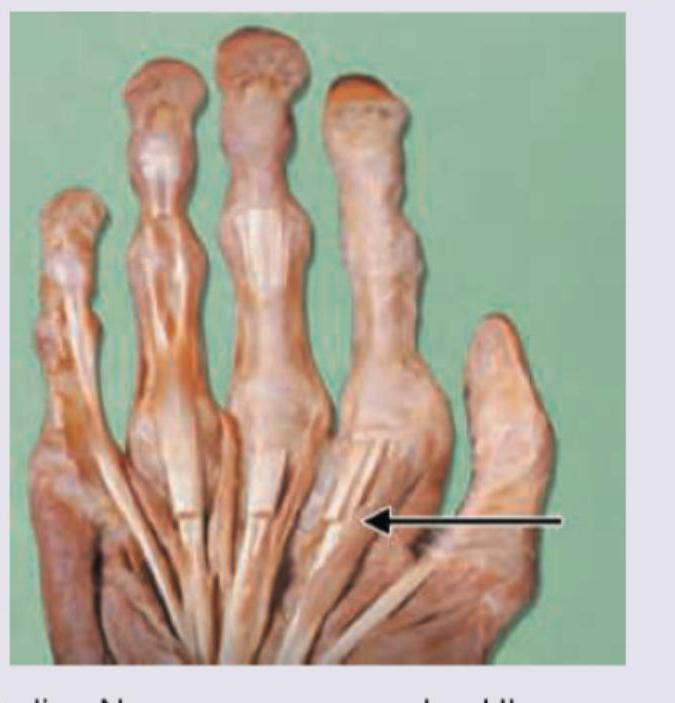
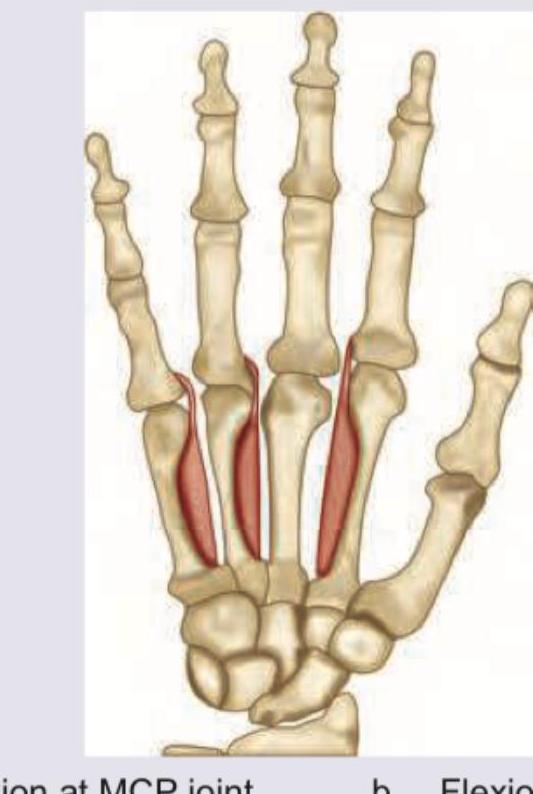
Explanation: The **Deep Palmar Arch** is the primary source of blood supply to the deep structures of the hand, including the interossei muscles. It is formed mainly by the terminal part of the **radial artery**, which anastomoses with the deep palmar branch of the ulnar artery. The arch lies across the bases of the metacarpal bones, deep to the adductor pollicis muscle. It gives off **three palmar metacarpal arteries**, which run distally in the interosseous spaces to supply the interossei muscles and eventually join the common digital arteries. **Analysis of Options:** * **Option A (Superficial palmar branch of radial artery):** This branch arises just before the radial artery enters the back of the hand; it contributes to the superficial palmar arch, primarily supplying the thenar muscles. * **Option B (Deep palmar branch of ulnar artery):** While this branch contributes to the formation of the deep palmar arch, the arch *itself* (as a collective structure) is the direct source of the metacarpal arteries that nourish the interossei. * **Option C (Superficial palmar arch):** Formed mainly by the ulnar artery, it lies superficial to the long flexor tendons and primarily supplies the skin and long flexor tendons via common and proper palmar digital arteries. **High-Yield NEET-PG Pearls:** * **Rule of Thumb:** The **Radial artery** is the main contributor to the **Deep** arch, while the **Ulnar artery** is the main contributor to the **Superficial** arch. * **Nerve Supply:** All interossei (4 dorsal, 3 palmar) are supplied by the **deep branch of the ulnar nerve** (C8, T1) [1]. * **Action:** **PAD-DAB** (Palmar ADduct; Dorsal ABduct) [1]. * **Allen’s Test:** Used clinically to assess the patency of the radial and ulnar arteries and the adequacy of the palmar arches before arterial sampling.
Explanation: **Explanation:** The **Median Nerve** is the primary nerve of the anterior (flexor) compartment of the forearm. It supplies all the muscles in this compartment **except for 1.5 muscles**: the Flexor Carpi Ulnaris (FCU) and the medial half (ulnar half) of the Flexor Digitorum Profundus (FDP) [1]. These 1.5 muscles are supplied by the **Ulnar Nerve** [1]. **Analysis of Options:** * **A. Flexor Carpi Ulnaris (Correct):** This muscle is exclusively supplied by the **Ulnar Nerve (C8, T1)**. It is a key landmark for the ulnar nerve and artery at the wrist. * **B. Flexor Digitorum Superficialis:** This is a superficial muscle of the forearm supplied entirely by the Median Nerve before it passes through the carpal tunnel [1]. * **C. Pronator Teres:** This is the most lateral of the superficial flexors and is supplied by the Median Nerve. * **D. Flexor Pollicis Longus:** This is a deep muscle of the forearm supplied by the **Anterior Interosseous Nerve (AIN)**, which is a major branch of the Median Nerve. **High-Yield Clinical Pearls for NEET-PG:** * **Point of Compression:** The median nerve can be compressed between the two heads of the **Pronator Teres** (Pronator Syndrome) or under the flexor retinaculum (**Carpal Tunnel Syndrome**) [1]. * **The "1.5" Rule:** Always remember that the Ulnar nerve "steals" the FCU and the medial half of the FDP. * **Hand of Benediction:** This deformity occurs when a patient attempts to make a fist but cannot flex the index and middle fingers due to a high median nerve palsy. * **Mnemonic:** The Median nerve supplies the **LOAF** muscles in the hand (Lumbricals 1 & 2, Opponens pollicis, Abductor pollicis brevis, Flexor pollicis brevis).
Explanation: ### Explanation **1. Why Upper Trunk Injury is Correct:** The clinical presentation describes a classic case of **Erb’s Palsy**, which results from an injury to the **Upper Trunk (C5-C6)** of the brachial plexus. * **Abduction loss:** Due to paralysis of the **Deltoid** (Axillary nerve, C5-C6) and **Supraspinatus** (Suprascapular nerve, C5-C6). * **Elbow flexion loss:** Due to paralysis of the **Biceps brachii** and **Brachialis** (Musculocutaneous nerve, C5-C6). In high-impact trauma like motor vehicle accidents, forceful displacement of the head away from the shoulder stretches or tears these roots, leading to the characteristic "Policeman’s tip" or "Waiter’s tip" deformity (arm adducted, medially rotated, and forearm extended/pronated). **2. Why Other Options are Incorrect:** * **Shoulder Dislocation:** While it can cause axillary nerve damage (loss of abduction), it typically does not affect elbow flexion (musculocutaneous nerve). * **Medial Cord Injury (C8-T1):** This would primarily affect the intrinsic muscles of the hand (Ulnar nerve) and medial aspect of the forearm, leading to "Claw hand" rather than proximal shoulder/elbow deficits. * **Lateral Cord Injury:** While it involves the musculocutaneous nerve (flexion loss), it does not account for the loss of abduction mediated by the suprascapular and axillary nerves (which arise from the trunk and posterior cord, respectively). **3. Clinical Pearls for NEET-PG:** * **Erb’s Point:** A site on the upper trunk where 6 nerves meet (C5, C6 roots; Suprascapular, Nerve to Subclavius; Anterior and Posterior divisions). * **Klumpke’s Palsy:** Lower trunk injury (C8-T1) resulting from hyper-abduction of the arm; presents with "Total Claw Hand." * **Nerve Roots:** Remember C5-C6 for "proximal" movements (Shoulder/Elbow) and C8-T1 for "distal" movements (Hand).
Pectoral Region and Axilla
Practice Questions
Arm and Cubital Fossa
Practice Questions
Forearm and Hand
Practice Questions
Joints of Upper Limb
Practice Questions
Nerves of Upper Limb
Practice Questions
Arterial Supply and Venous Drainage
Practice Questions
Lymphatic Drainage
Practice Questions
Muscles and Their Actions
Practice Questions
Applied Anatomy and Clinical Correlations
Practice Questions
Surface Anatomy and Landmarks
Practice Questions
Get full access to all questions, explanations, and performance tracking.
Start For Free