Which dermatome supplies the middle finger?
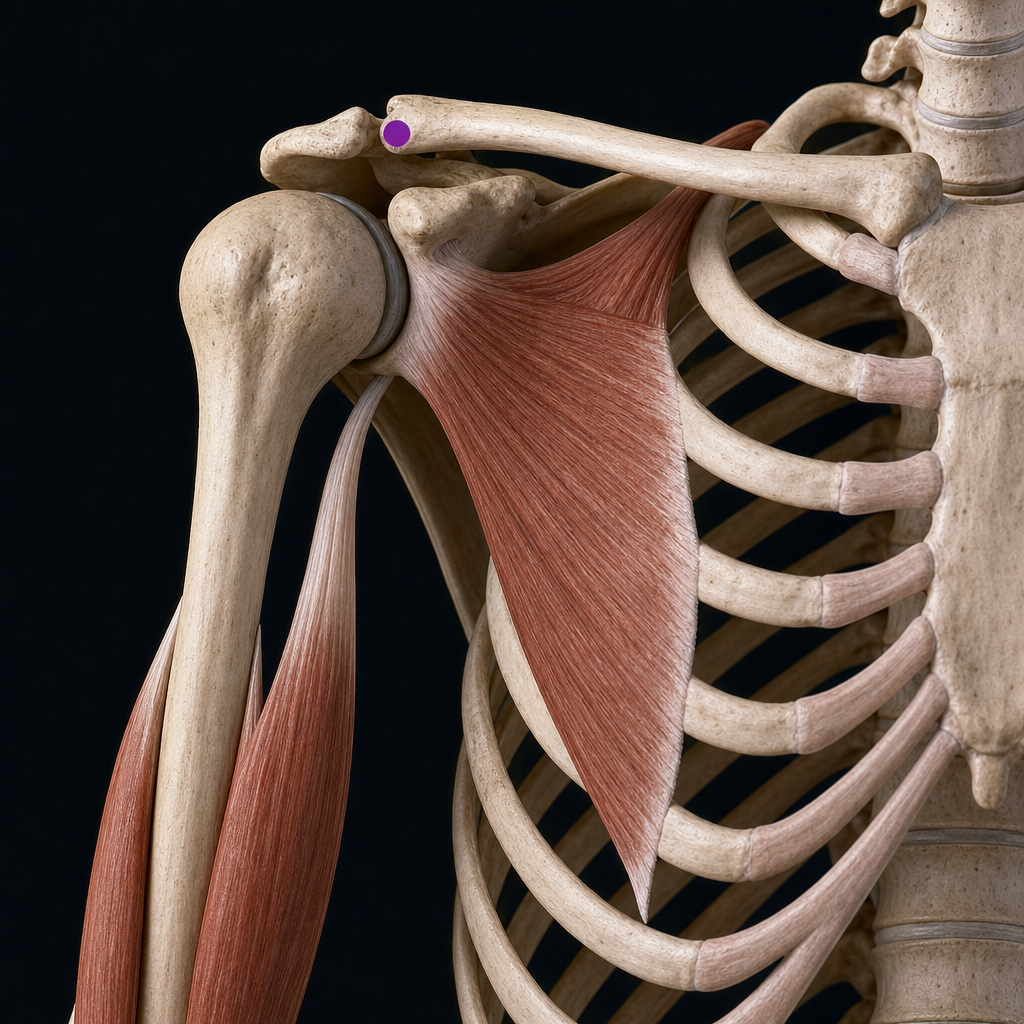
A patient presents with winging of the scapula, noticed when pushing against a wall. The nerve responsible for this condition arises from which part of the brachial plexus?
Which muscle causes adduction of the wrist joint?
Which tendon is located in the 1st extensor compartment of the wrist?
All of the following are features of musculocutaneous nerve injury at the axilla except?
Which of the following statements is false regarding the ulnar nerve?
All of the following muscles of the shoulder girdle assist in abduction of the upper limb, EXCEPT:
What is the deformity caused by the involvement of the 1st and 2nd lumbrical muscles called?
The number of lactiferous ducts that open into the nipple is
A 13-year-old boy is brought to the emergency department after losing control during a motorbike race in which he was run over by several of the other racers. Physical examination reveals several cuts and bruises. He is unable to extend the left wrist, fingers, and thumb, although he can extend the elbow. Sensation is lost in the lateral half of the dorsum of the left hand. Which of the following nerves has most likely been injured, and in what part of the arm is the injury located?
Explanation: ### Explanation The dermatomes of the upper limb follow a specific segmental distribution derived from the brachial plexus (C5-T1). The correct answer is **C7** because it provides sensory innervation to the central axis of the hand, specifically the **middle finger**. #### Why C7 is Correct: The C7 spinal nerve root supplies the skin over the middle of the posterior aspect of the forearm and the **middle finger** (palmar and dorsal surfaces). In clinical practice, testing sensation on the tip of the middle finger is the standard method to assess the integrity of the C7 nerve root. #### Analysis of Incorrect Options: * **A. C6:** This dermatome supplies the lateral aspect of the forearm, the **thumb**, and the lateral half of the index finger. (Mnemonic: C6 forms a "6" shape with the thumb and index finger). * **C. C8:** This dermatome supplies the medial aspect of the hand, specifically the **ring and little fingers**. * **D. T1:** This dermatome supplies the medial aspect of the forearm and the upper arm (distal portion). #### High-Yield Clinical Pearls for NEET-PG: * **The "Hand" Rule:** To remember the hand dermatomes quickly: C6 = Thumb, C7 = Middle finger, C8 = Little finger. * **Myotome Correlation:** C7 is also responsible for the **Triceps reflex** and movements like elbow extension and wrist flexion. * **Axillary Dermatome:** T2 supplies the skin of the axilla (via the intercostobrachial nerve). * **Clinical Significance:** In cervical disc prolapse (e.g., C6-C7 disc herniation), the C7 nerve root is compressed, leading to paresthesia or sensory loss specifically in the middle finger [1].
Explanation: ***Root*** - **Winging of the scapula** is caused by **long thoracic nerve palsy**, which paralyzes the **serratus anterior muscle**. - The **long thoracic nerve** arises directly from the **roots C5, C6, and C7** of the brachial plexus, making this the correct answer. *Trunk* - Nerves arising from trunks include the **suprascapular nerve** and **nerve to subclavius**. - These nerves do not innervate the **serratus anterior muscle** responsible for preventing scapular winging. *Division* - The **divisions** of the brachial plexus are primarily organizational structures that separate into **anterior and posterior** components. - No major nerves arise directly from the divisions that would cause scapular winging when damaged. *Cord* - Nerves from cords include the **median nerve** (lateral and medial cords), **ulnar nerve** (medial cord), and **radial nerve** (posterior cord). - These nerves primarily innervate **forearm and hand muscles**, not the serratus anterior muscle.
Explanation: **Explanation:** The movement of the wrist joint (radiocarpal joint) occurs along two axes: flexion/extension and abduction/adduction. **Adduction (ulnar deviation)** is primarily performed by the simultaneous contraction of muscles on the medial (ulnar) aspect of the forearm. **Why Flexor Carpi Ulnaris (FCU) is correct:** The FCU is the most medial muscle of the superficial flexor compartment. It inserts into the pisiform, hook of hamate, and the base of the 5th metacarpal [1]. Due to its medial position relative to the axis of the wrist, its contraction pulls the hand toward the midline (ulnar side). It works in synergy with the **Extensor Carpi Ulnaris (ECU)** to produce pure adduction. **Analysis of Incorrect Options:** * **A. Flexor carpi radialis:** This muscle is located on the lateral side of the forearm. Its contraction results in **abduction (radial deviation)** and flexion of the wrist. * **C. Flexor pollicis longus:** This is a deep muscle primarily responsible for flexing the interphalangeal joint of the thumb [1]. While it may weakly assist in wrist flexion, it does not contribute to adduction. * **D. Flexor digitorum profundus:** This muscle primarily flexes the distal interphalangeal (DIP) joints of the fingers and the wrist as a whole, but it does not have a specific vector for ulnar deviation [1]. **High-Yield Clinical Pearls for NEET-PG:** * **Synergy:** Pure adduction requires the co-contraction of FCU (flexor) and ECU (extensor) to cancel out their respective flexion/extension components. * **Nerve Supply:** FCU is a notable exception in the flexor compartment as it is supplied by the **Ulnar Nerve (C8, T1)**, not the Median Nerve. * **Range of Motion:** Adduction (approx. 45°) has a greater range than abduction (approx. 15°) because the radial styloid process extends further distally than the ulnar styloid, limiting lateral movement.
Explanation: The extensor retinaculum at the wrist is divided into **six fibro-osseous compartments** that house the tendons of the forearm muscles [1]. Understanding the contents of these compartments is high-yield for NEET-PG. ### **Why Option B is Correct** The **1st extensor compartment** contains two tendons [1]: 1. **Abductor Pollicis Longus (APL)** 2. **Extensor Pollicis Brevis (EPB)** These tendons form the lateral (radial) border of the **Anatomical Snuffbox** [2]. Inflammation of the synovial sheaths of these two tendons leads to **De Quervain’s Tenosynovitis**, a common clinical condition [3]. ### **Analysis of Incorrect Options** * **Option A (EPL):** The Extensor Pollicis Longus is located in the **3rd compartment** [1]. It hooks around **Lister’s tubercle** of the radius, which acts as a pulley, and forms the medial (ulnar) border of the anatomical snuffbox [2]. * **Options C & D (ECRL & ECRB):** Both the Extensor Carpi Radialis Longus and Brevis are located in the **2nd compartment** [1]. They insert into the bases of the 2nd and 3rd metacarpals, respectively. ### **High-Yield Clinical Pearls for NEET-PG** * **Mnemonic for Compartments:** **2-2-1-2-1-1** (Number of tendons in each compartment from 1st to 6th). * **4th Compartment:** Contains the most structures (Extensor Digitorum, Extensor Indicis, Posterior Interosseous Nerve, and Anterior Interosseous Artery) [1]. * **5th Compartment:** Contains Extensor Digiti Minimi (EDM) [1]. * **6th Compartment:** Contains Extensor Carpi Ulnaris (ECU) [1]. * **Finkelstein’s Test:** Used to diagnose De Quervain’s tenosynovitis by assessing pain over the 1st compartment during ulnar deviation of the wrist with the thumb flexed.
Explanation: ### Explanation The **musculocutaneous nerve (C5–C7)** is a branch of the lateral cord of the brachial plexus. It supplies the muscles of the anterior compartment of the arm (Coracobrachialis, Biceps Brachii, and Brachialis) and continues as the Lateral Cutaneous Nerve of the Forearm. **1. Why "Loss of flexion of the shoulder" is the correct answer (the "Except"):** While the musculocutaneous nerve supplies the coracobrachialis and the long head of the biceps (both weak flexors of the shoulder), shoulder flexion is **not lost** in this injury. This is because the **Pectoralis Major** (medial/lateral pectoral nerves) and the **Anterior fibers of the Deltoid** (axillary nerve) are the primary flexors of the shoulder and remain intact. **2. Analysis of incorrect options:** * **Loss of flexion of the elbow:** The nerve supplies the Biceps Brachii and Brachialis, which are the chief flexors of the elbow. Injury leads to significant weakness/loss of this movement. * **Loss of supination of the forearm:** The Biceps Brachii is the most powerful supinator of the flexed forearm. Its paralysis results in a major loss of supinatory power. * **Loss of sensation on the radial side of the forearm:** The nerve terminates as the **Lateral Cutaneous Nerve of the Forearm**, providing sensory innervation to the skin of the radial (lateral) aspect of the forearm up to the base of the thumb. **Clinical Pearls for NEET-PG:** * **Mnemonic:** The nerve pierces the **Coracobrachialis** muscle (Biceps and Brachialis are the other two "B" muscles it supplies). * **Reflex:** Injury to this nerve results in a lost **Biceps reflex**. * **Sensory Loss:** Only the lateral forearm is affected; the sensation in the hand remains normal as it is supplied by the radial, median, and ulnar nerves.
Explanation: ### Explanation **Why Option D is False (The Correct Answer):** The **ulnar nerve** does not pass through the supinator muscle. Instead, it enters the forearm by passing between the two heads of the **flexor carpi ulnaris (FCU)** muscle. The structure that passes between the two heads of the supinator muscle is the **deep branch of the radial nerve** (also known as the Posterior Interosseous Nerve or PIN). This anatomical landmark is a frequent "trap" in PG exams. **Analysis of Other Options:** * **Option A & B:** These are **true**. The ulnar nerve is primarily formed by the **C8 and T1** nerve roots (medial cord). However, in approximately 90% of individuals, it receives a "lateral root contribution" carrying **C7** fibers from the lateral cord to supply the flexor carpi ulnaris. Therefore, both descriptions of its root value are considered correct in an anatomical context. * **Option C:** This is **true**. The ulnar nerve typically gives off **no branches in the axilla or the arm**. Its first branches arise in the forearm to supply the FCU and the medial half of the flexor digitorum profundus (FDP). **High-Yield Clinical Pearls for NEET-PG:** * **Cubital Tunnel Syndrome:** The ulnar nerve is most commonly compressed at the elbow, behind the medial epicondyle, or between the heads of the FCU. * **Guyon’s Canal:** The site of ulnar nerve compression at the wrist (between the pisiform and hook of hamate) [1]. * **Froment’s Sign:** Tests for adductor pollicis paralysis (ulnar nerve) by observing compensatory flexion of the thumb IP joint (median nerve/FPL) when gripping paper. * **Ulnar Paradox:** A higher lesion (at the elbow) results in a *less* prominent claw hand because the FDP is paralyzed, reducing the flexion of the IP joints.
Explanation: **Explanation:** Abduction of the shoulder is a complex movement involving multiple muscles acting in a coordinated sequence. The correct answer is **Latissimus dorsi** because it is a powerful **adductor**, extensor, and medial rotator of the humerus—actions diametrically opposed to abduction. **Analysis of Options:** * **Latissimus dorsi (Correct):** Known as the "Climber's muscle," it pulls the trunk toward the arms. Because its insertion is on the floor of the bicipital groove (anterior humerus), its contraction brings the arm toward the midline (adduction). * **Deltoid:** The multipennate middle fibers are the primary abductors of the arm from 15° to 90°. * **Supraspinatus:** This rotator cuff muscle initiates the first 0–15° of abduction. It also stabilizes the humeral head in the glenoid cavity, providing a fulcrum for the deltoid. * **Long head of biceps brachii:** While primarily a flexor of the elbow and supinator, its tendon passes over the head of the humerus. When the arm is laterally rotated, it acts as a weak accessory abductor and helps stabilize the glenohumeral joint. **NEET-PG High-Yield Pearls:** 1. **The Abduction Sequence:** * 0–15°: Supraspinatus (Suprascapular nerve). * 15–90°: Deltoid (Axillary nerve). * >90° (Overhead): Serratus anterior and Trapezius (Scapular rotation). 2. **The "Lady between two Majors":** Latissimus dorsi inserts into the bicipital groove between the Pectoralis major (lateral lip) and Teres major (medial lip). All three are adductors. 3. **Clinical Correlation:** In a Supraspinatus tear, the patient cannot initiate abduction and may lean toward the affected side to use gravity to "jumpstart" the deltoid's range.
Explanation: ### Explanation **1. Why Median Claw Hand is Correct:** The **1st and 2nd lumbricals** are innervated by the **Median nerve** [1]. The physiological role of lumbricals is to flex the metacarpophalangeal (MCP) joints and extend the interphalangeal (IP) joints ("L-shaped" position). When these muscles are paralyzed (typically due to a distal median nerve lesion), the antagonistic muscles take over, resulting in the opposite posture: **hyperextension at the MCP joints and flexion at the IP joints** of the index and middle fingers. This specific deformity is known as the **Median claw hand**. **2. Analysis of Incorrect Options:** * **A. Ulnar claw hand:** Caused by paralysis of the **3rd and 4th lumbricals** (and all interossei) due to ulnar nerve injury [1]. It affects the ring and little fingers. * **C. Total claw hand:** Occurs when there is a combined lesion of both the **Median and Ulnar nerves** (or a Klumpke’s paralysis/C8-T1 injury), leading to clawing of all four fingers. * **D. Pointing finger (Ochsner’s clasping test):** This occurs in **proximal** median nerve injuries. When the patient attempts to make a fist, the index and middle fingers remain extended due to loss of the Long Flexors (FDS and lateral half of FDP), not just the lumbricals. **3. Clinical Pearls for NEET-PG:** * **Lumbrical Innervation:** Remember the **"12-23" rule**: 1st and 2nd lumbricals = Median nerve; 3rd and 4th lumbricals = Ulnar nerve [1]. * **The Paradox:** Clawing is more prominent in **distal** lesions (at the wrist) than proximal lesions because the long flexors (FDP) remain intact and pull the IP joints into deeper flexion. * **Ape Thumb Deformity:** Also caused by median nerve injury, specifically due to paralysis of the *Abductor Pollicis Breis*, leading to loss of thumb opposition [1].
Explanation: The mammary gland (breast) is a modified sweat gland composed of glandular tissue and supporting stroma. The glandular portion is organized into **15 to 20 independent lobes** [1]. Each lobe is drained by a single **lactiferous duct**. These ducts converge toward the nipple, where each undergoes a localized dilation called the **lactiferous sinus** (which acts as a milk reservoir during lactation) before narrowing again to open independently on the surface of the nipple [1]. Therefore, there are 15–20 ductal openings on the nipple. **Analysis of Options:** * **Option B (15-20):** Correct. This corresponds to the anatomical number of lobes and their respective primary drainage ducts [1]. * **Option A (0-5):** Incorrect. This number is too low to represent the complex lobular architecture of the human breast. * **Options C & D (35-75):** Incorrect. While there are hundreds of terminal duct lobular units (TDLUs) within the breast, they all coalesce into the 15–20 major lactiferous ducts before reaching the nipple [1, 3]. **High-Yield Facts for NEET-PG:** * **Lymphatic Drainage:** Approximately 75% of the lymph from the breast drains into the **axillary nodes** (primarily the pectoral/anterior group). * **Suspensory Ligaments of Cooper:** These fibrous bands connect the dermis to the deep fascia and provide structural support; their contraction by a tumor causes **skin dimpling** [3, 4]. * **Nerve Supply:** The breast is supplied by the anterior and lateral cutaneous branches of the **4th to 6th intercostal nerves**. * **Etiology:** Most breast cancers (Carcinoma) arise from the epithelium of the **terminal duct lobular unit (TDLU)**.
Explanation: ### Explanation **1. Why the Correct Answer is Right:** The clinical presentation describes **Wrist Drop** (inability to extend the wrist, fingers, and thumb) with preserved elbow extension. This indicates an injury to the **Radial Nerve** distal to the origin of the branches to the Triceps brachii. [1] The radial nerve enters the **spiral groove** of the humerus (midshaft), where it is highly vulnerable to fractures or direct trauma. [2] At this level, the branches to the long and medial heads of the triceps have already departed (preserving elbow extension), but the branches to the brachioradialis, extensor carpi radialis longus, and the posterior interosseous nerve (which supplies the finger/thumb extensors) are affected. [1] The sensory loss in the **lateral half of the dorsum of the hand** (first dorsal web space) confirms radial nerve involvement. **2. Why the Other Options are Wrong:** * **Options A & B (Median Nerve):** Median nerve injury typically presents with "Ape Hand" deformity, loss of thumb opposition, and sensory loss on the palmar aspect of the lateral 3.5 digits. It does not control wrist or finger extension. [1] * **Option D (Ulnar Nerve):** Ulnar nerve injury leads to "Claw Hand" (at the wrist) and sensory loss on the medial 1.5 digits. It does not cause wrist drop. [1] **3. Clinical Pearls for NEET-PG:** * **High-Yield Rule:** The higher the radial nerve lesion, the more "drop" you see. * **Axilla:** Loss of elbow extension + Wrist drop. * **Spiral Groove (Midhumerus):** Normal elbow extension + Wrist drop + Sensory loss. * **Posterior Interosseous Nerve (PIN):** Finger drop ONLY; **No** sensory loss and **No** true wrist drop (ECRL is spared). * **Saturday Night Palsy:** Compression of the radial nerve in the spiral groove, presenting identically to this case. * **Holstein-Lewis Fracture:** A fracture of the distal third of the humerus resulting in radial nerve palsy. [2]
Pectoral Region and Axilla
Practice Questions
Arm and Cubital Fossa
Practice Questions
Forearm and Hand
Practice Questions
Joints of Upper Limb
Practice Questions
Nerves of Upper Limb
Practice Questions
Arterial Supply and Venous Drainage
Practice Questions
Lymphatic Drainage
Practice Questions
Muscles and Their Actions
Practice Questions
Applied Anatomy and Clinical Correlations
Practice Questions
Surface Anatomy and Landmarks
Practice Questions
Get full access to all questions, explanations, and performance tracking.
Start For Free