A 55-year-old female choreographer had been treated in the emergency department after she fell from the stage into the orchestra pit. Radiographs revealed fracture of the styloid process of the ulna. Disruption of the triangular fibrocartilage complex is suspected. With which of the following bones does the ulna normally articulate at the wrist?
A median nerve lesion at the wrist causes all of the following except:
Which of the following movements will be affected if the greater tubercle of the humerus is lost?
Which of the following is the only shoulder girdle muscle that is not innervated by the brachial plexus?
All of the following muscles of the pectoral girdle are innervated by branches from the brachial plexus, except?
A patient presents with pain and paresthesia on the palmar surface of the lateral portion of the hand and the palmar surface of the first three digits. Through which of the following muscles does the nerve that supplies this region pass?
Which of the following muscles is NOT supplied by the ulnar nerve?
Which of the following statements is NOT true regarding the anatomical snuffbox?
Which of the following muscles of the scapula does NOT function as a retractor?
A stab wound injury to the shoulder results in a patient being unable to form a fist, presenting with a 'pointing index' appearance. Which nerve is most likely injured?
Explanation: The correct answer is **Radius**. This question tests your understanding of the anatomy of the wrist joint (radiocarpal joint) and the distal radioulnar joint. **1. Why Radius is Correct:** The ulna is unique because it **does not articulate directly with any carpal bones** at the wrist. Instead, the distal end of the ulna articulates with the **ulnar notch of the radius** to form the distal radioulnar joint (a pivot joint allowing pronation and supination). The ulna is separated from the carpal bones (specifically the triquetrum and lunate) by the **Triangular Fibrocartilage Complex (TFCC)**. Therefore, the only bone the ulna articulates with at the wrist level is the radius. **2. Why Incorrect Options are Wrong:** * **Triquetrum & Lunate (Options A & C):** While these bones are located distal to the ulna, they articulate with the **radius** and the **TFCC**, not the ulna itself. The TFCC acts as a physical barrier preventing ulnar-carpal contact. * **Hamate (Option B):** The hamate is a distal row carpal bone. It articulates with the triquetrum, capitate, and the 4th and 5th metacarpals, but has no anatomical relationship with the ulna. **3. NEET-PG High-Yield Pearls:** * **The Wrist Joint (Radiocarpal Joint):** Formed by the distal end of the radius and the TFCC proximally, and the scaphoid, lunate, and triquetrum distally. * **TFCC Components:** Includes the articular disc (triangular fibrocartilage), palmar and dorsal radioulnar ligaments, and the ulnar collateral ligament. * **Clinical Correlation:** A fracture of the ulnar styloid often indicates a TFCC tear, leading to ulnar-sided wrist pain and instability during rotation. * **Memory Aid:** The Ulna is "**U**nable" to touch the carpal bones!
Explanation: **Explanation:** The **Median Nerve** is the primary motor nerve for the thenar muscles and the lateral two lumbricals in the hand [1]. A lesion at the wrist (e.g., Carpal Tunnel Syndrome or a wrist laceration) affects the **recurrent branch** and the **digital branches** of the median nerve. **Why "Weakness of Adductor Pollicis" is the correct answer:** The **Adductor Pollicis** is the only muscle of the thumb that is **not** supplied by the median nerve [1]. It is supplied by the **deep branch of the Ulnar Nerve (C8, T1)** [1]. Therefore, a median nerve lesion at the wrist will spare this muscle, and thumb adduction will remain intact. **Analysis of incorrect options:** * **Thenar Atrophy:** The median nerve supplies the thenar eminence (Abductor pollicis brevis, Opponens pollicis, and Flexor pollicis brevis) [1]. Denervation leads to visible wasting of this muscle bulk. * **Weakness of 1st and 2nd Lumbricals:** These lateral two lumbricals are specifically innervated by the digital branches of the median nerve [1]. * **Weakness of Flexor Pollicis Brevis (FPB):** The superficial head of the FPB is supplied by the recurrent branch of the median nerve. While the deep head often receives ulnar innervation, the muscle as a whole shows significant weakness in median nerve lesions. **NEET-PG High-Yield Pearls:** 1. **Ape Thumb Deformity:** Caused by median nerve injury at the wrist, leading to loss of thumb opposition and abduction (thenar atrophy). 2. **Pointed Index/Benediction Gesture:** Seen in **high** median nerve lesions (at or above the elbow) when attempting to make a fist, due to loss of FDP and FDS. 3. **Froment’s Sign:** Used to test for Ulnar Nerve palsy; it specifically assesses the **Adductor Pollicis** [1]. If weak, the patient compensates by flexing the thumb IP joint (using the Median-innervated FPL).
Explanation: The **greater tubercle** of the humerus serves as the insertion site for three of the four rotator cuff muscles (SITS). Understanding the muscles attached here is key to determining the functional loss: 1. **Supraspinatus:** Inserts on the superior impression. It initiates **abduction** (first 0-15°). 2. **Infraspinatus:** Inserts on the middle impression. It is a powerful **lateral rotator**. 3. **Teres Minor:** Inserts on the inferior impression. It also assists in **lateral rotation**. If the greater tubercle is lost (e.g., due to a fracture), these muscles lose their leverage, leading to a deficit in **abduction and lateral rotation**. **Analysis of Incorrect Options:** * **B, C, and D:** These options involve **adduction and medial rotation**. These movements are primarily performed by muscles that insert on the **lesser tubercle** (Subscapularis) or the **intertubercular sulcus/bicipital groove** (Pectoralis major, Latissimus dorsi, and Teres major). These structures remain intact if only the greater tubercle is lost. **High-Yield Clinical Pearls for NEET-PG:** * **Rotator Cuff (SITS):** Only the **Subscapularis** inserts on the **lesser tubercle**; the other three insert on the greater tubercle. * **Fracture Displacement:** In greater tubercle fractures, the fragment is typically displaced superiorly and posteriorly due to the pull of the supraspinatus and infraspinatus. * **Nerve Supply:** Supraspinatus and Infraspinatus are supplied by the **Suprascapular nerve** (C5, C6), while Teres minor is supplied by the **Axillary nerve** (C5, C6). * **The "Lady between two Majors":** Latissimus dorsi (the Lady) inserts into the floor of the bicipital groove, flanked by Pectoralis major and Teres major on the lips.
Explanation: ### Explanation The correct answer is **C. Pectoralis minor**. **Why it is correct:** The question asks for a shoulder girdle muscle **not** innervated by the brachial plexus. However, based on standard anatomical teaching, the **Pectoralis minor** is supplied by the **Medial Pectoral Nerve (C8, T1)** [1]. The Medial Pectoral Nerve arises directly from the **Medial Cord** of the brachial plexus [1]. Therefore, Pectoralis minor *is* innervated by the brachial plexus. *Note on Question Context:* In many competitive exams, if the options provided are Coracobrachialis, Pectoralis major, and Pectoralis minor, all of these are innervated by branches of the brachial plexus. If the question intended to identify a muscle *not* supplied by the brachial plexus, the classic answer is the **Trapezius** (innervated by the Spinal Accessory Nerve/CN XI). Given the options provided, there appears to be a technical error in the question stem or key; however, among the choices, all are derivatives of the brachial plexus. **Why the other options are incorrect:** * **Coracobrachialis:** Innervated by the **Musculocutaneous nerve** (C5-C7), which is a terminal branch of the Lateral Cord of the brachial plexus. * **Pectoralis major:** Innervated by both the **Lateral and Medial Pectoral nerves**, both of which originate from the cords of the brachial plexus [1]. **High-Yield NEET-PG Pearls:** 1. **Trapezius:** The most high-yield "shoulder" muscle NOT supplied by the brachial plexus (Spinal Accessory Nerve). 2. **Levator Scapulae & Rhomboids:** Supplied by the **Dorsal Scapular Nerve** (Branch from the C5 root). 3. **Serratus Anterior:** Supplied by the **Long Thoracic Nerve of Bell** (C5, C6, C7 roots); injury leads to "winging of scapula." 4. **Pectoralis Minor Landmark:** It serves as the key landmark to divide the **Axillary Artery** into three parts.
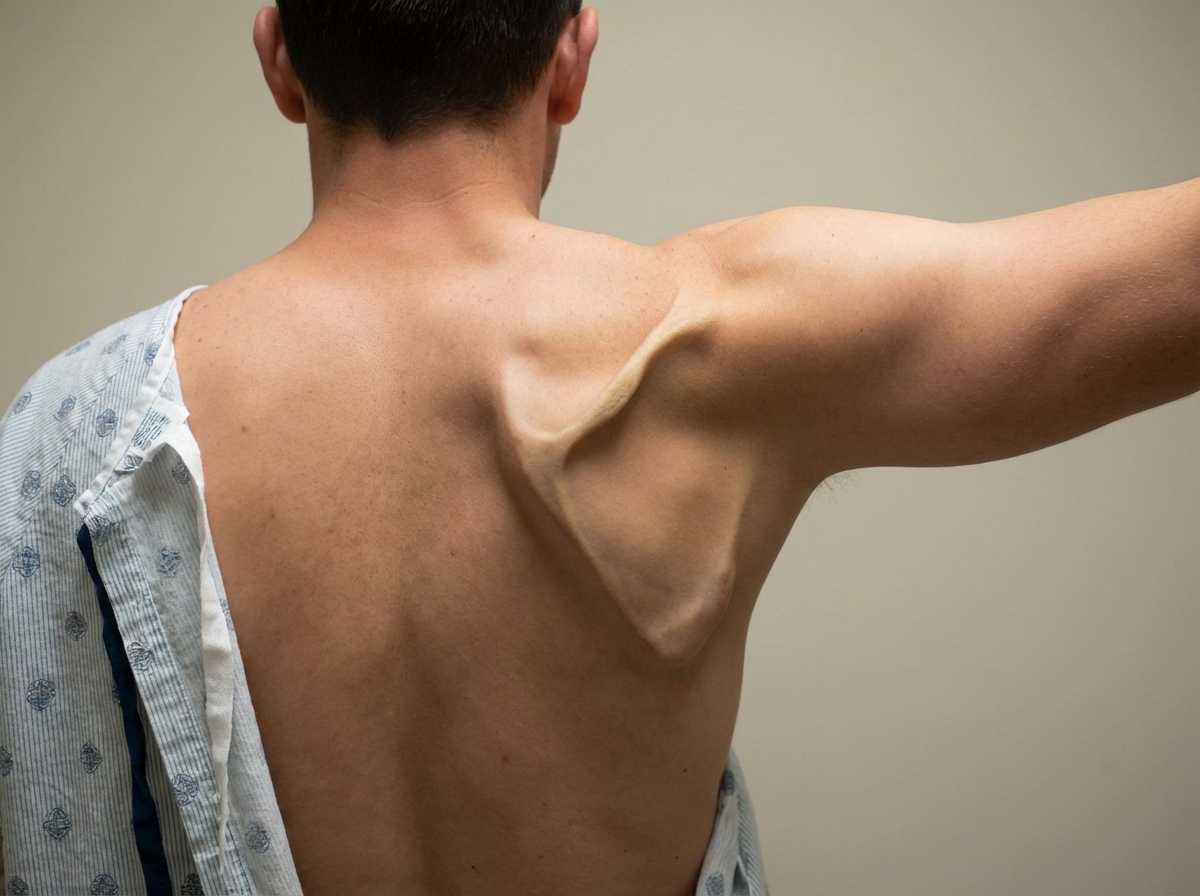
Explanation: ### Explanation The correct answer is **Trapezius**. The pectoral girdle is connected to the axial skeleton by several muscles. The key to answering this question lies in distinguishing between muscles innervated by the **brachial plexus (C5–T1)** and those innervated by **cranial nerves**. **Why Trapezius is the correct answer:** The Trapezius is a large, superficial muscle of the back that acts on the pectoral girdle. Unlike the other options, it is **not** innervated by the brachial plexus. Its motor supply is derived from the **Spinal Accessory Nerve (Cranial Nerve XI)**. Its sensory (proprioceptive) fibers come from the ventral rami of **C3 and C4**. **Analysis of Incorrect Options:** * **Subclavius:** Innervated by the **nerve to subclavius**, which arises from the **upper trunk** of the brachial plexus (C5, C6). * **Serratus anterior:** Innervated by the **long thoracic nerve** (Nerve of Bell), which arises from the **roots** of the brachial plexus (C5, C6, C7). * **Rhomboid major:** Innervated by the **dorsal scapular nerve**, which arises from the **C5 root** of the brachial plexus. **Clinical Pearls for NEET-PG:** 1. **Winged Scapula:** Damage to the long thoracic nerve (Serratus anterior) causes medial winging [1]. Damage to the spinal accessory nerve (Trapezius) causes lateral winging. 2. **Triangle of Auscultation:** The Trapezius forms the medial boundary of this triangle, which is the best site to listen to lung sounds due to the relative thinning of muscles. 3. **Testing CN XI:** Shrugging the shoulders against resistance tests the Trapezius, while turning the head against resistance tests the Sternocleidomastoid (also supplied by CN XI).
Explanation: ### Explanation **1. Why the Correct Answer is Right:** The patient’s symptoms (pain and paresthesia on the lateral palmar surface and the first three digits) indicate a lesion of the **Median Nerve** [1]. In the forearm, the median nerve enters the anterior compartment by passing **between the two heads (humeral and ulnar) of the Pronator teres muscle**. Compression at this specific site leads to **Pronator Teres Syndrome**, which mimics carpal tunnel syndrome but often includes sensory loss over the thenar eminence (due to involvement of the palmar cutaneous branch) [2]. **2. Why the Incorrect Options are Wrong:** * **Coracobrachialis (Option A):** This muscle is pierced by the **Musculocutaneous nerve**, not the median nerve. * **Flexor carpi ulnaris (Option B):** The **Ulnar nerve** enters the forearm by passing between the two heads of the flexor carpi ulnaris. * **Flexor digitorum superficialis (Option C):** While the median nerve travels deep to the FDS (specifically under the fibrous arch/sublimis bridge), it first passes through the Pronator teres. The Pronator teres is the classic anatomical landmark for its entry into the forearm. **3. Clinical Pearls & High-Yield Facts for NEET-PG:** * **Median Nerve Course:** It is the "Laborer’s nerve." It passes between the two heads of Pronator teres and then travels between FDS and Flexor digitorum profundus (FDP). * **Pronator Syndrome vs. Carpal Tunnel:** In Pronator Syndrome, sensation over the **thenar eminence** is lost because the palmar cutaneous branch arises *proximal* to the carpal tunnel but *distal* to the pronator teres [2]. * **Ulnar Nerve:** Passes between the heads of Flexor Carpi Ulnaris (Cubital Tunnel). * **Radial Nerve (Deep branch/PIN):** Pierces the **Supinator** muscle (Arcade of Frohse).
Explanation: **Explanation:** The ulnar nerve, often called the "musician’s nerve," is responsible for the fine motor movements of the hand [1]. The correct answer is the **First Lumbrical** because it is supplied by the **Median Nerve**, not the ulnar nerve [1]. **1. Why the First Lumbrical is the correct answer:** The lumbricals have a dual nerve supply [1]. The **first and second lumbricals** (lateral two) are unipennate and supplied by the **Median Nerve** (C8, T1). In contrast, the **third and fourth lumbricals** (medial two) are bipennate and supplied by the **Deep branch of the Ulnar Nerve**. **2. Analysis of incorrect options:** * **Flexor Carpi Ulnaris (FCU):** This is one of the two muscles in the forearm supplied by the ulnar nerve (the other being the medial half of the Flexor Digitorum Profundus). * **Fourth Lumbrical:** As mentioned above, the medial two lumbricals (3rd and 4th) are supplied by the deep branch of the ulnar nerve. * **Dorsal Interossei:** All interossei (4 Dorsal and 3 Palmar) are supplied by the **Deep branch of the Ulnar Nerve** [1]. **High-Yield NEET-PG Pearls:** * **The "1.5 + 14" Rule:** The ulnar nerve supplies **1.5 muscles in the forearm** (FCU and medial half of FDP) and **14 intrinsic muscles of the hand** (Hypothenar eminence, all Interossei, Adductor Pollicis, and medial two Lumbricals). * **Ulnar Paradox:** A lesion at the wrist causes more prominent "clawing" than a lesion at the elbow because the FDP remains intact, increasing the flexion deformity of the IP joints. * **Froment’s Sign:** Tests for ulnar nerve palsy by assessing the Adductor Pollicis; if weak, the patient compensates by flexing the thumb (using the Median-innervated FPL).
Explanation: The **anatomical snuffbox** is a triangular depression on the lateral aspect of the wrist, visible during thumb extension. ### **Why Option C is the Correct Answer (The False Statement)** The floor of the snuffbox is formed by the **scaphoid** and the **trapezium** (not the trapezoid). While the tendons of the extensor carpi radialis longus (ECRL) and brevis (ECRB) pass deep to the extensor pollicis longus, they are generally considered to be located in the base of the snuffbox rather than forming the structural floor itself. The primary bony floor consists of the scaphoid and trapezium [2]. ### **Analysis of Other Options** * **Option A (True):** The **lateral (anterior) border** is formed by the tendons of the **Abductor Pollicis Longus (APL)** and **Extensor Pollicis Brevis (EPB)** [1]. These two tendons belong to the first dorsal compartment of the wrist. * **Option B (True):** The **medial (posterior) border** is formed by the tendon of the **Extensor Pollicis Longus (EPL)** [1]. This tendon hooks around Lister’s tubercle on the radius. * **Option D (True):** The **radial artery** is the most important structure passing through the snuffbox, lying deep to the tendons on the floor. Pulsations can be felt here. ### **High-Yield Clinical Pearls for NEET-PG** * **Scaphoid Fracture:** Tenderness in the anatomical snuffbox is the classic clinical sign of a scaphoid fracture. * **Cephalic Vein:** Begins in the roof of the anatomical snuffbox. * **Superficial Radial Nerve:** Crosses the roof of the snuffbox; it can be compressed here (Wartenberg’s Syndrome). * **Contents Summary:** Radial artery (floor), Cephalic vein (roof), and Superficial branch of the radial nerve (roof).
Explanation: The movement of **scapular retraction** (adduction) involves pulling the medial border of the scapula toward the vertebral column. This action is primarily performed by muscles with horizontally oriented fibers that originate from the spine and insert into the medial border or acromion of the scapula. **Why Levator Scapulae is the Correct Answer:** The **Levator scapulae** originates from the transverse processes of C1-C4 and inserts into the superior angle of the scapula. Its primary function is to **elevate** the scapula and assist in downward rotation of the glenoid cavity. Because its fibers run vertically, it does not contribute to retraction. **Analysis of Incorrect Options:** * **Trapezius:** The middle fibers of the trapezius run horizontally from the spinous processes to the acromion and spine of the scapula. It is the **primary retractor** of the scapula. * **Rhomboid Major & Minor:** These muscles originate from the nuchal ligament/spinous processes (C7-T5) and insert into the medial border of the scapula. Their oblique-horizontal orientation allows them to powerfully **retract** and rotate the scapula. **High-Yield NEET-PG Pearls:** * **Nerve Supply:** Trapezius is supplied by the **Spinal Accessory Nerve (CN XI)**, while the Rhomboids and Levator scapulae are supplied by the **Dorsal Scapular Nerve (C5)**. * **Winged Scapula:** True winging (medial) is due to **Serratus anterior** palsy (Long thoracic nerve). "Pseudo-winging" or lateral displacement occurs with Trapezius palsy. * **Scapular Protractor:** The **Serratus anterior** is the chief protractor (boxer’s muscle), acting as the functional antagonist to the retractors listed above.
Explanation: ### Explanation The correct answer is **Median nerve**. **1. Why the Median Nerve is Correct:** The "pointing index" (also known as the **Ochsner’s sign** or **Hand of Benediction** when attempting to make a fist) is a classic sign of a high median nerve injury. The median nerve innervates the long flexors of the thumb, index, and middle fingers. Specifically: * **Flexor Digitorum Profundus (FDP):** The lateral half (index and middle fingers) is supplied by the median nerve. * **Flexor Digitorum Superficialis (FDS):** All four fingers are supplied by the median nerve. * **Flexor Pollicis Longus (FPL):** Supplied by the median nerve. When the patient attempts to make a fist, they cannot flex the IP joints of the thumb and index finger, and only partially flex the middle finger [1]. The ring and little fingers flex normally (supplied by the ulnar nerve), resulting in the characteristic "pointing" appearance. **2. Why the Other Options are Incorrect:** * **Radial Nerve:** Injury typically results in **Wrist Drop** due to paralysis of the extensors. It does not affect the ability to flex the fingers into a fist. * **Ulnar Nerve:** Injury leads to **Ulnar Claw Hand** (hyperextension at MCP joints and flexion at IP joints of the ring and little fingers) at rest. It does not cause the "pointing index" during active fist formation. * **Axillary Nerve:** This nerve supplies the deltoid and teres minor. Injury results in loss of shoulder abduction and sensation over the "regimental badge" area, but does not affect hand movements. **3. High-Yield Clinical Pearls for NEET-PG:** * **High Median Nerve Injury:** Occurs at the elbow or humerus; results in Pointing Index/Hand of Benediction when **making a fist**. * **Low Median Nerve Injury:** Occurs at the wrist (e.g., Carpal Tunnel); results in **Ape Thumb Deformity** (wasting of thenar eminence) [1]. * **Kiloh-Nevin Syndrome:** Isolated injury to the **Anterior Interosseous Nerve** (branch of median); patient cannot make an "OK" sign (cannot flex distal IP of index and IP of thumb).
Pectoral Region and Axilla
Practice Questions
Arm and Cubital Fossa
Practice Questions
Forearm and Hand
Practice Questions
Joints of Upper Limb
Practice Questions
Nerves of Upper Limb
Practice Questions
Arterial Supply and Venous Drainage
Practice Questions
Lymphatic Drainage
Practice Questions
Muscles and Their Actions
Practice Questions
Applied Anatomy and Clinical Correlations
Practice Questions
Surface Anatomy and Landmarks
Practice Questions
Get full access to all questions, explanations, and performance tracking.
Start For Free