
Interventional Radiological Anatomy — MCQs

In which of the following locations should the incision be made for the saphenous cutdown procedure in an obese patient with no visible or palpable superficial veins, requiring intravenous fluids in shock?
Pringle's maneuver is mainly used to control bleeding from which site?
Which one of the following is the most preferred route to perform cerebral angiography?
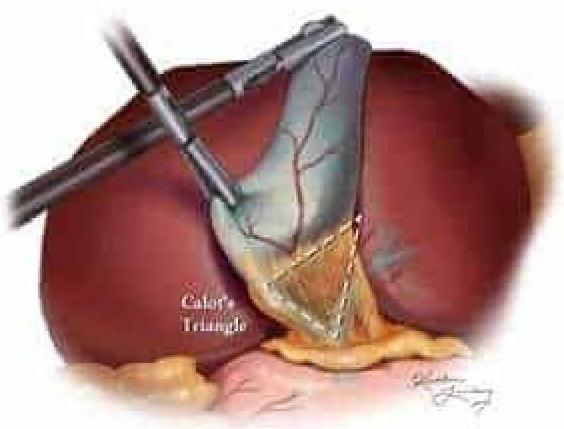
Which of the following structures is not a boundary of Calot's triangle shown in the given image?
A 55-year-old male, known smoker, complains of calf pain while walking. He experiences calf pain while walking but can continue walking with effort. Which grade of claudication does this patient fall under?
A young man with tuberculosis presents with massive recurrent hemoptysis. For angiographic treatment, which vascular structure should be evaluated first?
Which of the following is NOT a standard management option for fat embolism?
One of the risks of the endometrial biopsy that was performed on this patient is perforation of the uterus. The endometrial biopsy device is placed through the cervix and into the endometrial cavity. If complete perforation occurs, what is the sequence of layers that the biopsy device would penetrate prior to entering the peritoneal cavity?
Arrange the following according to good outcome a - zone of stasis b - zone of coagulation c - zone of hyperemia
Which of the following statements about articular cartilage is true?
Want unlimited practice?
Get full access to all questions, explanations, and performance tracking.
Scan to download app