What are the boundaries of the ovarian fossa?
In an adult male, on per rectal examination, which of the following structures cannot be palpated anteriorly?
What is the most common site of prostatic carcinoma?
What is the approximate length of the adult female urethra?
Which of the following represents the lymphatic drainage of the fundus and upper part of the uterus?
In a sagittal cross-section of the pelvis, describe the anatomical relationship of the bladder when empty to the uterine body.
What is the shortest diameter of the pelvic outlet?
After his bath but before getting dressed, a 4-year-old boy was playing with his puppy. The boy's penis was bitten by the puppy, and the deep dorsal vein was injured. Which of the following describes the damaged vein?
Which of the following is NOT a content of the broad ligament?
All of the following are related to the lateral vaginal fornix except:
Explanation: The **ovarian fossa** (of Waldeyer) is a shallow depression on the lateral pelvic wall where the ovary typically lies in nulliparous women [1]. Understanding its boundaries is high-yield for pelvic anatomy and surgical procedures like oophorectomy. ### **Explanation of the Correct Answer** The **ureter** and the **internal iliac artery** form the **posterior boundary** of the ovarian fossa. As the ureter descends into the pelvis, it runs immediately behind the ovary before turning medially toward the bladder [2]. This anatomical proximity is clinically significant, as the ureter is at risk of injury during ligation of the ovarian vessels (infundibulopelvic ligament) [2]. ### **Analysis of Incorrect Options** * **A. Posterior obliterated umbilical artery:** Incorrect. The obliterated umbilical artery (medial umbilical ligament) forms the **anterior** boundary of the fossa. * **C. Uterine tube anteriorly:** Incorrect. While the uterine tube is related to the ovary, it is not considered a formal boundary of the fossa. The anterior boundary is specifically the **obliterated umbilical artery**. * **D. Internal iliac artery laterally:** Incorrect. The internal iliac artery forms the **posterior** boundary (along with the ureter). The lateral boundary is the **obturator nerve and vessels**, which separate the fossa from the pelvic wall. ### **NEET-PG High-Yield Pearls** * **Boundaries Summary:** * **Anterior:** Obliterated umbilical artery. * **Posterior:** Ureter and Internal iliac artery. * **Superior:** External iliac vein. * **Floor (Lateral):** Obturator nerve, artery, and vein. * **Clinical Correlation:** In cases of ovarian pathology (e.g., cysts or inflammation), the **obturator nerve** (on the floor of the fossa) can be irritated, leading to referred pain along the **medial aspect of the thigh**. * **Parity:** The ovary only occupies this fossa in nulliparous women; in multiparous women, the ovary often displaces posteroinferiorly.
Explanation: ### Explanation The Digital Rectal Examination (DRE) is a vital clinical tool for assessing pelvic structures. The rectum is related anteriorly to several structures separated only by the rectovesical fascia (Denonvilliers' fascia). **1. Why Internal Iliac Lymph Nodes are the Correct Answer:** The internal iliac lymph nodes are located along the internal iliac vessels on the **lateral pelvic wall**. They are situated superior and lateral to the rectum, making them inaccessible to the finger during a standard rectal examination. In contrast, only structures directly adjacent to the anterior or lateral rectal walls can be palpable. **2. Analysis of Incorrect Options:** * **Prostate:** This is the most prominent structure felt anteriorly in males. The posterior surface of the prostate lies directly against the anterior rectal wall. * **Bulb of the Penis:** Located inferiorly in the perineum, the bulb of the penis can be felt at the lower limit of the anterior rectal wall, especially if the finger is angled downwards towards the perineal body. * **Seminal Vesicles:** Under normal physiological conditions, healthy seminal vesicles are soft and non-palpable. However, when **enlarged** (due to inflammation, cysts, or malignancy), they become palpable superior to the prostate on the anterior aspect. **Clinical Pearls for NEET-PG:** * **Anterior relations in males:** Prostate, seminal vesicles (if enlarged), base of the bladder, and the rectovesical pouch. * **Anterior relations in females:** Vagina, cervix, and the rectouterine pouch (Pouch of Douglas). * **Posterior relations (both sexes):** Sacrum, coccyx, and sacral lymph nodes. * **High-Yield Fact:** The **rectovesical pouch** is the lowest point of the peritoneal cavity in a supine male and can be palpated anteriorly for tenderness (e.g., in peritonitis) or fluid collection.
Explanation: **Explanation:** The prostate gland is anatomically divided into lobes and clinically/pathologically into zones (McNeal’s zones). Understanding the correlation between these classifications is crucial for NEET-PG. **1. Why the Posterior Lobe is Correct:** Approximately **70-80% of prostatic carcinomas** originate in the **posterior lobe**, which corresponds to the **Peripheral Zone (PZ)** in McNeal’s zonal anatomy. This area is located at the back of the gland, making it easily accessible for detection via a **Digital Rectal Examination (DRE)**. Because this zone is distant from the urethra, carcinomas here often remain asymptomatic until they reach an advanced stage. **2. Analysis of Incorrect Options:** * **Anterior Lobe:** This is primarily fibromuscular stroma and contains very little glandular tissue; it is the rarest site for malignancy. * **Median Lobe:** This lobe (part of the **Transition Zone**) is the classic site for **Benign Prostatic Hyperplasia (BPH)**. Enlargement here leads to early urinary obstruction (nocturia, urgency) because it surrounds the urethra. * **Central Zone:** This zone surrounds the ejaculatory ducts. While it can host cancer (about 5-10%), it is significantly less common than the peripheral/posterior zone. **3. Clinical Pearls for NEET-PG:** * **Gold Standard for Diagnosis:** Transrectal Ultrasound (TRUS) guided biopsy. * **Metastasis:** Prostatic cancer characteristically spreads to the **lumbar vertebrae** via the **Batson’s venous plexus** (valveless veins), resulting in **osteoblastic (sclerotic) lesions.** * **Tumor Marker:** Prostate-Specific Antigen (PSA) is used for screening and monitoring, though it is organ-specific, not cancer-specific. * **Acid Phosphatase:** Historically used as a marker for extra-capsular spread.
Explanation: The adult female urethra is a short, muscular tube approximately **3.5 to 4 cm (35–40 mm)** in length. It extends from the internal urethral orifice at the bladder neck to the external urethral orifice located in the vestibule, anterior to the vaginal opening. **Why 35 mm is correct:** Standard anatomical texts (like Gray’s Anatomy) define the female urethra as being roughly 4 cm long. Among the given options, **35 mm (3.5 cm)** is the closest approximation to this standard measurement. It traverses the pelvic diaphragm and the deep perineal pouch, running posterior to the pubic symphysis. **Analysis of Incorrect Options:** * **A (15 mm) & B (20 mm):** These are significantly too short. A urethra of this length would be insufficient to maintain the anatomical relationship between the bladder neck and the perineum. * **C (25 mm):** While longer than A and B, 2.5 cm is still shorter than the average adult female measurement and is more characteristic of pediatric anatomy. **High-Yield Clinical Pearls for NEET-PG:** * **Urinary Tract Infections (UTIs):** The short length of the female urethra (compared to the ~20 cm male urethra) is the primary anatomical reason why females are more predisposed to ascending UTIs. * **Course:** It is embedded in the anterior wall of the vagina and runs an anteroinferior course [1]. * **Sphincters:** It possesses an internal sphincter (involuntary, smooth muscle) and an external sphincter (voluntary, skeletal muscle) [2]. The external sphincter is located in the deep perineal pouch. * **Catheterization:** Due to its short, straight course and lack of sharp curvatures (unlike the male urethra), catheterization is significantly easier in females.
Explanation: The lymphatic drainage of the uterus is complex and follows the arterial supply. Understanding this distribution is high-yield for NEET-PG [1]. ### **Why Option A is Correct** The **fundus and the upper part of the body of the uterus** are supplied by the ovarian arteries, which arise directly from the abdominal aorta. Consequently, the lymphatics from this region (along with those from the ovaries and fallopian tubes) travel upwards along the ovarian vessels to drain directly into the **Pre-aortic and Para-aortic (Lateral aortic) lymph nodes** at the level of the L1-L2 vertebrae [1]. ### **Analysis of Incorrect Options** * **B. External iliac lymph nodes:** These primarily drain the **lower part of the body of the uterus**. * **C. Superficial inguinal lymph nodes:** This is a classic "trap" for examiners. Only a small portion of the uterus—the **near the attachment of the round ligament at the cornua**—drains to these nodes. * **D. Deep inguinal lymph nodes:** These primarily drain the glans clitoris and deep structures of the perineum, not the uterine fundus. ### **Clinical Pearls & High-Yield Facts** * **Cervix Drainage:** The cervix drains into the **Internal iliac** and **Obturator nodes** (primary) and later to the External iliac nodes. * **The "Round Ligament" Exception:** If a question mentions a tumor at the uterine cornua spreading to the **labia majora/groin**, the answer is the **Superficial Inguinal nodes** (via the round ligament). * **Summary Table for Uterine Drainage:** * **Fundus:** Para-aortic nodes. * **Body:** External iliac nodes. * **Cervix:** Internal iliac, Obturator, and Sacral nodes.
Explanation: ### Explanation **1. Why Option D is Correct:** In a normal anatomical position, the uterus is **anteverted** (tilted forward relative to the vagina) and **anteflexed** (bent forward at the level of the internal os). [1] When the bladder is empty, it collapses and lies in a horizontal plane on the superior surface of the vagina and the anterior surface of the uterus. [1] Because of the extreme anteflexion of the uterus, the superior surface of the empty bladder and the anterior (vesical) surface of the uterine body lie in **parallel planes**, with the bladder situated immediately anterior to the uterus. [1] **2. Analysis of Incorrect Options:** * **Option A & B:** These describe the relationship between the **urethra** and the **vagina**. The female urethra is approximately 4 cm long and lies embedded in the anterior wall of the vagina. [1] Specifically, it lies **anterior to the lower two-thirds** of the vagina. It does not lie posterior to it. [1] * **Option C:** While the bladder is anterior to the uterus, the term "above" is anatomically inaccurate for an empty bladder. When the bladder fills, it expands superiorly into the abdominal cavity, but when empty, it is a pelvic organ situated inferior/anterior to the anteflexed uterine fundus. [2] **3. High-Yield NEET-PG Pearls:** * **Uterine Orientation:** The most common position of the uterus is **Anteverted (AV) and Anteflexed (AF)**. * **Vesicouterine Pouch:** This is the shallow peritoneal fold between the bladder and the uterus. It is a frequent site for endometric implants. * **Clinical Correlation:** During a Cesarean section, the **vesicouterine fold** of the peritoneum is incised to push the bladder inferiorly, protecting it before the uterine incision is made. * **Empty vs. Full Bladder:** An empty bladder is entirely pelvic; a full bladder becomes an abdominal organ and can reach the level of the umbilicus, altering the uterine position to a more vertical orientation. [2]
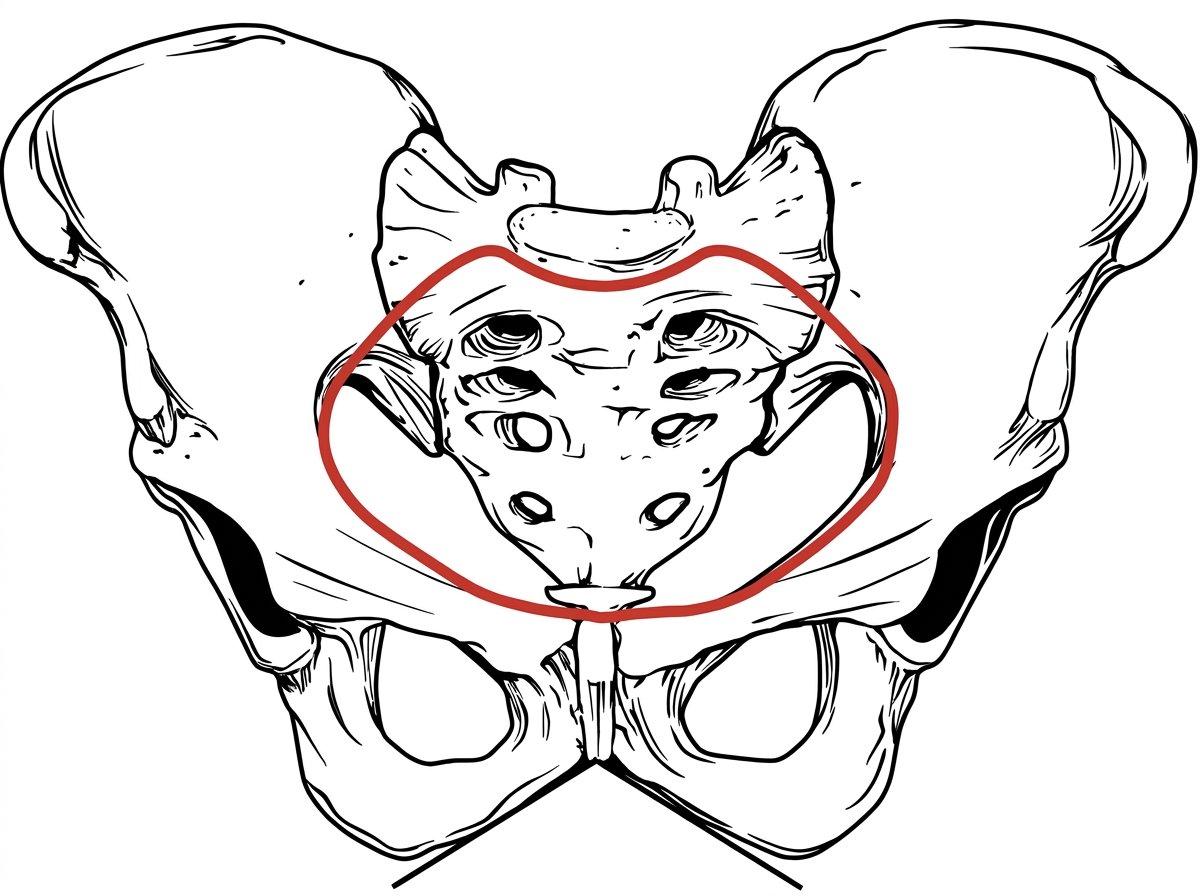
Explanation: The pelvic outlet is a diamond-shaped space bounded anteriorly by the pubic arch, laterally by the ischial tuberosities, and posteriorly by the tip of the coccyx. Understanding its dimensions is crucial for predicting the progress of labor [1]. ### **Explanation of the Correct Answer** The **Intertubercous diameter** (transverse diameter of the outlet) is the distance between the inner borders of the ischial tuberosities [1]. It measures approximately **10 to 11 cm** [1]. In clinical practice, this is considered the **shortest diameter of the pelvic outlet** because it represents the narrowest fixed transverse span that the fetal head must pass through during the final stage of delivery. ### **Analysis of Incorrect Options** * **Antero-posterior (AP) diameter (A):** Measured from the lower border of the symphysis pubis to the tip of the coccyx, it is approximately **11 to 12.5 cm**. It is longer than the intertubercous diameter, especially since the coccyx can move posteriorly during labor [1]. * **Oblique diameter (C):** There is no fixed "oblique diameter" for the outlet as there is for the inlet; however, the space available diagonally is generally larger than the intertubercous distance. * **Interspinous diameter (D):** This measures the distance between the ischial spines (approx. **10 cm**). While it is the narrowest diameter of the **pelvic cavity (mid-pelvis)**, it is not a diameter of the **pelvic outlet** [1]. ### **High-Yield Clinical Pearls for NEET-PG** * **Narrowest part of the entire pelvis:** The **Interspinous diameter** (Mid-pelvis). Do not confuse this with the outlet. * **Obstetric Conjugate:** The shortest diameter of the **pelvic inlet** (approx. 10.5 cm). * **Bituberous (Intertubercous) Assessment:** Clinically measured by placing a closed fist between the ischial tuberosities; a width of 4 knuckles usually indicates an adequate outlet [1]. * **Waste Space of Morris:** The area under the pubic arch that cannot be utilized by the fetal head; it increases if the subpubic angle is narrow (Android pelvis).
Explanation: The penis contains two distinct venous drainage systems: superficial and deep. The **deep dorsal vein of the penis** lies in the dorsal midline, deep to the deep fascia of the penis (**Buck’s fascia**). **Why the correct answer is right:** The deep dorsal vein passes posteriorly, deep to the suspensory ligament of the penis. It then travels through a gap between the arcuate pubic ligament and the transverse perineal ligament to enter the pelvic cavity. Here, it terminates by draining into the **prostatic venous plexus** (specifically the plexus of Santorini), which eventually drains into the internal iliac veins. **Analysis of incorrect options:** * **A. Lies superficial to Buck fascia:** This describes the *superficial* dorsal vein. The superficial vein drains into the superficial external pudendal vein (a tributary of the great saphenous vein), whereas the deep vein lies beneath Buck’s fascia. * **C. Lies lateral to the dorsal artery:** On the dorsum of the penis, the arrangement from medial to lateral is: **Deep dorsal vein (central/unpaired) → Dorsal artery (paired) → Dorsal nerve (paired).** Thus, the vein is medial to the artery. * **D. Is found in the corpus spongiosum:** The deep dorsal vein lies on the outer surface of the tunica albuginea of the **corpora cavernosa**. The corpus spongiosum contains the urethra and is located on the ventral aspect. **High-Yield NEET-PG Pearls:** * **Buck’s Fascia:** It is the deep fascia of the penis. If the urethra is ruptured but Buck’s fascia remains intact, urine extravasation is limited to the penis. If Buck’s fascia is torn, urine can spread to the scrotum and anterior abdominal wall (Colles' fascia). * **Venous Occlusion:** Compression of the deep dorsal vein against the rigid Buck’s fascia by the engorged corpora cavernosa is the primary mechanism for maintaining an erection.
Explanation: ### Explanation The **Broad Ligament** is a double layer of peritoneum (a fold) that extends from the sides of the uterus to the lateral pelvic walls and floor [1][2]. It acts as a "mesentery" for the female reproductive organs, enclosing several structures between its two layers. **Why the Ovary is the correct answer:** The ovary is **not** contained within the layers of the broad ligament. Instead, it is attached to the **posterior surface** of the broad ligament via a short fold of peritoneum called the **mesovarium** [1][2]. Because the ovary must rupture its surface epithelium to release an oocyte into the peritoneal cavity (to be picked up by the fimbriae), it remains an intraperitoneal structure not covered by the broad ligament's double layer [1]. **Analysis of Incorrect Options:** * **Ovarian Ligament:** This is a fibromuscular band connecting the ovary to the uterus; it lies within the layers of the broad ligament. * **Round Ligament:** This remnant of the gubernaculum travels from the uterine cornu, through the broad ligament, to the inguinal canal. * **Fallopian Tube:** The uterine tube runs along the superior free margin of the broad ligament, specifically within the portion known as the **mesosalpinx** [1][2]. **NEET-PG High-Yield Pearls:** 1. **Subdivisions:** The broad ligament is divided into the **Mesometrium** (largest part, adjacent to the uterus), **Mesosalpinx** (enclosing the tube), and **Mesovarium** (suspending the ovary) [1][2]. 2. **Other Contents:** Uterine artery/veins, ureter (passing "water under the bridge" near the cervix), Epoophoron, and Paraoophoron (vestigial remnants) [1]. 3. **The "Water under the bridge" rule:** The ureter passes inferior to the uterine artery within the base of the broad ligament (cardinal ligament area)—a critical landmark during hysterectomy [2].
Explanation: The vaginal fornix is the recessed area around the cervix. The **lateral fornix** is of significant clinical importance due to its close proximity to vital pelvic structures [1]. ### **Why "Inferior Vesical Artery" is the Correct Answer** The **inferior vesical artery** is a branch of the internal iliac artery found in **males** (supplying the bladder, prostate, and seminal vesicles) [3]. In females, this artery is replaced by the **vaginal artery**. Therefore, it cannot be a relation to the lateral vaginal fornix. ### **Analysis of Other Options** * **Ureters (Option A):** The ureter passes approximately **1–2 cm lateral** to the lateral fornix as it travels forward and medially to enter the bladder [1]. This is a critical landmark during pelvic surgery. * **Mackenrodt’s Ligament (Option B):** Also known as the **Cardinal ligament** or Transverse Cervical ligament, it attaches the cervix and upper vagina to the lateral pelvic wall [2]. It lies immediately lateral to the lateral fornix. * **Uterine Artery (Option C):** The uterine artery crosses **superior and anterior** to the ureter ("water under the bridge") in the base of the broad ligament, very close to the lateral fornix, before ascending the uterus [1]. ### **NEET-PG High-Yield Pearls** 1. **"Water under the bridge":** Refers to the ureter (water) passing inferior to the uterine artery (bridge) near the lateral fornix [1]. This is the most common site for accidental ureteric ligation during a hysterectomy. 2. **Palpation:** The internal iliac lymph nodes, ovaries, and ureteric stones can sometimes be palpated through the lateral fornix. 3. **Pouch of Douglas:** This is related to the **posterior fornix**, which is the deepest fornix and the site used for culdocentesis [1].
Pelvic Walls and Floor
Practice Questions
Pelvic Viscera
Practice Questions
Urogenital Organs
Practice Questions
Pelvic Vasculature
Practice Questions
Pelvic Innervation
Practice Questions
Male Perineum
Practice Questions
Female Perineum
Practice Questions
Pelvic Lymphatics
Practice Questions
Applied Anatomy and Clinical Correlations
Practice Questions
Gender Differences in Pelvic Anatomy
Practice Questions
Get full access to all questions, explanations, and performance tracking.
Start For Free