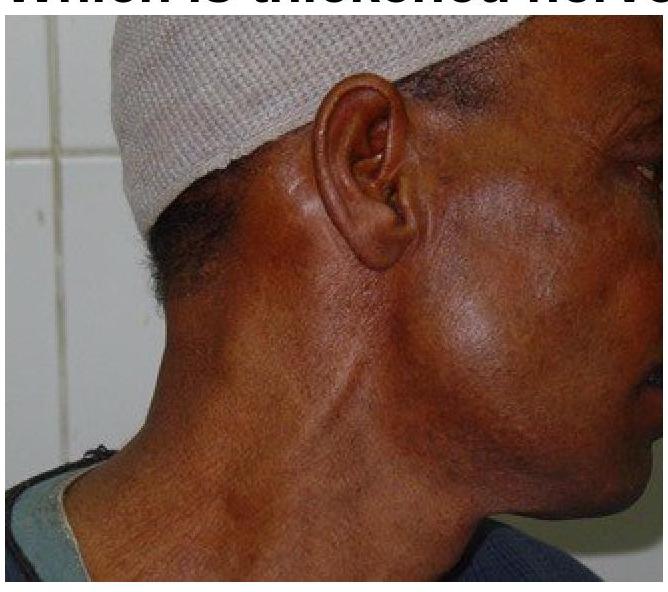
A 65-year-old male presents with difficulty swallowing and a hoarse voice. Imaging reveals a mass at the level of the cricoid cartilage. Which nerve is most likely to be compressed?
The recurrent laryngeal nerve is closely associated with:
Which of the following is the PRIMARY anatomical location of the parathyroid glands?
Quadrangular cartilage is seen in which of the following anatomical structures?
The retropharyngeal space is located between which two fascial layers?
What are Delphian nodes?
What type of movement primarily occurs at the atlanto-axial joint?
Which of the following is an unpaired laryngeal cartilage?
What is the action of the sternocleidomastoid muscle when acting unilaterally?
The key to the root of the neck is the scalenus anterior muscle. Which among the following is the MOST CLINICALLY SIGNIFICANT relationship of the scalenus anterior?
Explanation: ### Recurrent laryngeal nerve - The **recurrent laryngeal nerve** innervates most intrinsic muscles of the **larynx**, responsible for **vocal cord movement** and **phonation** [2]. - Compression or damage to this nerve, particularly at the level of the **cricoid cartilage** where it ascends in the **tracheoesophageal groove**, directly leads to **hoarseness** due to **vocal cord paralysis** and can cause **dysphagia** by affecting **laryngeal elevation and closure** during swallowing [2, 3]. - This is the most specific answer given the anatomical location of the mass. ### Hypoglossal nerve - The **hypoglossal nerve (CN XII)** primarily controls the movements of the **tongue**. - Damage to this nerve would manifest as difficulties with **tongue protrusion** or **articulation**, not primarily hoarseness or dysphagia related to laryngeal function. ### Glossopharyngeal nerve - The **glossopharyngeal nerve (CN IX)** plays a role in swallowing by innervating the **stylopharyngeus muscle** and providing sensory innervation to the **pharynx** and **posterior tongue**. - While it can contribute to **dysphagia**, it is less directly associated with **hoarseness of voice** which is a laryngeal function. ### Vagus nerve - The **vagus nerve (CN X)** is the parent nerve from which the recurrent laryngeal nerve branches. - While a lesion to the vagus nerve **proximal** to the origin of the recurrent laryngeal nerve would cause similar symptoms, the specific localization of the mass at the **cricoid cartilage** points more directly to the **recurrent laryngeal nerve** itself, which runs in the tracheoesophageal groove at this level [1].
Explanation: ***Inferior thyroid artery*** - The recurrent laryngeal nerve passes either anterior or posterior to the **inferior thyroid artery**, making it the most consistently associated structure during thyroid surgeries [1]. - This proximity is crucial as injury to the nerve can lead to **vocal cord paralysis** [2]. *Superior thyroid artery* - The superior thyroid artery usually runs with the **external laryngeal nerve**, not the recurrent laryngeal nerve. - The superior thyroid artery supplies the **upper pole of the thyroid gland**, while the recurrent laryngeal nerve is more associated with the lower pole [1]. *Middle thyroid vein* - The middle thyroid vein drains directly into the **internal jugular vein** and is generally located more superficially to the thyroid gland. - It does not have a direct anatomical relationship with the course of the **recurrent laryngeal nerve**. *Superior thyroid vein* - The superior thyroid vein empties into the **internal jugular vein** and is closely associated with the **superior thyroid artery** and the external laryngeal nerve. - Its anatomical position is typically superior to the key area where the recurrent laryngeal nerve has its closest relationship with thyroid structures [3].
Explanation: ***Located behind the thyroid gland*** - The parathyroid glands are typically **four small endocrine glands** located on the **posterior surface of the thyroid gland** [1]. - This is their key anatomical landmark and the most accurate description of their location [1]. - They are usually found as **two superior** and **two inferior** parathyroid glands [1]. *Produces parathyroid hormone* - While this statement is true (parathyroid glands produce PTH), it describes their **physiological function**, not their **anatomical location** [2]. - The question specifically asks about anatomical location. *Regulates calcium levels in the blood* - This describes the **functional outcome** of parathyroid hormone secretion, not the anatomical position of the glands [2]. - This is a physiological function rather than an anatomical characteristic. *Not associated with any muscle* - This is **anatomically incorrect**. - The parathyroid glands are located in the neck region where they have anatomical relationships with **strap muscles** (infrahyoid muscles) such as the sternohyoid and sternothyroid muscles. - They lie superficial to the prevertebral fascia and deep to the strap muscles.
Explanation: **Nose** - The **quadrangular cartilage** is a key component of the **nasal septum**, the wall that divides the nasal cavity into two. - It provides important **structural support** to the nose, particularly the anterior part. *Larynx* - The larynx contains several cartilages like the **thyroid**, **cricoid**, and **arytenoid cartilages**, but not the quadrangular cartilage. - These cartilages are primarily involved in **voice production** and protecting the airway. *Cranium* - The cranium consists of multiple **bones** that form the skull and protect the brain. - It does not contain any quadrangular cartilage; its structure is primarily **osseous**. *Palate* - The palate is formed by the **maxillary and palatine bones** anteriorly (hard palate) and **muscle and connective tissue** posteriorly (soft palate). - It does not contain quadrangular cartilage; its role is in **speech and swallowing**.
Explanation: ***Buccopharyngeal fascia and prevertebral fascia*** - In the **classical anatomical description**, the **retropharyngeal space** extends from the base of the skull to the posterior mediastinum, bounded anteriorly by the **buccopharyngeal fascia** (covering the posterior pharynx and esophagus) and posteriorly by the **prevertebral fascia**. - This is the most commonly tested definition in medical examinations and represents the **entire retropharyngeal region** as a clinical unit. - **Clinical significance**: Infections in this space can spread inferiorly into the mediastinum, causing mediastinitis. *Alar fascia and buccopharyngeal fascia* - The **alar fascia** is a thin fascial layer located between the buccopharyngeal fascia and prevertebral fascia. - The space between alar fascia and buccopharyngeal fascia is the **true (anterior) retropharyngeal space** in detailed anatomical descriptions. - However, this terminology distinction is less commonly emphasized in standard medical curricula. *Alar fascia and prevertebral fascia* - The space between the **alar fascia** and **prevertebral fascia** is specifically called the **danger space**. - The danger space extends from the skull base to the diaphragm and is clinically important for potential inferior spread of infections. - This represents the **posterior compartment** when the retropharyngeal region is subdivided. *None of the options* - This option is incorrect because the classical boundaries of the retropharyngeal space are well-established. - The first option correctly identifies the traditional anatomical boundaries taught in most medical textbooks.
Explanation: ***Lymph nodes located anterior to the thyroid cartilage.*** - Delphian nodes are **prelaryngeal lymph nodes** situated on the **cricothyroid membrane**, in the midline anterior to the larynx [1], [2]. - They are positioned between the thyroid cartilage (above) and the cricoid cartilage (below) [1]. - Their enlargement can be an early indicator of **thyroid carcinoma** or laryngeal malignancies due to their drainage of the thyroid gland and larynx [2]. - Named after the **Oracle at Delphi**, as their enlargement can be a prophetic sign of underlying thyroid pathology. *Occipital lymph nodes* - These nodes are located at the **back of the head**, near the occipital bone. - They primarily drain the **posterior scalp** and are not associated with the thyroid or larynx. *Celiac lymph nodes* - Celiac lymph nodes are located in the **abdominal cavity**, surrounding the celiac artery. - They drain intra-abdominal organs such as the **stomach, liver, spleen, and pancreas**, and are unrelated to the neck or thyroid region. *None of the options* - This option is incorrect because the first option accurately describes **Delphian nodes** as lymph nodes located anterior to the thyroid cartilage.
Explanation: ***Rotation*** - The atlanto-axial joint is a **pivot joint** that allows for significant **rotation** of the head, enabling actions like shaking the head "no". - This movement is primarily facilitated by the **dens (odontoid process)** of the axis (C2) articulating with the anterior arch of the atlas (C1) and the transverse ligament. *Lateral bending* - **Lateral bending** of the head occurs mostly at the **atlanto-occipital joint** and the lower cervical spine, not primarily at the atlanto-axial joint. - While some minimal lateral bending might occur, it is not the main function of this specific joint. *Nodding* - **Nodding** (flexion and extension of the head) is primarily performed at the **atlanto-occipital joint**, which connects the atlas (C1) to the occipital bone of the skull. - The atlanto-axial joint contributes very little to this type of movement. *Flexion* - **Flexion** of the head is also predominantly a function of the **atlanto-occipital joint** and the intervertebral joints of the lower cervical spine. - While neck flexion involves multiple cervical joints, the atlanto-axial joint's primary role is rotation, not significant flexion.
Explanation: ***Epiglottis*** - The **epiglottis** is one of the three unpaired cartilages of the larynx, along with the **thyroid** and **cricoid** cartilages. - Its primary function is to **protect the airway** during swallowing, preventing food and liquids from entering the trachea [1]. *Arytenoid* - The **arytenoid cartilages** are paired cartilages that sit atop the cricoid cartilage. - They are crucial for **vocal cord movement** and tension, playing a key role in phonation [1]. *Corniculate* - The **corniculate cartilages** are small, paired cartilages located superior to the arytenoid cartilages. - They extend the arytenoids posteriorly and medially, though their exact function is not fully understood, they are thought to contribute to **vocal cord movement**. *Cuneiform* - The **cuneiform cartilages** are small, paired cartilages embedded within the aryepiglottic folds. - They provide **structural support** to the vocal folds and help maintain the patency of the laryngeal inlet.
Explanation: ***Tilts the head to the same side*** When acting unilaterally, the **sternocleidomastoid muscle** produces two key movements: - **Lateral flexion (tilt)** of the head and neck towards the **ipsilateral (same) side** - **Rotation** of the head to the **contralateral (opposite) side** When **both sternocleidomastoid muscles contract bilaterally**, they produce **flexion of the neck**. *Arises from sternum and clavicle* - While anatomically correct (sternal head from manubrium, clavicular head from medial 1/3 of clavicle), this describes the **origin**, not the **action** of the muscle. *Motor supply by spinal accessory nerve* - The **spinal accessory nerve (CN XI)** does provide motor innervation, but this describes the **nerve supply**, not the **action** of the muscle. *Inserts on mastoid process* - While correct (inserts on mastoid process and superior nuchal line), this describes the **insertion**, not the **action** of the muscle.
Explanation: ***The phrenic nerve runs anterior to it but does not pierce it.*** - This anatomical relationship is crucial because the **phrenic nerve** lies directly on the anterior surface of the **scalenus anterior muscle**, making it vulnerable during surgical procedures in the **root of the neck**. - Accidental injury to the **phrenic nerve** (e.g., during lymph node dissection or central line placement) can lead to **diaphragmatic paralysis**, impacting respiration. *The phrenic nerve pierces it.* - The **phrenic nerve** does not typically pierce the **scalenus anterior muscle**; instead, it runs superficial to its anterior surface. - Piercing of the phrenic nerve through the muscle is an anatomical variation that is rare and not considered the most clinically significant relationship. *Inserts into scalene tubercle on 1st rib* - While the **scalenus anterior muscle** does insert into the **scalene tubercle** on the **first rib**, this is an anatomical attachment point and not the most critical *clinical* relationship. - This insertion point is relevant for understanding thoracic outlet syndrome but does not highlight a direct vulnerability of a vital structure like the phrenic nerve. *Separates subclavian artery from subclavian vein* - The **scalenus anterior muscle** separates the **subclavian artery** (posterior to it) from the **subclavian vein** (anterior to it). - While an important anatomical landmark for clinicians when accessing these vessels, the direct vulnerability of the **phrenic nerve** on its surface carries more immediate clinical significance regarding potential iatrogenic injury.
Cervical Fascia
Practice Questions
Triangles of the Neck
Practice Questions
Deep Structures of the Neck
Practice Questions
Thyroid and Parathyroid Glands
Practice Questions
Vasculature of the Neck
Practice Questions
Lymphatic Drainage
Practice Questions
Cervical Plexus
Practice Questions
Root of the Neck
Practice Questions
Applied Anatomy and Clinical Correlations
Practice Questions
Surface Anatomy of the Neck
Practice Questions
Get full access to all questions, explanations, and performance tracking.
Start For Free