Which of the following statements is true about the vertebral artery?
Which of the following arteries supplies the thyroid gland?
All muscles of the pharynx are supplied by the pharyngeal plexus, EXCEPT?
The sternocleidomastoid muscle is supplied by all of the following arteries, EXCEPT?
What structures are superficial to the mylohyoid muscle in the anterior digastric triangle?
The axis is the name for which cervical vertebra?
Which of the following structures does NOT lie deep to the posterior belly of the digastric muscle?
Which of the following is NOT a branch of the external carotid artery?
The sinus of Morgagni is located between which structures?
Which is the narrowest part of the adult laryngeal airway?
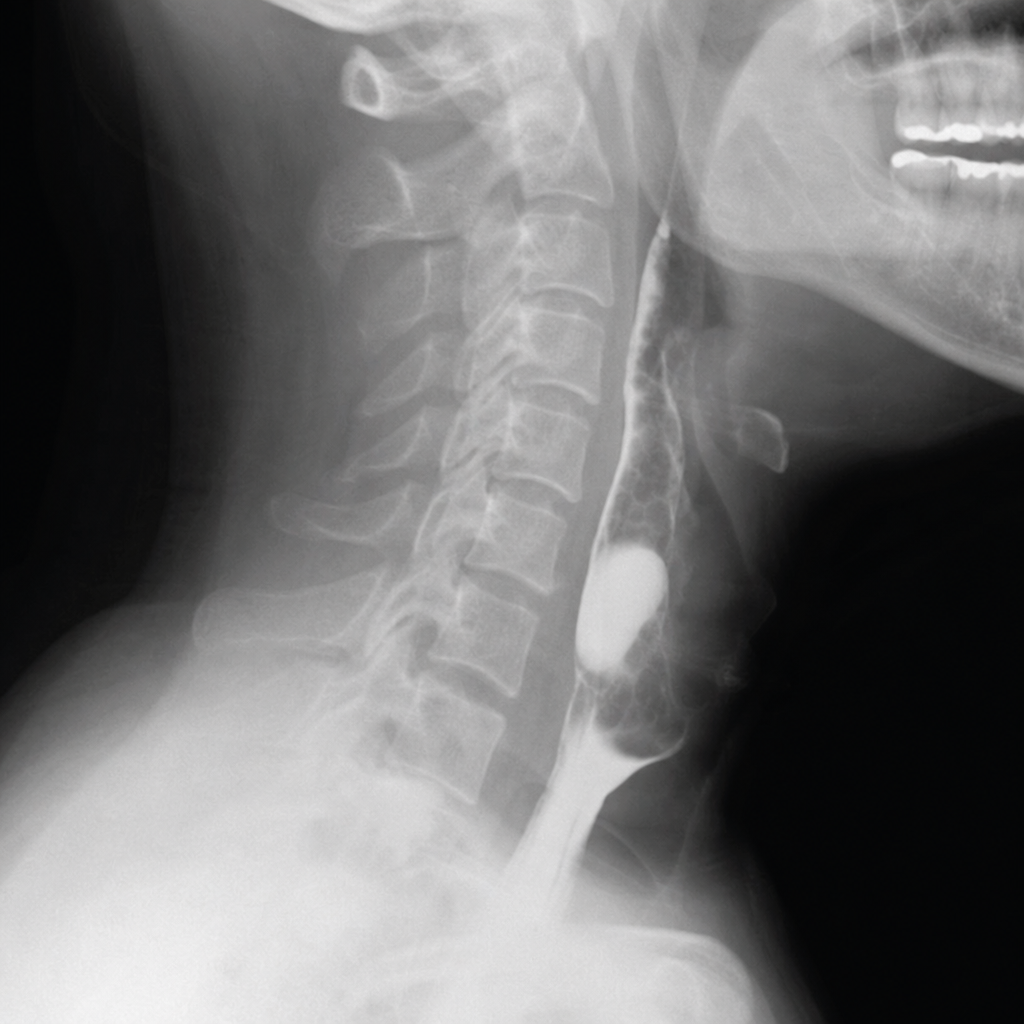
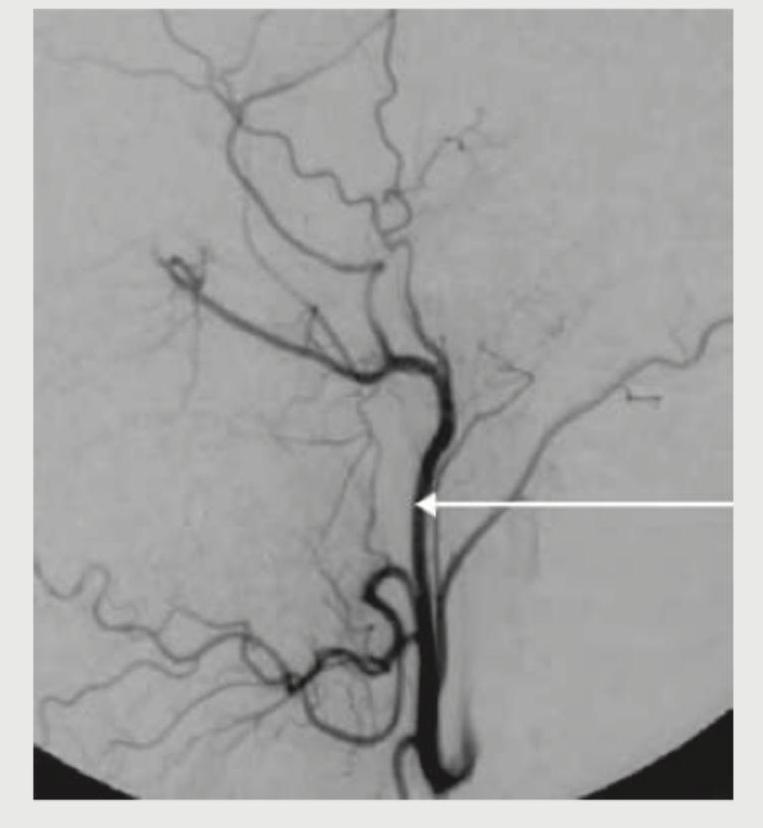
Explanation: ### Explanation **Correct Answer: C. A branch of the subclavian artery.** The vertebral artery is the first and largest branch of the **first part of the subclavian artery**. It is a vital vessel that supplies the posterior part of the brain (hindbrain) and the spinal cord. It is anatomically divided into four parts: 1. **V1 (Pre-foraminal):** From the subclavian artery to the C6 transverse foramen. 2. **V2 (Foraminal):** Ascends through the foramina transversaria of **C6 to C1**. 3. **V3 (Atlantic):** Curves behind the lateral mass of the atlas (C1) in the suboccipital triangle. 4. **V4 (Intracranial):** Enters the skull and joins the opposite vertebral artery to form the **Basilar artery**. #### Analysis of Incorrect Options: * **Option A:** The vertebral artery enters the skull through the **foramen magnum**, not the condylar canal. The condylar canal typically transmits an emissary vein. * **Option B:** It is a branch of the **subclavian artery**, not the internal carotid. Together with the internal carotid, it forms the Circle of Willis. * **Option C:** While it passes through the foramina transversaria, it is accompanied by a **plexus of sympathetic nerves** (derived from the inferior cervical ganglion) and the **vertebral vein**, but it does not pass through the C7 foramen transversarium (which only transmits the vertebral vein). #### High-Yield Clinical Pearls for NEET-PG: * **C7 Exception:** The vertebral artery enters the transverse foramen at the level of **C6**. The C7 transverse foramen contains only the vertebral vein and sympathetic fibers. * **Suboccipital Triangle:** The 3rd part of the artery lies on the posterior arch of the atlas, making it vulnerable during cervical spine surgeries. * **Wallenberg Syndrome:** Lateral Medullary Syndrome is most commonly caused by occlusion of the **Posterior Inferior Cerebellar Artery (PICA)**, which is a branch of the 4th part of the vertebral artery.
Explanation: ### Explanation The thyroid gland is a highly vascular endocrine organ primarily supplied by two pairs of arteries: the **Superior Thyroid Artery** and the **Inferior Thyroid Artery** [3]. **Why Option B is Correct:** The **Inferior Thyroid Artery** is a major branch of the **Thyrocervical trunk**, which itself arises from the first part of the subclavian artery [1]. It provides the bulk of the blood supply to the posterior and inferior aspects of the thyroid gland [1]. Since the Thyrocervical trunk is the direct parent vessel of the inferior thyroid artery, it is the most accurate choice among the options provided. **Analysis of Incorrect Options:** * **A. Internal Carotid Artery:** This artery has no branches in the neck; it enters the skull to supply the brain and eyes. * **C. Lingual Artery:** This is a branch of the external carotid artery that primarily supplies the tongue and the floor of the mouth. * **D. Subclavian Artery:** While the thyrocervical trunk originates from the subclavian artery, the subclavian artery itself does not directly supply the gland. In anatomy MCQs, the most proximal direct branch (Thyrocervical trunk) is the preferred answer over the parent trunk. **High-Yield Clinical Pearls for NEET-PG:** 1. **Superior Thyroid Artery:** The first branch of the **External Carotid Artery**. It is closely related to the **External Laryngeal Nerve**; during thyroidectomy, it should be ligated near the gland to avoid nerve injury. 2. **Inferior Thyroid Artery:** Closely related to the **Recurrent Laryngeal Nerve** [2]. It should be ligated far from the gland to protect the nerve. 3. **Thyroid Ima Artery:** An occasional artery (found in ~3-10% of individuals) arising from the **Brachiocephalic trunk** or Aortic arch. It can cause profuse bleeding during a tracheostomy. 4. **Venous Drainage:** Superior and Middle thyroid veins drain into the **Internal Jugular Vein (IJV)**, while the Inferior thyroid vein drains into the **Brachiocephalic vein**.
Explanation: ### Explanation The motor innervation of the pharynx follows a "general rule" with one specific exception, a common pattern tested in NEET-PG. **1. Why Stylopharyngeus is the Correct Answer:** The **Stylopharyngeus** is the only muscle of the pharynx derived from the **third branchial arch**. Consequently, it is supplied by the nerve of the third arch—the **Glossopharyngeal nerve (CN IX)**. All other pharyngeal muscles are derived from the fourth and sixth arches and are supplied by the pharyngeal plexus (specifically the cranial accessory nerve via the vagus nerve). **2. Why the Other Options are Incorrect:** * **Inferior Constrictor:** This is a circular muscle of the pharynx. Like the superior and middle constrictors, it is supplied by the **pharyngeal plexus** (Vagus nerve). Note: The cricopharyngeus part also receives branches from the external laryngeal and recurrent laryngeal nerves, but its primary motor supply remains the plexus. * **Salpingopharyngeus:** This is a longitudinal muscle of the pharynx. Along with the Palatopharyngeus, it is supplied by the **pharyngeal plexus** (Vagus nerve). **3. Clinical Pearls & High-Yield Facts:** * **The Pharyngeal Plexus:** Located on the middle constrictor, it is formed by the pharyngeal branches of the Vagus (motor), Glossopharyngeal (sensory), and Superior Cervical Sympathetic ganglion. * **The "Rule of Laryngeal/Pharyngeal Muscles":** * All muscles of the **Pharynx** are supplied by CN X (via plexus) except Stylopharyngeus (CN IX). * All muscles of the **Palate** are supplied by CN X (via plexus) except Tensor Veli Palatini (CN V3). * All muscles of the **Larynx** are supplied by the Recurrent Laryngeal Nerve except Cricothyroid (External Laryngeal Nerve). * **Passage:** The Stylopharyngeus muscle acts as a landmark, passing between the superior and middle constrictor muscles along with the Glossopharyngeal nerve.
Explanation: The **sternocleidomastoid (SCM)** muscle is a large, superficial muscle of the neck with a complex, segmental blood supply derived from multiple branches of the external carotid artery and the subclavian artery. ### **Explanation of Options** * **Posterior Auricular (Correct Answer):** While the posterior auricular artery arises from the external carotid artery near the SCM, it primarily supplies the scalp behind the ear and the auricle. It is **not** a recognized source of arterial supply to the SCM. * **Occipital Artery:** This is a major contributor. It provides two branches: one at the level of the accessory nerve and another lower down. * **Superior Thyroid Artery:** A branch of the external carotid, it typically provides a "sternocleidomastoid branch" that supplies the middle portion of the muscle. * **Thyrocervical Trunk:** This is a branch of the subclavian artery. Its **suprascapular artery** branch provides blood to the lower (clavicular) portion of the SCM. ### **High-Yield NEET-PG Facts** 1. **Nerve Supply:** The SCM has a dual nerve supply. Motor supply is via the **Spinal Accessory Nerve (CN XI)**, while sensory (proprioception) is via the **ventral rami of C2 and C3**. 2. **Surgical Significance:** Because the SCM has a segmental blood supply (superior, middle, and inferior sets of vessels), it can be used as a **myocutaneous flap** in reconstructive head and neck surgery. 3. **Torticollis (Wry Neck):** This clinical condition involves the permanent contraction or shortening of the SCM, often due to birth trauma or fibromatosis. 4. **Key Landmark:** The SCM divides the neck into the **Anterior and Posterior triangles**, making it the most important anatomical landmark in neck dissections.
Explanation: The **mylohyoid muscle** forms the anatomical floor of the mouth and serves as a critical landmark in the submandibular (digastric) triangle, dividing structures into superficial and deep groups. ### **Why Option D is Correct** The **mylohyoid nerve** (a branch of the inferior alveolar nerve) and the **mylohyoid artery** (a branch of the maxillary artery) run on the inferior (superficial) surface of the mylohyoid muscle. They are located within the submandibular triangle, deep to the submandibular gland but superficial to the muscle itself. The nerve provides motor innervation to both the mylohyoid and the anterior belly of the digastric muscle. ### **Analysis of Incorrect Options** * **A & B (Deep part of submandibular gland & Hypoglossal nerve):** These structures are located **deep** (superior) to the mylohyoid muscle. The mylohyoid acts as a partition; the superficial part of the submandibular gland is superficial to it, while the deep part, the submandibular duct (Wharton’s), the lingual nerve, and the hypoglossal nerve lie deep to it in the sublingual space. * **C (Part of the parotid gland):** The parotid gland is located in the retromandibular fossa and the parotid region. While its "tail" may reach the angle of the mandible, it is not a standard constituent of the anterior portion of the digastric triangle superficial to the mylohyoid. ### **High-Yield Clinical Pearls for NEET-PG** * **The "Mylohyoid Line":** This is the site of attachment on the mandible. Infections of mandibular molars can spread either above (sublingual space) or below (submandibular space) this line. * **Nerve Supply:** The mylohyoid is derived from the **1st branchial arch**, hence it is supplied by the mandibular nerve (V3). * **Mnemonic for Deep Structures:** To remember structures deep to the mylohyoid, use **"HLS"**: **H**ypoglossal nerve, **L**ingual nerve, and **S**ubmandibular duct/deep gland.
Explanation: The cervical spine consists of seven vertebrae (C1–C7). The **second cervical vertebra (C2)** is uniquely known as the **Axis**. Its defining anatomical feature is the **odontoid process (dens)**, a finger-like projection that extends superiorly from the body. This dens serves as a pivot point around which the first cervical vertebra (Atlas) rotates, allowing for the "no" movement of the head at the atlanto-axial joint. **Analysis of Options:** * **Option D (First cervical vertebra):** Known as the **Atlas**. It is unique because it lacks a vertebral body and a spinous process, consisting instead of anterior and posterior arches. It supports the globe of the skull. * **Option B (Third cervical vertebra):** This is a "typical" cervical vertebra. It does not have a specific name and possesses standard features like a bifid spinous process and foramina transversaria. * **Option A (Fourth cervical vertebra):** Also a typical cervical vertebra with no specific nomenclature. **Clinical Pearls for NEET-PG:** 1. **Hangman’s Fracture:** This is a traumatic spondylolisthesis of the axis (C2), usually involving bilateral fractures of the pars interarticularis, often caused by hyperextension of the neck. 2. **Cruciate Ligament:** The transverse ligament of the atlas holds the dens of the axis against the anterior arch of the atlas; its rupture can lead to fatal spinal cord compression. 3. **Vertebra Prominens:** This refers to **C7**, characterized by a long, non-bifid spinous process that is easily palpable at the base of the neck.
Explanation: The posterior belly of the digastric muscle is a key anatomical landmark in the neck, serving as a "bridge" over several major neurovascular structures. Understanding its relationships is high-yield for NEET-PG. ### **Explanation of the Correct Answer** **A. Retromandibular vein:** This is the correct answer because the retromandibular vein (formed by the union of the maxillary and superficial temporal veins) lies **superficial** to the posterior belly of the digastric. It descends within the parotid gland and eventually divides into anterior and posterior divisions, both of which remain superficial to the muscle. ### **Analysis of Incorrect Options (Structures Deep to the Muscle)** The posterior belly of the digastric covers the "carotid triangle" contents. Structures lying deep to it include: * **B. Hypoglossal nerve (CN XII):** This nerve emerges from between the internal jugular vein and internal carotid artery and passes deep to the posterior belly of the digastric to enter the submandibular triangle. * **C. Hyoglossus muscle:** This extrinsic muscle of the tongue lies in the floor of the submandibular triangle, deep to both the digastric muscle and the mylohyoid. * **D. Occipital artery:** This branch of the external carotid artery runs backwards along the lower border of (and deep to) the posterior belly of the digastric. ### **High-Yield NEET-PG Pearls** * **Nerve Supply:** The posterior belly is supplied by the **Facial nerve (CN VII)** (derived from the 2nd branchial arch), while the anterior belly is supplied by the **Nerve to Mylohyoid (V3)** (1st arch). * **The "Deep" Rule:** Almost all major vessels (Internal/External Carotid, Internal Jugular Vein) and nerves (CN IX, X, XI, XII) lie deep to this muscle. * **Superficial Structures:** Only the skin, fascia, platysma, and the **retromandibular vein** (along with the great auricular nerve) are superficial to it.
Explanation: The **External Carotid Artery (ECA)** is one of the two terminal branches of the common carotid artery, providing the primary blood supply to the exterior of the head, face, and neck. ### **Explanation of the Correct Answer** **B. Ophthalmic Artery:** This is the correct answer because it is a branch of the **Internal Carotid Artery (ICA)**, not the ECA. It arises from the cavernous or cerebral portion of the ICA immediately after it emerges from the cavernous sinus. It enters the orbit via the optic canal to supply the eye and ocular structures. ### **Analysis of Incorrect Options** The ECA typically gives off **eight branches**, which can be remembered by the mnemonic: *"**S**ome **A**natomists **L**ike **F**reaking **O**ut **P**oor **M**edical **S**tudents."* * **A. Superior Thyroid:** The first anterior branch of the ECA. It descends to supply the upper pole of the thyroid gland and gives off the superior laryngeal artery. * **C. Lingual:** The second anterior branch, arising at the level of the greater cornua of the hyoid bone. It is the primary blood supply to the tongue. * **D. Ascending Pharyngeal:** The only medial branch and usually the smallest branch of the ECA. It ascends between the internal carotid and the pharynx. ### **High-Yield Clinical Pearls for NEET-PG** * **Terminal Branches:** The ECA ends within the parotid gland by dividing into the **Maxillary artery** and **Superficial Temporal artery**. * **ICA vs. ECA:** In the neck, the ICA generally has **no branches**, whereas the ECA has several. This is a key surgical landmark. * **Clinical Correlation:** The **Middle Meningeal Artery** is a branch of the Maxillary artery (from ECA). Its rupture leads to **Extradural Hemorrhage (EDH)**. * **Carotid Triangle:** Most branches of the ECA originate within the carotid triangle of the neck.
Explanation: ### Explanation The **Sinus of Morgagni** (also known as the pharyngobasilar gap) is a semilunar space located between the **upper border of the superior constrictor muscle and the base of the skull**. #### 1. Why Option C is Correct The pharyngeal wall is not attached to the skull base by muscle throughout its entire circumference. Instead, the superior constrictor muscle stops short of the occipital and temporal bones. This gap is closed by the **pharyngobasilar fascia**. It serves as a vital conduit for structures passing from the extracranial space into the pharynx, specifically: * Auditory (Eustachian) tube * Levator veli palatini muscle * Ascending palatine artery #### 2. Why Other Options are Incorrect * **Option A & B:** The gaps between the constrictor muscles are distinct anatomical intervals. * The gap between the **superior and middle constrictors** transmits the stylopharyngeus muscle and the glossopharyngeal nerve (CN IX). * The gap between the **middle and inferior constrictors** transmits the internal laryngeal nerve and superior laryngeal artery. * The gap **below the inferior constrictor** (Killian's dehiscence) is a site of potential mucosal herniation (Zenker’s diverticulum). #### 3. NEET-PG High-Yield Pearls * **Clinical Significance:** The Sinus of Morgagni is the site where a **Trotter’s Triad** is observed in cases of Nasopharyngeal Carcinoma. The triad includes: 1. Ipsilateral conductive deafness (due to Eustachian tube obstruction). 2. Ipsilateral trigeminal neuralgia (pain in the mandibular nerve distribution). 3. Palatal paralysis (due to involvement of the levator veli palatini). * **Mnemonic:** Remember "S" for **S**inus of Morgagni is above the **S**uperior constrictor.
Explanation: ***Glottis***- In adults, the **glottis** (the level of the true vocal cords) is the point of the smallest cross-sectional area in the larynx, crucial for regulating airflow and phonation [1].- This region is formed by the mobile **vocal folds** and the space between them (rima glottidis), making it the most critical constriction point. *Supraglottic region*- The **supraglottic region** (above the vocal folds) is generally wider than the glottis due to the location of the expansive **epiglottis** and aryepiglottic folds.- Its primary function is protective, and its diameter is larger than the narrow aperture created by the vocal cords. *Subglottic region*- While the **subglottic region** (at the level of the cricoid cartilage) is the narrowest part in *children*, in adults, its diameter usually exceeds that of the glottis [1].- It is supported by the complete ring of the **cricoid cartilage**, which provides a relatively unyielding but generally wider structure compared to the mucosal space between the vocal cords. *Trachea*- The **trachea** is positioned distal to the larynx and is markedly wider than any part of the laryngeal airway.- Its large diameter, maintained by **C-shaped cartilage rings**, ensures low resistance for air passage to the bronchi and lungs.
Cervical Fascia
Practice Questions
Triangles of the Neck
Practice Questions
Deep Structures of the Neck
Practice Questions
Thyroid and Parathyroid Glands
Practice Questions
Vasculature of the Neck
Practice Questions
Lymphatic Drainage
Practice Questions
Cervical Plexus
Practice Questions
Root of the Neck
Practice Questions
Applied Anatomy and Clinical Correlations
Practice Questions
Surface Anatomy of the Neck
Practice Questions
Get full access to all questions, explanations, and performance tracking.
Start For Free