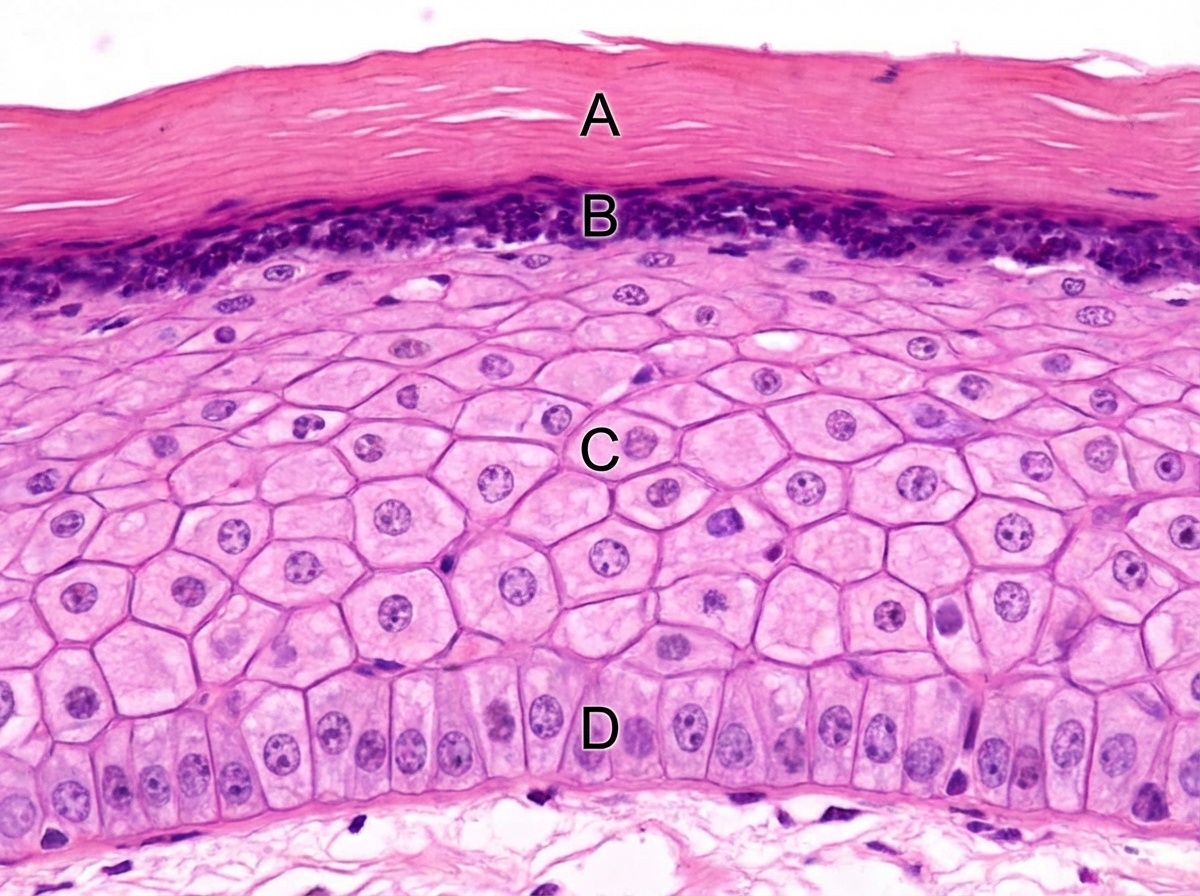
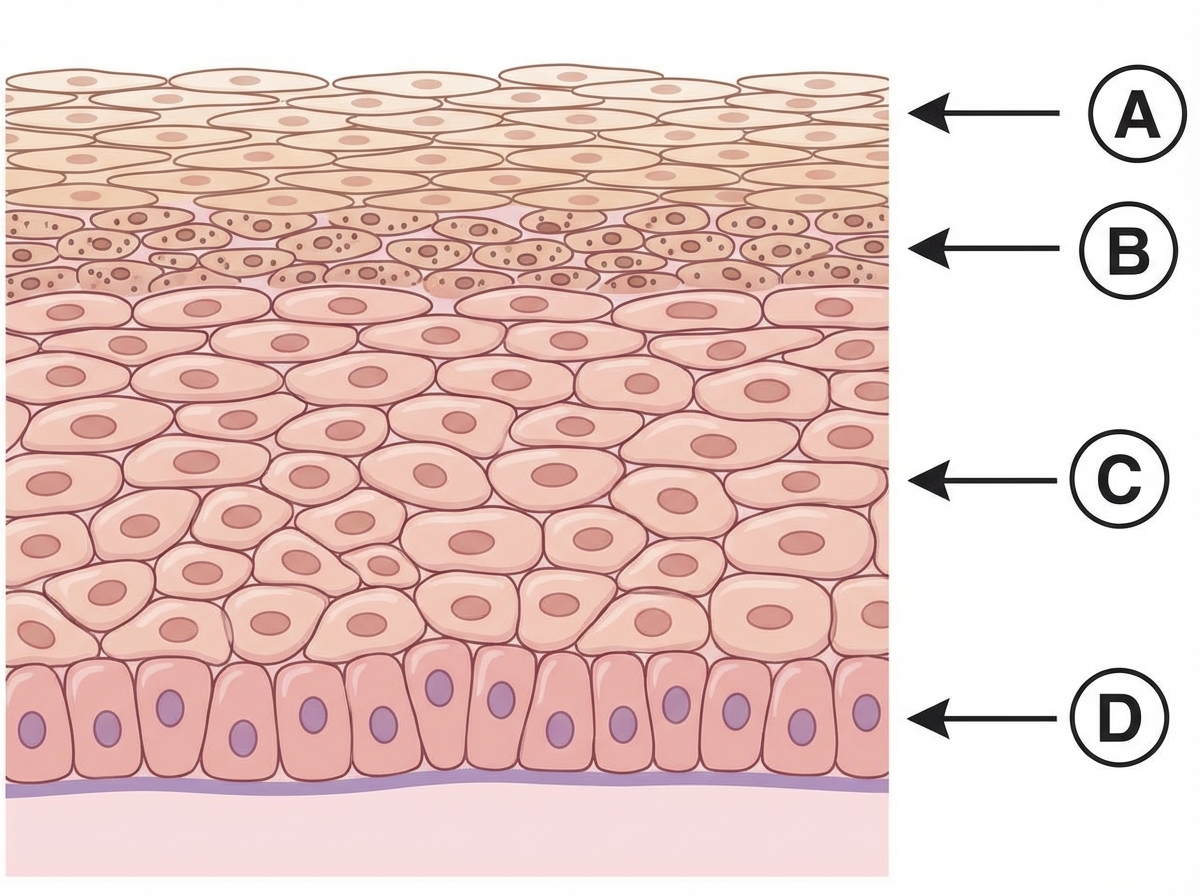
Which protein is commonly found in the structure of skin and hair?
Which of the following statements about Langer's lines is false?
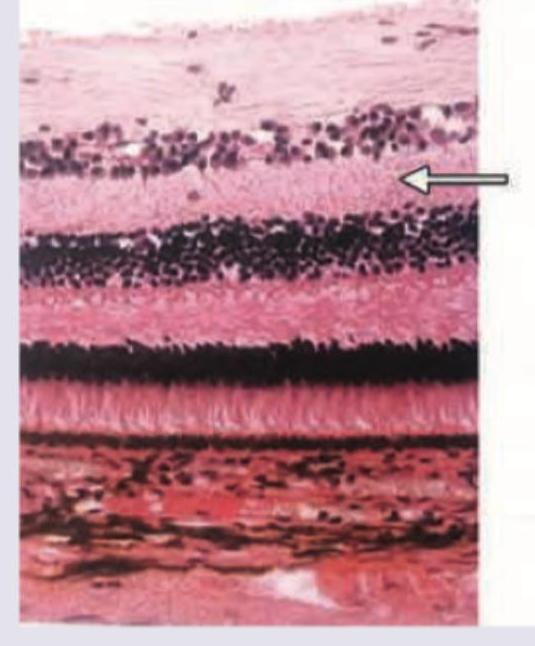
Cell bodies of Müller Cells are present in which layer of the retina?
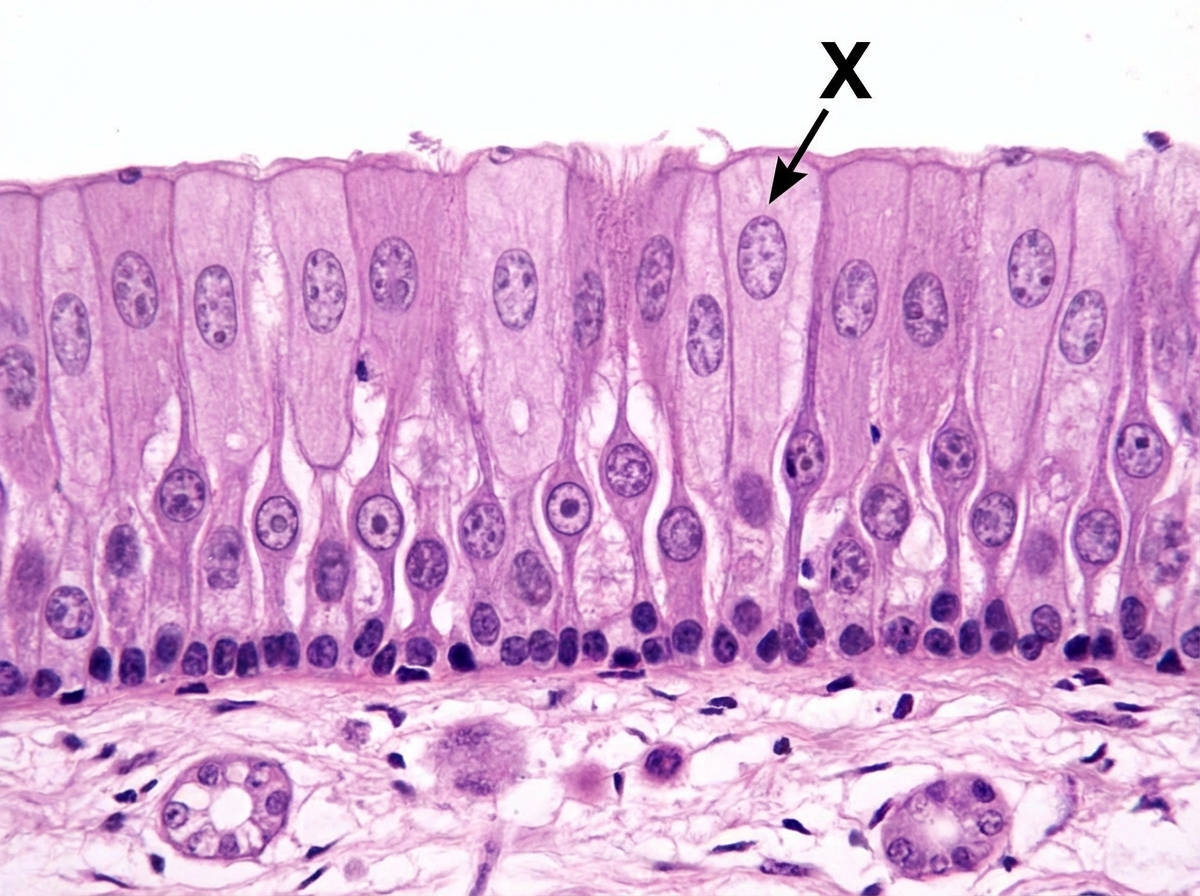
Lining epithelium of vocal cord is
Barr body is found in the following phase of the cell cycle:
Which is the most abundant type of cartilage in the human body?
Which muscle has the highest proportion of Type II (fast-twitch) muscle fibers?
Herring's bodies are present in which part of the pituitary gland?
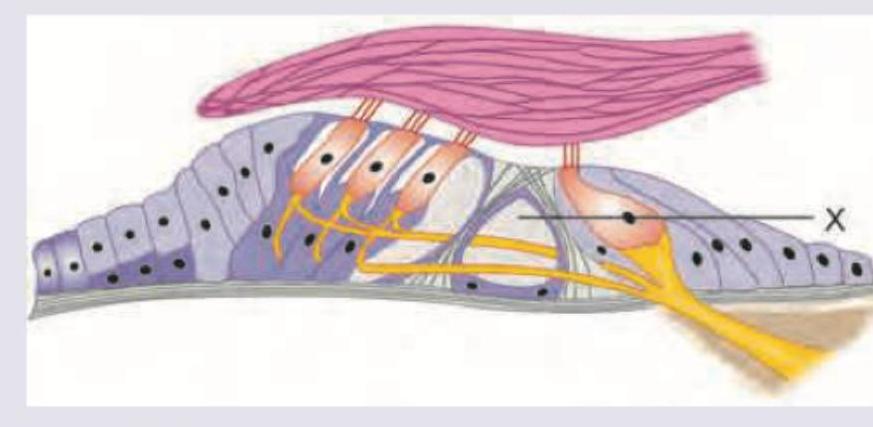
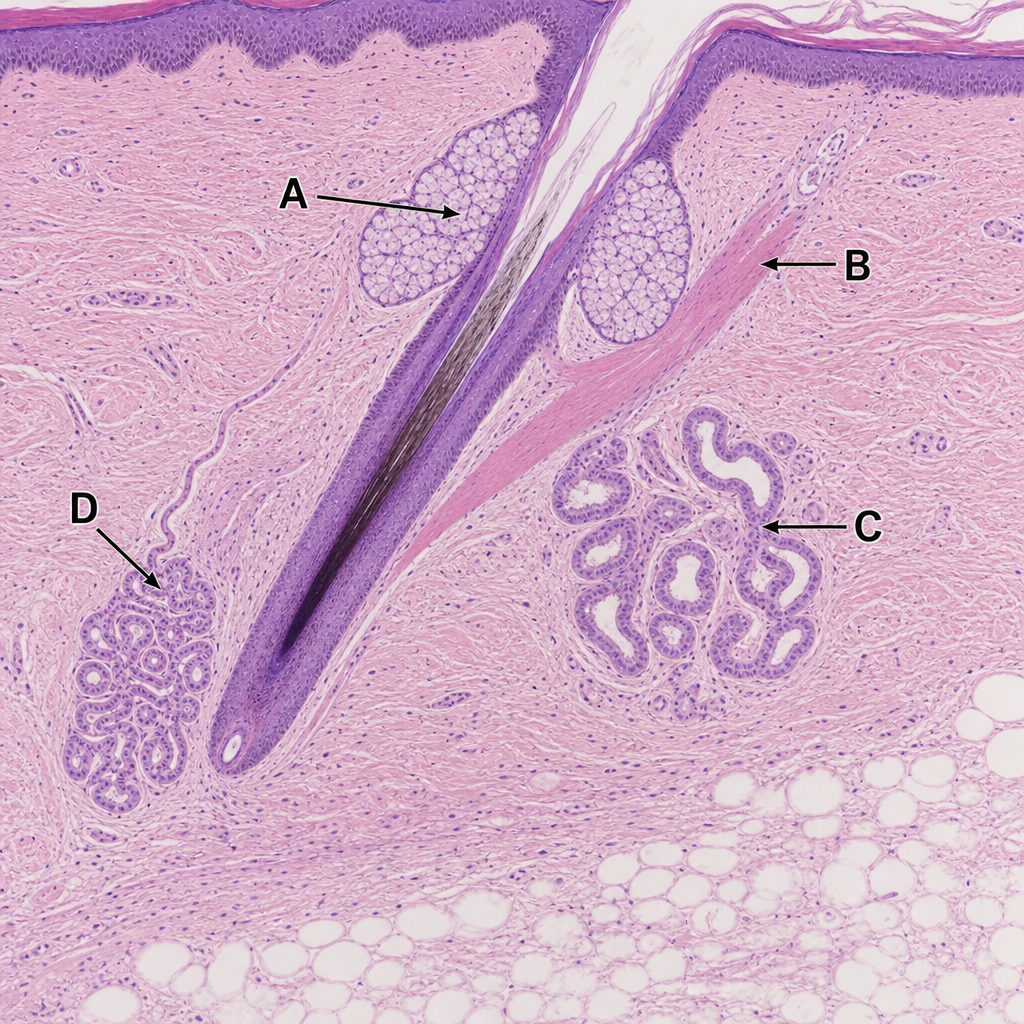
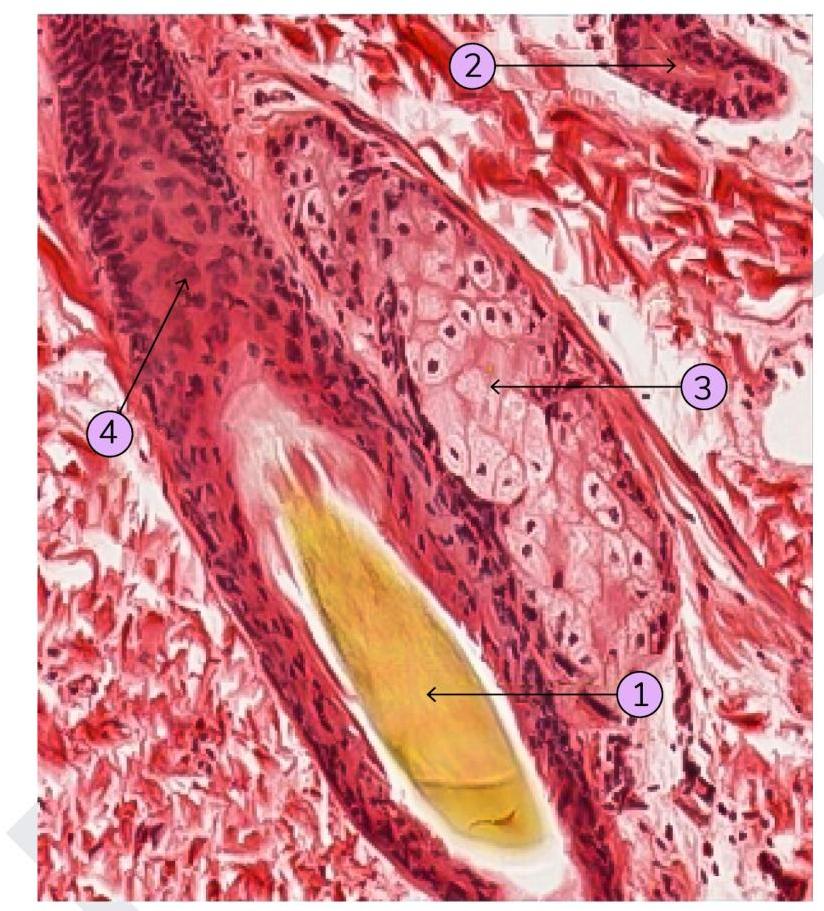
Gland of Moll opens in/on the ?
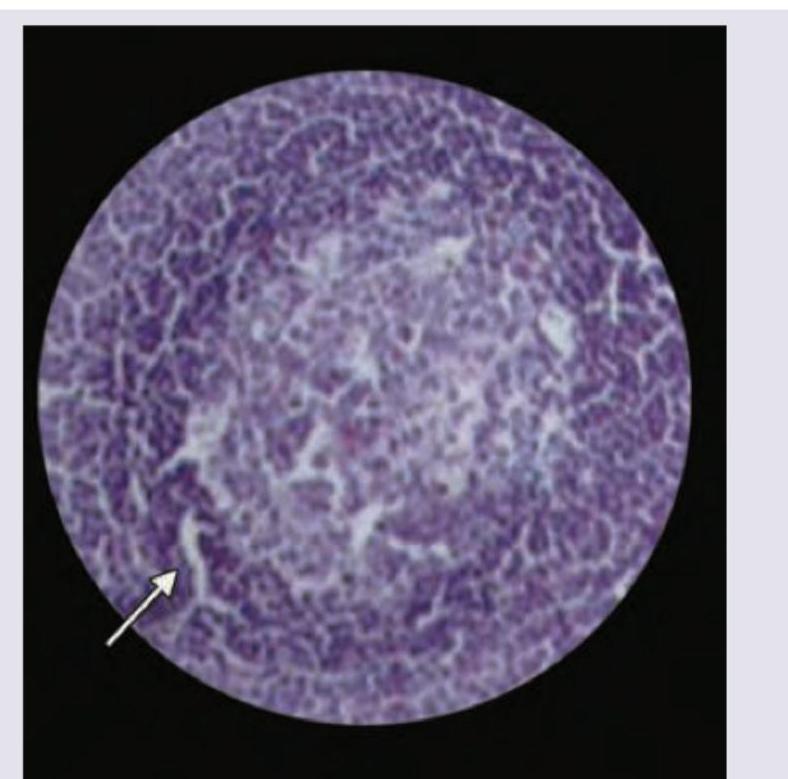
Hassall's corpuscles are found in?
Explanation: ***Keratin*** - **Keratin** is a fibrous structural protein that forms the main component of **skin**, **hair**, and **nails** [1]. - It provides strength and protective properties to these tissues. *Laminin* - **Laminins** are a family of proteins that are major components of the **basal lamina**, a layer of the extracellular matrix. - They play a crucial role in cell adhesion, migration, and differentiation, but are not the primary structural protein of skin and hair. *Nectin* - **Nectins** are a family of cell adhesion molecules involved in the formation of **adherens junctions** and **tight junctions** between cells. - They are vital for cell-to-cell adhesion in various tissues but are not structural components of skin and hair in the same way as keratin. *Vimentin* - **Vimentin** is an intermediate filament protein found in the **cytoplasm of mesenchymal cells**, such as fibroblasts, endothelial cells, and leukocytes. - It provides mechanical support and helps maintain cell shape but is not a primary structural protein of the outer layer of skin or hair.
Explanation: ***Remain constant throughout life time of a person*** - This statement is **false** because **Langer's lines** are **dynamic**, changing with factors like age, weight fluctuations, and pregnancy. - The orientation of **collagen fibers** in the dermis, which dictates Langer's lines, is influenced by skin tension and underlying tissue changes over time. *Represent lines of natural skin tension* - This statement is **true** because Langer's lines represent the **direction of natural skin tension** created by the predominant orientation of collagen fiber bundles in the dermis. - These lines follow the natural **cleavage lines** of the skin and indicate the direction in which the skin has maximum **extensibility** and **elasticity**. *Correspond to the collagen fibers in dermis* - This statement is **true** because Langer's lines represent the **direction of maximum tension** in the skin, which is determined by the predominant orientation of **collagen fiber bundles** within the dermis. - These lines are an effective mapping of the **structural arrangement** of the skin's connective tissue. *Incision along these lines produces better scar* - This statement is **true** because incisions made **parallel to Langer's lines** experience less tension during healing. - This reduced tension results in **less wound gaping** and subsequent formation of a **finer, less noticeable scar**.
Explanation: ***Inner nuclear layer*** - The **Müller cell** is a type of retinal glial cell that extends across nearly the entire thickness of the retina. - Its **cell body** is located within the inner nuclear layer, positioning it to provide structural and metabolic support to surrounding neurons. *Outer nuclear layer* - This layer primarily contains the **cell bodies of the photoreceptor cells** (rods and cones). - While Müller cell processes extend through this layer, their somas are not located here. *Retinal pigment epithelium* - This is the **outermost layer of the retina**, responsible for nourishing photoreceptors and absorbing scattered light. - It is a distinct cell layer and does not contain the cell bodies of Müller cells. *Ganglion cell layer* - This layer contains the **cell bodies of the ganglion cells**, whose axons form the optic nerve. - Müller cell processes extend through this layer to the inner limiting membrane, but their cell bodies are located in the inner nuclear layer.
Explanation: Stratified squamous epithelium - The true vocal cords are covered by stratified squamous epithelium to withstand the significant mechanical stress and vibration during phonation. - This type of epithelium provides protection against abrasion and physical forces associated with airflow and vocalization. Simple squamous epithelium - This type of epithelium is typically found in areas where a thin barrier for diffusion and filtration is required, such as the lining of blood vessels (endothelium) or lung alveoli. - It is not suited for areas experiencing significant mechanical stress, like the vocal cords, as it offers limited protection. Ciliated columnar epithelium - Ciliated columnar epithelium is characteristic of the respiratory tract (e.g., trachea, bronchi) where its cilia help to trap and clear foreign particles and mucus. - The true vocal cords do not have ciliated epithelium because cilia would interfere with precise vocal fold vibration and sound production. Non ciliated columnar epithelium - Non-ciliated columnar epithelium is found in regions such as the gastrointestinal tract (e.g., stomach, small intestine) where absorption and secretion are primary functions. - It does not provide the robust protection needed for high-stress areas like the vocal cords, nor does it serve a primary absorptive or secretory role in that location.
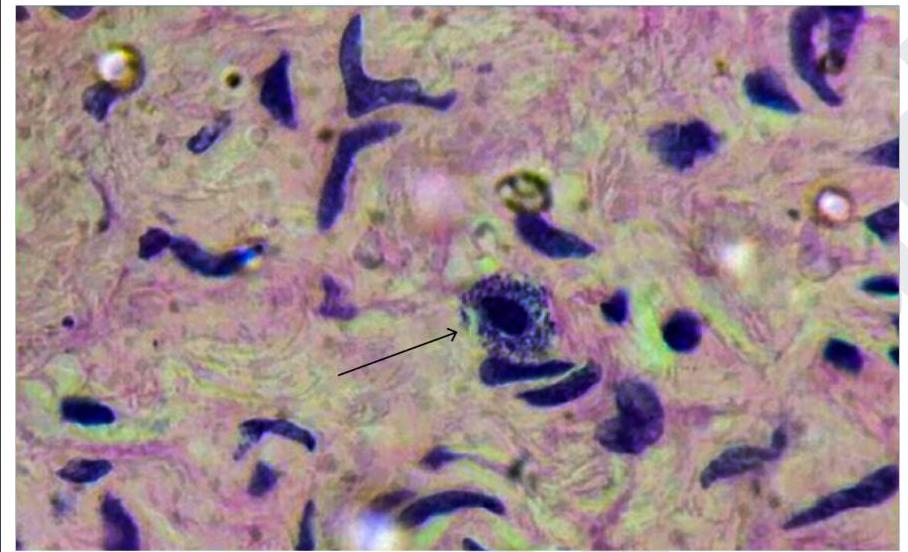
Explanation: Interphase - A Barr body represents the inactivated X chromosome, which is visible as a condensed chromatin structure [1]. - This condensation and inactivation occur early in development and persist through interphase, making it observable during this non-dividing phase [1]. Metaphase - During metaphase, chromosomes are highly condensed and aligned at the metaphase plate, making individual Barr bodies difficult to distinguish from other condensed chromosomes. - The focus of metaphase is on chromosome alignment for segregation, not on individual inactive X chromosome structures. GI phase - The G1 phase is a part of interphase when the cell grows and prepares for DNA replication. - While the Barr body is present during G1, interphase is a more encompassing term that includes G1, S, and G2 phases, during all of which the Barr body is identifiable. Telophase - In telophase, the nuclear envelope reforms around newly separated chromosomes, and chromosomes begin to decondense. - While the inactive X chromosome is still present, it is less clearly defined as a distinct Barr body compared to the more stable interphase state.
Explanation: ***Hyaline cartilage*** - **Hyaline cartilage** is the most widely distributed type of cartilage in the human body, found in the **articular surfaces of joints**, nose, trachea, bronchi, laryngeal cartilages, costal cartilages, and most of the embryonic skeleton [1]. - Its **smooth surface** provides low-friction movement and structural support [1]. - It comprises the majority of cartilage mass in the body. *Elastic cartilage* - **Elastic cartilage** is characterized by a high proportion of **elastic fibers**, providing flexibility and elasticity. - It is found in specific locations like the **external ear (pinna)**, epiglottis, and cuneiform cartilages of the larynx. - Least abundant of the three main cartilage types. *Fibrocartilage* - **Fibrocartilage** contains abundant **collagen fibers (Type I)**, making it very strong and resistant to compression and tension. - It is present in structures requiring high tensile strength, such as **intervertebral discs**, menisci of the knee, and the pubic symphysis [2]. *Calcified cartilage* - **Calcified cartilage** is not a separate type but represents **hyaline cartilage undergoing calcification** during endochondral ossification [1], [2]. - It is a transitional form found at the junction between cartilage and bone in growing bones [3].
Explanation: Type II fibers generate force quickly and are essential for activities requiring speed and power [1]. The gastrocnemius is designed for powerful, rapid contractions needed for jumping, sprinting, and explosive movements, while postural muscles like the erector spinae are predominantly Type I (slow-twitch) fibers designed for endurance [1].
Explanation: ***Neurohypophysis*** - **Herring bodies** are terminal enlargements of unmyelinated axons within the posterior pituitary (neurohypophysis) that store and then release neurohormones like **oxytocin** and **ADH** [1]. - These structures represent accumulations of **neurosecretory vesicles** containing hormones, neurophysins, and ATP, which are synthesized in the hypothalamus and transported to the neurohypophysis [2]. *Pars tuberalis* - The pars tuberalis is a part of the **adenohypophysis (anterior pituitary)** that wraps around the infundibular stalk but does not contain Herring bodies. - Its primary function is not typically associated with the storage and release of neurohormones in the same manner as the neurohypophysis. *Pars intermedia* - The pars intermedia is a small, rudimentary part of the **adenohypophysis** located between the anterior and posterior lobes [1], primarily involved in producing **melanocyte-stimulating hormone (MSH)**. - It does not contain Herring bodies, which are exclusive to the neurosecretory terminals of the posterior pituitary. *Pars terminalis* - "Pars terminalis" is not a recognized anatomical division of the pituitary gland. - The primary divisions are the **adenohypophysis (anterior pituitary)**, which includes pars distalis, pars tuberalis, and pars intermedia, and the **neurohypophysis (posterior pituitary)**.
Explanation: ***Hair follicle*** - The **glands of Moll** (also known as ciliary glands) are modified **apocrine sweat glands** located at the margin of the eyelid [1]. - Their ducts typically open into the **follicles of the eyelashes** or directly onto the eyelid margin between the lashes [1]. *Skin* - While they are a type of **sweat gland**, their opening is specifically associated with **eyelid structures**, not general skin surface. - The skin surface generally has eccrine sweat glands opening directly to it. *Tarsal plate* - The **tarsal plate** is a dense connective tissue layer within the eyelid that provides structure [1]. - The glands of Moll are located anterior to the tarsal plate, not opening into it. *Ducts of Meibomian glands* - **Meibomian glands** (tarsal glands) are sebaceous glands located within the tarsal plate, secreting an oily layer for the tear film. - Their ducts open onto the eyelid margin through orifices that are distinct from those of the glands of Moll.
Explanation: ***Thymus*** - **Hassall's corpuscles**, also known as thymic corpuscles, are unique structures found in the **medulla of the thymus**. - They are composed of concentrically arranged epithelial reticular cells and play a role in **T-cell education** and the development of **regulatory T cells** [2]. *Lymph nodes* - Lymph nodes are secondary lymphoid organs that filter lymph and house **B cells and T cells**, but they do not contain Hassall's corpuscles [1]. - They are characterized by distinct cortical and medullary regions, with germinal centers in the cortex. *Spleen* - The spleen is a secondary lymphoid organ involved in **filtering blood**, removing old red blood cells, and mounting immune responses [1]. - Its parenchyma is divided into **red pulp and white pulp**, but it does not contain Hassall's corpuscles. *Liver* - The liver is primarily involved in **metabolism**, detoxification, and bile production. - It is not a primary lymphoid organ and does not contain structures like Hassall's corpuscles [2].
Basic Tissue Types
Practice Questions
Cell Biology and Organelles
Practice Questions
Epithelial Tissue
Practice Questions
Connective Tissue
Practice Questions
Muscular Tissue
Practice Questions
Nervous Tissue
Practice Questions
Cardiovascular System Histology
Practice Questions
Lymphoid Organs and Immune System
Practice Questions
Endocrine System Histology
Practice Questions
Respiratory System Histology
Practice Questions
Digestive System Histology
Practice Questions
Urinary and Reproductive System Histology
Practice Questions
Get full access to all questions, explanations, and performance tracking.
Start For Free