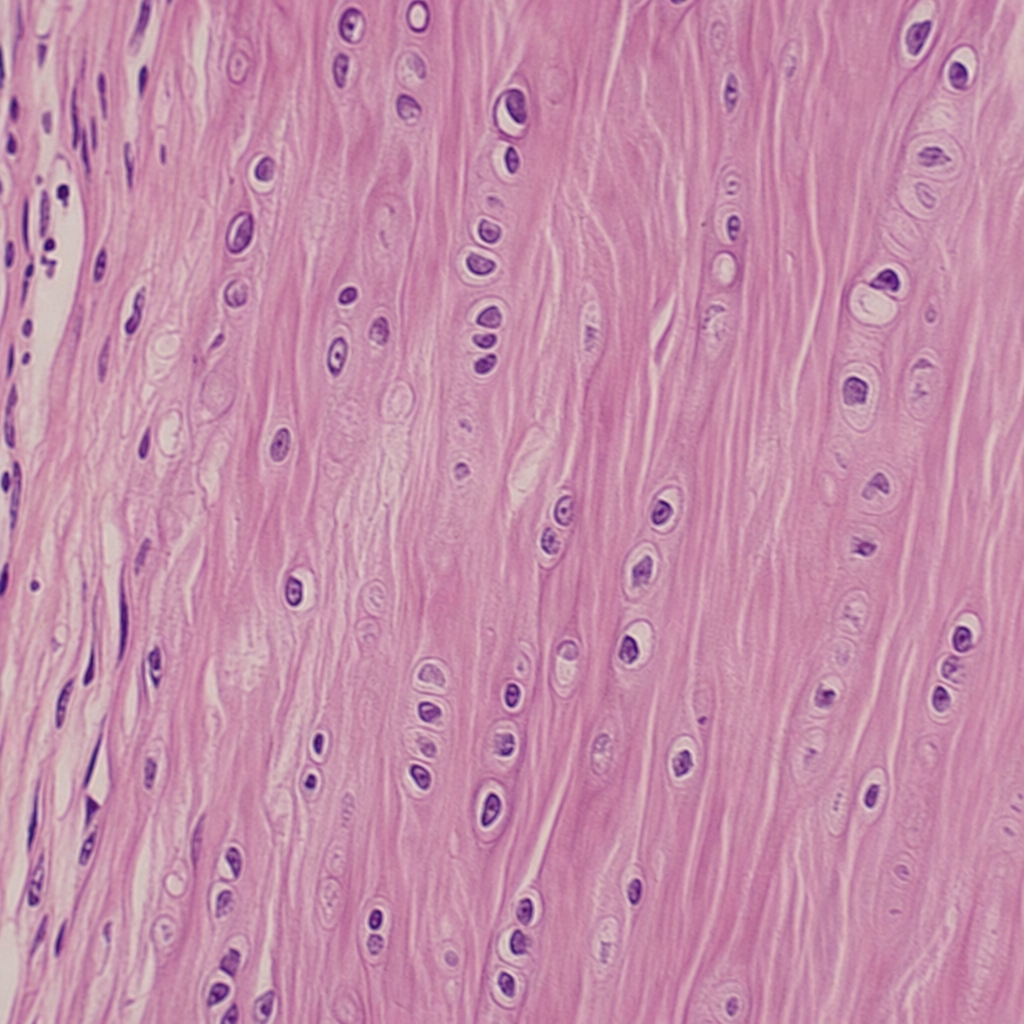
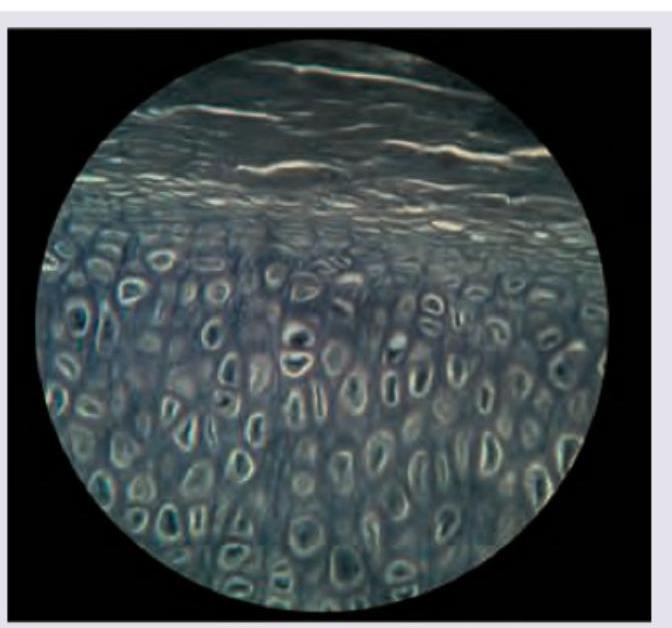
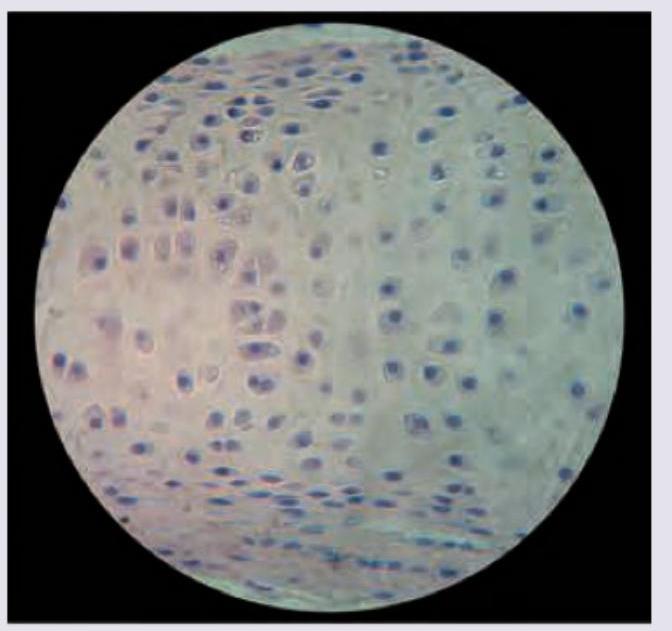
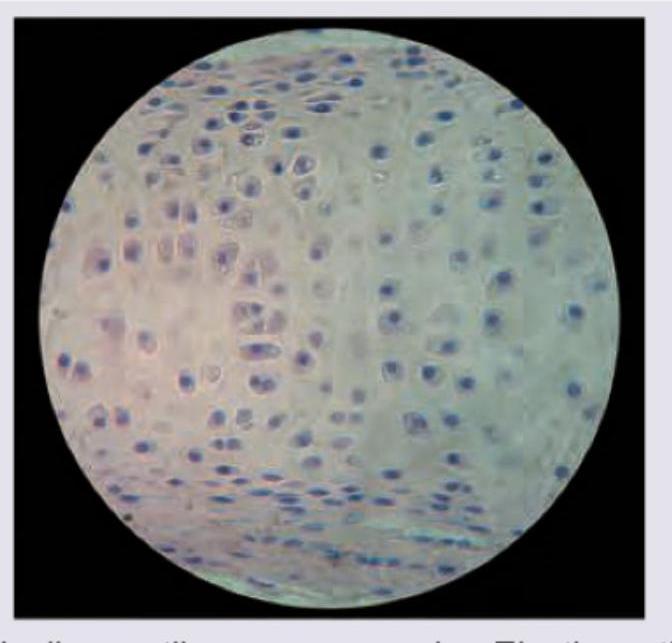
Which of the following statements is TRUE about osteoblasts and chondroblasts?
Stem cells in skin are found in all, EXCEPT:
In articular cartilage, most active chondrocytes are seen in ?
Which type of collagen is maximum in skin?
All of the following are features of Lymph node histology except:
Type I collagen is present in all EXCEPT:
Ligamentum flavum consists of which fibres:
Which cell type is responsible for maintaining bone tissue?
Hard palate contains:
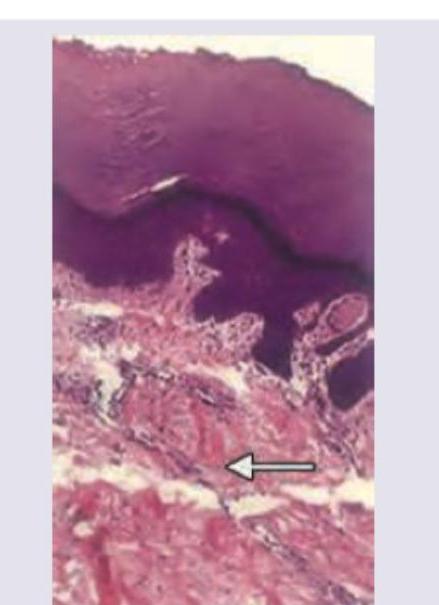
What constitutes the Malpighian layer of skin?
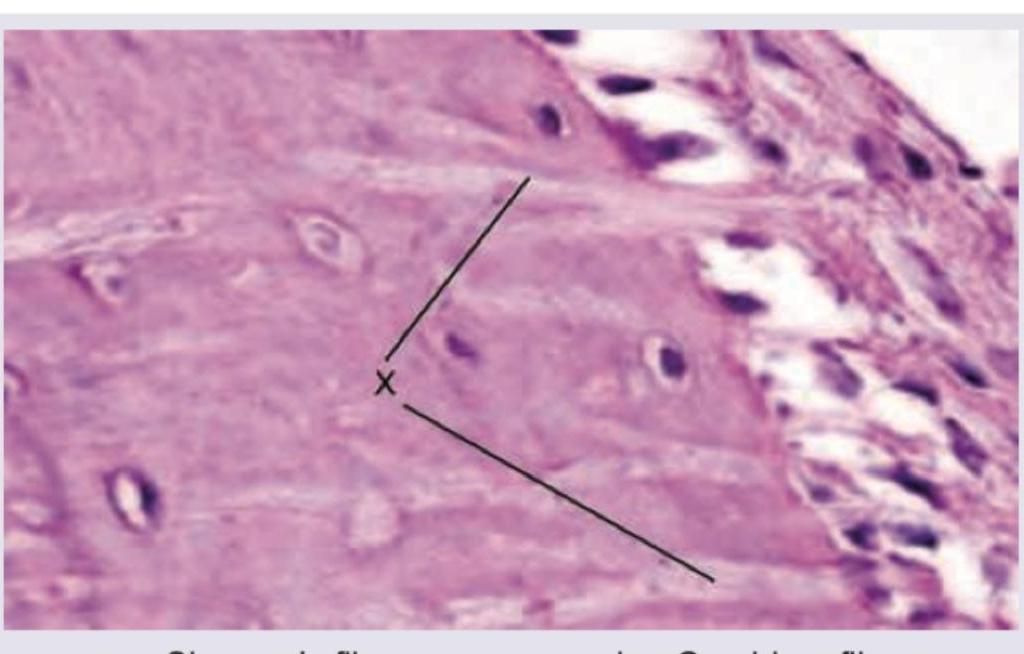
Explanation: ***Derived from mesenchymal stem cells*** - Both **osteoblasts** (bone-forming cells) and **chondroblasts** (cartilage-forming cells) originate from **mesenchymal stem cells**, which are multipotent stromal cells [2]. - These stem cells can differentiate into various connective tissue cells, including those responsible for building bone and cartilage [3]. *Osteoblasts and chondroblasts are terminally differentiated cells.* - Osteoblasts can further differentiate into **osteocytes** once they become embedded in the bone matrix, while chondroblasts can mature into **chondrocytes** [1]. - While they undergo differentiation, the term "terminally differentiated" usually implies a cell that has reached its final development stage and cannot differentiate further, which is not entirely accurate for osteoblasts before becoming osteocytes. *Osteoblasts and chondroblasts communicate via gap junctions.* - **Osteocytes**, not osteoblasts, communicate via **gap junctions** through their cytoplasmic processes within the bone matrix. - Chondrocytes (mature chondroblasts) in cartilage are generally isolated within the matrix and do not extensively form gap junctions for direct cell-to-cell communication. *Osteoblasts and chondroblasts are both found in lacunae.* - **Chondrocytes** (mature chondroblasts) are typically found in **lacunae** within the cartilage matrix. - **Osteocytes** (mature osteoblasts) are found in lacunae within the bone matrix, but **osteoblasts** themselves are typically found on the surface of developing bone, laying down new matrix, not within lacunae [1].
Explanation: ***Stratum corneum*** - The **stratum corneum** is the outermost layer of the epidermis consisting of **dead, anucleated keratinocytes** (corneocytes) that have undergone terminal differentiation [1]. - This layer contains **no viable cells** and therefore **no stem cells**, as it is composed entirely of flattened, keratinized cells that serve as a protective barrier [1]. - Stem cells require viable cellular machinery for self-renewal and differentiation, which is absent in this dead layer. *Hair follicle* - The **hair follicle bulge** region contains a population of multipotent **stem cells** responsible for hair regeneration and contributing to epidermal repair [1]. - These stem cells can differentiate into various cell types, including keratinocytes, sebocytes, and pigment cells [1]. *Sebaceous glands* - **Stem cells** are located in the **basal layer of sebaceous glands** and contribute to the maintenance and repair of the gland [1]. - These cells facilitate the continuous production of sebum and the structural integrity of the gland. *Sweat glands* - **Stem cells** are present in the **sweat glands**, particularly in the ductal regions, and play a role in the regeneration and repair of this glandular tissue [1]. - They are important for maintaining the function of eccrine and apocrine glands [1].
Explanation: ***Zone 2*** - The **transitional zone (Zone 2)** contains chondrocytes that are more metabolically active and contribute significantly to **collagen and proteoglycan synthesis**. [1] - These chondrocytes are typically **larger and more rounded** than those in the superficial layer and are organized in columns. *Zone 1* - **Zone 1 (superficial or tangential zone)** consists of **flattened chondrocytes** that are metabolically less active. - Its primary role is to resist **shear forces** and reduce friction. [1] *Zone 4* - **Zone 4 (calcified zone)** is the deepest layer of articular cartilage, characterized by **chondrocytes embedded in a calcified matrix**. - This zone anchors the cartilage to the subchondral bone and has **minimal metabolic activity**. *Zone 3* - **Zone 3 (deep or radial zone)** has chondrocytes arranged in **columns perpendicular to the articular surface**. [1] - While active in matrix production, their activity is generally **less pronounced** compared to the transitional zone.
Explanation: ***Type I*** - **Type I collagen** is the most abundant type of collagen in the human body, constituting about 90% of total collagen [1]. - It provides **strength and structural support** to tissues like skin, bone, tendons, and ligaments [1]. *Type III* - **Type III collagen** is often found alongside Type I collagen in many tissues, but it is typically more prominent in **distensible tissues** like blood vessel walls and intestine. - While present in the skin, it is not the most abundant type; it contributes to **skin elasticity** and is abundant in early wound healing. *Type II* - **Type II collagen** is primarily found in **cartilage**, providing resistance to pressure and flexibility. - It is not a major component of the skin. *Type IV* - **Type IV collagen** is a major component of the **basement membrane**, forming a mesh-like network that provides support and acts as a filter. - It is found beneath epithelial cells, including those in the skin, but it is not the predominant collagen type within the dermal layer itself.
Explanation: ***Red pulp and White pulp are present*** - **Red pulp** and **white pulp** are characteristic histological features of the **spleen**, not lymph nodes [1]. - The white pulp contains lymphoid follicles (PALS - periarteriolar lymphoid sheaths), while the red pulp is involved in filtering blood and destroying old red blood cells [1]. - This is the feature that does NOT belong to lymph node histology. *Both Efferent and Afferent are present* - Lymph nodes have multiple **afferent lymphatic vessels** that bring lymph into the node and usually one or two **efferent lymphatic vessels** that carry lymph away [2]. - This arrangement allows for efficient filtering of lymph and immune surveillance [2]. - This IS a feature of lymph nodes. *Subcapsular sinus present* - The **subcapsular sinus** is a space located directly beneath the capsule of the lymph node, which receives lymph from the afferent lymphatic vessels. - It contains a network of reticular fibers and macrophages, acting as the initial filtering area. - This IS a feature of lymph nodes. *Cortex and Medulla are present* - Lymph nodes are histologically divided into an outer **cortex** and an inner **medulla**. - The cortex contains lymphoid follicles (B-cell areas) and paracortical areas (T-cell areas), while the medulla consists of medullary cords and sinuses. - This IS a feature of lymph nodes.
Explanation: Cartilage - **Type II collagen** is the predominant collagen found in hyaline and elastic cartilage (the typical forms of cartilage), providing their characteristic tensile strength and resilience [2]. - Type I collagen is NOT the primary collagen in cartilage, making this the correct answer. - Note: Fibrocartilage is a specialized form that does contain Type I collagen, but standard cartilage refers to hyaline and elastic types. *Ligament* - **Type I collagen** is the primary structural component of ligaments, providing high tensile strength to connect bones and stabilize joints. - Its presence allows ligaments to withstand significant pulling forces without stretching excessively. *Aponeurosis* - **Type I collagen** is abundant in aponeuroses, which are flat sheet-like tendons that connect muscles to bones or other muscles. - This type of collagen provides the necessary tensile strength for these broad connective tissues. *Bone* - **Type I collagen** is the most abundant collagen in bone matrix, accounting for approximately 90% of its organic content [1]. - It forms a robust scaffold that gives bone its flexibility and tensile strength, working in conjunction with mineralized components like hydroxyapatite [1].
Explanation: The ligamentum flavum is predominantly composed of elastic fibers [1], which allow it to stretch and recoil during spinal movements. This high elastic content helps maintain the upright posture of the spine and prevents excessive flexion. Type I collagen is the most abundant collagen type, forming strong, inextensible fibers found in structures like tendons, ligaments, and bone, but is not the primary component of ligamentum flavum [1]. While present in some ligaments, its dominance would make the ligamentum flavum too stiff for its role in the spinal canal. Reticular fibers are fine, branching collagen fibers (primarily type III collagen) that form a supportive network in soft tissues and organs, but they are not a major component of the ligamentum flavum. Type II collagen is the primary collagen type found in hyaline cartilage and elastic cartilage, providing resistance to pressure. It is not a significant component of ligaments, especially those requiring high elasticity like the ligamentum flavum.
Explanation: ***Osteocyte*** - **Osteocytes** are mature bone cells embedded within the bone matrix that originate from osteoblasts [1]. - They play a crucial role in **maintaining bone tissue** by sensing mechanical stress and signaling for bone remodeling [1, 2]. *Chondrocyte* - **Chondrocytes** are cells found in **cartilage**, responsible for producing and maintaining the cartilaginous matrix [3]. - They are primarily associated with cartilage formation and repair, not direct maintenance of bone tissue. *Osteoclast* - **Osteoclasts** are large, multinucleated cells responsible for **bone resorption**, the breakdown of bone tissue [1, 3, 5]. - While essential for bone remodeling, their primary function is bone destruction, not maintenance. *Osteoblast* - **Osteoblasts** are cells responsible for **bone formation** by synthesizing and secreting the organic matrix of bone [1, 3]. - They are involved in building new bone, but once encased in the matrix, they differentiate into osteocytes for maintenance [1].
Explanation: ***Keratinised, submucosa, minor salivary gland*** - The oral epithelium of the **hard palate** is predominantly **keratinized stratified squamous epithelium**, which provides protection against mechanical stress during mastication. - The hard palate has a **unique structure**: in the **median raphe and anterior region**, the mucosa is directly attached to periosteum (mucoperiosteum with no submucosa), but in the **anterolateral and posterolateral regions**, a **submucosa IS present** containing **minor salivary glands** (predominantly mucous type). - Since the question asks what the hard palate "contains," and it DOES contain submucosa in the lateral regions where glands are located, this is the correct answer. *Keratinised, absent submucosal layer, minor salivary gland* - While it is true that the **submucosa is absent in the midline/anterior region** of the hard palate, this option is incorrect because the hard palate DOES contain submucosa in the **lateral and posterior regions** where the **minor salivary glands** are located. - The presence of glands requires underlying submucosa for their placement. *Non keratinised, submucosal layer, minor salivary gland* - The hard palate is primarily covered by **keratinized epithelium**, not non-keratinized epithelium, which makes this option incorrect. - Non-keratinized epithelium is typically found in areas like the **soft palate, buccal mucosa, and ventral tongue** where less mechanical stress occurs. *Non keratinised, absent submucosa, minor salivary gland* - This option is incorrect on both counts: the epithelium is **keratinized** (not non-keratinized) and the **submucosa is present** in lateral/posterior regions where glands are located. - This combination does not accurately describe any region of the hard palate.
Explanation: The Malpighian layer is a historical term used to collectively refer to the stratum spinosum and stratum basale of the epidermis [1]. These two layers are responsible for keratinocyte proliferation (basale) and establishing strong intercellular connections via desmosomes (spinosum) [1].
Basic Tissue Types
Practice Questions
Cell Biology and Organelles
Practice Questions
Epithelial Tissue
Practice Questions
Connective Tissue
Practice Questions
Muscular Tissue
Practice Questions
Nervous Tissue
Practice Questions
Cardiovascular System Histology
Practice Questions
Lymphoid Organs and Immune System
Practice Questions
Endocrine System Histology
Practice Questions
Respiratory System Histology
Practice Questions
Digestive System Histology
Practice Questions
Urinary and Reproductive System Histology
Practice Questions
Get full access to all questions, explanations, and performance tracking.
Start For Free