Paneth cells are mainly found in the bases of the crypts in the small intestine. All of the following are true about Paneth cells, EXCEPT:
Gomori's aldehyde fuchsin specifically stains which of the following?
Which cells in the stomach are responsible for secreting acid?
A newborn baby presented with profuse bleeding from the umbilical stump. Rest of the examination and PT, APTT are within normal limits. Most likely diagnosis is which of the following?
Which of the following is the weakest type of cartilage?
A 50-year-old male with a positive family history of prostate cancer presents for screening. What is the most sensitive screening test to detect prostate cancer?
All of the following are macrophages except:
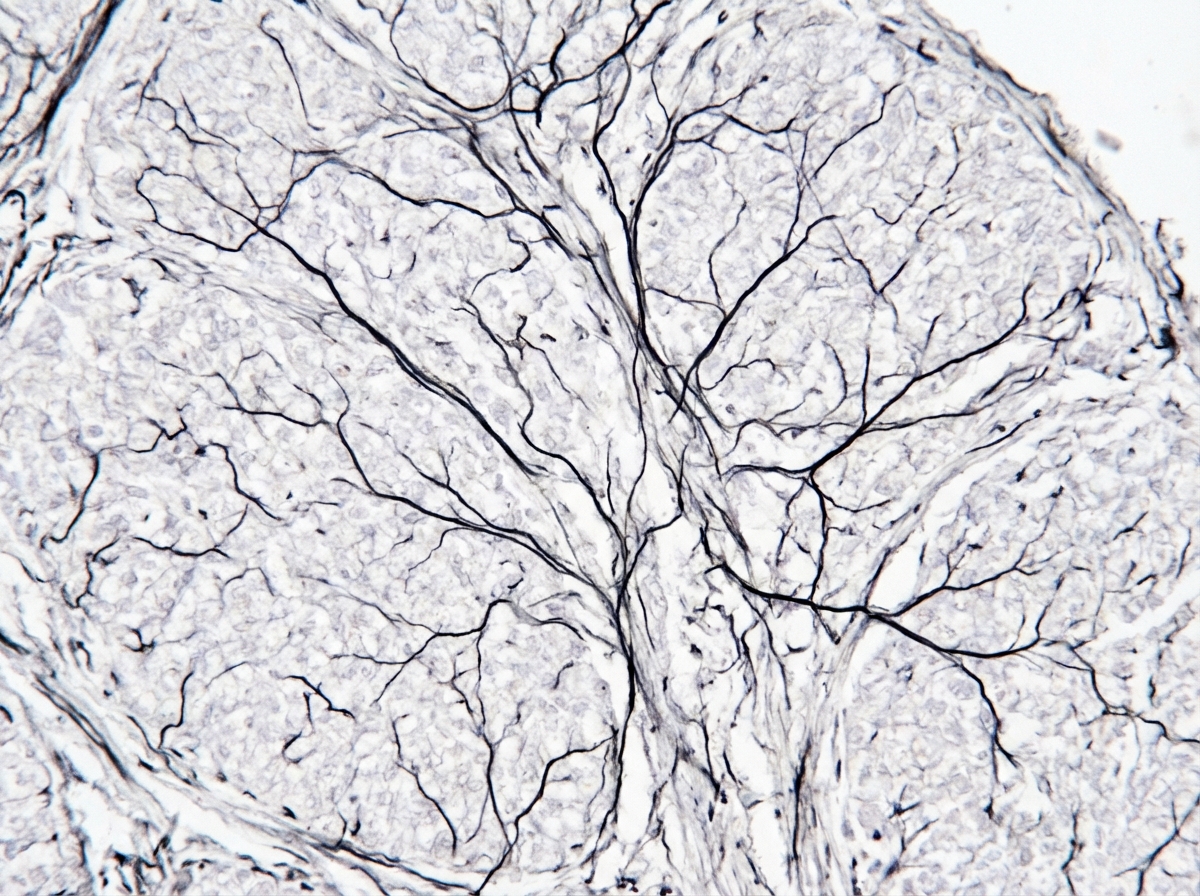
The type of collagen depicted in the staining is:
Which of the following is NOT true about hepatocytes?
What is the origin and characteristic of osteoclasts?
Explanation: Explanation: Paneth cells are specialized secretory cells located at the bases of the **Crypts of Lieberkühn** in the small intestine [1]. Their primary role is innate immunity and the maintenance of the gastrointestinal mucosal barrier. **Why "Foamy Cytoplasm" is the Correct Answer (The Exception):** Paneth cells do **not** have a foamy cytoplasm. Instead, they are characterized by **prominent, eosinophilic (acidophilic) apical granules**. A "foamy" or "vacuolated" appearance is characteristic of cells like Sebaceous glands or Xanthoma cells, which contain lipid droplets. Paneth cells have a dense, granular appearance due to their high protein-secretory activity. **Analysis of Other Options:** * **Rich in Rough Endoplasmic Reticulum (RER):** As protein-secreting cells (producing enzymes and antimicrobial peptides), they possess an extensive network of basal RER, which accounts for the basal basophilia seen on H&E staining. * **High Zinc Content:** Paneth cell granules are unique for their high concentration of zinc, which acts as a cofactor for several enzymes and helps stabilize the stored secretory proteins. * **Numerous Lysozyme Granules:** The hallmark of Paneth cells is the secretion of **Lysozyme**, an enzyme that digests bacterial cell walls. They also secrete **alpha-defensins** (cryptidins) and Tumor Necrosis Factor-alpha (TNF-α). **High-Yield Clinical Pearls for NEET-PG:** * **Location:** Most numerous in the **Ileum**; absent in the large intestine (except in pathological states like "Paneth cell metaplasia" in IBD). * **Function:** They remain in the crypt bases, where they protect intestinal stem cells from damage by releasing signaling molecules to maintain homeostasis [1]. They regulate the gut microbiome and protect intestinal stem cells located nearby in the crypts. * **Staining:** Their granules stain bright red with Eosin and are also **PAS-positive**.
Explanation: **Explanation:** **Gomori’s Aldehyde Fuchsin** is a specialized histological stain primarily used to demonstrate **elastic fibers** [1]. The stain consists of a mixture of basic fuchsin, hydrochloric acid, and paraldehyde. It has a high affinity for the sulfur-containing cross-links found in elastin, staining these fibers a deep purple or violet color against a contrasting background (usually green or yellow). [1] **Analysis of Options:** * **A. Elastic Fibers (Correct):** Aldehyde fuchsin is highly selective for elastic tissue [1]. It is often preferred over Verhoeff’s Van Gieson (VVG) for demonstrating fine terminal elastic fibers in tissues like the skin or lungs. * **B. Glycogen:** Glycogen is typically demonstrated using the **Periodic Acid-Schiff (PAS)** stain, which reacts with carbohydrate groups. * **C. Nuclei:** Standard nuclear staining is achieved using **Hematoxylin** (in H&E) or basic dyes like Methylene Blue. Aldehyde fuchsin does not specifically target nuclear chromatin. * **D. Mucins:** While some acidic mucins may show weak staining, the gold standard for mucins is **Alcian Blue** or PAS. **High-Yield Clinical Pearls for NEET-PG:** * **Pancreatic Beta Cells:** Beyond elastic fibers, Gomori’s Aldehyde Fuchsin is a classic stain for the **insulin-containing granules** in the beta cells of the Islets of Langerhans. * **HBsAg:** This stain is also used to identify **Hepatitis B Surface Antigen** (ground-glass hepatocytes) in liver biopsies. * **Pituitary Gland:** It can be used to differentiate thyrotrophs and gonadotrophs in the anterior pituitary. * **Comparison:** Remember that **Orcein** and **Resorcin-Fuchsin** are other common stains used specifically for elastic fibers.
Explanation: The stomach mucosa contains specialized gastric glands composed of various cell types, each with distinct secretory functions [1], [2]. **1. Why Parietal Cells are Correct:** **Parietal (Oxyntic) cells**, located primarily in the body and fundus of the stomach, are responsible for secreting **Hydrochloric acid (HCl)** and **Intrinsic Factor (IF)** [1]. HCl maintains the highly acidic gastric pH (1.0–2.0) necessary for denaturing proteins and activating pepsinogen. These cells are characterized by an abundance of mitochondria and a specialized canalicular system that increases surface area for acid secretion via the $H^+/K^+$ ATPase pump [2]. **2. Analysis of Incorrect Options:** * **Mucus cells:** Found in the gastric pits (foveolar cells) and neck of the glands, they secrete alkaline mucus and bicarbonate to protect the gastric epithelium from autodigestion by acid [2]. * **Chief cells (Zymogenic cells):** Located at the base of the gastric glands, they secrete **pepsinogen** (an inactive proenzyme) and gastric lipase [1]. Pepsinogen is converted to active pepsin by the HCl produced by parietal cells. * **Endocrine cells (G-cells/D-cells):** These are enteroendocrine cells. **G-cells** (mainly in the antrum) secrete **Gastrin**, which stimulates parietal cells to produce acid [2]. **D-cells** secrete Somatostatin, which inhibits acid secretion [2]. **Clinical Pearls for NEET-PG:** * **Intrinsic Factor:** Parietal cells are the sole source of IF, which is essential for **Vitamin B12 absorption** in the terminal ileum [1]. Destruction of these cells (e.g., in Pernicious Anemia) leads to B12 deficiency and Megaloblastic Anemia. * **Staining:** Parietal cells are intensely **eosinophilic** (pink) due to numerous mitochondria, while Chief cells are **basophilic** (purple) due to extensive rough endoplasmic reticulum. * **Pharmacology Link:** Proton Pump Inhibitors (PPIs) like Omeprazole act directly on the $H^+/K^+$ ATPase pump in the parietal cell membrane [2].
Explanation: ### Explanation **Correct Answer: B. Glanzmann's thrombasthenia** **Understanding the Concept:** The clinical presentation of **umbilical stump bleeding** in a newborn with **normal PT (Prothrombin Time) and APTT (Activated Partial Thromboplastin Time)** points toward a defect in **platelet function** rather than the coagulation cascade [1]. **Glanzmann’s Thrombasthenia (GT)** is an autosomal recessive bleeding disorder caused by a deficiency or dysfunction of the **GP IIb/IIIa complex** (integrin αIIbβ3). This receptor is essential for **platelet aggregation** as it binds fibrinogen to bridge adjacent platelets. Umbilical cord bleeding is a classic, high-yield presentation of GT. Since the coagulation factors are intact, PT and APTT remain normal. **Why the other options are incorrect:** * **Factor X deficiency (Option A):** Factor X is part of the common pathway. A deficiency would result in **prolonged PT and APTT**. * **Von Willebrand Disease (Option C):** While it is the most common inherited bleeding disorder, it rarely presents with umbilical stump bleeding. Furthermore, vWD often causes a **prolonged APTT** due to its role in stabilizing Factor VIII. * **Bernard-Soulier Disease (Option D):** This is a deficiency of **GP Ib-IX-V** (the von Willebrand factor receptor), leading to defective platelet **adhesion**. While it presents with mucosal bleeding, it is classically associated with **thrombocytopenia and giant platelets** on a peripheral smear, which distinguishes it from GT [1]. **High-Yield Clinical Pearls for NEET-PG:** * **Glanzmann’s:** Defect in Aggregation (GP IIb/IIIa); Normal platelet count; Normal morphology. * **Bernard-Soulier:** Defect in Adhesion (GP Ib-IX-V); Low platelet count; **Giant platelets** (often as large as RBCs). * **Umbilical stump bleeding** is most commonly associated with **Factor XIII deficiency** (which would show normal PT/APTT but abnormal clot solubility test) and **Glanzmann’s Thrombasthenia**. * **Gold Standard Test for GT:** Platelet aggregometry showing absent response to all agonists (ADP, collagen, epinephrine) except **Ristocetin** (which remains normal).
Explanation: The strength and durability of cartilage are determined by the density and arrangement of its constituent fibers (collagen and elastin) within the extracellular matrix. **Why Hyaline Cartilage is the Correct Answer:** Hyaline cartilage is considered the **weakest** type because it contains the least amount of collagen fibers compared to fibrocartilage and lacks the resilient elastic fibers found in elastic cartilage [1]. Its matrix is primarily composed of Type II collagen fibers, which are extremely fine and have the same refractive index as the ground substance, making them invisible under standard light microscopy (appearing "glass-like"). While excellent for reducing friction in joints, it is more prone to calcification and fracture under high mechanical stress compared to the other types. **Analysis of Incorrect Options:** * **Fibrocartilage:** This is the **strongest** type of cartilage. It contains thick bundles of Type I collagen fibers arranged in a dense, orderly fashion. It is designed to withstand heavy pressure and shear forces (e.g., intervertebral discs, pubic symphysis). * **Elastic Cartilage:** This type is more flexible and resilient than hyaline cartilage. It contains a dense network of branching elastic fibers in addition to Type II collagen, allowing it to maintain its shape after repeated bending (e.g., pinna of the ear, epiglottis). **High-Yield Clinical Pearls for NEET-PG:** * **Most Common Type:** Hyaline cartilage is the most abundant cartilage in the human body. * **Articular Exception:** All hyaline cartilage is covered by perichondrium **except** articular cartilage (at joints) and epiphyseal plates. * **Calcification:** Hyaline cartilage is the only type that commonly undergoes calcification as part of the aging process or endochondral ossification [2]. * **Fiber Types:** Remember: **F**ibrocartilage = Type **I** collagen; **H**yaline & **E**lastic = Type **II** collagen [1].
Explanation: **Explanation:** The screening for prostate cancer relies on the combined sensitivity of biochemical markers and physical examination. The correct answer is **Option C (DRE + PSA)** because these two tests are complementary [1]. 1. **Why Option C is Correct:** * **PSA (Prostate-Specific Antigen)** is a glycoprotein produced by the prostatic epithelium. While highly sensitive, it is not specific to cancer (it rises in BPH and prostatitis). * **DRE (Digital Rectal Examination)** can detect tumors in the posterior and lateral aspects of the gland (where 70% of cancers arise) even if PSA levels are within the normal range (false negatives) [1]. * Combining both significantly increases the **Positive Predictive Value (PPV)** and sensitivity, ensuring that cancers which do not produce high PSA or those not palpable via rectum are both captured [1]. 2. **Why Other Options are Incorrect:** * **Option A (DRE alone):** Many early-stage tumors are non-palpable (T1 stage), making DRE alone insufficient for screening. * **Option B (PSA alone):** Approximately 20-25% of men with prostate cancer have a "normal" PSA (<4 ng/mL). Relying solely on PSA would miss these cases [1]. * **Option D (MRI):** While Multiparametric MRI (mpMRI) is excellent for localization and staging (PI-RADS scoring), it is too expensive and resource-intensive to be used as a primary screening tool for the general population. **High-Yield Clinical Pearls for NEET-PG:** * **Zone of Origin:** Most prostate cancers (70-80%) arise in the **Peripheral Zone**, which is why they are palpable on DRE. * **PSA Cut-off:** Traditionally **>4 ng/mL** is the threshold for further investigation (biopsy) [1]. * **Age to Start:** Screening usually begins at **age 50** for average-risk men, but at **age 40-45** for those with a strong family history or high-risk ethnicity. * **Definitive Diagnosis:** Transrectal Ultrasound (TRUS) guided biopsy remains the gold standard for diagnosis [1].
Explanation: ### Explanation The question tests the knowledge of the **Mononuclear Phagocyte System (MPS)**, a functional unit of the immune system consisting of cells derived from bone marrow promonocytes that differentiate into blood monocytes and eventually settle in tissues as specialized macrophages [1]. **Why Lymphocytes is the correct answer:** Lymphocytes (B-cells, T-cells, and NK cells) are **not** macrophages [2]. They are a type of white blood cell involved in adaptive immunity. While they interact closely with macrophages (which act as Antigen-Presenting Cells), lymphocytes are derived from the **lymphoid lineage**, whereas macrophages are derived from the **myeloid lineage** [2]. **Analysis of Incorrect Options:** * **Histiocytes:** These are the resident macrophages of **connective tissue**. They are pleomorphic cells that play a key role in tissue repair and defense. * **Kupffer cells:** These are specialized macrophages located in the **sinusoids of the liver** [1]. They are responsible for clearing bacteria and damaged red blood cells from the portal circulation. * **Osteoclasts:** These are large, multinucleated cells found in **bone**. They are derived from the fusion of monocyte-macrophage precursors and are responsible for bone resorption. **High-Yield Clinical Pearls for NEET-PG:** * **Dust Cells:** Macrophages found in the pulmonary alveoli [1]. * **Microglia:** The resident macrophages of the Central Nervous System (CNS) [1]. * **Langerhans Cells:** Dendritic cells (antigen-presenting macrophages) found in the skin. * **Mesangial Cells:** Macrophages located in the kidneys. * **Hofbauer Cells:** Macrophages found in the placenta. * **Littoral Cells:** Macrophages found in the splenic sinusoids.
Explanation: ***Type III*** - **Reticular fibers** are composed of Type III collagen and stain **black/dark brown** with silver impregnation (reticulin staining). - Found in **lymphoid organs**, **liver sinusoids**, and **basement membranes of smooth muscle**, forming delicate supportive networks. *Type I* - Forms thick **collagenous fibers** that stain **pink/eosinophilic** with H&E and **blue** with Masson's trichrome staining. - Predominant in **bones**, **tendons**, and **skin dermis**, providing structural strength rather than delicate networks. *Type IV* - Component of **basement membranes** and does not form visible fibers in routine histological staining. - Requires **immunohistochemical staining** or **electron microscopy** for proper visualization, not silver staining. *Type V* - Forms **thin fibrils** that are typically **co-distributed with Type I collagen** in tissues. - Not specifically highlighted by **reticulin staining** and requires specialized techniques for identification.
Explanation: ### Explanation This question tests the detailed histological and biochemical characteristics of hepatocytes, the functional units of the liver. **1. Why Option D is Correct:** All the provided statements (A, B, and C) are factually incorrect. Therefore, the statement "None of the above statements are true" is the only accurate choice. **2. Analysis of Incorrect Options:** * **Option A:** While hepatocytes make up about **80% of the liver volume**, they constitute only approximately **70–75% of the total cell population**. The remaining cells include Kupffer cells, stellate cells, and endothelial cells. * **Option B:** Hepatocytes store iron primarily as **ferritin** and **hemosiderin**; however, these are stored as **amorphous granules or aggregates**, not as "crystals." Crystalline inclusions in hepatocytes are typically associated with specific proteins or pathological states, but not iron storage. * **Option C:** This is a classic "distractor" in histology. Hepatocytes contain the enzyme **Urate Oxidase (Uricase)**—not urease—within their peroxisomes. In many species (though not humans), this enzyme forms a **distinctive crystalline core (nucleoid)**. Humans lack functional uricase, making this statement doubly incorrect for human histology. **3. NEET-PG High-Yield Pearls:** * **Organelles:** Hepatocytes are rich in **Smooth Endoplasmic Reticulum (SER)** for detoxification and lipid synthesis, and **Rough Endoplasmic Reticulum (RER)** for plasma protein synthesis (Albumin, Clotting factors). The abundance of organelles like mitochondria (approximately 1000 per cell) reflects their metabolic diversity [1]. * **Regeneration:** They have an extraordinary capacity for regeneration (G0 phase cells that can re-enter the cell cycle). * **Biliary Pole:** The plasma membrane of adjacent hepatocytes forms the **bile canaliculi**, sealed by tight junctions (Zonula occludens) [1]. * **Space of Disse:** The narrow space between the hepatocyte and the sinusoidal endothelium where nutrient exchange occurs [1].
Explanation: **Explanation:** Osteoclasts are specialized cells responsible for bone resorption [1]. Understanding their lineage and morphology is crucial for NEET-PG. 1. **Origin (Option A):** Unlike osteoblasts (which arise from mesenchymal stem cells [1]), osteoclasts are derived from **hematopoietic stem cells (HSC)**. Specifically, they originate from the **monocyte-macrophage lineage**. Progenitor cells fuse together under the influence of RANKL and M-CSF to form these mature cells. 2. **Morphology (Option B):** Because they are formed by the fusion of multiple precursor cells, osteoclasts are characteristically **large, multinucleated giant cells** [2]. They typically contain 5 to 50 nuclei and possess a "ruffled border" at the site of bone resorption [2]. 3. **Developmental Stages (Option C):** Osteoclasts exist in different functional states. They develop from inactive precursors (pre-osteoclasts) into an **inactive/quiescent stage** before being activated by hormonal signals (like PTH) or cytokines to begin bone degradation. **Why "All are true" is correct:** Each statement accurately describes a fundamental biological aspect of the osteoclast—its hematopoietic origin, its multinucleated structure, and its developmental progression. **High-Yield Clinical Pearls for NEET-PG:** * **Howship’s Lacunae:** The shallow depressions on the bone surface where active osteoclasts reside [2]. * **Enzymes:** Osteoclasts secrete **Tartrate-Resistant Acid Phosphatase (TRAP)** and Cathepsin K to dissolve the bone matrix. TRAP is a key histological marker. * **Osteopetrosis:** A clinical condition caused by defective osteoclast function, leading to abnormally dense, brittle bones ("Marble Bone Disease"). * **Regulation:** **Osteoprotegerin (OPG)** acts as a decoy receptor for RANKL, thereby inhibiting osteoclast differentiation and preventing excessive bone loss.
Basic Tissue Types
Practice Questions
Cell Biology and Organelles
Practice Questions
Epithelial Tissue
Practice Questions
Connective Tissue
Practice Questions
Muscular Tissue
Practice Questions
Nervous Tissue
Practice Questions
Cardiovascular System Histology
Practice Questions
Lymphoid Organs and Immune System
Practice Questions
Endocrine System Histology
Practice Questions
Respiratory System Histology
Practice Questions
Digestive System Histology
Practice Questions
Urinary and Reproductive System Histology
Practice Questions
Get full access to all questions, explanations, and performance tracking.
Start For Free