Which of the following cells is NOT present in the parathyroid gland?
What type of epithelium lines the esophagus?
Which of the following is the most likely cause of non-megaloblastic macrocytic anemia?
Non-specific esterase is positive in all categories of AML except which subtype?
Schwann cells are supporting cells of:
Lamin is present in:
Which of the following is NOT a feature of sideroblastic anemia?
Which of the following structures histologically shows Henle's and Huxley's layers?
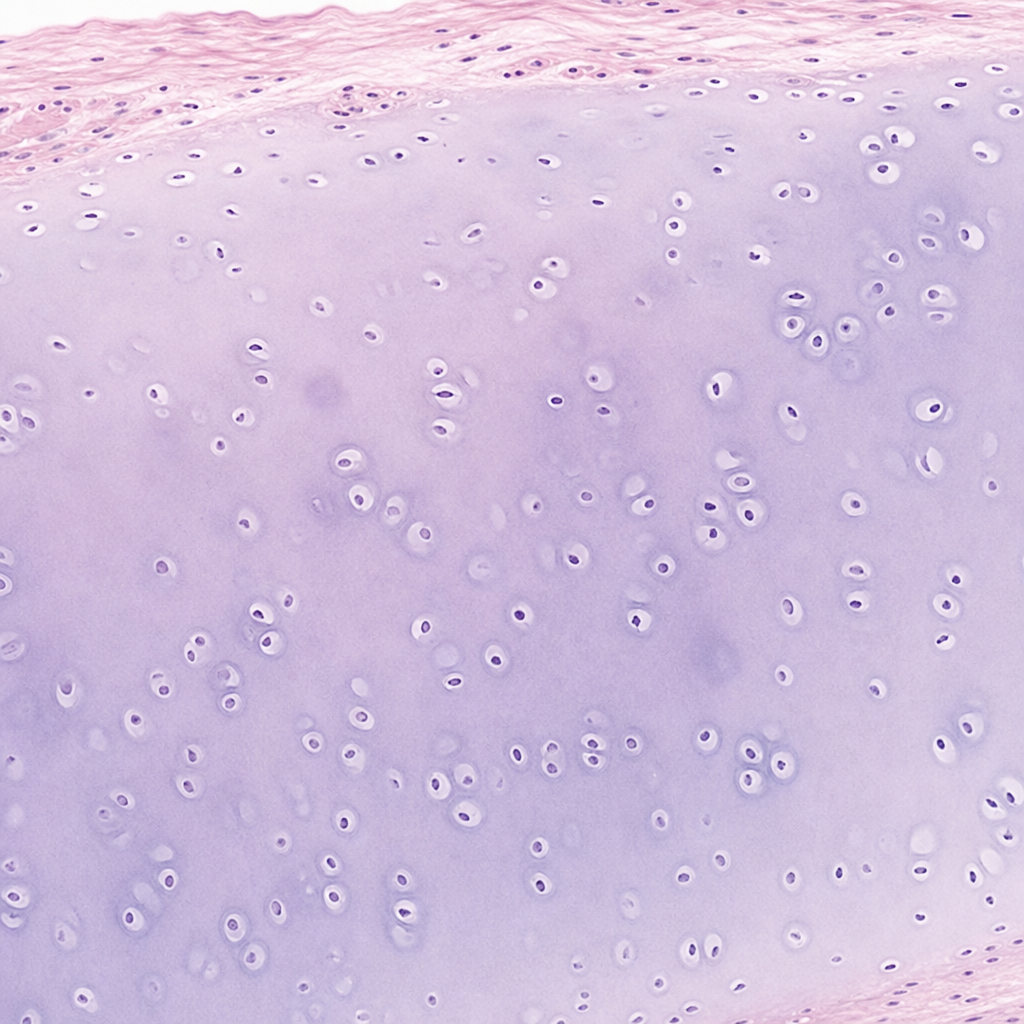
Which of the following is true about articular cartilage?
Which is the most metabolically active layer of the cornea?
Explanation: The parathyroid gland is an endocrine organ responsible for calcium homeostasis [1]. To identify the correct answer, one must distinguish between the cellular components of the endocrine system and the gastrointestinal system. **Why Parietal Cells is the correct answer:** **Parietal cells** (also known as oxyntic cells) are located in the **gastric glands of the stomach**, not the parathyroid gland. Their primary function is the secretion of hydrochloric acid (HCl) and intrinsic factor. Confusingly, "oxyntic" sounds similar to "oxyphil," which is a common trap in histology questions. **Analysis of Incorrect Options:** * **Chief cells:** These are the most numerous cells in the parathyroid gland [1][2]. They are small, polygonal cells with central nuclei that secrete **Parathyroid Hormone (PTH)** in response to low serum calcium [3]. * **Oxyphil cells:** These are larger, acidophilic cells that appear after puberty [2]. They contain abundant mitochondria [1]. While their exact function is unclear, they increase in number with age [2]. * **Water-clear cells (Wasserhelle cells):** These are rare cells with abundant cytoplasmic glycogen, giving them a "clear" appearance [1]. They are considered a variant of chief cells and are often prominent in cases of parathyroid hyperplasia. **High-Yield Clinical Pearls for NEET-PG:** * **Embryology:** The superior parathyroids develop from the **4th pharyngeal pouch**, while the inferior parathyroids develop from the **3rd pharyngeal pouch** (along with the thymus). * **PTH Action:** PTH increases bone resorption, increases renal calcium reabsorption, and stimulates the synthesis of active Vitamin D (1,25-dihydroxycholecalciferol) in the kidneys [3]. * **Histology Tip:** If a question mentions "nests of cells" with "adipocytes" in an endocrine gland, think Parathyroid. In older adults, adipose tissue can make up to 50% of the gland [1].
Explanation: **Explanation:** The esophagus serves as a muscular conduit for food, requiring a lining that can withstand significant mechanical friction and abrasion during swallowing. [1] **1. Why the correct answer is right:** The **Non-keratinized stratified squamous epithelium** is specifically designed for protection against wear and tear in moist environments. The "stratified" (multi-layered) nature provides a thick barrier against abrasive food boluses, while the "non-keratinized" characteristic ensures the surface remains moist via secretions, unlike the dry, waterproof keratinized layer found in the skin. **2. Why the incorrect options are wrong:** * **Stratified columnar/cuboidal:** These are rare in the human body, found only in large excretory ducts of glands (e.g., salivary glands) or parts of the male urethra. They do not provide the necessary protection required by the esophagus. * **Keratinized stratified squamous:** This is the "dry" epithelium found in the **epidermis of the skin**. The keratin layer provides a waterproof, protective seal against dehydration, which is unnecessary and absent in the moist environment of the esophagus. **3. NEET-PG High-Yield Pearls:** * **The Transition:** The most important clinical landmark is the **Gastroesophageal Junction (Z-line)**, where the epithelium abruptly changes from non-keratinized stratified squamous to **simple columnar** (gastric mucosa). * **Barrett’s Esophagus:** In chronic GERD, the squamous lining undergoes **metaplasia** into specialized columnar epithelium (with goblet cells). This is a premalignant condition for esophageal adenocarcinoma. * **Exceptions:** While the esophagus is generally non-keratinized, the upper part of the oral cavity and parts of the pharynx share this lining, but the **hard palate** and **gingiva** are keratinized to handle masticatory forces.
Explanation: Macrocytic anemia is characterized by an increased Mean Corpuscular Volume (MCV > 100 fL) [2] and is broadly classified into **Megaloblastic** and **Non-megaloblastic** types based on the appearance of erythroblasts in the bone marrow. **Why Hypothyroidism is Correct:** Hypothyroidism is a classic cause of **non-megaloblastic macrocytic anemia**. In this condition, the macrocytosis occurs due to a decrease in metabolic rate and oxygen demand, leading to a down-regulation of erythropoiesis. Unlike megaloblastic anemia, there is **no impairment of DNA synthesis**, so the bone marrow does not show megaloblasts, and peripheral blood smears do not show hypersegmented neutrophils. The RBCs are typically large and uniform (round macrocytes). **Analysis of Incorrect Options:** * **Vitamin B12 Deficiency (A) & Folic Acid Deficiency (D):** These are the hallmark causes of **Megaloblastic Anemia**. Both nutrients are essential cofactors for DNA synthesis [2]. Their deficiency leads to "nuclear-cytoplasmic asynchrony," where the nucleus matures slower than the cytoplasm, resulting in hypersegmentation of neutrophils followed by megaloblastic bone marrow [1]. Common causes of B12 deficiency include vegetarian diets, gastrectomy, and Addisonian pernicious anemia [1]. * **Thiamine Deficiency (C):** While severe thiamine deficiency (Beriberi) can affect the cardiovascular and nervous systems, it is not a primary cause of macrocytic anemia. However, a rare genetic condition called Thiamine-Responsive Megaloblastic Anemia (TRMA) exists, but it is categorized as megaloblastic, not non-megaloblastic. **High-Yield Facts for NEET-PG:** * **Causes of Non-megaloblastic Macrocytosis:** Alcoholism (most common), Liver disease, Hypothyroidism, and Myelodysplastic Syndrome (MDS). * **Key Distinguishing Feature:** Hypersegmented neutrophils (>5 lobes) are **only** seen in megaloblastic anemia [1]. * **MCV in Hypothyroidism:** Usually ranges between 100–110 fL; if it exceeds 120 fL, suspect a coexisting B12 or Folate deficiency (often seen in Pernicious Anemia associated with autoimmune thyroiditis).
Explanation: The diagnosis and classification of Acute Myeloid Leukemia (AML) often rely on cytochemical stains to differentiate cell lineages. **Non-specific esterase (NSE)**, such as alpha-naphthyl acetate esterase, is a marker primarily used to identify cells of **monocytic lineage**. **Why M6 is the correct answer:** **AML-M6 (Erythroleukemia)** involves the malignant proliferation of erythroid precursors. These cells are typically **NSE negative**. Instead, erythroid precursors often show a characteristic block-like positivity with Periodic Acid-Schiff (PAS) staining. Since M6 lacks a monocytic component, it does not show NSE positivity. **Analysis of incorrect options:** * **M4 (Acute Myelomonocytic Leukemia):** This subtype consists of both granulocytic and monocytic lineages. The monocytic component will test **positive for NSE**, while the granulocytic component is positive for Myeloperoxidase (MPO). * **M5 (Acute Monocytic Leukemia):** This subtype is characterized by a predominant population of monoblasts or monocytes. It shows **strong, diffuse NSE positivity**, which is characteristically inhibited by sodium fluoride. * **M3 (Acute Promyelocytic Leukemia):** While M3 is primarily MPO positive, some variants can show weak or focal NSE positivity. However, in the context of this question, M6 is the definitive "negative" category as it lacks monocytic differentiation entirely. **High-Yield Clinical Pearls for NEET-PG:** * **MPO (Myeloperoxidase):** Positive in M1, M2, M3, M4. Negative in M0, M5 (usually), M6, and M7. * **NSE (Non-specific Esterase):** Marker for **Monocytic** differentiation (M4, M5). * **SBB (Sudan Black B):** Stains phospholipids; follows the same pattern as MPO. * **PAS (Periodic Acid-Schiff):** Positive in **M6** (block-like) and **M7** (diffuse). * **Auer Rods:** Most commonly seen in **M3** (faggot cells) and M2; never seen in Lymphoblastic leukemia.
Explanation: **Explanation:** The correct answer is **Peripheral Nervous System (PNS)**. Schwann cells are the primary glial cells of the PNS, derived from the **neural crest** [1]. Their fundamental role is to support both myelinated and unmyelinated nerve fibers [2]. In myelinated axons, a single Schwann cell wraps its plasma membrane repeatedly around a segment of one axon to form the myelin sheath, which facilitates rapid saltatory conduction [4]. **Analysis of Options:** * **A. Central Nervous System (CNS):** This is incorrect because the CNS (brain and spinal cord) utilizes **Oligodendrocytes** for myelination [2]. Unlike Schwann cells, one oligodendrocyte can myelinate segments of multiple different axons [1]. * **C. Autonomic Nervous System (ANS):** While Schwann cells do support autonomic fibers, the ANS is functionally a division that spans both the CNS and PNS [4]. However, anatomically, Schwann cells are defined specifically as the supporting cells of the **PNS**. * **D. All of the above:** Incorrect due to the distinct cellular localization of Schwann cells (PNS) versus Oligodendrocytes (CNS). **NEET-PG High-Yield Pearls:** * **Regeneration:** Schwann cells are vital for peripheral nerve regeneration [3]. They form **Bands of Büngner** to guide regrowing axons. * **Tumor Correlation:** **Schwannomas** (e.g., Acoustic Neuroma) and Neurofibromas originate from these cells. * **Clinical Sign:** In **Guillain-Barré Syndrome (GBS)**, there is an autoimmune destruction of Schwann cells, leading to peripheral demyelination. * **Key Difference:** Schwann cell = 1 cell per 1 axon segment; Oligodendrocyte = 1 cell per multiple axons [4].
Explanation: Explanation: **Nuclear Lamins** are type V intermediate filament proteins that provide structural support to the cell nucleus [1]. They form a dense meshwork called the **nuclear lamina**, which is located specifically on the inner aspect of the **Inner Nuclear Membrane (INM)**. This lamina provides mechanical stability, organizes chromatin, and anchors nuclear pore complexes. **Analysis of Options:** * **Option B (Correct):** Lamins (Lamin A, B, and C) specifically localize to the inner face of the inner nuclear membrane [1]. They link the nuclear envelope to chromatin, maintaining the shape and integrity of the nucleus. * **Option A:** This is a common distractor. **Laminin** (a glycoprotein) is a major component of the **Basement Membrane**, whereas **Lamin** is an intermediate filament in the **Nucleus**. Do not confuse the two. * **Option C:** The outer nuclear membrane is continuous with the Rough Endoplasmic Reticulum (RER) and is studded with ribosomes; it does not contain a lamin meshwork. * **Option D:** Mitochondria have their own internal structure (cristae) and circular DNA but do not possess a nuclear lamina or lamin proteins. **High-Yield Clinical Pearls for NEET-PG:** 1. **Laminopathies:** Mutations in the *LMNA* gene (encoding Lamin A/C) lead to a group of disorders, most notably **Hutchinson-Gilford Progeria Syndrome** (premature aging) and Emery-Dreifuss muscular dystrophy. 2. **Cell Division:** During mitosis (prophase), lamins are **phosphorylated**, leading to the disassembly of the nuclear envelope. They are dephosphorylated during telophase to re-form the nucleus. 3. **Identification:** Remember: **Lamin** = Nucleus (Intermediate Filament); **Laminin** = Basement Membrane (Glycoprotein).
Explanation: **Explanation:** Sideroblastic anemia is characterized by a defect in heme synthesis, leading to iron accumulation within the mitochondria of developing erythroblasts. **Why "Decreased transferrin saturation" is the correct answer:** In sideroblastic anemia, iron is not utilized effectively for heme synthesis. This leads to an **increase** in serum iron levels and a decrease in Total Iron Binding Capacity (TIBC). Consequently, the **transferrin saturation is increased**, not decreased. A decreased transferrin saturation is a hallmark of Iron Deficiency Anemia (IDA), making this the "except" feature [1]. **Analysis of Incorrect Options:** * **Microcytic anemia:** Since heme synthesis is impaired, hemoglobin production is reduced, typically resulting in a microcytic, hypochromic blood picture (though a dimorphic population can sometimes be seen). * **Sideroblastic cells in blood smear:** While "Ringed Sideroblasts" are classically seen in the bone marrow (Prussian blue stain), Pappenheimer bodies (siderocytes) can be observed on a peripheral blood smear. * **Ineffective erythropoiesis:** The premature destruction of iron-laden erythroblasts within the bone marrow before they mature into functional RBCs is the definition of ineffective erythropoiesis, a core feature of this condition. **NEET-PG High-Yield Pearls:** * **Gold Standard Diagnosis:** Bone marrow examination showing **Ringed Sideroblasts** (iron deposits in mitochondria encircling >1/3 of the nucleus). * **Stain used:** Prussian Blue (Perl’s) stain. * **Common Causes:** Hereditary (X-linked ALA synthase deficiency), Lead poisoning, Isoniazid (Vitamin B6 deficiency), and Alcoholism. * **Biochemical Profile:** ↑ Serum Iron, ↑ Ferritin, ↓ TIBC, and **↑ Transferrin Saturation** [1].
Explanation: **Explanation:** The correct answer is **A. Bulb of hair follicle.** **Why it is correct:** The hair follicle is a complex structure derived from the invagination of the epidermis [1]. The **Inner Root Sheath (IRS)**, which surrounds the growing hair shaft, is composed of three distinct layers (from outermost to innermost): 1. **Henle’s layer:** A single layer of flattened cells (the outermost layer of the IRS). 2. **Huxley’s layer:** One or two layers of flattened or cuboidal cells containing trichohyalin granules. 3. **IRS Cuticle:** Overlaps with the cuticle of the hair shaft. These layers are most prominent in the lower portion of the hair follicle, specifically near the **bulb**. **Why the other options are incorrect:** * **B. Tongue:** Histologically characterized by stratified squamous epithelium (keratinized or non-keratinized), skeletal muscle fibers in three planes, and various types of papillae (filiform, fungiform, etc.), but no root sheath layers [3]. * **C. Salivary gland:** Composed of acini (serous, mucous, or mixed) and a ductal system (intercalated, striated, and excretory ducts). * **D. Sweat gland:** Consists of a secretory coil (simple cuboidal/columnar epithelium) and a duct (stratified cuboidal epithelium). **High-Yield Facts for NEET-PG:** * **Glassy Membrane:** The thickened basement membrane that separates the hair follicle from the surrounding dermis. * **Arrector Pili:** The smooth muscle responsible for "goosebumps," attached to the connective tissue sheath of the follicle [2]. * **Hair Matrix:** The actively proliferating area of the bulb where melanocytes provide pigment to the hair. * **Mnemonic:** Remember the IRS layers from outside to inside as **He-Hu-Cu** (Henle, Huxley, Cuticle).
Explanation: **Explanation:** Articular cartilage is a specialized form of **hyaline cartilage** that covers the articulating surfaces of bones within synovial joints. Its primary function is to provide a smooth, lubricated surface for low-friction movement and to facilitate the transmission of loads to the underlying subchondral bone [1]. **Why Option B is correct:** Articular cartilage is histologically classified as hyaline cartilage. It is unique because it **lacks a perichondrium** (the fibrous connective tissue covering found in most other cartilages), which allows for a perfectly smooth surface but limits its regenerative capacity. **Analysis of Incorrect Options:** * **Option A:** Elastic cartilage contains elastic fibers (e.g., in the pinna and epiglottis). Articular cartilage does not contain elastic fibers; it is designed for load-bearing, not extreme flexibility. * **Option C:** Articular cartilage is primarily composed of **Type II collagen**, not Type I [1]. Type I collagen is characteristic of fibrocartilage (e.g., intervertebral discs) and bone. * **Option D:** While the growth plate (epiphyseal plate) is also made of hyaline cartilage, it is a temporary structure responsible for longitudinal bone growth, whereas articular cartilage is a permanent structure on the joint surface. **High-Yield Clinical Pearls for NEET-PG:** * **Composition:** 70-80% water, Type II collagen (10%), and Proteoglycans [1]. * **Nutrition:** Since it is avascular and lacks a perichondrium, it receives nutrition via **diffusion from the synovial fluid** (facilitated by the "pumping action" of joint movement) [1]. * **Osteoarthritis:** Characterized by the progressive loss and degradation of articular cartilage. * **Zones:** It is organized into four distinct histological zones: Superficial (Tangential), Intermediate (Transitional), Deep (Radial), and Calcified zone.
Explanation: The **corneal endothelium** is a single layer of hexagonal cells that serves as the most metabolically active part of the cornea. Its primary function is to maintain **corneal deturgescence** (a state of relative dehydration). It achieves this through active **ATP-dependent sodium-potassium pumps** ($Na^+/K^+$ ATPase), which constantly pump water out of the stroma into the aqueous humor [2]. This process is vital because an overhydrated stroma loses its transparency, leading to corneal edema and blindness [1]. **Analysis of Options:** * **Option A (Descemet's membrane):** This is the basement membrane of the endothelium. It is an acellular, elastic structure and is metabolically inactive. * **Option C (Connective tissue stroma):** Making up 90% of corneal thickness, it consists of collagen lamellae and keratocytes. While it provides structural integrity, its metabolic rate is significantly lower than the endothelium. * **Option D (Epithelium):** While the epithelium is regenerative and active, its metabolic demand is secondary to the endothelium [3]. It acts primarily as a physical barrier and lacks the intensive active transport mechanisms found in the endothelial layer. **High-Yield Clinical Pearls for NEET-PG:** * **Regeneration:** Unlike the epithelium, corneal endothelial cells **do not regenerate** in humans [1]. They compensate for cell loss by stretching and increasing in size (polymegathism). * **Critical Cell Count:** A healthy endothelium has ~3,000 cells/mm². If the count falls below **500–700 cells/mm²**, corneal decompensation and edema occur [1]. * **Fuchs’ Dystrophy:** A common clinical condition involving the progressive loss of these metabolically active endothelial cells [1].
Basic Tissue Types
Practice Questions
Cell Biology and Organelles
Practice Questions
Epithelial Tissue
Practice Questions
Connective Tissue
Practice Questions
Muscular Tissue
Practice Questions
Nervous Tissue
Practice Questions
Cardiovascular System Histology
Practice Questions
Lymphoid Organs and Immune System
Practice Questions
Endocrine System Histology
Practice Questions
Respiratory System Histology
Practice Questions
Digestive System Histology
Practice Questions
Urinary and Reproductive System Histology
Practice Questions
Get full access to all questions, explanations, and performance tracking.
Start For Free