Which of the following statements regarding collagen synthesis is incorrect?
Which of the following helps in cell-to-cell adhesion?
What is the main component of a bilayer cell membrane?
Major mechanism of transport of drugs across biological membranes is:
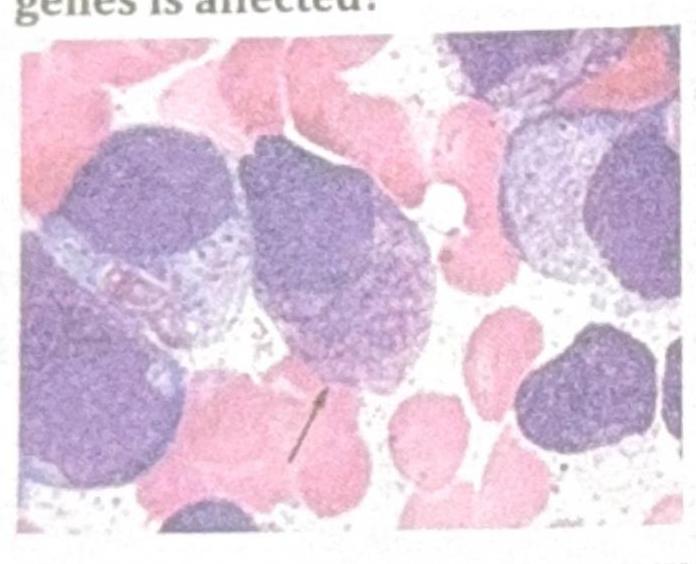
Identify the gene commonly involved in the condition shown in the image?
Which of these is not a part of extracellular matrix:
Most radio-resistant phase in the cell cycle:
Which of the following statements regarding mitochondrial DNA is FALSE?
Which organelle produces and destroys H2O2?
All the following features are seen in neurons from dorsal root ganglia, EXCEPT:
Explanation: ***Hydroxylation of proline occurs in Golgi apparatus*** - This statement is incorrect because the **hydroxylation of proline** residues occurs in the **endoplasmic reticulum** (ER), not the Golgi apparatus. - This step is critical for forming stable **triple helix** structures of collagen and requires **vitamin C**. *Synthesized in ribosomes as preprocollagen* - This statement is correct. Collagen synthesis begins in the cytoplasm, where mRNA is translated by **ribosomes** into **preprocollagen**, which contains a signal peptide. - The signal peptide directs the nascent polypeptide chain into the lumen of the **endoplasmic reticulum**. *Hydroxylation of lysine occurs in ER* - This statement is correct. Following entry into the ER, specific **lysine** residues are hydroxylated by **lysyl hydroxylase** to form hydroxylysine. - This hydroxylation, along with that of proline, is crucial for **cross-linking** and stability of the collagen molecule. *Triple helix assembly occurs in ER* - This statement is correct. After hydroxylation and glycosylation of some residues, three procollagen alpha chains self-assemble to form a **triple helix** within the **endoplasmic reticulum**. - This assembly is stabilized by **disulfide bonds** at the C-terminal ends and molecular chaperones.
Explanation: ***E-Cadherin*** - E-Cadherin is a **cell adhesion molecule** that plays a crucial role in maintaining the structure of tissues by promoting **cell-to-cell adhesion** [1]. - It is mainly involved in the **adherens junctions**, helping cells stick together, especially in epithelial tissues. *Matrix metallo proteinase* - Matrix metallo proteinases (MMPs) are enzymes that degrade **extracellular matrix** components, rather than promoting adhesion between cells. - They are involved in **tissue remodeling** and **wound healing**, not in direct cell-to-cell interactions. *Interleukins* - Interleukins are a group of **cytokines** that mediate **immune responses**, but they do not facilitate direct cell adhesion. - Their primary function involves **cell signaling** and communication, rather than adhesion processes. *Interferons* - Interferons are signaling proteins involved in the **immune defense against viral infections** and do not have a role in cell-to-cell adhesion. - They primarily act to induce an **antiviral state** in neighboring cells and modulate the immune response. **References:** [1] Kumar V, Abbas AK, et al.. Robbins and Cotran Pathologic Basis of Disease. 9th ed. Neoplasia, pp. 314-315.
Explanation: ***Correct: Phospholipids*** - **Phospholipids** are the primary structural components of cell membranes, forming a **bilayer** due to their amphipathic nature. - The **hydrophilic heads** face the aqueous environment, while the **hydrophobic tails** form the core of the membrane. *Incorrect: Cholesterol* - **Cholesterol** is an important component of animal cell membranes, contributing to fluidity and stability, but it is not the **main structural component**. - It inserts between phospholipids, modulating membrane fluidity by preventing the tight packing of fatty acid tails at lower temperatures and hindering excessive movement at higher temperatures. *Incorrect: Cholesterol ester* - **Cholesterol esters** are storage forms of cholesterol and are primarily found in intracellular lipid droplets or associated with lipoproteins in the bloodstream. - They are generally too **hydrophobic** to be significant structural components within the phospholipid bilayer itself. *Incorrect: Triacyl glycerol* - **Triacylglycerols** (triglycerides) are the primary form of **energy storage** in cells, found in lipid droplets within the cytoplasm. - They are highly **hydrophobic** and do not form a structural part of the cell membrane bilayer.
Explanation: ***Passive diffusion*** - This is the **most common mechanism** for drug transport across biological membranes, especially for **lipid-soluble** drugs. - It occurs down a **concentration gradient** and does not require energy or carrier proteins. *Facilitated diffusion* - This process requires **carrier proteins** to move drugs across membranes, but it still occurs down a **concentration gradient** and does not consume energy directly. - It handles substances that are **too large or too polar** to cross by passive diffusion, but it is not the primary mechanism for most drugs. *Active transport* - This mechanism uses **carrier proteins** and **expends energy (ATP)** to move drugs against their **concentration gradient**. - It is important for the transport of specific drugs, but it is not the predominant mode for the majority of drug molecules. *Endocytosis* - This involves the **engulfment of large molecules** or particles by the cell membrane, forming vesicles. - It is a less common mechanism for drug absorption, primarily used for **very large molecules** like proteins or nanoparticles.
Explanation: ***BRAF V600E*** - The image displays cells with **Langerhans cell morphology**, including folded nuclei and abundant pale cytoplasm, which are characteristic of **Langerhans cell histiocytosis (LCH)** [1]. - The **BRAF V600E mutation** is the most common genetic alteration found in LCH, present in about 50-60% of cases and activating the MAPK pathway [1]. *RAS* - **RAS mutations** are frequently seen in various cancers, including colorectal adenocarcinoma, pancreatic adenocarcinoma, and non-small cell lung cancer. - While RAS pathway activation can occur in LCH, a direct RAS mutation is not the most common genetic driver; rather, downstream effectors like BRAF V600E are more prominent [1]. *RET* - **RET mutations** are primarily associated with **medullary thyroid carcinoma** (in both sporadic and inherited forms like MEN 2A and MEN 2B) and can also be found in certain types of lung cancer. - They are not a characteristic genetic alteration for Langerhans cell histiocytosis. *P53* - The **TP53 gene** encodes the tumor suppressor protein p53, and mutations in this gene are among the most frequent genetic alterations across a wide spectrum of human cancers. - Although p53 plays a critical role in cell cycle regulation and apoptosis, it is not a primary or common driver mutation specifically associated with Langerhans cell histiocytosis [1]. **References:** [1] Kumar V, Abbas AK, et al.. Robbins and Cotran Pathologic Basis of Disease. 9th ed. Diseases of White Blood Cells, Lymph Nodes, Spleen, and Thymus, pp. 629-630.
Explanation: ***Integrins*** - Integrins are **transmembrane receptors** on the cell surface that facilitate cell-extracellular matrix (ECM) adhesion and cell-cell adhesion. - They are part of the cell membrane, **not** an extracellular component. *Laminin* - **Laminin** is a major protein component of the **basal lamina**, a specialized extracellular matrix that underlies epithelial cells. - It plays a crucial role in cell adhesion, differentiation, and migration within the ECM. *Fibronectin* - **Fibronectin** is a large glycoprotein present in the **extracellular matrix** and in soluble form in blood plasma. - It mediates cell adhesion to the ECM by binding to integrins and various ECM components like collagen and proteoglycans. *Collagen* - **Collagen** is the most abundant protein in the human body and a primary structural component of the **extracellular matrix**. - It provides tensile strength and structural integrity to tissues like skin, bone, tendons, and cartilage.
Explanation: ***Late S*** - The **late S phase** is the **most radio-resistant phase** of the cell cycle due to high levels of DNA repair enzymes and mechanisms active during this period. - During late S phase, chromatin is **tightly packed** and DNA synthesis is accompanied by robust **homologous recombination repair** capacity, making cells less vulnerable to radiation-induced damage. - This is a well-established principle in radiobiology, with cells in late S showing **2-3 times more resistance** compared to G2/M phases. *Early S* - While S phase overall is relatively radio-resistant, **early S is less resistant than late S** because repair mechanisms are not yet fully upregulated. - DNA replication has just begun, and the cell has moderate levels of repair enzymes compared to late S phase. *G1* - Cells in G1 phase have **moderate radio-sensitivity**, more sensitive than S phase but less sensitive than G2/M phases. - While cells have time for repair in G1, they lack the enhanced repair enzyme levels present during S phase. - G1 cells are in an **active metabolic state** preparing for DNA synthesis. *G2* - G2 phase is one of the **most radio-sensitive phases** along with mitosis (M phase). - Cells have **duplicated DNA** (4n content) and are preparing for division, making them highly vulnerable to radiation damage. - Any unrepaired DNA damage will be transmitted to both daughter cells during the upcoming mitosis.
Explanation: ***All respiratory proteins are synthesized within the mitochondria.*** - While mitochondrial DNA (mtDNA) encodes some proteins essential for the **electron transport chain** (respiratory proteins), not all respiratory proteins are synthesized within the mitochondria. - Many crucial respiratory proteins are encoded by **nuclear DNA** and imported into the mitochondria from the cytoplasm. *Double stranded* - **Mitochondrial DNA (mtDNA)** is a **double-stranded**, circular molecule, similar to bacterial chromosomes. - This structure provides stability and allows for efficient replication within the organelle. *Inherited from mother* - Mitochondria and their DNA are exclusively inherited from the **mother** during fertilization, as sperm primarily contributes nuclear DNA. - This **maternal inheritance pattern** is a key feature of mtDNA and is used in tracing ancestry. *High mutation rate* - mtDNA has a significantly **higher mutation rate** compared to nuclear DNA due to several factors, including lack of robust repair mechanisms and exposure to reactive oxygen species. - This contributes to the rapid evolution of mtDNA and its use in **population genetics** studies.
Explanation: ***Peroxisome*** - **Peroxisomes** are involved in metabolic processes, including **fatty acid oxidation**, which produces **hydrogen peroxide (H2O2)** as a byproduct. - They also contain the enzyme **catalase**, which breaks down the toxic H2O2 into water and oxygen, thus both producing and destroying it. *Lysosome* - **Lysosomes** are responsible for waste breakdown and cellular garbage disposal using **hydrolytic enzymes** in an acidic environment. - They are not primarily involved in the production or destruction of **H2O2**. *Ribosome* - **Ribosomes** are responsible for **protein synthesis** and are composed of ribosomal RNA and protein. - They do not play a role in the metabolism of **H2O2**. *Golgi body* - The **Golgi apparatus** modifies, sorts, and packages **proteins and lipids** for secretion or delivery to other organelles. - It is not associated with the production or breakdown of **H2O2**.
Explanation: ***They are multipolar*** - Dorsal root ganglia (DRG) neurons are typically **pseudounipolar**, meaning they have a single process that branches into two (peripheral and central) rather than multiple dendrites and an axon [1]. - **Multipolar neurons** are characteristic of motor neurons and interneurons in the central nervous system, not DRG sensory neurons [1]. *They contain lipofuscin granules* - **Lipofuscin granules** are common in long-lived, post-mitotic cells like neurons and are considered "wear and tear" pigments, accumulating with age. - Their presence in DRG neurons is a normal finding and reflects the neuron's metabolic activity over time. *They have eccentrically located nuclei* - While not universally present in all DRG neurons, an **eccentrically located nucleus** is a common histological feature of certain types of DRG neurons, particularly larger ones. - This feature helps distinguish them from other neuron types and can be accentuated by the large amount of cytoplasm in these cells. *They are derived from neural crest cells* - All sensory neurons of the DRG, along with other components like Schwann cells and sympathetic ganglia, originate from **neural crest cells**. - This developmental origin is a fundamental characteristic of DRG neurons, distinguishing them from CNS neurons derived from the neural tube.
Get full access to all questions, explanations, and performance tracking.
Start For Free