
Anatomical Aspects of Exercise Physiology — MCQs

Golgi tendon organ function is?
Arrange the following parts of sarcomere from periphery to center. 1. Z line 2. M line 3. A band 4. H zone
During heavy exercise the cardiac output (CO) increases up to five fold while pulmonary arterial pressure rises very little. This physiological ability of the pulmonary circulation is best explained by
During exercise in physiological limits, what is the effect on end systolic volume?
Least useful for a 800-m run in a competitive event would be
During a 100 m sprint which of the following is used by the muscle for meeting energy demands?
What is a key difference between smooth muscle and skeletal muscle physiology?
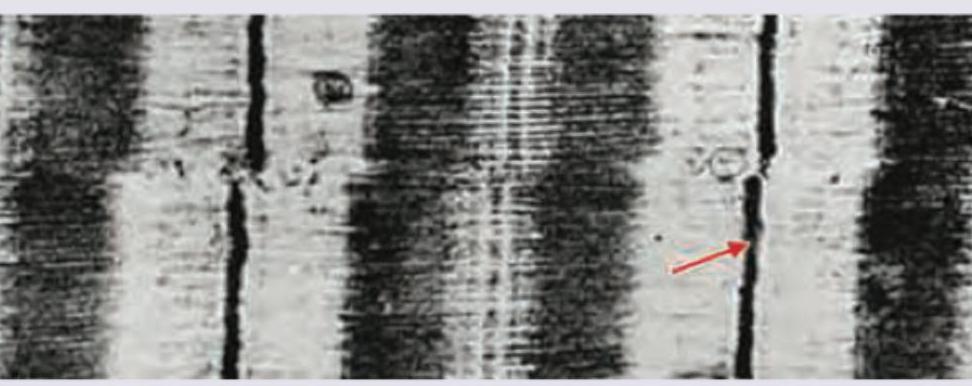
Which of the following is the constituent of the marked area in the given electron microscope picture of the muscle?
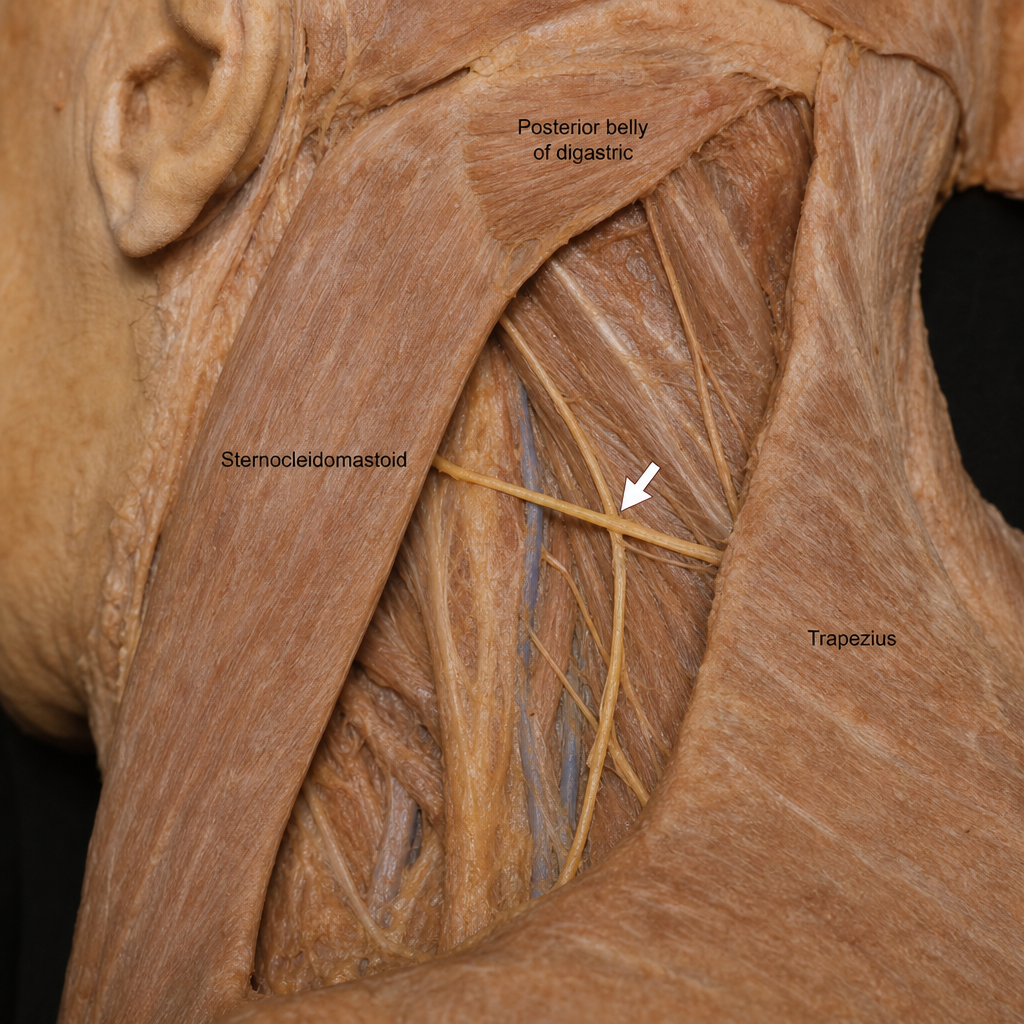
A 28-year-old woman undergoes excision of an enlarged lymph node in the posterior triangle of the neck. Two weeks post-operatively she is unable to shrug her left shoulder. Nerve conduction studies confirm injury to the arrowed nerve (Image 1) as well as a separate injury to the long thoracic nerve, accounting for a newly noted winged scapula on the ipsilateral side. Which of the following best explains why TWO distinct nerve injuries are required to account for both motor deficits observed in this patient?
When forces are applied on the lateral surface of the mandibular angle region, compression is generated on:
Want unlimited practice?
Get full access to all questions, explanations, and performance tracking.
Scan to download app