What is the fastest acting receptor/transduction mechanism?
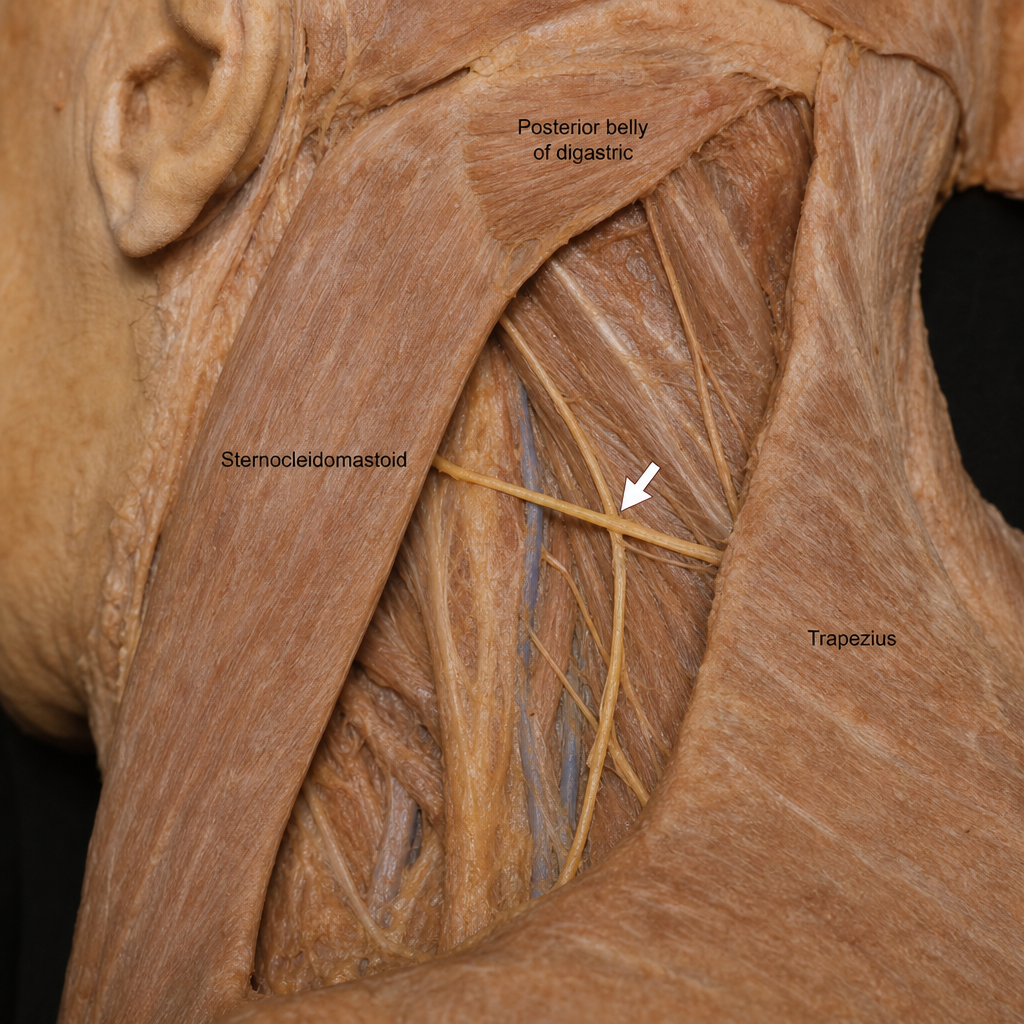
Which of the following nerves supplies the muscle that is involved in the moment given below?
Name the muscles being used in climbing a tree as shown in the figure.

What is the action of the muscle marked in the given image?

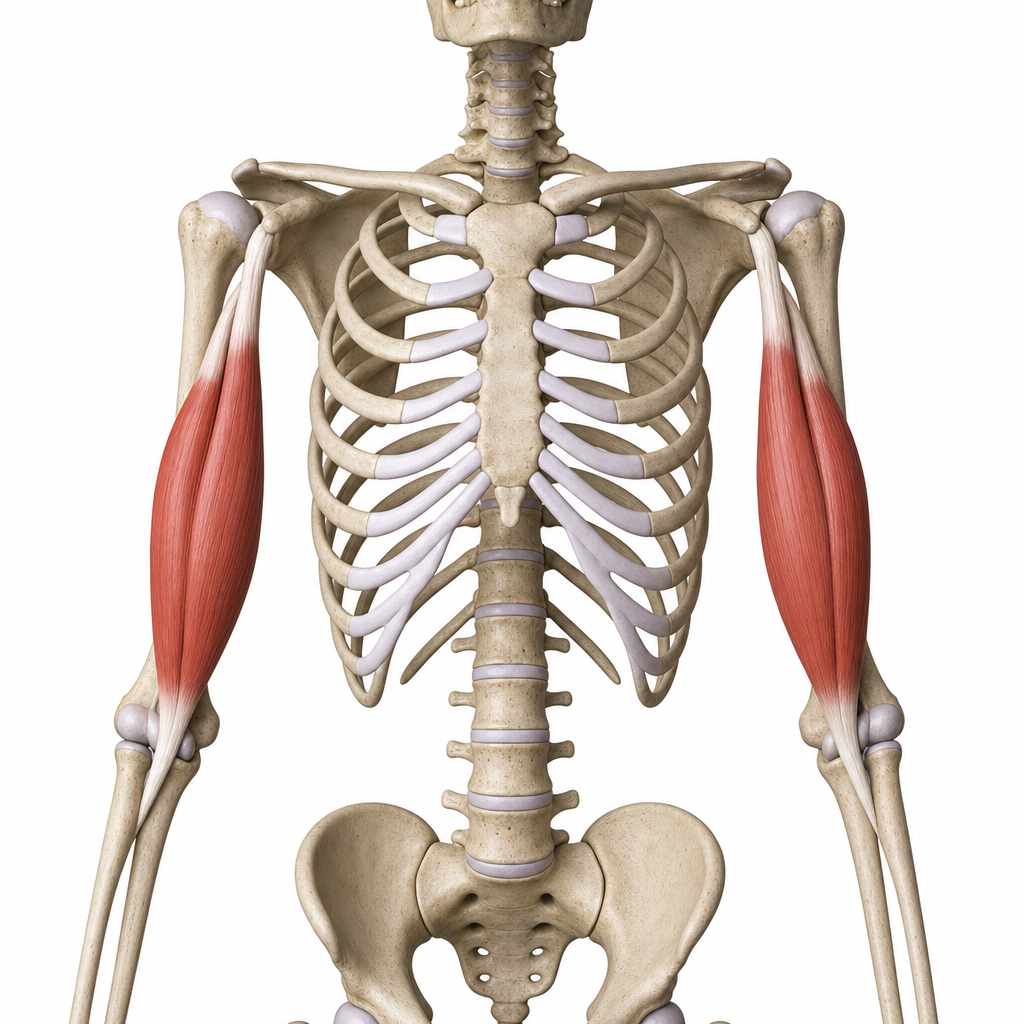
What is the action of the muscle shown in the image below?

Which of the following is the safety muscle of tongue?
Which of the following muscles causes the forward movement of the condyle in the mandibular fossa?
When forces are applied on the lateral surface of the mandibular angle region, compression is generated on:
Which muscle helps in climbing a tree?
Muscles involved in centric relation
Explanation: **Explanation:** The speed of a receptor's response is determined by the number of biochemical steps involved between ligand binding and the final physiological effect. **Why Option C is Correct:** **Intrinsic ion channel operation** (also known as **Ionotropic receptors**) represents the fastest transduction mechanism. In these receptors (e.g., Nicotinic ACh receptors, GABA-A receptors), the receptor itself is an ion channel. Upon ligand binding, the channel undergoes an immediate conformational change to allow ion flow [1]. This process occurs within **milliseconds**, making it ideal for rapid neurotransmission and muscle contraction. **Why the other options are incorrect:** * **Options A & B (G-Protein Coupled Receptors - GPCRs):** These utilize the Adenylyl cyclase and Phospholipase C pathways. They are slower because they require a "middleman" (G-proteins) and the generation of second messengers (cAMP, IP3, DAG). Their response time is typically in **seconds**. * **Option D (Nuclear Receptors):** These are the slowest. They involve ligand transport into the nucleus, binding to DNA, and subsequent gene transcription and protein synthesis. This process takes **hours to days**. **NEET-PG High-Yield Pearls:** * **Fastest to Slowest Sequence:** Ionotropic (ms) > Metabotropic/GPCR (seconds) > Enzyme-linked (minutes) > Nuclear receptors (hours/days). * **Classic Example:** The **Nicotinic ACh receptor** at the neuromuscular junction is the prototype for rapid ionotropic signaling. * **Clinical Correlation:** Rapid-acting drugs often target ion channels (e.g., local anesthetics blocking Na+ channels), whereas drugs with delayed onset (e.g., Steroids, Thyroxine) act via nuclear receptors.
Explanation: ***A. Spinal accessory nerve*** - This nerve provides motor innervation to the **Trapezius muscle**, which is responsible for elevation (shrugging) and retraction/rotation of the scapula, allowing the movement described. - It also innervates the **Sternocleidomastoid muscle**, which is crucial for turning the head to the opposite side and neck flexion. *B. Long thoracic nerve* - The long thoracic nerve supplies the **Serratus anterior** muscle, which protracts the scapula and stabilizes it against the chest wall. - Damage to this nerve results in **winged scapula**, particularly noticeable when pushing against a wall. *C. Axillary nerve* - The **Axillary nerve** primarily supplies the **Deltoid** (responsible for shoulder abduction after the initial 15 degrees) and the **Teres minor** muscles. - Impairment typically involves difficulty initiating or maintaining shoulder abduction and loss of sensation over the **regimental badge area**. *D. Radial nerve* - The radial nerve is the nerve of the posterior compartment of the arm, supplying all the **extensor muscles** of the upper limb. - It is vital for elbow extension via the **Triceps** and extension of the wrist and fingers, not the primary nerve for scapular movement.
Explanation: ***Latissimus dorsi and pectoralis major*** - The **latissimus dorsi** is a large, powerful muscle responsible for adduction, extension, and internal rotation of the arm, all crucial for pulling the body upward during climbing. - The **pectoralis major** is a large, fan-shaped muscle that helps with adduction, flexion, and internal rotation of the humerus, also vital for pulling oneself up against gravity. *Teres major and pectoralis major* - While the **pectoralis major** is involved, the **teres major** is a smaller muscle that primarily assists the latissimus dorsi in extension, adduction, and internal rotation of the humerus, but is not as dominant in the main pulling action as the latissimus dorsi. - The primary pulling force comes from larger muscles, making the teres major a less significant contributor to the overall climbing action. *Teres minor and pectoralis minor* - The **teres minor** is part of the rotator cuff and primarily functions in external rotation of the humerus, which is not a primary movement for pulling oneself up. - The **pectoralis minor** is a small, thin muscle that stabilizes the scapula and depresses the shoulder; it does not directly contribute to the powerful pulling action needed for climbing. *External oblique and pectoralis major* - The **external oblique** is an abdominal muscle involved in trunk rotation and flexion, providing core stability but not directly contributing to the primary upper body pulling motion for climbing. - While the **pectoralis major** is correctly identified, the external oblique is not a primary muscle used for the upward pulling motion in climbing.
Explanation: ***Elevation*** - The image shows a coronal section of the head, and the arrow points to the **temporalis muscle**, which is one of the primary muscles of mastication. - The main action of the temporalis muscle is to **elevate the mandible**, closing the mouth. - The **anterior and middle fibers** particularly produce elevation. *Depression* - Depression of the mandible is primarily performed by the **lateral pterygoid muscle** and the suprahyoid muscles (e.g., digastric, geniohyoid). - The temporalis muscle's fiber orientation is not consistent with mandibular depression. *Protraction* - **Protraction** (protrusion) of the mandible is primarily carried out by the **lateral pterygoid muscles** (bilateral contraction). - The temporalis muscle does not contribute significantly to protraction. *Retraction* - **Retraction** of the mandible is indeed performed by the **posterior fibers of the temporalis muscle**. - However, since the question asks about the action of the muscle as shown in the image (likely showing the entire muscle or its anterior portion), and the **primary and most prominent action** of the temporalis as a whole is **elevation**, this is the best answer.
Explanation: ***Retracts the scapula*** - The image highlights the **rhomboid major** muscle, which originates from the spinous processes of T2-T5 vertebrae and inserts onto the medial border of the scapula. - Its primary action is to **retract** (pull medially) and rotate the scapula inferiorly, and also to help hold the scapula against the thoracic wall. *Medial rotation of the shoulder* - Medial rotation of the shoulder is primarily performed by muscles like the **subscapularis**, **pectoralis major**, **latissimus dorsi**, and **teres major**. - The rhomboids do not directly act on the glenohumeral joint for shoulder rotation. *Adduction of the shoulder* - Adduction of the shoulder (bringing the arm towards the body) is mainly performed by the **latissimus dorsi**, **pectoralis major**, and **teres major**. - The rhomboids' action on the scapula indirectly influences shoulder movement but does not directly adduct the shoulder joint. *Extension of the shoulder* - Shoulder extension is primarily achieved by the **latissimus dorsi**, **teres major**, and the posterior fibers of the **deltoid**. - The rhomboid major muscle's action focuses solely on the scapula, not direct extension of the shoulder joint.
Explanation: ***Genioglossus*** - The **genioglossus muscle** is considered the safety muscle of the tongue because its contraction pulls the tongue forward, preventing it from falling backward and **obstructing the airway**, especially during sleep or in an unconscious state. - Its forward action is crucial in maintaining a **patent airway** [1]. *Hyoglossus* - The **hyoglossus muscle** depresses and retracts the tongue. - Its primary action is not to prevent airway obstruction, but rather for **tongue movement** during speech and swallowing. *Styloglossus* - The **styloglossus muscle** retracts and elevates the tongue. - It helps in shaping the tongue for **swallowing and speech**, but does not have a primary role in airway patency. *Palatoglossus* - The **palatoglossus muscle** elevates the posterior part of the tongue and depresses the soft palate. - It is involved in initiating **swallowing** and separating the oral cavity from the pharynx, not in preventing airway collapse.
Explanation: ***Lateral pterygoid*** - The **lateral pterygoid muscle** (especially its inferior head) is primarily responsible for **protrusion (forward movement)** of the mandible, causing the condyle to slide anteriorly along the articular eminence in the temporomandibular joint. - Its superior head stabilizes the **articular disc** during jaw movements, while the inferior head produces the forward translation. *Masseter* - The **masseter muscle** is a powerful muscle of mastication primarily involved in **elevation (closing)** of the mandible. - While it can assist slightly in protrusion when both sides contract, it does not produce the forward gliding movement of the condyle. *Medial pterygoid* - The **medial pterygoid muscle** primarily functions in **elevating** the mandible and assists in **protrusion** and grinding movements. - While it contributes to protrusion, the **lateral pterygoid** is the primary muscle responsible for the forward movement of the condyle. *Temporalis* - The **temporalis muscle** is a strong elevator of the mandible and its posterior fibers act as a **retractor**, pulling the mandible backward. - It opposes forward movement and is responsible for retrusion, not protrusion of the condyle.
Explanation: ***Lateral surface*** - When a force is applied to the **lateral surface** of the mandibular angle, this is the **point of direct impact and compression**. - According to **biomechanical principles**, compression occurs at the site where external force is applied to bone [1]. - In bending mechanics, the side receiving the load experiences **compressive stress**, while the opposite side experiences tensile stress [1]. - This principle is fundamental in understanding **mandibular fracture patterns** and surgical plating techniques. *Medial surface* - The medial surface, being **opposite to the point of force application**, experiences **tensile (tension) forces**, not compression [1]. - In beam bending theory, when one side is compressed, the opposite side is under tension [1]. - This is why fracture lines in the mandible often propagate from the tension side (medial) when lateral forces are applied. *Inferior surface* - The inferior border of the mandible is classically described as the **tension side during mastication and functional loading**, not lateral impact forces. - When lateral forces are applied to the angle, the inferior surface experiences complex stress patterns but is not the primary site of compression. - The inferior border-superior border axis is different from the lateral-medial force axis described in this question. *Superior surface* - The superior (alveolar) border typically experiences **compression during mastication**, but this relates to occlusal forces, not lateral impact. - For lateral forces applied to the mandibular angle, the superior surface does not experience primary compression. - This surface is more relevant for bite forces and dental occlusion mechanics.
Explanation: ***Latissimus Dorsi*** - The **latissimus dorsi** is a large, powerful muscle responsible for **adduction, extension, and internal rotation** of the shoulder joint, all actions crucial for pulling the body upward during climbing. [1] - Its broad attachment helps stabilize the torso and provides the necessary force for **pulling and gripping** movements involved in tree climbing. *Trapezius* - The **trapezius** primarily functions in **shrugging the shoulders**, retracting the scapula, and rotating the head and neck. - While it contributes to overall upper body strength, its main actions are not directly involved in the powerful **pulling motion** required for climbing. *Rhomboideus* - The **rhomboids (major and minor)** primarily act to **retract (pull back) and rotate the scapula** downwards. - These actions are important for stabilizing the shoulder blade but are not the primary movers for the **vertical pulling** associated with climbing. *Levator scapulae* - The **levator scapulae** elevates the scapula and can assist in rotating the neck. - While it contributes to shoulder girdle movement, it does not provide the significant **pulling force** needed to lift the body during climbing.
Explanation: ***Temporalis & masseter*** - The **temporalis** and **masseter** muscles are primary elevators of the mandible and play a significant role in forcefully seating the condyles into their most **superior-anterior position** against the articular eminences, which defines **centric relation**. - These muscles contribute to the controlled **retraction** and **elevation** required to achieve a stable and reproducible condylar position in the glenoid fossa. *Medial and lateral pterygoids* - The **lateral pterygoid muscle** is primarily responsible for **protrusion** and **depression** of the mandible, as well as initiating lateral movements, which are movements away from centric relation. - The **medial pterygoid muscle** also aids in **protrusion** and **elevation**, but its primary action is to assist in **side-to-side movements** with the lateral pterygoid. *Temporalis and lateral pterygoid* - While the **temporalis** is critical for achieving centric relation by elevating and retracting the mandible, the **lateral pterygoid** muscle's primary actions of **protrusion** and depression work against establishing centered condylar position. - The combined action of these two muscles in this context would make it difficult to achieve or maintain the **retruded, superior-anterior position** of the condyles characteristic of centric relation. *None of the options* - This option is incorrect because the **temporalis** and **masseter** muscles are indeed directly involved in establishing and maintaining centric relation. - These muscles, through their **elevating** and **retracting** actions, seat the condyles in their most stable and reproducible position within the glenoid fossae.
Explanation: ***Lateral flexion*** - **Lateral flexion** (side bending) is the most characteristic movement of the lumbar spine among the given options. - This movement is primarily facilitated by the **frontal plane orientation of the facet joints** in the lumbar region. - The lumbar spine allows approximately **20-30 degrees of lateral flexion** to each side. - The structure of the intervertebral discs and facet joint orientation in the lumbar region particularly favor this movement. *Rotation* - **Rotation** is the LEAST characteristic movement of the lumbar spine. - The lumbar facet joints are oriented in the **sagittal plane**, which significantly **restricts rotational movement**. - The lumbar spine allows only about **5 degrees of rotation**, much less than the thoracic or cervical regions. - Most trunk rotation actually occurs at the thoracic spine, not the lumbar region. *Circumduction* - **Circumduction** is a combined, sequential movement (flexion → lateral flexion → extension → lateral flexion) typically seen in ball-and-socket joints. - While the spine can perform these individual movements, circumduction is not considered a characteristic or distinct movement of intervertebral joints. - This term is more applicable to joints like the shoulder and hip. *Extension* - **Extension** (backward bending) is certainly possible and important in the lumbar spine. - However, it is not the MOST characteristic movement—the lumbar spine allows approximately **20-25 degrees of extension**. [1] - Flexion (forward bending, 40-60 degrees) and lateral flexion are more prominent movements in the lumbar region during functional activities.
Explanation: ***Forearm supination*** - The **long head of the biceps brachii** is the **most powerful supinator** of the forearm, especially when the elbow is flexed. - The biceps has a **longer moment arm** for supination compared to the supinator muscle, making it biomechanically more effective. - Severing its tendon results in **significant weakness (20-30% loss)** in supination strength, particularly during resisted supination. - While the **supinator muscle** can still perform this action, it is considerably weaker and cannot fully compensate. *Elbow flexion* - Although the biceps contributes to elbow flexion, the **brachialis** is the primary elbow flexor (the "workhorse" of elbow flexion). - The **brachioradialis** also assists significantly. - Loss of the long head of biceps results in only **5-10% loss** of elbow flexion strength, as other muscles compensate effectively. *Shoulder abduction* - **Shoulder abduction** is primarily performed by the **deltoid** and **supraspinatus** muscles. - The biceps brachii is not a primary mover for shoulder abduction. *Wrist extension* - **Wrist extension** is controlled by muscles in the posterior compartment of the forearm, such as the **extensor carpi radialis longus** and **brevis**, and **extensor carpi ulnaris**. - The biceps brachii has no direct action on the wrist.
Explanation: ***Assists in elbow extension*** - The **anconeus muscle** is a small muscle located on the posterior aspect of the **elbow joint**. - Its primary role is to assist the **triceps brachii** in **elbow extension** and to stabilize the elbow joint during pronation. - It acts as an **accessory extensor** and also tenses the capsule of the elbow joint to prevent it from being pinched during extension. *Wrist extension* - **Wrist extension** is primarily performed by muscles originating from the lateral epicondyle of the humerus, such as the **extensor carpi radialis longus and brevis** and **extensor carpi ulnaris** [1]. - The anconeus muscle is not involved in wrist movements. *Thumb abduction* - **Thumb abduction** is the movement of the thumb away from the palm, controlled by muscles like the **abductor pollicis longus** and **abductor pollicis brevis** [1]. - The anconeus muscle has no role in thumb movements. *Elbow flexion* - **Elbow flexion** is performed by anterior compartment muscles including the **biceps brachii**, **brachialis**, and **brachioradialis**. - The anconeus is located in the **posterior compartment** and produces the opposite action (extension), not flexion.
Explanation: ***Vastus medialis*** - The **vastus medialis obliquus (VMO)** fibers pull the patella medially, counteracting the natural lateral pull exerted by the quadriceps femoris. - Its strength and proper activation are crucial in maintaining **patellar tracking** and preventing lateral subluxation or dislocation. *Rectus femoris* - The **rectus femoris** primarily acts as a hip flexor and knee extensor, with its pull being largely in the superior-inferior direction. - While it contributes to knee extension, its role in **medial stabilization** of the patella is minimal. *Vastus intermedius* - The **vastus intermedius** lies deep to the rectus femoris and primarily contributes to knee extension. - Its fibers run predominantly in the superior-inferior direction, offering little direct lateral-to-medial pull on the patella for stability. *Vastus lateralis* - The **vastus lateralis** pulls the patella in a superior and lateral direction, increasing the tendency for **lateral patellar dislocation**. - An imbalance where the vastus lateralis is significantly stronger or more active than the vastus medialis often contributes to patellar instability.
Explanation: ***Has no nerve supply*** - Articular cartilage is **aneural**, meaning it lacks nerve endings, which is why damage to it doesn't immediately cause pain until underlying bone or surrounding tissues are affected [1]. - Its aneural nature contributes to its low metabolic activity and limited capacity for repair. *Very vascular structure* - Articular cartilage is **avascular**, meaning it lacks a direct blood supply [1]. - It receives nutrients primarily through diffusion from the synovial fluid [1]. *Surrounded by thick perichondrium* - Articular cartilage is typically **not covered by a perichondrium**, unlike most other types of cartilage. - The absence of perichondrium prevents potential ossification of the articular surface. *Fibrocartilage* - Articular cartilage is primarily composed of **hyaline cartilage**, not fibrocartilage [1]. - **Hyaline cartilage** provides a smooth, low-friction surface for joint movement and acts as a shock absorber [1].
Explanation: ***Left Inferior Oblique*** - Yoke muscles are pairs of synergistic muscles, one in each eye, that act together to produce conjugate eye movements in the same direction of gaze. - The **right superior rectus** and **left inferior oblique** are yoke muscles that work together during **upward and rightward gaze** (dextro-elevation) [1]. - Right SR elevates the **adducted** right eye, while left IO elevates the **abducted** left eye, producing coordinated upward-right movement [1]. - This follows **Hering's Law of Equal Innervation**, where yoke muscles receive equal and simultaneous innervation. *Left Superior rectus* - The left superior rectus is the **contralateral homologous muscle**, not a yoke muscle for the right superior rectus. - Both superior recti work together for **upward gaze in primary position**, but they are versional muscles, not yoke pairs. - Yoke muscles produce conjugate movements in oblique directions, not straight up. *Left Inferior rectus* - The left inferior rectus depresses the left eye and is an antagonist to elevation. - It would pair with the **right superior oblique** for downward-left gaze (levo-depression), not with the right superior rectus. *Left Lateral Rectus* - The left lateral rectus is responsible for **abduction** of the left eye (leftward gaze). - Its yoke muscle is the **right medial rectus** for leftward horizontal gaze (levoversion), not for upward-right gaze.
Explanation: ***Orbicularis oculi*** - This muscle is responsible for **closing the eyelid** and is essential for actions like blinking, squinting, and winking. - Its fibers encircle the eye and facilitate the **controlled closure** required for winking. *Levator labii superioris* - This muscle primarily functions to **elevate the upper lip**, playing a role in facial expressions such as sneering or smiling. - It has no direct involvement in the movement of the eyelids or the act of winking. *Corrugator supercilii* - This muscle is located in the eyebrow region and is responsible for **drawing the eyebrows medially and inferiorly**, creating vertical wrinkles between the eyebrows. - It is associated with expressions of frowning or concern, not eyelid closure. *Levator palpebrae* - This muscle is responsible for **opening the upper eyelid**, thus counteracting the action of the orbicularis oculi. - While essential for eye movement, it is not involved in the closing action required for winking.
Explanation: ***Supinator*** - The **supinator muscle** is the **primary muscle** responsible for **supination** of the forearm, rotating the palm anteriorly or superiorly. - It is a deep muscle of the **posterior compartment** of the forearm. - Its action is especially prominent when **supinating against resistance** or in very slow movements, as it works synergistically with the biceps brachii. *Biceps brachii* - While the **biceps brachii** is also a powerful **supinator** of the forearm, especially when the elbow is flexed, it is a **secondary supinator**. - It is primarily a major **flexor** of the elbow, whereas the supinator is dedicated specifically to supination. *Brachioradialis* - The **brachioradialis** is primarily a **flexor** of the forearm at the elbow joint. - It helps to bring the forearm into a **mid-prone or mid-supine position** from either full pronation or full supination, but does not actively supinate. *Anconeus* - The **anconeus** is a small muscle that assists the **triceps brachii** in **extension of the forearm** at the elbow. - It helps to **stabilize the elbow joint** and slightly abducts the ulna during pronation, but has no role in supination.
Explanation: ***Hyaline cartilage covers the articular surfaces of synovial joints.*** - The articular surfaces of bones within a **synovial joint** are covered by a thin layer of **hyaline cartilage**, providing a smooth, low-friction surface for movement [1]. - This **articular cartilage** absorbs shock and protects the underlying bone from wear and tear [1]. - This is a **universal structural characteristic** of all synovial joints, making it the most accurate answer. *The metacarpo-phalangeal joint is a condyloid joint.* - While this statement is factually true (MCP joints are indeed **condyloid/ellipsoid joints** allowing movement in two planes), it describes a **specific type** of synovial joint, not a general characteristic of all synovial joints. - The question asks for a characteristic that describes synovial joints as a category, not an example of one specific joint classification. - This makes it incorrect as the best answer to this question. *Cartilage can sometimes divide the joint into two cavities.* - This statement refers to an **articular disc** or **meniscus**, which is a fibrocartilaginous structure that can partially or completely divide a synovial joint cavity. - This feature is present in **some** synovial joints (like the knee or temporomandibular joint) but is **not universal**. - Since it's not a characteristic of all synovial joints, it's not the best answer. *Stability is inversely proportional to mobility in synovial joints.* - Generally, there is an **inverse relationship** between **stability** and **mobility** in joints; joints designed for great mobility (e.g., shoulder) tend to be less stable, and vice-versa (e.g., hip). - However, this describes a **functional principle** or trade-off rather than a **structural characteristic** that defines synovial joints. - While true, it's not the defining characteristic being asked for in this question.
Explanation: The original text does not contain any relevant citations from the provided reference set to include. ***Posterior fibers of temporalis*** - The posterior fibers of the **temporalis muscle** are primarily responsible for **retrusion of the mandible**, pulling it backward. - This action is particularly effective when the mouth is closed, as the muscle's pull retracts the condyle into the glenoid fossa. *Anterior belly of digastric* - The anterior belly of the **digastric muscle** is mainly involved in **depressing the mandible** (opening the mouth) and elevating the hyoid bone. - It does not directly contribute to the retrusion of the mandible. *Posterior belly of digastric* - The posterior belly of the **digastric muscle** functions to **elevate the hyoid bone** and assist in depressing the mandible when the hyoid is fixed. - It does not play a direct role in retracting the mandible. *Deep fibers of masseter* - The **masseter muscle**, including its deep fibers, is a powerful muscle of **mastication** primarily responsible for **elevating the mandible** (closing the mouth). - It also contributes to protraction and only minimally to retrusion, not as a primary mover.
Explanation: ***Quadratus femoris*** - The **tensor fasciae latae (TFL)** functions as a **hip flexor**, **abductor**, and **internal rotator**. - The **quadratus femoris** is a powerful **external rotator** of the hip, making it a direct antagonist to TFL's internal rotation action. - During typical TFL contraction, the quadratus femoris would be **inhibited** due to reciprocal innervation, making simultaneous contraction highly unlikely. - This is the **least likely** muscle to contract during TFL activation. *Gluteus medius* - Primary **hip abductor** with anterior fibers assisting in **internal rotation**. - Acts **synergistically** with TFL for both abduction and internal rotation. - **Commonly contracts** simultaneously with TFL during gait and standing. *Obturator internus* - Primarily an **external rotator**, but also functions as a hip **stabilizer**. - Despite being an external rotator, it can contract with TFL in **complex stabilization movements** and postural adjustments. - Its stabilizing role makes simultaneous contraction **possible** in certain functional contexts. *Piriformis* - Functions as an **external rotator** and **abductor** when the hip is flexed. - Can act as a **hip stabilizer** and may contract with TFL during complex movements requiring fine motor control. - While primarily an antagonist, simultaneous contraction is **possible** for stabilization.
Explanation: ***Erector spinae*** - The **rectus abdominis** flexes the trunk, while the **erector spinae muscles** extend the trunk. [1] - This direct opposition in primary function makes the erector spinae the main antagonist to the rectus abdominis. *Psoas major* - The **psoas major** primarily functions as a **hip flexor** and contributes to lumbar stabilization. - While it has some action on the trunk, its main antagonistic relationship is with hip extensors, not primarily the rectus abdominis. *Latissimus dorsi* - The **latissimus dorsi** is a large muscle of the back that primarily extends, adducts, and internally rotates the arm. - It has a minimal direct antagonistic role to the rectus abdominis, which focuses on trunk flexion. *Quadratus lumborum* - The **quadratus lumborum** acts to laterally flex the trunk and stabilize the lumbar spine. - Its primary actions are distinct from the rectus abdominis's main function of trunk flexion, making it an antagonist for different movements, not directly for trunk flexion/extension.
Explanation: Abduction of the thigh is limited by: ***Pubofemoral ligaments*** - The **pubofemoral ligament** is positioned anteroinferiorly and becomes taut during **ADDUCTION** and **extension**, limiting these movements. - Note: This ligament primarily limits **adduction**, not abduction. Some sources suggest it may provide minimal limitation to abduction in certain hip positions, but its primary role is restricting adduction and extension. - This ligament prevents excessive adduction and extension at the **hip joint**, contributing to joint stability. *Ischiofemoral ligaments* - The **ischiofemoral ligament** is located posteriorly and becomes taut during **internal rotation** and **extension**, limiting these motions. - Its primary role is to restrict extreme movements in **internal rotation** and **hyperextension** of the hip. *Iliofemoral ligaments* - The **iliofemoral ligament** is the strongest ligament of the hip joint and is positioned anteriorly, limiting **extension** and **external rotation**. - The inferior/medial band can limit **adduction**, while the superior band limits extension. - It forms an inverted 'Y' shape, known as the **Y-ligament of Bigelow**, providing significant hip stability. *Sacroiliac ligament* - The **sacroiliac ligaments** connect the sacrum to the ilium, stabilizing the **sacroiliac joint**, not the hip joint. - These ligaments are crucial for maintaining the integrity of the **pelvic girdle** and supporting weight bearing. **Clinical Note:** Hip **abduction** is primarily limited by the adductor muscle group tension, inferior joint capsule, and bony contact with the acetabulum, rather than by specific ligamentous structures.
Explanation: ***Patella moves proximally in the trochlear groove*** - During **knee extension** from a flexed position, the quadriceps femoris muscle contracts, pulling the patella superiorly along the **trochlear groove** of the femur. - This proximal movement optimizes the **lever arm** of the quadriceps, enhancing efficiency of extension. *Patella moves distally in the trochlear groove* - The patella moves **distally (inferiorly)** during **knee flexion**, not extension, as it follows the femoral condyles and is pulled by gravity and the patellar ligament. - This distal movement brings the patella into a deeper part of the trochlear groove during flexion, which can lead to **increased patellofemoral contact pressure**. *Patella remains stationary* - The patella is a **sesamoid bone** embedded in the quadriceps tendon and patellar ligament, making it a dynamic structure that moves significantly with knee flexion and extension. - It acts as a **pulley** to change the direction of force in the quadriceps tendon, thus it cannot remain stationary during knee movement. *Patella moves posteriorly away from the femur* - The patella maintains close contact with the **femoral trochlear groove** throughout knee motion, gliding within it. - Moving posteriorly away from the femur would indicate **patellar subluxation or dislocation**, which is an abnormal event.
Explanation: ***Rotation*** - The **lumbar spine permits the LEAST rotation** of all movements (~5° total rotation), making this the correct answer. - The PRIMARY limiting factor is the **sagittal (near-vertical) orientation of the lumbar facet joints**, which are oriented in the coronal plane and face medially/laterally. - This facet orientation creates a **mechanical block to rotational movement**, acting like interlocking barriers. - The thick **intervertebral discs** in the lumbar region also resist torsional forces, further limiting rotation. *Flexion* - The lumbar region permits **excellent flexion** (forward bending), with approximately 50-60° of range. - The **large, wedge-shaped intervertebral discs** allow substantial anterior compression and movement. - This is one of the primary movements of the lumbar spine. *Extension* - **Extension** (backward bending) is moderately permitted in the lumbar spine, with approximately 15-20° of range. - Eventually limited by contact between **spinous processes** and the posterior ligamentous structures. - Still considerably more movement than rotation. *Lateral flexion* - **Lateral flexion** (sideways bending) is well permitted, with approximately 20° of movement to each side. - The structure of the vertebral bodies and **compressible intervertebral discs** allows good range of motion in the coronal plane. - Significantly more mobile than rotation.
Explanation: The original text cannot be accurately cited with the provided references because they do not contain specific information regarding the masseter muscle's anatomical fiber arrangement. ***Parallel arrangement with oblique fibers*** - The **masseter muscle** has a complex arrangement with **parallel fibers running in oblique directions**, which is the key to its strength and power. - The **superficial part** has fibers running **obliquely downward and backward**, while the **deep part** has fibers running more **vertically**. - This arrangement allows the muscle to generate **powerful biting force** by combining multiple fiber orientations, maximizing cross-sectional area and force production. - The masseter is sometimes classified as **multipennate** due to this complex architecture, but the fundamental arrangement is **parallel fibers with oblique orientation**. *Bipennate arrangement of fibers* - A **bipennate arrangement** (like the rectus femoris) has fibers approaching a central tendon from two sides like a feather. - While the masseter is powerful, its fiber arrangement is better described as **oblique parallel** or **multipennate** rather than strictly bipennate. - The masseter's two heads (superficial and deep) have different fiber orientations, which is not characteristic of a simple bipennate muscle. *Random arrangement of fibers* - Skeletal muscles require an **organized fiber arrangement** for effective force transmission. - A **random arrangement** would result in inefficient force generation and poor coordination of muscle contraction. *Circumpennate arrangement of fibers* - **Circumpennate** (or multipennate) arrangement has fibers converging from multiple directions to central tendons, as seen in the **deltoid muscle**. - While some sources describe the masseter as multipennate due to its complex architecture, the more precise anatomical description emphasizes its **parallel fibers with oblique orientation** in distinct superficial and deep parts.
Explanation: ***Serratus anterior*** - Paralysis or weakness of the **serratus anterior muscle**, innervated by the **long thoracic nerve**, causes winging of the scapula. - This muscle is responsible for **protraction and upward rotation of the scapula**, keeping it flat against the chest wall; without its function, the medial border of the scapula protrudes posteriorly. *Teres minor* - The **teres minor** is part of the rotator cuff and is involved in **external rotation** and **adduction of the arm**. - Its paralysis would primarily affect shoulder movement and stability, but not directly lead to **scapular winging**. *Deltoid* - The **deltoid muscle** is the primary muscle for **abduction of the arm** beyond the first 15 degrees. - Paralysis of the deltoid would result in significant difficulty lifting the arm, but it does not cause the **scapula to wing**. *Supraspinatus* - The **supraspinatus muscle** initiates **abduction of the arm** (first 15 degrees) and helps stabilize the shoulder joint. - Its paralysis would impair arm elevation but does not directly result in **scapular winging**.
Anatomical Basis of Movement
Practice Questions
Biomechanics of Joints
Practice Questions
Functional Anatomy of Respiratory System
Practice Questions
Functional Anatomy of Cardiovascular System
Practice Questions
Functional Anatomy of Digestive System
Practice Questions
Functional Anatomy of Urinary System
Practice Questions
Functional Anatomy of Reproductive System
Practice Questions
Neuroanatomical Basis of Functions
Practice Questions
Functional Correlations in Clinical Practice
Practice Questions
Anatomical Aspects of Exercise Physiology
Practice Questions
Get full access to all questions, explanations, and performance tracking.
Start For Free