The main pancreatic duct is derived from which embryonic structures?
If a zygote divides on the 5th day after fertilization, what type of twinning occurs?
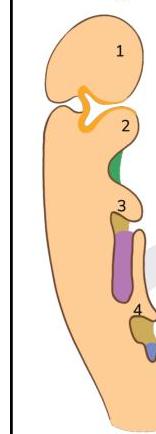
Parafollicular 'C' cells develop from:
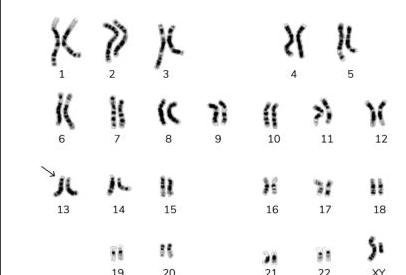
Which type of chromosome has its centromere close to one end, resulting in a very short arm?
At which week do germ cells appear in the yolk sac?
Which of the following statements about tongue epithelium is NOT true?
What structure develops from the cranial end of the Wolffian duct?
Which of the following structures develops from the ventral part of the ventral mesentery of the stomach?
The three germ cell layers in the embryo separate by which process?
The Y-chromosome is which type of chromosome based on centromere position?
Explanation: ### Explanation The pancreas develops from two outgrowths of the endodermal lining of the duodenum: the **dorsal pancreatic bud** and the **ventral pancreatic bud** [1]. **Why Option A is Correct:** During the 7th week of development, the ventral bud rotates posteriorly around the duodenum to fuse with the dorsal bud. The ductal systems of these two buds then undergo a specific pattern of fusion [1]: 1. **Distal part of the dorsal pancreatic duct** joins with the **entire ventral pancreatic duct** to form the **Main Pancreatic Duct (Duct of Wirsung)**. 2. The main pancreatic duct opens into the major duodenal papilla along with the common bile duct. **Why Other Options are Incorrect:** * **Option B:** The proximal part of the dorsal pancreatic duct either obliterates or persists as the **Accessory Pancreatic Duct (Duct of Santorini)**, which opens into the minor duodenal papilla. It does not form the entire main duct [1]. * **Option C:** The ventral pancreatic bud only contributes to the head and uncinate process of the pancreas and the distal-most portion of the main duct. It is insufficient to form the entire length of the duct. **High-Yield Clinical Pearls for NEET-PG:** * **Pancreas Divisum:** The most common congenital anomaly of the pancreas. It occurs when the dorsal and ventral ducts **fail to fuse**. Consequently, the bulk of the pancreas drains through the smaller accessory duct (Santorini) into the minor papilla, increasing the risk of pancreatitis. * **Annular Pancreas:** Occurs when a bifid ventral bud rotates in opposite directions, encircling the second part of the duodenum, leading to neonatal intestinal obstruction (Double-bubble sign on X-ray). * **Derivatives:** * **Ventral Bud:** Forms the uncinate process and the inferior part of the head. * **Dorsal Bud:** Forms the upper part of the head, body, and tail.
Explanation: The type of monozygotic (identical) twinning depends entirely on the **timing of the zygotic division**. The rule of thumb for NEET-PG is the "0-4, 4-8, 8-12" day timeline [1]. **1. Why Option B is Correct:** The zygote in this scenario divides on the **5th day**, which falls within the **4–8 day window**. At this stage, the embryo is a **blastocyst**. The trophoblast (which forms the chorion) has already differentiated, but the inner cell mass (which forms the amnion) has not yet split. Therefore, the twins will share one placenta (Monochorionic) but develop in separate sacs (Diamniotic) [1]. **2. Why the Other Options are Incorrect:** * **Option C (Dichorionic, Diamniotic):** Occurs if division happens within the first **0–4 days** (Morula stage). Since the trophoblast hasn't formed yet, each twin develops its own chorion and amnion [1]. * **Option A (Monochorionic, Monoamniotic):** Occurs if division happens between **8–12 days** (Implanted blastocyst stage). By this time, both the chorion and amnion have differentiated, so the twins must share both [1]. * **Option D (Dichorionic, Monoamniotic):** This is **physiologically impossible**. The chorion always differentiates before the amnion; you cannot share an inner sac while having separate outer sacs [1]. **3. High-Yield Clinical Pearls for NEET-PG:** * **Conjoined Twins:** Occur if division happens **after day 13** (at the primitive streak stage) [1]. * **Most Common Type:** Monochorionic, Diamniotic (approx. 70-75% of monozygotic twins) [1]. * **Twin-to-Twin Transfusion Syndrome (TTTS):** Only occurs in **Monochorionic** pregnancies due to vascular anastomoses in the shared placenta. * **Lambda (λ) vs. T-sign:** On ultrasound, a "Lambda sign" indicates Dichorionic twins, while a "T-sign" indicates Monochorionic twins.
Explanation: ### Explanation **Correct Answer: C. Ultimobranchial body** The **Parafollicular ‘C’ cells** of the thyroid gland, which secrete calcitonin, are derived from the **Ultimobranchial body**. During the 5th week of development, the ventral part of the **fourth pharyngeal pouch** (often referred to as the **caudal pharyngeal complex** or the fifth pouch) gives rise to the ultimobranchial body. These cells migrate into the thyroid gland as it descends, eventually becoming incorporated into the follicles. **Analysis of Incorrect Options:** * **A. First pharyngeal pouch:** This develops into the tubotympanic recess, which forms the **middle ear cavity** and the **Eustachian tube**. * **B. Second branchial cleft:** Branchial clefts (ectodermal) generally disappear, except for the first. The second, third, and fourth clefts are covered by the expansion of the second arch, forming the **cervical sinus of His**. Persistent remnants lead to branchial cysts. * **D. Third branchial pouch:** This gives rise to the **inferior parathyroid glands** (dorsal wing) and the **thymus** (ventral wing). **High-Yield Clinical Pearls for NEET-PG:** * **Dual Origin of Thyroid:** The thyroid gland has a dual origin: the follicular cells (T3/T4) develop from the **thyroid diverticulum** (endoderm at the base of the tongue), while the C-cells develop from the **ultimobranchial body** [1]. * **Medullary Carcinoma:** This thyroid cancer originates from Parafollicular C-cells [2]. It is a key component of **MEN 2A and 2B** syndromes [2]. * **Neural Crest Connection:** While traditionally taught as endodermal, many modern texts note that C-cells are derived from **Neural Crest Cells** that migrate into the ultimobranchial body.
Explanation: Chromosomes are classified based on the position of the **centromere**, which divides the chromosome into a short arm (**p arm**) and a long arm (**q arm**) [1]. **Why Acrocentric is Correct:** In an **acrocentric** chromosome, the centromere is located very close to one end. This results in one extremely short p arm, which often contains repetitive DNA sequences and forms structures called **satellites** (involved in organizing the nucleolus). In humans, chromosomes **13, 14, 15, 21, and 22** are acrocentric. **Analysis of Incorrect Options:** * **Metacentric:** The centromere is located exactly in the middle, resulting in p and q arms of equal length (e.g., Chromosome 1). * **Submetacentric:** The centromere is slightly off-center, making the p arm noticeably shorter than the q arm, but not "very short" or rudimentary. * **Telocentric:** The centromere is located at the very tip (telomere) of the chromosome, meaning there is no p arm at all. **Note:** Telocentric chromosomes do not occur naturally in humans. **Clinical Pearls for NEET-PG:** 1. **Robertsonian Translocation:** This specific type of translocation occurs only between **acrocentric chromosomes** [1]. The short arms are lost, and the long arms fuse at the centromere. This is a common cause of familial Down Syndrome (Trisomy 21). 2. **Nucleolar Organizer Regions (NORs):** In acrocentric chromosomes, the satellites on the short arms contain the genes for 45S ribosomal RNA. 3. **Mnemonic:** To remember human acrocentric chromosomes, use **"13, 14, 15, 21, 22"** (The "D" and "G" groups in Denver classification).
Explanation: The correct answer is **3 weeks**. Primordial germ cells (PGCs) are the precursors of gametes (oocytes and spermatozoa). They originate from the **epiblast** during the second week of development [1]. During the **3rd week**, these cells migrate through the primitive streak and reside in the **endodermal lining of the yolk sac**, specifically near the origin of the allantois. **Analysis of Options:** * **3 weeks (Correct):** This is the initial site of appearance outside the embryo proper. PGCs remain here until they begin their migration back into the embryo during the 4th week. * **5 weeks:** By the 5th week, the germ cells have migrated along the dorsal mesentery of the hindgut to reach the **primordial gonads** (genital ridges) [2]. * **6 weeks:** By this stage, the germ cells have already populated the indifferent gonads and are undergoing further differentiation. * **9 weeks:** This is well into the fetal period; by this time, the gonads are morphologically distinct as either testes or ovaries. **High-Yield Clinical Pearls for NEET-PG:** * **Migration Path:** Epiblast (Week 2) → Yolk Sac (Week 3) → Hindgut/Dorsal Mesentery (Week 4) → Genital Ridge (Week 5). * **Clinical Correlation:** If PGCs stray from their normal migratory path and fail to reach the genital ridge, they may survive in ectopic locations. These cells can later give rise to **extragonadal germ cell tumors**, such as **Sacrococcygeal Teratomas**. * **Indifferent Stage:** The gonads do not acquire male or female morphological characteristics until the 7th week.
Explanation: ### Explanation The development of the tongue involves a complex fusion of various pharyngeal arches, leading to a dual embryological origin for its epithelium. **1. Why Option D is the Correct Answer (The False Statement):** The **posterior 1/3rd** of the tongue (including the root) is derived from the **endoderm** of the third and fourth pharyngeal arches (specifically from the hypobranchial eminence). Stating it is of ectodermal origin is embryologically incorrect. **2. Analysis of Other Options:** * **Option A:** Initially, the entire primitive pharynx is lined by **endoderm**. While the anterior 2/3rd later acquires an ectodermal character due to the stomodeum, the primitive foundation is endodermal. * **Option B:** In embryology, any epithelium derived from the **stomodeum** (the primitive mouth) is **ectodermal**. Since the anterior 2/3rd develops from the lingual swellings within the stomodeum, it is lined by ectoderm. * **Option C:** The **sulcus terminalis** (the V-shaped groove) represents the site of fusion between the anterior 2/3rd (ectoderm) and the posterior 1/3rd (endoderm). Thus, it serves as the histological junction between these two germ layers. **High-Yield Clinical Pearls for NEET-PG:** * **Nerve Supply Rule:** The dual origin explains the nerve supply. The **Anterior 2/3rd** (Ectoderm) is supplied by the Lingual nerve (General) and Chorda tympani (Taste). The **Posterior 1/3rd** (Endoderm) is supplied by the Glossopharyngeal nerve (Both General and Taste). * **Foramen Caecum:** Located at the apex of the sulcus terminalis, it is the site of origin for the **thyroid gland** (thyroglossal duct). * **Muscles:** All muscles of the tongue (except Palatoglossus) are derived from **occipital myotomes** and supplied by the Hypoglossal nerve (CN XII).
Explanation: The **Wolffian duct (Mesonephric duct)** is the precursor to the male internal genital tract [3]. In females, the absence of testosterone leads to the regression of this duct; however, non-functional vestigial remnants often persist within the broad ligament [1]. **Why Epoophoron is correct:** The **Epoophoron** (also known as the Organ of Rosenmüller) consists of a series of small parallel tubules located in the mesosalpinx between the ovary and the fallopian tube [1]. It represents the persistent **cranial end** of the Wolffian duct and the associated mesonephric tubules. **Analysis of Incorrect Options:** * **B. Paraepoophoron:** This is also a vestigial remnant of the Wolffian duct, but it develops from the **caudal (distal) tubules** of the mesonephros, located more medially near the uterus. * **C. Gartner Cyst:** This is a fluid-filled cyst that forms from the **caudal-most portion** of the Wolffian duct, typically found in the lateral wall of the vagina. * **D. Bartholin Cyst:** These arise from the Bartholin glands (Greater vestibular glands), which are derivatives of the **Urogenital Sinus** (endodermal origin), not the Wolffian duct [2]. **High-Yield NEET-PG Pearls:** * **Male Derivatives of Wolffian Duct:** Remember the mnemonic **SEED** (Seminal vesicles, Epididymis, Ejaculatory duct, Ductus deferens) [3]. * **Female Remnants:** Cranial = Epoophoron; Caudal = Paraepoophoron; Vaginal wall = Gartner Cyst. * **Prostatic Utricle:** This is the male remnant of the **Müllerian duct** (Paramesonephric duct), often called the "vagina masculina." * **Appendix Testis:** Another Müllerian remnant in males (cranial end).
Explanation: The development of the stomach involves the rotation and differentiation of its associated mesenteries. The **ventral mesentery** exists only in the upper abdomen (foregut region) and is divided into two distinct parts by the development of the **liver bud** [1]. 1. **Ventral Part (Anterior to the liver):** This portion connects the liver to the anterior abdominal wall. It develops into the **Falciform ligament** and the **Ligamentum teres** (obliterated umbilical vein) [1]. 2. **Dorsal Part (Posterior to the liver):** This portion connects the liver to the lesser curvature of the stomach and the first part of the duodenum. It develops into the **Lesser Omentum** [1]. **Analysis of Options:** * **Option A (Correct):** As explained, the falciform ligament is the derivative of the ventral part of the ventral mesentery [1]. * **Option B & C (Incorrect):** The **Lesser Omentum** consists of two parts: the **Hepatogastric ligament** and the **Hepatoduodenal ligament**. Both are derived from the *dorsal* part of the ventral mesentery. * **Option D (Incorrect):** The **Splenogastric (Gastrosplenic) ligament** is a derivative of the **Dorsal Mesentery**, which also gives rise to the greater omentum and the splenorenal ligament. **High-Yield NEET-PG Pearls:** * **Ventral Mesentery Derivatives:** Falciform ligament, Lesser omentum (Hepatogastric & Hepatoduodenal ligaments), and Coronary/Triangular ligaments of the liver. * **Dorsal Mesentery Derivatives:** Greater omentum, Gastrosplenic ligament, Splenorenal ligament, and Mesentery of the small intestine. * **The Liver** develops within the ventral mesentery, while the **Spleen** develops within the dorsal mesentery.
Explanation: ### Explanation **Correct Answer: C. Gastrulation** **1. Why Gastrulation is Correct:** Gastrulation is the landmark process occurring in the **3rd week** of intrauterine life (specifically starting on Day 15). It is the process by which the bilaminar embryonic disc (epiblast and hypoblast) is converted into a **trilaminar embryonic disc** [1]. * It begins with the formation of the **primitive streak** on the surface of the epiblast. * Epiblast cells invaginate through this streak to displace the hypoblast (forming **Endoderm**), lie between the layers (forming **Mesoderm**), and remain on the surface (forming **Ectoderm**). * Thus, gastrulation is the fundamental process that establishes the three primary germ layers. **2. Why Other Options are Incorrect:** * **A. Ovulation:** This is the physiological process where a mature ovarian follicle (Graafian follicle) releases a secondary oocyte into the fallopian tube [2]. It occurs long before fertilization and embryonic layer formation. * **B. Neurulation:** This occurs *after* gastrulation (late 3rd to 4th week). It is the process where the ectoderm forms the neural plate, which folds to become the neural tube (the precursor to the CNS). While it involves germ layer differentiation, it does not "separate" the three layers. **3. High-Yield Clinical Pearls for NEET-PG:** * **The "First" Sign:** The appearance of the **primitive streak** is the first sign of gastrulation. * **Remnant Pathology:** If the primitive streak fails to degenerate at the end of the 4th week, it can lead to a **Sacrococcygeal Teratoma** (the most common tumor in newborns, containing tissues from all three germ layers). * **Rule of 3s:** Gastrulation occurs in the **3rd week**, results in **3 layers**, and involves **3 main structures** (Primitive streak, Notochord, and Prechordal plate).
Explanation: ### Explanation **Correct Answer: D. Acrocentric** **Understanding the Concept:** Chromosomes are classified based on the position of the **centromere**, which divides the chromosome into a short arm (**p arm**) and a long arm (**q arm**). In an **acrocentric chromosome**, the centromere is located very close to one end. This results in an extremely short p arm, which often contains repetitive DNA sequences and forms structures called **satellites**. In humans, the acrocentric chromosomes are **13, 14, 15, 21, 22, and the Y-chromosome**. **Analysis of Options:** * **A. Telocentric:** The centromere is located at the very tip (telomere) of the chromosome, resulting in only one arm. **Telocentric chromosomes do not occur in humans**; they are found in species like mice. * **B. Metacentric:** The centromere is located in the middle, making the p and q arms roughly equal in length (e.g., Chromosomes 1 and 3). * **C. Submetacentric:** The centromere is slightly off-center, resulting in a clearly shorter p arm and a longer q arm (e.g., Chromosome 2 and the X-chromosome). **High-Yield Clinical Pearls for NEET-PG:** 1. **Robertsonian Translocation:** This occurs only between **acrocentric chromosomes** (most commonly 13 and 14, or 14 and 21) [1]. The short arms are lost, and the long arms fuse. This is a significant cause of familial Down Syndrome. 2. **Y-Chromosome Specifics:** While the Y-chromosome is acrocentric, it is unique because it **does not have a satellite** on its short arm, unlike the autosomal acrocentric chromosomes (13, 14, 15, 21, 22). 3. **X vs. Y:** Remember that the **X-chromosome is submetacentric**, while the **Y-chromosome is acrocentric**.
Gametogenesis and Fertilization
Practice Questions
Early Embryonic Development
Practice Questions
Placentation
Practice Questions
Development of Nervous System
Practice Questions
Development of Cardiovascular System
Practice Questions
Development of Gastrointestinal System
Practice Questions
Development of Urogenital System
Practice Questions
Development of Musculoskeletal System
Practice Questions
Development of Head and Neck
Practice Questions
Congenital Anomalies
Practice Questions
Teratology
Practice Questions
Molecular Mechanisms in Development
Practice Questions
Get full access to all questions, explanations, and performance tracking.
Start For Free