Which of the following structures give origin to the primordial germ cells?
Which of the following does not develop from the neural ectoderm?
Implantation occurs at which stage of embryonic development?
At what stage does the morula reach the uterus?
Pouches are lined by which germ layer?
Which of the following pharyngeal pouches gives rise to the ultimobranchial body?
Vaginal epithelium is a derivative of?
The proximal part of the internal carotid artery is derived from which of the following?
The lower 1/3rd of the anal canal is derived from which embryonic structure?
Sironemelia is caused by an effect in which germ layer?
Explanation: ### Explanation **Correct Option: C (Yolk sac)** Primordial germ cells (PGCs) are the precursors of gametes (oocytes and spermatozoa). In human development, PGCs first appear during the **4th week** of gestation. They originate from the **epiblast** during gastrulation and subsequently migrate to the **endodermal lining of the yolk sac**, specifically near the site of the allantois [3], [4]. From the yolk sac, these cells migrate via the dorsal mesentery of the hindgut to reach the **genital ridges** (primitive gonads) by the 5th to 6th week [4]. **Analysis of Incorrect Options:** * **A. Chorion:** This is the outermost fetal membrane that contributes to the formation of the placenta. It is involved in nutrient exchange and hormone production (hCG), not gametogenesis [1]. * **B. Amnion:** This membrane surrounds the developing embryo and contains amniotic fluid. While it provides protection and space for movement, it does not house or originate germ cells [2]. * **D. Cord blood:** This refers to the blood found in the umbilical cord and placenta after birth. While rich in hematopoietic stem cells, it is not the developmental origin of primordial germ cells. **NEET-PG High-Yield Pearls:** * **Migration Pathway:** Epiblast → Yolk sac wall (near allantois) → Hindgut mesentery → Genital ridge. * **Clinical Correlation:** If PGCs stray from their normal migratory path and lodge in extragonadal sites, they may give rise to **extragonadal teratomas** (most commonly in the sacrococcygeal region). * **Timeline:** PGCs reach the primitive gonads by the **end of the 5th week**. Failure of PGCs to reach the ridges results in the failure of gonadal development [3].
Explanation: The development of the eye involves a complex interplay between surface ectoderm, neural ectoderm, and mesenchyme. **Why Aqueous is the Correct Answer:** The **Aqueous humor** is not a tissue structure but a fluid. It is secreted by the ciliary processes, which are derived from the neuroectoderm [1]. However, the fluid itself is a filtrate of blood plasma originating from the capillaries of the ciliary body (mesodermal origin) [1]. More importantly, in the context of embryological layers, the **Aqueous chamber** (the space) forms from the **mesenchyme** located between the lens and the developing cornea. **Analysis of Incorrect Options (Neural Ectoderm Derivatives):** The retina develops from the **optic vesicle/cup**, which is an outgrowth of the forebrain (neuroectoderm) [2]. * **Retinal Pigment Epithelium (C):** Derived from the outer layer of the optic cup [3]. * **Fibres of Optic Nerve (D):** Formed by the axons of ganglion cells in the inner layer of the optic cup [2] that grow through the optic stalk to the brain. * **Vitreous (A):** The **secondary vitreous** (the main bulk) is primarily derived from the neuroectoderm of the optic cup, while the primary vitreous has a mesenchymal contribution. **NEET-PG High-Yield Pearls:** * **Surface Ectoderm:** Gives rise to the Lens, Corneal epithelium, and Lacrimal apparatus. * **Neural Ectoderm:** Gives rise to the Retina, Iris (including sphincter and dilator pupillae), Ciliary body epithelium, and Optic nerve. * **Mesenchyme (Neural Crest/Mesoderm):** Gives rise to the Sclera, Corneal stroma/endothelium, and Choroid [2]. * **Rule of Thumb:** All internal "neural" components of the eye are neuroectodermal; all "covering/protective" layers are mesenchymal; and the "focusing" lens is surface ectodermal.
Explanation: ### Explanation **Correct Option: C. Blastocyst** Implantation is the process by which the developing embryo attaches to and embeds within the maternal endometrium. This occurs specifically at the **blastocyst stage**, typically on **day 6 or 7** after fertilization [1]. For implantation to succeed, the blastocyst must undergo "hatching"—the shedding of the protective **zona pellucida** [1]. Once hatched, the outer layer of the blastocyst, the **trophoblast**, differentiates into the cytotrophoblast and syncytiotrophoblast to invade the uterine wall (usually the posterior wall of the body of the uterus) [1]. **Why other options are incorrect:** * **A. Zygote:** This is the single-cell stage formed immediately after fertilization in the ampulla of the fallopian tube (Day 1) [1]. * **B. Morula:** This is a solid ball of 16–32 cells (resembling a mulberry) [1]. It reaches the uterine cavity on Day 4 but is still enclosed in the zona pellucida, preventing premature implantation (ectopic pregnancy) [1]. * **D. Primary Villi:** These are finger-like projections formed by the syncytiotrophoblast and cytotrophoblast *after* implantation has already begun (end of the 2nd week) [2]. **High-Yield Clinical Pearls for NEET-PG:** * **Window of Implantation:** Occurs between days 20–24 of a standard menstrual cycle [1]. * **Site of Implantation:** Most common site is the **upper posterior wall** of the uterus. * **The "Rule of 2s":** The second week of development is characterized by the blastocyst differentiating into two layers (Epiblast/Hypoblast) and the trophoblast into two layers (Cytotrophoblast/Syncytiotrophoblast). * **hCG Production:** Secreted by the **syncytiotrophoblast** shortly after implantation; it is the basis for pregnancy tests [1].
Explanation: The process of early embryonic development follows a precise chronological sequence as the zygote travels through the fallopian tube toward the uterine cavity. 1. **Why Option B is correct:** After fertilization occurs in the ampulla, the zygote undergoes cleavage [1, 2]. By **day 3**, it forms a solid ball of 12–16 cells known as the **morula** [1]. The morula continues its transit and typically **enters the uterine cavity on day 4** post-fertilization [1]. At this stage, fluid begins to penetrate the intercellular spaces, transitioning the morula into a blastocyst. 2. **Why other options are incorrect:** * **Option A (3 days):** At 3 days, the morula is formed but is still located within the **isthmus of the fallopian tube**, nearing the utero-tubal junction [1]. * **Option C (5 days):** By day 5, the embryo has already reached the uterus and has developed into a **late blastocyst** [1, 3]. The "hatching" process (shedding of the zona pellucida) begins around this time. * **Option D (6 days):** This is the critical window for **implantation** [3]. On day 6, the blastocyst begins to attach to the endometrial epithelium, usually at the embryonic pole [3]. **High-Yield NEET-PG Pearls:** * **Fertilization Site:** Ampulla of the fallopian tube [2]. * **Morula Cell Count:** 12 to 16 cells (resembles a mulberry) [1]. * **Zona Pellucida:** Remains intact until the blastocyst reaches the uterus; its primary role is to prevent **ectopic (tubal) pregnancy** by inhibiting premature implantation [1]. * **Implantation Window:** Starts on Day 6 and is completed by Day 10–12 [3].
Explanation: **Explanation:** The pharyngeal (branchial) apparatus is a fundamental concept in embryology, consisting of arches, pouches, grooves (clefts), and membranes. 1. **Why Endoderm is Correct:** The **Pharyngeal Pouches** are balloon-like diverticula that derive from the **endodermal** lining of the foregut. They migrate laterally between the pharyngeal arches to form various internal structures of the head and neck. 2. **Why other options are incorrect:** * **Ectoderm:** This layer lines the **Pharyngeal Grooves (Clefts)**, which are the external indentations between the arches. (Mnemonic: **E**xternal = **E**ctoderm = Cl**e**ft). * **Mesoderm:** This forms the **core** of each pharyngeal arch, eventually giving rise to the muscular and vascular components. * **Neural Crest Cells (Ectomesenchyme):** While not an option here, they migrate into the mesoderm to form the skeletal (cartilage/bone) components of the arches. **High-Yield Clinical Pearls for NEET-PG:** * **Pouch Derivatives:** * **1st Pouch:** Tubotympanic recess (Middle ear cavity and Eustachian tube). * **2nd Pouch:** Palatine tonsils. * **3rd Pouch:** Inferior parathyroid glands and Thymus. * **4th Pouch:** Superior parathyroid glands and Ultimobranchial body (Parafollicular C-cells of Thyroid). * **DiGeorge Syndrome:** Results from the failure of the 3rd and 4th pouches to develop, leading to thymic aplasia (immunodeficiency) and hypocalcemia. * **Only Cleft Derivative:** The 1st pharyngeal cleft is the only one that persists, forming the External Auditory Meatus.
Explanation: **Explanation:** The pharyngeal pouches are endodermal outpocketings that give rise to various critical structures in the head and neck. **Why the Fifth Pouch is Correct:** The **fifth pharyngeal pouch** is often considered a rudimentary part of the fourth pouch. It gives rise to the **ultimobranchial body**. This body later migrates and incorporates into the thyroid gland, where it differentiates into **Parafollicular cells (C-cells)**. These cells are responsible for secreting **calcitonin**, which plays a role in calcium homeostasis. **Analysis of Incorrect Options:** * **A. Second Pouch:** Primarily gives rise to the epithelial lining of the **palatine tonsils** and the tonsillar fossa. * **B. Third Pouch:** Differentiates into two wings. The dorsal wing forms the **inferior parathyroid glands**, and the ventral wing forms the **thymus**. Note: The "inferior" glands come from the "superior" (3rd) pouch because they migrate further down. * **C. Fourth Pouch:** The dorsal wing forms the **superior parathyroid glands**. The ventral wing contributes to the formation of the musculature of the pharynx. **High-Yield Clinical Pearls for NEET-PG:** * **DiGeorge Syndrome:** Results from the failure of the 3rd and 4th pouches to develop, leading to thymic hypoplasia (T-cell deficiency) and hypocalcemia (absent parathyroids). * **Medullary Carcinoma of Thyroid:** This tumor arises specifically from the **C-cells** (derived from the ultimobranchial body/5th pouch) [2]. * **Rule of "3s and 4s":** The 3rd pouch forms the *inferior* parathyroid, while the 4th pouch forms the *superior* parathyroid. Remember: "The 3rd goes low, the 4th stays high." *(Note: References [1] describe the anatomic development of the thyroid from the pharynx floor, supporting the general developmental context). [1]
Explanation: ### Explanation The development of the vagina is a dual process involving two distinct embryological sources. Understanding the transition between these sources is crucial for NEET-PG. **1. Why the correct answer is right:** The vagina develops from two components: * **Upper 1/3rd:** Derived from the fused **Müllerian (Paramesonephric) ducts**, which are mesodermal [1]. * **Lower 2/3rds:** Derived from the **Sino-vaginal bulbs**, which are outgrowths of the **Urogenital Sinus (UGS)** [1]. The Urogenital Sinus is a derivative of the cloaca, which is lined by **endoderm**. Therefore, the definitive vaginal epithelium, which replaces the original solid vaginal plate formed by the UGS, is **endodermal** in origin [1]. **2. Why the incorrect options are wrong:** * **Option A:** While the UGS contributes to the vagina, its lining is endodermal, not mesodermal. Mesoderm contributes to the muscular and serosal layers, but not the epithelium [1]. * **Option C & D:** The **Genital Ridge** is a precursor to the gonads (testes or ovaries). It does not contribute to the formation of the vaginal canal or its epithelial lining. **3. Clinical Pearls & High-Yield Facts:** * **Dual Origin Rule:** Remember "Upper 1/3 = Mesoderm (Müllerian); Lower 2/3 = Endoderm (UGS)." * **Vaginal Plate:** The solid core formed by the sino-vaginal bulbs that later canalizes [1]. Failure of canalization leads to **vaginal atresia**. * **Hymen:** Formed at the junction where the UGS meets the Müllerian duct system; it is lined by thin layers of endoderm [1]. * **Mayer-Rokitansky-Küster-Hauser (MRKH) Syndrome:** Congenital absence of the uterus and upper 2/3rds of the vagina due to Müllerian duct aplasia [2].
Explanation: **Explanation:** The development of the arterial system is a high-yield topic in embryology. The **third aortic arch** is responsible for forming the **Common Carotid Artery** and the **proximal part of the Internal Carotid Artery (ICA)**. The distal portion of the ICA is subsequently formed by the cranial extension of the dorsal aorta. **Why the other options are incorrect:** * **Aortic Arch 1:** This arch largely disappears, but its remnants contribute to the **Maxillary artery**. * **Aortic Arch 2:** This arch also regresses significantly, leaving behind the **Stapedial artery** and the **Hyoid artery**. * **Aortic Arch 4:** This arch has asymmetrical derivatives. The **left** side forms part of the **Arch of the Aorta** (between the left common carotid and left subclavian), while the **right** side forms the **proximal segment of the Right Subclavian artery**. **High-Yield Clinical Pearls for NEET-PG:** * **Arch 6 (Pulmonary Arch):** The left side forms the Left Pulmonary artery and the **Ductus Arteriosus** (Ligamentum arteriosum after birth) [1]. The right side forms the Right Pulmonary artery. * **Recurrent Laryngeal Nerve:** The relationship between the nerves and arches explains their course. The left nerve hooks around the 6th arch derivative (Ductus arteriosus/Aorta), while the right nerve hooks around the 4th arch derivative (Right Subclavian) [1]. * **Carotid Body:** It is also derived from the mesoderm of the third pharyngeal arch, which explains why it is located at the bifurcation of the common carotid artery.
Explanation: The anal canal has a dual embryological origin, divided by the **pectinate (dentate) line**. This is a high-yield concept for NEET-PG as it dictates the vascular, lymphatic, and nerve supply of the region [1]. ### **Explanation of the Correct Answer** * **A. Proctodaeum:** The lower 1/3rd (below the pectinate line) is derived from the **proctodaeum**, which is an invagination of the **surface ectoderm**. Because it originates from the ectoderm, it is lined by stratified squamous epithelium, supplied by the inferior rectal artery, and possesses somatic innervation (sensitive to pain). ### **Why Other Options are Incorrect** * **B. Cloaca:** The cloaca is the common cavity into which the hindgut and urogenital tracts open. While the upper 2/3rd of the anal canal develops from the dorsal part of the cloaca (anorectal canal), the lower 1/3rd specifically comes from the ectodermal pit (proctodaeum). * **C. Urogenital Sinus:** This is the ventral part of the cloaca after it is divided by the urorectal septum. It gives rise to the urinary bladder, urethra, and parts of the reproductive system, not the anal canal. * **D. Midgut:** The midgut gives rise to the gastrointestinal tract from the second part of the duodenum to the proximal 2/3rd of the transverse colon. The anal canal is associated with the **hindgut** (upper part) and **ectoderm** (lower part) [1]. ### **NEET-PG High-Yield Pearls** 1. **The Pectinate Line Rule:** * **Above (Endoderm):** Autonomic supply, portal venous drainage, painless internal hemorrhoids. * **Below (Ectoderm):** Somatic supply (pudendal nerve), systemic venous drainage, painful external hemorrhoids. 2. **Anal Membrane:** This is the site where the endodermal hindgut meets the ectodermal proctodaeum. Failure of this membrane to rupture results in **imperforate anus**. 3. **Lymphatic Drainage:** Above the pectinate line drains to **internal iliac nodes**; below the line drains to **superficial inguinal nodes** [2].
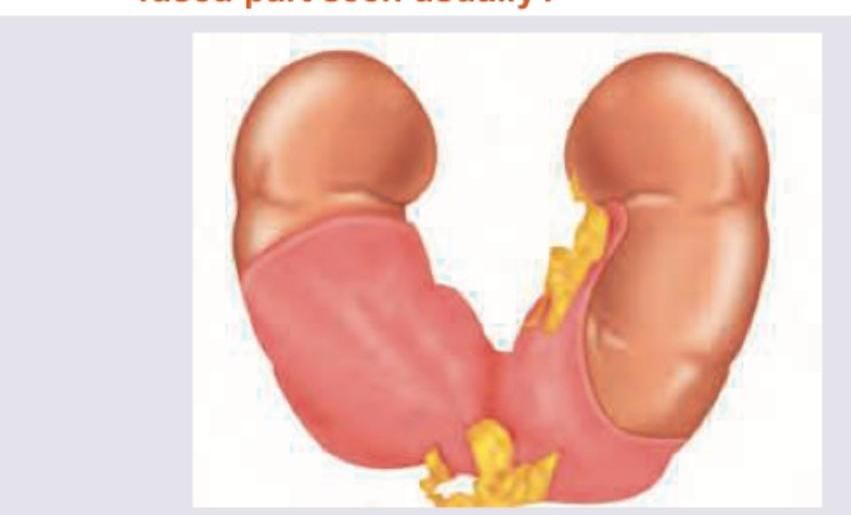
Explanation: **Explanation:** **Sirenomelia** (also known as "Mermaid Syndrome") is a rare congenital anomaly characterized by the fusion of the lower limbs. **Why Mesoderm is the Correct Answer:** Sirenomelia results from an insult to the **caudal-most mesoderm** during the third week of development (gastrulation). Specifically, it is caused by inadequate mesodermal migration to the caudal eminence. Since the mesoderm is responsible for forming the lower limb buds, pelvic bones, and the urogenital system, its deficiency leads to: * Fusion of the lower extremities. * Renal agenesis (due to failure of the intermediate mesoderm). * Imperforate anus. **Why Other Options are Incorrect:** * **A. Endoderm:** The endoderm primarily forms the epithelial lining of the gastrointestinal and respiratory tracts. While sirenomelia involves gastrointestinal defects (like imperforate anus), these are secondary to the primary mesodermal failure. * **C. Ectoderm:** The ectoderm gives rise to the nervous system and skin epidermis. While the overlying skin is affected in sirenomelia, the structural fusion of limbs is a skeletal/muscular (mesodermal) defect. **High-Yield Clinical Pearls for NEET-PG:** * **Vascular Steal Hypothesis:** Sirenomelia is often associated with a single large umbilical artery (persistent vitelline artery) that "steals" blood from the caudal end of the embryo, leading to nutrient deprivation and developmental failure. * **Association:** It is strongly associated with **maternal diabetes** (though Caudal Regression Syndrome is more classically linked). * **Prognosis:** Usually fatal shortly after birth due to associated bilateral renal agenesis (Potter’s sequence) and pulmonary hypoplasia. * **Differentiation:** Unlike Caudal Regression Syndrome, Sirenomelia specifically features limb fusion and a single umbilical artery.
Gametogenesis and Fertilization
Practice Questions
Early Embryonic Development
Practice Questions
Placentation
Practice Questions
Development of Nervous System
Practice Questions
Development of Cardiovascular System
Practice Questions
Development of Gastrointestinal System
Practice Questions
Development of Urogenital System
Practice Questions
Development of Musculoskeletal System
Practice Questions
Development of Head and Neck
Practice Questions
Congenital Anomalies
Practice Questions
Teratology
Practice Questions
Molecular Mechanisms in Development
Practice Questions
Get full access to all questions, explanations, and performance tracking.
Start For Free