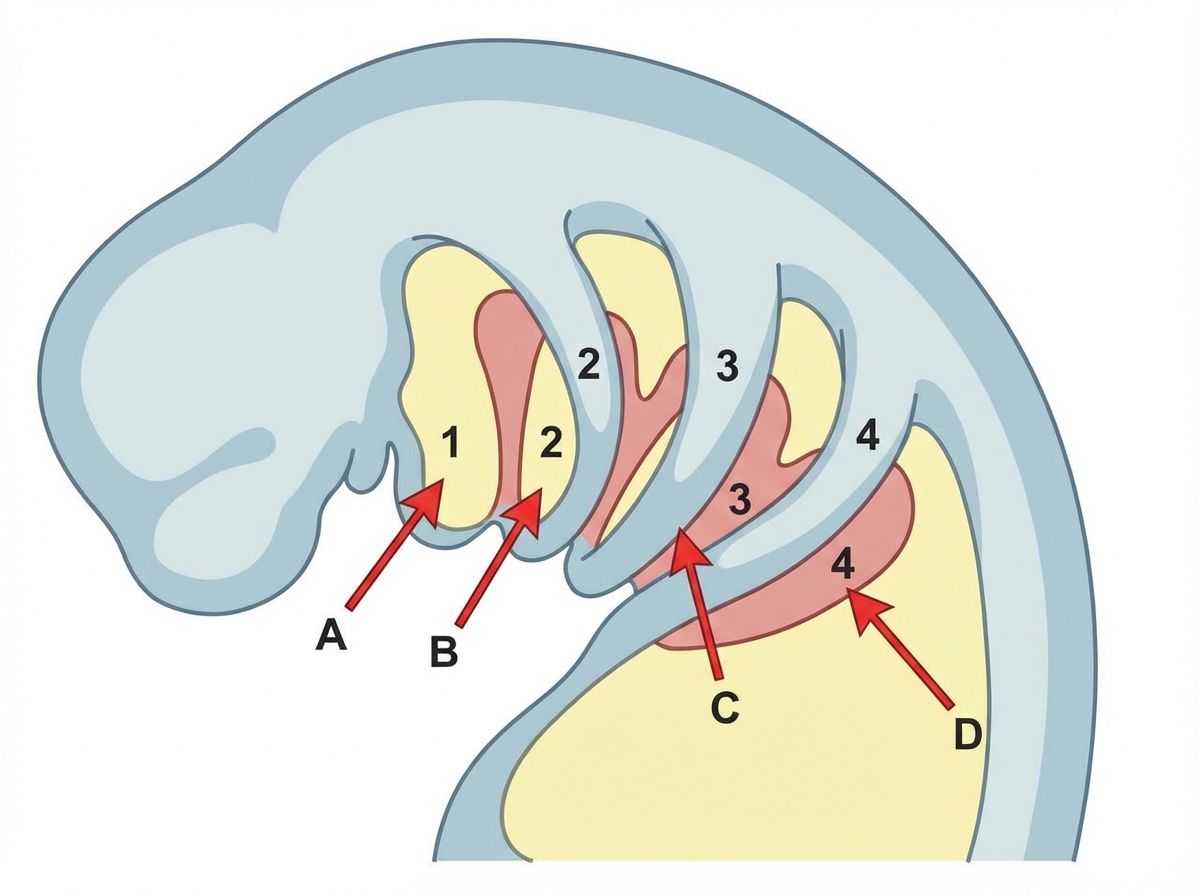
The ear pinna develops from which embryonic germ layer?
What is the function of the zona pellucida?
At which stage does the conceptus reach the uterine cavity?
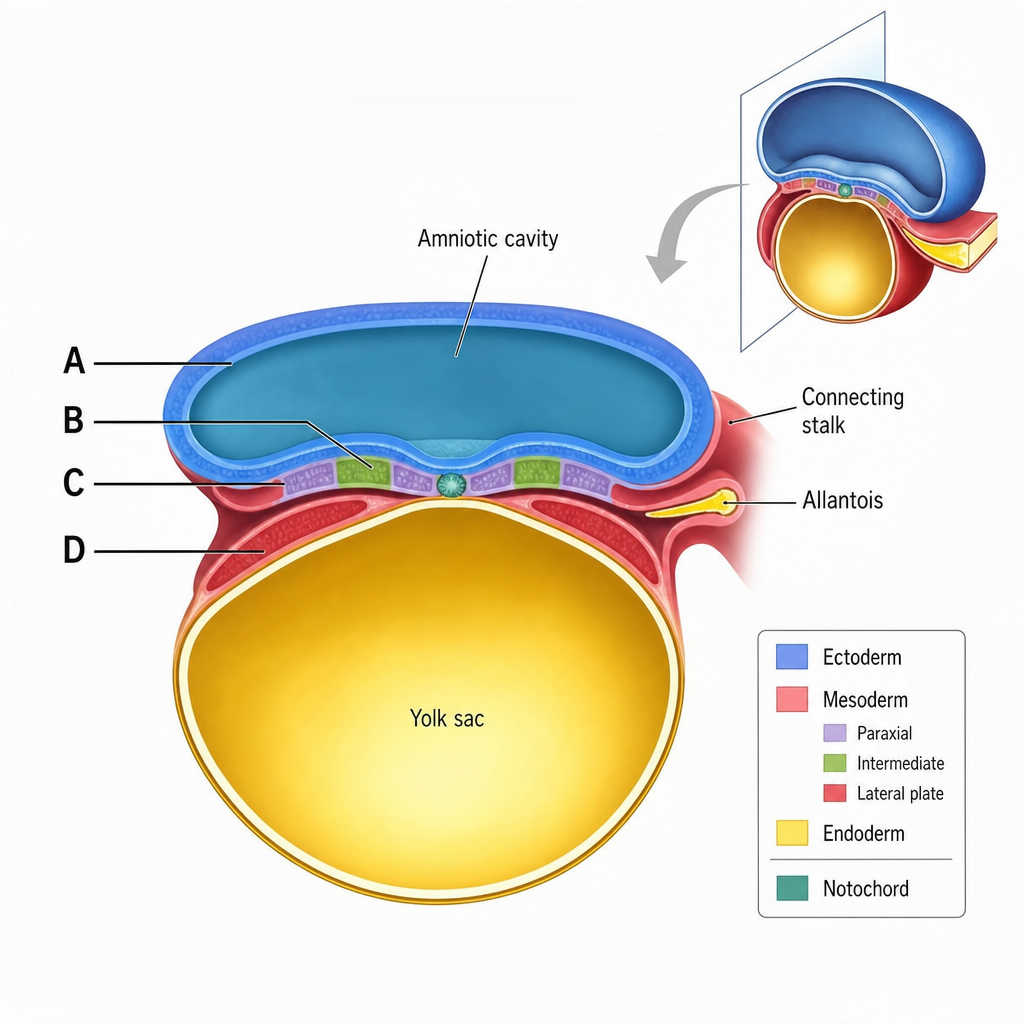
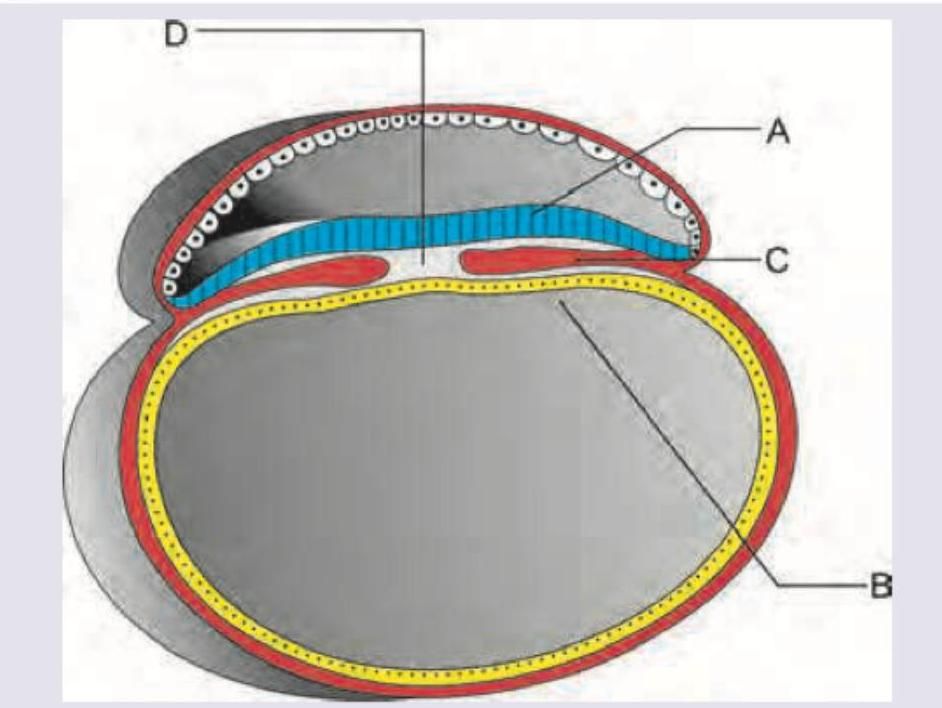
The marked area develops from:

The pancreas is derived from which embryonic structure?
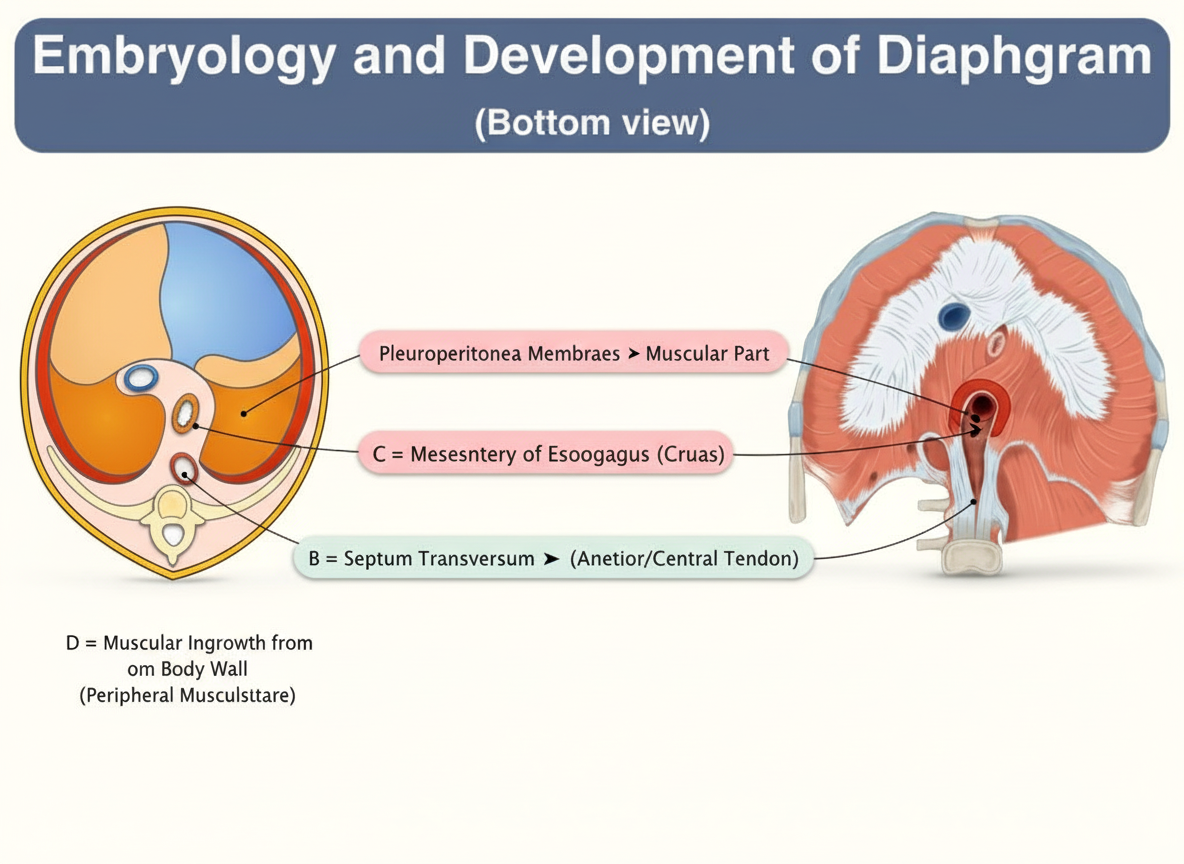
The gastrosplenic ligament is derived from which of the following embryonic developmental structures?
A neonate has suffered from a teratogenic insult during embryonic growth that has affected the mesencephalic part of his developing neural tube. In the presented cast of his ventricular system (left lateral view), which of the following areas might have suffered?

Allanto-enteric diverticulum is formed by the outgrowth of?
A patient with genotype X0 will have which of the following phenotypes, except?
Meckel's diverticulum is derived from which part of the embryonic yolk stalk (vitelline duct)?
Explanation: **Explanation:** The development of the ear is a complex process involving all three germ layers, but the **pinna (auricle)** specifically originates from the **ectoderm** and the underlying mesenchyme of the first and second pharyngeal arches. 1. **Why Ectoderm is Correct:** The pinna develops from six mesenchymal proliferations known as the **His auricular hillocks**. These hillocks are covered by surface **ectoderm**, which gives rise to the skin and epithelial lining of the auricle. Since the question asks for the primary germ layer contributing to the external structure, ectoderm is the definitive answer. 2. **Why other options are incorrect:** * **Endoderm:** This layer forms the lining of the Eustachian tube and the middle ear cavity (derived from the first pharyngeal pouch). It does not contribute to the external ear. * **Mesoderm:** While the connective tissue and cartilage of the pinna are derived from mesenchyme (specifically neural crest cells and mesoderm), the "covering" and primary developmental origin in standard embryological classification for the external ear surface is ectoderm. * **All:** While the ear *as a whole organ* involves all three layers (Ectoderm for the external ear/internal ear, Mesoderm for ossicles, and Endoderm for the middle ear), the **pinna** specifically does not have an endodermal component. **High-Yield Clinical Pearls for NEET-PG:** * **Hillocks of His:** 1st, 2nd, and 3rd hillocks arise from the **1st arch (Mandibular)**; 4th, 5th, and 6th hillocks arise from the **2nd arch (Hyoid)**. * **Tragus:** Derived from the 1st arch; the rest of the pinna is primarily from the 2nd arch. * **Preauricular Sinus:** Caused by the failure of fusion of the auricular hillocks. * **External Auditory Meatus:** Develops from the **1st Pharyngeal Cleft** (Ectoderm).
Explanation: The **zona pellucida (ZP)** is a thick, translucent glycoprotein layer surrounding the oocyte [1]. Its primary physiological role during fertilization is the **prevention of polyspermy**. ### Why Option C is Correct: When a sperm penetrates the oocyte, it triggers the **cortical reaction**. This causes the release of lysosomal enzymes from cortical granules into the perivitelline space, which alters the structure of the ZP (the **zona reaction**) [2]. This process inactivates ZP3 receptors and hardens the shell, making it impermeable to other sperm, thereby ensuring a diploid zygote [2]. ### Analysis of Incorrect Options: * **Option A:** While the ZP does prevent premature implantation (ectopic pregnancy) by physically shielding the blastomeres as they travel through the fallopian tube, it is not its *primary* function in the context of fertilization dynamics. The ZP must actually disappear (**"hatching"**) for implantation to occur [3]. * **Option B:** The formation of the blastocyst is a result of cellular cleavage and fluid accumulation (cavitation); the ZP merely contains these cells but does not drive the formation process. * **Option C vs D:** The ZP actually **facilitates** the attachment of the first sperm via specific ZP3 receptors; it only prevents the attachment of *subsequent* sperm after fertilization has begun [2]. ### NEET-PG High-Yield Pearls: * **ZP3 Protein:** Acts as the specific sperm receptor and inducer of the acrosome reaction [2]. * **Zona Hatching:** Occurs on **Day 5–6** post-fertilization. The blastocyst must "hatch" from the ZP to implant in the uterine endometrium [3]. * **Clinical Correlation:** If the ZP fails to disappear, infertility occurs. Conversely, if it disappears too early, it may lead to a tubal (ectopic) pregnancy.
Explanation: The transport of the conceptus from the fallopian tube to the uterine cavity is a precisely timed process essential for successful implantation. [1] **1. Why the 32-cell stage is correct:** Fertilization occurs in the ampulla of the fallopian tube. [1] As the zygote undergoes cleavage, it forms a solid ball of cells called the **morula**. The morula typically consists of 16 to 32 cells. While the 16-cell morula is formed within the fallopian tube (around day 3), it is specifically at the **late morula stage (32-cell stage)**, approximately **3 to 4 days after fertilization**, that the conceptus enters the uterine cavity. [1] Once inside the uterus, fluid enters the morula to form the blastocyst. **2. Why the other options are incorrect:** * **A & B (1-cell and 2-cell stages):** These stages occur within the first 24–30 hours post-fertilization. [1] At this time, the conceptus is still located in the lateral part of the fallopian tube (ampulla/isthmus). * **C (16-cell stage):** This is the "early morula." While it is close to the utero-tubal junction, it generally remains in the fallopian tube. Standard embryological texts (like Langman’s) specify that the transition into the uterine cavity occurs as the morula reaches the 32-cell density. **High-Yield NEET-PG Pearls:** * **Timing:** The conceptus reaches the uterine cavity on **Day 4** post-fertilization. [1] * **Implantation:** Occurs at the **Blastocyst stage** (Day 6), usually on the posterior wall of the uterine body. [1] * **Zona Pellucida:** It remains intact until the blastocyst reaches the uterine cavity; its disappearance ("hatching") is mandatory for implantation. [1] * **Clinical Correlation:** Delayed transport can lead to **Ectopic Pregnancy**, most commonly in the Ampulla (widest part). [1]
Explanation: ***Septum primum*** - The **septum primum** is the first septum to develop during atrial septation, growing from the **roof of the primitive atrium** toward the endocardial cushions. - It forms the primary component of the **interatrial septum** and is the structure that would be marked in embryological diagrams showing early cardiac development. *Septum secundum* - The **septum secundum** develops later, growing to the **right side** of the septum primum as a thick, muscular ridge. - It does not completely separate the atria but leaves an opening called the **foramen ovale**, allowing right-to-left shunting during fetal life. *Ostium primum* - The **ostium primum** is not a structure but rather an **opening** that exists between the growing septum primum and endocardial cushions. - This opening eventually **closes** when the septum primum fuses with the endocardial cushions, making it a temporary space rather than a developmental structure. *Ostium secundum* - The **ostium secundum** refers to **fenestrations** (small perforations) that develop in the upper portion of the septum primum. - These are **openings within** the septum primum rather than the septum itself, allowing continued blood flow between atria during development.
Explanation: **Explanation:** The pancreas develops from the **Foregut** endoderm. Specifically, it arises from two separate buds—the **ventral pancreatic bud** and the **dorsal pancreatic bud**—which appear at the junction of the foregut and midgut [1]. During the 7th week of development, the ventral bud rotates posteriorly around the duodenum to fuse with the dorsal bud. The dorsal bud forms the upper head, body, and tail, while the ventral bud forms the uncinate process and the lower part of the head [1]. **Analysis of Options:** * **Foregut (Correct):** The foregut gives rise to the esophagus, stomach, proximal duodenum (up to the major duodenal papilla), liver, gallbladder, and pancreas. The blood supply to these structures is the **Celiac Trunk**. * **Midgut:** This gives rise to the distal duodenum, jejunum, ileum, cecum, and the colon up to the proximal two-thirds of the transverse colon. Its blood supply is the Superior Mesenteric Artery. * **Hindgut:** This forms the distal third of the transverse colon to the upper anal canal. Its blood supply is the Inferior Mesenteric Artery. * **Notochord:** This is a mesodermal structure that serves as the primary longitudinal skeletal element of the embryo and eventually becomes the **nucleus pulposus** of the intervertebral discs. **High-Yield NEET-PG Pearls:** 1. **Annular Pancreas:** Caused by the failure of the ventral pancreatic bud to rotate properly, encircling the duodenum and causing neonatal obstruction. 2. **Pancreas Divisum:** The most common congenital anomaly; it occurs when the dorsal and ventral ducts fail to fuse. 3. **Ductal Origins:** The main pancreatic duct (Wirsung) is formed by the distal part of the dorsal duct and the entire ventral duct. The accessory duct (Santorini) is derived from the proximal part of the dorsal duct.
Explanation: The **dorsal mesogastrium** is a double layer of peritoneum that suspends the primitive stomach from the posterior abdominal wall. During the 5th week of development, the spleen develops as a mesenchymal condensation within the layers of this dorsal mesogastrium. As the stomach rotates 90 degrees clockwise and the spleen enlarges, the dorsal mesogastrium is partitioned into specific ligaments: [2] 1. **Gastrosplenic ligament:** Connects the stomach to the spleen (contains short gastric and left gastroepiploic vessels). [2] 2. **Lienorenal (Splenorenal) ligament:** Connects the spleen to the left kidney (contains splenic vessels and the tail of the pancreas). [2] 3. **Greater Omentum:** The caudal portion of the dorsal mesogastrium. **Analysis of Incorrect Options:** * **A & B (Splenic Artery/Vein):** These are vascular structures. While the splenic artery travels through the lienorenal ligament to reach the spleen, it does not give rise to the peritoneal ligaments themselves. * **D (Ventral Mesogastrium):** This structure only exists cranial to the umbilicus and gives rise to the **lesser omentum** (hepatogastric and hepatoduodenal ligaments) and the **falciform ligament**. It does not contribute to splenic attachments. [1] **High-Yield Clinical Pearls for NEET-PG:** * **Spleen Embryology:** The spleen is **mesodermal** in origin (unlike the rest of the GI tract, which is endodermal) but is supplied by the **Celiac trunk** (foregut artery). * **Rotation:** The rotation of the dorsal mesogastrium creates the **Lesser Sac** (Omental Bursa). * **Surgical Note:** During a splenectomy, the tail of the pancreas must be protected as it lies within the lienorenal ligament, which is also derived from the dorsal mesogastrium. [2]
Explanation: ***Area D*** - The **mesencephalon** gives rise to the **cerebral aqueduct (aqueduct of Sylvius)**, which connects the third and fourth ventricles and corresponds to Area D in the ventricular cast. - Teratogenic insults affecting the **mesencephalic neural tube** would specifically impact this narrow channel, potentially causing **aqueductal stenosis** and subsequent hydrocephalus. *Area B* - Represents the **lateral ventricle** region, which develops from the **prosencephalon (forebrain)**, specifically the telencephalic vesicles. - Since the teratogenic insult affected the **mesencephalon**, not the prosencephalon, this area would remain unaffected. *Area C* - Corresponds to the **third ventricle**, which also originates from the **prosencephalon (diencephalon)**. - As this structure derives from the **forebrain** rather than the mesencephalon, it would not be directly affected by the described teratogenic insult. *Area E* - Represents the **fourth ventricle**, which develops from the **rhombencephalon (hindbrain)**. - Since the teratogenic damage was specifically to the **mesencephalon**, not the rhombencephalon, this area would be spared from the insult.
Explanation: The **allantois** (or allanto-enteric diverticulum) is a small, finger-like outpouching that arises from the **caudal wall of the yolk sac** (specifically the hindgut) into the extra-embryonic mesoderm of the connecting stalk [1], [2]. It appears around the 16th day of development [2]. **Why Yolk Sac is Correct:** The allantois is endodermal in origin. As the hindgut forms, a portion of the yolk sac's endoderm protrudes into the connecting stalk [1]. This diverticulum is essential for early blood formation and the development of the urinary bladder [1], [2]. **Why Other Options are Incorrect:** * **Amnion:** The amnion is a membrane that surrounds the embryo to form the amniotic cavity [2]; it does not give rise to diverticula involved in gut or bladder development. * **Intra-embryonic coelom:** This primordium gives rise to the body cavities (pericardial, pleural, and peritoneal) but not to the allantois. * **Extra-embryonic coelom:** Also known as the chorionic cavity, this is the space surrounding the yolk sac and amnion [1]. While the allantois grows *into* the mesoderm surrounding this space, it does not originate from the cavity itself. **High-Yield Clinical Pearls for NEET-PG:** * **Fate of Allantois:** In humans, the extra-embryonic part degenerates, while the intra-embryonic part forms the **urachus** [1]. * **Urachus:** In adults, the urachus persists as the **median umbilical ligament**, connecting the apex of the bladder to the umbilicus. * **Clinical Correlation:** Failure of the allantois/urachus to obliterate can lead to a **urachal fistula** (urine leaking from the umbilicus), urachal cyst, or urachal sinus. * **Vascularity:** The blood vessels in the wall of the allantois become the **umbilical arteries and vein**.
Explanation: **Explanation:** The question describes **Turner Syndrome**, a chromosomal anomaly characterized by a **45,X0** karyotype. This condition results from the complete or partial absence of one X chromosome, leading to the loss of specific genes required for normal growth and ovarian development [1]. **1. Why "Tall Stature" is the correct answer:** The hallmark of Turner Syndrome is **short stature**, not tall stature [1]. This is primarily due to the haploinsufficiency of the **SHOX gene** (Short Stature Homeobox gene) located on the pseudoautosomal region of the X chromosome. Without two functional copies of this gene, longitudinal bone growth is severely impaired. **2. Analysis of Incorrect Options (Features present in Turner Syndrome):** * **Broad chest:** Also known as a "shield chest," patients typically have widely spaced nipples [1]. * **Webbed neck:** Caused by **cystic hygroma** (lymphatic obstruction) during fetal development, leading to redundant skin folds (pterygium colli) [1]. * **Lymphedema:** Congenital lymphedema of the hands and feet is a classic neonatal presentation due to abnormal development of the lymphatic system [1]. **Clinical Pearls for NEET-PG:** * **Most common cause:** Meiotic nondisjunction (usually paternal). * **Cardiac association:** Bicuspid aortic valve (most common) and Coarctation of the aorta (pre-ductal) [1]. * **Renal association:** Horseshoe kidney [1]. * **Gonadal status:** "Streak ovaries" leading to primary amenorrhea and hypergonadotropic hypogonadism. * **Intelligence:** Usually normal, though some may have specific spatial perception deficits [1].
Explanation: **Explanation:** **1. Why the correct answer is right:** Meckel’s diverticulum is the most common congenital anomaly of the gastrointestinal tract. During embryonic development, the midgut communicates with the yolk sac via the **vitelline duct (omphalomesenteric duct)** [1]. Normally, this duct obliterates completely between the 5th and 8th weeks of gestation. Meckel’s diverticulum occurs when the **proximal part** (the end attached to the ileum) fails to involute, resulting in a finger-like pouch projecting from the antimesenteric border of the distal ileum [3]. **2. Why the incorrect options are wrong:** * **Distal part of the vitelline duct:** Persistence of the distal part (umbilical end) results in an **umbilical sinus** or a vitelline cyst [1]. * **Entire vitelline duct:** If the entire duct remains patent, it forms a **vitelline fistula**, where fecal matter may discharge through the umbilicus [1]. * **Urachus:** The urachus is the remnant of the **allantois**, connecting the bladder to the umbilicus [3]. Abnormalities here lead to urachal cysts or fistulae, not intestinal diverticula. **3. Clinical Pearls for NEET-PG (Rule of 2s):** * **Prevalence:** Occurs in **2%** of the population [1]. * **Location:** Usually located **2 feet** proximal to the ileocecal valve [1]. * **Length:** Approximately **2 inches** long [1]. * **Age:** Often becomes symptomatic before age **2**. * **Ectopic Tissue:** Most commonly contains **gastric mucosa** (leading to painless bleeding) or pancreatic tissue [1]. * **Complication:** It is a leading cause of **intussusception** in children (acting as a lead point) [2].
Gametogenesis and Fertilization
Practice Questions
Early Embryonic Development
Practice Questions
Placentation
Practice Questions
Development of Nervous System
Practice Questions
Development of Cardiovascular System
Practice Questions
Development of Gastrointestinal System
Practice Questions
Development of Urogenital System
Practice Questions
Development of Musculoskeletal System
Practice Questions
Development of Head and Neck
Practice Questions
Congenital Anomalies
Practice Questions
Teratology
Practice Questions
Molecular Mechanisms in Development
Practice Questions
Get full access to all questions, explanations, and performance tracking.
Start For Free