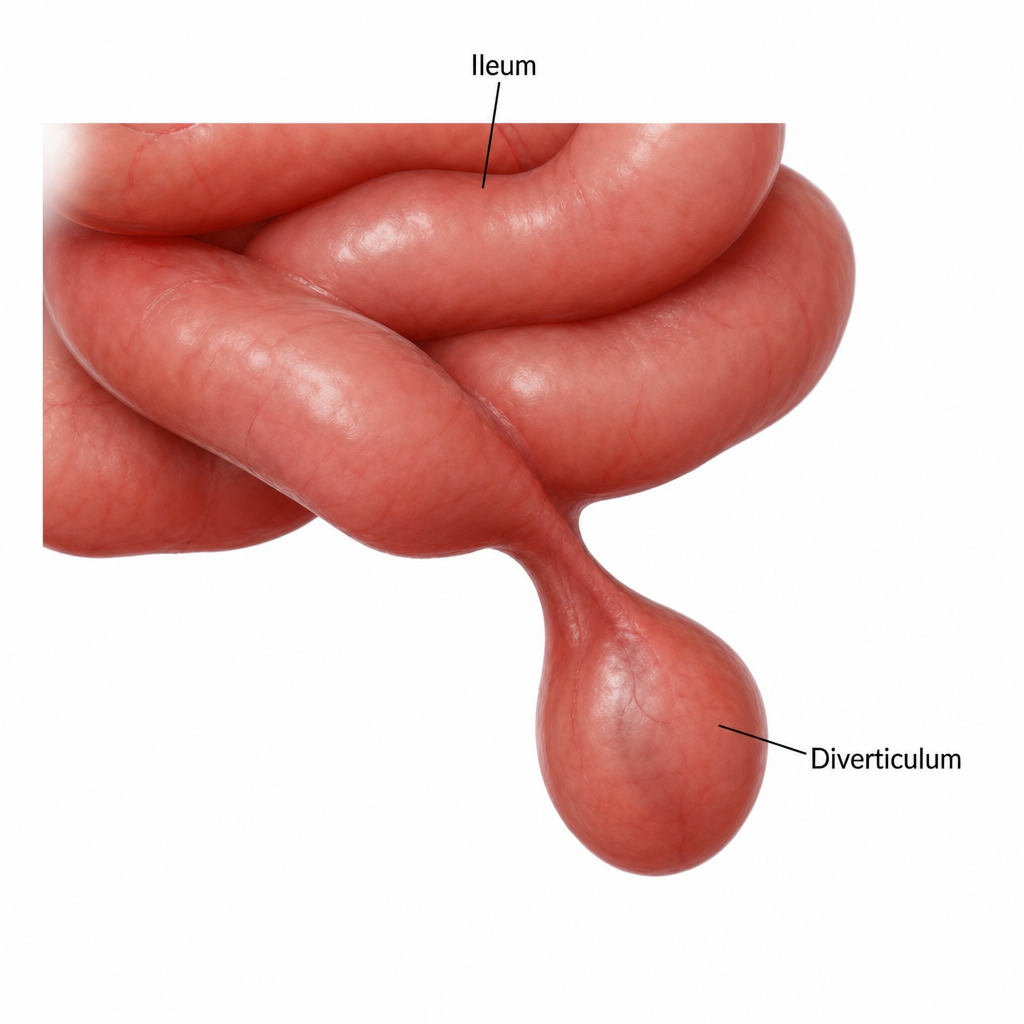
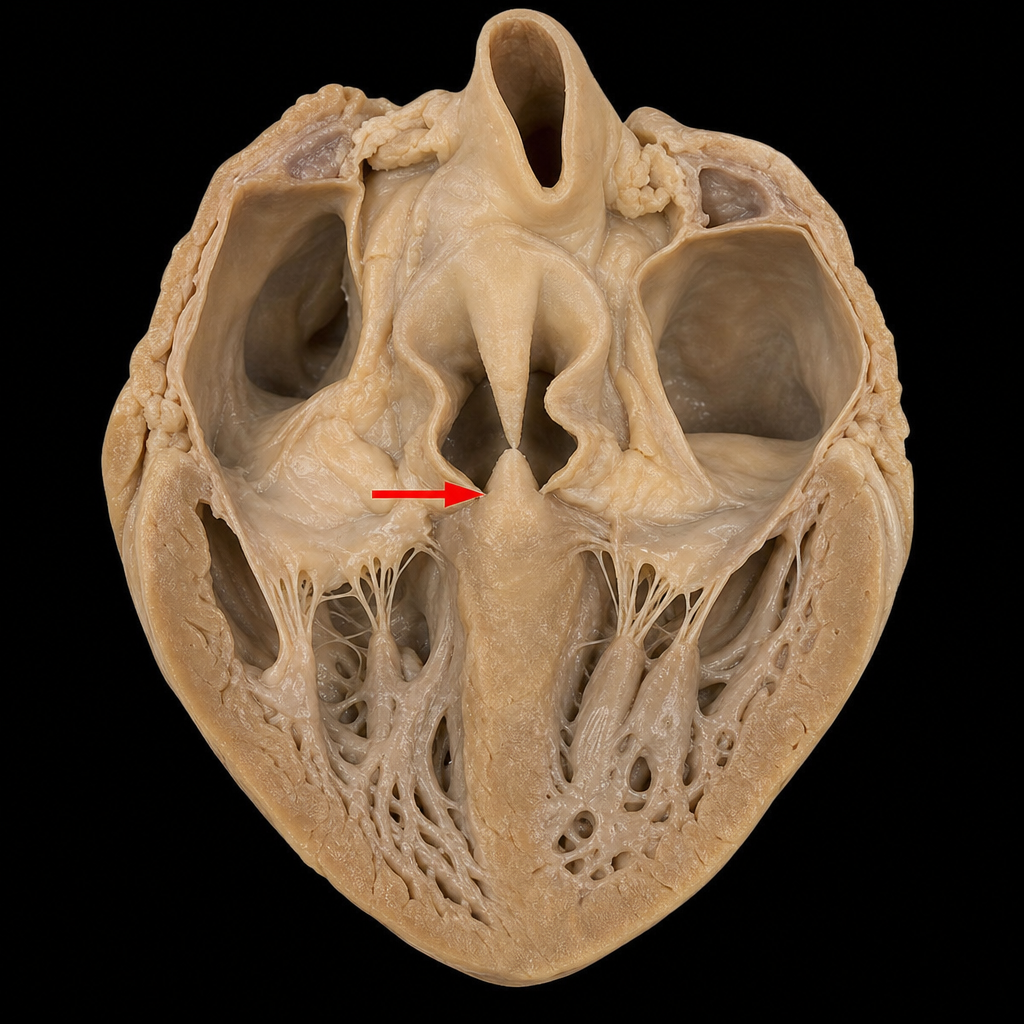
The primitive uteroplacental circulation is functionally established during which period of embryonic/fetal development?
A newborn has multiple congenital defects owing to dysgenesis of neural crest cells. Which of the following cells is most likely to be spared?
The collecting ducts of the kidney develop from which embryonic structure?
A partial development of the aortopulmonary septum will result in which of the following?
Which joint allows for right to left movement?
The first centres of ossification appear during which month of pregnancy?
The diaphragm is developed from which embryonic structure?
Astrocytes are developed from which embryonic germ layer?
In morbus caeruleus, when does the foramen ovale typically close?
At which week of gestation does the physiological umbilical hernia typically resolve?
Explanation: The establishment of the uteroplacental circulation is a progressive process, but it becomes **functionally established** only when the embryonic heart begins to beat and pump blood through the newly formed villous capillary system [1]. ### 1. Why "End of first month" is correct: While the precursors of this system appear earlier, the **functional** circuit requires three components to be connected: the maternal sinusoids, the chorionic villi, and the embryonic heart [1]. * By the **end of the 3rd week**, tertiary villi (containing fetal capillaries) have formed [1]. * By the **4th week (end of the first month)**, the embryonic heart begins to beat. This allows fetal blood to circulate through the capillaries of the villi, enabling the actual exchange of gases and nutrients with maternal blood in the intervillous spaces [1]. ### 2. Why other options are incorrect: * **First week:** This period is dedicated to fertilization, cleavage, and the beginning of implantation. No placental structures exist yet. * **Second week:** This is the "period of twos." While the **lacunar stage** begins (maternal blood enters syncytiotrophoblast lacunae), there are no fetal blood vessels yet [1]. This is "primordial" rather than functional circulation. * **Third week:** Gastrulation occurs and primary/secondary/tertiary villi form. Although the plumbing is being laid down, the "pump" (the heart) is not yet functional enough to establish a continuous circulatory circuit. ### 3. NEET-PG High-Yield Pearls: * **Day 9:** Lacunar stage begins (start of uteroplacental circulation precursor) [1]. * **Day 21-22:** The embryonic heart starts beating. * **Primary Villi:** Syncytiotrophoblast + Cytotrophoblast core (Day 13-15) [1]. * **Secondary Villi:** Adds extraembryonic mesoderm core (Day 16-18) [1]. * **Tertiary Villi:** Adds fetal capillaries (Day 18-21) [1]. * **Hemochorial Placenta:** Human placenta type where maternal blood directly bathes fetal chorionic villi [1].
Explanation: The core concept tested here is the embryonic origin of the nervous system. The nervous system develops from the **ectoderm**, which differentiates into the **neural tube** and the **neural crest**. **Why Motor Neurons are spared:** Motor neurons (Somatic Efferent neurons) are derived from the **basal plate of the neural tube**, not the neural crest. Since the defect in this scenario is specific to neural crest dysgenesis, structures derived from the neural tube—such as the brain, spinal cord, and motor neurons—will remain unaffected (spared). **Analysis of Incorrect Options:** * **Melanocytes (A):** These are pigment-producing cells of the skin derived entirely from neural crest cells. * **Parafollicular cells (C):** Also known as 'C-cells' of the thyroid gland (secreting calcitonin), these migrate from the neural crest via the ultimobranchial body. * **Spinal ganglion cells (D):** These are sensory neurons located in the Dorsal Root Ganglia (DRG). All peripheral sensory ganglia and autonomic ganglia (sympathetic and parasympathetic) are neural crest derivatives. **High-Yield NEET-PG Pearls:** * **Neural Crest Derivatives Mnemonic (MOTHER):** **M**elanocytes, **O**dontoblasts, **T**racheal cartilage, **H**eart (conotruncal septum), **E**nteric nervous system, **R**ead (Adrenal medulla/All Ganglia). * **Clinical Correlation:** Conditions like **DiGeorge Syndrome** and **Treacher Collins Syndrome** are classic examples of "neurocristopathies" (defects in neural crest migration). * **Rule of Thumb:** If it is a neuron *inside* the CNS (brain/spinal cord), it comes from the Neural Tube. If it is a neuron *outside* the CNS (ganglia), it comes from the Neural Crest.
Explanation: The development of the definitive kidney (metanephros) involves a complex interaction between two mesodermal structures: the **Ureteric Bud** and the **Metanephric Blastema**. [1] **1. Why the Ureteric Bud is correct:** The ureteric bud is an outgrowth from the distal end of the mesonephric duct. It undergoes repeated branching to form the **collecting system** of the kidney. This includes the ureter, renal pelvis, major and minor calyces, and approximately 1 to 3 million **collecting ducts**. [1] **2. Why the other options are incorrect:** * **Pronephros:** This is the first, most primitive kidney system. It appears in the cervical region and is non-functional in humans, disappearing completely by the 4th week. * **Mesonephros:** This "interim" kidney functions briefly during the first trimester. While most of it regresses, its duct (Wolffian duct) persists in males to form the reproductive tract (epididymis, vas deferens). * **Metanephros (Metanephric Blastema):** While the metanephros is the definitive kidney, the *blastema* specifically forms the **excretory unit (Nephron)**. This includes Bowman’s capsule, proximal convoluted tubule, Loop of Henle, and distal convoluted tubule. **High-Yield Clinical Pearls for NEET-PG:** * **Reciprocal Induction:** The ureteric bud induces the metanephric blastema to form nephrons; if the bud fails to reach the blastema, **renal agenesis** occurs. * **Polycystic Kidney Disease (Potter’s Theory):** Historically attributed to a failure of fusion between the collecting ducts (ureteric bud) and the nephrons (blastema). * **Duplication of Ureter:** Occurs due to early branching or "double" ureteric buds. [1]
Explanation: The **aortopulmonary (AP) septum** is a spiral-shaped mesenchymal structure derived from **neural crest cells**. Its primary role is to divide the embryonic *truncus arteriosus* into the aorta and the pulmonary artery. **Why Option A is correct:** **Persistent Truncus Arteriosus (PTA)** occurs due to a failure or partial development of the AP septum [1]. When the septum fails to form or fuse completely, the truncus arteriosus remains as a single, large common vessel that receives blood from both the right and left ventricles [1]. This is almost always associated with a Ventricular Septal Defect (VSD). **Why the other options are incorrect:** * **Ebstein’s Anomaly:** This is a congenital malformation of the **tricuspid valve** where the septal and posterior leaflets are displaced downward into the right ventricle. It is not related to septation of the great vessels. * **Transposition of the Great Arteries (TGA):** This occurs due to a failure of the AP septum to **spiral** (it grows straight instead), leading to the aorta arising from the right ventricle and the pulmonary artery from the left. It is a defect in *orientation*, not a failure of *development/formation*. * **Common Ventricle:** This results from the failure of the **interventricular septum** to develop, not the AP septum. **High-Yield Clinical Pearls for NEET-PG:** * **Neural Crest Cells:** These are essential for AP septum formation. DiGeorge Syndrome (22q11 deletion) often presents with PTA due to defective neural crest migration. * **Spiral Septation:** The AP septum must undergo a 180-degree spiral. Failure to spiral leads to TGA. * **Cyanosis:** PTA is one of the "5 Ts" of cyanotic congenital heart diseases (Right-to-Left shunt).
Explanation: The movement of the head from side to side (the "No" movement or right-to-left rotation) occurs primarily at the **Atlanto-axial joint**. This joint is a complex of three synovial joints between the Atlas (C1) and the Axis (C2). The pivot mechanism is formed by the **dens (odontoid process)** of the axis rotating within the osteoligamentous ring formed by the anterior arch of the atlas and the transverse ligament. This specialized anatomy allows for approximately 50% of the total cervical rotation. **Analysis of Options:** * **Atlanto-occipital joint (Option B):** This is a condylar synovial joint between the occipital condyles and the superior articular facets of the atlas. It primarily facilitates flexion and extension (the **"Yes" movement** or nodding). * **C2-C3 and C3-C4 joints (Options C & D):** These are typical cervical vertebrae joints consisting of intervertebral discs and plane-type zygapophyseal (facet) joints. While they contribute to lateral flexion and minor rotation, they are not the primary site for the specialized right-to-left rotation. **High-Yield Clinical Pearls for NEET-PG:** * **Cruciate Ligament:** The transverse ligament of the atlas is the most important component, holding the dens against the atlas. Rupture (e.g., in Rheumatoid Arthritis) can lead to atlanto-axial subluxation and spinal cord compression. * **Alar Ligaments:** These "check ligaments" limit the extent of rotation at the atlanto-axial joint. * **Embryology:** The body of the Atlas (C1) fails to fuse with its neural arches and instead fuses with the body of the Axis (C2) to form the **dens**.
Explanation: The correct answer is **A. At the end of the 2nd month of pregnancy.** **1. Why Option A is Correct:** The process of ossification begins with the formation of primary ossification centers. In humans, these centers first appear in the **8th week of intrauterine life (IUL)**, which corresponds to the end of the 2nd month. The first bone to initiate ossification is the **clavicle** (via intramembranous ossification), followed closely by the mandible and long bones like the femur. By the end of the 8th week, the embryonic period concludes, and the skeletal framework begins transitioning from mesenchymal/cartilaginous models to true bone. **2. Why Other Options are Incorrect:** * **Option B & C:** While significant ossification continues throughout the 3rd month (9th–12th weeks), the *initial* appearance occurs earlier. By the end of the 3rd month, primary centers are established in almost all long bones and the skull, but they are not the "first." * **Option D:** The 4th month is characterized by rapid skeletal growth and the beginning of secondary ossification centers in specific areas (though most secondary centers appear postnatally). **3. NEET-PG High-Yield Pearls:** * **First bone to ossify:** Clavicle (5th–6th week of IUL). * **Type of ossification:** The clavicle is unique as it undergoes both intramembranous and intracartilaginous ossification. * **Medicolegal Importance:** The presence of the **lower end of femur** ossification center (appears at 36–40 weeks) is a standard medicolegal marker for fetal maturity/full-term status. * **Order of appearance:** Primary centers appear *before* birth (except for some tarsal/carpal bones); most secondary centers appear *after* birth.
Explanation: The diaphragm is a complex musculotendinous structure that develops from the fusion of four embryonic components between the 4th and 12th weeks of gestation. **Why the Correct Answer is Right:** The **Septum transversum** is a thick plate of mesodermal tissue located between the primitive thoracic and abdominal cavities. It is the primary contributor to the diaphragm, eventually forming the **central tendon** [1]. It initially develops at the level of C3-C5 somites, which explains why the phrenic nerve (C3, C4, C5) provides the motor supply to the diaphragm. **Why the Other Options are Wrong:** * **A & B (Ectoderm & Endoderm):** The diaphragm is entirely **mesodermal** in origin. Ectoderm gives rise to the nervous system and skin, while endoderm forms the lining of the gut and respiratory tract. * **C (Septum secundum):** This is a structure involved in **cardiac development**, specifically forming part of the atrial septum. It has no role in the development of the respiratory or abdominal partitions. **High-Yield Facts for NEET-PG:** * **The Four Embryonic Sources:** To remember the components, use the mnemonic **"S-P-E-M"**: 1. **S**eptum transversum (Central tendon) 2. **P**leuroperitoneal membranes (Small portion of the adult diaphragm) 3. **E**sophageal mesentery (Dorsal mesentery of esophagus forms the **Crura**) 4. **M**uscular ingrowth from body wall (Peripheral muscular part) * **Clinical Correlation:** Failure of the **pleuroperitoneal membrane** to fuse with the other components leads to **Congenital Diaphragmatic Hernia (Bochdalek hernia)**, most commonly occurring on the **left side**. * **Innervation:** "C3, 4, 5 keep the diaphragm alive." (Phrenic nerve).
Explanation: The central nervous system (CNS) originates from the **neural tube**, which is derived from the **neuroectoderm**. Astrocytes, the most abundant glial cells in the brain, function as metabolic and structural support cells. Along with oligodendrocytes and ependymal cells, astrocytes develop from the neuroepithelial cells of the neural tube [1]. **Why the other options are incorrect:** * **Mesoderm:** While most connective tissues are mesodermal, only one type of glial cell originates here: the **Microglia** [1]. Microglia are derived from yolk sac macrophages (mesodermal origin) and migrate into the CNS during development [1]. * **Endoderm:** This layer gives rise to the epithelial lining of the gastrointestinal and respiratory tracts, as well as organs like the liver and pancreas. It does not contribute to the nervous system. * **Surface Ectoderm:** (Distinction from Neuroectoderm) While also ectodermal, surface ectoderm gives rise to the epidermis, lens of the eye, and the anterior pituitary (Rathke’s pouch), rather than the CNS parenchyma. **High-Yield Clinical Pearls for NEET-PG:** 1. **Glial Origin Rule:** All glial cells in the CNS are **Neuroectodermal**, EXCEPT **Microglia** (Mesodermal) [1]. 2. **PNS Glia:** Schwann cells and satellite cells are derived from the **Neural Crest Cells** (also ectodermal). 3. **Marker:** Astrocytes contain **GFAP** (Glial Fibrillary Acidic Protein), a high-yield diagnostic marker for astrocytomas. 4. **Blood-Brain Barrier:** Astrocytic "foot processes" are essential components of the BBB.
Explanation: **Explanation:** **Morbus Caeruleus** (Blue Baby Syndrome) refers to congenital cyanotic heart diseases, most classically **Tetralogy of Fallot (TOF)**. In these conditions, the fundamental pathophysiology involves a right-to-left shunt due to high right-sided heart pressures or outflow obstruction [1]. **Why the correct answer is "Never":** Under normal physiological conditions, the foramen ovale closes functionally at birth due to increased left atrial pressure and structurally by 6–12 months. However, in Morbus Caeruleus, the elevated pressure in the right atrium (secondary to pulmonary stenosis or right ventricular hypertrophy) prevents the septum primum from sealing against the septum secundum [1]. This persistent pressure gradient keeps the foramen ovale **patent** to allow for compensatory shunting or as a direct result of the underlying malformation. In many cyanotic cases, the foramen ovale remains open indefinitely unless surgically corrected. **Why other options are incorrect:** * **6 months / 1 year:** These represent the typical timeline for structural closure in a **healthy** infant. In cyanotic heart disease, these timelines are bypassed by pathological hemodynamics. * **2 years:** While some delayed closures occur in normal variants, it is not the clinical expectation for Morbus Caeruleus. **High-Yield Clinical Pearls for NEET-PG:** * **Probe Patent Foramen Ovale (PFO):** Occurs in ~25% of the general population; it is usually asymptomatic but can lead to **paradoxical embolism**. * **Fetal Circulation:** The foramen ovale shunts blood from the Right Atrium to the Left Atrium, bypassing the non-functional lungs. * **Closure Mechanism:** At birth, decreased pulmonary vascular resistance and increased systemic resistance lead to a rise in Left Atrial pressure, which pushes the valve of the foramen ovale shut [1].
Explanation: The **physiological umbilical hernia** is a normal developmental process occurring because the rapidly growing liver and midgut loops exceed the capacity of the abdominal cavity. **Why 10 weeks is correct:** During the **6th week** of gestation, the midgut loops herniate into the umbilical cord. As the abdominal cavity enlarges and the kidneys/liver growth slows down, the intestines return to the abdomen [1]. This reduction typically occurs during the **10th week** of development [1]. By the end of this process, the midgut has undergone a total of **270° counter-clockwise rotation** around the superior mesenteric artery. **Analysis of Incorrect Options:** * **6 weeks:** This is the timing of the **commencement** of the hernia (herniation out of the abdomen), not its resolution. * **8 weeks:** At this stage, the midgut is at its maximum point of protrusion and is undergoing its first 90° rotation. * **12 weeks:** While some textbooks suggest the process completes by the 11th or 12th week, standard embryological teaching (and NEET-PG patterns) identifies the **10th week** as the definitive time the midgut returns to the abdominal cavity. **High-Yield Clinical Pearls for NEET-PG:** 1. **Omphalocele:** Failure of the midgut to return to the abdomen by the 10th-12th week (covered by peritoneum/amnion). 2. **Gastroschisis:** A defect in the abdominal wall (usually to the right of the umbilicus) where viscera protrude without a covering sac [2]. 3. **Rotation:** The midgut rotates 90° during herniation and 180° during return, totaling 270° counter-clockwise. 4. **Axis:** The rotation occurs around the **Superior Mesenteric Artery (SMA)**.
Gametogenesis and Fertilization
Practice Questions
Early Embryonic Development
Practice Questions
Placentation
Practice Questions
Development of Nervous System
Practice Questions
Development of Cardiovascular System
Practice Questions
Development of Gastrointestinal System
Practice Questions
Development of Urogenital System
Practice Questions
Development of Musculoskeletal System
Practice Questions
Development of Head and Neck
Practice Questions
Congenital Anomalies
Practice Questions
Teratology
Practice Questions
Molecular Mechanisms in Development
Practice Questions
Get full access to all questions, explanations, and performance tracking.
Start For Free