From which germ layer does the secondary vitreous develop?
The central nervous system develops from which germ layer?
The styloid process is embryologically derived from which structure?
Which of the following structures develops from the genital swellings in males?
Lumbar hemivebra results from the abnormal development of which embryonic structure?
The acrosome reaction occurs when the sperm:
All of the following muscles are derivatives of paraxial mesoderm except?
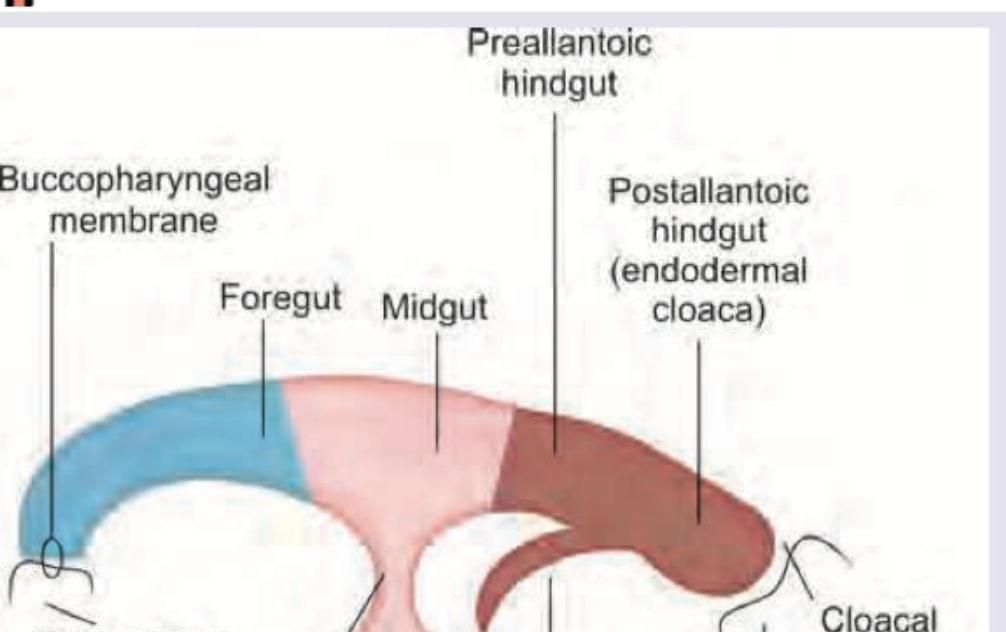
The urorectal septum separates the cloaca into which structures?
Nucleus pulposus is derived from which embryonic structure?
The greater omentum is derived from which of the following embryonic structures?
Explanation: The eye develops from three primary sources: neuroectoderm, surface ectoderm, and mesenchyme (neural crest cells). Understanding the development of the vitreous body is a high-yield topic for NEET-PG. ### **Explanation of the Correct Answer** The **secondary vitreous** (the definitive vitreous) develops from the **neuroectoderm** of the optic cup. It consists of a network of collagen fibers and hyaluronic acid. During the second month of gestation, it begins to form and gradually replaces the primary vitreous, pushing it centrally and anteriorly. Since neuroectoderm is a derivative of the **Ectoderm**, Option A is correct. ### **Analysis of Incorrect Options** * **B. Endoderm:** The endoderm does not contribute to any ocular structures. It primarily forms the lining of the gastrointestinal and respiratory tracts. * **C. Mesoderm:** While the **primary vitreous** (which contains the hyaloid vessels) is derived from the mesenchyme (mesoderm/neural crest), the secondary vitreous is purely ectodermal. Mesoderm also forms the extraocular muscles and the vascular coat. * **D. All:** Ocular development is complex, but specific structures arise from specific layers; they do not arise from all three layers simultaneously. ### **High-Yield Clinical Pearls for NEET-PG** * **Primary Vitreous:** Derived from Mesenchyme (Mesoderm). * **Secondary Vitreous:** Derived from Neuroectoderm (Definitive vitreous). * **Tertiary Vitreous:** Forms the **Zonules of Zinn** (Suspensory ligaments), also derived from neuroectoderm. * **Cloquet’s Canal:** A remnant of the hyaloid artery system within the primary vitreous. * **Lens Origin:** Surface Ectoderm. * **Retina & Optic Nerve Origin:** Neuroectoderm.
Explanation: The development of the Central Nervous System (CNS) begins during the third week of gestation through a process called **neurulation**. The correct answer is **Ectoderm** [2] because the CNS (brain and spinal cord) originates specifically from the **neuroectoderm**. Under the inductive influence of the underlying notochord, the surface ectoderm thickens to form the neural plate, which subsequently folds to form the neural tube—the precursor to the entire CNS. **Analysis of Options:** * **B. Ectoderm (Correct):** It gives rise to the CNS, Peripheral Nervous System (via neural crest cells), sensory epithelia (eye, ear, nose), and the epidermis [2]. * **A. Endoderm (Incorrect):** This layer primarily forms the epithelial lining of the gastrointestinal tract, respiratory tract, and associated glands (liver, pancreas) [2]. * **C. Mesoderm (Incorrect):** This layer forms "middle" structures like muscles, bones, circulatory system, dermis, and the urogenital system. Notably, the **Microglia** (the macrophages of the CNS) are the only CNS cells derived from mesoderm [1]. * **D. All 3 germ layers (Incorrect):** While organs are often composed of tissues from multiple layers, the primary structural and functional components of the nervous system are purely ectodermal. **High-Yield Clinical Pearls for NEET-PG:** * **Neural Crest Cells:** Often called the "4th germ layer," these ectodermal cells migrate to form the PNS, adrenal medulla, melanocytes, and facial cartilage. * **Microglia Exception:** Always remember that while neurons and macroglia (astrocytes/oligodendrocytes) are ectodermal, **microglia are mesodermal** in origin, arising from macrophages outside the nervous system [1]. * **Neural Tube Defects (NTDs):** Failure of the neural tube to close (e.g., Anencephaly or Spina Bifida) is associated with low maternal **Folic Acid** levels and elevated **Alpha-fetoprotein (AFP)** in amniotic fluid.
Explanation: The **styloid process** of the temporal bone is derived from the **Second Pharyngeal Arch (Reichert’s cartilage)**. ### 1. Why the Second Arch is Correct The second pharyngeal arch (Hyoid arch) gives rise to several skeletal structures through its cartilage, Reichert’s cartilage. These include: * **Stapes** (of the middle ear) * **Styloid process** * **Stylohyoid ligament** * **Lesser horn** and **upper body of the hyoid bone** The nerve associated with this arch is the **Facial nerve (CN VII)**. ### 2. Why Other Options are Incorrect * **First Pharyngeal Arch (Mandibular arch):** Its cartilage (Meckel’s cartilage) gives rise to the **Malleus**, **Incus**, sphenomandibular ligament, and the primordium of the mandible. * **Third Pharyngeal Arch:** This arch forms the **Greater horn** and **lower body of the hyoid bone**. Its associated nerve is the Glossopharyngeal nerve (CN IX). * **Fourth Pharyngeal Arch:** This arch (along with the sixth) contributes to the **laryngeal cartilages** (except the epiglottis), specifically the thyroid and cricoid cartilages. ### 3. High-Yield Clinical Pearls for NEET-PG * **Eagle Syndrome:** Occurs due to an elongated styloid process or calcification of the stylohyoid ligament, leading to facial pain and difficulty swallowing (dysphagia). * **Mnemonic for Skeletal Derivatives:** * **1st Arch:** **M**alleus, **I**ncus (**M**eckel’s). * **2nd Arch:** **S**tapes, **S**tyloid, **S**stylohyoid, **S**mall (Lesser) horn of hyoid (**S**econd = **S**). * **3rd Arch:** **G**reater horn of hyoid (**G**reater = 3 syllables). * **Muscles of 2nd Arch:** Muscles of facial expression, Stapedius, Stylohyoid, and Posterior belly of digastric.
Explanation: ### Explanation The development of external genitalia occurs during the indifferent stage (weeks 4–7) and is driven by the presence or absence of androgens (Dihydrotestosterone) [1]. **1. Why the Correct Answer is Right:** In males, the **genital swellings** (also known as labioscrotal swellings) enlarge and fuse in the midline to form the **scrotum** [1]. This fusion is marked by the scrotal raphe. In females, these same swellings remain unfused to form the **labia majora**. **2. Analysis of Incorrect Options:** * **A. Glans penis:** This develops from the **genital tubercle** (specifically the phallus) [1]. In females, the genital tubercle forms the clitoris. * **B. Penile urethra:** This is formed by the fusion of the **urogenital folds** (cloacal folds). These folds enclose the urethral groove to form the spongy urethra. In females, these folds remain separate to form the **labia minora**. * **C. Ischiocavernosus of penis:** This is a skeletal muscle derived from the **mesoderm of the perineum**, not from the external genital primordia. **3. NEET-PG High-Yield Clinical Pearls:** * **Hypospadias:** Results from the failure of the **urogenital folds** to fuse properly on the ventral surface of the penis. * **Bifid Scrotum:** Occurs due to the failure of the **genital swellings** to fuse. * **Homologues Table:** * Genital Tubercle $\rightarrow$ Glans Penis / Clitoris * Urogenital Folds $\rightarrow$ Penile Urethra / Labia Minora * Genital Swellings $ ightarrow$ Scrotum / Labia Majora * **Hormonal Control:** Development of male external genitalia is dependent on **Dihydrotestosterone (DHT)**, converted from testosterone by the enzyme **5-alpha reductase** [1].
Explanation: The development of the vertebral column originates from the **sclerotome** portion of the somites. Each vertebra is formed by the fusion of the caudal half of one sclerotome with the cranial half of the adjacent sclerotome. **Why Ventral Sclerotome is Correct:** The sclerotome differentiates into two main functional components: 1. **Ventral Sclerotome:** Surrounds the notochord to form the **vertebral body** and intervertebral discs. 2. **Dorsal Sclerotome:** Migrates dorsally to form the **vertebral (neural) arch** and spinous process. A **Hemivertebra** occurs due to the failure of one of the two chondrification centers in the vertebral body to develop or fuse. Since the vertebral body is derived from the ventral sclerotome, its malformation (resulting in a wedge-shaped bone) is a defect of this specific embryonic layer. **Analysis of Incorrect Options:** * **Dorsal Sclerotome:** Defects here lead to abnormalities of the vertebral arch, such as **Spina Bifida**, rather than the vertebral body. * **Intermediate Cell Mass:** This gives rise to the **urogenital system** (kidneys and gonads), not the skeletal system. * **Notochord:** While it induces the formation of the vertebral body, its primary remnant in adults is the **nucleus pulposus** of the intervertebral disc. **High-Yield Clinical Pearls for NEET-PG:** * **Hemivertebra** is the most common cause of **congenital scoliosis**. * **Klippel-Feil Syndrome:** Characterized by the fusion of cervical vertebrae (brevicollis). * **Chordoma:** A rare malignant tumor arising from persistent remnants of the **notochord**, most commonly found in the sacrococcygeal or spheno-occipital regions.
Explanation: ### Explanation The **acrosome reaction** is a vital step in fertilization that allows the sperm to penetrate the protective layers of the oocyte. [1] **Why Option B is correct:** The acrosome reaction is specifically triggered when the sperm head binds to the **ZP3 receptors** (zona pellucida glycoprotein 3) on the **zona pellucida**. This binding induces the release of acrosomal enzymes, primarily **Acrosin** (a serine protease) and **Hyaluronidase**. These enzymes locally digest the zona pellucida, enabling the sperm to reach the perivitelline space. [1] **Why other options are incorrect:** * **Option A:** Entering the uterine cavity is associated with **Capacitation**, a functional maturation process where the glycoprotein coat and seminal plasma proteins are removed from the sperm's plasma membrane. * **Option C:** Penetration of the **corona radiata** occurs *before* the acrosome reaction. [1] It is achieved primarily through the mechanical swimming movements of the sperm and some membrane-bound hyaluronidase; however, the formal "acrosome reaction" is not triggered until the zona pellucida is reached. [1] * **Option D:** Penetration of the oocyte cell membrane occurs *after* the acrosome reaction is complete and the sperm has traversed the zona pellucida. [1] **High-Yield Clinical Pearls for NEET-PG:** * **Capacitation:** Occurs in the female reproductive tract (mainly the isthmus of the fallopian tube) and is a prerequisite for the acrosome reaction. * **Cortical/Zona Reaction:** Triggered by the entry of the sperm into the oocyte; it prevents **polyspermy** by making the zona pellucida impermeable to other sperm. * **Key Enzyme:** **Acrosin** is the most important enzyme for digesting the zona pellucida.
Explanation: **Explanation:** The **paraxial mesoderm** organizes into segments called **somites** (and somitomeres in the head region). These give rise to the **myotome**, which forms the skeletal muscles of the body wall, limbs, and head. **Why Detrusor is the correct answer:** The **Detrusor muscle** is a smooth muscle of the urinary bladder. Most smooth muscles and cardiac muscles are derived from the **splanchnic layer of lateral plate mesoderm**. Specifically, the detrusor muscle develops from the mesoderm associated with the urogenital sinus. Since it is not a skeletal muscle, it does not originate from the paraxial mesoderm. **Analysis of incorrect options:** * **Masseter:** This is a muscle of mastication derived from the **1st pharyngeal arch**. All pharyngeal arch muscles originate from the **paraxial mesoderm** (specifically cranial somitomeres). * **Diaphragm:** The skeletal muscle of the diaphragm originates from **cervical somites (C3-C5)**, which migrate to the septum transversum. Somites are a direct product of paraxial mesoderm. * **Biceps femoris:** This is a limb muscle. All limb muscles develop from the **myotome of somites** (paraxial mesoderm) that migrate into the limb buds. **High-Yield NEET-PG Pearls:** 1. **Exceptions to Mesoderm:** The **Iris muscles** (sphincter and dilator pupillae) and **myoepithelial cells** (mammary/sweat glands) are unique because they are derived from the **Ectoderm**. 2. **Tongue Muscles:** All are derived from **occipital somites** (paraxial mesoderm), except the Palatoglossus (4th arch). 3. **Extraocular Muscles:** Derived from **pre-otic somitomeres** (paraxial mesoderm).
Explanation: ### Explanation **Underlying Concept:** During the 4th to 7th weeks of development, the **cloaca** (the terminal part of the hindgut) is a common chamber for the digestive and urinary tracts. The **urorectal septum**, a layer of mesoderm, grows caudally toward the cloacal membrane [1]. This septum divides the cloaca into two distinct parts: 1. **Dorsal (Posterior) part:** Becomes the **rectum** and the upper part of the anal canal. 2. **Ventral (Anterior) part:** Becomes the **primitive urogenital sinus** (which later develops into the bladder, urethra, and associated glands) [1]. **Analysis of Options:** * **Option A & B:** These are incorrect because the bladder, urethra, and anus are *derivative* structures that form later from the urogenital sinus and the anal pit, respectively. The urorectal septum performs the primary division into the rectum and urogenital sinus first [1]. * **Option C:** The allantois is a diverticulum that extends from the ventral wall of the cloaca into the umbilical cord; it is not a product of cloacal division. **Clinical Pearls & High-Yield Facts for NEET-PG:** * **Perineal Body:** The point where the urorectal septum fuses with the cloacal membrane becomes the **primitive perineum** (perineal body). * **Developmental Defects:** Failure of the urorectal septum to divide the cloaca properly leads to **urorectal fistulas** (e.g., rectovesical, rectourethral, or rectovaginal fistulas). * **Anal Membrane:** The cloacal membrane is divided into the **anal membrane** (posteriorly) and the **urogenital membrane** (anteriorly). * **Proctodeum:** The lower 1/3rd of the anal canal is formed by the invagination of ectoderm called the proctodeum, while the upper 2/3rd is endodermal (from the hindgut).
Explanation: The **Nucleus pulposus** is the gelatinous core of the intervertebral disc [1]. It is the direct adult remnant of the **Notochord** (Option B). During embryonic development, the notochord serves as the primary longitudinal skeletal element. As the vertebral bodies form, the notochord disappears within the vertebrae but persists and expands in the areas of the future intervertebral discs to form the nucleus pulposus. **Why other options are incorrect:** * **Neural crest (Option A):** These cells give rise to a vast array of structures, including the peripheral nervous system (ganglia), adrenal medulla, melanocytes, and craniofacial cartilage, but they do not contribute to the intervertebral discs. * **Sclerotome (Option C):** This is a subdivision of the somite (paraxial mesoderm). The sclerotome gives rise to the **Annulus fibrosus** (the tough outer ring of the disc) and the **vertebral bodies** themselves, but not the central nucleus pulposus. **High-Yield Clinical Pearls for NEET-PG:** * **Chordoma:** A rare, slow-growing malignant tumor that arises from persistent remnants of the notochord. It most commonly occurs at the base of the skull (clivus) or the sacrococcygeal region. * **Remnant Summary:** * Notochord $\rightarrow$ Nucleus pulposus. * Sclerotome $\rightarrow$ Vertebral body + Annulus fibrosus. * **Inductive Role:** The notochord is essential for inducing the overlying ectoderm to thicken and form the neural plate (neurulation).
Explanation: **Explanation:** The **Greater Omentum** is a large, apron-like fold of peritoneum that hangs from the greater curvature of the stomach. During the 4th week of development, the stomach is attached to the posterior abdominal wall by the **dorsal mesogastrium**. As the stomach rotates 90 degrees around its longitudinal axis, the dorsal mesogastrium bulges leftward and downward, eventually fusing to form the four-layered greater omentum. **Analysis of Options:** * **Dorsal Mesogastrium (Correct):** This structure gives rise to the greater omentum, the gastrosplenic ligament, and the lienorenal (splenorenal) ligament. * **Dorsal Mesoduodenum (Incorrect):** This gives rise to the mesentery of the duodenum. Most of it disappears as the duodenum becomes retroperitoneal (except for the first part). * **Pericardioperitoneal Canal (Incorrect):** These are the primitive body cavities that connect the thoracic and abdominal regions before the formation of the diaphragm. * **Pleuropericardial Membranes (Incorrect):** These are lateral folds that eventually fuse to form the fibrous pericardium, separating the pericardial cavity from the pleural cavities. **High-Yield Clinical Pearls for NEET-PG:** * **"Policeman of the Abdomen":** The greater omentum is known for its ability to migrate to sites of inflammation (e.g., appendicitis) to wall off infections. * **Ventral Mesogastrium Derivatives:** Unlike the dorsal counterpart, the ventral mesogastrium gives rise to the **lesser omentum** (hepatogastric and hepatoduodenal ligaments) and the **falciform ligament** [1]. * **Spleen Development:** The spleen develops as a mesodermal proliferation *within* the dorsal mesogastrium.
Gametogenesis and Fertilization
Practice Questions
Early Embryonic Development
Practice Questions
Placentation
Practice Questions
Development of Nervous System
Practice Questions
Development of Cardiovascular System
Practice Questions
Development of Gastrointestinal System
Practice Questions
Development of Urogenital System
Practice Questions
Development of Musculoskeletal System
Practice Questions
Development of Head and Neck
Practice Questions
Congenital Anomalies
Practice Questions
Teratology
Practice Questions
Molecular Mechanisms in Development
Practice Questions
Get full access to all questions, explanations, and performance tracking.
Start For Free