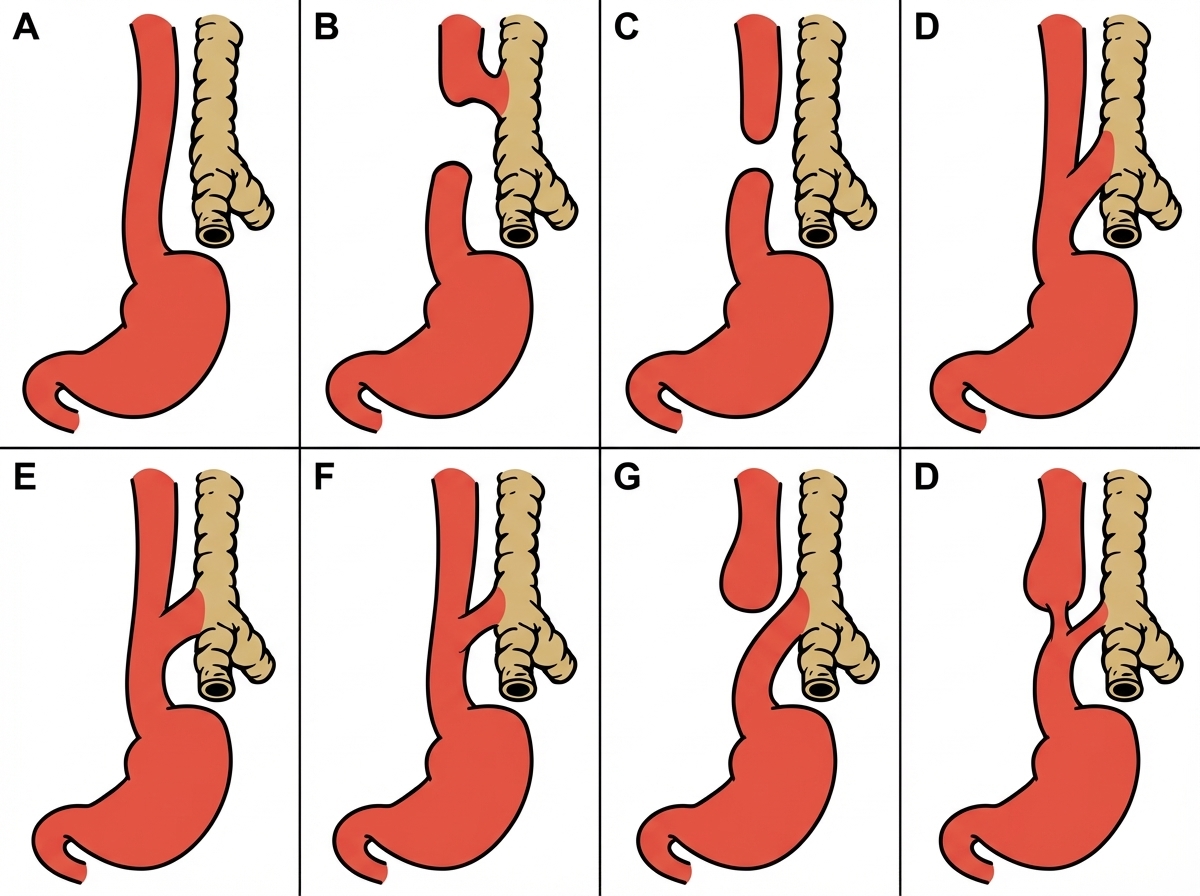
Which of the following is NOT a fetal membrane?
The embryonic period extends up to which gestational week?
The limbic membrane develops from which germ layers?
Pulmonary veins develop from which embryonic structure?
Which of the following muscles is not a derivative of mesoderm?
From which germ layer do ameloblasts develop?
Around which structure does the rotation of the midgut loop occur?
Failure of fusion of which of the following facial ridges results in the formation of an oblique facial cleft, leading to failure of nasolacrimal duct formation?

At what stage of embryonic development does an embryo normally begin to implant in the endometrium?
Which of the following structures develops from the paraxial mesoderm?
Explanation: ### Explanation The fetal membranes are the extra-embryonic structures that surround the developing fetus and facilitate protection, nutrition, and gas exchange [1]. They are derived entirely from the **zygote** (trophoblast and extra-embryonic mesoderm). **Why "Yolk sac" is the correct answer (in the context of this question):** In classical embryology, the **four primary fetal membranes** are the **Chorion, Amnion, Yolk sac, and Allantois** [3]. However, in the context of clinical anatomy and maternal-fetal interface, the **Decidua** is often the ".odd one out" because it is of **maternal origin** (modified uterine endometrium), whereas the others are fetal in origin [2]. *Note: There is a common academic debate regarding this specific MCQ. If the question asks which is NOT a fetal membrane and includes Decidua, Decidua is the most accurate answer because it is maternal [1]. However, if the question follows the logic that the Yolk sac is a "vestigial" or "transient" structure in humans compared to the definitive membranes, it is sometimes used as the distractor. In standard NEET-PG patterns, always remember: **Decidua = Maternal; Chorion/Amnion/Yolk Sac/Allantois = Fetal.*** **Analysis of Options:** * **Chorion (Option A):** The outermost membrane derived from trophoblast; it forms the fetal component of the placenta [1]. * **Amnion (Option B):** The innermost membrane that encloses the amniotic cavity and fluid, providing a buoyant environment [4]. * **Decidua capsularis (Option C):** This is the part of the **maternal endometrium** that covers the blastocyst [2]. Since it is maternal tissue, it is technically not a "fetal" membrane. * **Yolk sac (Option D):** Though it becomes vestigial, it is a true fetal membrane responsible for early hematopoiesis and germ cell origin [3]. **High-Yield Clinical Pearls for NEET-PG:** 1. **Origin:** Amnion and Chorion are fetal; Decidua is maternal [2]. 2. **Yolk Sac Function:** First site of **hematopoiesis** (up to 6 weeks) and the source of **primordial germ cells** [3]. 3. **Allantois:** Its remnants form the **urachus** (median umbilical ligament) [3]. 4. **Chorion Frondosum:** The part of the chorion that forms the definitive placenta [2].
Explanation: ### Explanation The prenatal development of a human is divided into three distinct stages: the **pre-embryonic period** (conception to 2 weeks), the **embryonic period** (3rd to 8th week), and the **fetal period** (9th week until birth). **Why 8 weeks is correct:** The embryonic period concludes at the end of the **8th week post-fertilization** (Day 56). This stage is critical because it encompasses **organogenesis**—the formation of all major internal and external structures [1]. By the end of the 8th week, the embryo has a distinctly human appearance, and the primordia of all organ systems are established. **Analysis of Incorrect Options:** * **6 weeks:** While rapid development occurs here (heartbeat begins around week 4), organogenesis is incomplete. * **10 weeks:** By this stage, the organism is already considered a fetus [2]. The transition occurs at the start of the 9th week. * **12 weeks:** This marks the end of the first trimester. While clinically significant for screening (e.g., NT scan), the embryonic phase ended four weeks prior. **High-Yield Clinical Pearls for NEET-PG:** * **Teratogenicity:** The embryonic period (Weeks 3–8) is the **period of maximum susceptibility** to teratogens [1]. Insults during this time lead to major structural anomalies. * **The "All-or-None" Period:** Insults during the first 2 weeks (pre-embryonic) usually result in either death of the conceptus or total recovery without malformation [1]. * **Transition:** The hallmark of the transition from embryo to fetus is the replacement of undifferentiated tissues with recognizable organ systems and rapid body growth.
Explanation: ### Explanation The **limbic membrane** (also known as the **cloacal membrane**) is a transient embryonic structure located at the caudal end of the embryonic disc. Its development is rooted in the early stages of gastrulation. **1. Why Ectoderm and Endoderm is Correct:** During the third week of development, the trilaminar embryonic disc forms. However, there are two specific regions where the **mesoderm fails to migrate** between the other two layers: * **Cranially:** The Prochordal (Buccopharyngeal) membrane. * **Caudally:** The Cloacal (Limbic) membrane. In these regions, the **surface ectoderm** remains in direct apposition with the **underlying endoderm** [1]. Therefore, the limbic membrane is strictly a bilaminar structure composed of these two germ layers [1]. **2. Why Other Options are Incorrect:** * **Mesoderm (Options A, C, D):** These are incorrect because the defining feature of the limbic/cloacal membrane is the **absence of intervening mesoderm**. If mesoderm were present, the membrane would not be able to rupture later in development to form the urogenital and anal orifices [2]. **3. Clinical Pearls & High-Yield Facts for NEET-PG:** * **Fate of the Membrane:** The cloacal membrane later divides into the **urogenital membrane** (anteriorly) and the **anal membrane** (posteriorly) following the growth of the urorectal septum. * **Rupture:** The anal membrane typically ruptures to establish continuity between the rectum (endoderm) and the anal canal (ectoderm) [2]. * **Clinical Correlation:** Failure of the cloacal membrane to rupture or abnormal breakdown leads to **imperforate anus** or **anal atresia**. * **The "Rule of Two":** Remember that both the **Buccopharyngeal** and **Cloacal** membranes are bilaminar (Ectoderm + Endoderm), unlike the rest of the trilaminar embryo.
Explanation: **Explanation:** The development of the pulmonary veins is a unique process in cardiac embryology. Initially, the lungs are drained by the systemic venous plexus. However, as the heart develops, a **single common pulmonary vein** arises as an outgrowth from the **posterior wall of the primitive left atrium**, just to the left of the septum primum. As the left atrium expands, this common pulmonary vein and its first two generations of branches are gradually **incorporated (absorbed)** into the atrial wall. This process, known as intussusception, results in the formation of the smooth-walled part of the adult left atrium (*sinus venarum*) and explains why four separate pulmonary veins eventually open into it. **Analysis of Incorrect Options:** * **Sixth aortic arch:** This gives rise to the proximal part of the pulmonary arteries and the ductus arteriosus, not the veins. * **Left common cardinal vein:** This contributes to the formation of the coronary sinus and the oblique vein of the left atrium (Vein of Marshall). * **Left vitelline vein:** This contributes to the formation of the hepatic sinusoids and the portal venous system. **High-Yield Clinical Pearls for NEET-PG:** * **Total Anomalous Pulmonary Venous Return (TAPVR):** Occurs when the common pulmonary vein fails to connect with the left atrium and instead drains into systemic veins (e.g., SVC or coronary sinus) [1]. * **Smooth vs. Rough Atrium:** The smooth part of the left atrium is derived from the absorbed pulmonary veins, while the rough part (auricle) is derived from the primitive atrium. * **Cor Triatriatum Sinister:** A rare anomaly where a persistent membrane divides the left atrium into two chambers, often due to incomplete incorporation of the common pulmonary vein [1].
Explanation: ### Explanation The correct answer is **D. Dilators of pupil**. The fundamental concept in embryology is that almost all muscle tissue in the human body originates from the **Mesoderm**. However, there are specific, high-yield exceptions where muscles are derived from the **Ectoderm**. **1. Why "Dilators of pupil" is correct:** The **Dilator pupillae** and **Sphincter pupillae** muscles of the iris are unique because they develop from the **neural ectoderm** (specifically the outer layer of the optic cup). This is an evolutionary and developmental exception to the rule that muscles are mesodermal. **2. Why the other options are incorrect:** * **A. Skeletal muscles:** These are derived from the **paraxial mesoderm** (somites and somitomeres). * **B. Smooth muscles:** Most smooth muscles (e.g., in the gut and respiratory tract) develop from the **splanchnic mesoderm**, while those in blood vessel walls develop from **local mesoderm**. * **C. Cardiac myocytes:** These originate from the **splanchnic mesoderm** (specifically the cardiogenic area/heart tube). **3. NEET-PG High-Yield Clinical Pearls:** * **Ectodermal Muscle Exceptions:** Memorize these three for the exam: 1. **Dilator pupillae** (Iris) 2. **Sphincter pupillae** (Iris) 3. **Myoepithelial cells** of mammary and sweat glands. * **Ciliary Muscle:** Unlike the iris muscles, the ciliary muscle is derived from **mesenchyme** (neural crest/mesoderm origin), making it a common distractor in questions. * **Muscles of Tongue:** All are derived from occipital myotomes (mesoderm) except the Palatoglossus (Pharyngeal arch derivative). * **Extraocular Muscles:** Derived from pre-otic somites (mesoderm) [1].
Explanation: **Explanation:** The development of the tooth involves a complex interaction between the oral epithelium and the underlying mesenchyme. **Ameloblasts**, the cells responsible for secreting dental enamel, are derived from the **Inner Enamel Epithelium (IEE)** of the enamel organ. The enamel organ itself develops as a downgrowth of the **dental lamina**, which originates directly from the **surface ectoderm** [1] lining the primitive oral cavity (stomodeum). **Analysis of Options:** * **Surface Ectoderm (Correct):** It gives rise to the enamel organ, which contains ameloblasts. Enamel is the only dental tissue derived from ectoderm [1]. * **Neuroectoderm:** While the **Neural Crest Cells** (derived from neuroectoderm) migrate into the branchial arches to form "ectomesenchyme," they give rise to the dental papilla (odontoblasts/dentin and pulp) and dental follicle (cementum and periodontal ligament), but not the enamel. * **Mesoderm:** Although most connective tissues are mesodermal, the specialized connective tissues of the tooth are derived from ectomesenchyme (neural crest). Mesoderm contributes only to the vascular supply of the tooth. * **Endoderm:** The endoderm forms the lining of the gastrointestinal and respiratory tracts; it does not contribute to dental structures. **High-Yield Clinical Pearls for NEET-PG:** * **Odontoblasts** (form dentin) are derived from **Neural Crest Cells** (Ectomesenchyme). * **Enamel** is the hardest substance in the body and is **acellular** and **non-vital** (it cannot regenerate). * **Life Cycle of Ameloblast:** Includes stages of morphogenetic, organizing, formative (secretory), maturative, protective, and desmolytic. * **Tomes’ Process:** The projection of the ameloblast involved in the secretion of enamel matrix.
Explanation: The midgut is the portion of the embryo that extends from the distal half of the duodenum to the junction of the proximal two-thirds and distal one-third of the transverse colon [1]. Its development is characterized by rapid elongation and a complex **270° counter-clockwise rotation** [3]. **Why the Correct Answer (A) is Right:** The **Superior Mesenteric Artery (SMA)** serves as the central axis for this rotation [3]. During the 6th week of development, the midgut forms a U-shaped loop that herniates into the umbilical cord (physiological herniation) [1]. The SMA runs down the center of this loop, dividing it into a cranial (pre-arterial) limb and a caudal (post-arterial) limb. The entire loop rotates around the SMA as it returns to the abdominal cavity by the 10th week. **Why the Incorrect Options are Wrong:** * **B. Inferior Mesenteric Artery:** This is the artery of the **hindgut**. It supplies structures from the distal third of the transverse colon to the upper anal canal [2]. * **C. Middle-colic Artery:** This is a branch of the SMA. While it supplies the midgut, it is not the primary axis of rotation. * **D. Superior Rectal Artery:** This is the terminal continuation of the inferior mesenteric artery; it is associated with the hindgut and the rectum. **NEET-PG High-Yield Pearls:** * **Direction & Degree:** The rotation is **270° counter-clockwise** in total (90° during herniation, 180° during return). * **Clinical Correlation:** Failure or reversal of this rotation leads to **Malrotation**, which can cause **Midgut Volvulus** (twisting around the SMA) or "Ladd’s bands" causing duodenal obstruction [4]. * **SMA Syndrome:** A clinical condition where the third part of the duodenum is compressed between the SMA and the Abdominal Aorta.
Explanation: ***Maxillary and nasal prominence B*** - The **oblique facial cleft** results from failure of fusion between the **maxillary prominence** and **lateral nasal prominence**, which normally forms the **nasolacrimal groove**. - This groove subsequently **canalizes** to form the **nasolacrimal duct**, so fusion failure leads to absence of this important drainage pathway. *Maxillary and nasal prominence A* - This option represents fusion between **maxillary** and **medial nasal prominence**, failure of which causes **median cleft lip**. - Does not involve the **nasolacrimal groove formation** or result in oblique facial clefts. *Maxillary and nasal prominence C* - This option does not correspond to a recognized **facial prominence fusion** pattern in embryological development. - **Oblique facial clefts** specifically result from maxillary-lateral nasal prominence fusion failure, not this combination. *Maxillary and nasal prominence D* - This option also does not represent a standard **embryological fusion** pattern relevant to facial development. - **Nasolacrimal duct formation** specifically depends on maxillary-lateral nasal prominence interaction, not this variant.
Explanation: ### Explanation **Correct Answer: A. Blastocyst** Implantation is the process by which the developing embryo attaches to and penetrates the maternal endometrium. This process typically begins on **day 6 post-fertilization**. By this time, the embryo has reached the **blastocyst** stage [1]. A blastocyst is characterized by a fluid-filled cavity (blastocele), an inner cell mass (embryoblast), and an outer layer of cells called the **trophoblast** [2]. The trophoblast is crucial as it differentiates into the cytotrophoblast and syncytiotrophoblast, the latter of which secretes enzymes to erode the endometrial lining, facilitating implantation [2]. **Why the other options are incorrect:** * **B. Four-cell stage:** This occurs approximately 40–50 hours after fertilization while the embryo is still traveling through the fallopian tube [1]. * **C. Morula:** This is a solid ball of 16–32 cells formed by day 3–4. The morula enters the uterine cavity but must transform into a blastocyst and undergo "hatching" (shedding the zona pellucida) before implantation can occur [1]. * **D. Trilaminar embryo:** This stage (ectoderm, mesoderm, and endoderm) is reached during the **third week** of development (gastrulation), well after implantation has already begun. **NEET-PG High-Yield Pearls:** * **Zona Pellucida:** Must disappear ("hatching") for implantation to occur [1]. If it persists, it prevents implantation. * **Window of Implantation:** Usually occurs between days 20–24 of a standard 28-day menstrual cycle [1]. * **Site of Implantation:** Most commonly the upper posterior wall of the uterine body. * **hCG Secretion:** Begins once the syncytiotrophoblast invades the endometrium, which is the basis for pregnancy tests [2].
Explanation: ### Explanation The intraembryonic mesoderm differentiates into three distinct regions: **paraxial**, **intermediate**, and **lateral plate mesoderm**. **Why Skeletal Muscles are the Correct Answer:** The **paraxial mesoderm** organizes into segments called **somites** (and somitomeres in the head region). Each somite further differentiates into: 1. **Sclerotome:** Forms the vertebrae and ribs. 2. **Myotome:** Forms the **skeletal muscles** of the body wall and limbs. 3. **Dermatome:** Forms the dermis of the skin. Therefore, skeletal muscles are a direct derivative of the paraxial mesoderm. **Analysis of Incorrect Options:** * **A & B (Parietal and Visceral Peritoneum):** These develop from the **lateral plate mesoderm** [1]. The lateral plate splits into the **somatic (parietal) layer**, which forms the parietal peritoneum, and the **splanchnic (visceral) layer**, which forms the visceral peritoneum [1] and the smooth muscle of the gut. * **D (Peritoneal Cavity):** This is the space formed *between* the somatic and splanchnic layers of the lateral plate mesoderm (the intraembryonic coelom). **High-Yield Clinical Pearls for NEET-PG:** * **Intermediate Mesoderm:** Gives rise to the urogenital system (kidneys, gonads, and associated ducts). * **Notochord:** Derived from axial mesoderm; its remnant in adults is the **Nucleus Pulposus** of the intervertebral disc. * **Head Muscles:** While most skeletal muscles come from somites, the muscles of mastication, facial expression, and the pharynx develop from the mesoderm of the **pharyngeal arches**.
Gametogenesis and Fertilization
Practice Questions
Early Embryonic Development
Practice Questions
Placentation
Practice Questions
Development of Nervous System
Practice Questions
Development of Cardiovascular System
Practice Questions
Development of Gastrointestinal System
Practice Questions
Development of Urogenital System
Practice Questions
Development of Musculoskeletal System
Practice Questions
Development of Head and Neck
Practice Questions
Congenital Anomalies
Practice Questions
Teratology
Practice Questions
Molecular Mechanisms in Development
Practice Questions
Get full access to all questions, explanations, and performance tracking.
Start For Free