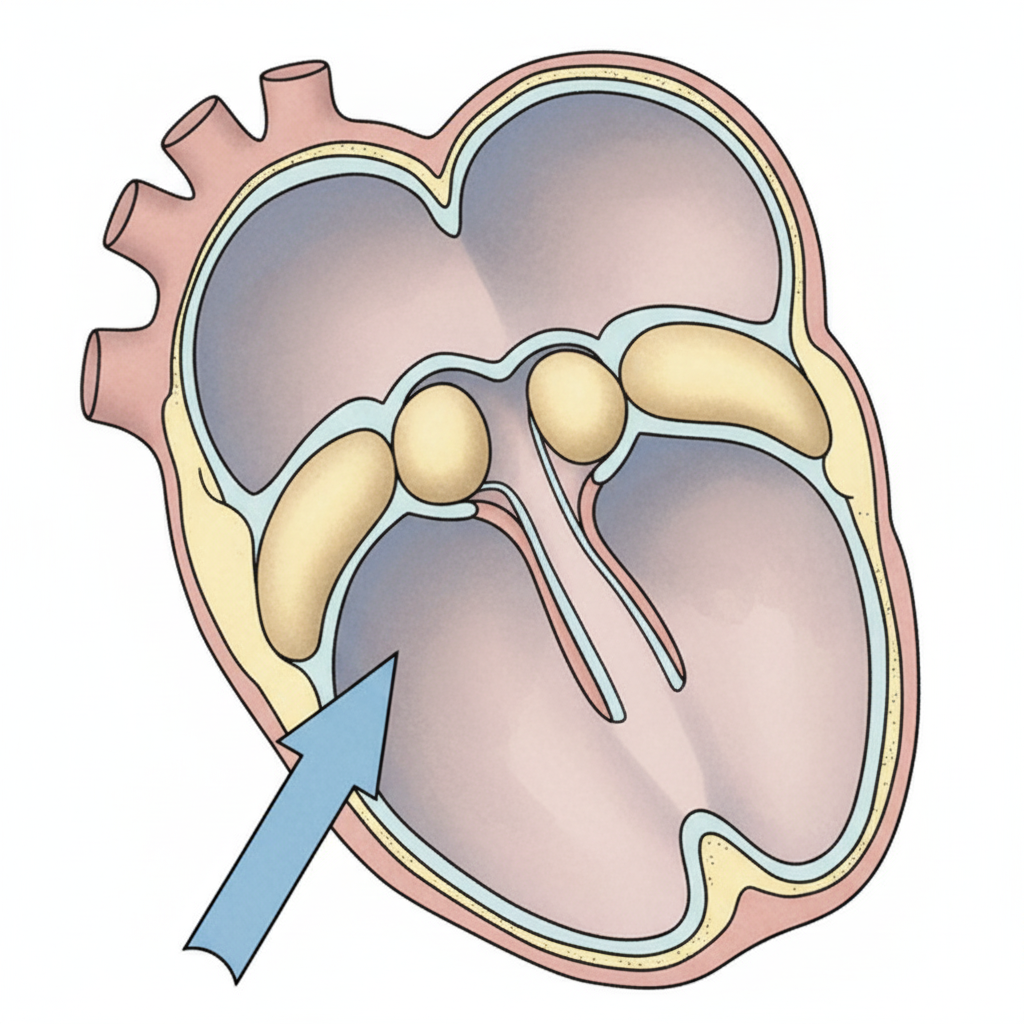
All of the following events occur at or shortly after birth EXCEPT?
All of the following are developed from the 1st pharyngeal pouch except?
Which nerve is derived from the second branchial arch?
The lens of the eye develops from which embryonic germ layer?
If the zygote divides between 4-8 days post fertilization, which type of twinning occurs?
What is the most common congenital anomaly of the pancreas?
Double aorta occurs due to which of the following embryological events?
Which of the following structures is NOT derived from mesoderm?
Based on the appearance of these two siblings, which pharyngeal arch appears to be most affected?

The philtrum of the upper lip is formed largely by which embryonic structure?
Explanation: The transition from fetal to neonatal circulation involves a series of rapid physiological changes triggered by the first breath and the clamping of the umbilical cord [3]. **Why Option A is the Correct Answer (The Exception):** In fetal life, the **ductus arteriosus** shunts blood from the pulmonary artery to the aorta to **bypass the non-functional lungs** [1]. At birth, when the lungs expand and oxygen levels rise, the ductus arteriosus closes [3]. This closure ensures that blood is directed **into** the lungs for oxygenation, rather than bypassing them. Therefore, the statement that closure "allows blood to bypass the lungs" is physiologically incorrect. **Analysis of Other Options:** * **Option B:** In the fetus, the shunt is right-to-left (Pulmonary artery to Aorta) [1]. After birth, if it remained open, the higher systemic pressure would cause a left-to-right shunt (Aorta to Pulmonary artery). Closure prevents this abnormal flow. * **Option C:** As pulmonary blood flow increases, venous return to the left atrium rises [3]. This pressure pushes the septum primum against the septum secundum, functionally closing the **foramen ovale** and ending the right-to-left atrial shunt [2]. * **Option D:** Upon birth, the low-resistance placental circuit is removed (increasing systemic resistance) and pulmonary blood flow increases. This significantly **increases the blood pressure in the left atrium**, which is the primary mechanism for closing the foramen ovale [3]. **NEET-PG High-Yield Pearls:** * **Functional vs. Anatomical Closure:** The ductus arteriosus closes functionally within 10–15 hours (mediated by **Bradykinin** and decreased **Prostaglandin E2**) but takes 2–3 weeks for anatomical closure (forming the **Ligamentum arteriosum**) [3]. * **Indomethacin:** A prostaglandin inhibitor used to medically close a Patent Ductus Arteriosus (PDA). * **Prostaglandin E1:** Used to keep the ductus open in cyanotic heart diseases. * **Remnants:** Foramen ovale becomes **Fossa ovalis**; Ductus venosus becomes **Ligamentum venosum** [2].
Explanation: ### Explanation The question asks which structure is **not** a derivative of the 1st pharyngeal pouch. This is a high-yield conceptual point in embryology regarding the transition from embryonic precursors to adult structures. **Why "Tubotympanic Recess" is the correct answer:** The **Tubotympanic recess** is the *precursor* (the embryonic diverticulum) formed by the 1st pharyngeal pouch itself. It is not a structure "developed from" the pouch in the final sense; rather, it is the intermediate stage. The question asks for the final derivatives. While the pouch expands to form the recess, the recess then differentiates into the specific anatomical structures listed in the other options. **Analysis of Incorrect Options (Derivatives of the 1st Pouch):** The 1st pharyngeal pouch expands laterally to contact the 1st pharyngeal cleft. The distal portion dilates, while the proximal portion remains narrow. * **A. Pharyngotympanic (Eustachian) tube:** Formed from the narrow proximal part of the tubotympanic recess. * **B. Middle ear cavity (Tympanic cavity):** Formed from the distal expansion of the tubotympanic recess. * **C. Tympanic antrum:** Formed by the expansion of the tympanic cavity into the mastoid part of the temporal bone. **NEET-PG High-Yield Pearls:** * **1st Pouch:** Middle ear, Eustachian tube, Internal layer of the tympanic membrane. * **2nd Pouch:** Palatine tonsil and tonsillar fossa. * **3rd Pouch:** Inferior parathyroid gland and Thymus (Note: It migrates further down than the 4th). * **4th Pouch:** Superior parathyroid gland and Ultimobranchial body (Parafollicular C-cells of the thyroid). * **Mnemonic:** "Old **E**ars **T**onight **I**nferior **S**uperior" (Eustachian tube, Tonsils, Inferior parathyroid, Superior parathyroid).
Explanation: ### Explanation The pharyngeal (branchial) arches are fundamental structures in head and neck development. Each arch contains a specific cranial nerve, skeletal element, and muscle group. **The Correct Answer: C. Facial nerve** The **second pharyngeal arch** (also known as the **Hyoid arch**) is innervated by the **Facial nerve (CN VII)**. During development, the muscles of facial expression, the stapedius, stylohyoid, and the posterior belly of the digastric migrate from this arch, carrying the facial nerve with them. **Analysis of Incorrect Options:** * **A. Glossopharyngeal nerve (CN IX):** This is the nerve of the **third pharyngeal arch**. It supplies the stylopharyngeus muscle and provides sensation to the posterior third of the tongue. * **B. Trigeminal nerve (CN V):** Specifically the mandibular branch ($V_3$), this is the nerve of the **first pharyngeal arch** (Mandibular arch). It supplies the muscles of mastication. * **D. Vagal nerve (CN X):** The vagus nerve supplies the **fourth and sixth arches**. The superior laryngeal nerve supplies the 4th arch (cricothyroid), while the recurrent laryngeal nerve supplies the 6th arch (intrinsic muscles of the larynx). **High-Yield Clinical Pearls for NEET-PG:** * **Skeletal Derivatives of 2nd Arch:** Stapes, Styloid process, Stylohyoid ligament, and the Lesser cornu (and upper body) of the hyoid bone. (Mnemonic: **S**tapes, **S**tyloid, **S**tylohyoid). * **Treacher Collins Syndrome:** Failure of neural crest cell migration into the **first arch**, leading to mandibular hypoplasia and zygomatic bone defects. * **Goldenhar Syndrome:** Abnormalities involving the **first and second arches**, often presenting with hemifacial microsomia and preauricular tags.
Explanation: ### Explanation The development of the eye is a complex process involving multiple embryonic layers. The **lens** specifically develops from the **surface ectoderm**. **1. Why Surface Ectoderm is Correct:** During the 4th week of development, the outgrowth of the forebrain (optic vesicle) comes into contact with the overlying surface ectoderm. This contact induces the surface ectoderm to thicken and form the **lens placode**. This placode subsequently invaginates to form the **lens vesicle**, which eventually detaches to become the mature lens. **2. Analysis of Incorrect Options:** * **Neuroectoderm:** This gives rise to the **retina** (both neural and pigmented layers), the posterior layers of the iris, and the **optic nerve** [2]. * **Mesoderm:** This contributes to the **extraocular muscles** and the vascular endothelium. It also forms the temporal portion of the sclera. * **Neural Crest:** These cells migrate to form the **corneal stroma and endothelium**, the majority of the **sclera**, and the ciliary muscle [3]. **3. High-Yield Clinical Pearls for NEET-PG:** * **Induction:** The formation of the lens is a classic example of **embryonic induction**; if the optic vesicle fails to reach the surface ectoderm, the lens will not develop (Aphakia). * **Dual Origin of the Cornea:** Remember that the corneal epithelium comes from surface ectoderm, while the stroma and endothelium come from neural crest cells [1]. * **Vitreous Body:** The primary vitreous is mesenchymal, while the secondary (definitive) vitreous is thought to be neuroectodermal. * **Pax6:** This is the "master gene" for eye development; mutations lead to **Aniridia**.
Explanation: ### Explanation The type of monozygotic (identical) twinning depends entirely on the **timing of the zygote's division**. **1. Why Monochorionic Diamniotic (MCDA) is correct:** Between **days 4 and 8**, the zygote has reached the **blastocyst stage**. At this point, the outer layer (trophoblast), which forms the placenta/chorion, has already differentiated, but the inner cell mass (which forms the embryo and amnion) has not yet split [1]. Therefore, the twins will share one placenta (monochorionic) but develop within two separate amniotic sacs (diamniotic) [1]. This is the most common type of monozygotic twinning (~75%) [1]. **2. Analysis of Incorrect Options:** * **Dichorionic Diamniotic (DCDA):** Occurs if division happens early, between **days 0–3** (morula stage) [1]. Since differentiation hasn't occurred, both embryos develop their own placentas and sacs [1]. * **Monochorionic Monoamniotic (MCMA):** Occurs if division happens between **days 8–13** [1]. By this time, the amniotic sac has already formed, so the twins share both the placenta and the sac [1]. * **Conjoined Twins:** Occur if division is delayed beyond **day 13**, resulting in incomplete separation of the embryonic disc [1]. **3. High-Yield Clinical Pearls for NEET-PG:** * **The "Rule of 4":** 0–4 days (DCDA), 4–8 days (MCDA), 8–12 days (MCMA), >13 days (Conjoined). * **Twin-Twin Transfusion Syndrome (TTTS):** A serious complication seen exclusively in **Monochorionic** pregnancies due to vascular anastomoses in the shared placenta. * **USG Signs:** The **"Lambda (λ) sign"** indicates DCDA, while the **"T-sign"** indicates MCDA.
Explanation: Explanation: Pancreas Divisum is the most common congenital anomaly of the pancreas, occurring in approximately 5–10% of the general population. It results from the failure of the dorsal and ventral pancreatic buds to fuse during the 7th week of gestation [1]. Consequently, the bulk of the pancreas (dorsal bud) drains through the minor duodenal papilla via the duct of Santorini, while only the lower part of the head (ventral bud) drains through the major papilla. Most cases are asymptomatic, though it is a known risk factor for recurrent pancreatitis. Analysis of Incorrect Options: * Accessory Pancreas (Ectopic Pancreas): This refers to pancreatic tissue located outside its normal anatomical position (commonly in the stomach or duodenum). While frequent, its incidence is lower than divisum. * Annular Pancreas: A rare condition where the ventral pancreatic bud rotates abnormally, encircling the second part of the duodenum. It is a classic cause of neonatal duodenal obstruction ("double bubble" sign) but is far less common than divisum. * Developmental Pancreatic Cysts: These result from anomalous development of the pancreatic ducts and are rare compared to the structural fusion anomalies. High-Yield Clinical Pearls for NEET-PG: * Embryological Origin: The pancreas develops from a large dorsal bud (forms the upper head, body, and tail) and a small ventral bud (forms the lower head and uncinate process) [1]. * Ductal Anatomy: In Pancreas Divisum, the Duct of Santorini (dorsal duct) becomes the main drainage pathway. * Clinical Presentation: Often presents as "idiopathic" recurrent pancreatitis due to relative stenosis of the minor papilla. * Investigation of Choice: MRCP (Magnetic Resonance Cholangiopancreatography).
Explanation: In normal development, the **right dorsal aorta** disappears between the origin of the 7th intersegmental artery and its junction with the left dorsal aorta. The definitive descending aorta is formed solely by the left dorsal aorta and the fused midline dorsal aorta. **Double Aortic Arch** occurs when the **distal portion of the right dorsal aorta persists**. This creates a vascular ring around the trachea and esophagus, as both the right and left 4th arches and their respective dorsal aortae remain patent, forming a complete circle [1]. **2. Analysis of Incorrect Options:** * **Option A & B:** The **4th aortic arches** normally form the arch of the aorta (left) and the proximal segment of the right subclavian artery (right). Non-development of the right 4th arch would lead to an abnormal right subclavian artery, while non-development of the left 4th arch results in an interrupted aortic arch, not a double aorta. * **Option C:** Failure of the **truncus arteriosus** to divide (via the spiral septum) results in **Persistent Truncus Arteriosus (PTA)**, where a single large vessel leaves the heart, overriding both ventricles. **3. Clinical Pearls for NEET-PG:** * **Vascular Ring:** Double aortic arch is the most common cause of a symptomatic vascular ring [1]. * **Symptoms:** It causes "stridor" (tracheal compression) and "dysphagia lusoria" (esophageal compression) [1]. * **Imaging:** On a Barium swallow, it typically shows **bilateral indentations** on the esophagus [1]. * **Right-sided Aortic Arch:** Occurs when the left 4th arch and left dorsal aorta disappear, and the right counterparts persist (common in Tetralogy of Fallot).
Explanation: The key to answering this question lies in understanding the dual embryological origin of the adrenal (suprarenal) gland. ### **Why Option C is Correct** The **Suprarenal Medulla** is derived from **Neural Crest Cells** (ectoderm). These cells migrate into the center of the developing adrenal gland and differentiate into chromaffin cells [1]. Because they are essentially modified post-ganglionic sympathetic neurons, they secrete catecholamines (epinephrine and norepinephrine) [1]. ### **Why Other Options are Incorrect** * **Adrenal Cortex (Option D):** Unlike the medulla, the cortex develops from the **coelomic epithelium (mesoderm)** lining the posterior abdominal wall. This is a classic "high-yield" distinction: Cortex = Mesoderm; Medulla = Ectoderm. * **Skeletal Muscles (Option A):** These are derived from the **paraxial mesoderm** (specifically the myotome of somites). * **Cardiac Muscles (Option B):** These develop from the **splanchnic mesoderm** surrounding the heart tube. ### **NEET-PG High-Yield Pearls** * **The "Rule of M":** **M**edulla is **M**odified post-ganglionic sympathetic neurons derived from Neural Crest [1]. * **Tumor Correlation:** **Pheochromocytoma** is a tumor of the adrenal medulla (chromaffin cells), while **Neuroblastoma** (common in children) also arises from these neural crest-derived cells. * **Pituitary Gland Contrast:** Just like the adrenal gland, the pituitary has a dual origin: Anterior pituitary (Adenohypophysis) from **Rathke’s pouch (Oral ectoderm)** and Posterior pituitary (Neurohypophysis) from **Neuroectoderm**.
Explanation: ***Pharyngeal arch 1*** - The clinical features shown suggest **Treacher Collins syndrome** (mandibulofacial dysostosis), which primarily affects structures derived from the **first pharyngeal arch** including the maxilla, mandible, and zygomatic bones. - Key features include **malar hypoplasia**, **micrognathia**, **downward-slanting palpebral fissures**, and **external ear anomalies** - all consistent with first arch developmental abnormalities. *Pharyngeal arch 2* - The second pharyngeal arch gives rise to the **stapes**, **hyoid bone**, and **muscles of facial expression**. - While some facial features may be affected, the primary skeletal abnormalities (maxilla, mandible, zygoma) are not derived from this arch. *Pharyngeal arch 3* - The third pharyngeal arch contributes to the **greater horn of hyoid** and **stylopharyngeus muscle**. - The distinctive facial bone abnormalities seen in this condition are not related to third arch derivatives. *Pharyngeal arch 4* - The fourth pharyngeal arch forms **thyroid cartilage** and **muscles of soft palate**. - The characteristic **mandibulofacial dysostosis** features do not involve structures derived from this arch.
Explanation: **Explanation:** The development of the face occurs between the 4th and 8th weeks of gestation, involving five mesenchymal prominences. The **Frontonasal process** is the primary structure responsible for the formation of the forehead, the bridge of the nose, and the **philtrum** of the upper lip. Specifically, the frontonasal process gives rise to the medial nasal processes; these two processes fuse in the midline to form the **intermaxillary segment**, which subsequently develops into the philtrum, the four incisor teeth, and the primary palate. **Analysis of Incorrect Options:** * **Lateral nasal process:** These form the **alae (sides) of the nose**. They do not contribute to the upper lip. * **Maxillary process:** These derive from the first pharyngeal arch and form the **lateral parts of the upper lip**, the cheeks, and the secondary palate. Failure of the maxillary process to fuse with the intermaxillary segment results in a cleft lip. * **Mandibular process:** These fuse in the midline to form the **lower lip** and the lower jaw (mandible). **Clinical Pearls for NEET-PG:** * **Cleft Lip:** Results from the failure of fusion between the **maxillary process** and the **medial nasal process** (part of the frontonasal process). * **Cleft Palate:** Results from the failure of fusion of the **palatine shelves** (derived from maxillary processes). * **Nerve Supply:** The sensory supply to the skin of the philtrum is the **infraorbital nerve** (a branch of the Maxillary nerve, V2), reflecting its developmental origins.
Gametogenesis and Fertilization
Practice Questions
Early Embryonic Development
Practice Questions
Placentation
Practice Questions
Development of Nervous System
Practice Questions
Development of Cardiovascular System
Practice Questions
Development of Gastrointestinal System
Practice Questions
Development of Urogenital System
Practice Questions
Development of Musculoskeletal System
Practice Questions
Development of Head and Neck
Practice Questions
Congenital Anomalies
Practice Questions
Teratology
Practice Questions
Molecular Mechanisms in Development
Practice Questions
Get full access to all questions, explanations, and performance tracking.
Start For Free