The heart assumes its normal four-chambered shape by the end of which week of gestation?
Which of the following is not an embryologic structure that contributes to the formation of the face?
A male newborn infant is brought to the clinic by his mother and diagnosed with a congenital malformation. MRI studies reveal that the cerebellum and medulla oblongata are protruding inferiorly through the foramen magnum into the vertebral canal. What is this clinical condition called?
The conus arteriosus is derived from which of the following?
Intermediate mesoderm is the precursor of which of the following structures?
The thymus develops from which pharyngeal arch?
Remnant of vitello intestinal duct causes which of the following?
Oxygenated blood to the fetus is carried by?
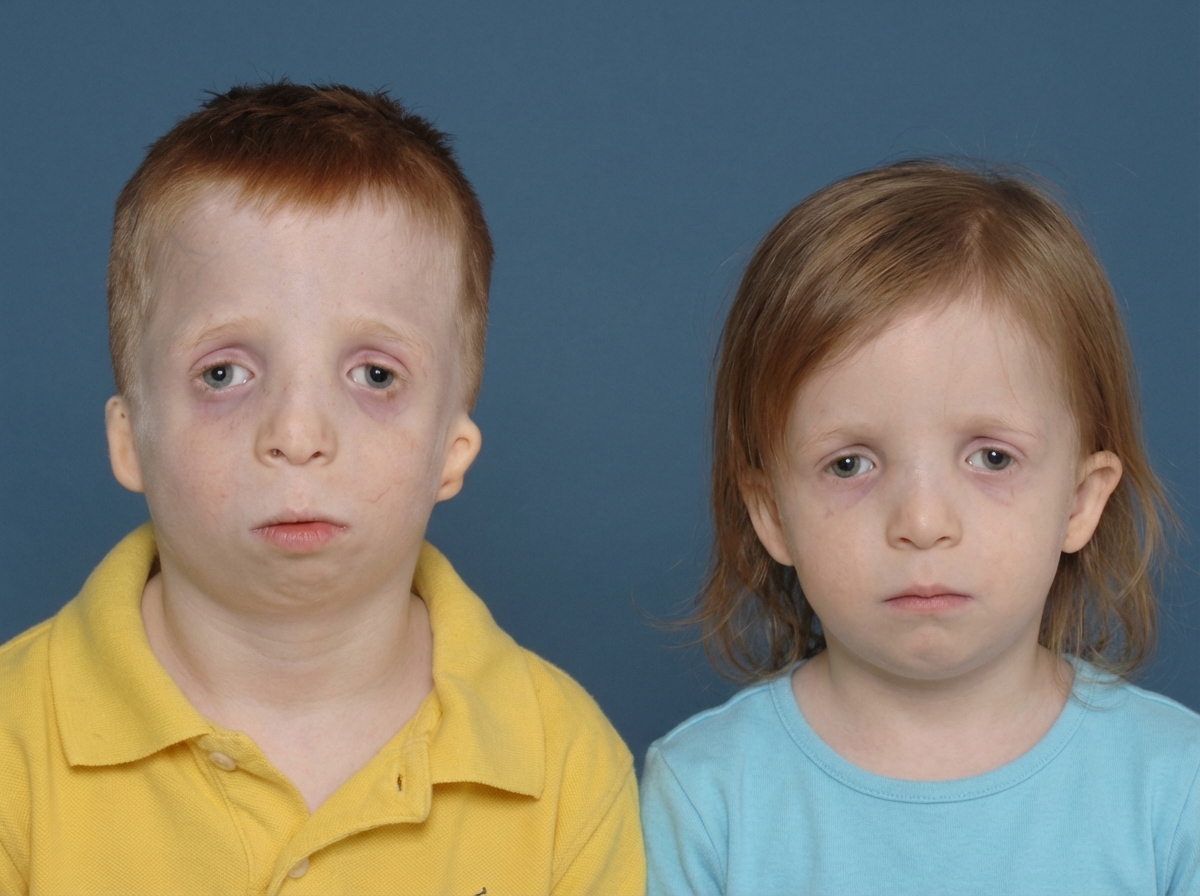
What is the most likely condition depicted below?

Rohr's stria are found in?
Explanation: **Explanation:** The development of the human heart is a complex process of folding, septation, and remodeling that occurs rapidly during early embryogenesis. By the **end of the 6th week** of gestation, the heart has completed its primary septation processes—including the formation of the septum primum and secundum in the atria, the muscular interventricular septum, and the partitioning of the bulbus cordis and truncus arteriosus. This results in a functional, **four-chambered structure** with separated systemic and pulmonary circulations. **Analysis of Options:** * **4 weeks (Incorrect):** At this stage, the heart is a simple **primitive heart tube** that has just begun to loop (D-looping). While it begins to beat around day 22, it is not yet partitioned into four distinct chambers. * **8 weeks (Incorrect):** By the 8th week, organogenesis is largely complete, and the heart is undergoing minor refinements and growth. The fundamental four-chambered shape was already established two weeks prior. * **12 weeks (Incorrect):** This marks the end of the first trimester. While the fetal heart is easily visualized via ultrasound at this stage, the structural formation of the chambers occurred much earlier in the embryonic period. **High-Yield NEET-PG Pearls:** * **First Sign of Heart Development:** Occurs in the **3rd week** (progenitor heart cells in the epiblast). * **Heart Beats:** Begins at approximately **22 days** (4th week). * **Dextrocardia:** Occurs due to the heart tube looping to the left instead of the right. * **Neural Crest Cells:** Essential for the formation of the **conotruncal septum**; defects lead to Tetralogy of Fallot or Transposition of Great Arteries.
Explanation: The development of the face occurs between the 4th and 10th weeks of gestation and is derived from **five mesenchymal primordia** (prominences) that surround the primitive mouth (stomodeum). ### **Why "Zygomatic Prominence" is the Correct Answer** There is no primary embryologic structure called the "Zygomatic prominence." The zygomatic bone (cheekbone) is actually formed via intramembranous ossification within the **Maxillary prominence**. While the zygomatic bone is a major facial feature, it is a derivative of a prominence, not a primary prominence itself. ### **Analysis of Incorrect Options** * **A. Frontonasal Prominence:** This is a single midline structure formed by the proliferation of mesenchyme ventral to the forebrain. It gives rise to the forehead, the bridge of the nose, and the medial and lateral nasal processes. * **C. Maxillary Prominence:** These are paired structures derived from the dorsal part of the **first pharyngeal arch**. They form the upper cheek regions, the secondary palate, and most of the upper lip. * **D. Mandibular Prominence:** These are paired structures derived from the ventral part of the **first pharyngeal arch**. They fuse in the midline to form the lower jaw (mandible), lower lip, and lower cheek regions. ### **High-Yield NEET-PG Clinical Pearls** * **Pharyngeal Arch Origin:** All facial prominences (except the Frontonasal) are derived from the **1st Pharyngeal Arch**. * **Neural Crest Cells:** The mesenchyme forming these prominences is primarily derived from **Neural Crest Cells**; defects in their migration lead to craniofacial malformations (e.g., Treacher Collins Syndrome). * **Cleft Lip:** Occurs due to the failure of fusion between the **Maxillary prominence** and the **Medial Nasal process**. * **Stomodeum:** The primitive mouth, separated from the pharynx by the buccopharyngeal membrane, which ruptures at the 4th week.
Explanation: **Explanation:** The clinical presentation described is a classic case of **Arnold-Chiari Malformation (Type II)**. This congenital anomaly involves the downward displacement of the cerebellar tonsils, vermis, and the medulla oblongata through the foramen magnum into the cervical spinal canal [2]. **Why Arnold-Chiari is correct:** The core embryological defect is often associated with a small posterior cranial fossa [2]. This lack of space forces the hindbrain structures (cerebellum and medulla) to herniate inferiorly. It is frequently associated with myelomeningocele and obstructive hydrocephalus due to the obstruction of CSF flow at the level of the foramen magnum [2], [3]. **Why the other options are incorrect:** * **Meningocele:** This is a type of neural tube defect where the meninges protrude through a vertebral defect, but the spinal cord remains in its normal position. It does not involve herniation of the hindbrain. * **Klippel-Feil Syndrome:** This condition is characterized by the congenital fusion of two or more cervical vertebrae, leading to a short neck and restricted neck mobility. It is a skeletal anomaly, not a primary hindbrain herniation. * **Hydrocephalus:** While often a *consequence* of Chiari malformation (due to CSF flow obstruction), hydrocephalus refers generally to the accumulation of CSF within the ventricles [4]. It is a clinical sign/finding rather than the name of the specific structural malformation described. **High-Yield Clinical Pearls for NEET-PG:** * **Type I Chiari:** Only cerebellar tonsils herniate; often asymptomatic until adulthood; associated with **syringomyelia** [1]. * **Type II Chiari (Arnold-Chiari):** Cerebellum + Medulla herniate; presents in infancy; strongly associated with **lumbar myelomeningocele** [2], [3]. * **Key Symptom:** Progressive hydrocephalus and cranial nerve palsies (due to stretching of nerves).
Explanation: ### Explanation The heart tube undergoes complex folding and septation during development. The **Bulbus cordis** is a key segment of the primitive heart tube that is divided into three parts, each giving rise to specific adult structures [1]: 1. **Proximal part:** Forms the **trabeculated part of the right ventricle**. 2. **Middle part (Conus cordis):** Forms the outflow tracts of both ventricles—the **conus arteriosus** (infundibulum) in the right ventricle and the **aortic vestibule** in the left ventricle [1]. 3. **Distal part (Truncus arteriosus):** Forms the roots of the **ascending aorta** and the **pulmonary trunk**. Therefore, the conus arteriosus is a direct derivative of the middle portion of the bulbus cordis. #### Why other options are incorrect: * **A. Truncus arteriosus:** This is the most distal part of the heart tube. It undergoes septation by the spiral aorticopulmonary septum to form the great vessels (Aorta and Pulmonary artery), not the muscular outflow tracts [1]. * **C. Primitive ventricle:** This gives rise to the **trabeculated part of the left ventricle**. * **D. Primitive atrium:** This gives rise to the **trabeculated parts of both the right and left atria** (the pectinate muscles). #### NEET-PG High-Yield Pearls: * **Smooth vs. Rough:** In the ventricles, the "rough" (trabeculated) parts come from the primitive ventricle/bulbus cordis, while the "smooth" (outflow) parts come from the **conus cordis**. * **Clinical Correlation:** Failure of the conus cordis and truncus arteriosus to septate properly leads to **Persistent Truncus Arteriosus**. * **Transposition of Great Vessels:** Occurs due to failure of the aorticopulmonary septum to spiral.
Explanation: **Explanation:** The intraembryonic mesoderm differentiates into three distinct regions: paraxial, intermediate, and lateral plate mesoderm. **1. Why the Correct Answer is Right:** The **Intermediate Mesoderm** is the precursor of the **Urogenital system**. It forms a longitudinal ridge known as the urogenital ridge, which further differentiates into: * **The Urinary System:** Pronephros, mesonephros, and metanephros (permanent kidney). * **The Reproductive System:** Gonads (testes/ovaries), ducts, and associated accessory glands [1]. **2. Why the Other Options are Incorrect:** * **A. Heart:** The heart develops from the **lateral plate mesoderm** (specifically the splanchnic layer) within the cardiogenic area. * **B. Body wall:** The parietal (somatic) layer of the **lateral plate mesoderm**, along with the overlying ectoderm, forms the lateral and ventral body walls. * **D. Somites:** Somites are derived from the **paraxial mesoderm**. They further differentiate into sclerotome (vertebrae/ribs), myotome (skeletal muscle), and dermatome (dermis of the back). **3. High-Yield Clinical Pearls for NEET-PG:** * **Trisegmental Origin:** The intermediate mesoderm is often described as
Explanation: ### Explanation The thymus develops from the **ventral wing of the third pharyngeal pouch**. During the 6th week of gestation, the endodermal lining of the third pouch differentiates into two parts: the dorsal part forms the **inferior parathyroid glands**, while the ventral part forms the **thymus**. As development progresses, the thymus migrates caudally and medially to its final position in the superior mediastinum [1], pulling the inferior parathyroids along with it. **Analysis of Options:** * **Option A (Fourth arch/pouch):** The fourth pouch gives rise to the **superior parathyroid glands** (dorsal wing) and the **ultimobranchial body** (ventral wing), which contributes parafollicular C-cells to the thyroid gland. * **Option B (Second arch/pouch):** The second pouch endoderm proliferates to form the epithelial lining of the **palatine tonsils**. * **Option D (Sixth arch):** The sixth pharyngeal arch (mesoderm/neural crest) contributes to the formation of the laryngeal cartilages (cricoid, arytenoid) and the recurrent laryngeal nerve; it does not form a pouch derivative like the thymus. **High-Yield Clinical Pearls for NEET-PG:** * **DiGeorge Syndrome:** Caused by the failure of the 3rd and 4th pharyngeal pouches to develop. It presents with the triad of **CATCH-22**: Cardiac defects, Abnormal facies, **Thymic hypoplasia** (T-cell deficiency), Cleft palate, and **Hypocalcemia** (due to absent parathyroids). * **Ectopic Thymus:** Small remnants of thymic tissue may be found along the path of migration, often near the inferior parathyroid glands or in the neck. * **Rule of Thumb:** "Inferior parathyroids come from the 3rd pouch, Superior from the 4th." (The 3rd pouch derivatives travel further down, hence they become "inferior").
Explanation: ### Explanation The **Vitello-intestinal duct** (also known as the Omphalomesenteric duct) is an embryonic structure that connects the primitive midgut to the yolk sac [1]. Normally, this duct obliterates and disappears between the 5th and 8th weeks of gestation. **1. Why Meckel’s Diverticulum is correct:** If the ileal end of the vitello-intestinal duct fails to atrophy, it persists as **Meckel’s diverticulum** [1]. It is a "true diverticulum" because it contains all layers of the intestinal wall. It is typically located on the antimesenteric border of the ileum, approximately 2 feet (60 cm) from the ileocaecal valve [3]. **2. Analysis of Incorrect Options:** * **A. Patent Urachus:** This results from the failure of the **allantois** (urachus) to obliterate. It creates a communication between the urinary bladder and the umbilicus, leading to the discharge of urine from the navel. * **C. Umbilical Granuloma:** This is a common cause of an umbilical mass in newborns, consisting of pinkish granulation tissue. It is caused by an overgrowth of tissue during the healing process after the cord falls off, not a ductal remnant. * **D. Omphalocele:** This is a congenital abdominal wall defect where herniated viscera (covered by a sac of peritoneum and amnion) persist at the umbilicus due to failure of the midgut to return to the abdomen during the 10th week. **3. NEET-PG High-Yield Pearls (Rule of 2s for Meckel’s):** * Occurs in **2%** of the population [1], [3]. * Located **2 feet** proximal to the ileocaecal valve [1]. * Approximately **2 inches** long [1]. * Contains **2 types** of ectopic tissue (most commonly **Gastric** mucosa, followed by Pancreatic) [1], [3]. * Most common presentation in children is painless lower GI bleeding (due to acid secretion from ectopic gastric mucosa causing ileal ulcers) [1], [2].
Explanation: **Explanation:** In fetal circulation, the exchange of gases and nutrients occurs in the **placenta**, not the lungs [4]. The direction of blood flow relative to the fetal heart determines whether a vessel is called an artery or a vein, regardless of its oxygen content. 1. **Why Umbilical Vein is Correct:** The umbilical vein carries highly oxygenated (approx. 80% saturation) and nutrient-rich blood from the placenta toward the fetal heart [1]. It enters the fetus at the umbilicus and travels to the liver, where most of the blood bypasses the hepatic sinusoids via the **ductus venosus** to enter the Inferior Vena Cava (IVC) [1], [2]. 2. **Why Incorrect Options are Wrong:** * **Umbilical Artery:** These carry **deoxygenated** blood and metabolic waste from the fetus back to the placenta [4]. There are two umbilical arteries and only one umbilical vein [1]. * **Superior Vena Cava (SVC):** This carries deoxygenated blood from the upper body (head, neck, and upper limbs) to the right atrium [2]. * **Pulmonary Artery:** In the fetus, the pulmonary artery carries predominantly deoxygenated blood toward the lungs; however, most of this blood is shunted into the aorta via the **ductus arteriosus** [2], [3]. **High-Yield Clinical Pearls for NEET-PG:** * **The Rule of One and Two:** At birth, there is **one** umbilical vein (left) and **two** umbilical arteries [1]. The right umbilical vein disappears early in development. * **Remnants:** After birth, the umbilical vein becomes the **Ligamentum teres** (found in the free margin of the falciform ligament), and the ductus venosus becomes the **Ligamentum venosum**. * **Oxygen Saturation:** The highest oxygen saturation in the fetus is found in the **umbilical vein**, followed by the **ductus venosus** [1].
Explanation: ***Treacher-Collins syndrome*** • Characterized by **bilateral symmetric facial features** including **antimongoloid palpebral slant**, **malar hypoplasia**, and **micrognathia** with distinctive **ear anomalies**. • Results from **neural crest cell defects** due to mutations in the **TCOF1 gene**, affecting craniofacial development during embryogenesis. *Williams syndrome* • Features **elfin-like facial appearance** with **broad forehead**, **stellate iris pattern**, and **supravalvular aortic stenosis**. • Associated with **hypercalcemia** and characteristic **cocktail party personality** with developmental delays. *Downs syndrome* • Presents with **mongoloid palpebral slant** (upward slanting), **flat nasal bridge**, and **epicanthal folds**. • Associated with **intellectual disability**, **cardiac defects**, and **trisomy 21** chromosomal abnormality. *Pierre-Robin syndrome* • Characterized by **micrognathia**, **glossoptosis** (posterior tongue displacement), and **cleft palate** triad. • Primarily affects the **mandible and tongue positioning** rather than the comprehensive facial dysmorphism seen in Treacher-Collins.
Explanation: **Explanation:** **Rohr’s stria** refers to a layer of fibrinoid deposition found within the **placenta**. Specifically, it is located at the **intervillous space** on the maternal side, just beneath the syncytiotrophoblast of the basal plate [1]. 1. **Why Placenta is Correct:** During placental development, fibrinoid material (a mixture of maternal and fetal proteins) accumulates at specific sites. There are three distinct layers of fibrinoid in the placenta [1]: * **Langhans stria:** Located beneath the chorionic plate. * **Rohr’s stria:** Located in the intervillous space (basal plate) [1]. * **Nitabuch’s layer:** Located deeper in the decidua basalis. It is clinically significant as it prevents the over-invasion of the trophoblast into the myometrium. 2. **Why other options are incorrect:** * **Umbilical cord:** Contains Wharton’s jelly, two arteries, and one vein, but no fibrinoid striae. * **Fallopian tube:** While ectopic pregnancies occur here, these specific fibrinoid layers are characteristic of the established placental architecture. * **Endometrium:** While the placenta attaches to the endometrium (decidua), Rohr's stria is specifically a placental component formed at the junctional zone [1]. **High-Yield Clinical Pearls for NEET-PG:** * **Nitabuch’s Layer vs. Placenta Accreta:** The absence or deficiency of Nitabuch’s layer is the primary pathological finding in **Placenta Accreta**, where the placenta adheres directly to the myometrium. * **Hofbauer Cells:** These are placental macrophages found in the stroma of the chorionic villi [1]. * **Placental Barrier:** Formed by syncytiotrophoblast, cytotrophoblast, basement membrane, and fetal capillary endothelium (note: cytotrophoblast thins out in late pregnancy).
Gametogenesis and Fertilization
Practice Questions
Early Embryonic Development
Practice Questions
Placentation
Practice Questions
Development of Nervous System
Practice Questions
Development of Cardiovascular System
Practice Questions
Development of Gastrointestinal System
Practice Questions
Development of Urogenital System
Practice Questions
Development of Musculoskeletal System
Practice Questions
Development of Head and Neck
Practice Questions
Congenital Anomalies
Practice Questions
Teratology
Practice Questions
Molecular Mechanisms in Development
Practice Questions
Get full access to all questions, explanations, and performance tracking.
Start For Free