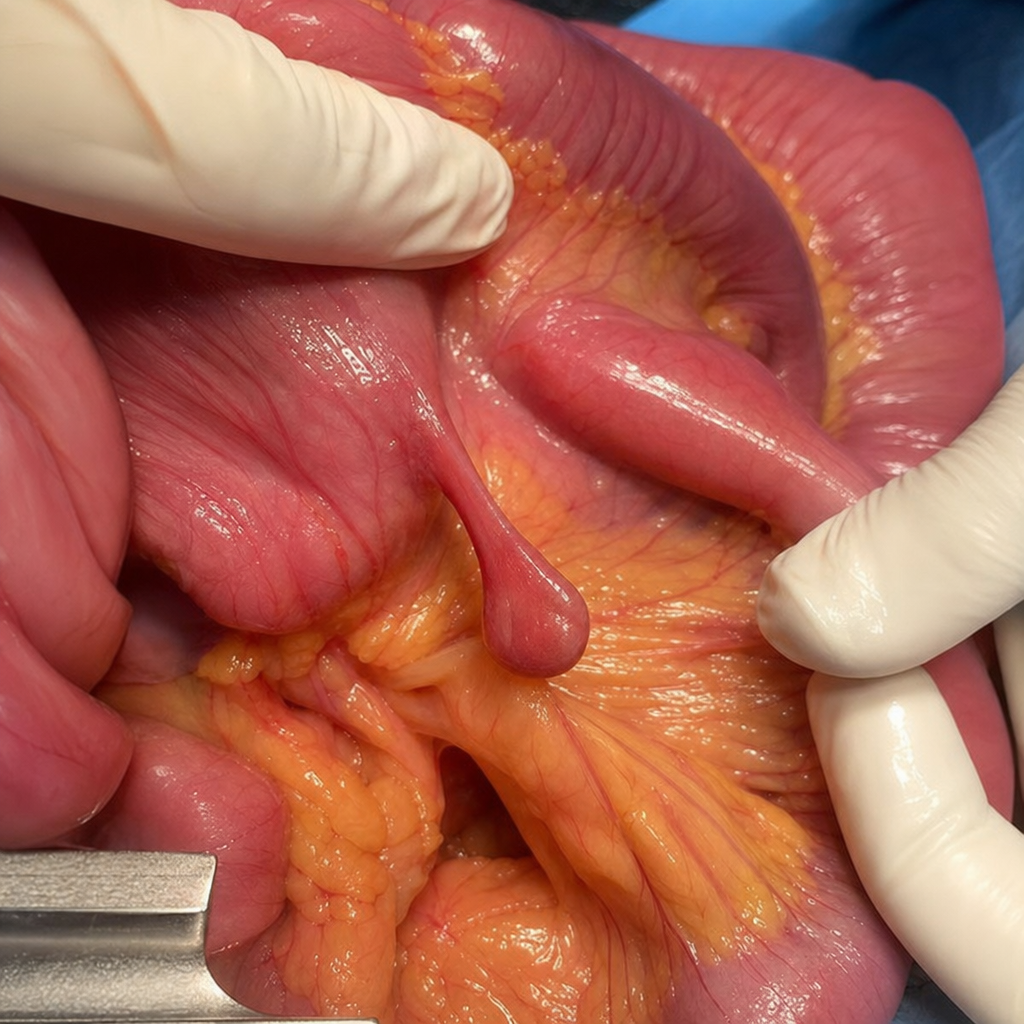
Which of the following is false regarding muscle development?
Which organ undergoes involution?
All of the following structures are of ectomesenchymal origin except?
Mullerian duct anomaly may include the absence of any of the following EXCEPT:
All of the following structures develop from the 2nd brachial arch, EXCEPT:
Premature closure of the foramen ovale results in which of the following?
An insufficient amount of AV cushion material will result in which of the following congenital heart defects?
In humans, where does fertilization typically occur?
Which of the following structures does not develop from the hindgut?
Implantation occurs after fertilization by how many days?
Explanation: ### Explanation The development of the muscular system is a high-yield topic in embryology. To identify the false statement, we must trace the embryological origins of different muscle types. **1. Why Option D is the Correct (False) Statement:** While most skeletal muscles of the body are derived from the paraxial mesoderm (somites), the **voluntary (skeletal) muscles of the head** have a dual origin. They are derived from both the **paraxial mesoderm** (somitomeres) and the **neural crest cells** (which contribute to the connective tissue framework of these muscles). However, in the context of standard embryological classification for exams, the muscles of the head are primarily associated with the **Pharyngeal (Branchial) Arches**. Therefore, a blanket statement attributing them solely to paraxial mesoderm is often considered the "least accurate" or false in comparative questions. **2. Analysis of Other Options:** * **Option A (True):** Cardiac muscle develops from the **splanchnic mesoderm** surrounding the endothelial heart tube. * **Option B (True):** Smooth muscle in the walls of the **aorta and large arteries** is derived from the **lateral plate mesoderm** and neural crest cells. * **Option C (True):** The **pupillary muscles** (sphincter and dilator pupillae) and the **myoepithelial cells** of the mammary and sweat glands are unique because they are derived from the **ectoderm**, specifically the neuroectoderm of the optic cup. ### High-Yield Clinical Pearls for NEET-PG: * **Tongue Muscles:** All are derived from **occipital somites** (except Palatoglossus, which is from the 4th pharyngeal arch). * **Extraocular Muscles:** Derived from **prechordal plate mesoderm**. * **Poland Syndrome:** Congenital absence of the Pectoralis minor and partial loss of the Pectoralis major, often associated with syndactyly. * **Prune Belly Syndrome:** Failure of abdominal wall muscle development due to mesodermal defects.
Explanation: **Explanation:** **1. Why Thymus is the Correct Answer:** Involution refers to the shrinkage or degeneration of an organ with age. The **thymus** is a primary lymphoid organ that reaches its maximum absolute weight during puberty (approx. 30–40g). Following puberty, it undergoes **age-associated involution**, where the lymphoid parenchyma is progressively replaced by fatty (adipose) tissue. This process leads to a decline in the production of new T-cells, though the thymus remains functional at a low level throughout life [1]. **2. Why the Other Options are Incorrect:** * **Parathyroid Gland:** These glands do not involute; they remain active throughout life to regulate calcium and phosphate homeostasis via parathyroid hormone (PTH). * **Thyroid Gland:** While the thyroid may undergo slight fibrotic changes or decrease in size in extreme old age, it does not undergo programmed physiological involution [2]. It remains the primary metabolic regulator throughout adulthood. * **Pineal Gland:** The pineal gland does not undergo involution in the sense of tissue replacement. However, it is famous for **calcification** (forming "brain sand" or *acervuli cerebri*), which is a high-yield radiological marker, but the gland remains secretory. **3. High-Yield Clinical Pearls for NEET-PG:** * **Embryology:** The thymus develops from the **3rd pharyngeal pouch** (ventral wing). * **Hassall’s Corpuscles:** These are characteristic histological features of the thymic medulla; they are remnants of type VI epithelioreticular cells. * **DiGeorge Syndrome:** Results from the failure of the 3rd and 4th pharyngeal pouches to develop, leading to thymic aplasia and T-cell deficiency. * **Myasthenia Gravis:** Often associated with thymic hyperplasia or thymoma.
Explanation: ### Explanation The correct answer is **C. Branchial arch arteries**. **Core Concept: Ectomesenchyme vs. Mesoderm** In the head and neck region, the "mesenchyme" (embryonic connective tissue) has a dual origin. While most of the body's connective tissue comes from the **mesoderm**, the pharyngeal (branchial) arches are unique because **Neural Crest Cells (NCCs)** migrate into them. These NCCs differentiate into a tissue called **ectomesenchyme**, which forms the majority of the skeletal and connective tissue structures of the face. **Why Branchial Arch Arteries are the exception:** The endothelial lining and the smooth muscle of the **branchial arch arteries** (aortic arches) are derived from the **lateral plate mesoderm** and **paraxial mesoderm**, not from the ectomesenchyme. While neural crest cells contribute to the tunica media of the great vessels, the primary origin of the vascular endothelium is mesodermal. **Analysis of Other Options:** * **A. Branchial arch cartilage:** All pharyngeal arch cartilages (e.g., Meckel’s, Reichert’s) and bones of the viscerocranium are derived from **ectomesenchyme** (Neural Crest Cells). * **B. Branchial arch nerve:** The cranial nerves (V, VII, IX, X) associated with the arches have significant contributions from **Neural Crest Cells** (forming sensory ganglia) and ectodermal placodes. **High-Yield NEET-PG Pearls:** * **Neural Crest Derivatives (Ectomesenchyme):** Odontoblasts, C-cells of the thyroid, Melanocytes, Adrenal medulla, and the entire viscerocranium (facial bones). * **Pharyngeal Arch Rule:** Muscles of the arches always come from **Mesoderm** (paraxial), while the skeletal elements come from **Ectomesenchyme**. * **Clinical Correlation:** Defects in ectomesenchymal migration lead to **Treacher Collins Syndrome** or **DiGeorge Syndrome**, characterized by craniofacial deformities.
Explanation: The core concept behind this question is the distinct embryological origins of the female reproductive system. **Why Ovary is the correct answer:** The **ovaries** do not develop from the Mullerian (Paramesonephric) ducts [1]. Instead, they originate from the **primordial germ cells** (which migrate from the yolk sac) and the **gonadal ridge** (thickened mesothelium and underlying mesenchyme). Since the ovaries have a different embryological precursor, a Mullerian duct anomaly or agenesis (such as Mayer-Rokitansky-Küster-Hauser syndrome) will typically present with normal, functional ovaries and normal secondary sexual characteristics [3]. **Why the other options are incorrect:** The **Mullerian (Paramesonephric) ducts** are responsible for forming the majority of the female reproductive tract [1]. Specifically: * **Uterine tubes (Fallopian tubes):** Form from the cranial, unfused portions of the Mullerian ducts [1]. * **Uterus and Cervix:** Form from the fusion of the caudal horizontal and vertical portions of the ducts (the uterovaginal canal) [2]. * **Vagina:** The Mullerian ducts form the **upper 4/5ths (superior portion)** of the vagina [2]. (The lower 1/5th is derived from the urogenital sinus [2]). Therefore, any defect in Mullerian duct development can lead to the absence or malformation of the uterus, tubes, and upper vagina [4]. **High-Yield Clinical Pearls for NEET-PG:** * **MRKH Syndrome:** Characterized by Mullerian agenesis (absent uterus and upper vagina) but **normal ovaries** and a 46,XX karyotype. * **Renal Anomalies:** Because the development of the Mullerian ducts is closely linked to the Wolffian (Mesonephric) ducts, always screen for **renal agenesis or ectopia** in patients with Mullerian anomalies. * **Remnant:** The male remnant of the Mullerian duct is the **Appendix Testis** and the **Prostatic Utricle**.
Explanation: The **2nd Pharyngeal (Branchial) Arch**, also known as the **Hyoid Arch**, gives rise to specific muscular, skeletal, and neural structures. The key to solving this question lies in matching the nerve supply to the muscle. ### **Why "Anterior belly of digastric" is the correct answer:** The **Anterior belly of the digastric** develops from the **1st Pharyngeal Arch** (Mandibular Arch). It is supplied by the nerve of the 1st arch, the **Mandibular nerve (V3)**. In contrast, the **Posterior belly of the digastric** develops from the 2nd arch and is supplied by the Facial nerve. This dual nerve supply is a classic high-yield anatomy fact. ### **Analysis of Incorrect Options (2nd Arch Derivatives):** * **Buccinator:** All muscles of facial expression, including the buccinator, platysma, and stapedius, originate from the 2nd arch. * **7th Cranial Nerve (Facial Nerve):** This is the designated nerve of the 2nd arch. It supplies all muscular derivatives of this arch. * **Stapes:** The skeletal derivatives of the 2nd arch (Reichert’s cartilage) include the **S**tapes, **S**tyloid process, **S**tylohyoid ligament, and the **Lesser** cornu/upper body of the hyoid bone. ### **High-Yield NEET-PG Pearls:** * **Mnemonic for 2nd Arch Skeletal structures:** "**S**ix **S**'s" — **S**tapes, **S**tyloid process, **S**tylohyoid ligament, **S**tylohyoid muscle, **S**eventh Nerve, and **S**miling muscles (facial expression). * **The "Digastric" Rule:** Anterior belly = 1st Arch (CN V3); Posterior belly = 2nd Arch (CN VII). * **The "Tensor" Rule:** Any muscle with "Tensor" in its name (Tensor tympani, Tensor veli palatini) comes from the **1st Arch**.
Explanation: Explanation: In fetal circulation, the **foramen ovale** is a critical right-to-left shunt that allows oxygenated blood from the placenta to bypass the non-functional lungs and enter the left heart for systemic distribution [1], [2]. **Why Right Ventricular Hypertrophy (RVH) occurs:** If the foramen ovale closes prematurely in utero, blood cannot shunt from the right atrium to the left atrium. This leads to a massive volume and pressure overload on the right side of the heart. The right ventricle must pump the entire cardiac output against high fetal pulmonary vascular resistance [1]. This increased workload results in compensatory **Right Ventricular Hypertrophy** and right heart failure. Conversely, the left side of the heart receives inadequate blood flow, often leading to left-sided hypoplasia. **Analysis of Incorrect Options:** * **A. Underdeveloped right atrium:** On the contrary, the right atrium becomes **dilated and hypertrophied** due to the inability to shunt blood to the left side. * **C. Left ventricular hypertrophy:** Premature closure leads to **left ventricular hypoplasia** (underdevelopment) because the left heart is deprived of its primary source of blood flow during development [3]. * **D. Pulmonary stenosis:** This is a structural malformation of the valve/outflow tract and is not a direct hemodynamic consequence of foramen ovale closure. **High-Yield NEET-PG Pearls:** * **Normal Closure:** The foramen ovale usually closes functionally at birth due to increased left atrial pressure and becomes the **fossa ovalis**. * **Probe Patency:** Failure of the septum primum and septum secundum to fuse occurs in ~25% of the population (Probe Patent Foramen Ovale). * **Associated Condition:** Premature closure is a rare but lethal cause of **Hypoplastic Left Heart Syndrome (HLHS)** [3]. * **Key Shunts:** Remember the three fetal shunts: Ductus venosus (bypasses liver), Foramen ovale (bypasses lungs), and Ductus arteriosus (bypasses lungs) [1], [2].
Explanation: The **Atrioventricular (AV) cushions** are essential mesenchymal structures that develop in the AV canal. They are responsible for the formation of the mitral and tricuspid valves, as well as the membranous portion of the interventricular septum and the lower part of the atrial septum. **Why Tricuspid Atresia is correct:** Tricuspid atresia occurs due to the **insufficient amount or failure of fusion** of the AV cushion material. This results in the complete lack of a tricuspid valve orifice, leading to no communication between the right atrium and right ventricle. This condition is characteristically associated with a hypoplastic right ventricle and requires an ASD and VSD for survival. **Analysis of Incorrect Options:** * **A & C (Persistent Truncus Arteriosus and TGA):** These defects result from the abnormal development of the **conotruncal (aorticopulmonary) ridges** and the spiral septum, not the AV cushions. They involve the outflow tracts rather than the AV valves. * **B (Ebstein’s Anomaly):** This is caused by the **failure of delamination** of the tricuspid valve leaflets from the myocardial wall, leading to their downward displacement into the right ventricle. It is classically associated with maternal Lithium intake. **High-Yield NEET-PG Pearls:** * **AV Cushion Derivatives:** Mitral valve, Tricuspid valve, Atrial septum primum (lower part), and Membranous interventricular septum. * **Endocardial Cushion Defect:** Highly associated with **Down Syndrome (Trisomy 21)**, often presenting as an Atrioventricular Septal Defect (AVSD). * **Tricuspid Atresia Triad:** Left axis deviation on ECG, Cyanosis at birth, and a small (hypoplastic) right ventricle.
Explanation: Fertilization is the process where the male and female gametes fuse to form a zygote [1]. In humans, this biological event typically occurs in the **Ampulla of the uterine (Fallopian) tube** [1]. **Why the Ampulla is the Correct Answer:** The ampulla is the widest and longest part of the uterine tube. It provides the ideal physiological environment for the sperm to meet the oocyte [1]. Following ovulation, the secondary oocyte is picked up by the fimbriae and transported to the ampulla [1], where it remains viable for approximately 12–24 hours, awaiting fertilization [2]. **Analysis of Incorrect Options:** * **A. Fimbriated end:** This is the finger-like distal extremity of the tube responsible for "capturing" the ovum from the peritoneal cavity; it is the entry point, not the site of fusion [1]. * **C. Isthmus:** This is the narrow, thick-walled segment of the tube. While sperm pass through it, it is generally too narrow and lacks the secretory environment required for the initial stages of fertilization. * **D. Uterine cavity:** If fertilization has not occurred by the time the ovum reaches the uterus, the ovum degenerates [2]. The uterus is the site for **implantation** (usually 6 days after fertilization), not fertilization [2]. **NEET-PG High-Yield Pearls:** * **Timing:** Fertilization usually occurs within 12 hours of ovulation. * **Ectopic Pregnancy:** The ampulla is also the **most common site** for an ectopic pregnancy. * **Capacitation:** Before fertilization can occur in the ampulla, sperm must undergo "capacitation" (removal of the glycoprotein coat) in the female reproductive tract, which takes about 7 hours. * **Zygote Transport:** It takes approximately 3–4 days for the fertilized zygote to travel from the ampulla to the uterine cavity [2].
Explanation: The development of the gastrointestinal tract is divided into the foregut, midgut, and hindgut, each defined by its arterial supply [1]. **Why the Ascending Colon is the Correct Answer:** The **ascending colon** is a derivative of the **midgut**. During the 6th week of development, the midgut undergoes physiological herniation and a 270° counter-clockwise rotation around the superior mesenteric artery [1]. The midgut gives rise to the distal duodenum (distal to the opening of the bile duct), jejunum, ileum, cecum, appendix, ascending colon, and the proximal two-thirds of the transverse colon. **Analysis of Incorrect Options (Hindgut Derivatives):** The hindgut is supplied by the **inferior mesenteric artery** and gives rise to the following structures [2]: * **Descending Colon (Option B):** Develops from the proximal part of the hindgut [4]. * **Sigmoid Colon (Option C):** Develops from the middle portion of the hindgut [4]. * **Rectum (Option D):** Develops from the upper part of the cloaca (hindgut derivative) above the pectinate line [1]. **High-Yield Clinical Pearls for NEET-PG:** * **The Watershed Area:** The junction between the proximal 2/3 and distal 1/3 of the transverse colon (Cannon-Böhm point) marks the transition from midgut to hindgut and is a common site for ischemic colitis [2]. * **The Pectinate Line:** This is a crucial embryological landmark. Above the line (hindgut) is endodermal, supplied by the IMA, and has autonomic innervation. Below the line (proctodeum) is ectodermal, supplied by internal iliac branches, and has somatic innervation. * **Rule of 270:** Remember that the midgut rotates 270° counter-clockwise in total. Failure of this rotation leads to malrotation and midgut volvulus [3].
Explanation: ### Explanation **Correct Answer: A. 5-6 days** **1. Underlying Medical Concept:** Fertilization typically occurs in the **ampulla** of the fallopian tube [1]. Following fertilization, the zygote undergoes cleavage as it travels toward the uterus. By day 4, it reaches the **morula** stage (16 cells) [1]. Upon entering the uterine cavity, fluid enters the morula, transforming it into a **blastocyst**. For implantation to occur, the blastocyst must first "hatch" from the **zona pellucida** [1]. This process of attachment and initial penetration into the endometrial epithelium begins approximately **5 to 6 days** after fertilization [1]. **2. Analysis of Incorrect Options:** * **B (7-8 days):** While the process of implantation *continues* during this window, the question asks when it "occurs" (initiates). By day 7-8, the blastocyst is already becoming more deeply embedded, and the trophoblast begins differentiating into the cytotrophoblast and syncytiotrophoblast. * **C & D (8-12 days):** These stages represent the completion of implantation. By day 10-12, the blastocyst is completely embedded in the endometrium, and the surface epithelium closes over the implantation site (often marked by a fibrin coagulum). **3. NEET-PG High-Yield Pearls:** * **Site of Implantation:** Most commonly the upper part of the posterior wall of the uterine body. * **Window of Implantation:** The period when the endometrium is receptive, usually days 20–24 of a 28-day secretory cycle [1]. * **The "Hatching" Phenomenon:** Implantation cannot occur until the zona pellucida disappears (Day 5) [1]. * **Decidual Reaction:** The morphological changes in endometrial cells to provide a nutrient-rich environment for the embryo [1]. * **hCG Production:** Begins shortly after implantation; detectable in maternal blood by day 8-11 and urine by day 12-14.
Gametogenesis and Fertilization
Practice Questions
Early Embryonic Development
Practice Questions
Placentation
Practice Questions
Development of Nervous System
Practice Questions
Development of Cardiovascular System
Practice Questions
Development of Gastrointestinal System
Practice Questions
Development of Urogenital System
Practice Questions
Development of Musculoskeletal System
Practice Questions
Development of Head and Neck
Practice Questions
Congenital Anomalies
Practice Questions
Teratology
Practice Questions
Molecular Mechanisms in Development
Practice Questions
Get full access to all questions, explanations, and performance tracking.
Start For Free