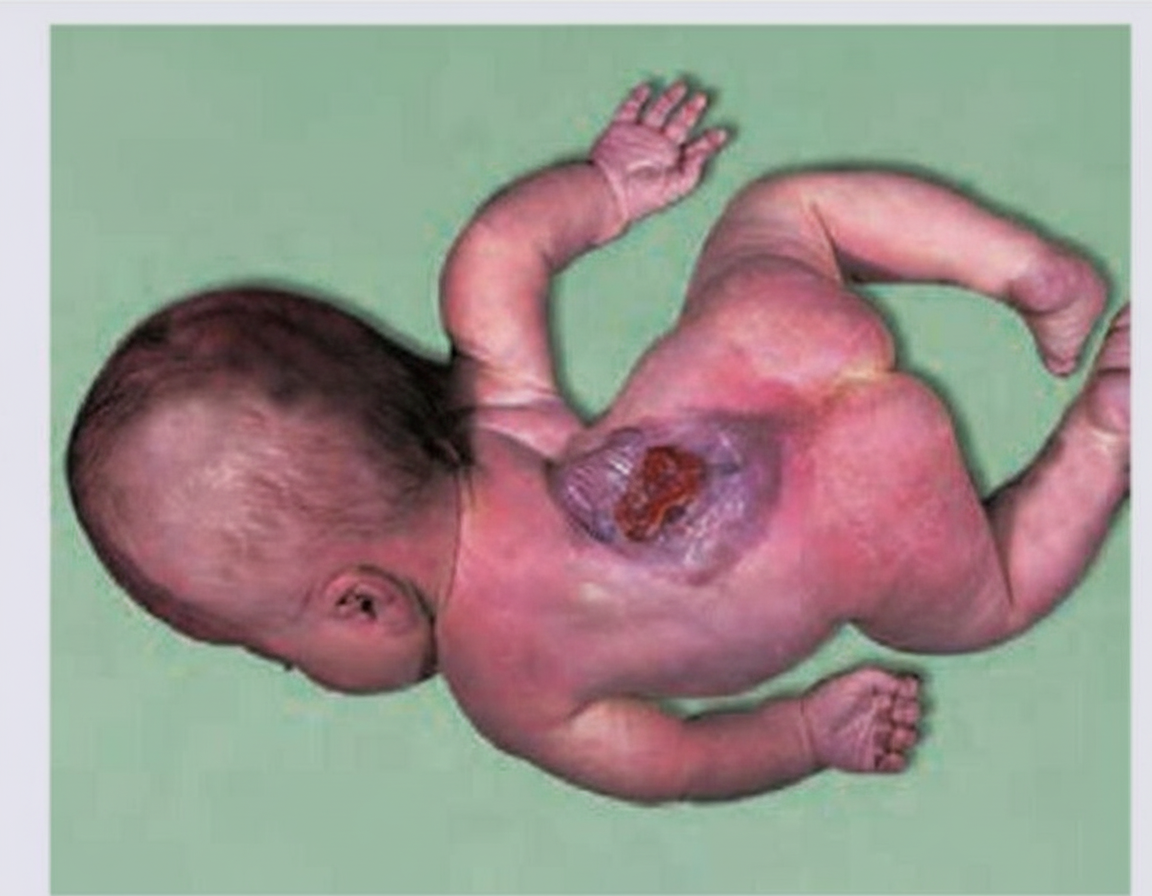
At what gestational age does the fetal stage begin?
Chromaffin cells are derived from which embryonic structure?
What is the correct sequence of oxygenated blood flow from the placenta to the fetal heart?
Superior parathyroid glands are derived from which branchial pouch?
Failure of descent of the thyroid primordium can lead to its ectopic location related to which anatomical structure?
The fetal blood is separated from the syncytiotrophoblast by all of the following except:
Males who are sexually underdeveloped with rudimentary testes and prostate glands, sparse pubic and facial hairs, long arms and legs, and large hands and feet, are likely to have which chromosome complement?
All are derivatives of ectoderm except?
What is a female pseudohermaphrodite?
Which of the following is untrue regarding ectodermal clefts?
Explanation: The development of a human being in utero is divided into three distinct stages: the **Germinal period** (fertilization to 2 weeks), the **Embryonic period** (3 to 8 weeks), and the **Fetal period** (9 weeks until birth) [1]. **Explanation of the Correct Answer:** * **A. 9 weeks:** The fetal stage begins at the start of the **9th week** of gestation [1]. By the end of the 8th week (the embryonic period), all major organ systems have been established (organogenesis). The fetal period is characterized by the rapid growth of the body and the functional maturation of these pre-formed tissues and organs. **Explanation of Incorrect Options:** * **B. 3 weeks:** This marks the beginning of the **Embryonic period** and the process of **Gastrulation** (formation of the three germ layers: ectoderm, mesoderm, and endoderm). * **C. 6 weeks:** This is a mid-embryonic stage. At this point, the heart is beating, and limb buds are developing, but the transition to the fetal stage has not yet occurred. * **D. 12 weeks:** This marks the end of the **first trimester**. While significant milestones occur here (such as the external genitalia becoming distinguishable), the fetal stage has already been underway for three weeks. **High-Yield Clinical Pearls for NEET-PG:** * **Organogenesis:** Occurs during weeks 3–8. This is the period of **maximum teratogenicity**; exposure to toxins during this time leads to major structural anomalies. * **Fetal Period:** Primarily a period of hypertrophy and hyperplasia [1]. Teratogen exposure here usually results in functional defects or minor morphological anomalies (e.g., IUGR). * **Rule of Thumb:** Embryo = "Organ formation"; Fetus = "Organ maturation."
Explanation: The correct answer is **Neural crest (Option A)**. Chromaffin cells are specialized neuroendocrine cells primarily located in the adrenal medulla. During embryonic development, neural crest cells (often called the "fourth germ layer") undergo an epithelial-to-mesenchymal transition and migrate throughout the body [2]. A specific population of these cells migrates to the dorsal abdomen to form the **sympathoadrenal lineage**, which differentiates into both sympathetic postganglionic neurons and chromaffin cells. **Analysis of Incorrect Options:** * **B. Surface ectoderm:** Gives rise to the epidermis, hair, nails, anterior pituitary (Rathke’s pouch), and the lens of the eye. * **C. Neuroectoderm:** Forms the neural tube, which develops into the Central Nervous System (brain and spinal cord), posterior pituitary, and retina. While neural crest cells originate at the border of the neuroectoderm, they are considered a distinct population once they migrate. * **D. Endoderm:** Gives rise to the epithelial lining of the gastrointestinal and respiratory tracts, as well as organs like the liver and pancreas. **Clinical Pearls & High-Yield Facts for NEET-PG:** 1. **Adrenal Medulla vs. Cortex:** Remember that the adrenal **medulla** is ectodermal (Neural crest), while the adrenal **cortex** is mesodermal in origin. 2. **Pheochromocytoma:** This is a tumor of the chromaffin cells [1]. Because these cells are derived from neural crest, extra-adrenal tumors (paragangliomas) can occur anywhere along the sympathetic chain (e.g., Organ of Zuckerkandl) [1], [2]. 3. **Other Neural Crest Derivatives:** "MOTEL PASS" is a common mnemonic (Melanocytes, Odontoblasts, Tracheal cartilage, Enterochromaffin cells, Laryngeal cartilage, Parafollicular C-cells, Adrenal medulla, Schwann cells, Spiral septum).
Explanation: ### Explanation **1. Understanding the Correct Sequence (Option C)** Fetal circulation is designed to bypass the non-functional lungs and prioritize the delivery of oxygenated blood from the placenta to the brain [1]. * **Umbilical Vein:** Carries 80% oxygen-saturated blood from the placenta toward the liver [1]. * **Ductus Venosus:** A critical shunt that allows the majority of this blood to bypass the hepatic sinusoids and enter the **Inferior Vena Cava (IVC)** directly [1]. * **Right Atrium:** Blood from the IVC enters the right atrium and is preferentially directed by the **eustachian valve** through the **foramen ovale** into the **Left Atrium**, ensuring oxygenated blood reaches the systemic circulation (ascending aorta) [1],[2]. **2. Analysis of Incorrect Options** * **Options A & B:** These list the **Umbilical Artery** as the starting point. In fetal life, umbilical arteries carry *deoxygenated* blood from the fetus back to the placenta [3]. * **Option D:** This incorrectly includes the **Ductus Arteriosus**. The ductus arteriosus shunts deoxygenated blood from the pulmonary artery to the descending aorta (bypassing the lungs), not oxygenated blood from the vein to the heart [3]. It also incorrectly lists the **Superior Vena Cava**, which carries deoxygenated blood from the upper body [2]. **3. NEET-PG High-Yield Pearls** * **Highest Oxygen Saturation:** The Umbilical Vein has the highest $O_2$ saturation (~80%), followed by the Ductus Venosus [1]. * **Remnants:** * Umbilical Vein $\rightarrow$ **Ligamentum teres hepatis** [4]. * Ductus Venosus $\rightarrow$ **Ligamentum venosum** [4]. * Ductus Arteriosus $\rightarrow$ **Ligamentum arteriosum** [4]. * Umbilical Arteries $\rightarrow$ **Medial umbilical ligaments** [4]. * **The Shunt Rule:** The Foramen Ovale shunts blood from Right Atrium to Left Atrium; the Ductus Arteriosus shunts blood from Pulmonary Artery to Aorta [3].
Explanation: The development of the parathyroid glands is a classic high-yield topic in embryology, often featuring "paradoxical" migration patterns. **Why Option C is Correct:** The **superior parathyroid glands** (Parathyroid IV) develop from the dorsal wing of the **4th branchial pouch**. Despite being anatomically positioned higher in the neck in adults, they are derived from a lower pouch than the inferior glands. They have a shorter migratory path, remaining attached to the posterior aspect of the thyroid gland as it descends. **Analysis of Incorrect Options:** * **Option A (1st Pouch):** This pouch gives rise to the tubotympanic recess, which forms the middle ear cavity and the Eustachian tube. * **Option B (3rd Pouch):** This pouch gives rise to the **inferior parathyroid glands** (Parathyroid III) and the **thymus**. Because the thymus migrates significantly downward into the mediastinum, it "pulls" the 3rd pouch parathyroids along with it, causing them to end up in a lower (inferior) position than those from the 4th pouch [1]. * **Option D (5th Pouch):** In humans, the 5th pouch is rudimentary or incorporated into the 4th pouch as the **ultimobranchial body**, which gives rise to the parafollicular (C) cells of the thyroid gland. **NEET-PG High-Yield Pearls:** * **The "Rule of Inversion":** The 3rd pouch forms the *inferior* glands, while the 4th pouch forms the *superior* glands. * **Ectopic Tissue:** Because the inferior parathyroids migrate with the thymus, they are more likely to be found in ectopic locations (e.g., the mediastinum) [1]. * **DiGeorge Syndrome:** Results from the failure of the 3rd and 4th pouches to develop, leading to hypocalcemia (absent parathyroids) and T-cell deficiency (absent thymus).
Explanation: ### Explanation **Concept of Thyroid Development:** The thyroid gland begins its development during the 4th week of gestation as an endodermal proliferation at the **foramen cecum**, located at the junction of the anterior two-thirds and posterior one-third of the tongue [2]. Under normal conditions, the thyroid primordium descends through the neck via the **thyroglossal duct** to reach its final destination anterior to the second and third tracheal rings [1]. **Why Option C is Correct:** If the thyroid primordium fails to descend, it remains at its site of origin. This results in a **Lingual Thyroid**, which is the most common form of ectopic thyroid tissue [1]. It is specifically located at the **base of the tongue, near the foramen cecum**. **Analysis of Incorrect Options:** * **Option A & B:** While the foramen cecum lies at the boundary of these sections, the ectopic mass is specifically localized to the midline base (the site of the foramen) rather than being distributed across the general dorsal surfaces of the anterior or posterior tongue. * **Option D:** The thyroid originates from the dorsal surface (top) of the tongue, not the inferior (ventral) surface [2]. **High-Yield Clinical Pearls for NEET-PG:** * **Lingual Thyroid:** In 70% of cases, this is the **only** functioning thyroid tissue in the body. Surgical removal without checking for a normal thyroid gland can lead to permanent hypothyroidism. * **Thyroglossal Cyst:** A remnant of the descent pathway. It is typically a **midline** neck swelling that **moves upward on protrusion of the tongue** [2]. * **Ectopic Sites:** Apart from the tongue, ectopic thyroid tissue can be found anywhere along the descent path, including the hyoid bone or the mediastinum [1].
Explanation: ### Explanation The question tests your knowledge of the **Placental Membrane (Placental Barrier)**, which is the composite layer of tissues separating the maternal blood (in the intervillous spaces) from the fetal blood (within the villi) [1]. **Why Decidua Parietalis is the Correct Answer:** The **Decidua parietalis** is the portion of the uterine lining that lines the rest of the uterine cavity away from the site of implantation [3]. It does not participate in the formation of the placenta or the placental barrier. The maternal component of the placenta is the **Decidua basalis** [1]. Therefore, Decidua parietalis has no role in separating fetal blood from the syncytiotrophoblast. **Analysis of Other Options (The Placental Barrier):** Until approximately the 20th week of gestation, the placental membrane consists of four layers (from fetal to maternal side) [4]: 1. **Fetal blood capillary membrane (Endothelium):** The innermost layer containing fetal RBCs. 2. **Mesenchyme (Connective tissue):** Found in the core of the villus. 3. **Cytotrophoblast:** The inner cellular layer of the trophoblast. 4. **Syncytiotrophoblast:** The outer multinucleated layer in direct contact with maternal blood. **Clinical Pearls for NEET-PG:** * **Thinning of the Barrier:** After the 20th week, the placental membrane thins to facilitate better exchange. The **cytotrophoblast disappears** in many areas, and the mesenchyme reduces, leaving mainly the syncytiotrophoblast and fetal endothelium in contact (the "vasculosyncytial membrane"). * **Intervillous Space:** This space contains **maternal blood**, not fetal blood [4]. * **Placental Barrier Function:** While it prevents most bacteria from passing, many viruses (e.g., Rubella, CMV, HIV) and drugs (e.g., Thalidomide) can cross this barrier, leading to teratogenic effects [2].
Explanation: ### Explanation The clinical presentation described is a classic case of **Klinefelter Syndrome**, which is the most common sex chromosome disorder in males. **1. Why 47,XXY is Correct:** Klinefelter Syndrome (47,XXY) occurs due to **nondisjunction** of sex chromosomes during meiosis (most commonly maternal). The presence of an extra X chromosome leads to **dysgenesis of seminiferous tubules** and damage to Leydig cells. This results in: * **Hypogonadism:** Rudimentary testes, small prostate, and low testosterone. * **Eunuchoid Body Habitus:** Increased leg length (delayed epiphyseal closure due to low testosterone) and sparse body hair. * **Laboratory Findings:** Elevated FSH and LH (due to loss of feedback inhibition) and low Testosterone. **2. Why Other Options are Incorrect:** * **45,XXY (Option A):** This is a non-viable chromosomal complement. A human cell must have 46 chromosomes (diploid) or a specific aneuploidy like 47. * **46,XY (Option B):** This is the normal male karyotype. These individuals would have normal secondary sexual characteristics and proportionate limb growth. * **46,X (Option D):** This is a misnomer for **45,X (Turner Syndrome)**. Turner syndrome presents in females with short stature, webbed neck, and streak ovaries [1]. **3. NEET-PG High-Yield Clinical Pearls:** * **Barr Body:** Males with Klinefelter Syndrome are **Barr body positive** (the extra X chromosome is inactivated). * **Infertility:** It is a leading cause of male infertility due to **azoospermia**. * **Histology:** Testicular biopsy shows **hyalinization and fibrosis** of seminiferous tubules and apparent Leydig cell hyperplasia. * **Associated Risks:** Increased risk of **gynecomastia**, male breast cancer, and extragonadal germ cell tumors.
Explanation: The correct answer is **D. arrector pili muscle**. ### **Explanation** The germ layer origin of tissues is a high-yield topic in NEET-PG. While most components of the integumentary system (like the epidermis and hair follicles) are ectodermal, the **arrector pili muscle** is a notable exception [1]. It is derived from the **mesoderm** (specifically the mesenchyme of the dermis). 1. **Why "Arrector Pili Muscle" is the correct answer:** Almost all muscles in the body are mesodermal in origin. The arrector pili is a smooth muscle responsible for "goosebumps" [1]. While most smooth muscles are mesodermal, students often get confused because it is associated with the hair follicle. Note: The only major exceptions (muscles of ectodermal origin) are the **iris muscles** (sphincter and dilator pupillae) and **myoepithelial cells** of mammary and sweat glands. 2. **Why the other options are incorrect:** * **A. Epidermis:** This is the classic derivative of **surface ectoderm** [1]. * **B. Parotid Gland:** Salivary glands are ectodermal (Parotid) or endodermal (Submandibular/Sublingual) in origin. The parotid gland specifically develops from the **oral ectoderm**. * **C. Neurohypophysis:** The posterior pituitary develops from the **neuroectoderm** (as a downward growth of the hypothalamus/diencephalon), whereas the Adenohypophysis develops from Rathke’s pouch (oral ectoderm). ### **NEET-PG Clinical Pearls** * **Rule of Thumb:** If it’s a muscle, think Mesoderm (Exceptions: Iris muscles and Myoepithelial cells). * **Adrenal Gland Split:** Cortex is Mesoderm; Medulla is Neural Crest (Ectoderm). * **Pituitary Split:** Anterior is Oral Ectoderm; Posterior is Neuroectoderm. * **Connective Tissue:** The dermis of the skin is mesodermal, while the epidermis is ectodermal [1].
Explanation: ### Explanation The classification of pseudohermaphroditism is based on the **gonadal sex** (the type of gonad present), while the "pseudo" prefix refers to the external appearance (phenotype) being opposite to that gonad. **1. Why the Correct Answer is Right:** A **Female Pseudohermaphrodite** possesses **ovaries** (46,XX karyotype) but has **virilized (male-like) external genitalia** [1]. This occurs due to excessive exposure of a female fetus to androgens during the critical period of sexual differentiation. The most common cause is **Congenital Adrenal Hyperplasia (CAH)** [1], specifically 21-hydroxylase deficiency, where the adrenal glands produce excess androgens instead of cortisol [2]. **2. Analysis of Incorrect Options:** * **Option A:** This describes a **Male Pseudohermaphrodite**. These individuals have **testes** (46,XY) but possess female external characteristics [1]. The most common cause is **Androgen Insensitivity Syndrome (AIS)**. * **Option C:** Having **XY chromosomes** is characteristic of male pseudohermaphroditism or normal males; female pseudohermaphrodites are always **46,XX**. * **Option D:** The presence of both ovarian and testicular tissue (either as separate gonads or an ovotestis) defines **True Hermaphroditism** (now termed Ovotesticular DSD) [1]. **3. High-Yield Clinical Pearls for NEET-PG:** * **Gold Standard Rule:** The name (Male/Female) always follows the **gonad**, not the appearance. * **Female Pseudohermaphroditism:** Most common cause is **CAH** [1]. Look for salt-wasting, hypotension, and virilization in a newborn girl. * **Male Pseudohermaphroditism:** Most common cause is **AIS** (Testicular Feminization Syndrome). Look for a phenotypically "perfect" female with a blind-ending vagina and absent uterus. * **Maternal causes:** Progestogens or androgenic tumors (Arrhenoblastoma) in the mother during pregnancy can also cause female pseudohermaphroditism [1].
Explanation: This question tests the understanding of the development of the pharyngeal apparatus, specifically the **ectodermal clefts (grooves)**. ### **Explanation of the Correct Answer** The correct answer is **D (None of the above)** because all the statements provided (A, B, and C) are anatomically accurate descriptions of embryological development. 1. **Statement A is True:** During the 5th week, the second pharyngeal arch grows rapidly and overlaps the third and fourth arches. This creates a deep ectodermal depression called the **cervical sinus (of His)**. It is bounded cranially by the 2nd arch and caudally by the 6th arch (though often simplified as the 2nd to 4th). 2. **Statement B is True:** As the second arch expands and fuses with the epicardial ridge in the lower neck, the ventral parts of the 2nd, 3rd, and 4th pharyngeal clefts lose contact with the outside and are **obliterated**. 3. **Statement C is True:** The **first pharyngeal cleft** is the only one that contributes to adult structures. Its dorsal portion penetrates the underlying mesenchyme to form the **external auditory canal** lining [1]. ### **Clinical Pearls for NEET-PG** * **Branchial Cyst:** If the cervical sinus fails to obliterate, it persists as a branchial cyst, typically located along the anterior border of the sternocleidomastoid muscle. * **Branchial Fistula:** Occurs when a branchial cyst maintains a connection to the skin (external) or the pharynx (internal, usually via the 2nd pouch). * **First Cleft Derivative:** The only cleft that does not disappear is the first; its membrane (where it meets the first pouch) forms the **tympanic membrane** [1].
Gametogenesis and Fertilization
Practice Questions
Early Embryonic Development
Practice Questions
Placentation
Practice Questions
Development of Nervous System
Practice Questions
Development of Cardiovascular System
Practice Questions
Development of Gastrointestinal System
Practice Questions
Development of Urogenital System
Practice Questions
Development of Musculoskeletal System
Practice Questions
Development of Head and Neck
Practice Questions
Congenital Anomalies
Practice Questions
Teratology
Practice Questions
Molecular Mechanisms in Development
Practice Questions
Get full access to all questions, explanations, and performance tracking.
Start For Free