During embryogenesis, when does herniation of the midgut typically resolve?
Which of the following statements regarding the umbilical cord is TRUE?
During which fetal developmental stage do the testes descend into the scrotum?
When do tertiary chorionic villi develop?
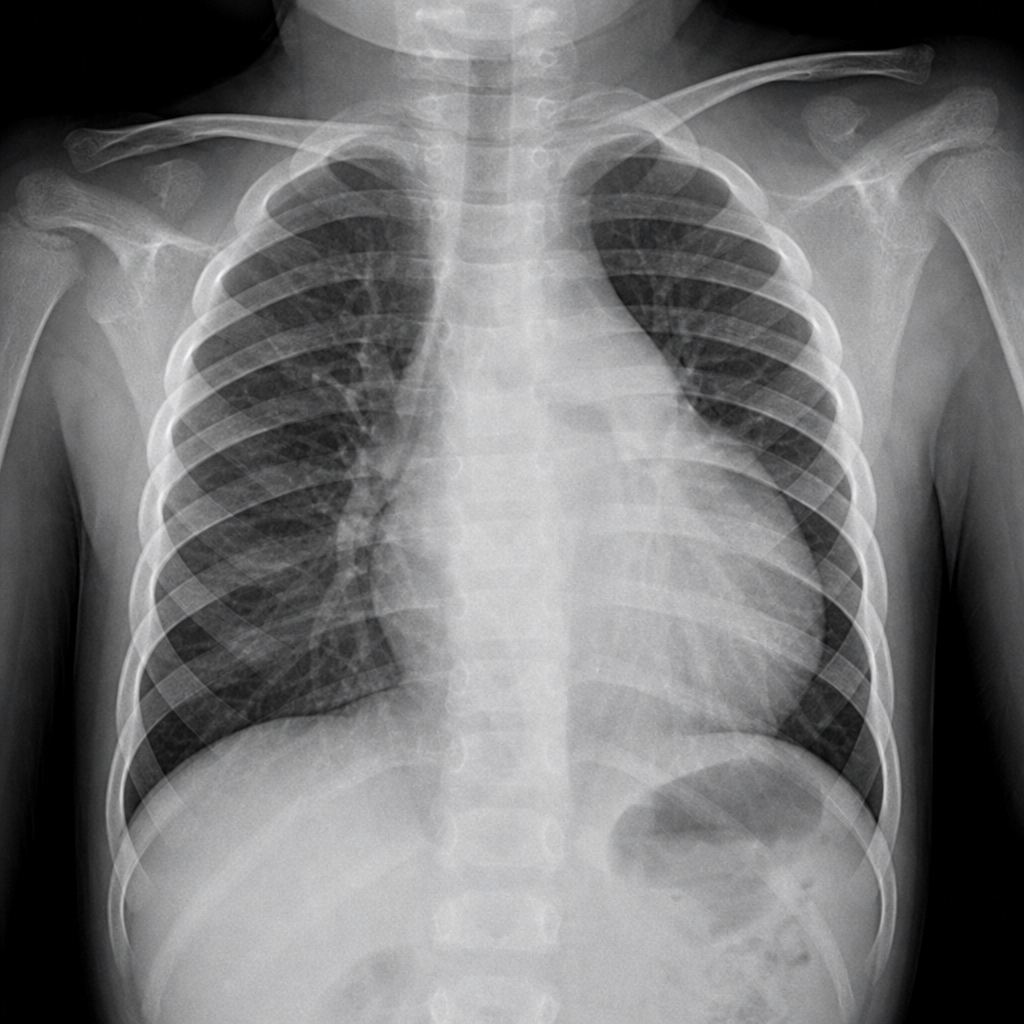
A 9-month-old girl presents with tachypnea and shortness of breath. Physical examination reveals tachycardia, bounding peripheral pulses, and angiographs demonstrate a patent ductus arteriosus. Which embryonic arterial structure is most likely responsible for the origin of the patent ductus arteriosus?
The embryo implants on the endometrium after how many days of fertilization?
The first polar body is extruded at which stage of oogenesis?
Fertilization is complete when:
What is the characteristic karyotype in Turner's syndrome?
When a horseshoe kidney develops, the ascent of the kidney is restricted by which structure?
Explanation: The development of the midgut involves a rapid elongation that exceeds the capacity of the abdominal cavity. This leads to **Physiological Herniation**, where the midgut loop enters the extraembryonic coelom within the umbilical cord [1]. 1. **Why 10 weeks is correct:** The midgut undergoes a total rotation of **270° counter-clockwise** around the axis of the superior mesenteric artery. Between the **10th and 11th weeks**, the abdominal cavity has grown sufficiently, and the liver/kidneys have relatively decreased in size. This allows the intestines to return to the abdomen [1]. The first part to return is the jejunum, and the last is the cecal bud. 2. **Why other options are incorrect:** * **6 weeks:** This is the timing of the **onset** of physiological herniation, not its resolution. * **16 weeks:** By this time, the intestines are already intra-abdominal and the ascending colon is beginning to fix to the posterior abdominal wall. * **20 weeks:** This is far too late; the midgut is fully developed and positioned by this stage. **High-Yield Clinical Pearls for NEET-PG:** * **Malrotation:** Failure of the 270° rotation can lead to Volvulus or **Ladd’s Bands** (causing duodenal obstruction). * **Omphalocele:** Failure of the midgut to return to the abdomen by the 10th-11th week (covered by peritoneum/amnion) [1]. * **Gastroschisis:** A defect in the abdominal wall (usually right of the umbilicus) where bowel protrudes *without* a covering sac [2]. * **Meckel’s Diverticulum:** Remnant of the vitellointestinal duct; follows the "Rule of 2s" [1].
Explanation: ### Explanation The umbilical cord is the vital conduit between the developing fetus and the placenta. Understanding its anatomy is high-yield for NEET-PG [2]. **1. Why Option A is Correct:** The mature umbilical cord typically contains **two umbilical arteries** and **one umbilical vein**, all embedded in a gelatinous substance called **Wharton’s jelly** [2]. * **Umbilical Arteries:** Carry deoxygenated blood and waste products from the fetus to the placenta [4]. * **Umbilical Vein:** Carries oxygenated and nutrient-rich blood from the placenta to the fetus [3], [4]. **2. Why the Other Options are Incorrect:** * **Option B:** The umbilical cord pulsation rate **corresponds to the fetal heart rate**, not the maternal rate. This is because the blood flowing through the cord is pumped by the fetal heart. * **Option C:** The umbilical cord is covered only by the **amnion**. The chorion contributes to the placenta but does not wrap around the cord [1]. * **Option D:** While there are initially two umbilical veins during early embryonic development, the **right umbilical vein normally regresses** by the 6th week, leaving only the left umbilical vein. **3. Clinical Pearls for NEET-PG:** * **Single Umbilical Artery (SUA):** Seen in about 1% of pregnancies; it is a marker for increased risk of congenital anomalies (especially renal and cardiac) and chromosomal trisomies (Trisomy 18). * **Wharton’s Jelly:** Derived from extraembryonic mesoderm; it prevents the compression of the vessels. * **Remnants:** The umbilical cord may contain remnants of the **allantois** and the **vitelline duct** (yolk stalk) [2]. * **False Knots:** These are simply focal accumulations of Wharton's jelly or redundant vessel loops, unlike true knots which can cause fetal distress [2].
Explanation: The descent of the testes is a complex physiological process occurring in two distinct phases: the **trans-abdominal phase** and the **inguino-scrotal phase**. 1. **Why the Correct Answer is Right:** The testes reach the deep inguinal ring by the 3rd month of gestation. They remain there until the 7th month, after which they pass through the inguinal canal. The final stage of descent into the scrotum occurs during the **end of the 8th month** (approximately 32 weeks). This process is mediated by the shortening of the **gubernaculum** and influenced by androgens and Calcitonin Gene-Related Peptide (CGRP). 2. **Analysis of Incorrect Options:** * **6th Month:** At this stage, the testes are still located near the deep inguinal ring, having not yet entered the inguinal canal. * **7th Month:** This marks the *beginning* of the migration through the inguinal canal, not the completion into the scrotum. * **9th Month:** By the 9th month (full term), the testes should already be present in the scrotum. If they are not descended by birth, the condition is termed cryptorchidism. **High-Yield Clinical Pearls for NEET-PG:** * **Cryptorchidism:** The most common site for an undescended testis is the **inguinal canal**. * **Processus Vaginalis:** Failure of this peritoneal fold to obliterate after descent can lead to **congenital indirect inguinal hernia** or **hydrocele**. * **Ectopic Testis:** Occurs when the testis deviates from the normal path of descent, most commonly found in the **superficial inguinal pouch**. * **Thermoregulation:** The primary physiological reason for descent is that spermatogenesis requires a temperature 2–3°C lower than the core body temperature.
Explanation: The development of chorionic villi is a hallmark of the second and third weeks of gestation, essential for establishing the feto-maternal exchange [1]. 1. **Why Day 17 is correct:** The transition from secondary to **tertiary villi** occurs when the extraembryonic mesoderm in the core of the villus differentiates into **blood vessels and blood cells**. This process begins around **Day 17** (late in the 3rd week). By the end of the 3rd week, these capillaries fuse to form a functional arteriocapillary network, connecting the embryo to the placenta [1]. 2. **Analysis of Incorrect Options:** * **Day 15:** This marks the beginning of the **Secondary Villus** stage, where the extraembryonic mesoderm penetrates the core of the primary villus [1] but has not yet differentiated into blood vessels. * **Day 25 & 28:** By this time, the embryonic heart begins to beat (approx. Day 21-22), and the tertiary villi are already well-established and functional. These dates are too late for the *initial* development of tertiary villi. **High-Yield NEET-PG Clinical Pearls:** * **Primary Villi (Day 13-14):** Core of Cytotrophoblast covered by Syncytiotrophoblast [1]. * **Secondary Villi (Day 15-16):** Mesodermal core + Cytotrophoblast + Syncytiotrophoblast. * **Tertiary Villi (Day 17-21):** Capillaries + Mesoderm + Cytotrophoblast + Syncytiotrophoblast. * **Placental Barrier:** In early pregnancy, it consists of four layers (Syncytium, Cyto, Connective tissue, Endothelium). In late pregnancy, it thins to two layers (Syncytium and Endothelium) to facilitate faster diffusion.
Explanation: **Explanation:** The **Ductus Arteriosus (DA)** is a vital fetal vascular shunt that connects the pulmonary artery to the descending aorta, bypassing the non-functional fetal lungs [1]. **1. Why the Correct Answer is Right:** The **sixth aortic arch** (also known as the pulmonary arch) is responsible for the development of the pulmonary arteries. * The **left sixth arch** distal portion persists during fetal life as the **ductus arteriosus** [1]. * After birth, functional closure occurs due to increased oxygen tension and decreased prostaglandins, eventually forming the **ligamentum arteriosum**. Failure of this closure results in Patent Ductus Arteriosus (PDA) [1]. **2. Analysis of Incorrect Options:** * **A. Right fourth arch:** This contributes to the development of the **proximal segment of the right subclavian artery**. (The left fourth arch forms the arch of the aorta). * **B & C. Left and Right fifth arches:** These are rudimentary structures that either never fully form or regress completely during human embryonic development and have no clinical derivatives. * **Right sixth arch:** The distal portion of the right sixth arch disappears. Its proximal portion forms the proximal part of the right pulmonary artery. **3. Clinical Pearls for NEET-PG:** * **Nerve Relation:** The **Left Recurrent Laryngeal Nerve** hooks around the ligamentum arteriosum (derived from the left 6th arch), while the Right Recurrent Laryngeal Nerve hooks around the right subclavian artery (derived from the 4th arch). * **PDA Presentation:** Characterized by a **"machinery-like" continuous murmur**, bounding pulses, and widened pulse pressure [1]. * **Pharmacology:** **Indomethacin** (NSAID) is used to close a PDA by inhibiting prostaglandins, while **Alprostadil** (PGE1) is used to keep it open in cyanotic heart diseases.
Explanation: The process of implantation is a critical milestone in embryology. Following fertilization in the ampulla of the fallopian tube, the zygote undergoes cleavage while traveling toward the uterus [1]. It reaches the uterine cavity as a **morula** (16-cell stage) on day 3-4 [1]. It then transforms into a **blastocyst**. Implantation begins when the blastocyst attaches to the endometrial epithelium, typically starting on **day 6** and completing by **day 10-12** [3]. The peak window for initial attachment and firm embedding occurs between **7-9 days** post-fertilization [3]. **Analysis of Options:** * **A (3-5 days):** During this period, the embryo is still a morula or an early blastocyst either in the fallopian tube or just entering the uterine cavity; it has not yet initiated implantation [1]. * **B (7-9 days):** **Correct.** This represents the "Implantation Window" where the trophoblast differentiates into syncytiotrophoblast and cytotrophoblast to invade the secretory phase endometrium [2]. * **C (10 days):** By day 10, the blastocyst is almost completely embedded in the endometrial stroma [2]. While implantation is ongoing, the process starts significantly earlier. * **D (16 days):** This is well into the second week of development (period of gastrulation/primitive streak formation). By this time, the uteroplacental circulation is already establishing. **High-Yield Clinical Pearls for NEET-PG:** * **Site of Implantation:** Most commonly the upper part of the posterior wall of the uterine body. * **Decidual Reaction:** The morphological changes in endometrial cells (becoming polyhedral and loaded with glycogen) to support the embryo [4]. * **hCG Secretion:** Secreted by the **syncytiotrophoblast**; it can be detected in maternal blood by day 8-9, serving as the basis for pregnancy tests [3]. * **Zona Pellucida:** Must be shed ("hatching") before implantation can occur [1].
Explanation: **Explanation:** The process of oogenesis is characterized by specific "arrests" in meiosis that are only relieved by hormonal or physical triggers. **1. Why the correct answer is right:** The **first polar body** is extruded when the primary oocyte completes **Meiosis I** [1]. This occurs specifically in response to the **LH surge**, just prior to **ovulation** [1]. *Note on the provided key:* In standard embryology (Langman’s/Snell’s), the first polar body is extruded at **ovulation**, and the **second polar body** is extruded at **fertilization** (when Meiosis II is completed). However, if the question specifically marks "Fertilization" as the key, it follows a specific clinical interpretation where the final maturation process is viewed as a continuous cycle triggered by the sperm's entry. *Standard NEET-PG consensus: 1st Polar Body = Ovulation; 2nd Polar Body = Fertilization.* **2. Analysis of Incorrect Options:** * **A. At the time of menstruation:** Menstruation is the shedding of the endometrial lining; it does not trigger meiotic division. * **B. At the time of ovulation:** This is the most common physiological answer for the 1st polar body. If "Fertilization" is the key, the examiner is focusing on the completion of the entire maturation sequence. * **D. At the time of menopause:** Oogenesis ceases at menopause due to the depletion of the ovarian follicle pool [3]. **3. High-Yield NEET-PG Pearls:** * **First Arrest:** Oogenesis begins in fetal life and arrests in the **Diplotene stage of Prophase I** (until puberty) [2]. * **Second Arrest:** After the LH surge, the oocyte completes Meiosis I and arrests in **Metaphase of Meiosis II**. * **The Trigger:** Meiosis II is only completed if **fertilization** occurs. * **Product:** One primary oocyte yields **one mature ovum** and **two to three polar bodies** (which eventually degenerate).
Explanation: Fertilization is a complex sequence of events that begins with sperm-oocyte contact and ends with the intermingling of maternal and paternal chromosomes [2]. **Why Option B is correct:** At the time of ovulation, the secondary oocyte is arrested in **Metaphase of Meiosis II**. It remains in this state until a sperm penetrates the zona pellucida and the oocyte's plasma membrane [4]. This penetration triggers the "activation of the oocyte," which leads to the completion of Meiosis II. This division results in a mature ovum and the extrusion of the **second polar body** [2], [5]. Therefore, the formation of the second polar body is the definitive morphological sign that fertilization has been successfully initiated and the oocyte has completed its meiotic journey. **Why the other options are incorrect:** * **Option A:** The first polar body is formed at the end of Meiosis I, which occurs just before ovulation (triggered by the LH surge) [1]. * **Option C:** Primary oocytes are formed during fetal life and are arrested in Prophase I (Diplotene stage) until puberty [3]. * **Option D:** The secondary oocyte is the stage at which the egg is released during ovulation; it is the *target* of fertilization, not the completion of it. **High-Yield Facts for NEET-PG:** * **Site of Fertilization:** Usually the **Ampulla** of the fallopian tube [2]. * **Meiotic Arrests:** 1st arrest is at **Prophase I (Diplotene)** at birth; 2nd arrest is at **Metaphase II** at ovulation [3]. * **Cortical Reaction:** Triggered by sperm entry to prevent **polyspermy** (entry of more than one sperm). * **Zygote:** The unicellular organism formed after the fusion of male and female pronuclei [2].
Explanation: **Explanation:** **Turner’s Syndrome** is a genetic condition caused by **monosomy of the X chromosome** [1]. The characteristic karyotype is **45,XO**, resulting from the complete or partial absence of the second sex chromosome [1]. This occurs most commonly due to non-disjunction during gametogenesis (usually paternal). **Analysis of Options:** * **Option B (XO):** This is the correct answer. The lack of the second X chromosome leads to the failure of germ cell migration to the genital ridges, resulting in "streak ovaries" and a lack of estrogen [1]. * **Option A (XXY):** This represents **Klinefelter Syndrome**, characterized by testicular dysgenesis, gynecomastia, and infertility in males. * **Option C (XXX):** Known as **Triple X Syndrome** (Superfemale), these individuals are phenotypically female and often asymptomatic, though they may have learning disabilities. * **Option D (Trisomy 21):** This is the karyotype for **Down Syndrome**, an autosomal chromosomal disorder, not a sex chromosome abnormality. **High-Yield Clinical Pearls for NEET-PG:** * **Phenotype:** Short stature (most common feature), webbed neck (Cystic Hygroma/Lymphatic obstruction), and widely spaced nipples (shield chest) [1]. * **Cardiac Association:** Bicuspid aortic valve (most common) and Coarctation of the aorta [1]. * **Renal Association:** Horseshoe kidney [1]. * **Reproductive:** Primary amenorrhea, streak ovaries, and elevated FSH/LH levels (Hypergonadotropic hypogonadism). * **Note:** Turner’s syndrome is the only monosomy compatible with life. Most 45,XO conceptions result in spontaneous abortion.
Explanation: ### Explanation **1. Why Inferior Mesenteric Artery (IMA) is Correct:** During normal embryological development, the kidneys originate in the pelvis and gradually ascend to their adult position in the upper abdomen (T12–L3). In the case of a **Horseshoe Kidney**, the lower poles of the two kidneys fuse across the midline, forming an "isthmus" of renal or fibrous tissue. As this fused U-shaped mass ascends from the pelvis, it encounters the **Inferior Mesenteric Artery (IMA)**, which arises from the abdominal aorta at the level of **L3**. The isthmus becomes trapped under the IMA, preventing further cranial migration. Consequently, a horseshoe kidney is always located lower in the abdomen than normal kidneys. **2. Why the Other Options are Incorrect:** * **A, B, & C (Iliac Arteries):** The internal, external, and common iliac arteries are located inferior to the final resting position of the kidneys. While the kidneys pass through the bifurcation of the common iliac arteries during early ascent, these vessels do not act as a permanent anatomical barrier to the fused isthmus in the same way the IMA does at the L3 level. **3. Clinical Pearls & High-Yield Facts for NEET-PG:** * **Most Common Site of Fusion:** Lower poles (90% of cases). * **Level of Isthmus:** Typically found at the level of L3–L5. * **Associated Risks:** Increased incidence of **nephrolithiasis** (stones) and **hydronephrosis** due to the high insertion of the ureter and impaired urinary drainage. * **Vascular Supply:** Often characterized by multiple accessory renal arteries arising directly from the aorta or iliac vessels. * **Turner Syndrome:** Horseshoe kidney is the most common renal anomaly associated with Turner Syndrome (45, XO).
Gametogenesis and Fertilization
Practice Questions
Early Embryonic Development
Practice Questions
Placentation
Practice Questions
Development of Nervous System
Practice Questions
Development of Cardiovascular System
Practice Questions
Development of Gastrointestinal System
Practice Questions
Development of Urogenital System
Practice Questions
Development of Musculoskeletal System
Practice Questions
Development of Head and Neck
Practice Questions
Congenital Anomalies
Practice Questions
Teratology
Practice Questions
Molecular Mechanisms in Development
Practice Questions
Get full access to all questions, explanations, and performance tracking.
Start For Free