A 38-year-old male is admitted to the emergency department after a car collision. Several lacerations are discovered on his back during physical examination. Pain from lacerations or irritations of the skin of the back is conveyed to the central nervous system by which of the following?
The posterior longitudinal ligament continues as which of the following structures?
A 43-year-old man presents with a whiplash injury after his car was struck from behind. An MRI reveals cervical disk herniation. Physical examination shows loss of elbow extension, absence of the triceps reflex, and loss of extension of the metacarpophalangeal joints on the ipsilateral side. Which spinal nerve is most likely affected?
At what vertebral level does the spinal cord typically end in adults?
A 26-year-old heavyweight boxer sustained a blow to the mandible, causing slight subluxation of the atlantoaxial joint. This injury resulted in a decreased range of motion at the joint. Which movement would be most affected?
The vertebral artery traverses all of the following structures except?
Which cervical vertebra has a lateral mass?
The highest point of the iliac crest is at the level of which vertebral body?
Which structure forms the posterior one-third of the vertebral canal?
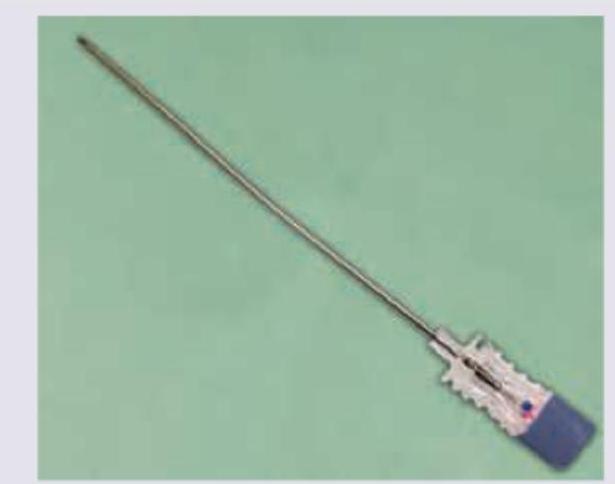
A 19-year-old presents at the emergency department with high fever, severe headache, nausea, and stiff neck for 3 days. The attending physician suspects meningitis and obtains a sample of CSF using a lumbar puncture. From which of the following spaces was the CSF collected?
Explanation: The spinal nerve divides into two major branches after exiting the intervertebral foramen: the **Dorsal (Posterior) Primary Ramus** and the **Ventral (Anterior) Primary Ramus**. 1. **Why Option A is Correct:** The **Dorsal Primary Rami** are responsible for the motor innervation of the deep (intrinsic) muscles of the back and the **sensory innervation of the skin of the back** (from the vertex of the skull to the gluteal region). Therefore, pain from skin lacerations on the back is transmitted via these rami to the spinal cord. [1] 2. **Why the other options are incorrect:** * **Ventral Primary Rami (C):** These are much larger and supply the skin and muscles of the limbs and the anterolateral aspect of the trunk. They also form the major nerve plexuses (Cervical, Brachial, Lumbar, and Sacral). * **Ventral Roots (D):** These carry purely **efferent (motor)** fibers from the spinal cord to the periphery. They do not carry sensory information; sensory fibers enter the spinal cord via the dorsal roots. [1] * **Communicating Rami (B):** These (Rami communicantes) connect the spinal nerves to the sympathetic trunk and are involved in autonomic (visceral) functions, not cutaneous sensation. **High-Yield Clinical Pearls for NEET-PG:** * **Rule of Back Innervation:** While the deep muscles of the back (e.g., Erector spinae) are supplied by dorsal rami, the **superficial muscles** of the back (e.g., Latissimus dorsi, Trapezius) are supplied by **ventral rami** or cranial nerves, as they are embryologically limb muscles. * **Dermatomes:** The sensory distribution of the dorsal rami follows a segmental pattern, which is crucial for localizing spinal cord injuries. * **Mixed Nerve:** Remember that both dorsal and ventral rami are **mixed nerves** (containing both sensory and motor fibers), whereas roots are functionally segregated (Dorsal = Sensory; Ventral = Motor). [1]
Explanation: The **Posterior Longitudinal Ligament (PLL)** is a strong fibrous band that runs along the posterior surfaces of the vertebral bodies, inside the vertebral canal. As it ascends to the upper cervical region, it undergoes a name change based on its anatomical transition. **Why Membrana Tectoria is correct:** At the level of the body of the **axis (C2)**, the PLL continues superiorly as the **Membrana Tectoria**. It broadens as it passes posterior to the dens and the cruciform ligament, eventually piercing the dura mater to attach to the internal surface of the occipital bone (clivus), just anterior to the foramen magnum. It acts as a protective "roof" over the atlanto-axial ligaments. **Analysis of Incorrect Options:** * **A. Apical Ligament:** This is a thin midline cord connecting the tip of the dens to the anterior margin of the foramen magnum. It is a remnant of the notochord, not a continuation of the PLL. * **B. Alar Ligament:** These are paired "check ligaments" extending from the sides of the dens to the lateral margins of the foramen magnum. They limit rotation of the head. * **C. Transverse Ligament:** This is a strong band that arches across the ring of the atlas (C1) to retain the dens in place. It is part of the cruciform ligament complex and lies deep to the membrana tectoria. **High-Yield Facts for NEET-PG:** * **PLL vs. ALL:** The PLL is narrower and weaker than the Anterior Longitudinal Ligament (ALL). It helps prevent hyperflexion and posterior disc herniation. * **Cruciform Ligament:** Composed of the transverse ligament of the atlas and superior/inferior vertical bands. * **Clinical Pearl:** In "Whiplash" injuries, the membrana tectoria can be stretched or torn, leading to craniovertebral instability. * **Ligamentum Flavum:** Connects the laminae of adjacent vertebrae; its cephalad continuation is the **posterior atlanto-axial membrane**.
Explanation: ### Explanation The patient presents with a classic constellation of symptoms pointing toward a **C7 spinal nerve** injury. In the cervical spine, a herniated disc typically compresses the nerve root exiting at that level (e.g., a C6-C7 disc herniation affects the C7 nerve) [1]. **Why C7 is the Correct Answer:** The C7 nerve root provides the primary motor innervation for: 1. **Elbow Extension:** The **Triceps brachii** is predominantly supplied by C7 (via the radial nerve). Loss of elbow extension is a hallmark of C7 palsy. 2. **Triceps Reflex:** This is the specific deep tendon reflex used to test the C7 cord level. 3. **Finger Extension:** Extension of the metacarpophalangeal (MCP) joints is performed by the **extensor digitorum**, which is primarily innervated by C7. **Why Other Options are Incorrect:** * **C5:** Injury leads to weakness in shoulder abduction (Deltoid) and elbow flexion (Biceps), with loss of the Biceps reflex. * **C6:** Injury affects elbow flexion (Brachialis/Biceps) and wrist extension (Extensor carpi radialis). It is associated with the Brachioradialis reflex. * **C8:** Injury primarily affects **finger flexion** (making a fist) and thumb movements, not elbow extension. **NEET-PG High-Yield Pearls:** * **Cervical Rule:** In the cervical spine, there are 8 nerves but only 7 vertebrae. Nerve C1-C7 exit **above** their corresponding vertebrae; C8 exits below C7. * **Reflex Map:** C5/C6 = Biceps/Brachioradialis; **C7 = Triceps**; L3/L4 = Patellar; S1 = Achilles. * **Sensory C7:** Sensory loss typically occurs in the **middle finger** ("C7 points to heaven").
Explanation: **Explanation:** The spinal cord (medulla spinalis) terminates as a tapered, conical structure called the **conus medullaris**. In adults, this termination typically occurs at the level of the **lower border of the L1 vertebra** or the **L1-L2 intervertebral disc**. **Why L1 is correct:** During embryonic development, the spinal cord and vertebral column are the same length. However, the vertebral column grows more rapidly than the spinal cord (disproportionate growth). By birth, the cord ends at L3, and by adulthood, it "ascends" to the level of the L1 vertebra. **Analysis of Incorrect Options:** * **B (L2):** While the cord can sometimes end at the upper border of L2, L1 is the standard textbook anatomical landmark for the adult termination. * **C (S1):** The dural sac and subarachnoid space (containing CSF) end at the level of the **S2 vertebra**, not the spinal cord itself. * **D (L3):** This is the typical level of spinal cord termination in **neonates/infants**. As the child grows, the vertebral column outpaces the cord, leading to the adult L1 level. **High-Yield Clinical Pearls for NEET-PG:** 1. **Lumbar Puncture (LP):** To avoid injuring the spinal cord, an LP is typically performed at the **L3-L4 or L4-L5** interspace (well below the conus medullaris). 2. **Filum Terminale:** A delicate strand of fibrous tissue (pia mater) that extends from the tip of the conus medullaris to the dorsum of the coccyx. 3. **Cauda Equina:** The collection of lumbar, sacral, and coccygeal nerve roots that descend below the level of the conus medullaris. 4. **Tethered Cord Syndrome:** A clinical condition where the conus medullaris is abnormally low (below L2), often associated with spina bifida.
Explanation: The **atlantoaxial joint** is a complex of three synovial joints between the Atlas (C1) and the Axis (C2): one median pivot joint (between the dens of C2 and the anterior arch of C1) and two lateral plane joints. 1. **Why Rotation is Correct:** The primary function of the atlantoaxial joint is **rotation**. It is often referred to as the "No" joint because it accounts for approximately **50% of the total cervical rotation**. The pivot mechanism of the dens acting as an axis allows the atlas to rotate around it. Any subluxation or injury to this joint will most significantly restrict the ability to turn the head from side to side. 2. **Why Other Options are Incorrect:** * **Extension (and Flexion):** These movements primarily occur at the **atlanto-occipital joint** (the "Yes" joint) between the occipital condyles and the atlas. * **Abduction/Adduction:** These terms describe movements of the limbs or lateral flexion of the spine. Lateral flexion of the neck involves multiple cervical segments (C3-C7) but is not a primary function of the C1-C2 complex. **High-Yield NEET-PG Pearls:** * **Cruciate Ligament:** The transverse ligament of the atlas is the most important component, holding the dens against the atlas. Rupture can lead to fatal spinal cord compression. * **Alar Ligaments:** These "check ligaments" limit excessive rotation. * **Innervation:** The atlantoaxial joints are supplied by the C2 spinal nerve. * **Clinical Correlation:** In Rheumatoid Arthritis, the transverse ligament can weaken, leading to atlantoaxial subluxation even without trauma.
Explanation: The **vertebral artery** is a major branch of the first part of the subclavian artery. Its course is traditionally divided into four segments (V1–V4). ### **Why "Intervertebral Foramen" is the Correct Answer** The **intervertebral foramen** is the opening between two adjacent vertebrae through which **spinal nerves** and small segmental vessels pass. The vertebral artery does not enter this space; instead, it ascends vertically through the neck within the bony canals of the cervical vertebrae and enters the cranial cavity. ### **Analysis of Incorrect Options** * **Foramen Transversarium (Option D):** This is the hallmark of cervical vertebrae. The vertebral artery (V2 segment) passes through the foramina transversaria of the **C1 to C6** vertebrae. (Note: It typically skips C7). * **Foramen Magnum (Option A):** After winding around the posterior arch of the atlas (C1), the artery pierces the posterior atlanto-occipital membrane to enter the skull via the **foramen magnum** (V4 segment). * **Subarachnoid Space (Option B):** Once inside the foramen magnum, the artery pierces the dural and arachnoid mater to run in the **subarachnoid space** before joining its counterpart to form the basilar artery. ### **NEET-PG High-Yield Pearls** * **Origin:** Arises from the **first part** of the subclavian artery. * **The "C7" Rule:** The vertebral artery passes through the foramina transversaria of C1–C6, but **not C7**. The foramen transversarium of C7 only transmits small accessory vertebral veins. * **Suboccipital Triangle:** The V3 segment lies in the floor of the suboccipital triangle, resting on the groove on the superior aspect of the posterior arch of the atlas. * **Clinical Significance:** Compression of the vertebral artery during neck rotation can lead to **Vertebrobasilar Insufficiency (VBI)**, presenting as vertigo or syncope.
Explanation: **Explanation:** The **Atlas (C1)** is unique among vertebrae because it lacks a vertebral body and a spinous process. Instead, it consists of an anterior arch, a posterior arch, and two **lateral masses**. These lateral masses are the thickest and strongest parts of the bone, designed to support the weight of the skull. Each lateral mass features an upper oval concave facet for articulation with the occipital condyles (forming the atlanto-occipital joint) and a lower circular facet for articulation with the Axis (forming the lateral atlanto-axial joint). **Analysis of Options:** * **Axis (C2):** While the Axis has superior articular processes that support the Atlas, it possesses a distinct vertebral body and the **Dens (odontoid process)**. It does not have a "lateral mass" in the same structural context as C1. * **C5 (Typical Cervical Vertebra):** Typical cervical vertebrae (C3-C6) have a small, broad body and a bifid spinous process. Their articular facets are located on the articular pillars, not lateral masses. * **C7 (Vertebra Prominens):** This is an atypical vertebra characterized by a long, non-bifid spinous process and a small foramen transversarium. It follows the standard vertebral body architecture. **Clinical Pearls for NEET-PG:** * **Jefferson Fracture:** A burst fracture of the Atlas (C1) caused by axial loading (e.g., diving into shallow water), which typically occurs through the weak points of the arches, causing the lateral masses to displace laterally. * **Ligamentous Attachment:** The medial aspect of the lateral mass has a tubercle for the attachment of the **transverse ligament of the atlas**, which holds the dens in place. * **Rule of Spence:** On an X-ray, if the total displacement of the lateral masses of C1 over C2 is >7mm, it indicates a rupture of the transverse ligament.
Explanation: ### Explanation The correct answer is **L3 (Option A)**. In the study of surface anatomy, it is crucial to distinguish between the **highest point of the iliac crest** and the **intercristal line**. 1. **Why L3 is correct:** While the horizontal line connecting the two iliac crests (Tuffier’s line) passes through the L4 spinous process, the **highest point** of the iliac crest itself actually corresponds to the level of the **L3 vertebral body** (or the L3-L4 disc space). This is a high-yield anatomical distinction often tested to differentiate between surface landmarks and vertebral levels. 2. **Why the other options are incorrect:** * **L4:** This is the level of the *intercristal line* (the supracristal plane). While often used as a landmark for lumbar punctures, the highest anatomical point of the crest is slightly superior to this plane. * **L5:** This level is inferior to the iliac crest. The iliolumbar ligaments typically attach here. [1] * **S2:** This level corresponds to the **Posterior Superior Iliac Spine (PSIS)**, marked by the "dimples of Venus." It also marks the end of the dural sac. ### Clinical Pearls for NEET-PG: * **Tuffier’s Line:** A horizontal line joining the highest points of the iliac crests. It crosses the **L4 spinous process** or the **L4-L5 interspace**. * **Lumbar Puncture:** Usually performed at the L3-L4 or L4-L5 space to avoid the spinal cord, which ends at **L1** in adults (L3 in infants). * **S2 Level:** High-yield landmark for the termination of the dural sac and the location of the sacroiliac joint. * **Transtubercular Plane:** Passes through the iliac tubercles at the level of the **L5 vertebral body**.
Explanation: ### Explanation The vertebral canal is a bony-ligamentous tunnel that houses the spinal cord and its coverings. To understand its boundaries, one must divide the canal into anterior and posterior segments. [1] **Why Ligamentum Flavum is Correct:** The **posterior wall** (or the posterior one-third) of the vertebral canal is formed primarily by the **laminae** of the vertebrae and the **ligamentum flavum**. The ligamentum flavum connects the laminae of adjacent vertebrae, extending from the axis to the sacrum. It is composed of yellow elastic tissue, which helps maintain upright posture and protects the neural elements posteriorly. **Analysis of Incorrect Options:** * **A. Posterior Longitudinal Ligament (PLL):** This structure runs along the posterior aspect of the vertebral bodies. Therefore, it forms the **anterior wall** of the vertebral canal, not the posterior. [1] * **C & D. Posterior one-third of vertebral body/intervertebral disc:** These structures are located in front of the spinal cord. Together with the PLL, they constitute the **anterior boundary** of the vertebral canal. [1] **High-Yield Clinical Pearls for NEET-PG:** * **Hypertrophy of Ligamentum Flavum:** This is a common cause of **Spinal Canal Stenosis**, leading to compression of the cauda equina or spinal nerves. * **Lumbar Puncture (LP):** During an LP, the "pop" felt by the clinician occurs as the needle pierces the **ligamentum flavum** to enter the epidural space. * **Elasticity:** The ligamentum flavum has the highest percentage of elastic fibers of any ligament in the human body, preventing it from buckling into the canal during spinal extension.
Explanation: The patient presents with the classic triad of meningitis: fever, headache, and neck stiffness (nuchal rigidity). To confirm the diagnosis, a lumbar puncture (spinal tap) is performed to analyze the Cerebrospinal Fluid (CSF). **Why the Subarachnoid Space is Correct:** The **subarachnoid space** is the anatomical interval located between the arachnoid mater and the pia mater. This space contains the CSF, which cushions the brain and spinal cord, as well as the major blood vessels supplying the CNS [3]. In a lumbar puncture, the needle must penetrate the dura and arachnoid mater to reach this space, typically between the L3-L4 or L4-L5 vertebrae, to safely collect CSF for diagnostic testing. Meningitis itself is defined as an inflammatory process involving the leptomeninges and the CSF within this specific space [3]. **Analysis of Incorrect Options:** * **A. Epidural space:** Located between the dura mater and the vertebral canal. It contains fat and the internal vertebral venous plexus [1]. It is the site for epidural anesthesia, not CSF collection. In cases of infection, this space may house an epidural abscess [1]. * **B. Subdural space:** A potential space between the dura and arachnoid mater. While it can harbor hematomas (subdural hemorrhage) or empyemas [2], it does not contain a significant volume of CSF. * **D. Pretracheal space:** A visceral space in the neck (anterior to the trachea). It has no anatomical connection to the spinal canal or CSF. **NEET-PG High-Yield Pearls:** * **Level of Spinal Cord:** Ends at **L1-L2** in adults and **L3** in infants. This is why lumbar punctures are performed at the L3-L4 or L4-L5 level to avoid cord injury. * **Structures Pierced (Outside to In):** Skin → Superficial fascia → Supraspinous ligament → Interspinous ligament → **Ligamentum flavum** (gives a characteristic "pop") → Epidural space → Dura mater → Arachnoid mater → **Subarachnoid space**. * **Lumbar Cistern:** The enlargement of the subarachnoid space from the conus medullaris (L1-L2) to the level of S2, containing the cauda equina and CSF.
Vertebral Column
Practice Questions
Spinal Cord and Meninges
Practice Questions
Back Muscles and Fasciae
Practice Questions
Vertebral Joints and Ligaments
Practice Questions
Vasculature of the Back
Practice Questions
Innervation of the Back
Practice Questions
Clinical Aspects of Back Disorders
Practice Questions
Applied Anatomy of the Back
Practice Questions
Surface Anatomy of the Back
Practice Questions
Development of the Vertebral Column
Practice Questions
Get full access to all questions, explanations, and performance tracking.
Start For Free