A 45-year-old man presents with a sensory deficit in the C8 and T1 dermatomes following a car crash that caused mild disk herniations of C7, C8, and T1. The dorsal root ganglia of C8 and T1 contain cell bodies of sensory fibers. Which of the following nerves carries sensory fibers originating from these dermatomes?
A 25-year-old man presents to the emergency department complaining of a severe headache, stiff neck, and fever. While waiting for treatment, the patient has a seizure. A neurologist suspects meningitis and performs a lumbar puncture. Immediately after the needle passes through the interlaminar space between the 4th and 5th lumbar vertebrae, which space does it enter?
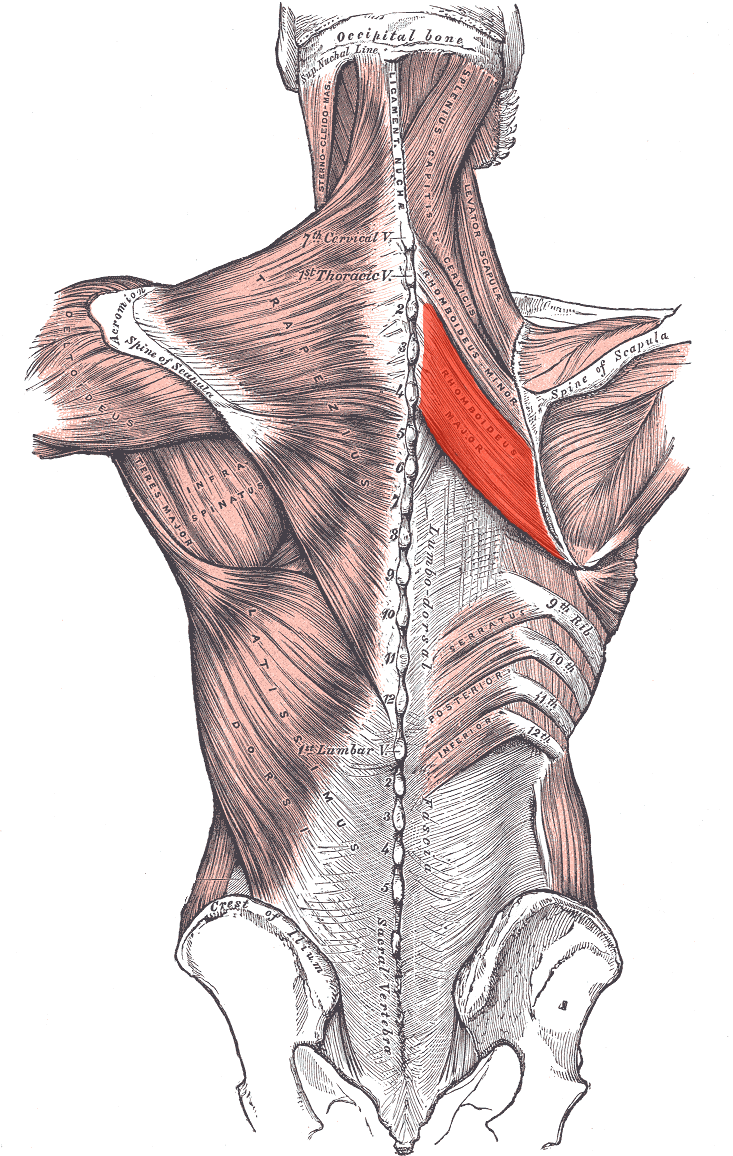
The trapezius muscle is attached to which of the following structures EXCEPT?
Symmetrical areflexic bladder, bowel, and lower limb dysfunction occurs in which of the following conditions?
Arrange the following structures in the order they are pierced during a lumbar puncture: Epidural space, Interspinous ligament, Supraspinous ligament, Ligamentum flavum, Subarachnoid space.
Which of the following statements about the trapezius muscle is false?
When performing a lumbar puncture in an infant, why is a lower intervertebral space typically chosen compared to an adult?
Which vertebral segment is numerically most constant?
What type of joint is the median atlanto-axial joint?
Cervical vertebrae are differentiated from thoracic vertebrae by the presence of which of the following?
Explanation: The patient presents with sensory deficits in the **C8 and T1 dermatomes**, which correspond to the medial aspect of the forearm and hand. **1. Why the Correct Answer is Right:** The **Medial antebrachial cutaneous nerve** arises from the **medial cord** of the brachial plexus, receiving fibers specifically from the **C8 and T1** nerve roots. It provides sensory innervation to the skin over the medial (ulnar) side of the forearm. Since the lesion involves the C8 and T1 dorsal root ganglia, the sensory fibers traveling within this nerve are directly affected. **2. Analysis of Incorrect Options:** * **Long thoracic nerve (C5, C6, C7):** This is a purely motor nerve that innervates the serratus anterior muscle. It does not carry sensory fibers from the C8/T1 dermatomes. * **Lateral antebrachial cutaneous nerve (C5, C6):** This is the terminal sensory branch of the **musculocutaneous nerve**. It supplies the lateral aspect of the forearm and originates from higher cervical levels (C5-C6). * **Deep branch of ulnar nerve:** While the ulnar nerve carries C8-T1 fibers, its **deep branch** is primarily **motor**, innervating the intrinsic muscles of the hand (hypothenar, interossei, adductor pollicis). Sensory supply to the C8/T1 area is handled by the superficial and cutaneous branches. **3. NEET-PG High-Yield Clinical Pearls:** * **Dermatome Landmark:** Remember that T1 covers the medial arm/forearm, while C8 covers the medial hand and little finger. * **Brachial Plexus Roots:** The medial cord (C8, T1) gives rise to the "M" nerves: **M**edial pectoral, **M**edial cutaneous nerve of arm, **M**edial cutaneous nerve of forearm, **M**edial root of median nerve, and the ulnar nerve. * **Disk Herniation Rule:** In the cervical spine, the nerve root involved is named after the lower vertebra (e.g., C7-T1 herniation affects the C8 nerve root).
Explanation: To perform a lumbar puncture, the needle must traverse several anatomical layers in a specific sequence. Understanding this sequence is high-yield for both Anatomy and Anesthesia questions in NEET-PG. ### **Anatomical Sequence of Layers** When a needle is inserted between the L4 and L5 vertebrae, it passes through: 1. Skin 2. Subcutaneous tissue 3. Supraspinous ligament 4. Interspinous ligament 5. **Ligamentum flavum** (the "pop" is felt here) 6. **Epidural space** (The correct answer) 7. Dura mater 8. Arachnoid mater 9. **Subarachnoid space** (where CSF is obtained) ### **Why Option A is Correct** The **interlaminar space** is the gap between the laminae of adjacent vertebrae, which is bridged by the **ligamentum flavum**. Once the needle pierces the ligamentum flavum, it immediately enters the **epidural space**. This space contains internal vertebral venous plexuses and fat. ### **Why Other Options are Incorrect** * **B. Intramuscular space:** While the needle may pass through paraspinal muscles if a paramedian approach is used, it is not the space entered immediately after the interlaminar ligaments. * **C. Subarachnoid space:** This is deeper than the epidural space. To reach it, the needle must still pierce the "dura-arachnoid" interface. * **D. Subcutaneous space:** This is the very first layer under the skin, far superficial to the interlaminar space. ### **High-Yield Clinical Pearls** * **The "Pop":** A distinct "give" or "pop" is felt twice: first when piercing the **ligamentum flavum** (entering the epidural space) and second when piercing the **dura mater** (entering the subarachnoid space). * **Level of Termination:** In adults, the spinal cord ends at **L1-L2**, while the subarachnoid space (thecal sac) ends at **S2**. Lumbar punctures are safely performed at **L3-L4 or L4-L5** to avoid cord injury. * **Tuffier’s Line:** An imaginary line connecting the highest points of the iliac crests usually crosses the **L4 spinous process**, serving as a landmark for needle insertion.
Explanation: **Explanation:** The **Trapezius** is a large, superficial, diamond-shaped muscle of the back. To identify the correct answer, one must understand its extensive origin and insertion points. 1. **Why "First Rib" is correct:** The trapezius has **no attachment** to the ribs. The muscles typically associated with the first rib are the scalene muscles (anterior and middle), subclavius, and serratus anterior. Therefore, it is the correct "EXCEPT" option. 2. **Why the other options are incorrect:** * **Occiput (Origin):** The muscle originates from the medial third of the superior nuchal line of the occipital bone and the external occipital protuberance. * **Clavicle (Insertion):** The upper fibers of the trapezius insert into the posterior border of the lateral one-third of the clavicle. * **Scapula (Insertion):** The middle and lower fibers insert into the medial margin of the acromion process and the superior lip of the crest of the spine of the scapula. **High-Yield Clinical Pearls for NEET-PG:** * **Nerve Supply:** It is unique because it receives motor supply from the **Spinal Accessory Nerve (CN XI)**. Sensory (proprioception) is provided by ventral rami of **C3 and C4**. * **Action:** It is a key stabilizer of the scapula. The upper and lower fibers work together with the serratus anterior to rotate the scapula upward during abduction of the arm above 90 degrees. * **Clinical Sign:** Injury to the Spinal Accessory Nerve leads to "drooping of the shoulder" and an inability to shrug.
Explanation: The key to distinguishing between spinal cord syndromes lies in the **symmetry** and the **level of the lesion**. **1. Why Conus Medullaris Syndrome is Correct:** The conus medullaris is the tapered terminal end of the spinal cord (ending at L1-L2). Because it is a compact area containing the sacral and coccygeal segments, a lesion here typically results in **symmetrical** and **bilateral** involvement. It presents with sudden onset of bladder and bowel dysfunction (autonomic centers are located here) and "saddle anesthesia." Since it involves the terminal cord, it presents with **Lower Motor Neuron (LMN)** signs like areflexia. **2. Why the other options are incorrect:** * **Cauda Equina Syndrome:** This involves a bundle of nerve roots below the cord. It is characterized by **asymmetrical** motor weakness and sensory loss, with a more gradual onset of bladder/bowel symptoms compared to conus medullaris syndrome. * **Nerve Root Damage:** This typically presents with radiculopathy in a specific dermatomal or myotomal distribution, usually unilateral and rarely causing symmetrical total bladder/bowel dysfunction. * **Brown-Séquard Syndrome:** This is a hemisection of the spinal cord. It presents with **asymmetrical** findings: ipsilateral loss of motor function/proprioception and contralateral loss of pain/temperature. **Clinical Pearls for NEET-PG:** * **Level:** Conus Medullaris (L1-L2); Cauda Equina (L2-Sacrum). * **Symmetry:** Conus is **Symmetrical**; Cauda Equina is **Asymmetrical**. * **Reflexes:** Both show LMN signs (areflexia), but the **Ankle Jerk** is specifically lost in Conus Medullaris lesions. * **Onset:** Conus Medullaris symptoms are sudden/abrupt; Cauda Equina is gradual.
Explanation: To perform a lumbar puncture (spinal tap), the needle must pass through several anatomical layers from superficial to deep to reach the CSF-filled subarachnoid space. ### **Anatomical Sequence (Superficial to Deep)** 1. **Skin and Subcutaneous tissue:** The initial entry point. 2. **Supraspinous ligament:** Connects the tips of the spinous processes. 3. **Interspinous ligament:** Connects the bodies of adjacent spinous processes. 4. **Ligamentum flavum:** A thick, elastic ligament connecting the laminae. Clinically, a "pop" or sudden loss of resistance is felt here. 5. **Epidural space:** Contains internal vertebral venous plexuses and fat. 6. **Dura mater & Arachnoid mater:** Often pierced simultaneously. 7. **Subarachnoid space:** The destination where CSF is collected. **Correct Answer (D):** Correctly follows the posterior-to-anterior trajectory: Supraspinous → Interspinous → Ligamentum flavum → Epidural space → Subarachnoid space. ### **Analysis of Incorrect Options** * **Option A:** Incorrectly places the epidural space before the ligaments. * **Option B:** Reverses the order of the Supraspinous and Interspinous ligaments. The supraspinous is the most posterior/superficial. * **Option C:** Incorrectly lists the Ligamentum flavum as the most superficial structure. ### **NEET-PG High-Yield Facts** * **Level of Puncture:** In adults, it is usually performed at the **L3-L4 or L4-L5** interspace to avoid the spinal cord (which ends at L1 in adults and L3 in infants). * **Tuffier’s Line:** An imaginary line connecting the highest points of the iliac crests, which crosses the **L4 spinous process**, serving as a landmark. * **The "Pop":** The distinct "give" felt during the procedure occurs when the needle traverses the **Ligamentum flavum** and the **Dura mater**. * **Structures NOT pierced:** In a midline approach, the **Posterior Longitudinal Ligament** is not pierced as it lies anterior to the spinal canal.
Explanation: The **Trapezius** is a large, superficial muscle of the back. The statement that it is supplied by the cranial part of the accessory nerve is **false** because the Trapezius is innervated by the **spinal part of the accessory nerve (CN XI)**. 1. **Why Option C is the correct (false) statement:** The accessory nerve has two components. The **cranial part** joins the vagus nerve to supply the muscles of the larynx and pharynx. The **spinal part** (arising from C1-C5 segments) ascends through the foramen magnum and exits through the jugular foramen to provide motor supply to the **Trapezius** and **Sternocleidomastoid**. Sensory fibers (proprioception) for the trapezius come from the ventral rami of **C3 and C4**. 2. **Analysis of other options:** * **Option A (True):** The upper fibers of the trapezius are responsible for **elevating the scapula** (shrugging shoulders). * **Option B (True):** The muscle has an extensive origin, including the medial third of the superior nuchal line, external occipital protuberance, ligamentum nuchae, and the **spinous processes of C7 to T12**. * **Option D (True):** Along with the Serratus Anterior, the trapezius (specifically the upper and lower fibers) rotates the scapula upwards, which is essential for **overhead abduction** (beyond 90 degrees). **High-Yield Clinical Pearls for NEET-PG:** * **Testing:** Trapezius palsy is tested by asking the patient to shrug their shoulders against resistance. * **Injury:** The spinal accessory nerve is most commonly injured in the **posterior triangle** of the neck during lymph node biopsies or radical neck dissections. * **Deformity:** Injury leads to "drooping" of the shoulder and an inability to abduct the arm above the horizontal plane.
Explanation: ### Explanation The spinal cord and the vertebral column do not grow at the same rate. This phenomenon, known as **differential growth**, results in the spinal cord occupying a progressively higher level relative to the vertebral column as a person matures. **1. Why Option C is Correct:** In **infants**, the spinal cord (conus medullaris) terminates at the **upper border of the L3 vertebra**. To avoid accidental trauma to the spinal cord during a lumbar puncture, the needle must be inserted below this level, typically at the **L4-L5** interspace. **2. Analysis of Incorrect Options:** * **Option A:** While it is true that in adults the spinal cord ends at the **lower border of L1** (or the L1-L2 disc space), this fact explains the procedure level for adults (L3-L4), not why a *lower* space is needed for infants. * **Option B:** The cord ends at the *upper* border of L3, not the lower border. In anatomy, precise levels are high-yield for exams. * **Option C:** This is incorrect as the cord extends further down in infants than in adults. **3. NEET-PG High-Yield Pearls:** * **Termination Levels:** * 8-week embryo: Extends to the coccyx. * Newborn/Infant: **L3**. * Adult: **L1** (Lower border). * **Lumbar Puncture Site:** * Adults: L3-L4 or L4-L5. * Infants: **L4-L5** (strictly). * **Subarachnoid Space (Dural Sac):** Ends at **S2** in both adults and infants. * **Landmark:** The line connecting the highest points of the iliac crests (Tuffier’s line) usually crosses the **L4 spinous process**, serving as a guide for needle insertion.
Explanation: The human vertebral column typically consists of 33 vertebrae, but numerical variations (anomalies) are common due to developmental shifts in the cranio-caudal borders of spinal regions. **1. Why Cervical is Correct:** The **Cervical segment** is the most numerically constant region of the spine. Almost all mammals, including humans, possess exactly **7 cervical vertebrae**. This constancy is regulated by highly conserved **HOX genes** during embryogenesis. Even in cases of extreme anatomical variation (like a "cervical rib"), the rib is an overgrowth of the C7 transverse process rather than an additional vertebral body. **2. Why the Other Options are Incorrect:** * **Thoracic:** Variations are common, often involving 11 or 13 vertebrae. This usually occurs due to "sacralization" or "lumbarization" at the thoracolumbar junction. * **Lumbar:** This region frequently shows numerical variation (4 or 6 vertebrae). The most common anomaly is **Lumbarization of S1** (where S1 remains mobile) or **Sacralization of L5** (where L5 fuses with the sacrum). * **Sacral:** The number of fused segments in the sacrum varies frequently depending on whether the 5th lumbar or 1st coccygeal vertebrae fuse with it. **High-Yield Clinical Pearls for NEET-PG:** * **Total Vertebrae:** 33 (7C, 12T, 5L, 5S, 4Co). * **Bertolotti’s Syndrome:** A clinical condition where an enlarged transverse process of L5 fuses with the sacrum (Sacralization), leading to altered biomechanics and chronic back pain. * **Rule of 7:** Remember that from a tiny shrew to a giant giraffe, the number of cervical vertebrae remains constant at 7. * **Primary Curvatures:** Thoracic and Sacral (present at birth/kyphotic). * **Secondary Curvatures:** Cervical (appears at 3-4 months when holding head) and Lumbar (appears at 12-18 months when walking/lordotic).
Explanation: The **median atlanto-axial joint** is a specialized articulation between the dens (odontoid process) of the axis (C2) and the anterior arch of the atlas (C1). ### Why Pivot is Correct The joint is classified as a **synovial pivot (trochoid) joint**. In this arrangement, a bony pivot (the dens) rotates within a ring formed by the anterior arch of the atlas and the strong **transverse ligament**. This configuration allows for the primary movement of **rotation** of the head (the "No" movement). ### Why Other Options are Incorrect * **Hinge (Ginglymus):** These joints (e.g., elbow, interphalangeal) allow movement in only one plane (flexion/extension). The atlanto-axial joint allows rotation, which is not a hinge movement. * **Saddle (Sellar):** These joints (e.g., first carpometacarpal joint) have opposing surfaces that are reciprocally concave-convex. * **Ellipsoid (Condyloid):** These joints (e.g., wrist, **atlanto-occipital joint**) allow flexion, extension, abduction, and adduction, but not isolated rotation. ### High-Yield Clinical Pearls for NEET-PG * **The "No" Joint:** The atlanto-axial joint is responsible for rotation, while the atlanto-occipital joint (the "Yes" joint) is responsible for nodding. * **Stability:** The **transverse ligament of the atlas** is the most important structure stabilizing this joint. Its rupture (e.g., in Rheumatoid Arthritis or Down Syndrome) can lead to atlanto-axial subluxation and fatal spinal cord compression. * **Alar Ligaments:** These "check ligaments" extend from the sides of the dens to the lateral margins of the foramen magnum and limit excessive rotation.
Explanation: **Explanation:** The presence of the **Foramen Transversarium** (a hole in the transverse process) is the pathognomonic feature of all cervical vertebrae. This foramen serves as a conduit for the **vertebral artery** (C1–C6), vertebral veins, and sympathetic nerves. No other vertebrae in the spinal column possess this feature, making it the definitive diagnostic landmark. **Analysis of Options:** * **A. Large vertebral body:** This is characteristic of **Lumbar vertebrae**, which are designed for weight-bearing. Cervical bodies are small and broad, while thoracic bodies are heart-shaped. * **B. Upward facing facets:** While cervical superior articular facets generally face upward and backward, this is not a unique differentiator. Thoracic facets face posteriorly and laterally, and lumbar facets face medially. * **C. Triangular foramen:** Both **Cervical and Lumbar** vertebrae have triangular vertebral foramina (to accommodate the cervical and lumbar enlargements of the spinal cord). Thoracic vertebrae typically have a smaller, circular foramen. **High-Yield Clinical Pearls for NEET-PG:** * **Atypical Cervical Vertebrae:** C1 (Atlas), C2 (Axis), and C7 (Vertebra Prominens). * **Vertebral Artery Course:** It enters the foramen transversarium at the level of **C6** (not C7) and ascends to enter the foramen magnum. * **C7 (Vertebra Prominens):** Its foramen transversarium is small or absent and transmits only the accessory vertebral vein, not the vertebral artery. * **Uncinate Processes:** These are hook-like projections on the superior surface of cervical bodies (C3-C7) that form **Luschka’s joints** (uncovertebral joints), common sites for osteophyte formation.
Vertebral Column
Practice Questions
Spinal Cord and Meninges
Practice Questions
Back Muscles and Fasciae
Practice Questions
Vertebral Joints and Ligaments
Practice Questions
Vasculature of the Back
Practice Questions
Innervation of the Back
Practice Questions
Clinical Aspects of Back Disorders
Practice Questions
Applied Anatomy of the Back
Practice Questions
Surface Anatomy of the Back
Practice Questions
Development of the Vertebral Column
Practice Questions
Get full access to all questions, explanations, and performance tracking.
Start For Free