Community Medicine
5 questionsPentavalent vaccine provides protection against which of the following diseases?
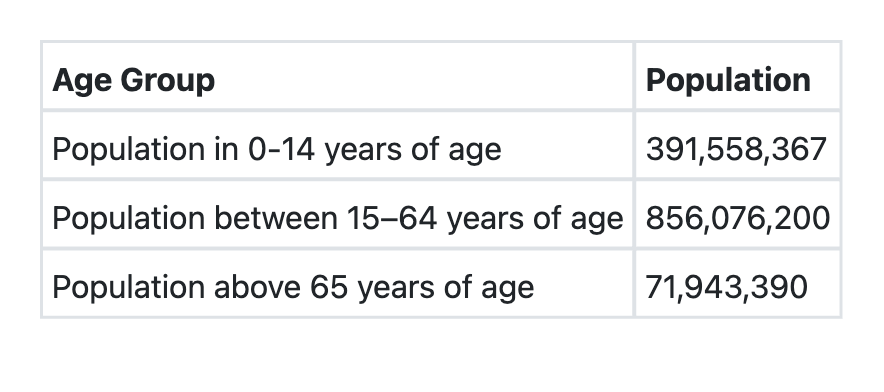
Consider the following data for a country: What shall be the dependency ratio of this country?
Predictive accuracy of a screening test depends on the following EXCEPT:
How much of Zinc supplement is recommended by WHO and UNICEF for infants less than 6 months of age after an episode of acute diarrhoea?
Which one of the following statements regarding sequential administration of Inactivated Polio Vaccine (IPV) and Oral Polio Vaccine (OPV) is NOT correct?
UPSC-CMS 2020 - Community Medicine UPSC-CMS Practice Questions and MCQs
Question 91: Pentavalent vaccine provides protection against which of the following diseases?
- A. Diphtheria, Pertussis, Tuberculosis, Measles and Hepatitis B
- B. Diphtheria, Pertussis, Tetanus, Hepatitis B and Hib (Correct Answer)
- C. Diphtheria, Pertussis, Tetanus, Hepatitis B and Rubella
- D. Diphtheria, Pertussis, Measles, Hepatitis B and Hib
Explanation: ***Diphtheria, Pertussis, Tetanus, Hepatitis B and Hib*** - The **Pentavalent vaccine** is a combination vaccine that provides protection against five common childhood diseases. - These five diseases are **Diphtheria**, **Pertussis** (whooping cough), **Tetanus**, **Hepatitis B**, and infections caused by **Haemophilus influenzae type b (Hib)**. *Diphtheria, Pertussis, Tuberculosis, Measles and Hepatitis B* - While it includes **Diphtheria**, **Pertussis**, and **Hepatitis B**, this option incorrectly lists **Tuberculosis** and **Measles** as components. - The vaccine for Tuberculosis is **BCG**, and Measles is part of the MMR vaccine, not the pentavalent vaccine. *Diphtheria, Pertussis, Tetanus, Hepatitis B and Rubella* - This option correctly identifies **Diphtheria**, **Pertussis**, **Tetanus**, and **Hepatitis B** but incorrectly includes **Rubella**. - **Rubella** is typically part of the **MMR vaccine**, not the pentavalent vaccine. *Diphtheria, Pertussis, Measles, Hepatitis B and Hib* - This option correctly includes **Diphtheria**, **Pertussis**, **Hepatitis B**, and **Hib**, but incorrectly lists **Measles**. - **Measles** is administered as part of the **MMR vaccine**, not as a component of the pentavalent vaccine.
Question 92: Consider the following data for a country: What shall be the dependency ratio of this country?
- A. 42.4 %
- B. 78.6 %
- C. 66.2 %
- D. 54.1 % (Correct Answer)
Explanation: ***54.1 %*** - The **dependency ratio** measures the proportion of dependents (children 0-14 and elderly 65+) to the working-age population (15-64). - Calculation: ((391,558,367 + 71,943,390) / 856,076,200) × 100 = (463,501,757 / 856,076,200) × 100 = **54.14%**. *42.4 %* - This value is significantly **lower** than the calculated dependency ratio of 54.1%. - Would indicate a much smaller **dependent population** relative to the working-age group. *66.2 %* - This percentage is **higher** than the mathematically correct dependency ratio calculation. - Would suggest a larger proportion of **dependents** than actually exists in the given data. *78.6 %* - This value is significantly **overestimated** compared to the calculated dependency ratio. - Such a high ratio would indicate an unrealistic proportion of **non-working population** to working-age adults.
Question 93: Predictive accuracy of a screening test depends on the following EXCEPT:
- A. Specificity of screening test
- B. Disease prevalence
- C. Disease incidence (Correct Answer)
- D. Sensitivity of screening test
Explanation: ***Disease incidence*** - **Disease incidence** refers to the rate at which new cases of a disease occur in a population over a specified period. While related to disease prevalence, it is not a direct factor in calculating the predictive accuracy of a screening test. - Predictive accuracy, specifically **positive predictive value (PPV)** and **negative predictive value (NPV)**, relies on the test's inherent properties (sensitivity and specificity) and the **prevalence** of the disease, not its incidence. *Specificity of screening test* - **Specificity** is crucial for predictive accuracy as it determines the probability that a test correctly identifies those *without* the disease. - A test with high specificity will have fewer **false positives**, which directly impacts the positive predictive value. *Disease prevalence* - **Disease prevalence** profoundly influences the predictive accuracy of a screening test. The **positive predictive value** increases with higher disease prevalence. - In populations with low disease prevalence, even highly sensitive and specific tests can yield a large number of **false positives**. *Sensitivity of screening test* - **Sensitivity** is a key determinant of predictive accuracy, as it measures the proportion of *true positives* correctly identified by the test. - A test with high sensitivity helps ensure that most individuals *with* the disease are detected, which affects both **positive and negative predictive values**.
Question 94: How much of Zinc supplement is recommended by WHO and UNICEF for infants less than 6 months of age after an episode of acute diarrhoea?
- A. 20 mg per day for 10–14 days
- B. 10 mg per day for 10–14 days (Correct Answer)
- C. 6 mg per day for 7 days
- D. 5 mg per day for 7 days
Explanation: **10 mg per day for 10–14 days** - For infants less than 6 months of age, **WHO and UNICEF** recommend **10 mg of elemental zinc per day** for 10-14 days following an acute diarrheal episode. - This dosage helps to reduce the severity and duration of the current diarrheal episode and prevents future episodes for several months. *20 mg per day for 10–14 days* - This dosage is recommended for **children 6 months of age and older**, not for infants under 6 months. - Providing 20 mg elemental zinc to infants under 6 months could lead to **zinc toxicity** or other adverse effects. *6 mg per day for 7 days* - This recommendation is below the **standard therapeutic dose** for infants, which may not be sufficient to achieve the desired clinical benefit. - The duration of **7 days** is also shorter than the generally recommended 10-14 days. *5 mg per day for 7 days* - Similar to 6 mg, this dose is **insufficient** for effective treatment of acute diarrhea in infants. - The shortened duration of 7 days further reduces its potential therapeutic impact, increasing the risk of **recurrence or prolonged symptoms**.
Question 95: Which one of the following statements regarding sequential administration of Inactivated Polio Vaccine (IPV) and Oral Polio Vaccine (OPV) is NOT correct?
- A. Intestinal mucosal immunity is lost due to IPV administration (Correct Answer)
- B. The combined schedules of IPV and OPV appear to reduce or prevent Vaccine Associated Paralytic Polio (VAPP)
- C. It will be cost effective in developing countries for Polio prevention
- D. IPV and OPV together may optimize both the humoral and mucosal immunogenicity of Polio vaccine
Explanation: ***Intestinal mucosal immunity is lost due to IPV administration*** - This statement is **incorrect** and is the answer to this "NOT correct" question. - IPV (given parenterally) does NOT cause "loss" of pre-existing mucosal immunity; rather, it **fails to stimulate intestinal mucosal immunity** because it doesn't reach the gut mucosa. - IPV primarily induces **systemic humoral immunity** with high levels of serum antibodies, providing excellent protection against paralytic polio but minimal intestinal immunity. - The absence of mucosal immunity means IPV recipients can still be infected and shed wild poliovirus in their intestines if exposed, though they remain protected from paralysis. *The combined schedules of IPV and OPV appear to reduce or prevent Vaccine Associated Paralytic Polio (VAPP)* - This statement is **correct**. VAPP is a rare complication (1 in 2.4 million doses) associated with OPV due to reversion of the live attenuated virus. - Using IPV first (which contains killed virus and cannot cause VAPP) followed by OPV reduces VAPP risk because the initial doses carry no reversion risk. - This sequential strategy maintains the benefits of OPV (mucosal immunity) while minimizing VAPP occurrence. *It will be cost effective in developing countries for Polio prevention* - This statement is **correct**, though context-dependent. Sequential IPV-OPV schedules represent a balance between optimal immunogenicity and practical implementation. - While IPV alone is more expensive than OPV, using **limited IPV doses followed by OPV** (as recommended by WHO) is cost-effective because it reduces VAPP while maintaining the transmission-blocking benefits of OPV. - Many developing countries have successfully implemented fractional-dose IPV in sequential schedules, making this approach feasible and cost-effective for polio eradication programs. *IPV and OPV together may optimize both the humoral and mucosal immunogenicity of Polio vaccine* - This statement is **correct** and represents the scientific rationale for sequential schedules. - **IPV provides robust systemic humoral immunity** (high serum IgG antibodies), protecting against paralytic disease and viremia. - **OPV stimulates strong intestinal mucosal immunity** (secretory IgA), preventing viral replication and shedding in the gut, thereby interrupting transmission. - Sequential administration leverages the complementary strengths of both vaccines for comprehensive individual and community protection.
Microbiology
1 questionsWhich is the most specific causative agent of Rabies?
UPSC-CMS 2020 - Microbiology UPSC-CMS Practice Questions and MCQs
Question 91: Which is the most specific causative agent of Rabies?
- A. Rabies lyssavirus (RABV) (Correct Answer)
- B. Lagos bat lyssavirus (LBV)
- C. Mokola lyssavirus (MOKV)
- D. Duvenhage lyssavirus (DUVV)
Explanation: ***Rabies lyssavirus (RABV)*** - **Rabies lyssavirus (RABV)**, also known as the **classical rabies virus** or **genotype 1**, is the primary and most specific causative agent of rabies in humans and animals worldwide. - While other lyssaviruses (Lagos bat, Mokola, Duvenhage, Australian bat lyssavirus, etc.) can cause rabies-like illnesses, **RABV is overwhelmingly responsible** for the vast majority of documented rabies cases globally. - It is transmitted primarily through dog bites in endemic regions and causes acute, progressive, fatal encephalomyelitis. *Lagos bat lyssavirus (LBV)* - **Lagos bat lyssavirus (genotype 2)** is a distinct species within the *Lyssavirus* genus that can cause rabies-like disease, primarily in bats in Africa. - It is **rarely associated with human rabies** and is not the most common or specific cause globally. *Mokola lyssavirus (MOKV)* - **Mokola lyssavirus (genotype 3)** is another lyssavirus found in Africa, isolated from shrews, rodents, and rarely humans. - Although it can cause a fatal encephalomyelitis similar to rabies, human cases are **extremely rare**, and it is not considered the typical rabies virus. *Duvenhage lyssavirus (DUVV)* - **Duvenhage lyssavirus (genotype 4)** is a bat-associated lyssavirus found in Africa, first isolated in 1970. - Human cases are **exceptionally rare** (only a few documented cases), and it is not the primary causative agent of classic rabies.
Obstetrics and Gynecology
1 questionsVisual inspection based screening test with 5 % acetic acid is used for the screening of which one of the following cancers?
UPSC-CMS 2020 - Obstetrics and Gynecology UPSC-CMS Practice Questions and MCQs
Question 91: Visual inspection based screening test with 5 % acetic acid is used for the screening of which one of the following cancers?
- A. Oral cancer
- B. Lung cancer
- C. Breast cancer
- D. Cervix cancer (Correct Answer)
Explanation: ***Cervix cancer*** - Visual inspection with **acetic acid (VIA)** is a widely used, low-cost screening method for **cervical cancer**, particularly in low-resource settings. - Acetic acid causes abnormal (dysplastic or cancerous) cervical cells to turn **white (acetowhite lesion)**, making them visible to the naked eye. *Oral cancer* - Screening for **oral cancer** typically involves a visual and tactile examination of the oral cavity by a dentist or healthcare provider. - While acetic acid can highlight some oral lesions, it is **not a standard diagnostic or screening tool** for oral cancer like it is for cervical cancer. *Lung cancer* - Screening for **lung cancer** usually involves **low-dose computed tomography (LDCT)** for high-risk individuals. - There is **no role for acetic acid** in the screening or diagnosis of lung cancer. *Breast cancer* - Screening for **breast cancer** is primarily done through **mammography**, clinical breast exams, and sometimes MRI. - **Acetic acid** has **no application** in the detection or screening of breast cancer.
Pharmacology
3 questionsWhich one of the following statements regarding Rabies Immunoglobulin is NOT true?
All of the following are true about Bedaquiline (BDQ) EXCEPT:
What is the recommended dose regimen of Vitamin A for the treatment of early stages of Xerophthalmia?
UPSC-CMS 2020 - Pharmacology UPSC-CMS Practice Questions and MCQs
Question 91: Which one of the following statements regarding Rabies Immunoglobulin is NOT true?
- A. It should be administered primarily into or around the wound sites
- B. There is no scientific ground for performing a skin test prior to administering equine immunoglobulin
- C. It can be administered till 15 days after the first dose of anti-rabies vaccine (Correct Answer)
- D. It should be administered only once as soon as possible after the initiation of post exposure prophylaxis
Explanation: ***It can be administered till 15 days after the first dose of anti-rabies vaccine*** - This statement is **incorrect** because Rabies Immunoglobulin (RIG) provides passive immunity and should be given as soon as possible after exposure, ideally within **7 days** of the first vaccine dose. Beyond this period, the vaccine itself is expected to have stimulated active immunity. - Delaying RIG administration significantly reduces its effectiveness, as the goal is to neutralize the virus before the body mounts its own immune response, which typically begins to be robust around day 7-10 after vaccination. *It should be administered primarily into or around the wound sites* - This statement is **true**. The primary goal of RIG is to provide immediate, localized immunity by neutralizing the rabies virus at the site of entry. - Infiltrating as much of the dose as anatomically feasible directly into and around the wound ensures effective local virus neutralization. *There is no scientific ground for performing a skin test prior to administering equine immunoglobulin* - This statement is **true** according to current WHO guidelines. With modern, highly purified RIG products, the risk of severe systemic allergic reactions is low. - Skin testing can be unreliable, lead to unnecessary delays in critical post-exposure prophylaxis, and may not accurately predict a severe allergic reaction. *It should be administered only once as soon as possible after the initiation of post exposure prophylaxis* - This statement is **true**. RIG is a single-dose treatment given at the beginning of post-exposure prophylaxis (PEP) to provide immediate antibodies. - Multiple doses are not recommended as they could interfere with the development of the body's active immune response stimulated by the rabies vaccine.
Question 92: All of the following are true about Bedaquiline (BDQ) EXCEPT:
- A. It has extended half life
- B. It is a bacteriostatic drug (Correct Answer)
- C. It specifically targets mycobacterial ATP synthase
- D. It has high volume of tissue distribution
Explanation: ***It is a bacteriostatic drug*** - **Bedaquiline (BDQ)** is a novel anti-tuberculosis drug that is **bactericidal** against *Mycobacterium tuberculosis*, meaning it kills the bacteria rather than just inhibiting their growth. - Its bactericidal action is crucial for treating multi-drug resistant (MDR) and extensively drug-resistant (XDR) tuberculosis. *It has extended half-life* - **Bedaquiline** has a very **long terminal elimination half-life**, which can extend up to several months. - This extended half-life allows for less frequent dosing schedules (e.g., once daily or thrice weekly after an initial loading phase). *It specifically targets mycobacterial ATP synthase* - **Bedaquiline** specifically inhibits **mycobacterial ATP synthase**, an enzyme essential for energy production in *Mycobacterium tuberculosis* [1]. - This unique mechanism of action contributes to its effectiveness against traditional drug-resistant strains [1]. *It has high volume of tissue distribution* - **Bedaquiline** is highly lipophilic and extensively distributed into tissues, resulting in a **large volume of distribution**. - This extensive tissue distribution contributes to its long half-life and allows it to reach therapeutic concentrations within the infection sites.
Question 93: What is the recommended dose regimen of Vitamin A for the treatment of early stages of Xerophthalmia?
- A. 2 lac IU on two successive days (Correct Answer)
- B. Single massive dose of 2 lac International Units (IU)
- C. 2 doses of 1 lac IU at a gap of one week
- D. 2 doses of 1 lac IU in two successive days
Explanation: ***2 lac IU on two successive days*** - The **WHO-recommended treatment protocol** for xerophthalmia (including early stages) involves a **3-dose regimen**: 200,000 IU immediately, followed by 200,000 IU the next day, and a third dose at least 2 weeks later. - The **first two doses on consecutive days** represent the critical initial treatment phase to rapidly replenish vitamin A stores and prevent progression to sight-threatening corneal damage. - This regimen applies to children **12 months and older and adults**; infants under 12 months receive 100,000 IU doses. *Single massive dose of 2 lac International Units (IU)* - While a high dose is essential, **a single dose alone is insufficient** for treating xerophthalmia according to WHO guidelines. - The second dose on the consecutive day is critical to ensure adequate tissue saturation and prevent progression of corneal lesions. - Single-dose regimens are used for **prophylaxis in high-risk populations**, not for active treatment of xerophthalmia. *2 doses of 1 lac IU at a gap of one week* - **100,000 IU doses** are recommended for **infants under 12 months of age**, not for older children and adults with xerophthalmia. - The one-week interval does not match the WHO protocol, which requires the second dose on the **very next day** to ensure rapid correction. *2 doses of 1 lac IU in two successive days* - This dosing regimen is appropriate for **infants aged 6-12 months** with xerophthalmia, where each dose is 100,000 IU. - For children **12 months and older and adults**, the standard dose is **200,000 IU (2 lac IU)**, making this dosage insufficient for the typical patient population.