Modified Bishop’s score includes all EXCEPT:
The engaging diameter of brow presentation is:
Which of the following is/are the risk factors for acute pelvic inflammatory disease in women? 1. Intercourse during menstruation 2. Multiple sex partners Select the correct answer using the code given below:
Medical management of tubal ectopic pregnancy can be done in the following EXCEPT:
Which of the following genital infections is associated with preterm labour?
Multiple pregnancy is associated with an increased incidence of the following EXCEPT:
Surgical staging is done for all the genital malignancies EXCEPT:
B-Lynch suture for atonic postpartum haemorrhage:
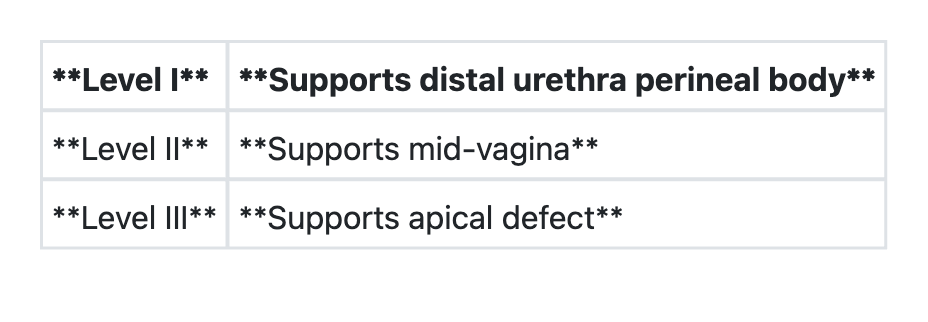
Regarding 'DeLancey's levels of vaginal support', consider the following pairs:
Consider the following pairs regarding foetal heart during labour:

UPSC-CMS 2017 - Obstetrics and Gynecology UPSC-CMS Practice Questions and MCQs
Question 11: Modified Bishop’s score includes all EXCEPT:
- A. Position of occiput (Correct Answer)
- B. Position of os
- C. Consistency of cervix
- D. Cervical length and dilatation
Explanation: ***Position of occiput*** - The **position of the occiput** (fetal head position) is assessed during labor but is not a component of either the original or modified Bishop's score. - The Bishop's score universally evaluates **cervical ripeness** and does not incorporate fetal station or position. *Position of os* - The **position of the cervix (os)**, whether anterior, posterior, or mid-position, is a crucial component of the Bishop's score. - A more **anterior cervix** indicates a higher likelihood of successful induction. *Consistency of cervix* - **Cervical consistency** (firm, medium, soft) is a key factor in the Bishop's score, reflecting the degree of cervical ripening. - A **softer cervix** is more favorable for induction and spontaneous labor progression. *Cervical length and dilatation* - **Cervical effacement** (length) and **dilatation** are essential parameters in the Bishop's score, indicating the readiness of the cervix for labor. - A **shorter and more dilated cervix** correlates with a higher Bishop's score and increased success of labor induction.
Question 12: The engaging diameter of brow presentation is:
- A. Submento‐bregmatic
- B. Submento‐vertical
- C. Suboccipito‐bregmatic
- D. Mento‐vertical (Correct Answer)
Explanation: ***Mento-vertical*** - In a **brow presentation**, the fetal head is incompletely extended, and the presenting part is the brow. - The **mento-vertical diameter** is the longest antero-posterior diameter of the fetal head, measuring approximately **13.5 cm**, and is the engaging diameter in a brow presentation. *Submento-bregmatic* - This diameter is measured from the junction of the neck and chin to the anterior fontanelle (bregma), reflecting the engaging diameter in a **face presentation** with full extension. - Its typical measurement is about **9.5 cm**, significantly shorter than the mento-vertical diameter. *Submento-vertical* - This diameter is not a standard engaging diameter used to describe typical fetal head presentations. - Standard obstetrical terminology focuses on submento-bregmatic for face and suboccipito-bregmatic for vertex presentations. *Suboccipito-bregmatic* - This is the engaging diameter for a **flexed vertex presentation** (occiput or crown of the head), which is the most common and favorable presentation. - It measures approximately **9.5 cm**, representing the optimal diameter for passage through the birth canal.
Question 13: Which of the following is/are the risk factors for acute pelvic inflammatory disease in women? 1. Intercourse during menstruation 2. Multiple sex partners Select the correct answer using the code given below:
- A. 2 only
- B. Both 1 and 2 (Correct Answer)
- C. Neither 1 nor 2
- D. 1 only
Explanation: **Both 1 and 2** - **Intercourse during menstruation** increases the risk for acute PID, as the cervical mucus plug, which normally protects against ascending infection, is absent during menses. - **Multiple sex partners** significantly raises the risk of exposure to sexually transmitted infections (STIs), which are the primary cause of PID. *2 only* - While **multiple sex partners** is a major risk factor, denying intercourse during menstruation as a risk factor is incorrect. - The physiological changes during menstruation facilitate the ascent of bacteria, making coitus during this period a risk. *Neither 1 nor 2* - Both statements describe established risk factors for PID. - This option is incorrect because both **intercourse during menstruation** and **multiple sex partners** contribute to increased risk. *1 only* - While **intercourse during menstruation** is a risk factor, it is incorrect to exclude **multiple sex partners** as a significant risk factor for PID. - Having multiple partners dramatically increases the likelihood of acquiring **STIs**, the main cause of PID.
Question 14: Medical management of tubal ectopic pregnancy can be done in the following EXCEPT:
- A. Period of gestation 5 weeks
- B. Absent foetal cardiac activity
- C. Gestational sac diameter 3 cm.
- D. β HCG level more than 10,000 IU (Correct Answer)
Explanation: ***β HCG level more than 10,000 IU*** - A **β-HCG level greater than 5,000-10,000 IU/L** is generally considered a contraindication for successful medical management of ectopic pregnancy with methotrexate. - Higher β-hCG levels are associated with a **larger ectopic mass**, making it less likely to respond to medical treatment and increasing the risk of rupture. *Period of gestation 5 weeks* - A **gestational age of 5 weeks** is often within the timeframe where medical treatment with methotrexate can be highly effective. - Early diagnosis and intervention within the first 6-7 weeks of gestation are crucial for successful medical management. *Absent foetal cardiac activity* - The **absence of fetal cardiac activity** is a favorable prognostic indicator for medical management, as it suggests the tissue is less viable and more likely to respond to methotrexate. - Methotrexate targets rapidly dividing cells, and the lack of a heartbeat indicates less metabolic activity. *Gestational sac diameter 3 cm.* - An **ectopic sac diameter of 3 cm** (or less than 3.5-4 cm) is generally within the size limits for successful medical management. - Larger sac diameters increase the risk of treatment failure and rupture, pushing towards surgical intervention.
Question 15: Which of the following genital infections is associated with preterm labour?
- A. Human Papilloma Virus
- B. Monilial vaginitis
- C. Bacterial vaginosis (Correct Answer)
- D. Trichomonas vaginalis
Explanation: ***Bacterial vaginosis*** - Bacterial vaginosis (BV) is strongly associated with an increased risk of **preterm labor** and **premature rupture of membranes** due to the production of proteases and phospholipases by anaerobic bacteria. - The imbalance of vaginal flora, particularly the overgrowth of anaerobic bacteria, can lead to ascending infection and inflammation of the **chorioamniotic membranes**. - BV has the **strongest and most consistent** evidence linking it to preterm birth among genital infections. *Human Papilloma Virus* - HPV infection is primarily known for causing **genital warts** and increasing the risk of **cervical dysplasia** and cancer. - It is not directly linked to an increased risk of preterm labor. *Monilial vaginitis* - Monilial vaginitis, or **vulvovaginal candidiasis** (yeast infection), is a common cause of vaginal discomfort, itching, and discharge. - While uncomfortable, it is not consistently associated with an increased risk of preterm labor or other adverse pregnancy outcomes. *Trichomonas vaginalis* - *Trichomonas vaginalis* infection is a sexually transmitted infection that can cause **vaginitis**, cervicitis, and urethritis. - While some studies suggest a possible association with adverse pregnancy outcomes, the evidence is **inconsistent and significantly weaker** compared to bacterial vaginosis, making BV the most established cause of preterm labor among these options.
Question 16: Multiple pregnancy is associated with an increased incidence of the following EXCEPT:
- A. Post date pregnancy (Correct Answer)
- B. Congenital malformations
- C. Hyperemesis gravidarum
- D. Pregnancy induced hypertension
Explanation: ***Post date pregnancy*** - **Multiple pregnancies** are instead associated with a significantly **increased risk of preterm birth** due to uterine overdistension and increased fetal-placental hormonal signaling. - Due to the high risk of complications for both mother and fetuses, multiple pregnancies are often delivered before the estimated due date or by **elective induction**/ **cesarean section**, making post-date pregnancy extremely rare. *Congenital malformations* - The incidence of **congenital malformations** is **increased in multiple pregnancies**, particularly in **monochorionic twins**, partly due to increased vascular anastomoses and potential for discordant growth or twin-to-twin transfusion syndrome (TTTS). - Both **monozygotic** and **dizygotic twins** have a higher risk of various malformations compared to singletons, including neural tube defects and cardiac anomalies. *Hyperemesis gravidarum* - **Hyperemesis gravidarum (severe nausea and vomiting)** is more common in multiple pregnancies due to higher levels of pregnancy hormones, especially **beta-human chorionic gonadotropin (β-hCG)**. - The increased placental mass in multiple gestations leads to **elevated hCG** levels, which are strongly correlated with the severity of nausea and vomiting. *Pregnancy induced hypertension* - **Pregnancy-induced hypertension (PIH)**, including **gestational hypertension** and **preeclampsia**, is significantly more prevalent in multiple pregnancies. - The **larger placental mass** and increased maternal physiological burden contribute to a higher risk of developing PIH, often with **earlier onset** and **increased severity**.
Question 17: Surgical staging is done for all the genital malignancies EXCEPT:
- A. Gestational trophoblastic neoplasia (Correct Answer)
- B. Fallopian tube malignancy
- C. Endometrial carcinoma
- D. Ovarian malignancy
Explanation: ***Gestational trophoblastic neoplasia*** - Gestational trophoblastic neoplasia (GTN) is primarily staged **clinically** and **biochemically** using beta-human chorionic gonadotropin (β-hCG) levels. - **Surgical staging is not typically performed** for GTN due to its high sensitivity to chemotherapy and its hematogenous spread pattern. *Fallopian tube malignancy* - **Surgical staging is essential** for fallopian tube malignancy to determine disease extent and guide treatment. - Staging often involves **laparotomy**, histological examination, and evaluation of surrounding tissues. *Endometrial carcinoma* - **Surgical staging is the cornerstone of management** for endometrial carcinoma, as it provides crucial prognostic information. - This typically includes **hysterectomy**, bilateral salpingo-oophorectomy, and lymph node dissection. *Ovarian malignancy* - **Comprehensive surgical staging** is standard for ovarian malignancy to assess the spread of the disease within the peritoneal cavity. - This involves **laparotomy**, biopsies, and often extensive debulking procedures.
Question 18: B-Lynch suture for atonic postpartum haemorrhage:
- A. ligates the uterine arteries
- B. ligates the ovarian vessels
- C. compresses the uterus (Correct Answer)
- D. ligates the utero-ovarian anastomosis
Explanation: ***compresses the uterus*** - The **B-Lynch suture** is a **compression suture** applied to the uterus to mechanically reduce blood flow through sustained pressure on both anterior and posterior uterine walls. - This mechanical compression helps to achieve **haemostasis** in cases of **atonic postpartum haemorrhage** by bringing the uterine walls together and reducing the uterine cavity size. *ligates the uterine arteries* - **Uterine artery ligation** is a separate surgical procedure that involves directly tying off the uterine arteries to reduce blood flow. - The B-Lynch suture does not ligate these arteries directly; its primary mechanism is compression rather than direct vessel occlusion. *ligates the ovarian vessels* - **Ovarian artery ligation** is also a distinct surgical intervention. The B-Lynch suture is placed around the uterus and does not directly ligate the ovarian vessels. - Ovarian vessels are primarily responsible for supplying the ovaries and part of the fallopian tubes, and their ligation is not the main action of a B-Lynch suture in PPH management. *ligates the utero-ovarian anastomosis* - While there are anastomoses between the uterine and ovarian arterial systems, the B-Lynch suture does not specifically ligate these connections. - Its mechanism is general uterine compression to reduce overall blood flow and promote myometrial contraction rather than specific vessel ligation.
Question 19: Regarding 'DeLancey's levels of vaginal support', consider the following pairs:
- A. 2 only
- B. 1, 2 and 3 (Correct Answer)
- C. 1 and 3 only
- D. 2 and 3 only
Explanation: ***1, 2 and 3*** - DeLancey's levels of vaginal support categorize the anatomical support structures of the vagina into three levels, providing a framework for understanding pelvic organ prolapse. - **Level I** refers to the **apical support** provided by the uterosacral and cardinal ligaments, supporting the uterus and upper vagina. - **Level II** supports the **mid-vagina**, including the paravaginal attachments to the arcus tendineus fascia pelvis (ATFP), providing lateral support. - **Level III** supports the **distal vagina**, including the fusion of the anterior and posterior vaginal walls with the levator ani muscles, perineal body, and urethral support. *2 only* - This option is incomplete as it only recognizes Level II, which supports the mid-vagina, but omits the correct descriptions for Levels I and III, which are also accurately presented. - All three levels described in the table correspond correctly to DeLancey's levels of vaginal support. *1 and 3 only* - This option is incomplete as it misses the correct description for Level II, which accurately states it supports the mid-vagina. - While Level I and Level III are correctly described, a comprehensive understanding requires all three levels. *2 and 3 only* - This option is incomplete because it omits the correct description for Level I, which corresponds to apical support. - Even though Levels II and III are correctly described, all three levels presented in the table are consistent with DeLancey's classification.
Question 20: Consider the following pairs regarding foetal heart during labour:
- A. 1 and 2
- B. 2 and 3 (Correct Answer)
- C. 2 only
- D. 1 and 3
Explanation: ***2 and 3*** - The description for **late decelerations** correctly identifies them as resulting from causes like **maternal hypotension**, **placental insufficiency**, or **excessive uterine activity**, which lead to uteroplacental insufficiency and fetal hypoxia. - The description for **variable decelerations** accurately states that they are caused by **umbilical cord compression**, which is the characteristic cause of this deceleration pattern. Variable decelerations have an abrupt onset and variable timing relative to contractions. *1 and 2* - The first statement regarding **early decelerations** is incorrect if it states they are caused by **cord compression**. Early decelerations are actually caused by **fetal head compression leading to vagal stimulation**, not cord compression. - While the second statement about late decelerations is correct, combining it with an incorrect statement about early decelerations makes this option incorrect. *2 only* - While the description for **late decelerations** is correct, this option is incomplete because the description for **variable decelerations** (statement 3) is also correct. - Answering "2 only" would imply that statement 3 is incorrect, which is not true. *1 and 3* - The first statement regarding **early decelerations** is incorrect if it attributes them to **cord compression** rather than **fetal head compression**. - While the third statement regarding **variable decelerations** is correctly described as being due to **umbilical cord compression**, the incorrectness of the first statement makes this option invalid.